
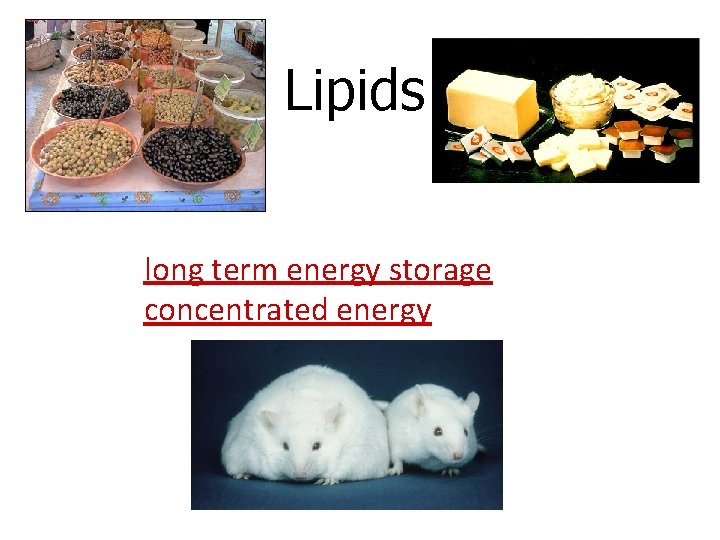
Lipids long term energy storage concentrated energy 3
- Slides: 20
Lipids long term energy storage concentrated energy
3. 8 Fats are lipids that are mostly energy-storage molecules • Lipids are water insoluble (hydrophobic, or water fearing) compounds that are important in energy storage – They contain twice as much energy as a polysaccharide • Fats are lipids made from glycerol and fatty acids Copyright © 2009 Pearson Education, Inc.
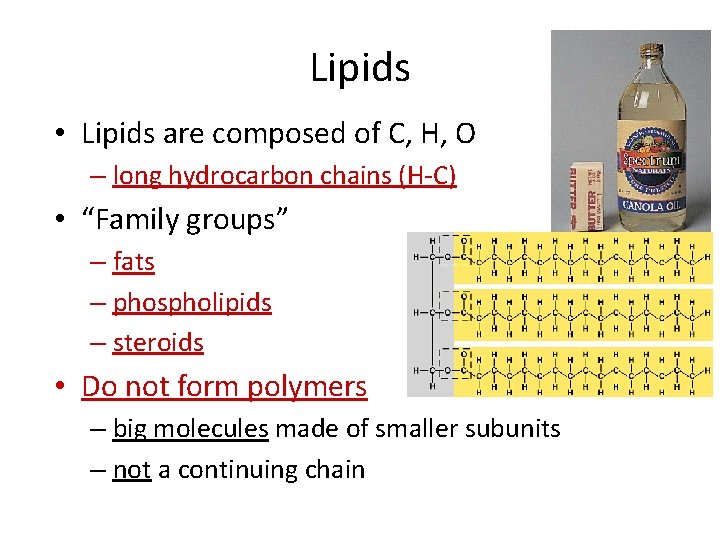
Lipids • Lipids are composed of C, H, O – long hydrocarbon chains (H-C) • “Family groups” – fats – phospholipids – steroids • Do not form polymers – big molecules made of smaller subunits – not a continuing chain
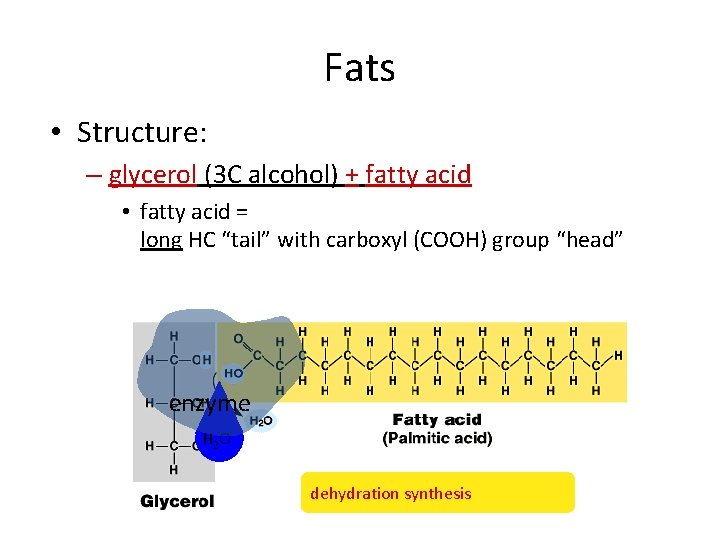
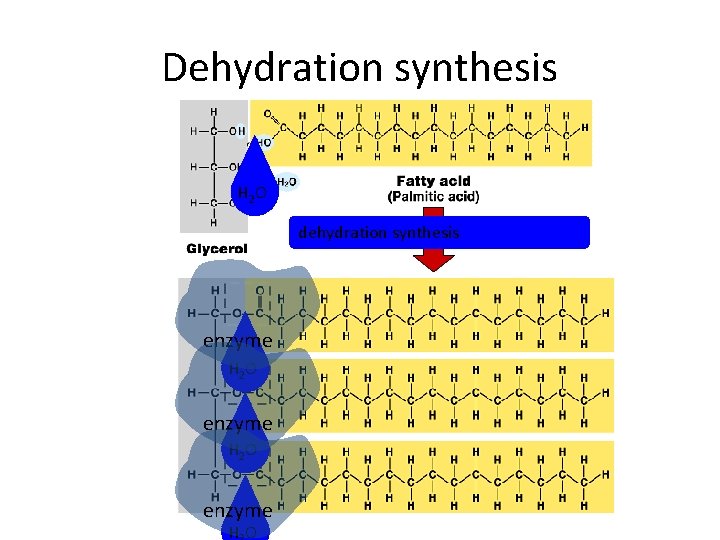
Fats • Structure: – glycerol (3 C alcohol) + fatty acid • fatty acid = long HC “tail” with carboxyl (COOH) group “head” enzyme H 2 O dehydration synthesis
3. 8 Fats are lipids that are mostly energy-storage molecules • Fatty acids link to glycerol by a dehydration reaction – A fat contains one glycerol linked to three fatty acids – Fats are often called triglycerides because of their structure Copyright © 2009 Pearson Education, Inc.
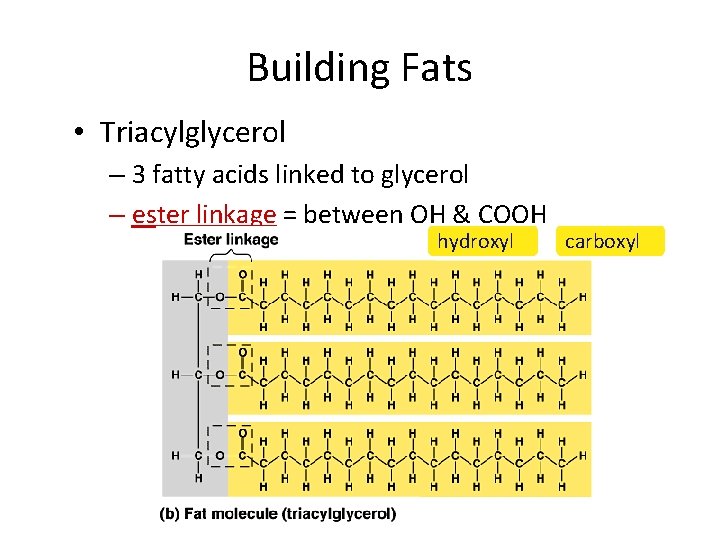
Building Fats • Triacylglycerol – 3 fatty acids linked to glycerol – ester linkage = between OH & COOH hydroxyl carboxyl
Dehydration synthesis H 2 O dehydration synthesis enzyme H 2 O enzyme HO
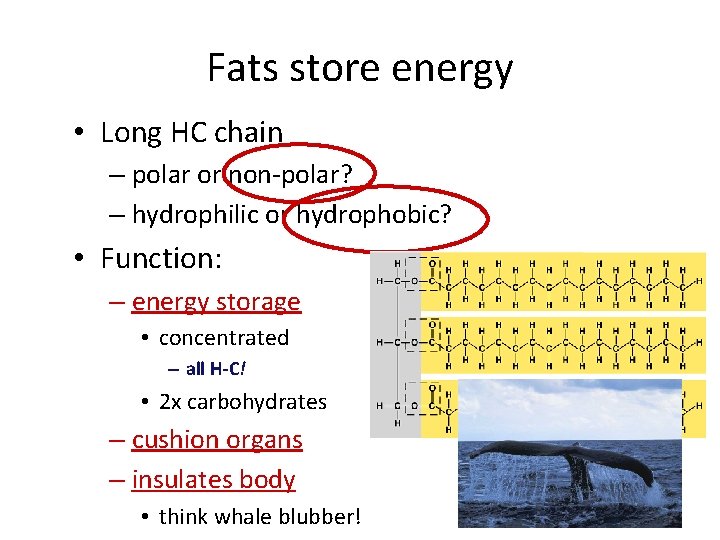
Fats store energy • Long HC chain – polar or non-polar? – hydrophilic or hydrophobic? • Function: – energy storage • concentrated – all H-C! • 2 x carbohydrates – cushion organs – insulates body • think whale blubber!
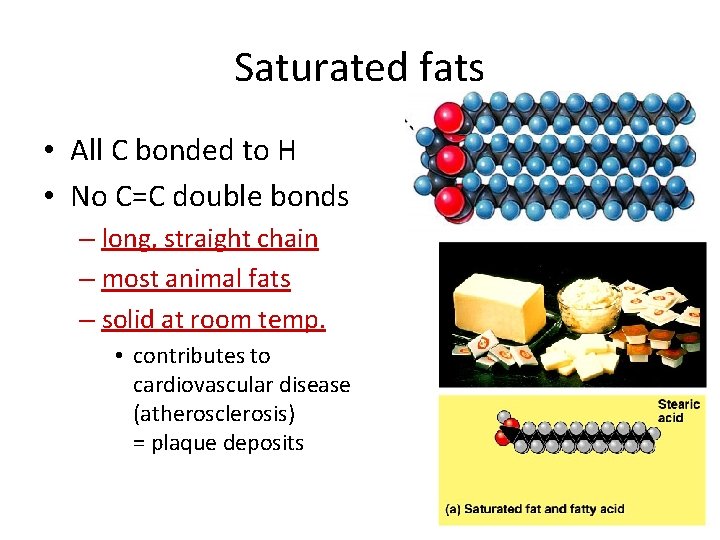
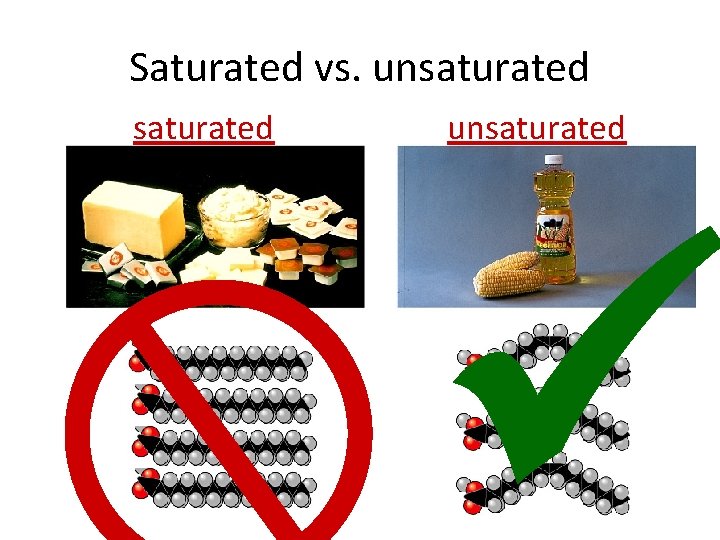
Saturated fats • All C bonded to H • No C=C double bonds – long, straight chain – most animal fats – solid at room temp. • contributes to cardiovascular disease (atherosclerosis) = plaque deposits
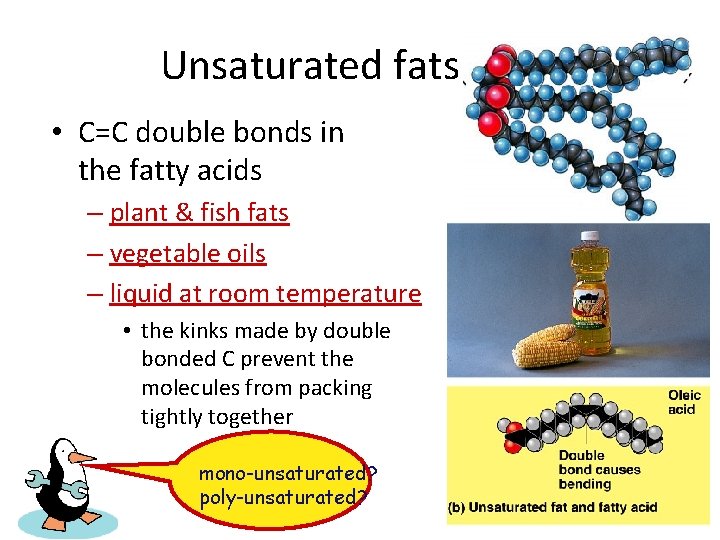
Unsaturated fats • C=C double bonds in the fatty acids – plant & fish fats – vegetable oils – liquid at room temperature • the kinks made by double bonded C prevent the molecules from packing tightly together mono-unsaturated? poly-unsaturated?
Saturated vs. unsaturated
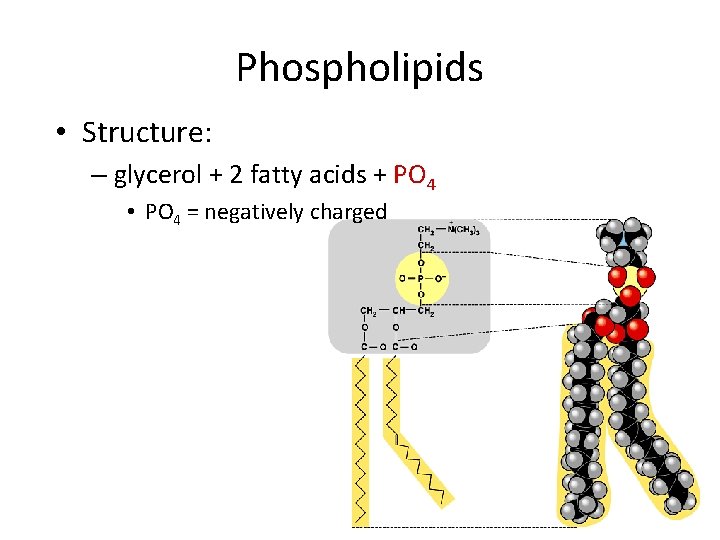
Phospholipids • Structure: – glycerol + 2 fatty acids + PO 4 • PO 4 = negatively charged
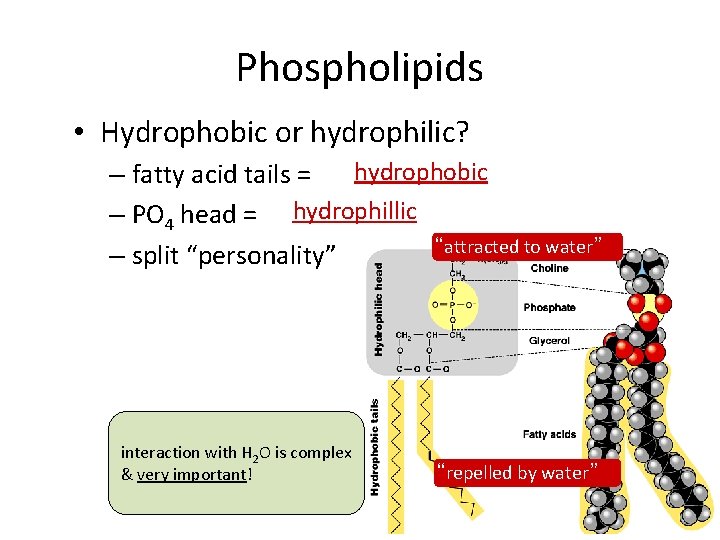
Phospholipids • Hydrophobic or hydrophilic? hydrophobic – fatty acid tails = – PO 4 head = hydrophillic “attracted to water” – split “personality” interaction with H 2 O is complex & very important! “repelled by water”
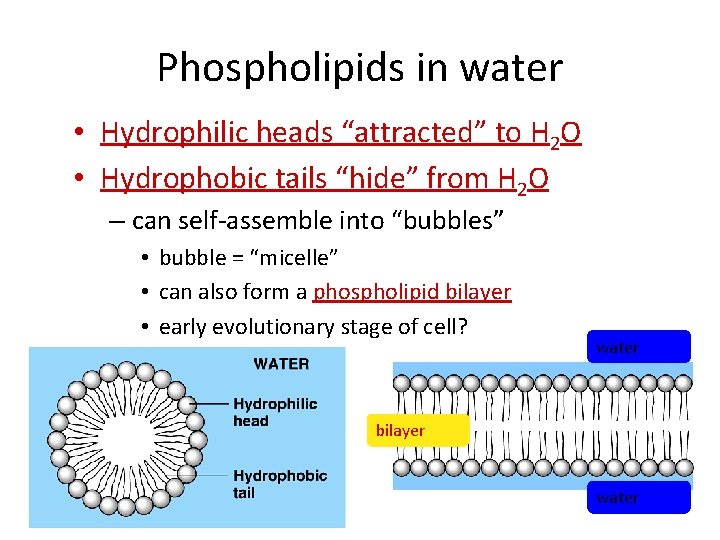
Phospholipids in water • Hydrophilic heads “attracted” to H 2 O • Hydrophobic tails “hide” from H 2 O – can self-assemble into “bubbles” • bubble = “micelle” • can also form a phospholipid bilayer • early evolutionary stage of cell? water bilayer water
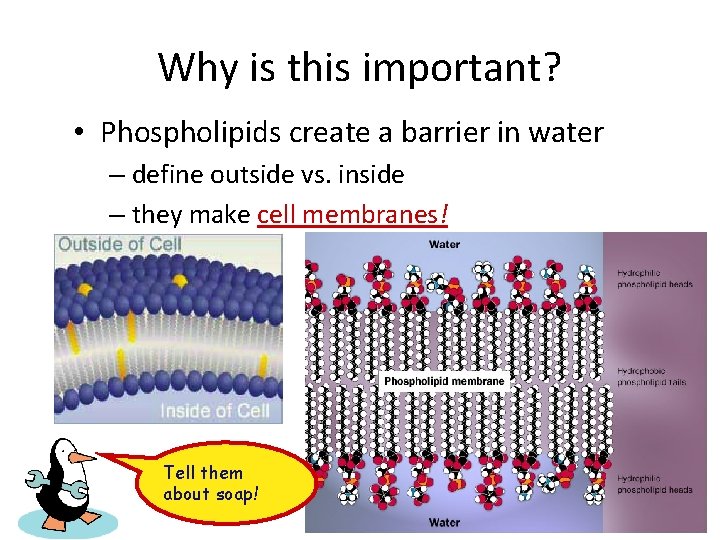
Why is this important? • Phospholipids create a barrier in water – define outside vs. inside – they make cell membranes! Tell them about soap!
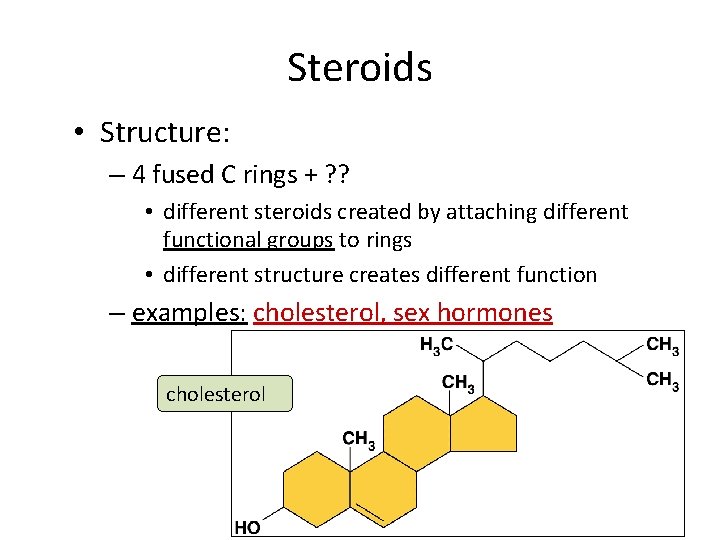
Steroids • Structure: – 4 fused C rings + ? ? • different steroids created by attaching different functional groups to rings • different structure creates different function – examples: cholesterol, sex hormones cholesterol
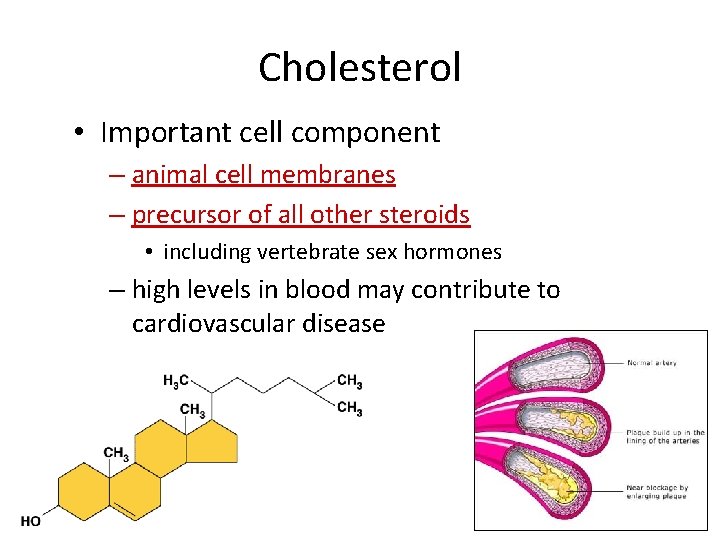
Cholesterol • Important cell component – animal cell membranes – precursor of all other steroids • including vertebrate sex hormones – high levels in blood may contribute to cardiovascular disease
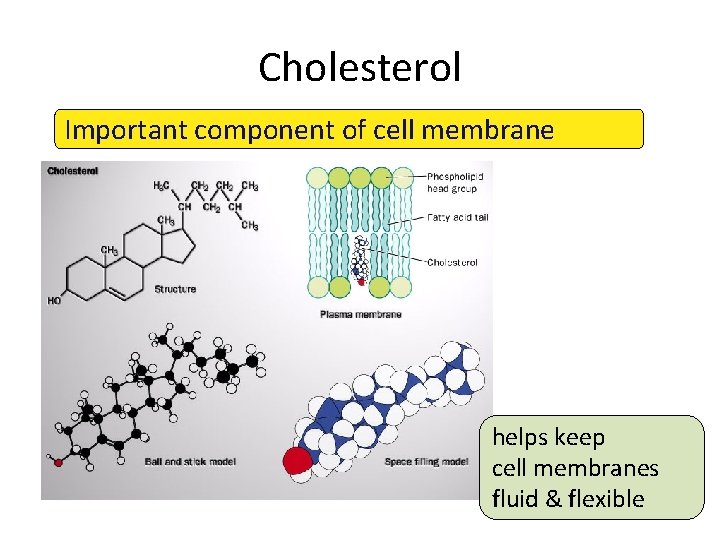
Cholesterol Important component of cell membrane helps keep cell membranes fluid & flexible
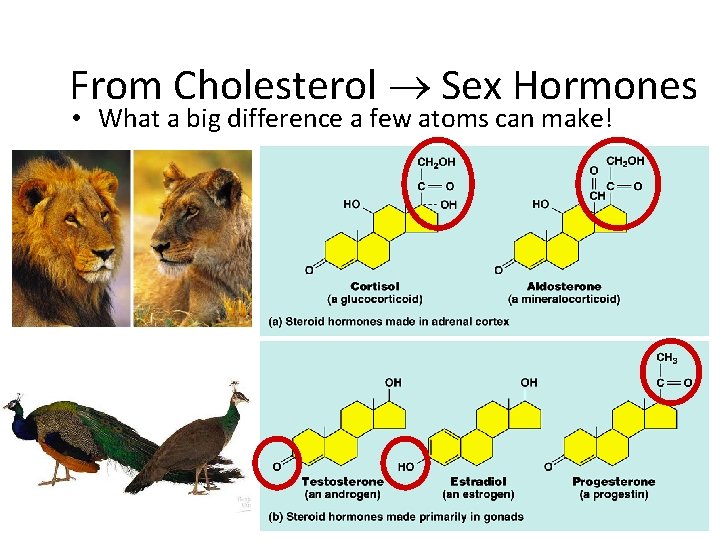
From Cholesterol Sex Hormones • What a big difference a few atoms can make!
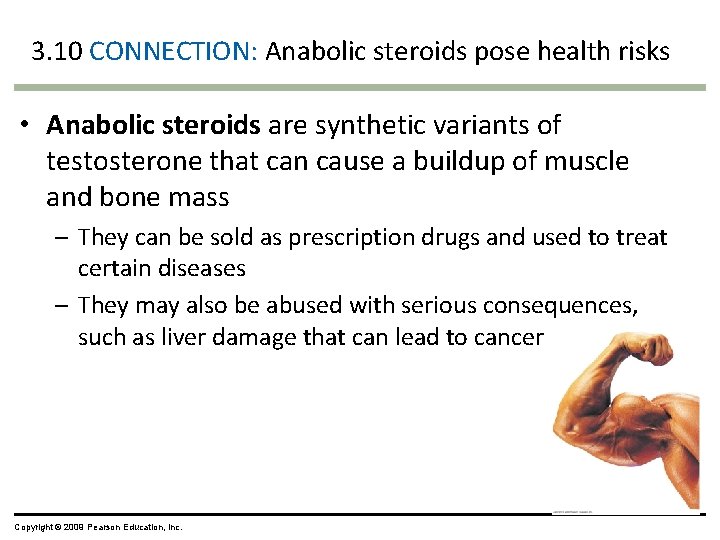
3. 10 CONNECTION: Anabolic steroids pose health risks • Anabolic steroids are synthetic variants of testosterone that can cause a buildup of muscle and bone mass – They can be sold as prescription drugs and used to treat certain diseases – They may also be abused with serious consequences, such as liver damage that can lead to cancer Copyright © 2009 Pearson Education, Inc.