
Lipids Lipids n One of 4 major classes
- Slides: 42
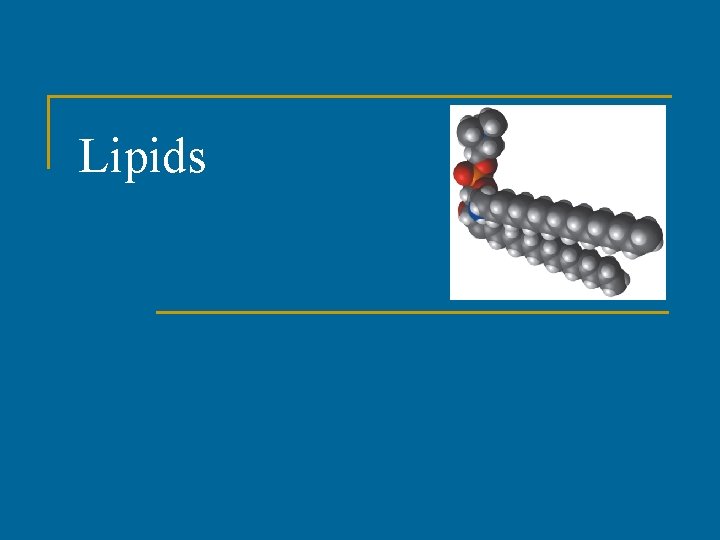
Lipids
Lipids n One of 4 major classes of compounds found in living tissue q n n Oils, fats, or fat-like material Some vitamins, hormones Not polymeric Aggregate q n Nucleic acids, proteins, carbohydrates, lipids Structural matrix of biological membranes Structural variety q q q Largely hydrophobic Insoluble in water Soluble in organic solvents (chloroform, ether)
Outline n Storage q q n Structural q q q n Fatty acids Triacylglycerols Phospholipids Glycolipids Sterols Other lipids q q Fat-soluble vitamins Eicosanoids
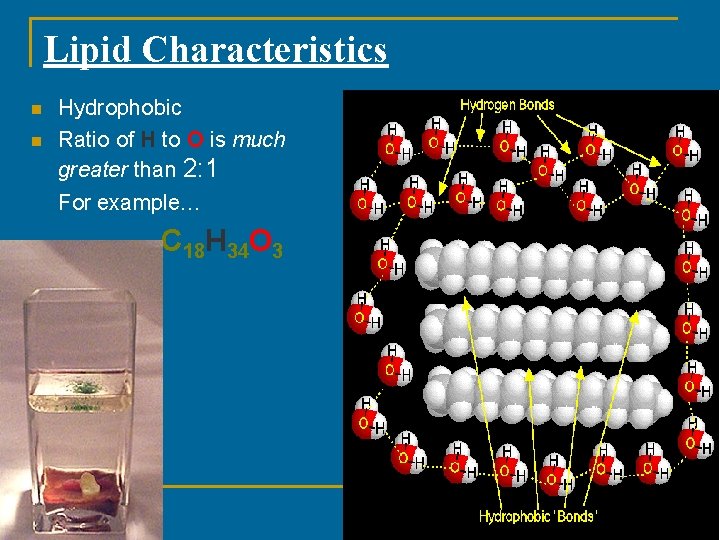
Lipid Characteristics n n Hydrophobic Ratio of H to O is much greater than 2: 1 For example… C 18 H 34 O 3
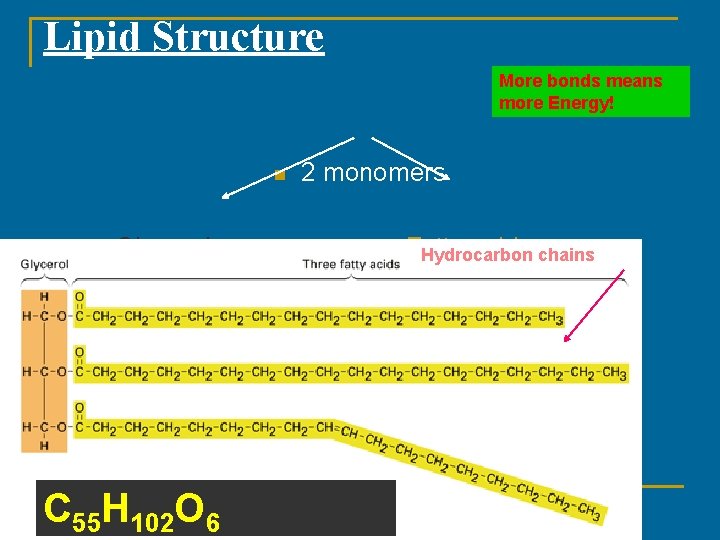
Lipid Structure More bonds means more Energy! n Glycerol C 55 H 102 O 6 2 monomers Fatty acid chains Hydrocarbon
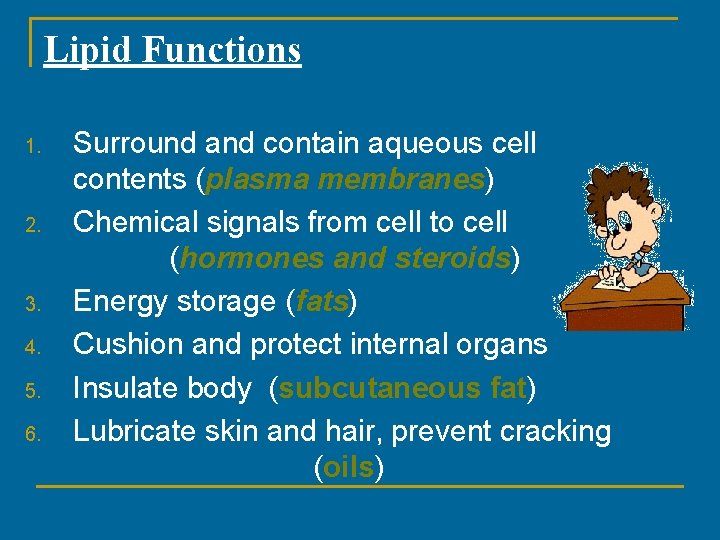
Lipid Functions 1. 2. 3. 4. 5. 6. Surround and contain aqueous cell contents (plasma membranes) Chemical signals from cell to cell (hormones and steroids) Energy storage (fats) Cushion and protect internal organs Insulate body (subcutaneous fat) Lubricate skin and hair, prevent cracking (oils)
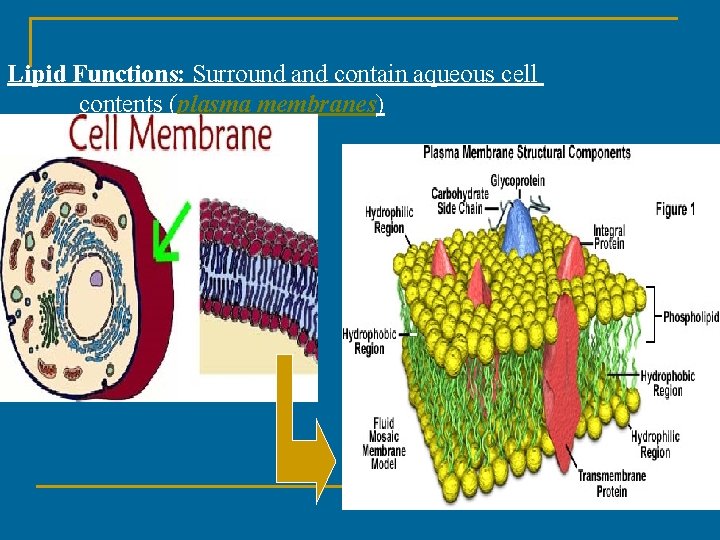
Lipid Functions: Surround and contain aqueous cell contents (plasma membranes)
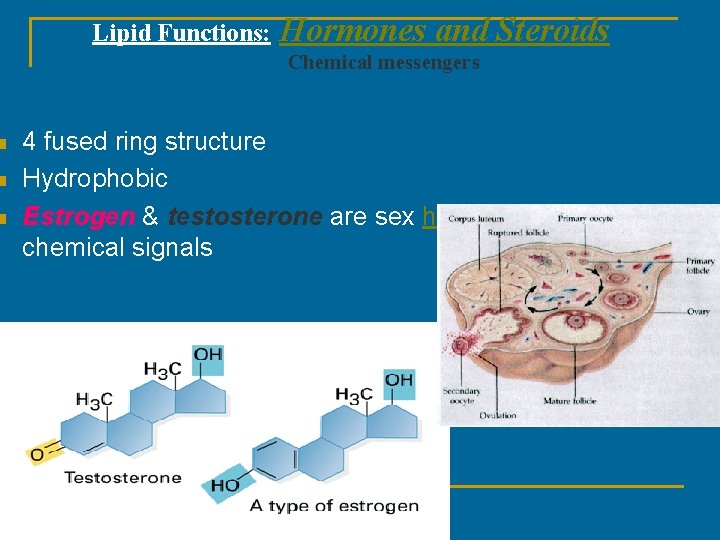
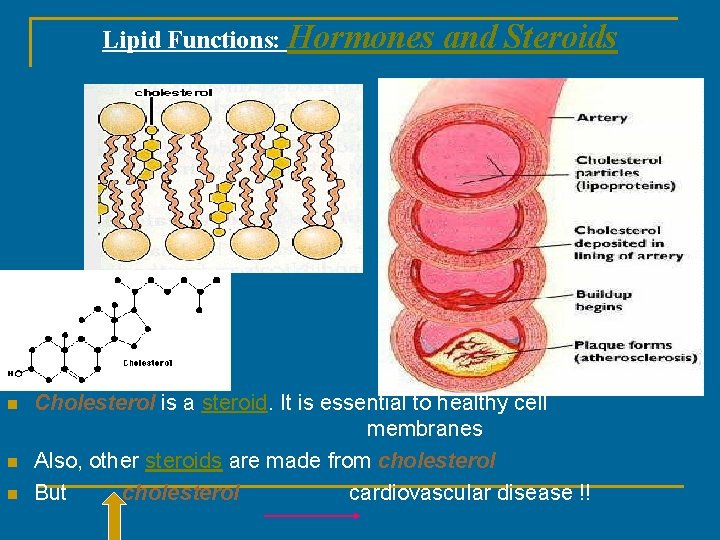
n n n Lipid Functions: Hormones and Steroids Chemical messengers 4 fused ring structure Hydrophobic Estrogen & testosterone are sex hormones, they act as chemical signals
Lipid Functions: Hormones n n n and Steroids Cholesterol is a steroid. It is essential to healthy cell membranes Also, other steroids are made from cholesterol But cholesterol cardiovascular disease !!
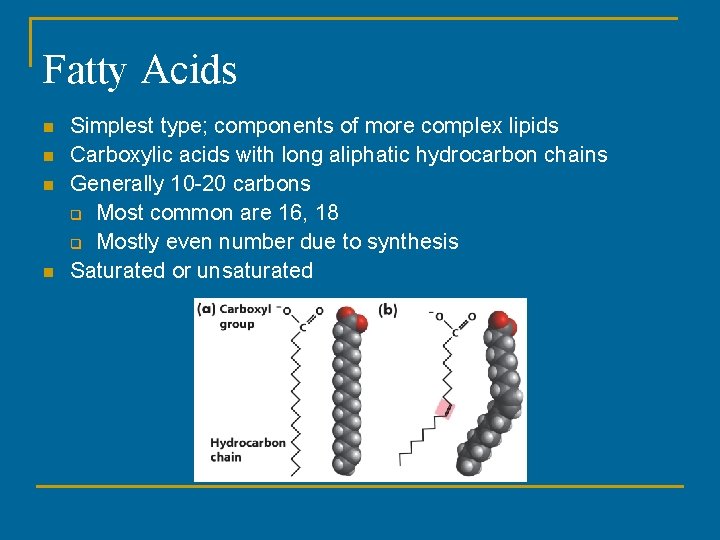
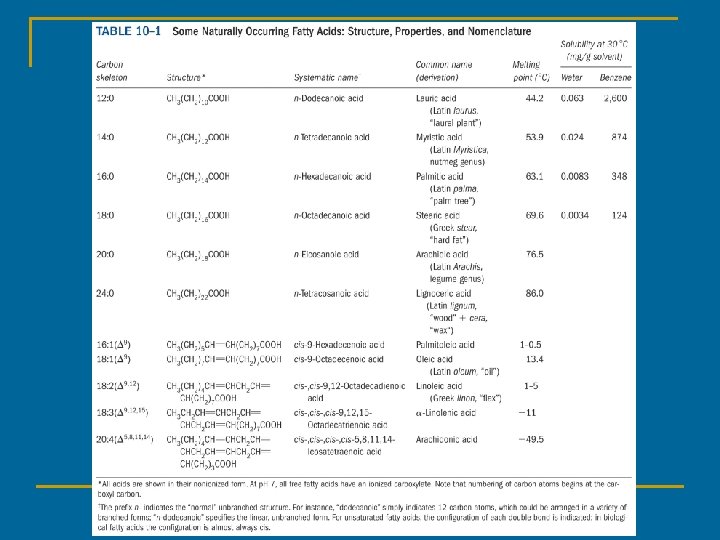
Fatty Acids n n Simplest type; components of more complex lipids Carboxylic acids with long aliphatic hydrocarbon chains Generally 10 -20 carbons q Most common are 16, 18 q Mostly even number due to synthesis Saturated or unsaturated
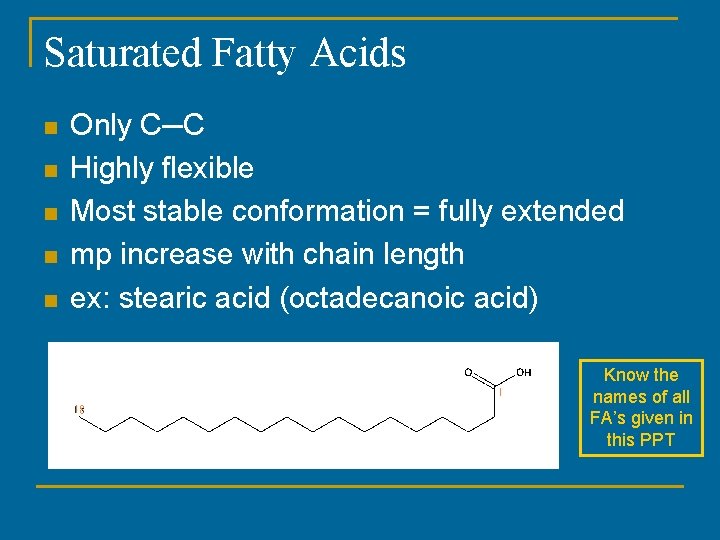
Saturated Fatty Acids n n n Only C─C Highly flexible Most stable conformation = fully extended mp increase with chain length ex: stearic acid (octadecanoic acid) Know the names of all FA’s given in this PPT
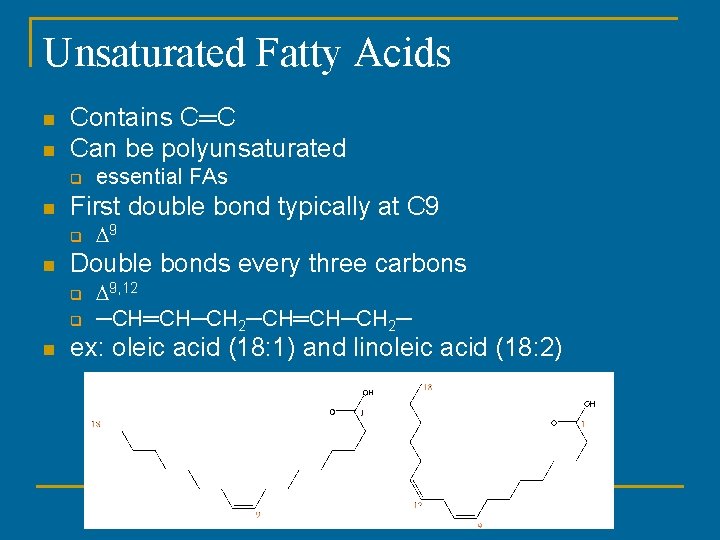
Unsaturated Fatty Acids n n Contains C═C Can be polyunsaturated q n First double bond typically at C 9 q n D 9 Double bonds every three carbons q q n essential FAs D 9, 12 ─CH═CH─CH 2─ ex: oleic acid (18: 1) and linoleic acid (18: 2)
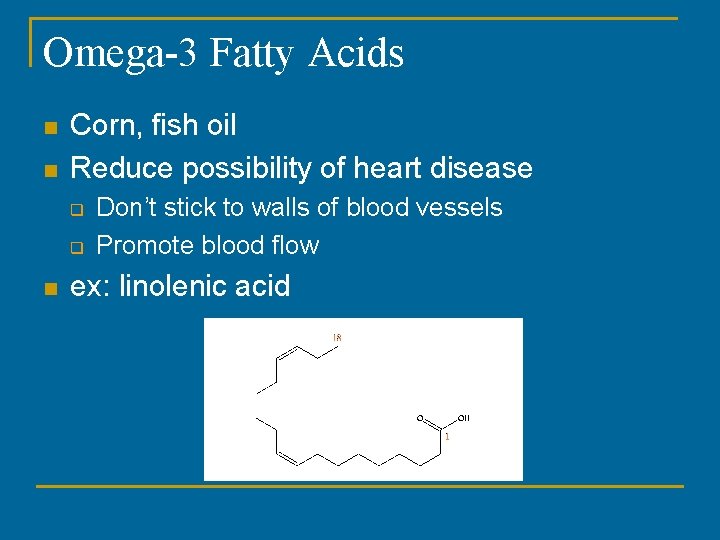
Omega-3 Fatty Acids n n Corn, fish oil Reduce possibility of heart disease q q n Don’t stick to walls of blood vessels Promote blood flow ex: linolenic acid
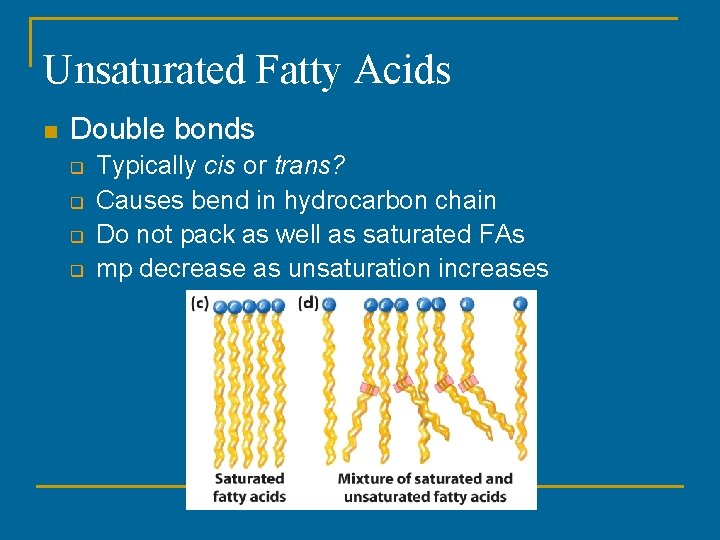
Unsaturated Fatty Acids n Double bonds q q Typically cis or trans? Causes bend in hydrocarbon chain Do not pack as well as saturated FAs mp decrease as unsaturation increases
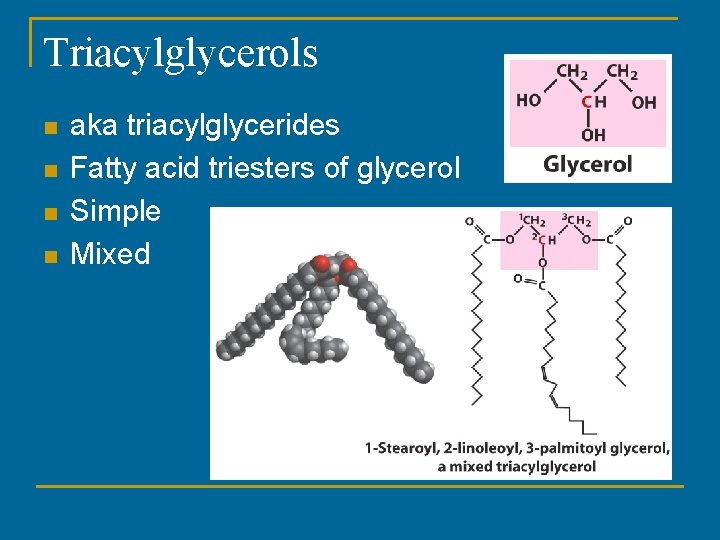
Triacylglycerols n n aka triacylglycerides Fatty acid triesters of glycerol Simple Mixed
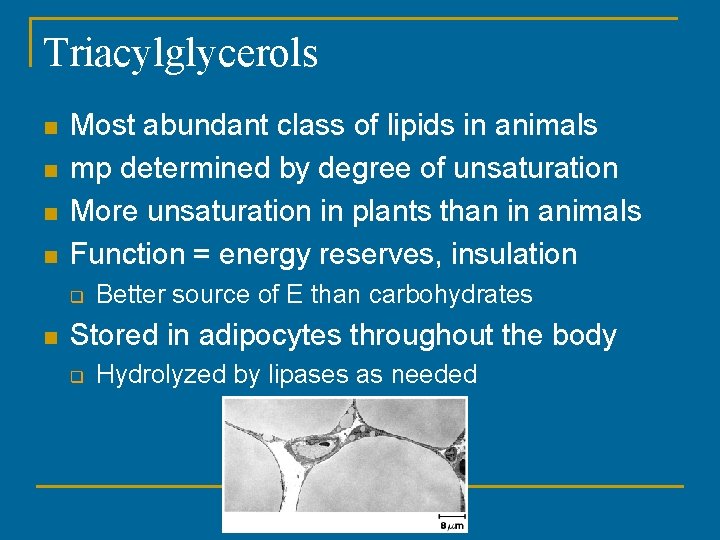
Triacylglycerols n n Most abundant class of lipids in animals mp determined by degree of unsaturation More unsaturation in plants than in animals Function = energy reserves, insulation q n Better source of E than carbohydrates Stored in adipocytes throughout the body q Hydrolyzed by lipases as needed
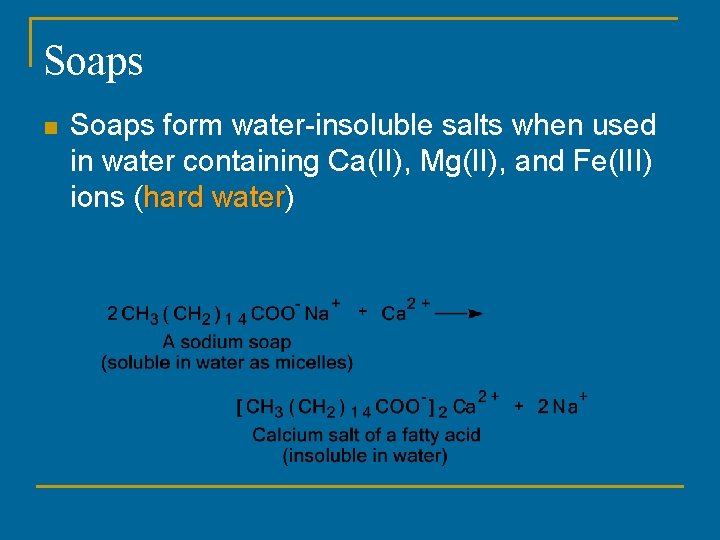
Soaps n Soaps form water-insoluble salts when used in water containing Ca(II), Mg(II), and Fe(III) ions (hard water) water
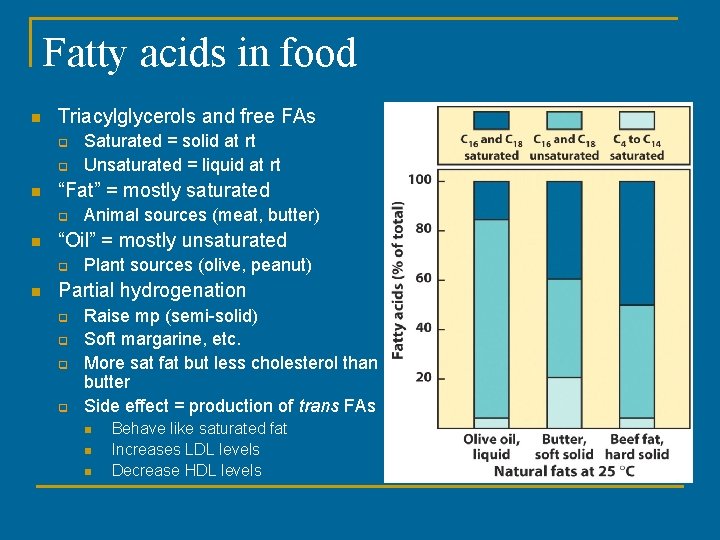
Fatty acids in food n Triacylglycerols and free FAs q q n “Fat” = mostly saturated q n Animal sources (meat, butter) “Oil” = mostly unsaturated q n Saturated = solid at rt Unsaturated = liquid at rt Plant sources (olive, peanut) Partial hydrogenation q q Raise mp (semi-solid) Soft margarine, etc. More sat fat but less cholesterol than butter Side effect = production of trans FAs n n n Behave like saturated fat Increases LDL levels Decrease HDL levels
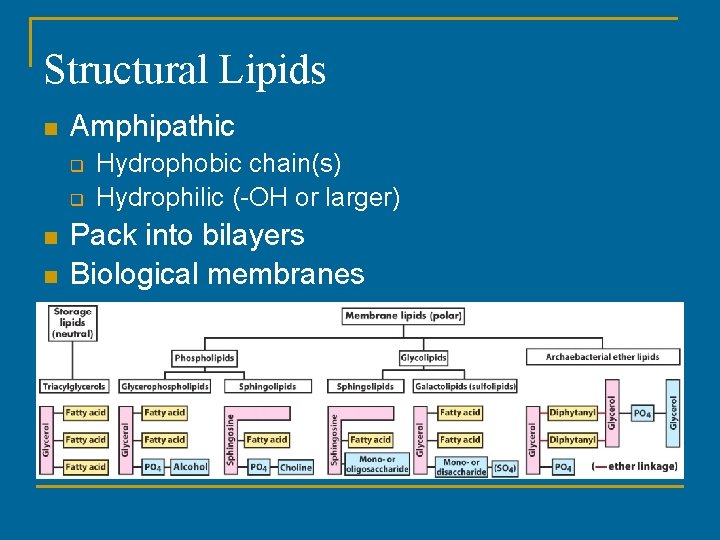
Structural Lipids n Amphipathic q q n n Hydrophobic chain(s) Hydrophilic (-OH or larger) Pack into bilayers Biological membranes
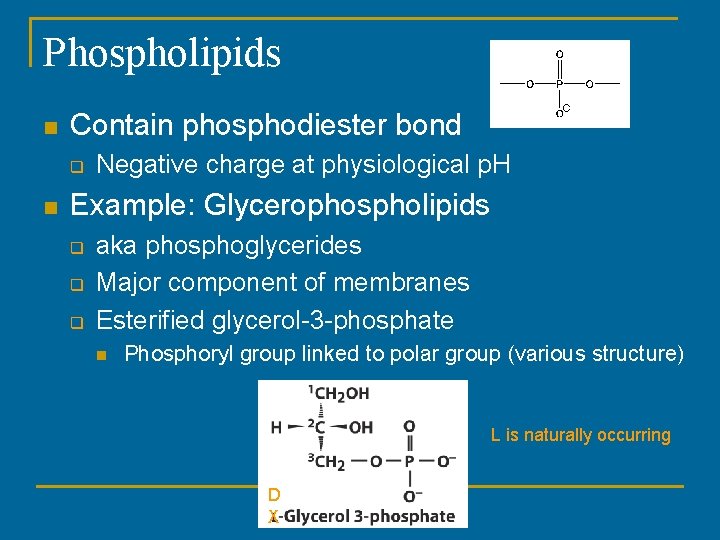
Phospholipids n Contain phosphodiester bond q n Negative charge at physiological p. H Example: Glycerophospholipids q q q aka phosphoglycerides Major component of membranes Esterified glycerol-3 -phosphate n Phosphoryl group linked to polar group (various structure) L is naturally occurring D X
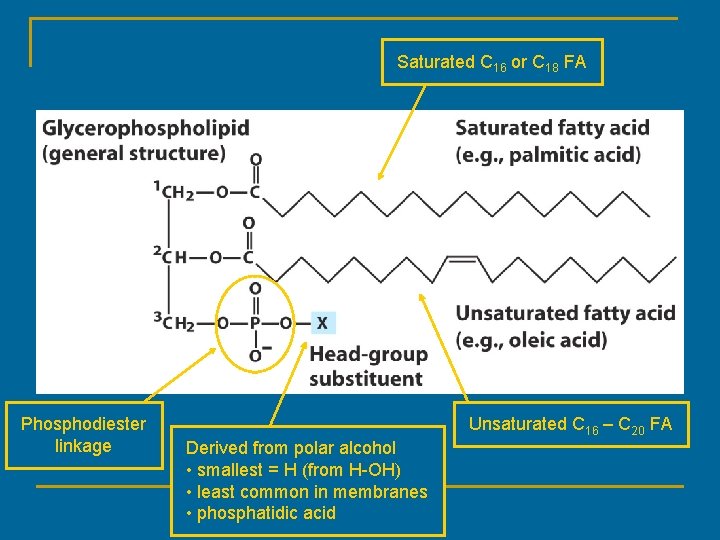
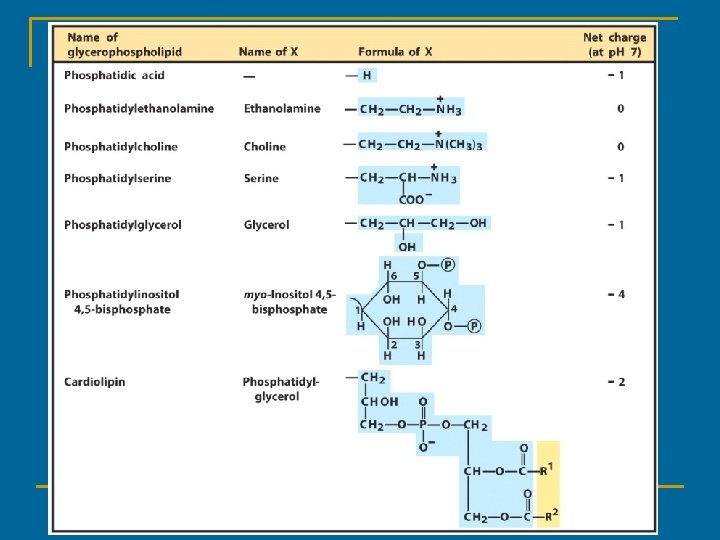
Saturated C 16 or C 18 FA Phosphodiester linkage Unsaturated C 16 – C 20 FA Derived from polar alcohol • smallest = H (from H-OH) • least common in membranes • phosphatidic acid
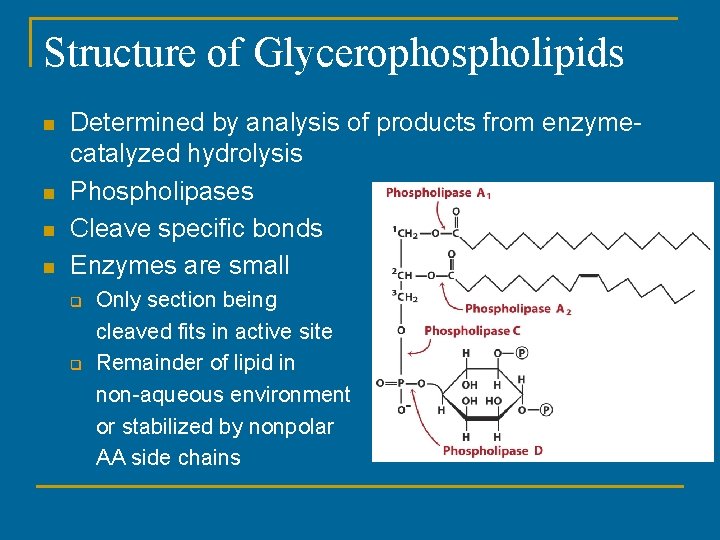
Structure of Glycerophospholipids n n Determined by analysis of products from enzymecatalyzed hydrolysis Phospholipases Cleave specific bonds Enzymes are small q q Only section being cleaved fits in active site Remainder of lipid in non-aqueous environment or stabilized by nonpolar AA side chains
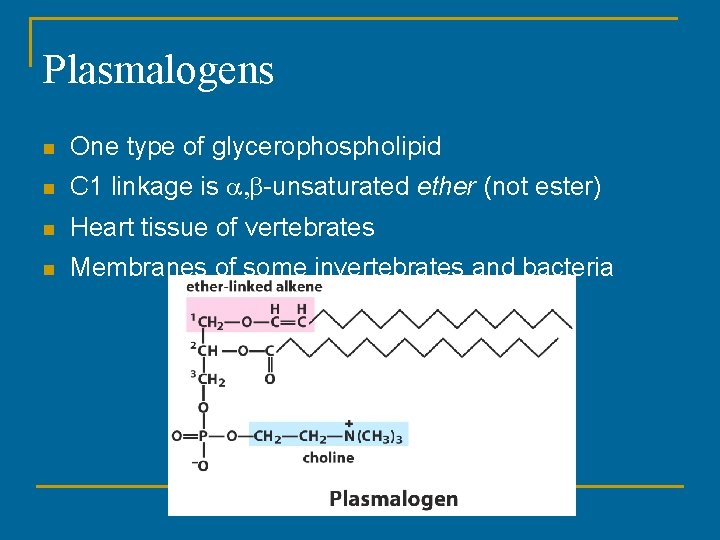
Plasmalogens n One type of glycerophospholipid n C 1 linkage is a, b-unsaturated ether (not ester) n Heart tissue of vertebrates n Membranes of some invertebrates and bacteria
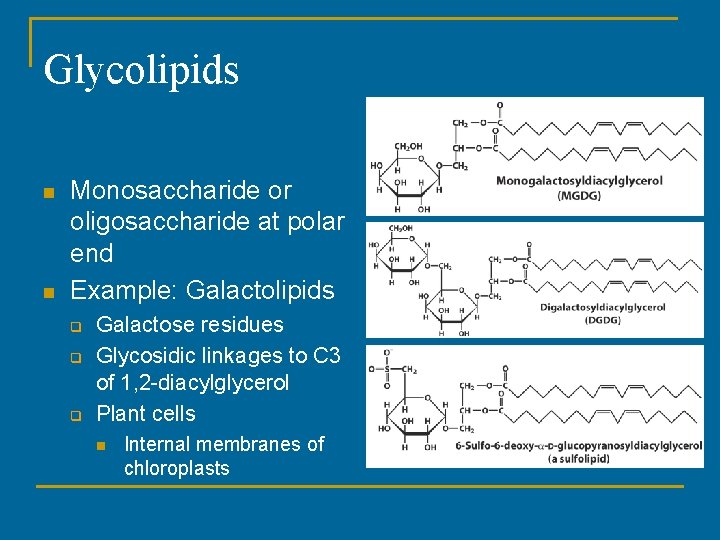
Glycolipids n n Monosaccharide or oligosaccharide at polar end Example: Galactolipids q q q Galactose residues Glycosidic linkages to C 3 of 1, 2 -diacylglycerol Plant cells n Internal membranes of chloroplasts
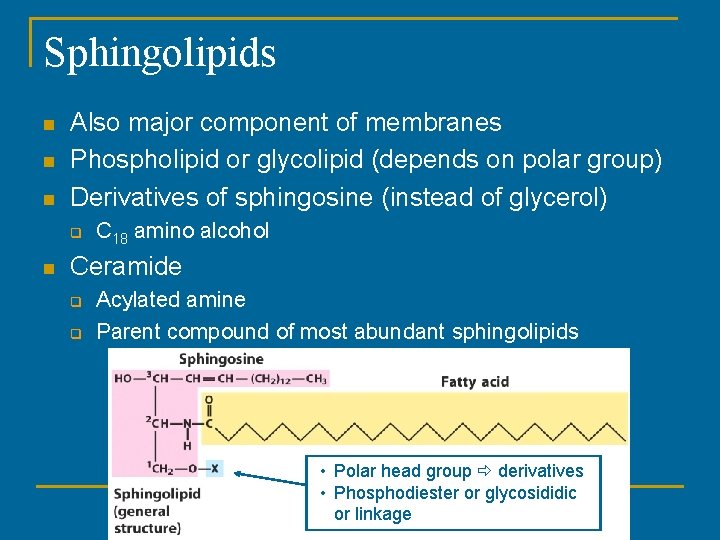
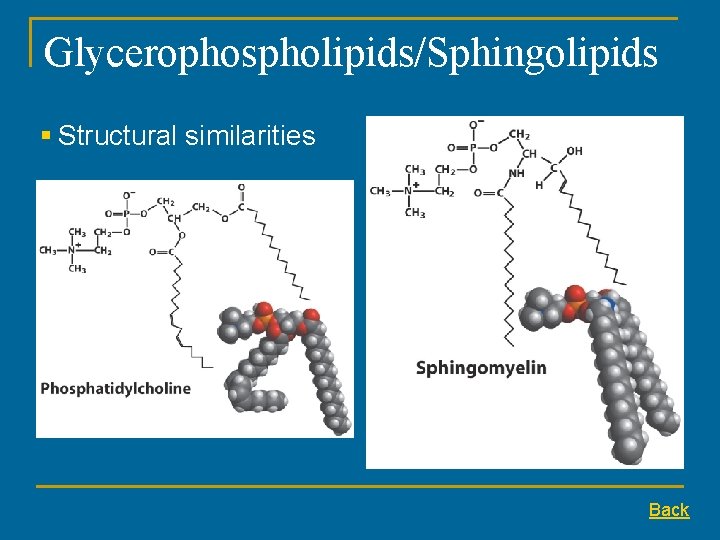
Sphingolipids n n n Also major component of membranes Phospholipid or glycolipid (depends on polar group) Derivatives of sphingosine (instead of glycerol) q n C 18 amino alcohol Ceramide q q Acylated amine Parent compound of most abundant sphingolipids • Polar head group derivatives • Phosphodiester or glycosididic or linkage
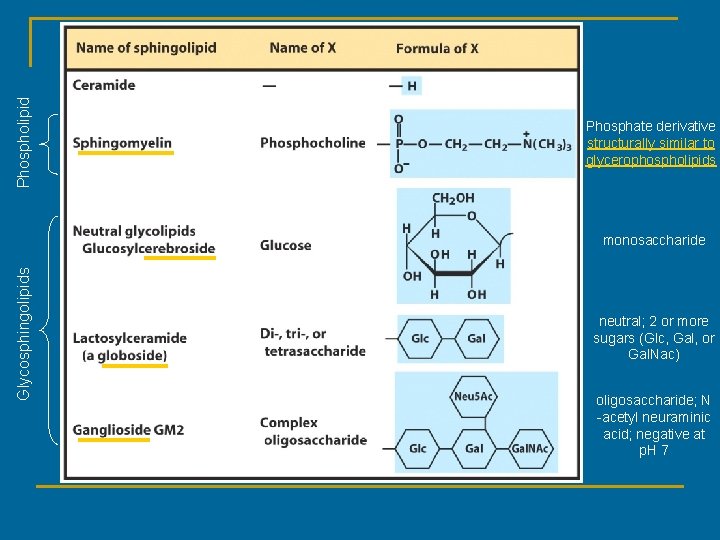
Phospholipid Phosphate derivative structurally similar to glycerophospholipids Glycosphingolipids monosaccharide neutral; 2 or more sugars (Glc, Gal, or Gal. Nac) oligosaccharide; N -acetyl neuraminic acid; negative at p. H 7
Glycerophospholipids/Sphingolipids § Structural similarities Back
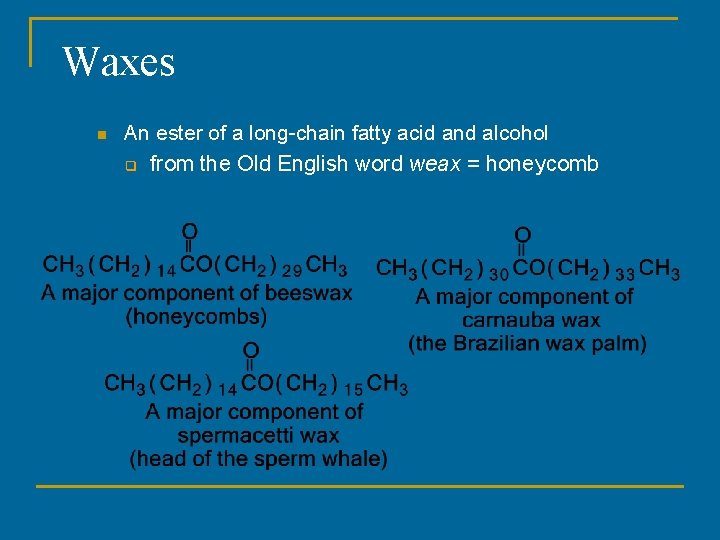
Waxes n An ester of a long-chain fatty acid and alcohol q from the Old English word weax = honeycomb
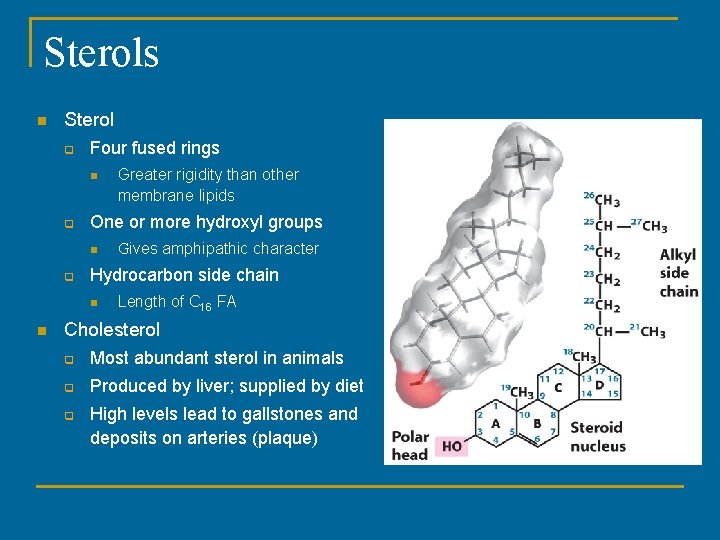
Sterols n Sterol q Four fused rings n q One or more hydroxyl groups n q Gives amphipathic character Hydrocarbon side chain n n Greater rigidity than other membrane lipids Length of C 16 FA Cholesterol q Most abundant sterol in animals q Produced by liver; supplied by diet q High levels lead to gallstones and deposits on arteries (plaque)
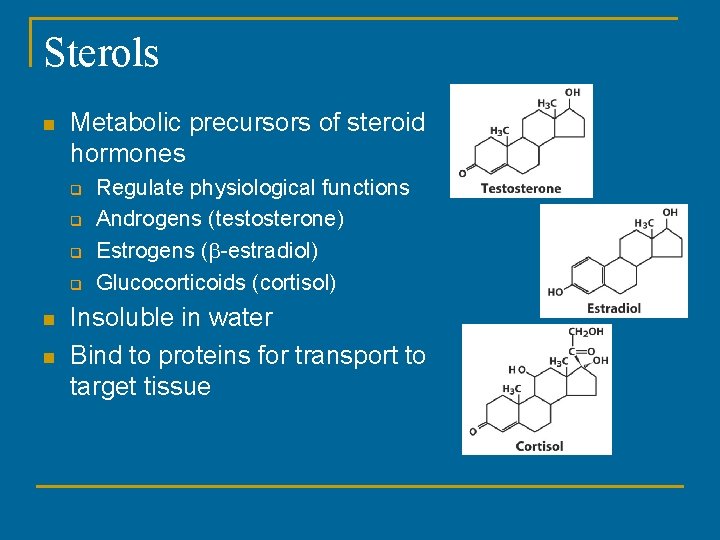
Sterols n Metabolic precursors of steroid hormones q q n n Regulate physiological functions Androgens (testosterone) Estrogens (b-estradiol) Glucocorticoids (cortisol) Insoluble in water Bind to proteins for transport to target tissue
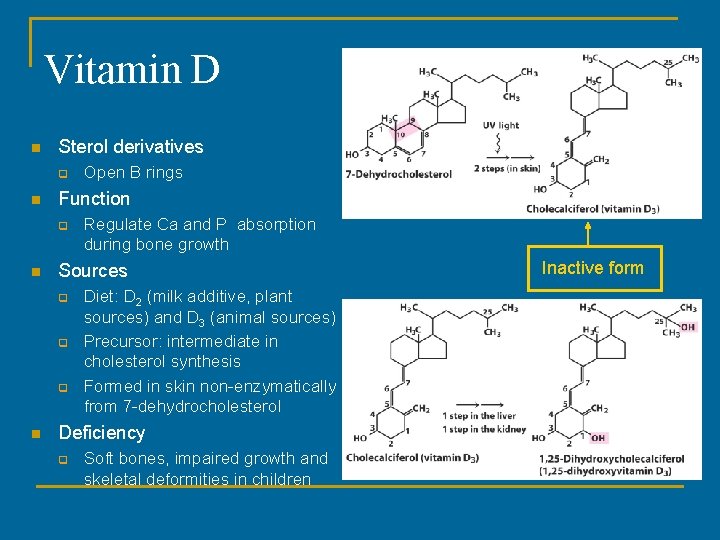
Vitamin D n Sterol derivatives q n Function q n Regulate Ca and P absorption during bone growth Sources q q q n Open B rings Diet: D 2 (milk additive, plant sources) and D 3 (animal sources) Precursor: intermediate in cholesterol synthesis Formed in skin non-enzymatically from 7 -dehydrocholesterol Deficiency q Soft bones, impaired growth and skeletal deformities in children Inactive form
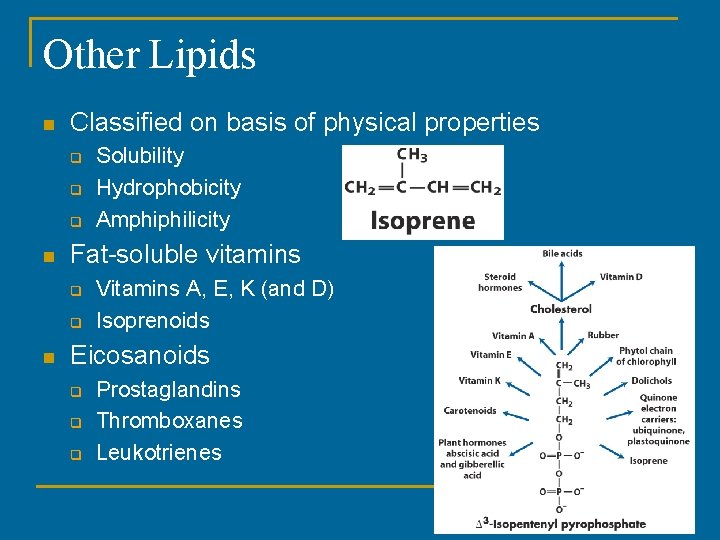
Other Lipids n Classified on basis of physical properties q q q n Fat-soluble vitamins q q n Solubility Hydrophobicity Amphiphilicity Vitamins A, E, K (and D) Isoprenoids Eicosanoids q q q Prostaglandins Thromboxanes Leukotrienes
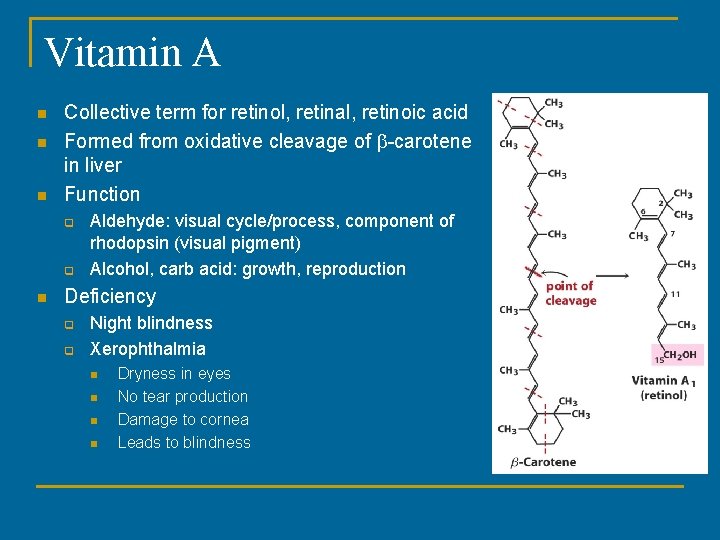
Vitamin A n n n Collective term for retinol, retinal, retinoic acid Formed from oxidative cleavage of b-carotene in liver Function q q n Aldehyde: visual cycle/process, component of rhodopsin (visual pigment) Alcohol, carb acid: growth, reproduction Deficiency q q Night blindness Xerophthalmia n n Dryness in eyes No tear production Damage to cornea Leads to blindness
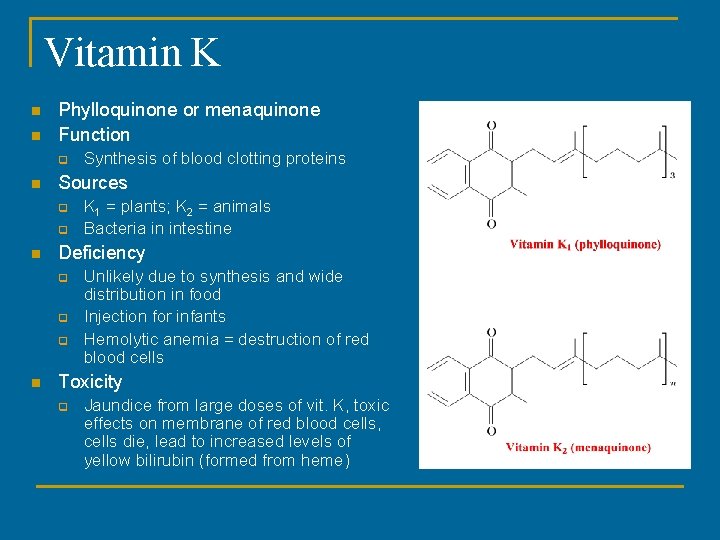
Vitamin K n n Phylloquinone or menaquinone Function q n Sources q q n K 1 = plants; K 2 = animals Bacteria in intestine Deficiency q q q n Synthesis of blood clotting proteins Unlikely due to synthesis and wide distribution in food Injection for infants Hemolytic anemia = destruction of red blood cells Toxicity q Jaundice from large doses of vit. K, toxic effects on membrane of red blood cells, cells die, lead to increased levels of yellow bilirubin (formed from heme)
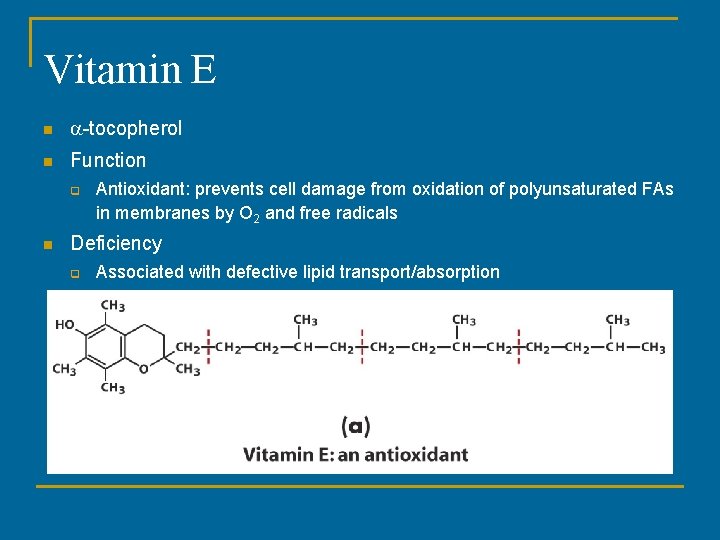
Vitamin E n a-tocopherol n Function q n Antioxidant: prevents cell damage from oxidation of polyunsaturated FAs in membranes by O 2 and free radicals Deficiency q Associated with defective lipid transport/absorption
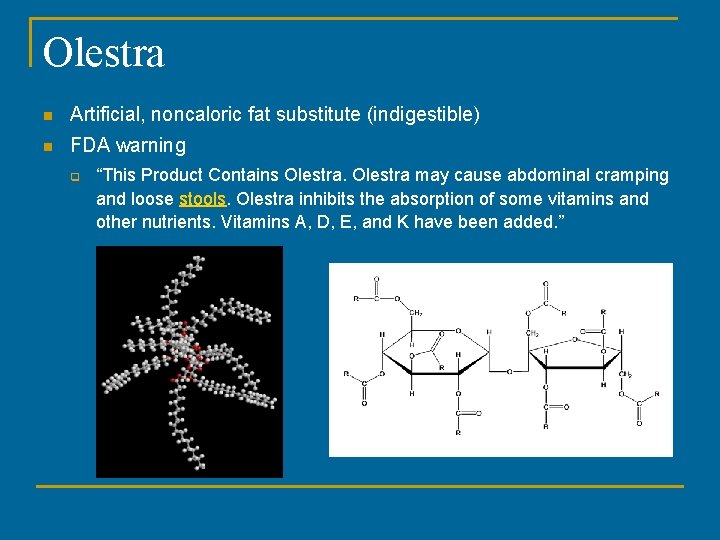
Olestra n Artificial, noncaloric fat substitute (indigestible) n FDA warning q “This Product Contains Olestra may cause abdominal cramping and loose stools. Olestra inhibits the absorption of some vitamins and other nutrients. Vitamins A, D, E, and K have been added. ”
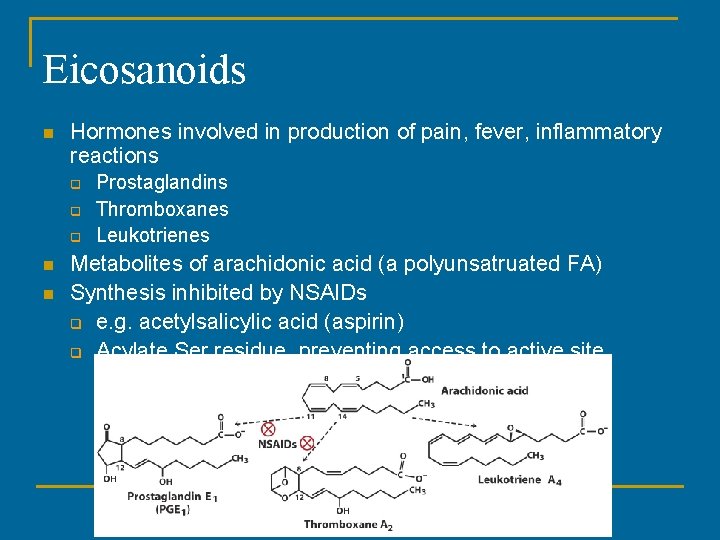
Eicosanoids n Hormones involved in production of pain, fever, inflammatory reactions q q q n n Prostaglandins Thromboxanes Leukotrienes Metabolites of arachidonic acid (a polyunsatruated FA) Synthesis inhibited by NSAIDs q e. g. acetylsalicylic acid (aspirin) q Acylate Ser residue, preventing access to active site
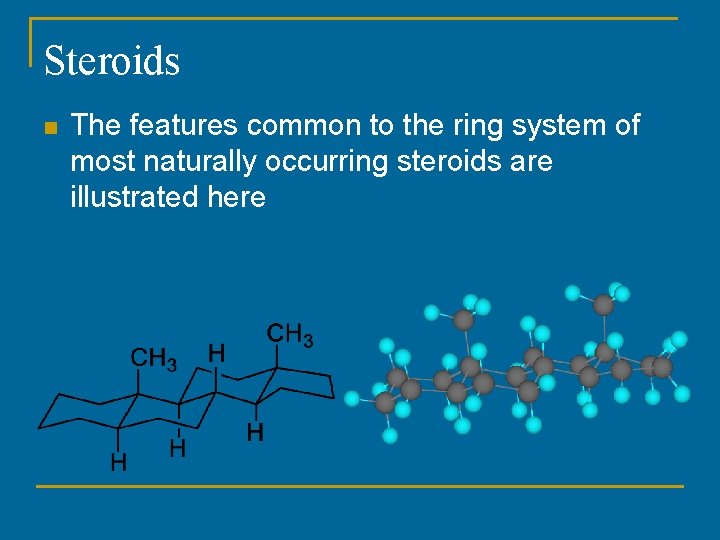
Steroids n The features common to the ring system of most naturally occurring steroids are illustrated here
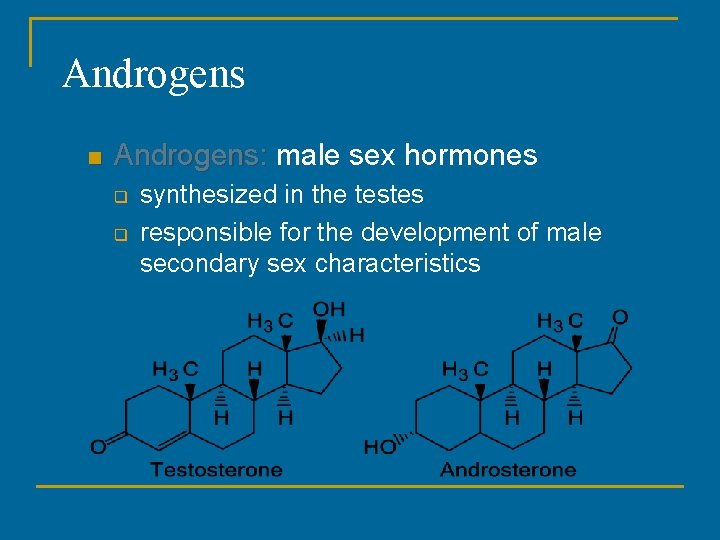
Androgens n Androgens: male sex hormones q q synthesized in the testes responsible for the development of male secondary sex characteristics
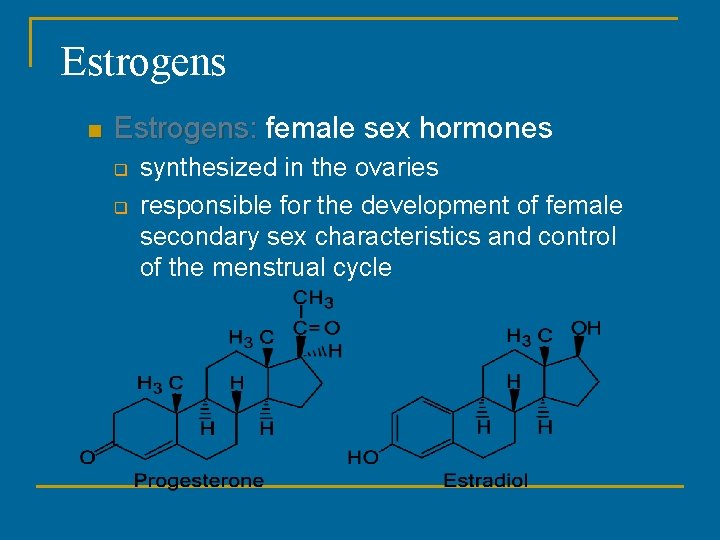
Estrogens n Estrogens: female sex hormones q q synthesized in the ovaries responsible for the development of female secondary sex characteristics and control of the menstrual cycle