
Lipids Lipids are insoluble in water but are
Lipids ØLipids are insoluble in water but are soluble in other lipids and in organic solvents (alcohol, ether) or detergents ØMost of the structure of lipids is non-polar, formed almost exclusively of carbon and hydrogen atoms. ØContain C, H, and O, but the proportion of oxygen in lipids is less than in carbohydrates
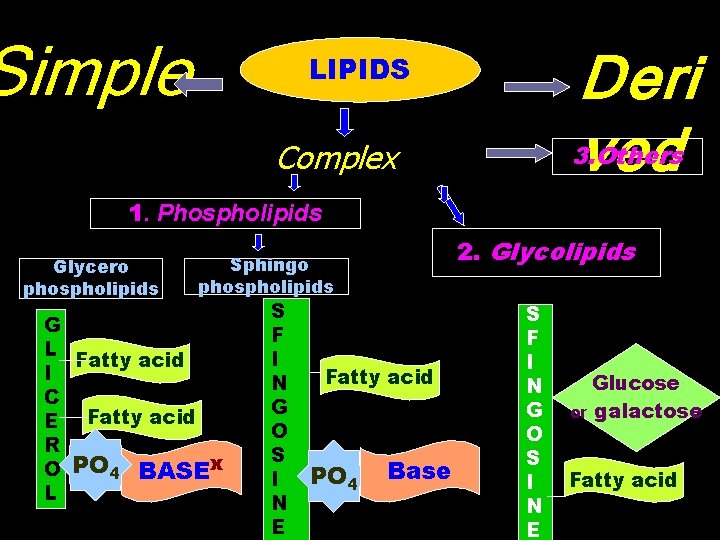
Classified into G Simple lipids A Complex lipids B Derived lipids
Simple lipids Ø Esters of fatty acids with various alcohols. 1. Fats (solid ) and Oils (liquid) esters of fatty acids with Glycerol +3 fatty acids = Triacylglycerols =Triglycerides
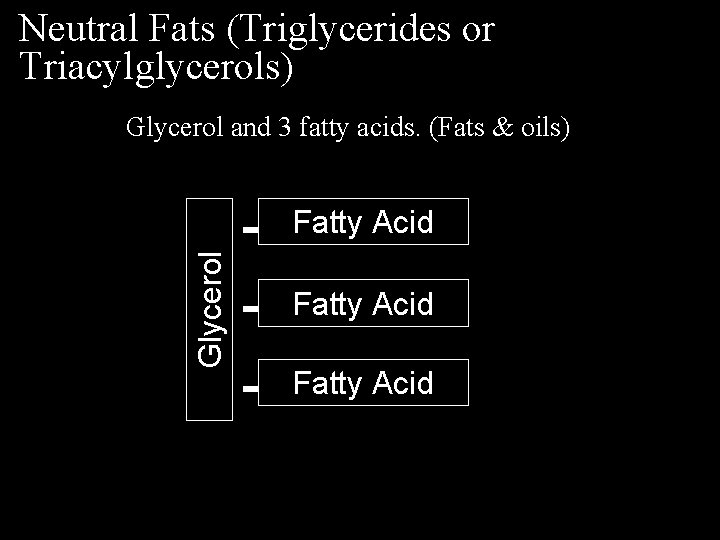
Neutral Fats (Triglycerides or Triacylglycerols) Glycerol and 3 fatty acids. (Fats & oils) Glycerol Fatty Acid
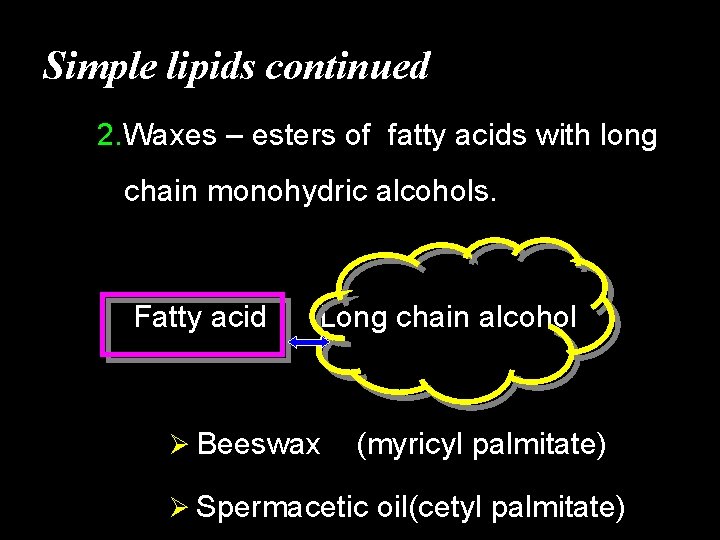
Simple lipids continued 2. Waxes – esters of fatty acids with long chain monohydric alcohols. Fatty acid Long chain alcohol Ø Beeswax (myricyl palmitate) Ø Spermacetic oil(cetyl palmitate)
Compound ( Complex ) lipids F Esters of fatty acids with alcohol , in addition they contain other groups F Depending on these extra groups they are subclassified a) Phospholipids b) Glycolipids c) Other complex lipids
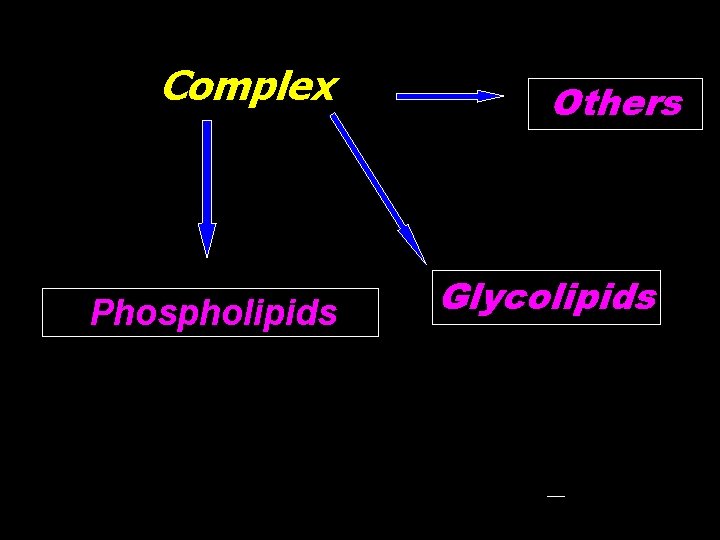
Complex Phospholipids Others Glycolipids
Phospholipids Ø Consists of Fatty acids + Alcohol + Phosphoric acid residue + Nitrogenous base i. Glycerophospholipids : Where the alcohol is Glycerol ii. Sphingophospholipids: Where the alcohol is Spingosine
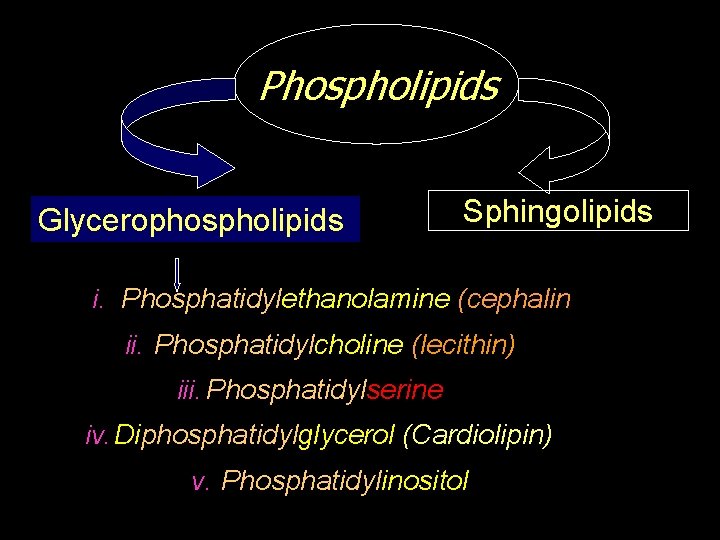
Phospholipids Glycerophospholipids Sphingolipids i. Phosphatidylethanolamine (cephalin ii. Phosphatidylcholine (lecithin) iii. Phosphatidylserine iv. Diphosphatidylglycerol (Cardiolipin) v. Phosphatidylinositol
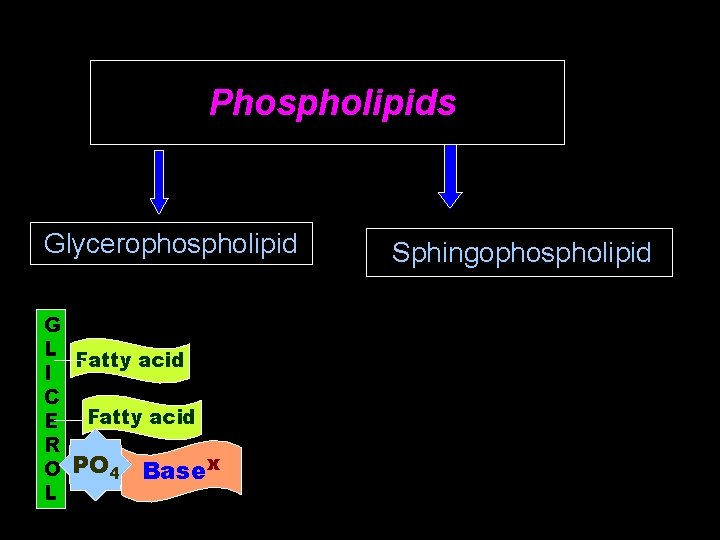
Phospholipids Glycerophospholipid G L Fatty acid I C E Fatty acid R O PO 4 Basex L Sphingophospholipid
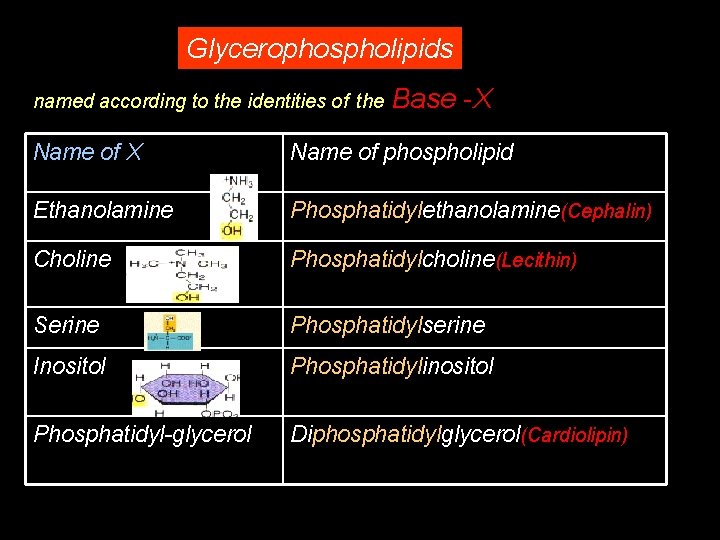
Glycerophospholipids named according to the identities of the Base -X Name of phospholipid Ethanolamine Phosphatidylethanolamine(Cephalin) Choline Phosphatidylcholine(Lecithin) Serine Phosphatidylserine Inositol Phosphatidylinositol Phosphatidyl-glycerol Diphosphatidylglycerol(Cardiolipin)
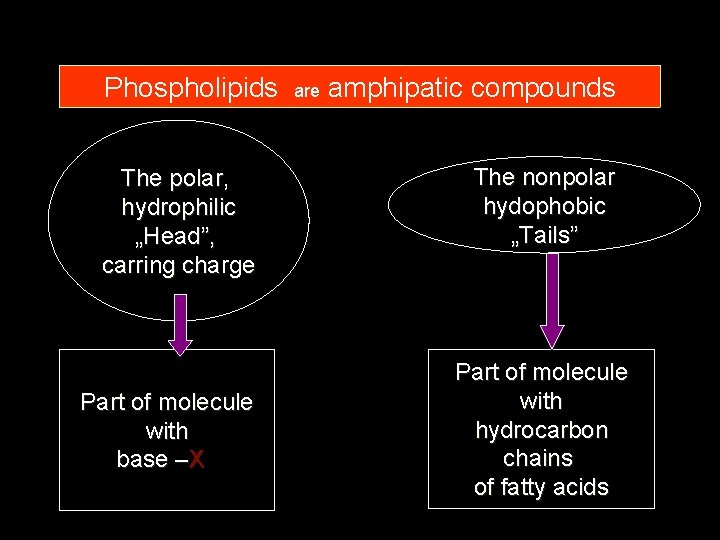
Phospholipids The polar, hydrophilic „Head”, carring charge Part of molecule with base –X are amphipatic compounds The nonpolar hydophobic „Tails” Part of molecule with hydrocarbon chains of fatty acids
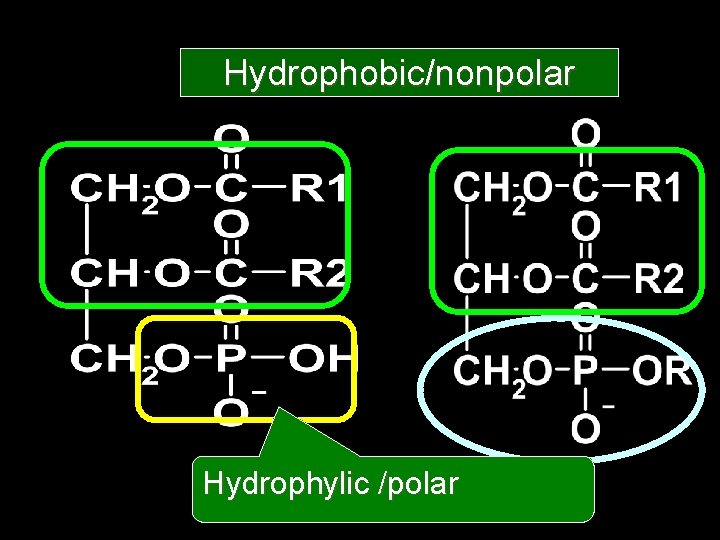
Hydrophobic/nonpolar Hydrophylic /polar

Hydrophylic polar Hydrophobic nonpolar
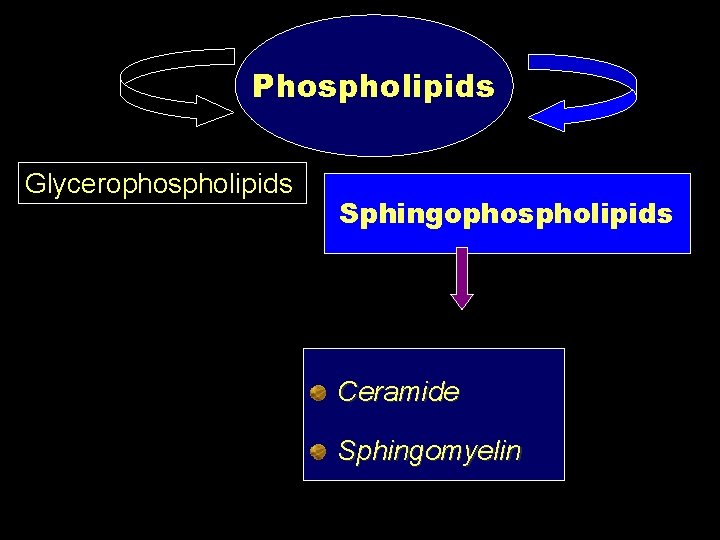
Phospholipids Glycerophospholipids Sphingophospholipids Ceramide Sphingomyelin
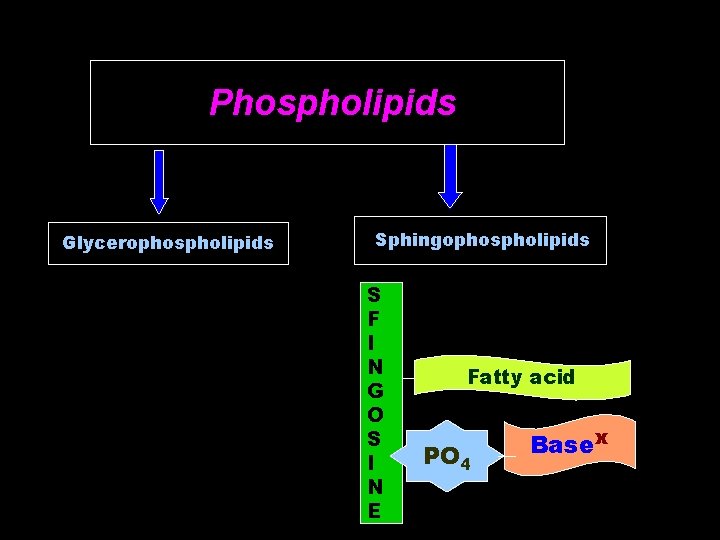
Phospholipids Glycerophospholipids Sphingophospholipids S F I N G O S I N E Fatty acid PO 4 Basex
Sphingophospholipids Ø Consists of Ceramide + phosphoric acid + choline Where Ceramide is made up of Spingosine (a amino alcohol) and Fatty acid
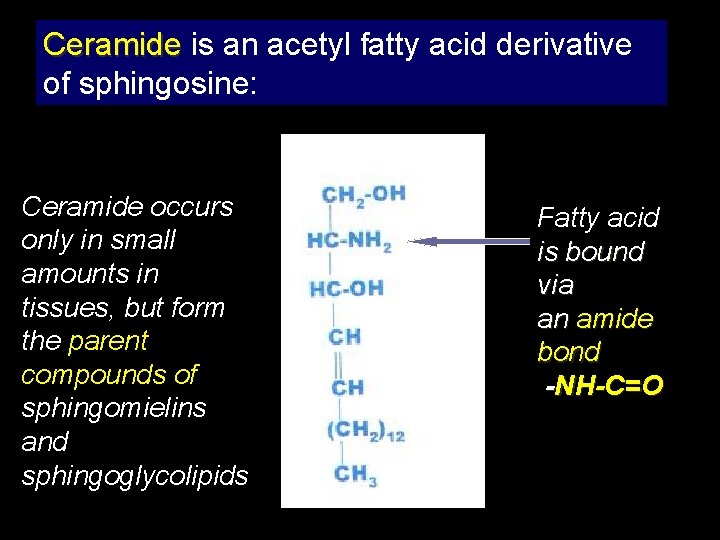
Ceramide is an acetyl fatty acid derivative of sphingosine: Ceramide occurs only in small amounts in tissues, but form the parent compounds of sphingomielins and sphingoglycolipids Fatty acid is bound via an amide bond -NH-C=O
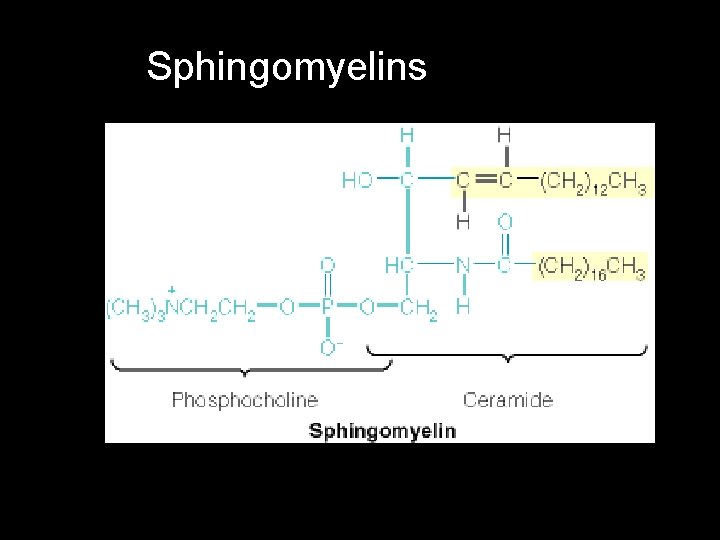
Sphingomyelins
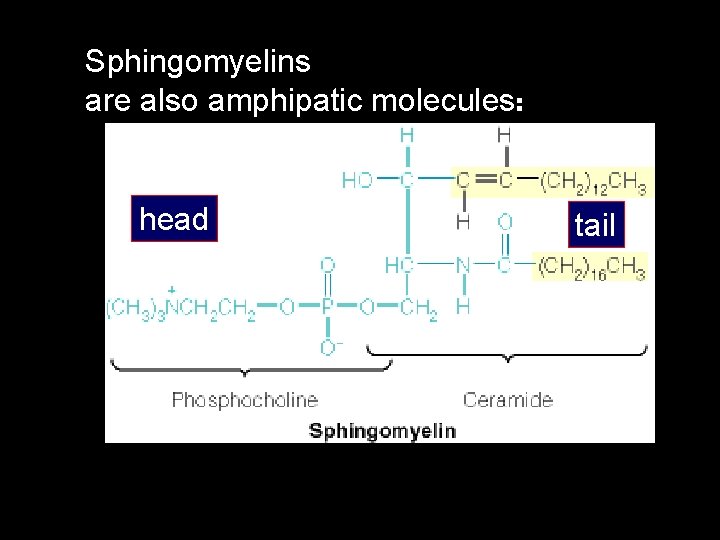
Sphingomyelins are also amphipatic molecules: head tail
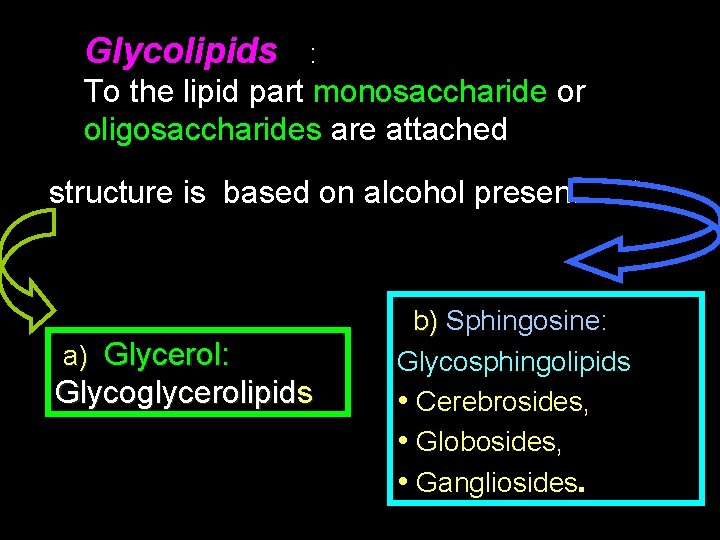
Glycolipids : To the lipid part monosaccharide or oligosaccharides are attached structure is based on alcohol present in it a) Glycerol: Glycoglycerolipids b) Sphingosine: Glycosphingolipids • Cerebrosides, • Globosides, • Gangliosides.
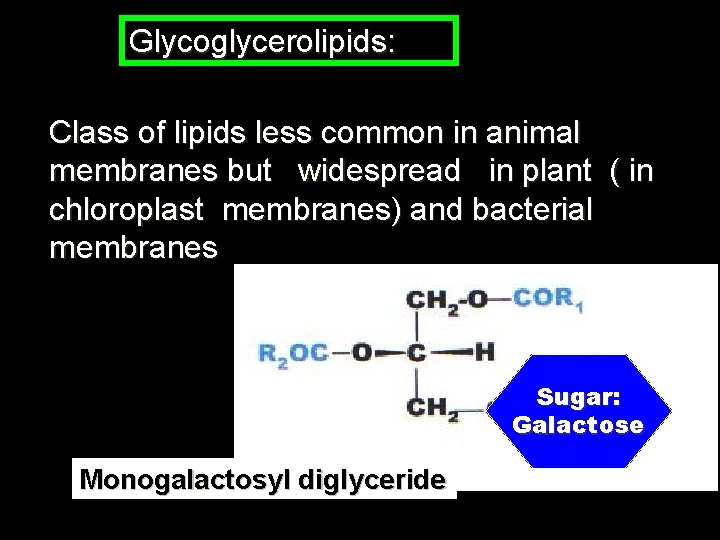
Glycoglycerolipids: Class of lipids less common in animal membranes but widespread in plant ( in chloroplast membranes) and bacterial membranes Sugar: Galactose Monogalactosyl diglyceride
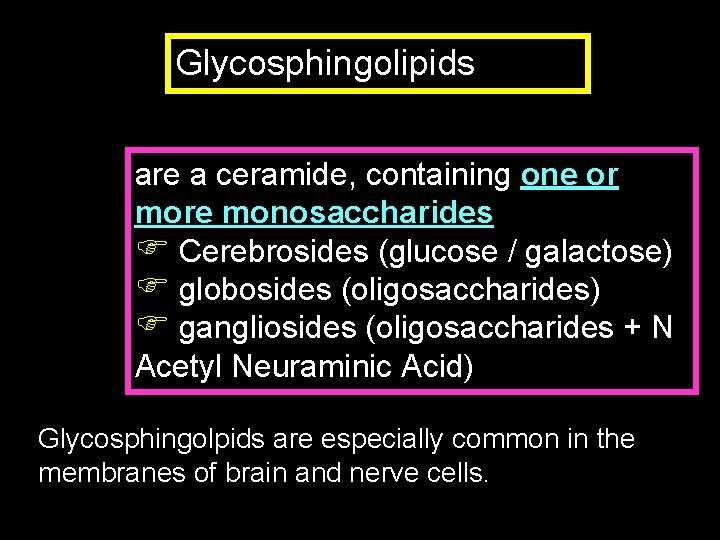
Glycosphingolipids are a ceramide, containing one or more monosaccharides F Cerebrosides (glucose / galactose) F globosides (oligosaccharides) F gangliosides (oligosaccharides + N Acetyl Neuraminic Acid) Glycosphingolpids are especially common in the membranes of brain and nerve cells.
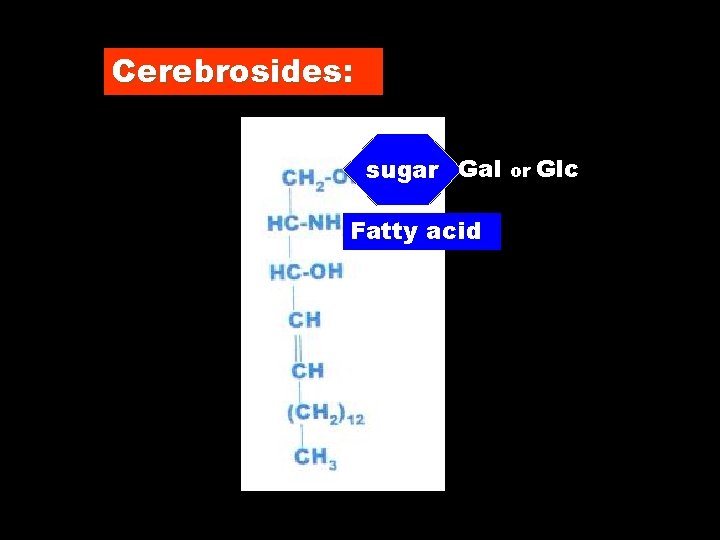
Cerebrosides: sugar Gal Fatty acid or Glc
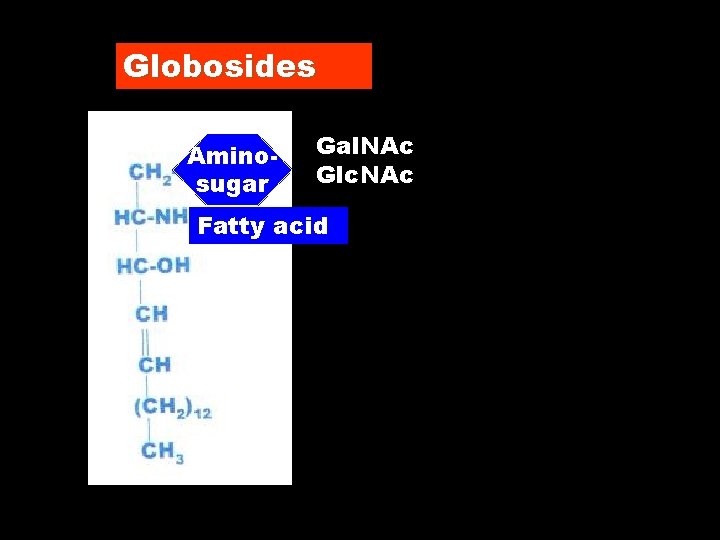
Globosides Aminosugar Gal. NAc Glc. NAc Fatty acid
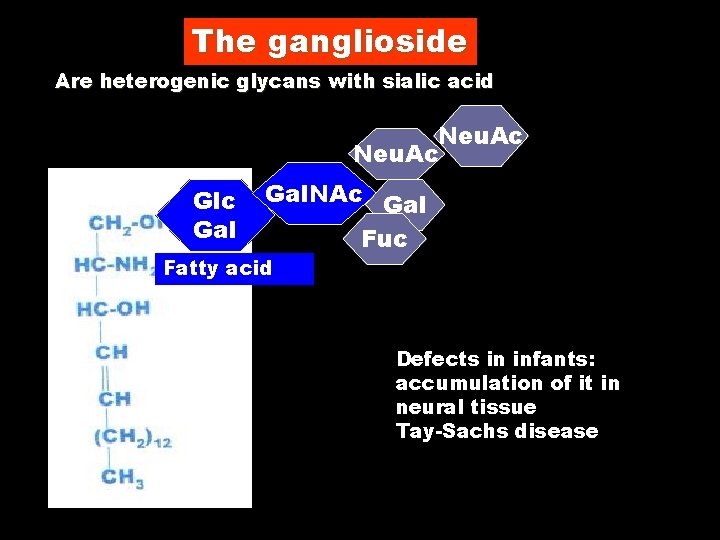
The ganglioside Are heterogenic glycans with sialic acid Neu. Ac Glc Gal. NAc Gal Fuc Fatty acid Defects in infants: accumulation of it in neural tissue Tay-Sachs disease
Simple Deri ved LIPIDS Complex 3. Others 1. Phospholipids Glycero phospholipids 2. Glycolipids Sphingo phospholipids G L Fatty acid I C E Fatty acid R O PO 4 BASEx L S F I N G O S I N E Fatty acid PO 4 Base S F I N G O S I N E Glucose or galactose Fatty acid
Functions of phospholipids Ø Are the major lipid components of amphipatic biological membranes, in which they form lipid bilayer Ø Insulating the nerve axons (myelin) contains a different kind of complex lipid called sphingolipids Ø Lipotropic factors which prevents fatty livers
Functions of phospholipids Ø Phosphoglycerolipids, but not sphingolipids, are excellent biologic detergents Ø such detergent action is especially important in the small intestine, where lipids are emulsified for digestion purposes.
Functions of phospholipids The phospholipids as detergents are especially important in the function of lung, where lecithin, through its action as a surfactant, prevents the collapse of its air sacs. The infant is occasionally born with immature lung that do not have the appropiate quantity of lecithin. Ø The clinical result is the respiratory distress syndrome Ø
Functions of phospholipids Ø It is possible to predict lung maturity by measuring the lecithin/sphingomyelin ratio in amniotic fluid. Ø Normal amniotic fluid after 34 -36 weeks of gestation gives an L/S ratio of 2: 1
Functions of phospholipids Ø Important constituent of lipoproteins- transport of lipids in the body Ø Anticholesterol agent – Lecithin involved in esterification of free cholesterol to form cholesterol ester (reverse cholesterol transport) Ø Plasmalogens involved in platelet aggregation
Representative Lipids Found in the Body Ø Neutral fats – found in subcutaneous tissue and around organs Ø Phospholipids – chief component of cell membranes Ø Steroids – cholesterol, bile salts, vitamin D, sex hormones, and adrenal cortical hormone Ø Eicosanoids – prostaglandins, leukotrienes, and thromboxanes Ø Lipoproteins (HDL, LDL) – combinations of fat and protein that transport fatty acids and cholesterol in the bloodstream
- Slides: 33