
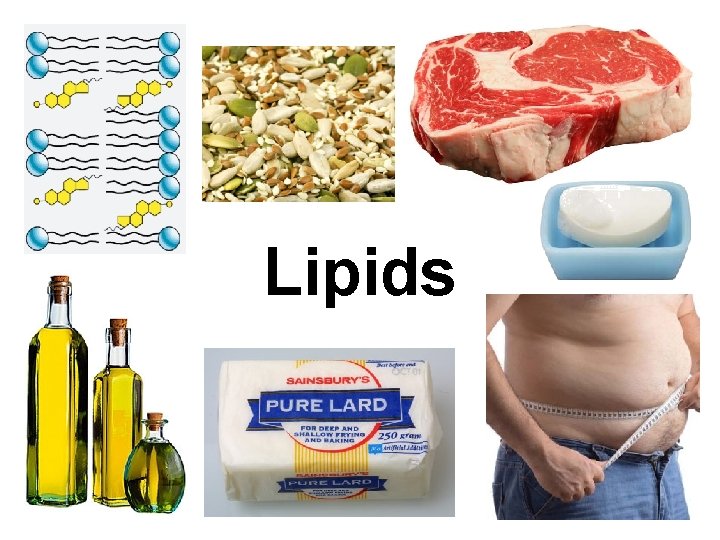
Lipids Lipids are hydrophobic or amphiphilic molecules with
Lipids

Lipids are hydrophobic or amphiphilic molecules with widely varying structures Rich in hydrocarbon Polar group (usually small) Cholesterol Oleic acid
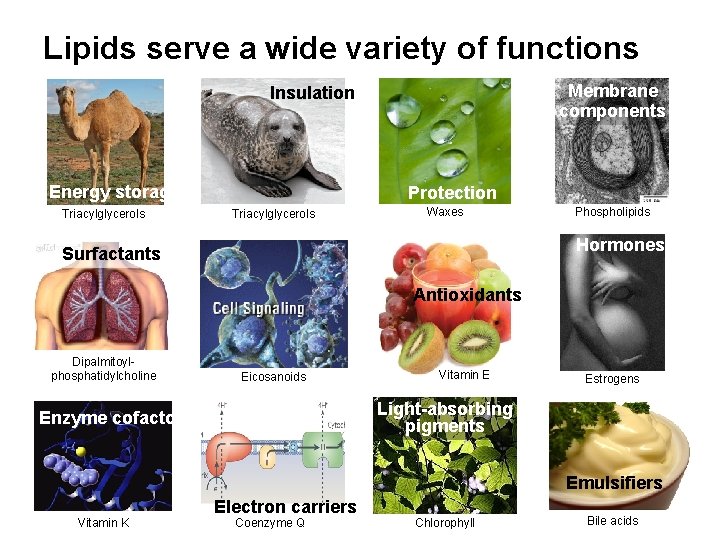
Lipids serve a wide variety of functions Membrane components Insulation Energy storage Triacylglycerols Protection Triacylglycerols Waxes Phospholipids Hormones Surfactants Antioxidants Dipalmitoylphosphatidylcholine Eicosanoids Vitamin E Estrogens Light-absorbing pigments Enzyme cofactors Emulsifiers Vitamin K Electron carriers Coenzyme Q Chlorophyll Bile acids
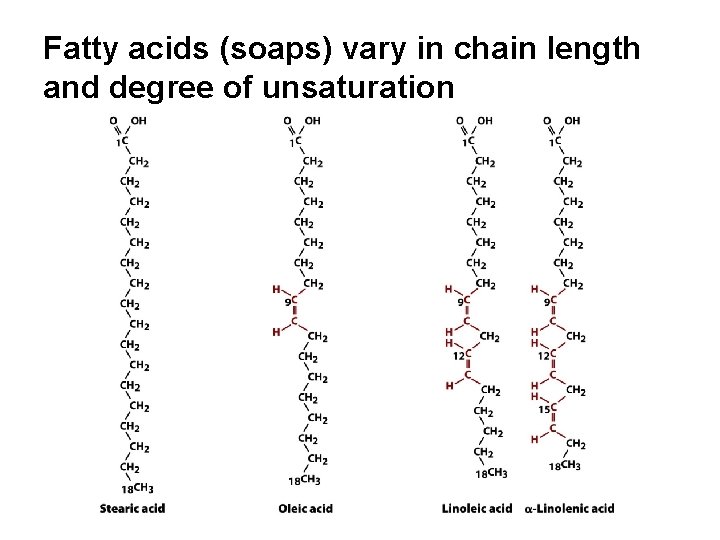
Fatty acids (soaps) vary in chain length and degree of unsaturation
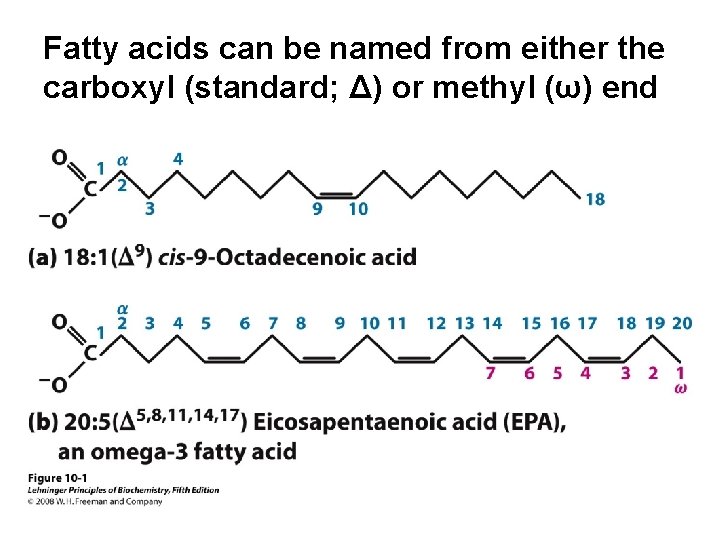
Fatty acids can be named from either the carboxyl (standard; Δ) or methyl (ω) end
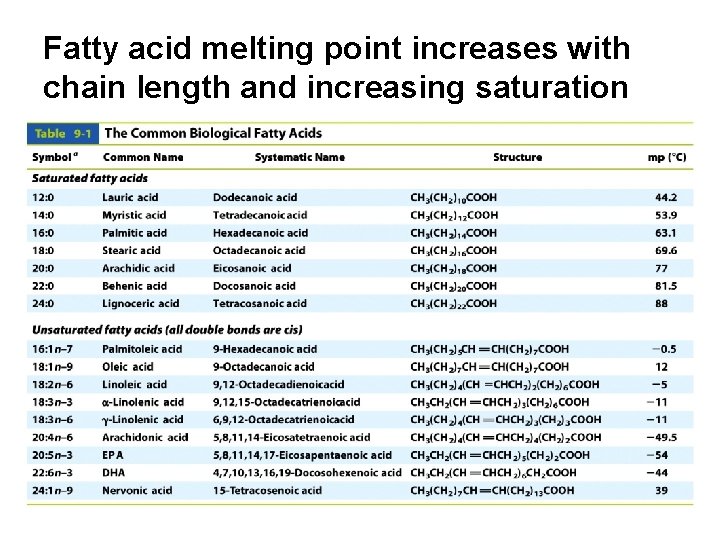
Fatty acid melting point increases with chain length and increasing saturation
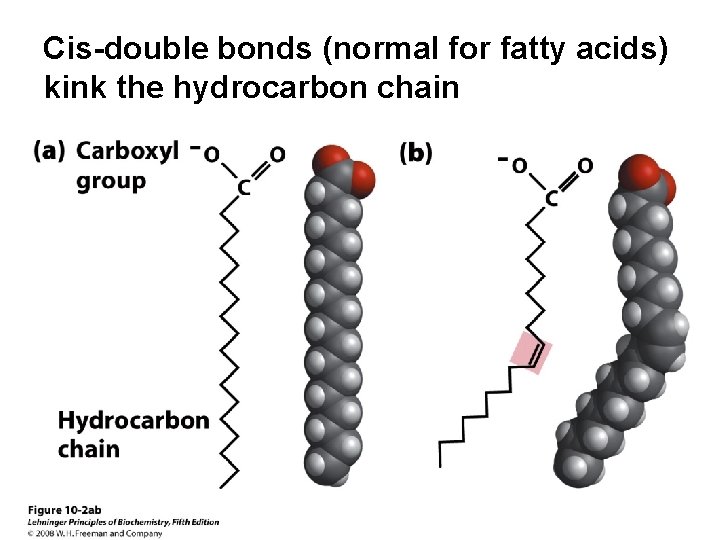
Cis-double bonds (normal for fatty acids) kink the hydrocarbon chain
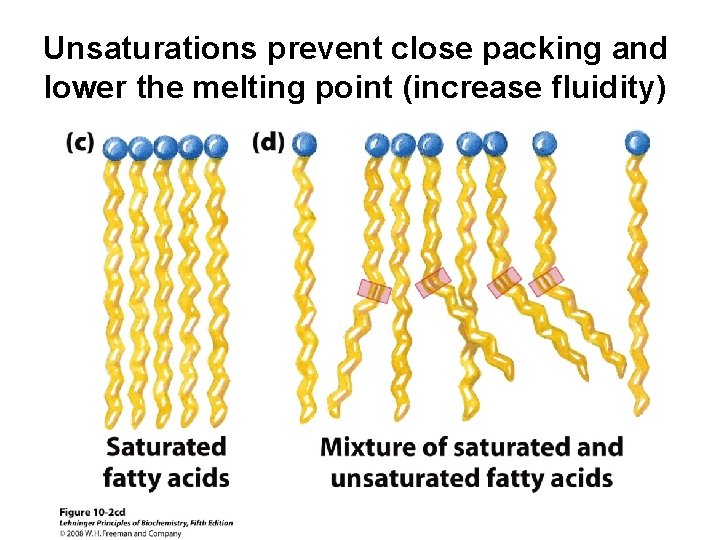
Unsaturations prevent close packing and lower the melting point (increase fluidity)
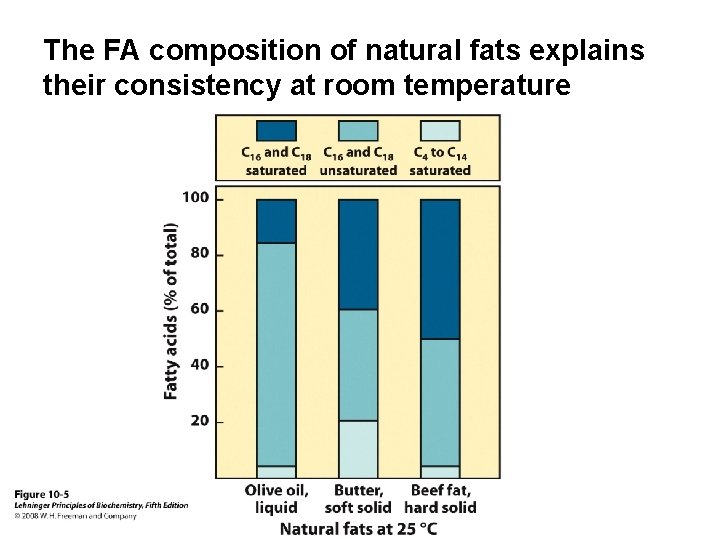
The FA composition of natural fats explains their consistency at room temperature
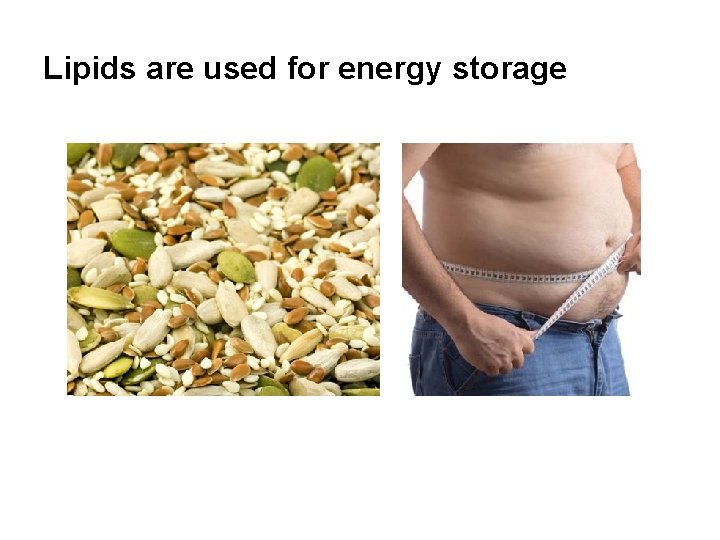
Lipids are used for energy storage
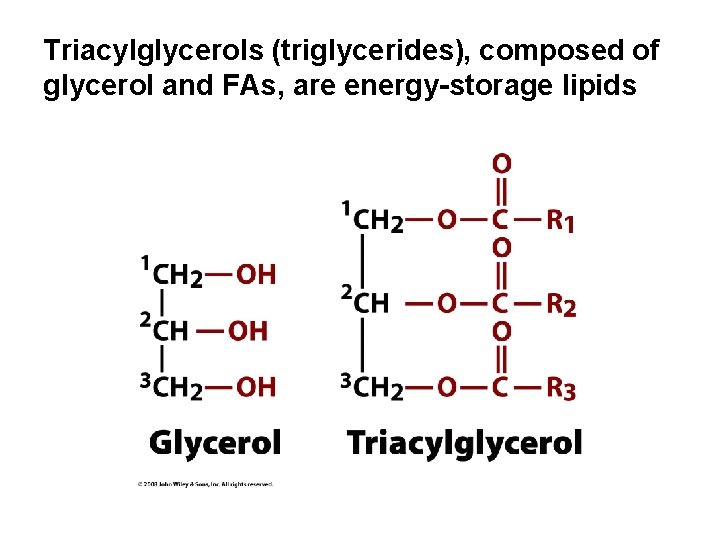
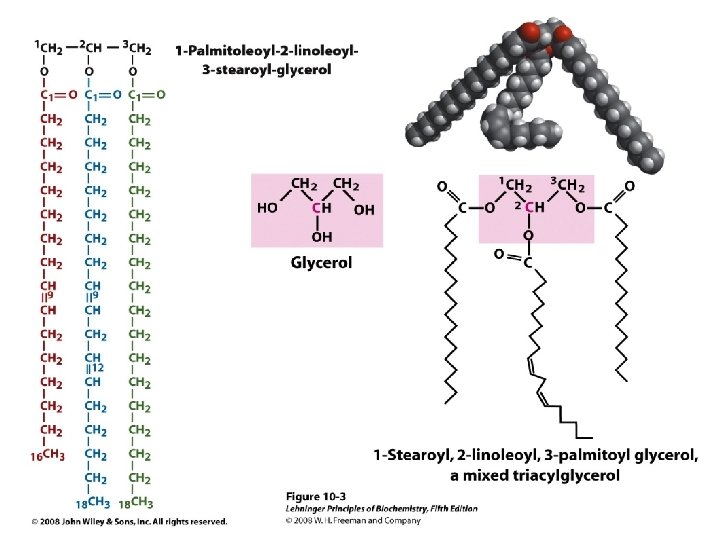
Triacylglycerols (triglycerides), composed of glycerol and FAs, are energy-storage lipids
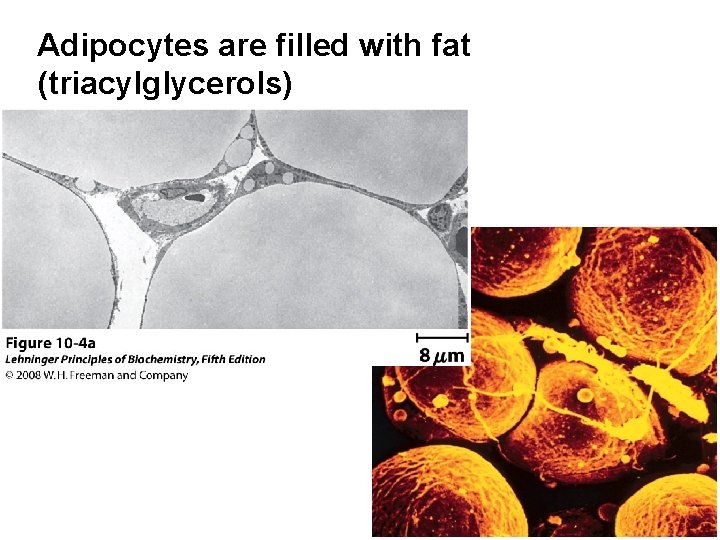
Adipocytes are filled with fat (triacylglycerols)
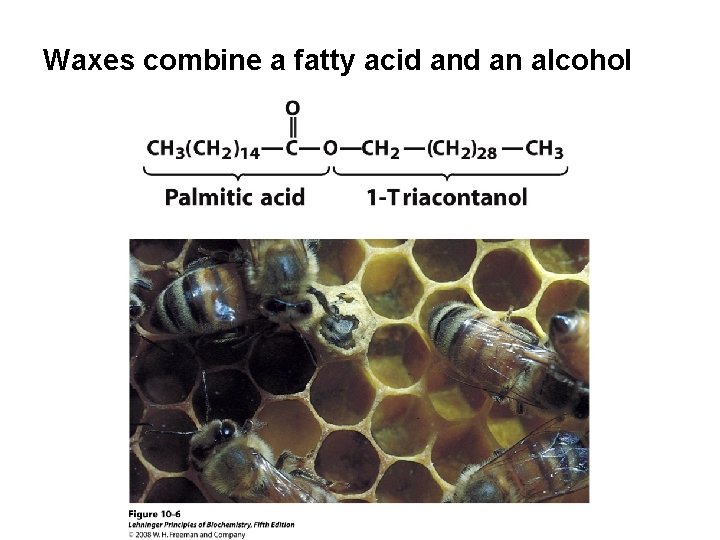
Waxes combine a fatty acid an alcohol
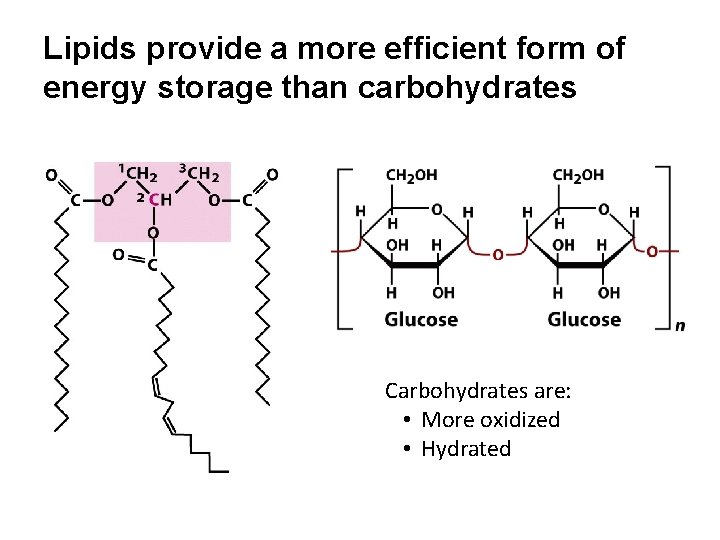
Lipids provide a more efficient form of energy storage than carbohydrates Carbohydrates are: • More oxidized • Hydrated
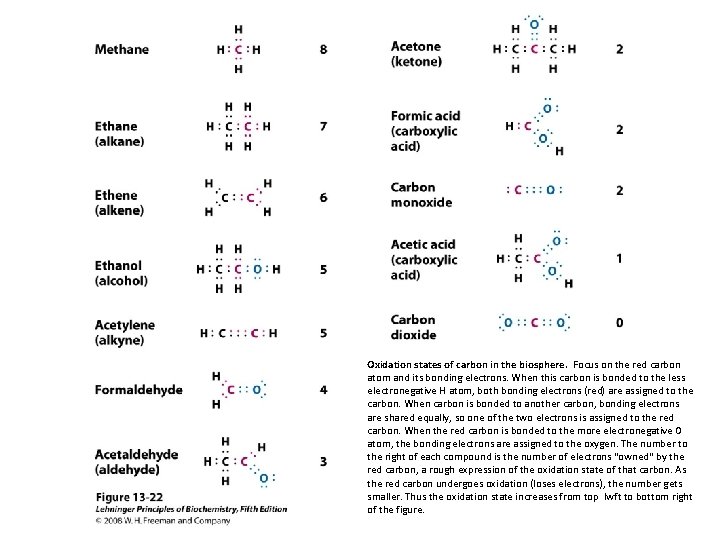
Oxidation states of carbon in the biosphere. Focus on the red carbon atom and its bonding electrons. When this carbon is bonded to the less electronegative H atom, both bonding electrons (red) are assigned to the carbon. When carbon is bonded to another carbon, bonding electrons are shared equally, so one of the two electrons is assigned to the red carbon. When the red carbon is bonded to the more electronegative O atom, the bonding electrons are assigned to the oxygen. The number to the right of each compound is the number of electrons "owned" by the red carbon, a rough expression of the oxidation state of that carbon. As the red carbon undergoes oxidation (loses electrons), the number gets smaller. Thus the oxidation state increases from top lwft to bottom right of the figure.
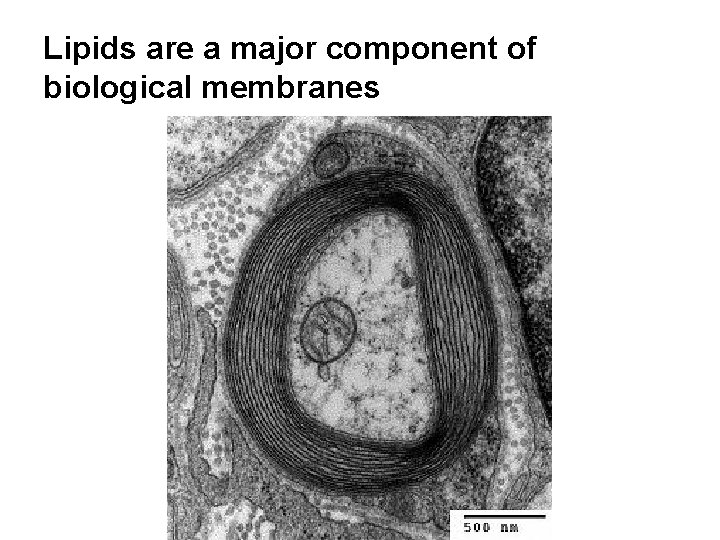
Lipids are a major component of biological membranes
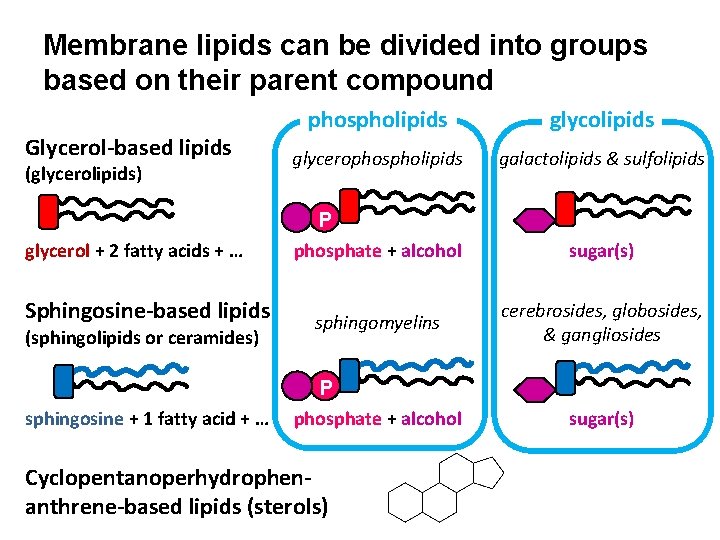
Membrane lipids can be divided into groups based on their parent compound Glycerol-based lipids (glycerolipids) phospholipids glycerophospholipids galactolipids & sulfolipids P glycerol + 2 fatty acids + … phosphate + alcohol sugar(s) Sphingosine-based lipids sphingomyelins cerebrosides, globosides, & gangliosides sphingosine + 1 fatty acid + … P phosphate + alcohol (sphingolipids or ceramides) Cyclopentanoperhydrophenanthrene-based lipids (sterols) sugar(s)
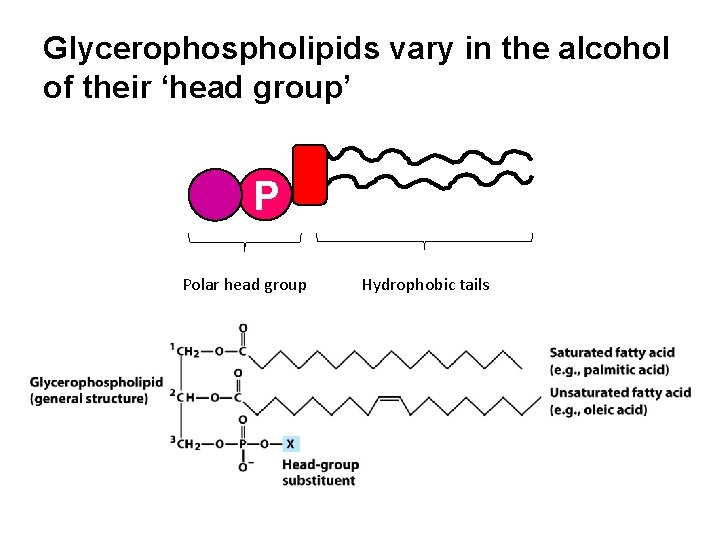
Glycerophospholipids vary in the alcohol of their ‘head group’ P Polar head group Hydrophobic tails
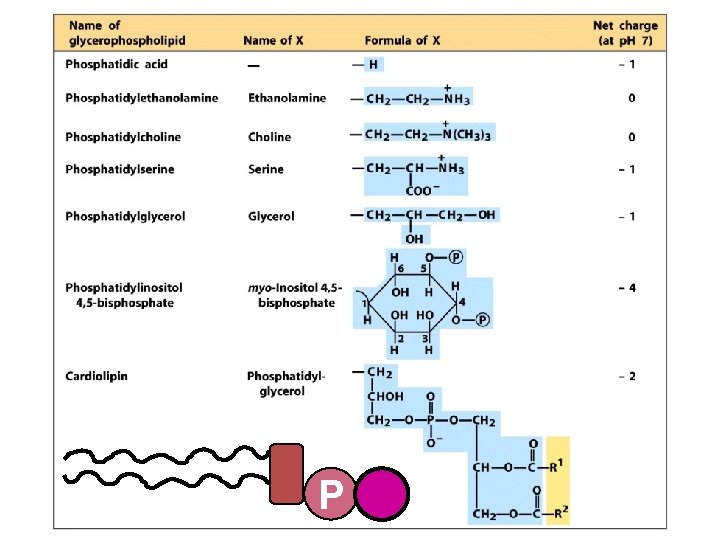
P
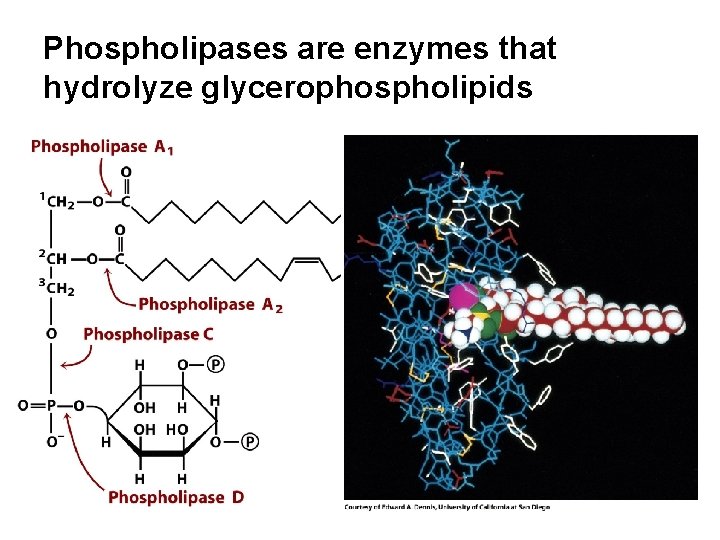
Phospholipases are enzymes that hydrolyze glycerophospholipids
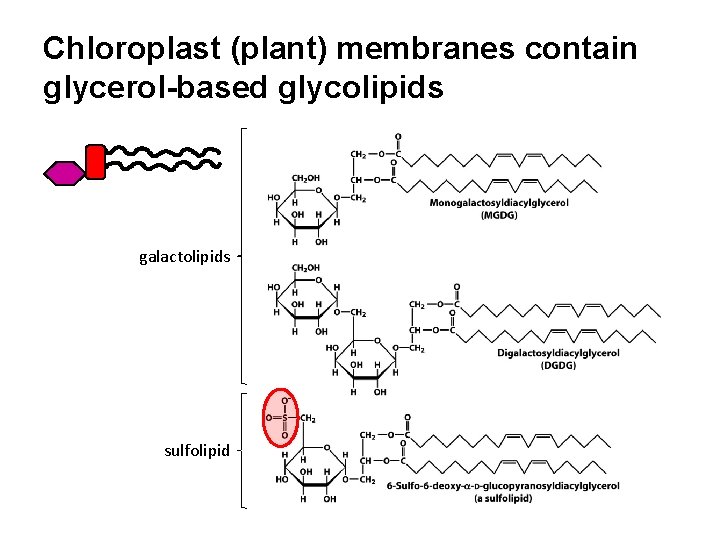
Chloroplast (plant) membranes contain glycerol-based glycolipids galactolipids sulfolipid
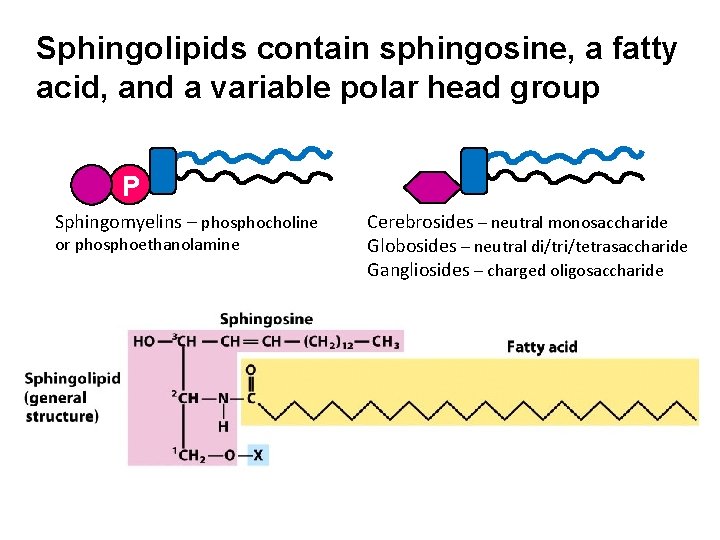
Sphingolipids contain sphingosine, a fatty acid, and a variable polar head group P Sphingomyelins – phosphocholine or phosphoethanolamine Cerebrosides – neutral monosaccharide Globosides – neutral di/tri/tetrasaccharide Gangliosides – charged oligosaccharide
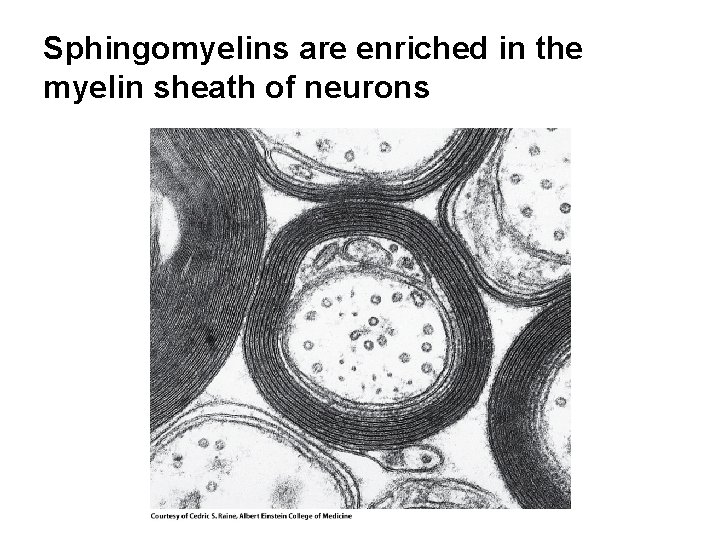
Sphingomyelins are enriched in the myelin sheath of neurons
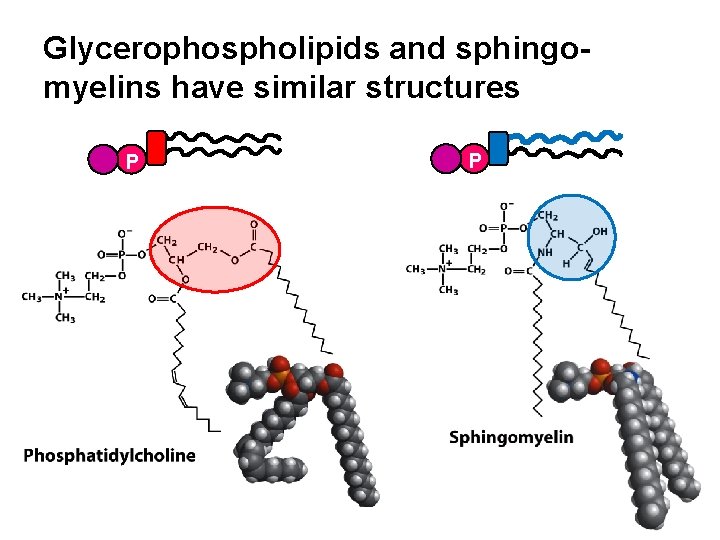
Glycerophospholipids and sphingomyelins have similar structures P P
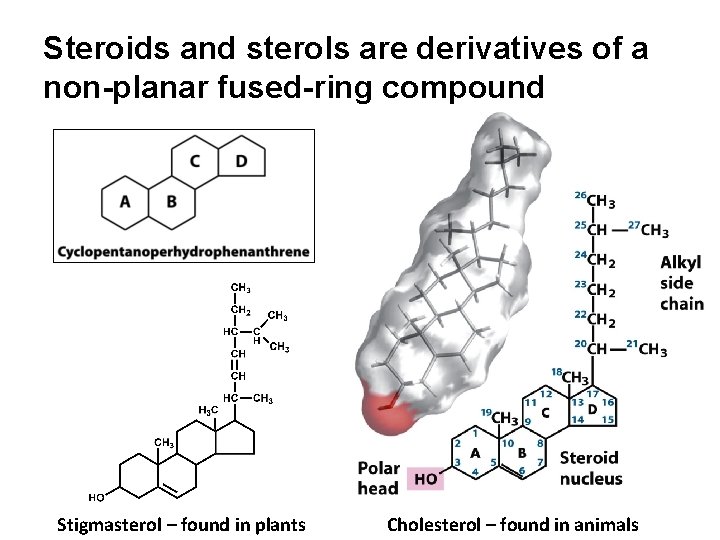
Steroids and sterols are derivatives of a non-planar fused-ring compound Stigmasterol – found in plants Cholesterol – found in animals
- Slides: 26