
LIPIDS LIPID CHEMISTRY Definition Classification Biological importance LIPID
LIPIDS
LIPID CHEMISTRY Definition Classification Biological importance
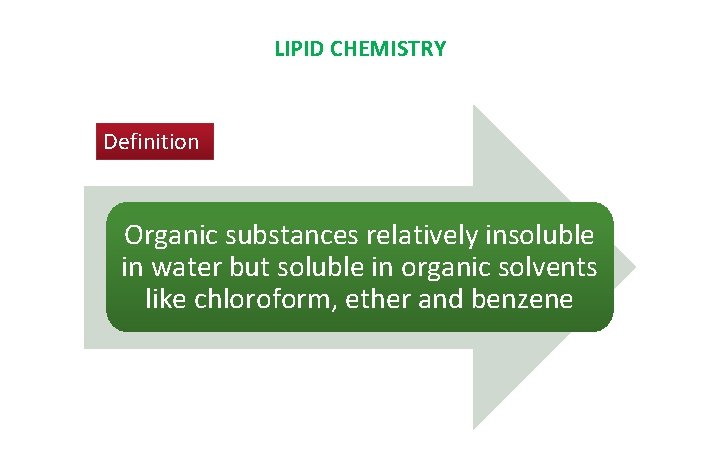
LIPID CHEMISTRY Definition Organic substances relatively insoluble in water but soluble in organic solvents like chloroform, ether and benzene
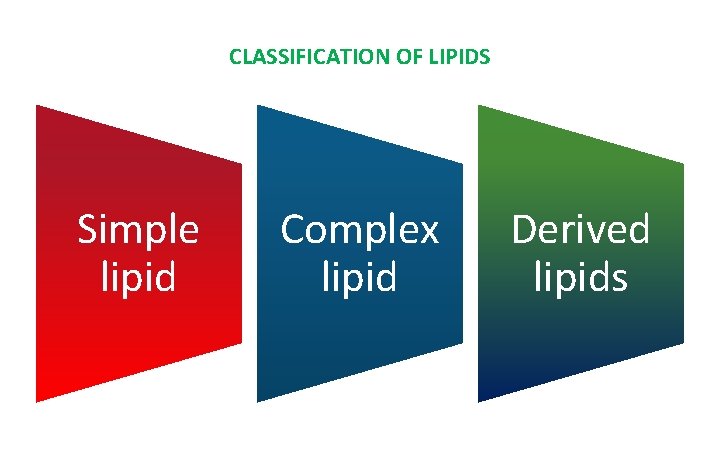
CLASSIFICATION OF LIPIDS Simple lipid Complex lipid Derived lipids
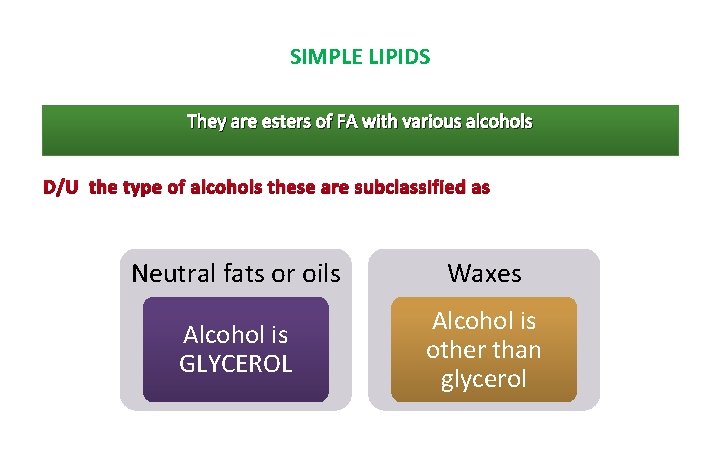
SIMPLE LIPIDS They are esters of FA with various alcohols D/U the type of alcohols these are subclassified as Neutral fats or oils Waxes Alcohol is GLYCEROL Alcohol is other than glycerol
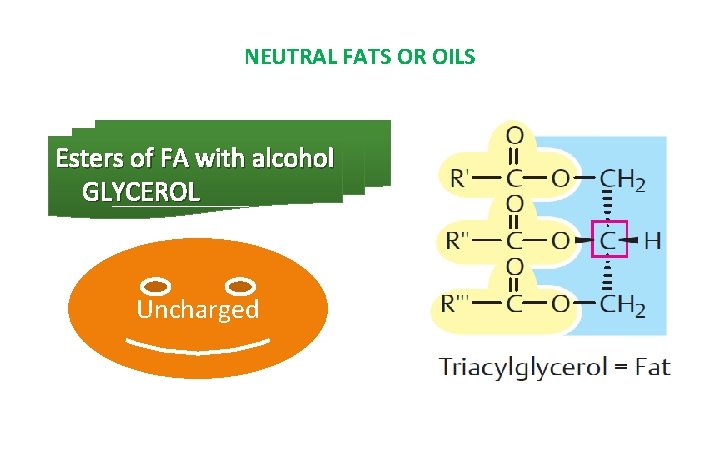
NEUTRAL FATS OR OILS Esters of FA with alcohol GLYCEROL Uncharged

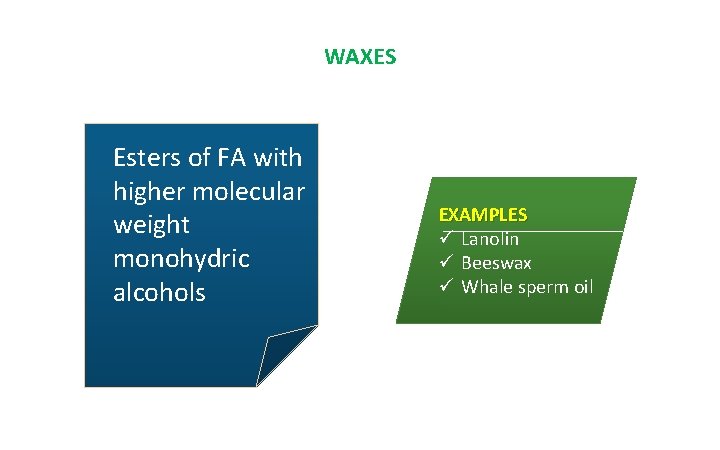
WAXES Esters of FA with higher molecular weight monohydric alcohols EXAMPLES ü Lanolin ü Beeswax ü Whale sperm oil
![These are esters of FA with alcohol containing additional[prosthetic] groups. Subclassified according to the](http://slidetodoc.com/presentation_image_h2/416b5eac5a1eff3a9730e0e173dc1c5c/image-9.jpg "These are esters of FA with alcohol containing additional[prosthetic] groups. Subclassified according to the")
These are esters of FA with alcohol containing additional[prosthetic] groups. Subclassified according to the type of prosthetic group Phospholipids Glycolipids Lipoproteins
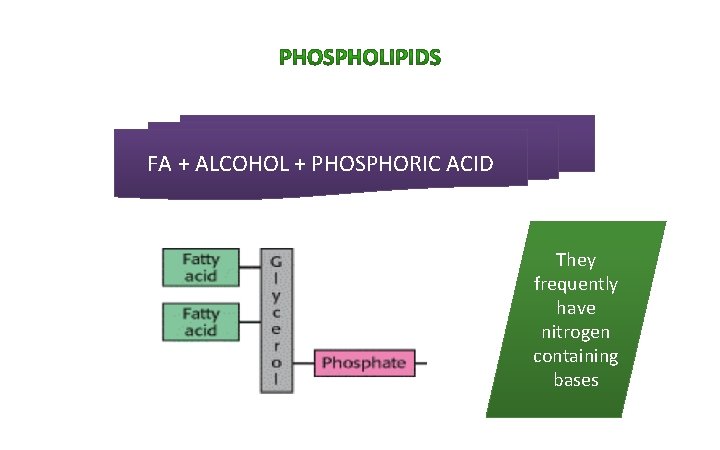
FA + ALCOHOL + PHOSPHORIC ACID They frequently have nitrogen containing bases
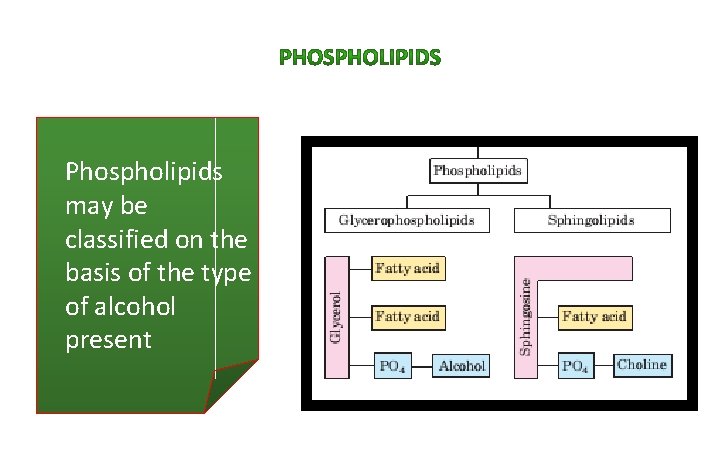
Phospholipids may be classified on the basis of the type of alcohol present
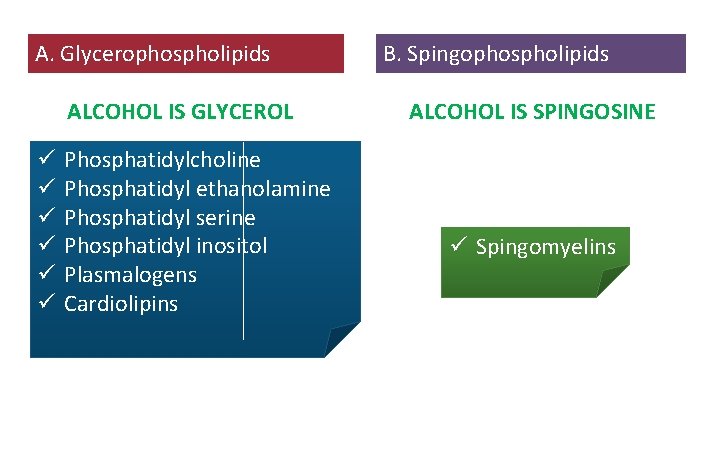
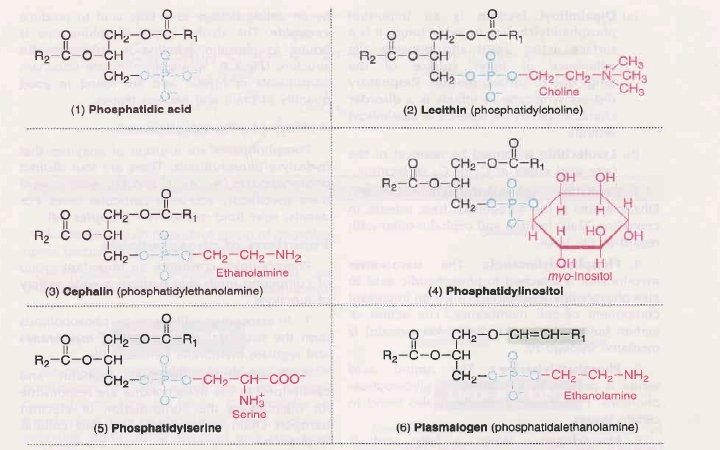
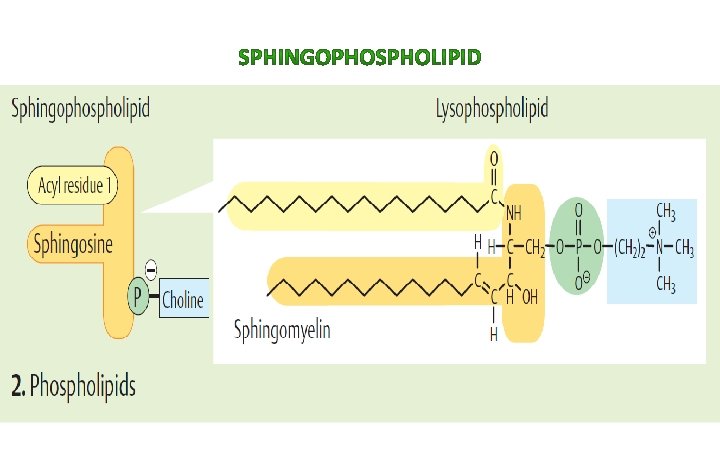
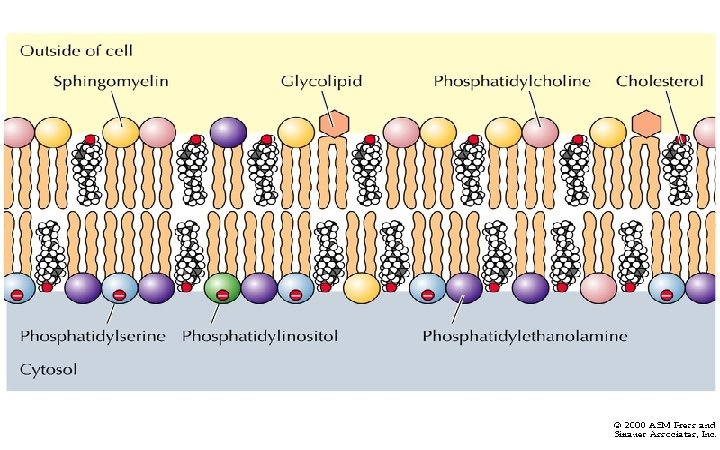
A. Glycerophospholipids ALCOHOL IS GLYCEROL ü ü ü Phosphatidylcholine Phosphatidyl ethanolamine Phosphatidyl serine Phosphatidyl inositol Plasmalogens Cardiolipins B. Spingophospholipids ALCOHOL IS SPINGOSINE ü Spingomyelins
Functions of phospholipids ØIn association with proteins phospholipids form the structural components of membranes and regulate membrane permeability. Ø Phospholipids participate in the absorption of fat from the intestine. ØEssential for the synthesis of different lipoproteins, and thus participate in the transport of lipids. ØAccumulation of fat in liver (fatty liver) can be prevented by phospholipids, hence they are regarded as lipotropic factors. ØArachidonic acid, an unsaturated fatty acid liberated from phospholipids, serves as a precursor for the synthesis of eicosanoids (prostaglandins, prostacyclins, thromboxanes etc. ).
Functions of phospholipids ØPhospholipids participate in the reverse cholesterol transport and thus help in the removal of cholesterol from the body. ØPhospholipids act as surfactants (agent lowering surface tension). ØCephalins, an important group of phospholipids participatin blood clotting. ØPhospholipids( phosphatidyl inositoal ) involved in signal transmission across membranes.
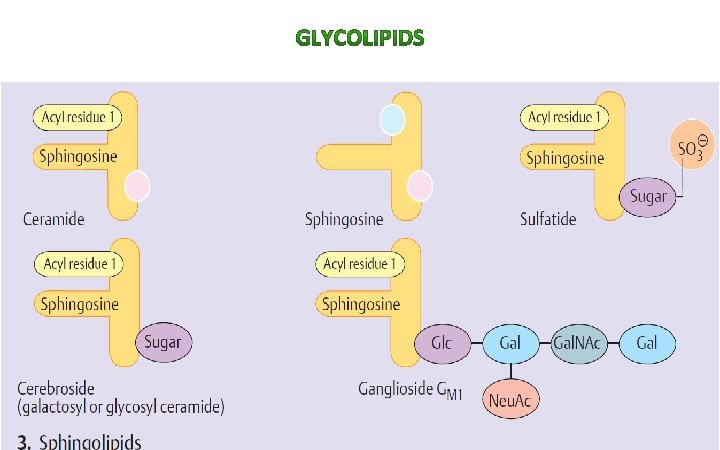
![FA + ALCOHOL[SPINGOSINE] +CARBOHYDRATE WITH NITROGEN BASE q They do not contain phosphate group](http://slidetodoc.com/presentation_image_h2/416b5eac5a1eff3a9730e0e173dc1c5c/image-17.jpg "FA + ALCOHOL[SPINGOSINE] +CARBOHYDRATE WITH NITROGEN BASE q They do not contain phosphate group")
FA + ALCOHOL[SPINGOSINE] +CARBOHYDRATE WITH NITROGEN BASE q They do not contain phosphate group Example üCerebrosides üGangliosides
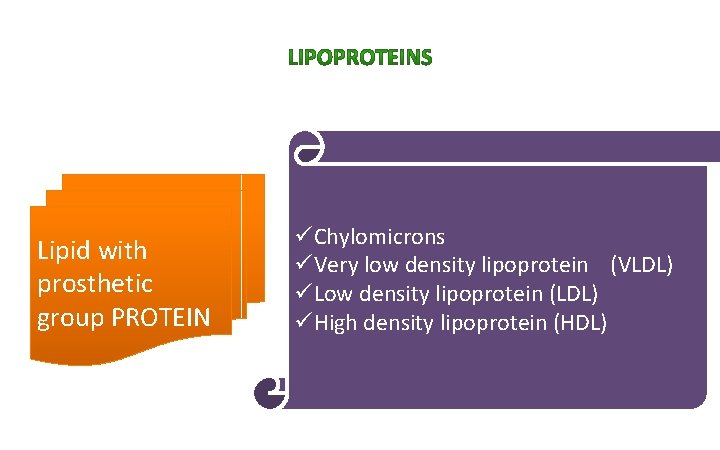
Lipid with prosthetic group PROTEIN üChylomicrons üVery low density lipoprotein (VLDL) üLow density lipoprotein (LDL) üHigh density lipoprotein (HDL)
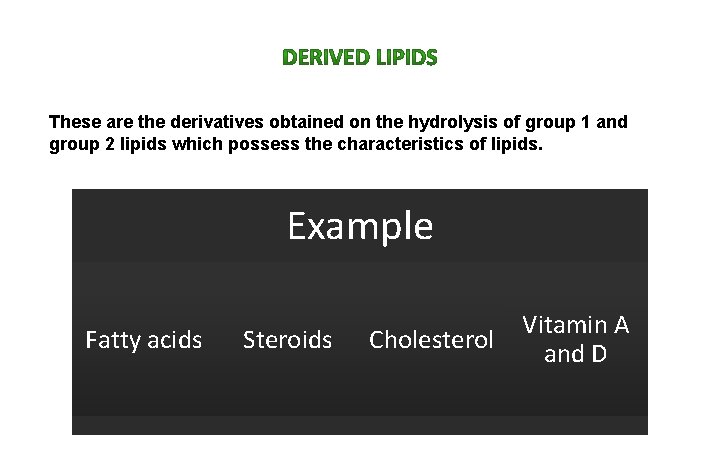
These are the derivatives obtained on the hydrolysis of group 1 and group 2 lipids which possess the characteristics of lipids. Example Fatty acids Steroids Cholesterol Vitamin A and D
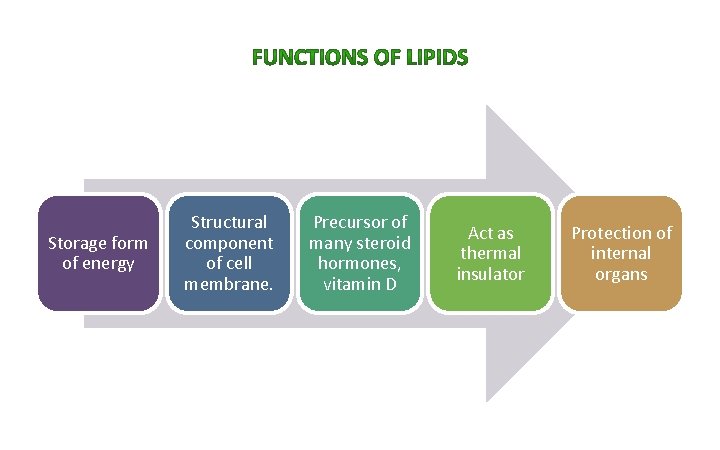
Storage form of energy Structural component of cell membrane. Precursor of many steroid hormones, vitamin D Act as thermal insulator Protection of internal organs
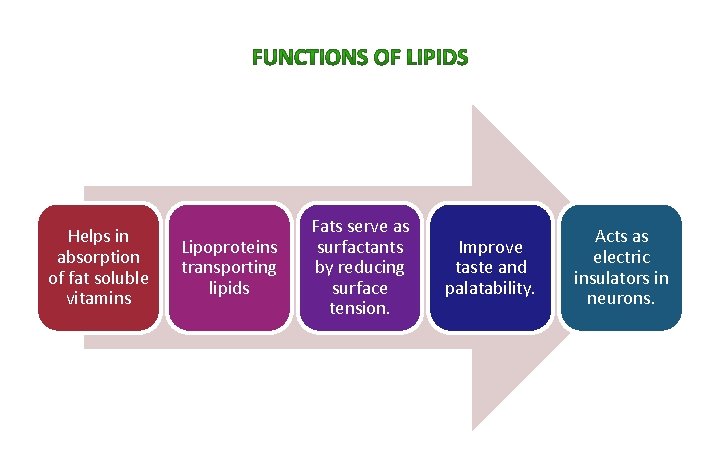
Helps in absorption of fat soluble vitamins Lipoproteins transporting lipids Fats serve as surfactants by reducing surface tension. Improve taste and palatability. Acts as electric insulators in neurons.
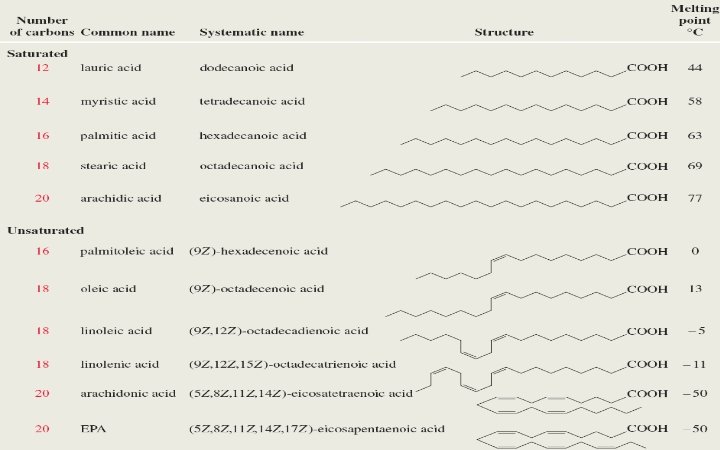
Fatty acids are naturally occurring carboxylic acids with an unbranched carbon chain and an even number of carbon atoms. Ø The pathway by which fatty acids are biosynthesized they almost always contain an even number of carbon atoms. Ø Long-chain fatty acids (12 to 26 carbon atoms) are found in meats and fish Ø medium-chain fatty acids (6 to 10 carbon atoms) and short-chain fatty acids (fewer than 6 carbon atoms) occur primarily in dairy products. Ø There are saturated and unsaturated Fatty acids.
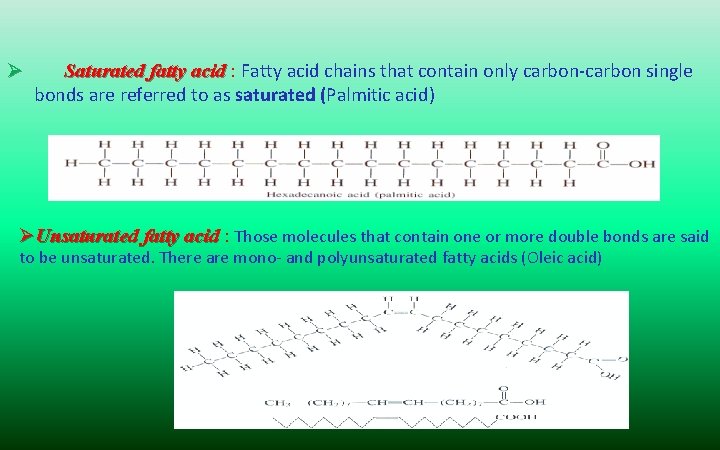
Ø Saturated fatty acid : Fatty acid chains that contain only carbon-carbon single bonds are referred to as saturated (Palmitic acid) ØUnsaturated fatty acid : Those molecules that contain one or more double bonds are said to be unsaturated. There are mono- and polyunsaturated fatty acids (Oleic acid)
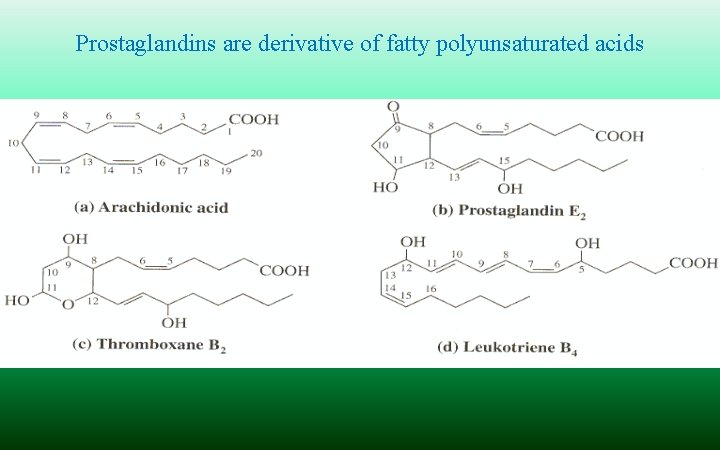
Prostaglandins are derivative of fatty polyunsaturated acids
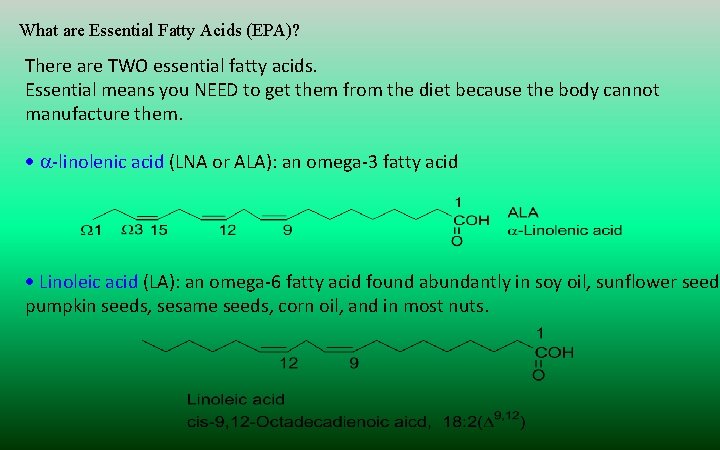
What are Essential Fatty Acids (EPA)? There are TWO essential fatty acids. Essential means you NEED to get them from the diet because the body cannot manufacture them. · -linolenic acid (LNA or ALA): an omega-3 fatty acid · Linoleic acid (LA): an omega-6 fatty acid found abundantly in soy oil, sunflower seeds pumpkin seeds, sesame seeds, corn oil, and in most nuts.
Functions of EFA ØEssential fatty acids are required for the membrane structure and function. ØTransport of cholesterol. ØFormation of lipoproteins. Ø Prevention of fatty liver etc. ØThey are also needed for the synthesis of another important group of compounds, namely eicosanoids.
Rancidity: Rancidity is the term used to represent the deterioration of fats and oils resulting in an unpleasant taste. Fats containing unsaturated fatty acids are more susceptible to rancidity. Ø Rancidity occurs when fats and oils are exposed to air, moisture, light, bacteria etc. Ø Hydrolytic rancidity occurs due to partial hydrolysis of triacylglycerols by bacterial enzymes. Ø Oxidative rancidity is due to oxidation of unsaturated fatty acids. This results in the formation of unpleasant products such as dicarboxylic acids, aldehydes, ketones etc. Rancid fats and oils are unsuitable for human consumption.
Test to Check Purity of Fats and Oils • Acid number: - It is the number of milligrams of potassium hydroxide required to completely neutralize the free fatty acids present in 1 g of the oil or fat. Ø In normal circumstances refined oils should be free from any free fatty acids. Ø Oils, on decomposition due to chemical or bacterial contamination-yield free fatty acids. Therefore, oils with increased acid number are unsafe for human consumption
Test to Check Purity of Fats and Oils • Saponification number: - It is defined as the mg (number) of KOH required to hydrolyze (saponify) one gram of fat or oil. • Saponification number is a measure of the average molecular size of the fatty acids present • The value is higher for fats containing short chain fatty acids. Human fat : 195 -200 Butter : 230 -240 Coconut oil : 250 -260
Test to Check Purity of Fats and Oils • Iodine number: - lt is defined as the grams (number) of iodine absorbed by 100 g of fat or oil. Ø Iodine number is useful to know the relative unsaturation of fats, and is directly proportional to the content of unsaturated fatty acids. Ø Thus lower is the iodine number, less is the degree of unsaturation. • Determination of iodine number will help to know the degree of adulteration of a given oil.
Test to Check Purity of Fats and Oils • Reichert-Meissl (RM) number: - lt is defined as the number of ml 0. 1 N KOH required to completely neutralize the soluble volatile fatty acids distilled from 5 g fat. Ø RM number is useful in testing the purity of butter since it contains a good concentration of volatile fatty acids( butyric acid, caproic acid and caprylic acid). Ø Butter has a RM number in the range 25 -30, while it is less than 1 for most other edible oils. Ø Thus any adulteration of butter can be easily tested by this sensitive RM number.
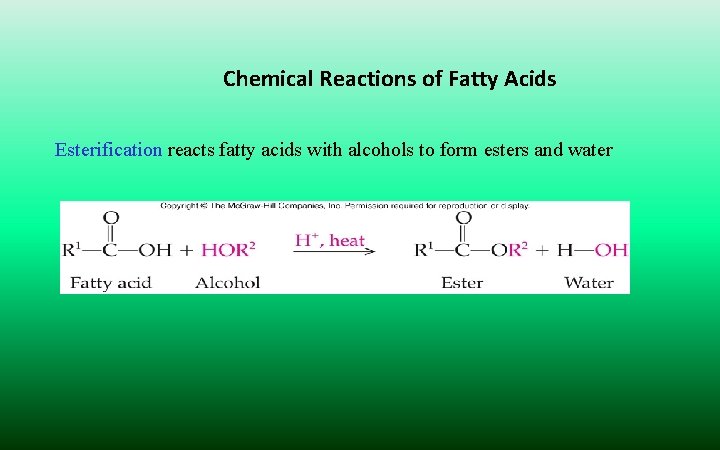
Chemical Reactions of Fatty Acids Esterification reacts fatty acids with alcohols to form esters and water
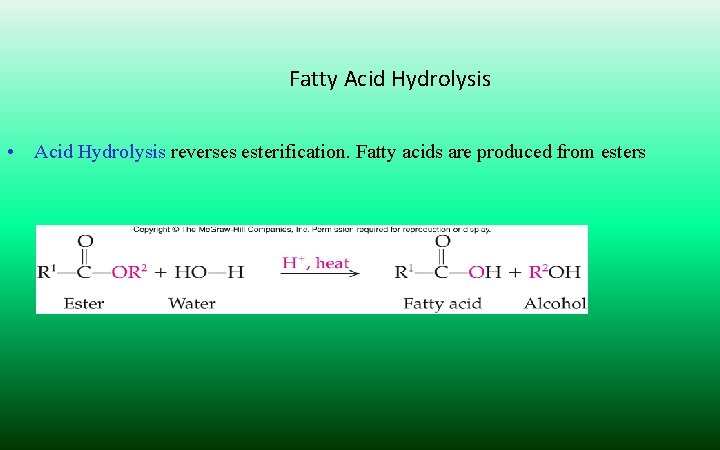
Fatty Acid Hydrolysis • Acid Hydrolysis reverses esterification. Fatty acids are produced from esters
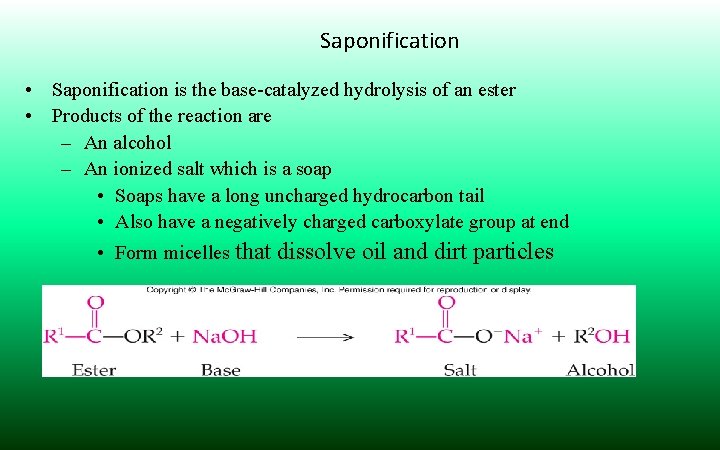
Saponification • Saponification is the base-catalyzed hydrolysis of an ester • Products of the reaction are – An alcohol – An ionized salt which is a soap • Soaps have a long uncharged hydrocarbon tail • Also have a negatively charged carboxylate group at end • Form micelles that dissolve oil and dirt particles

- Slides: 38