
Lipids in the body Functions 1 Membrane component
Lipids in the body Functions 1. Membrane component 2. Thermal insulation and mechanical protection 3. Metabolic 4. Energy - regulator store 90% of an adipocyte is lipid
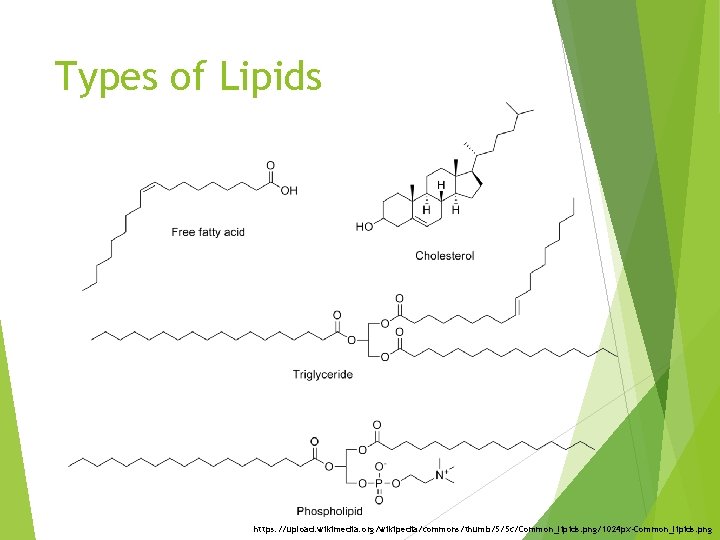
Types of Lipids https: //upload. wikimedia. org/wikipedia/commons/thumb/5/5 c/Common_lipids. png/1024 px-Common_lipids. png
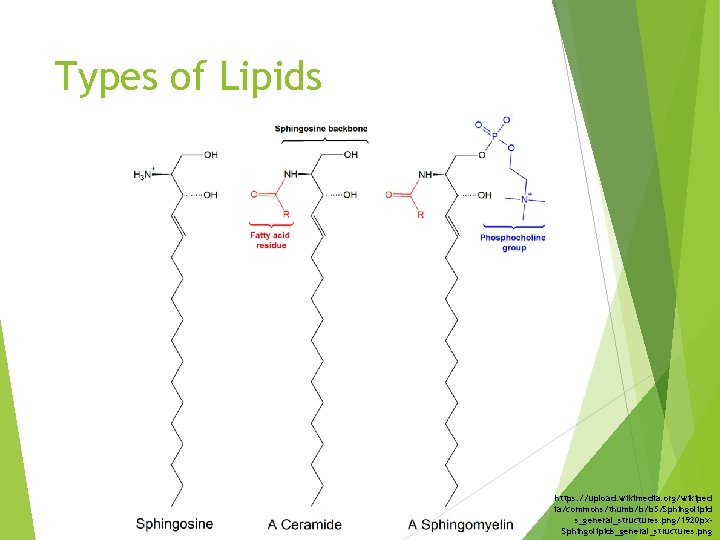
Types of Lipids https: //upload. wikimedia. org/wikiped ia/commons/thumb/b/b 5/Sphingolipid s_general_structures. png/1920 px. Sphingolipids_general_structures. png
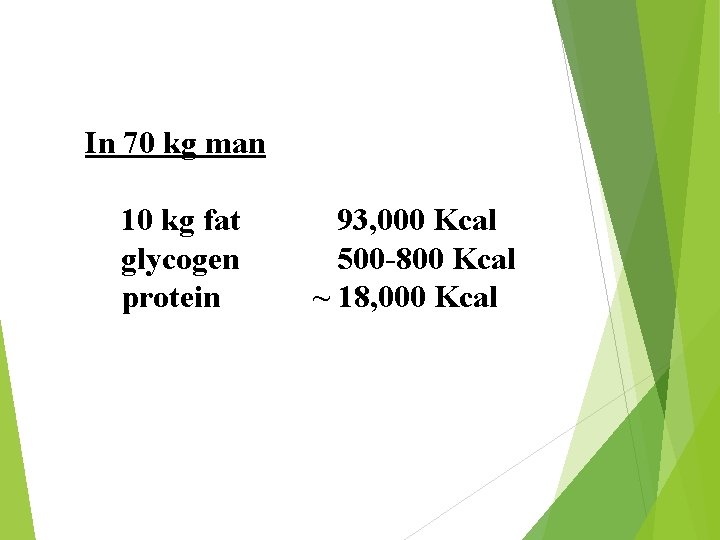
In 70 kg man 10 kg fat glycogen protein 93, 000 Kcal 500 -800 Kcal ~ 18, 000 Kcal
Adipose tissue is located: In the abdominal cavity around kidneys and between the mesentery Beneath the skin Between skeletal muscle fibers
Lipid Digestion and Absorption

Lipid Digestion and Absorption Triglycerides Stomach Little digestion Gastric lipase is secreted in the stomach that hydrolyze long chain triglycerides Small Fat intestine digestion and absorption occurs primarily in the duodenum and jejunum
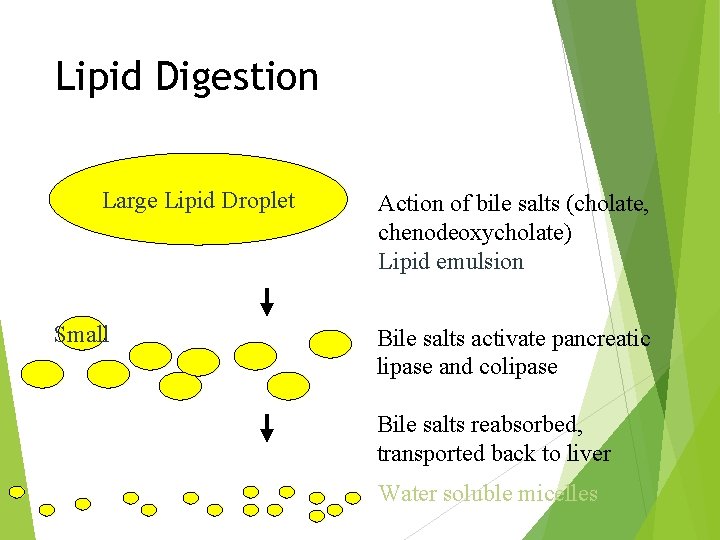
Lipid Digestion Large Lipid Droplet Small Action of bile salts (cholate, chenodeoxycholate) Lipid emulsion Bile salts activate pancreatic lipase and colipase Bile salts reabsorbed, transported back to liver Water soluble micelles
A. Luminal Phase Food entering small intestine causes the secretion of hormones such as cholecystokinin, pancreozymin and secretin Hormones cause gallbladder to contract and secrete bile Stimulate the pancreas to secrete pancreatic lipase
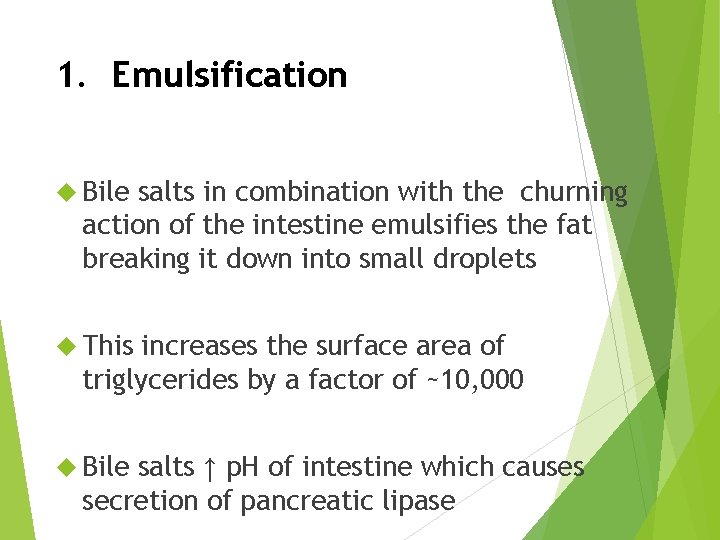
1. Emulsification Bile salts in combination with the churning action of the intestine emulsifies the fat breaking it down into small droplets This increases the surface area of triglycerides by a factor of ~10, 000 Bile salts ↑ p. H of intestine which causes secretion of pancreatic lipase
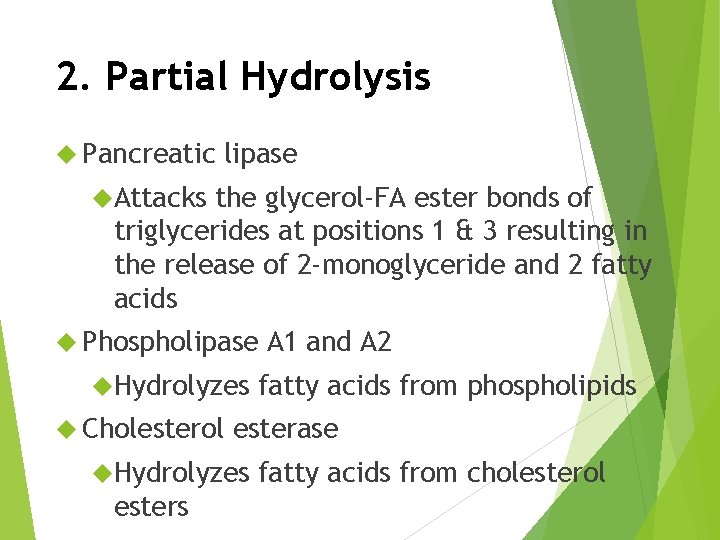
2. Partial Hydrolysis Pancreatic lipase Attacks the glycerol-FA ester bonds of triglycerides at positions 1 & 3 resulting in the release of 2 -monoglyceride and 2 fatty acids Phospholipase Hydrolyzes Cholesterol fatty acids from phospholipids esterase Hydrolyzes esters A 1 and A 2 fatty acids from cholesterol
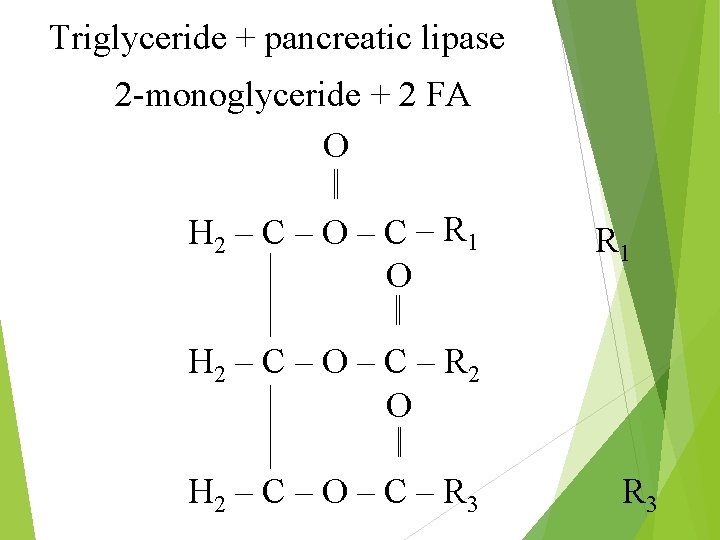
Triglyceride + pancreatic lipase 2 -monoglyceride + 2 FA O H 2 – C – O – C – R 1 O R 1 H 2 – C – O – C – R 2 O H 2 – C – O – C – R 3

3. Mixed micelle formation Consist mainly of long chain FAs, monoglycerides and bile acids Short (2 -6 C) and medium chain FAs (6 -12 C) are soluble enough in H 2 O that they can be absorbed into the portal blood
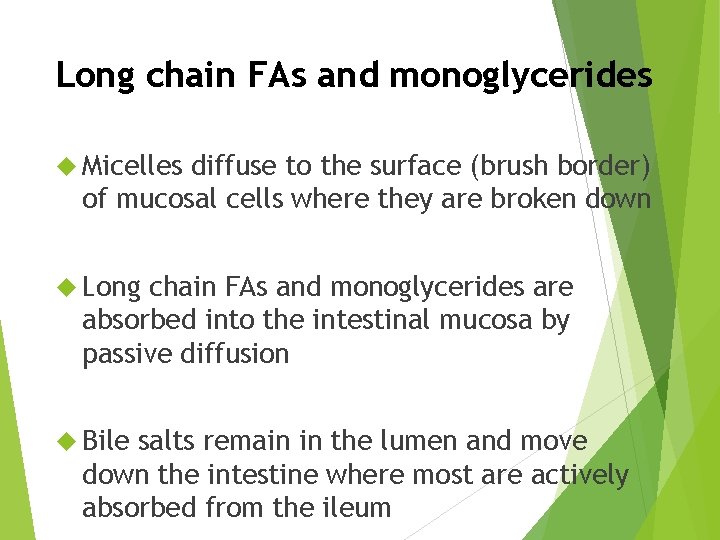
Long chain FAs and monoglycerides Micelles diffuse to the surface (brush border) of mucosal cells where they are broken down Long chain FAs and monoglycerides are absorbed into the intestinal mucosa by passive diffusion Bile salts remain in the lumen and move down the intestine where most are actively absorbed from the ileum
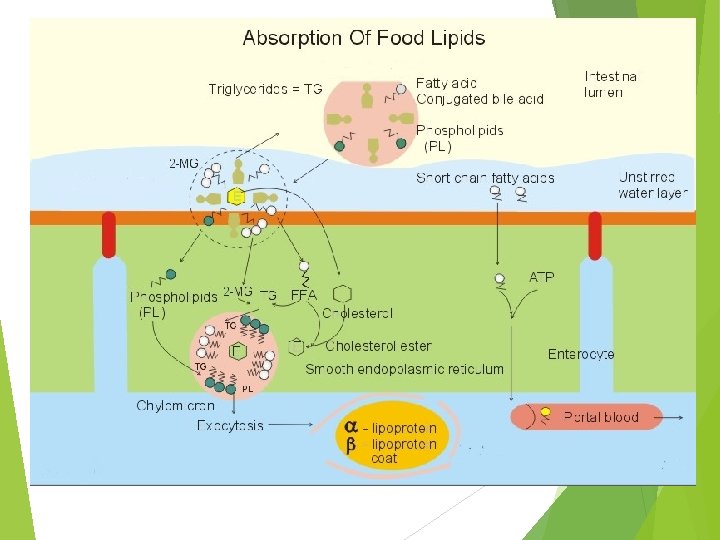
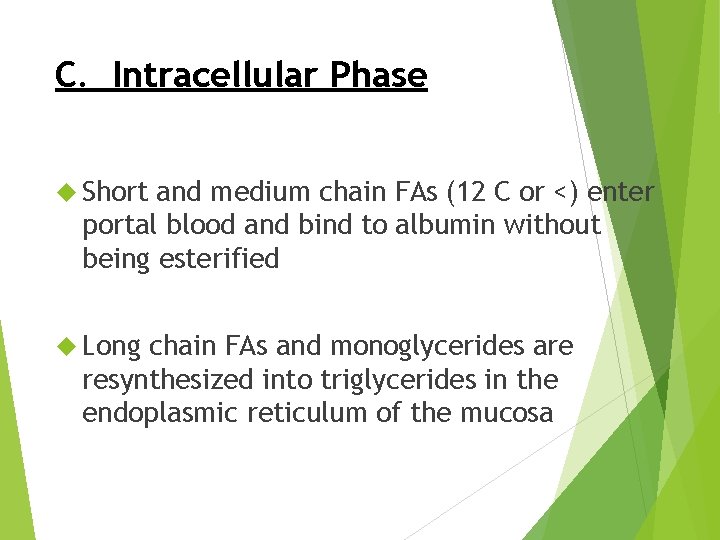
C. Intracellular Phase Short and medium chain FAs (12 C or <) enter portal blood and bind to albumin without being esterified Long chain FAs and monoglycerides are resynthesized into triglycerides in the endoplasmic reticulum of the mucosa

Lipid Synthesis
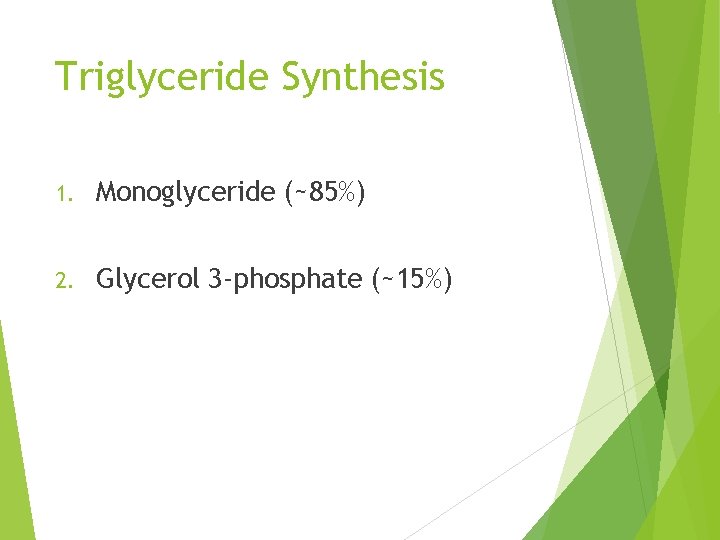
Triglyceride Synthesis 1. Monoglyceride (~85%) 2. Glycerol 3 -phosphate (~15%)

Monoglyceride Pathway Occurs in the smooth endoplasmic reticulum acid + ATP Acyl - Co. A Fatty Acy-Co. A + AMP + Co. A Synthetase + Pi Fatty Acyl-Co. A synthetase is specific for fatty acids with greater than 12 carbons Monoglyceride Diglyceride + Fatty Acyl Co. A Diglyceride Triglyceride
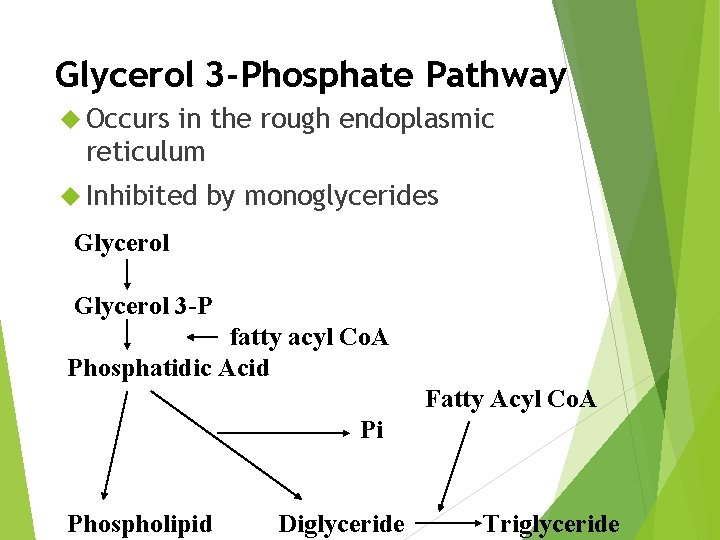
Glycerol 3 -Phosphate Pathway Occurs in the rough endoplasmic reticulum Inhibited by monoglycerides Glycerol 3 -P fatty acyl Co. A Phosphatidic Acid Fatty Acyl Co. A Pi Phospholipid Diglyceride Triglyceride
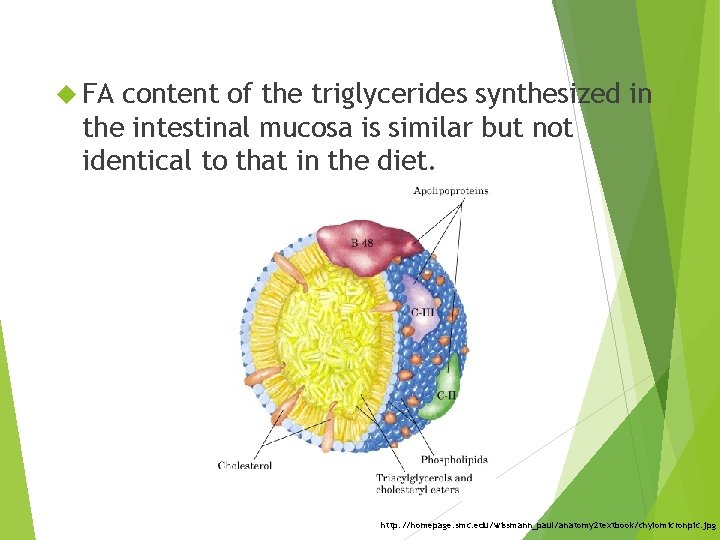
FA content of the triglycerides synthesized in the intestinal mucosa is similar but not identical to that in the diet. http: //homepage. smc. edu/wissmann_paul/anatomy 2 textbook/chylomicronpic. jpg
Generally fat is well absorbed 90% + Long chain saturated FA are not absorbed as rapidly as short chain or unsaturated FA A higher bile acid concentration is needed for micelle formation with long chain saturated FA Lack of bile decreases fat absorption
II. Phospholipid Secreted in the bile and some in diet Phospholipid Phospholipases Lysolecithin + FA Pancreatic must be dispersed into small micelles for enzymatic hydrolysis
Lysolecithin and FA produced become part of the mixed micelles They are absorbed and then resynthesized into phospholipids in the mucosal cells by the glycerol 3 -PO 4 pathway Phospholipids are then utilized to form the chylomicrons or VLDL
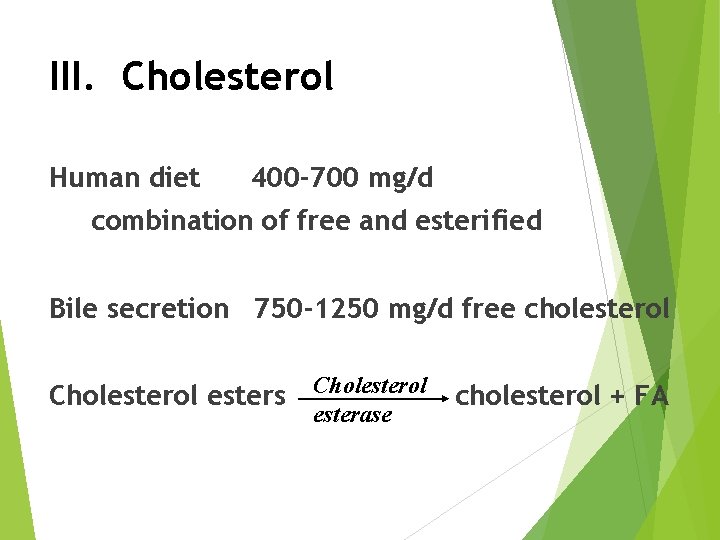
III. Cholesterol Human diet 400 -700 mg/d combination of free and esterified Bile secretion 750 -1250 mg/d free cholesterol Cholesterol esters Cholesterol esterase cholesterol + FA
Free cholesterol must be solubilized (mixed micelles) prior to absorption More cholesterol is taken up by micelles when micelles are enlarged due to the presence of high fat Cholesterol is taken up by the intestinal mucosa by passive diffusion then reesterified and incorporated in chylomicrons and VLDL
Lipid Transport
Lipid Transport Lipids appear in the blood in 3 forms 1. Lipoproteins 2. Free fatty acids – mostly bound to albumin 3. Ketone bodies
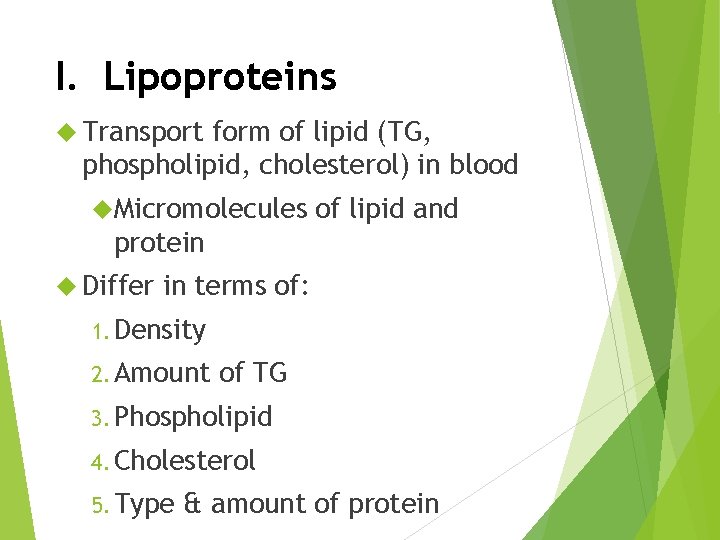
I. Lipoproteins Transport form of lipid (TG, phospholipid, cholesterol) in blood Micromolecules of lipid and protein Differ in terms of: 1. Density 2. Amount of TG 3. Phospholipid 4. Cholesterol 5. Type & amount of protein
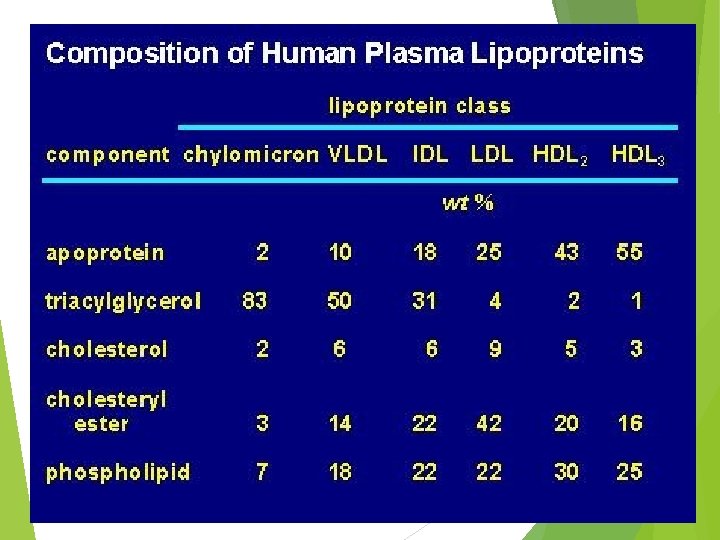
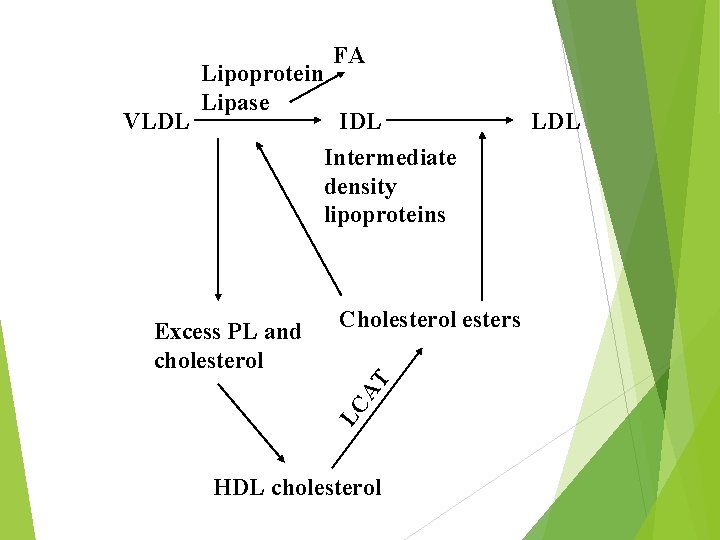
VLDL Lipoprotein Lipase FA IDL Intermediate density lipoproteins Cholesterol esters LC AT Excess PL and cholesterol HDL cholesterol LDL
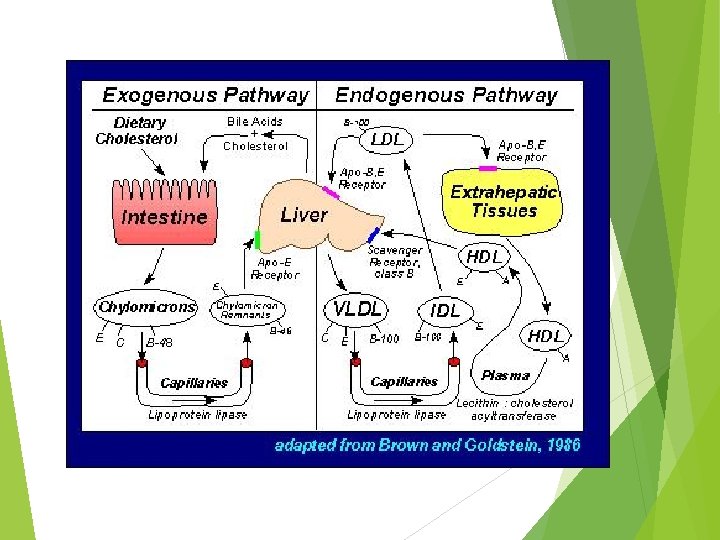
A. Chylomicrons TG are primarily transported in chylomicrons and VLDL because TG are not soluble in H 2 O Chylomicrons are produced only in the small intestine and they contain TG of dietary origin
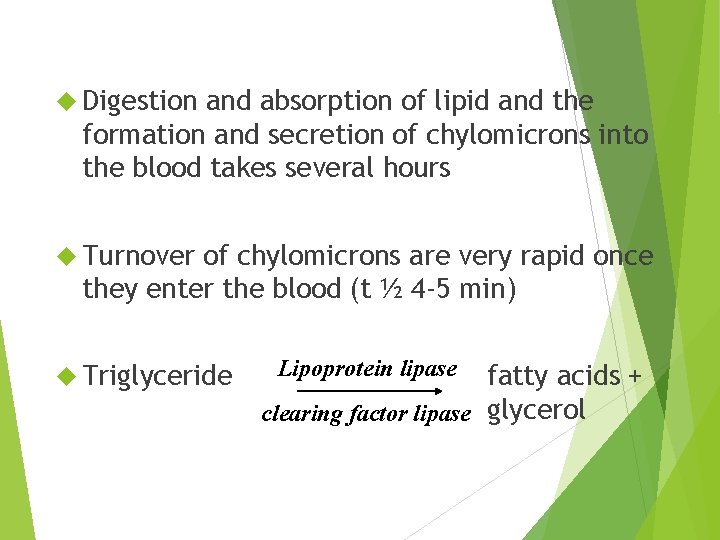
Digestion and absorption of lipid and the formation and secretion of chylomicrons into the blood takes several hours Turnover of chylomicrons are very rapid once they enter the blood (t ½ 4 -5 min) Triglyceride Lipoprotein lipase fatty acids + clearing factor lipase glycerol
Lipoprotein lipase is found on the outer surface of the endothelial cells lining the capillaries (adipose, heart, skeletal muscle, lung, mammary gland) In liver lipoprotein lipase is attached to the outer surface of the hepatocytes Following hydrolysis of TG the FAs diffuse into the tissue or they could remain in the blood and be transported to another tissue
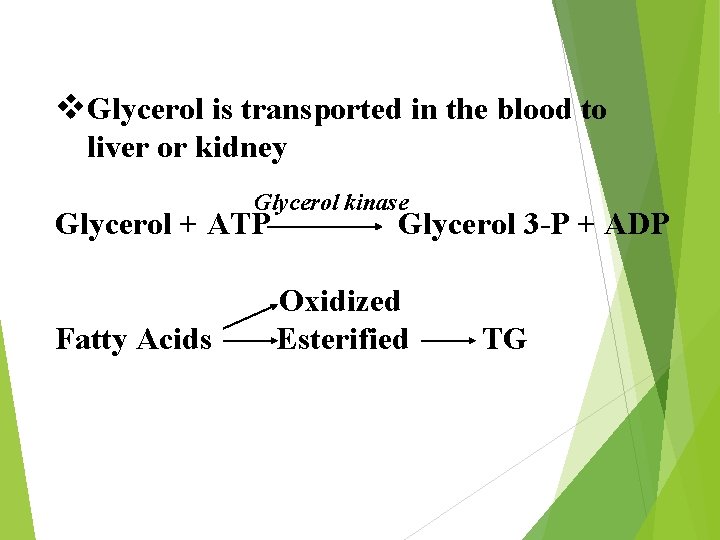
v. Glycerol is transported in the blood to liver or kidney Glycerol kinase Glycerol + ATP Fatty Acids Glycerol 3 -P + ADP Oxidized Esterified TG
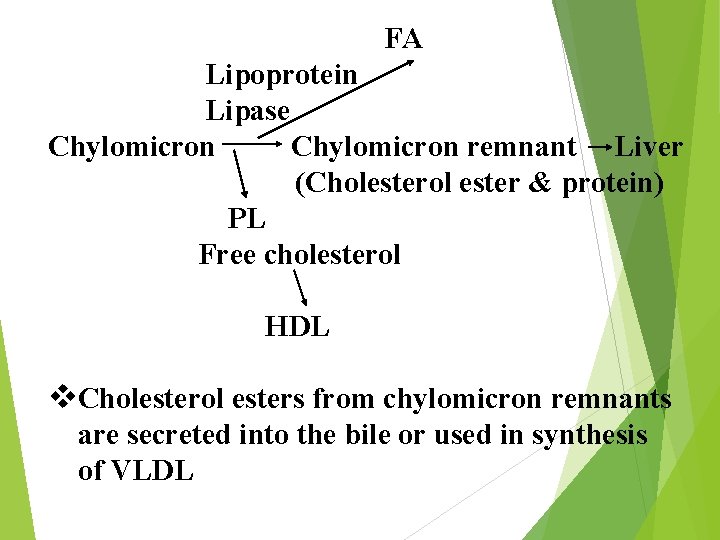
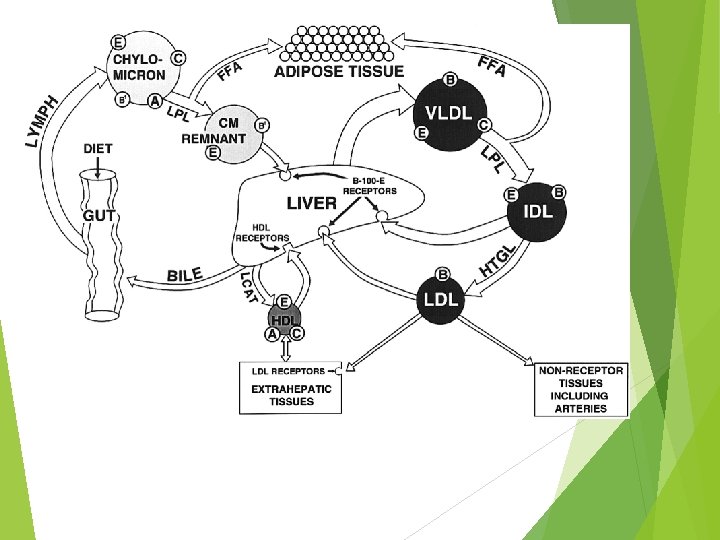
FA Lipoprotein Lipase Chylomicron remnant Liver (Cholesterol ester & protein) PL Free cholesterol HDL v. Cholesterol esters from chylomicron remnants are secreted into the bile or used in synthesis of VLDL
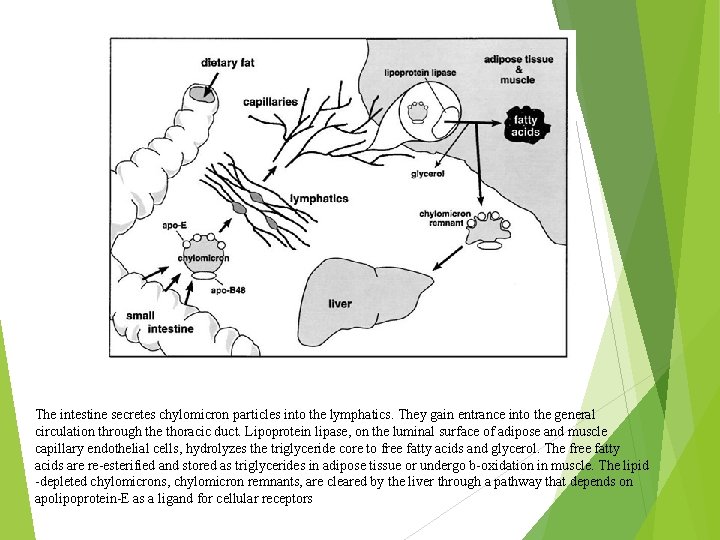
The intestine secretes chylomicron particles into the lymphatics. They gain entrance into the general circulation through the thoracic duct. Lipoprotein lipase, on the luminal surface of adipose and muscle capillary endothelial cells, hydrolyzes the triglyceride core to free fatty acids and glycerol. The free fatty acids are re-esterified and stored as triglycerides in adipose tissue or undergo b-oxidation in muscle. The lipid -depleted chylomicrons, chylomicron remnants, are cleared by the liver through a pathway that depends on apolipoprotein-E as a ligand for cellular receptors
B. Very low density lipoproteins (VLDL) Lipoprotein that contains TG secreted from the liver TG in liver are synthesized from either acetyl Co. A or FAs derived from blood or chylomicrons
When dietary cholesterol from chylomicron remnants is not available in adequate amounts for synthesis of VLDL, the liver synthesizes cholesterol Liver does this by increasing the activity of 3 -hydroxy-3 -methyl glutaryl coenzyme A reductase (HMG Co. A reductase)
LCAT – Lecithin – cholesterol acyltransferase LCAT esterifies excess cholesterol in HDL with FAs derived from the 2 - position of lecithin (PL) Half life of VLDL 1 -3 hours
Lipoprotein lipase Activity Fed determines which tissues take up FA state – high in adipose Fasted state-low in adipose, high in other tissues Insulin and glucose lipoprotein lipase in adipose and also formation of α glycerol-P which stimulates esterification of FAs Parturition - LPL in mammary gland
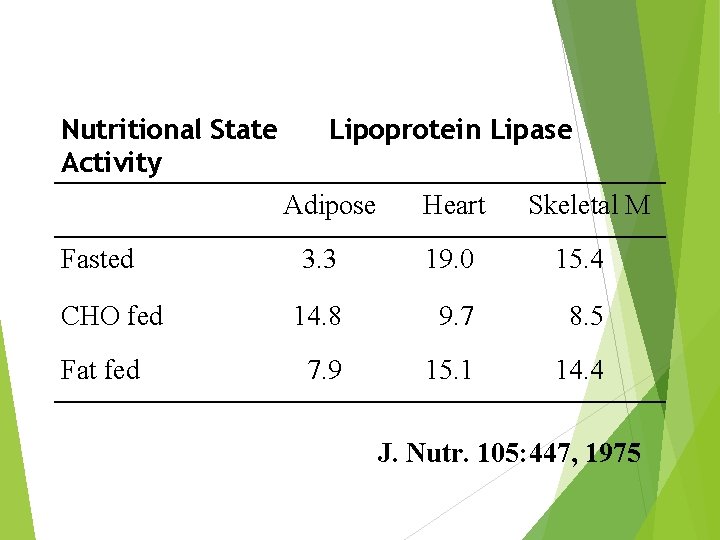
Nutritional State Activity Lipoprotein Lipase Adipose Fasted CHO fed Fat fed Heart Skeletal M 3. 3 19. 0 15. 4 14. 8 9. 7 8. 5 7. 9 15. 1 14. 4 J. Nutr. 105: 447, 1975
C. Low Density Lipoproteins (LDL) Involved in cholesterol transport LDL is taken up by tissues metabolized and the cholesterol is released and used for cellular functions Specific receptor on the surface of the cell that binds LDL Most tissues except liver depend on LDL for
D. High density Lipoproteins (HDL) Functions in cholesterol and phospholipid exchange and cholesterol esterification reactions in plasma Accepts cholesterol from tissues
Cholesterol bound to HDL can be esterified in plasma by LCAT and transferred to VLDL and IDL to form LDL HDLs are synthesized in liver and small intestine Half life of 5 -6 days
Lipid Transport Lipids appear in the blood in 3 forms 1. Lipoproteins 2. Free fatty acids – mostly bound to albumin 3. Ketone bodies
II. Free Fatty Acids Some Most from intestinal absorption FFA arise from TG breakdown in adipose tissue
III. Ketone Bodies Synthesis Gut epithelium (esp. ruminants) Liver Uses (requires thioporase) Heart Brain Muscle
- Slides: 50