
Lipids Fats and Oils Nonpolar will not dissolve
- Slides: 9
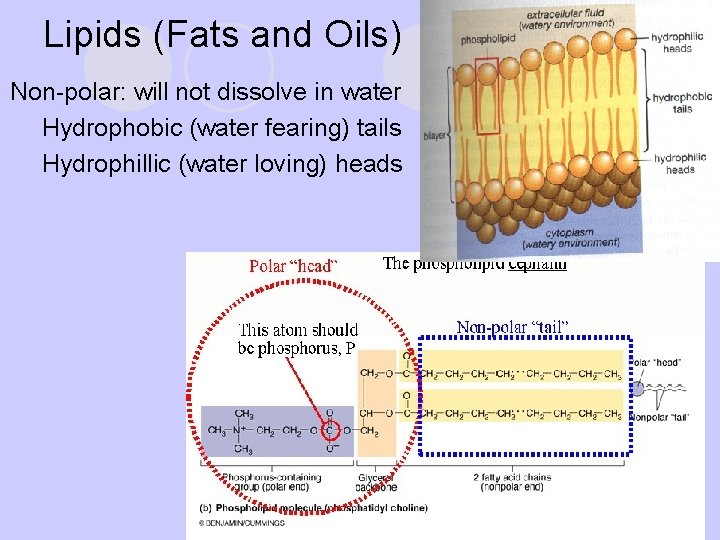
Lipids (Fats and Oils) Non-polar: will not dissolve in water ¡ Hydrophobic (water fearing) tails ¡ Hydrophillic (water loving) heads
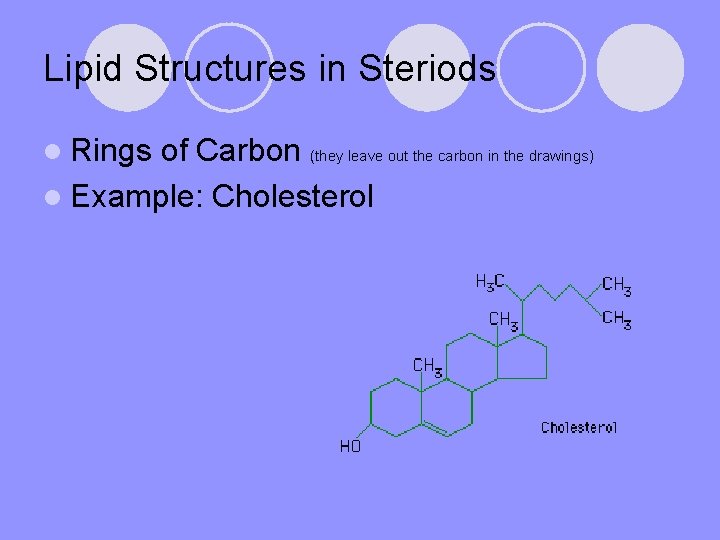
Lipid Structures in Steriods l Rings of Carbon (they leave out the carbon in the drawings) l Example: Cholesterol
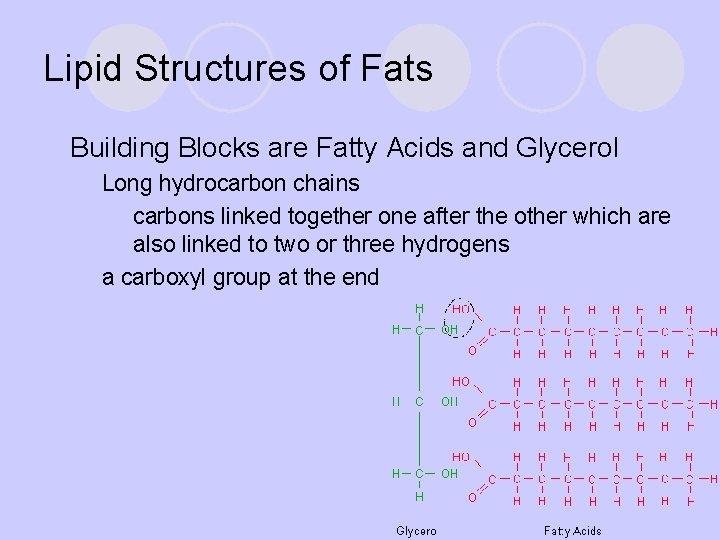
Lipid Structures of Fats l Building Blocks are Fatty Acids and Glycerol ¡ ¡ Long hydrocarbon chains l carbons linked together one after the other which are also linked to two or three hydrogens a carboxyl group at the end
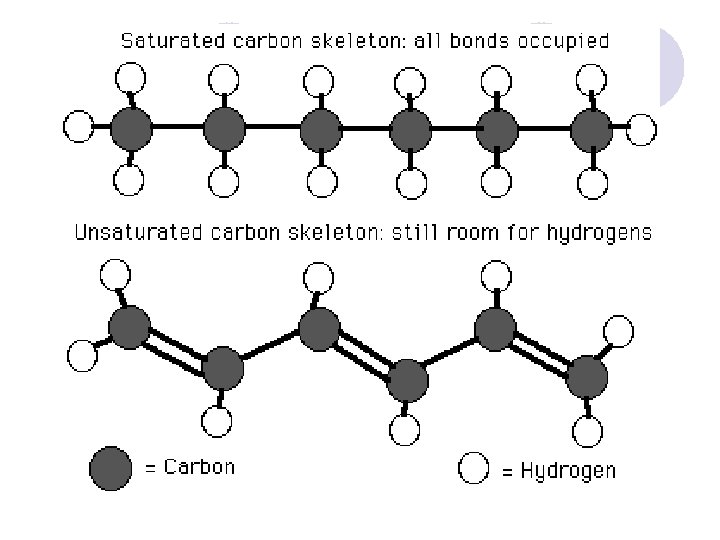
Unsaturated fats l the bond between the carbon atoms is a double bond and the molecule can absorb more hydrogen atoms. If this is the case, the fat molecule is of the unsaturated type of fat l are divided into two groups: ¡ polyunsaturated fat: is found in fatty fish like salmon, tuna and sardines, and in oils like corn oil, safflower oil and soybean oil. ¡ monounsaturated fat: is found in some nuts (peanuts, almonds, hazelnuts, and pecans) as well as in certain oils like canola oil, and olive oil.
Saturated Fats l Saturated fat is known to raise blood cholesterol levels. ¡ Found in foods such as fatty meats, poultry skin, coconut and palm oils, pastries, cookies and high fat dairy products like whole milk. l If the carbon atoms have a single bond between them and as many hydrogen atoms as possible are bonded to the carbon atoms, then the fat is said to be saturated
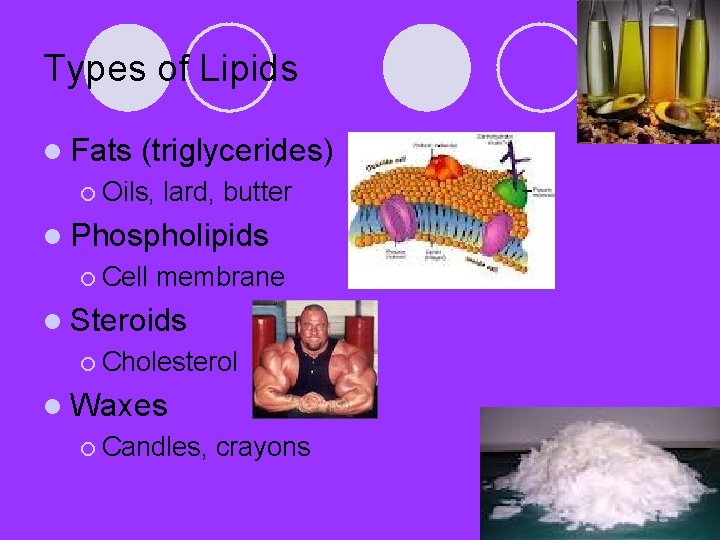
Types of Lipids l Fats (triglycerides) ¡ Oils, lard, butter l Phospholipids ¡ Cell membrane l Steroids ¡ Cholesterol l Waxes ¡ Candles, crayons
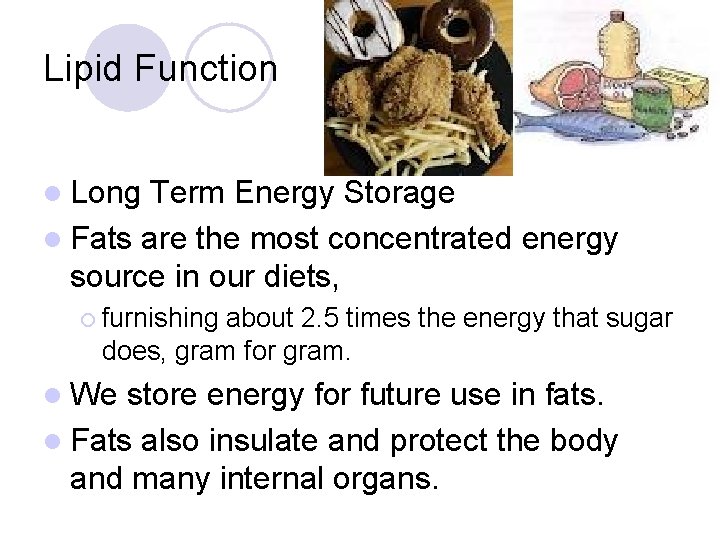
Lipid Function l Long Term Energy Storage l Fats are the most concentrated energy source in our diets, ¡ furnishing about 2. 5 times the energy that sugar does, gram for gram. l We store energy for future use in fats. l Fats also insulate and protect the body and many internal organs.
Answer the following questions: 1. 2. 3. 4. 5. 6. Several carbons in the steroid molecules already have four bonds and so will have no additional atoms (such as hydrogen) added. How many of these did you find? How many fatty acids do you have in your collection? How many are saturated? How many are unsaturated? Are fats and oils polar or non-polar? Explain your reasoning. Are fatty acids, fats and oils water soluble? Explain.