
Lipids Essential nutrients Provide energy Help transport fatsoluble
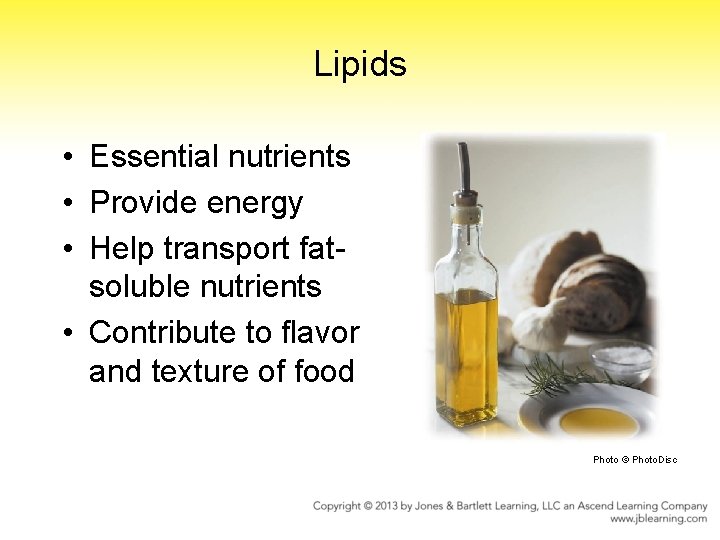
Lipids • Essential nutrients • Provide energy • Help transport fatsoluble nutrients • Contribute to flavor and texture of food Photo © Photo. Disc
Lipids • What are lipids? – Triglycerides • Stored in adipose tissue • Fats and oils in food – Phospholipids • Plant and animal origin • Body can make them • Soluble in fat and water – Sterols • Cholesterol
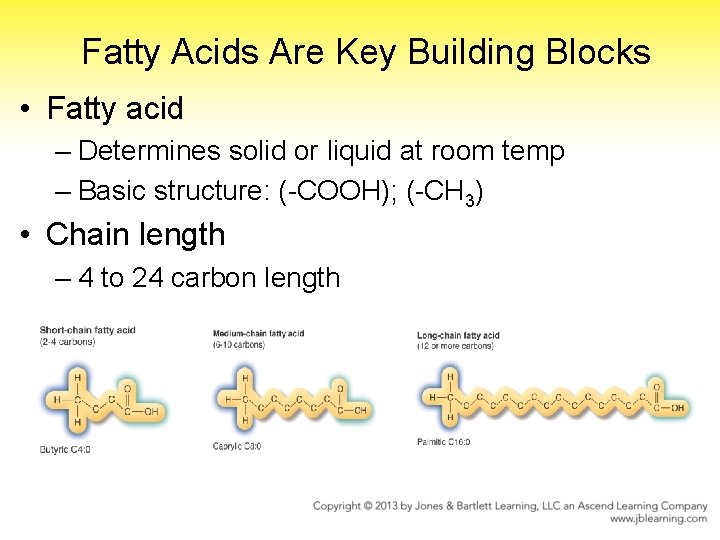
Fatty Acids Are Key Building Blocks • Fatty acid – Determines solid or liquid at room temp – Basic structure: (-COOH); (-CH 3) • Chain length – 4 to 24 carbon length
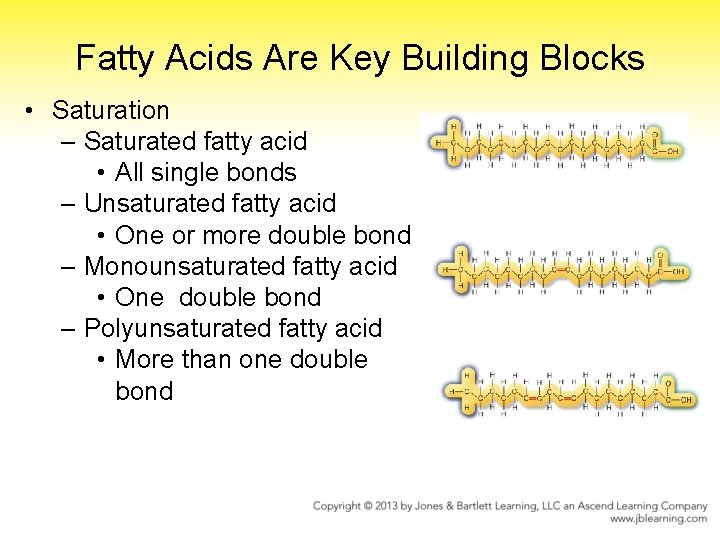
Fatty Acids Are Key Building Blocks • Saturation – Saturated fatty acid • All single bonds – Unsaturated fatty acid • One or more double bond – Monounsaturated fatty acid • One double bond – Polyunsaturated fatty acid • More than one double bond
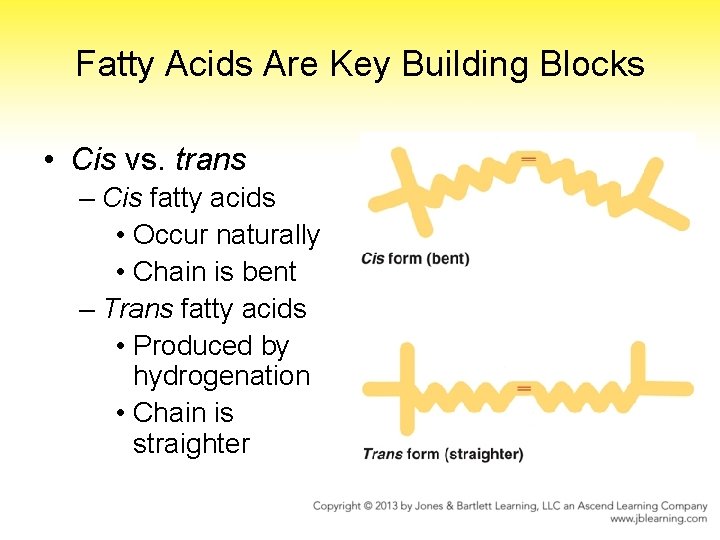
Fatty Acids Are Key Building Blocks • Cis vs. trans – Cis fatty acids • Occur naturally • Chain is bent – Trans fatty acids • Produced by hydrogenation • Chain is straighter
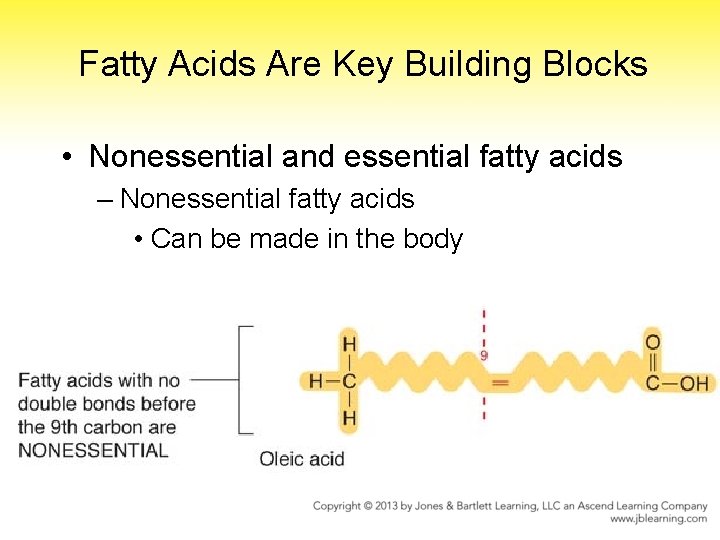
Fatty Acids Are Key Building Blocks • Nonessential and essential fatty acids – Nonessential fatty acids • Can be made in the body
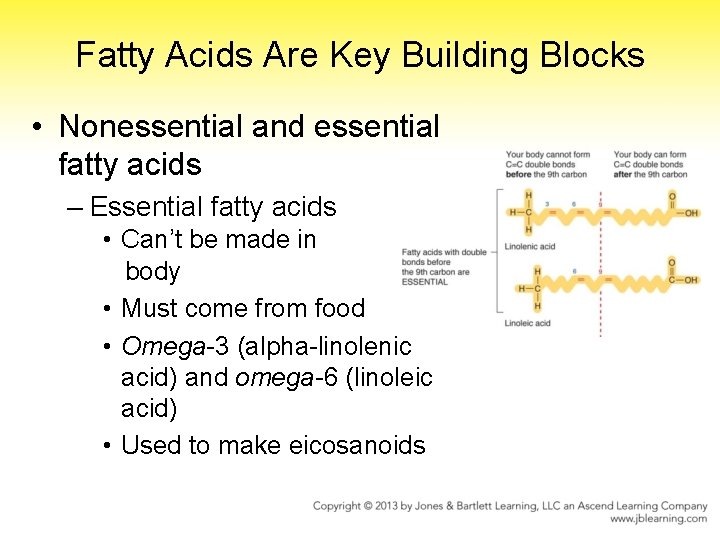
Fatty Acids Are Key Building Blocks • Nonessential and essential fatty acids – Essential fatty acids • Can’t be made in body • Must come from food • Omega-3 (alpha-linolenic acid) and omega-6 (linoleic acid) • Used to make eicosanoids
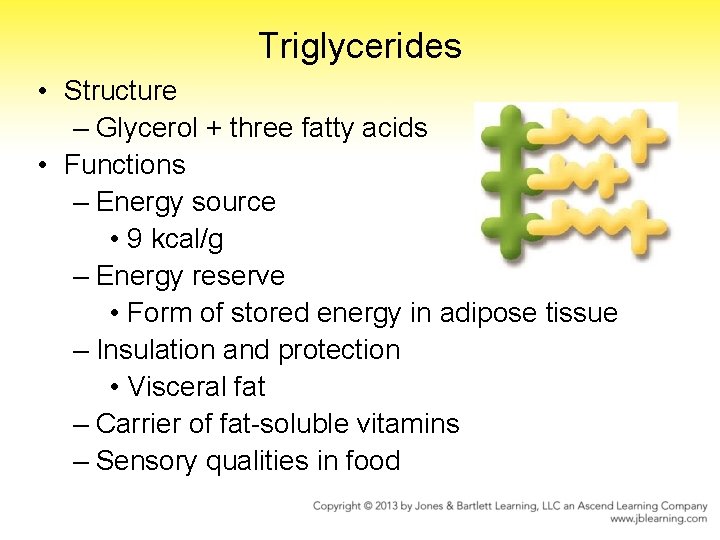
Triglycerides • Structure – Glycerol + three fatty acids • Functions – Energy source • 9 kcal/g – Energy reserve • Form of stored energy in adipose tissue – Insulation and protection • Visceral fat – Carrier of fat-soluble vitamins – Sensory qualities in food
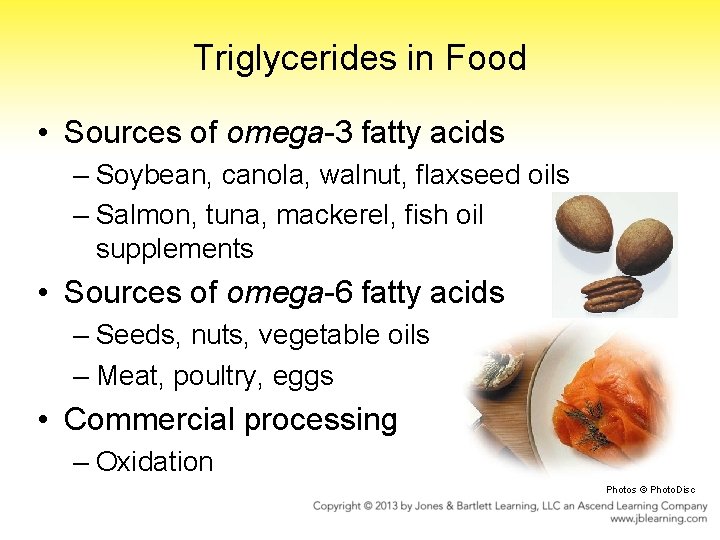
Triglycerides in Food • Sources of omega-3 fatty acids – Soybean, canola, walnut, flaxseed oils – Salmon, tuna, mackerel, fish oil supplements • Sources of omega-6 fatty acids – Seeds, nuts, vegetable oils – Meat, poultry, eggs • Commercial processing – Oxidation Photos © Photo. Disc
A healthy diet contains a balance of omega-3 and omega-6 fatty acids. üOmega-3 help reduce inflammation. üSome omega-6 tend to promote inflammation. üThe typical American diet contains 14 - 25 times more omega-6 than omega-3. The ratio should be in the range of 2: 1 - 4: 1, omega-6 to omega-3.
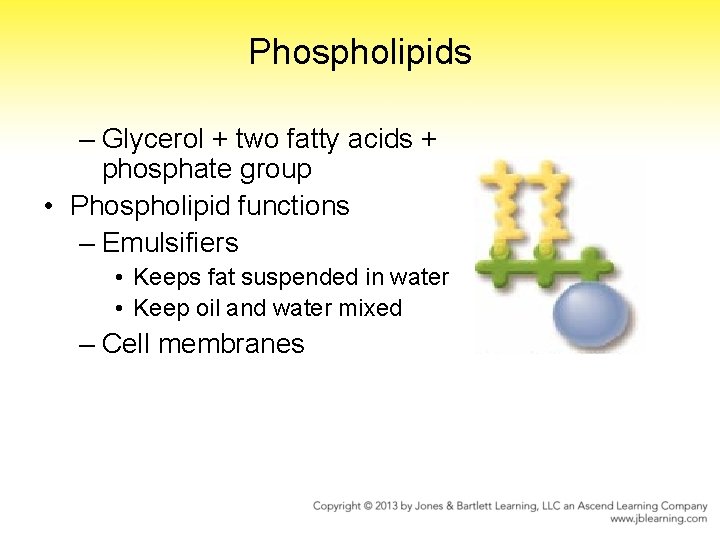
Phospholipids – Glycerol + two fatty acids + phosphate group • Phospholipid functions – Emulsifiers • Keeps fat suspended in water • Keep oil and water mixed – Cell membranes
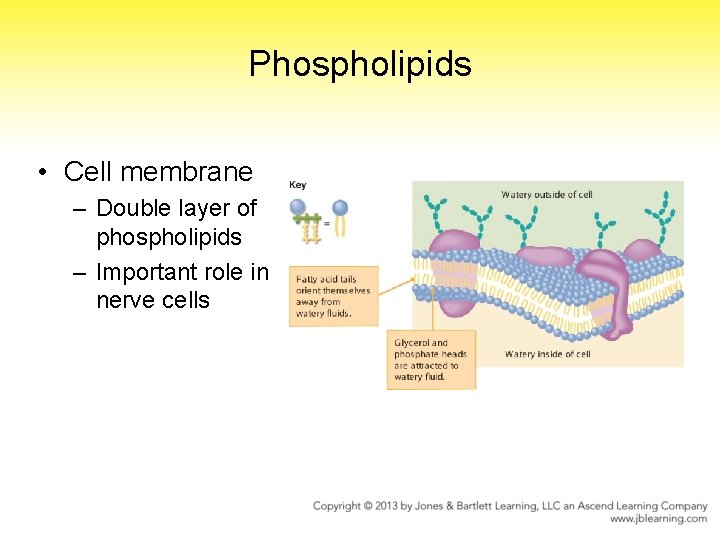
Phospholipids • Cell membrane – Double layer of phospholipids – Important role in nerve cells
Phospholipids • Lipid transport – Stomach • Break fats into tiny particles for digestion – Intestine • Continue emulsifying fat – Blood • Surface of lipoproteins that carry lipid particles in the body
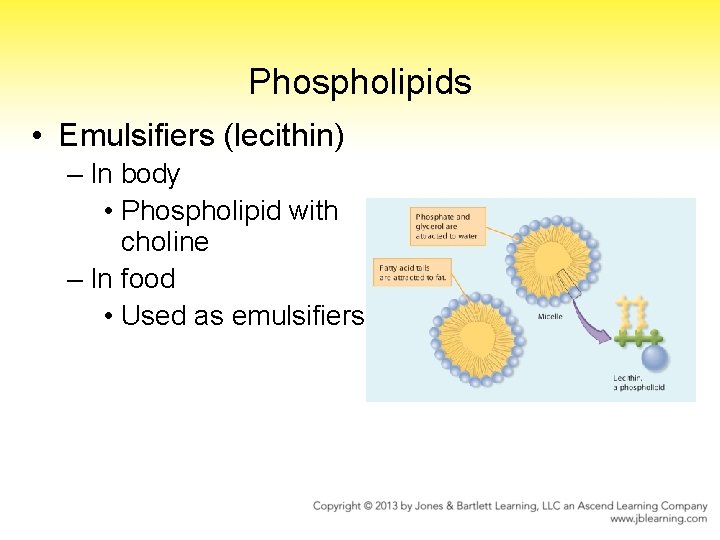
Phospholipids • Emulsifiers (lecithin) – In body • Phospholipid with choline – In food • Used as emulsifiers
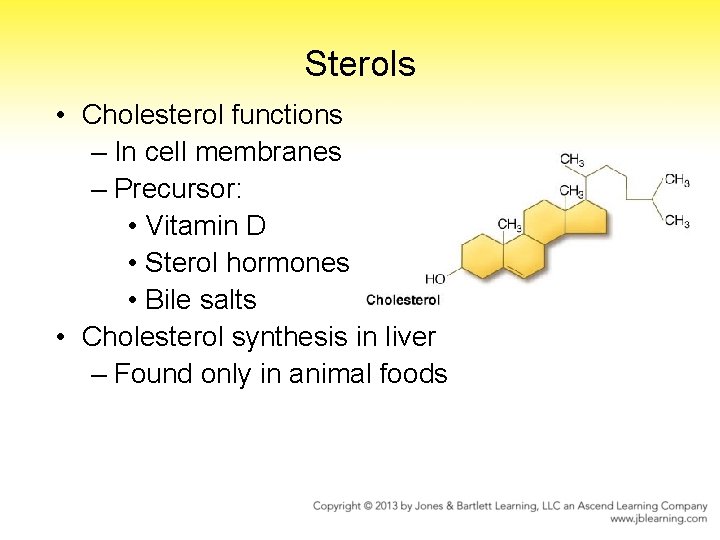
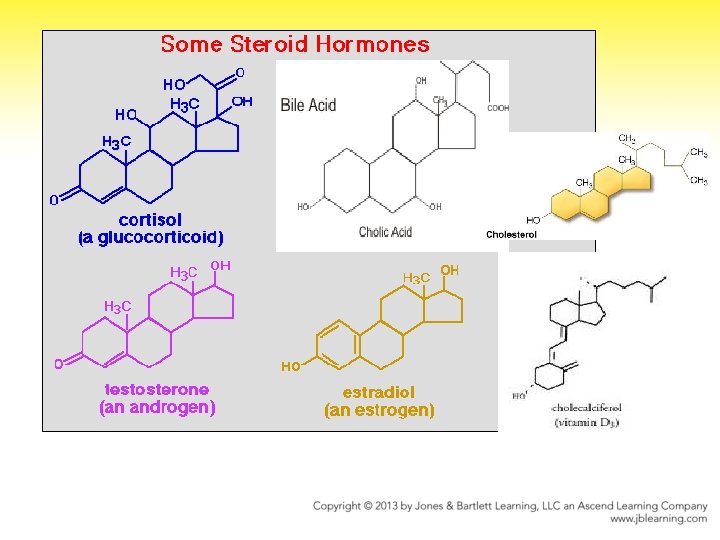
Sterols • Cholesterol functions – In cell membranes – Precursor: • Vitamin D • Sterol hormones • Bile salts • Cholesterol synthesis in liver – Found only in animal foods
Lipid Digestion and Absorption – Mouth • Chewing + lingual lipase – Stomach • Triglycerides to diglycerides and free fatty acids (FFA) – Small intestine • Emulsified by Bile • Digested by pancreatic lipase
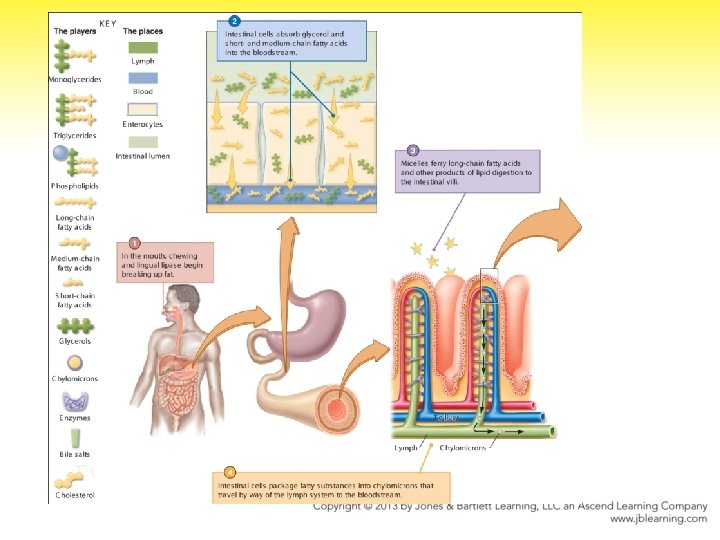
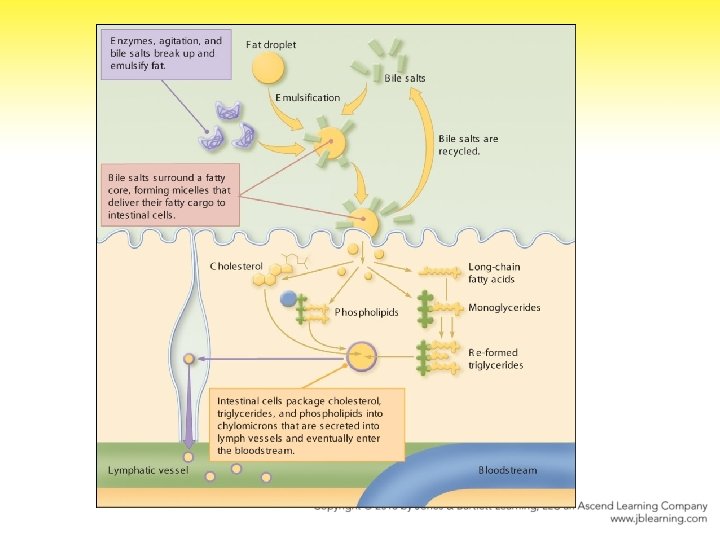
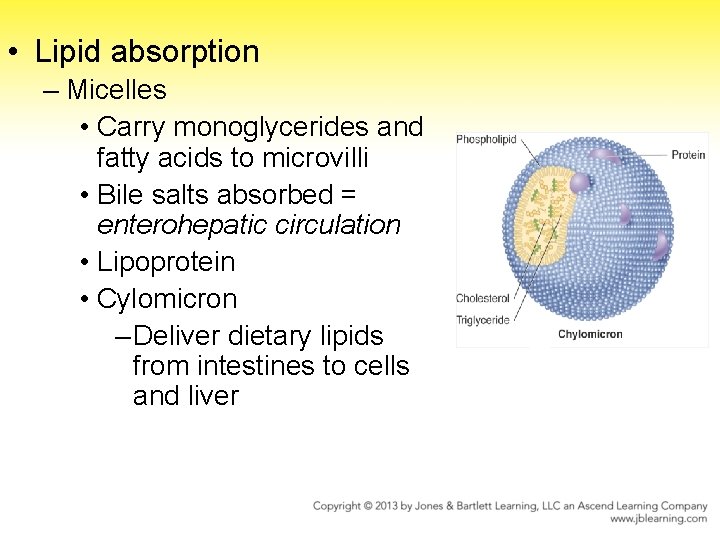
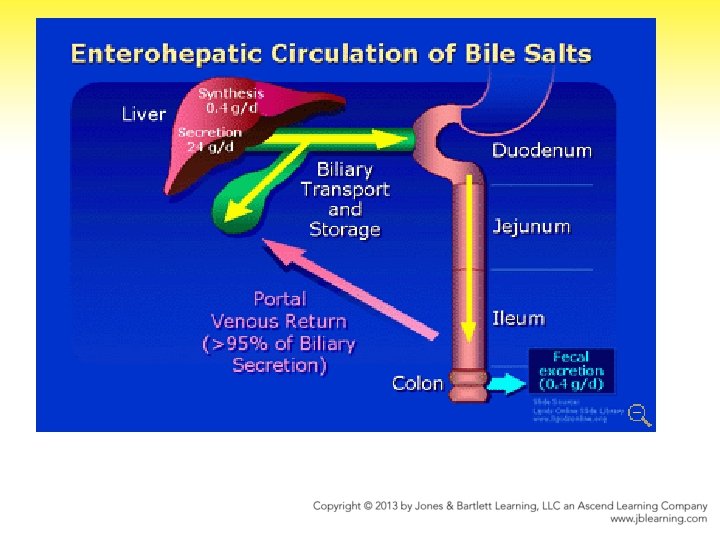
• Lipid absorption – Micelles • Carry monoglycerides and fatty acids to microvilli • Bile salts absorbed = enterohepatic circulation • Lipoprotein • Cylomicron – Deliver dietary lipids from intestines to cells and liver
• Digestion and absorption of sterols – 50% of dietary cholesterol is absorbed • Fat increases absorption • Plant sterols and dietary fiber decrease absorption
Lipids in the Body – Very-low-density lipoproteins (VLDL) • Deliver triglycerides to cells – Intermediate-density lipoproteins • Converted to LDL – Low-density lipoproteins (LDL) • Deliver cholesterol – High-density lipoproteins (HDL) • Pick up cholesterol for removal
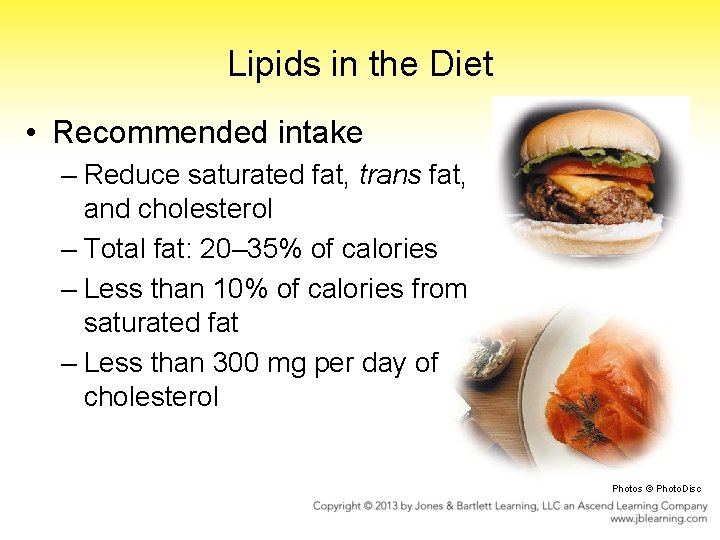
Lipids in the Diet • Recommended intake – Reduce saturated fat, trans fat, and cholesterol – Total fat: 20– 35% of calories – Less than 10% of calories from saturated fat – Less than 300 mg per day of cholesterol Photos © Photo. Disc
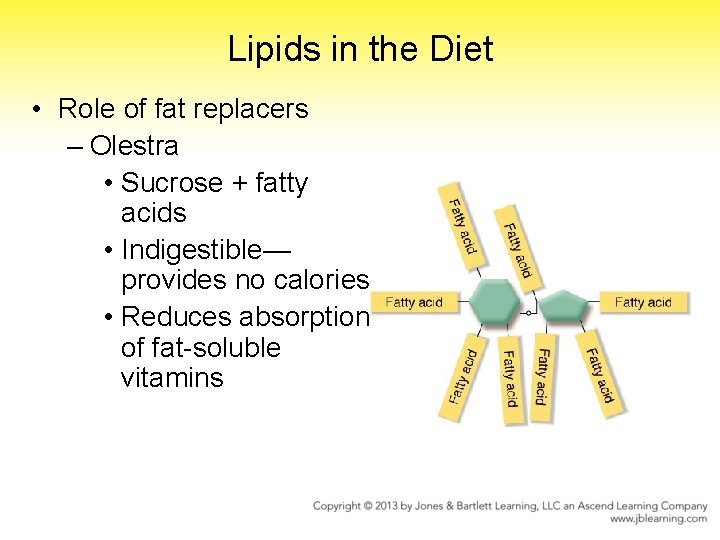
Lipids in the Diet • Role of fat replacers – Olestra • Sucrose + fatty acids • Indigestible— provides no calories • Reduces absorption of fat-soluble vitamins
Lipids and Health • Obesity – High-fat diets promote wt gain • Heart disease – Major risk factors • High blood cholesterol – High LDL and low HDL • Smoking • High blood pressure
Lipids and Health • Atherosclerosis – Slow, progressive hardening and narrowing of arteries – Promoted by high blood cholesterol – Lipoprotein a [Lp(a)] • Inflammation and atherosclerosis – C-reactive protein
Lipids and Health • Reducing heart disease risk – AHA diet and lifestyle recommendations • Consume an overall healthy diet • Aim for a healthy body weight • Aim for a desirable lipid profile • Aim for normal blood pressure • Aim for normal blood glucose levels • Be physically active • Avoid use of and exposure to tobacco products
Lipids and Health • Reduce heart disease risk – AHA recommendations • Balance calorie intake and physical activity to achieve or maintain a healthy body weight • Consume a diet rich in fruits and vegetables • Choose whole-grain, high-fiber foods • Consume fish, especially oily fish, at least twice a week • Limit your intake of saturated and trans fat and cholesterol
Lipids and Health • Cancer – Stages of development • Initiation • Promotion • Progression – Role of nutrition and diet • Factors that promote or protect
Lipids and Health • Cancer – Dietary and lifestyle factors for reducing cancer risk • Maintain a healthful weight • Adopt a physically active lifestyle • Consume a healthy diet • If you drink alcohol, limit consumption
- Slides: 31