
Lipids Dr Mamoun Ahram Resources This lecture Campbell
Lipids Dr. Mamoun Ahram
Resources • This lecture • Campbell and Farrell’s Biochemistry, chaper 8
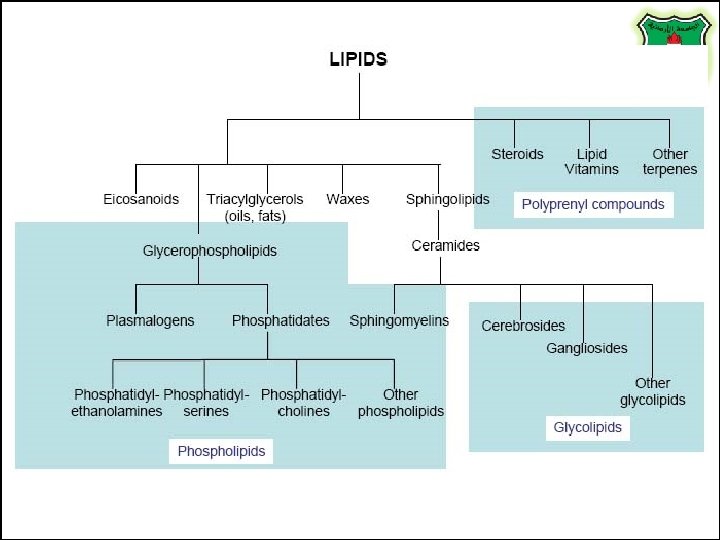
Lipids What are lipids? Classes Fatty acids Glycerides and waxes Phospholipids (glycerophospholipids and sphingolipids) Glycolipids Eicosanoids Steroids
Lipid Functions • • Source of energy Structural components (cell membranes) Regulators of signaling, metabolism, and absorption Precursors of hormone Precursors of vitamins Electric and tissue insulators Shock absorbers
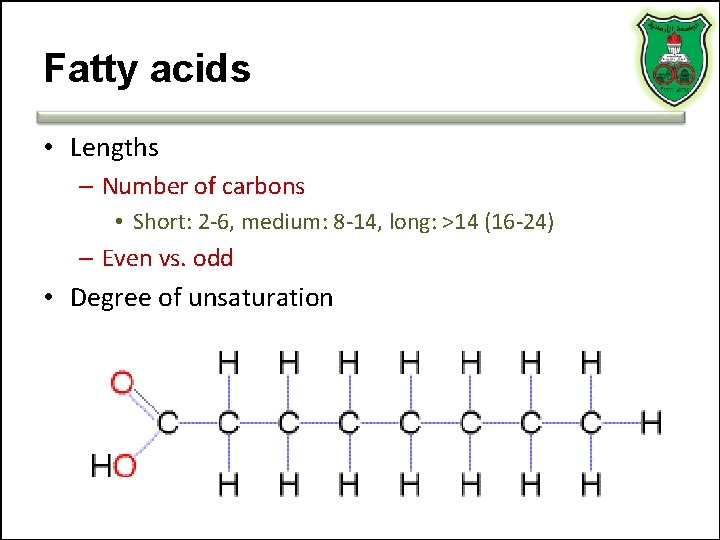
Fatty acids • Lengths – Number of carbons • Short: 2 -6, medium: 8 -14, long: >14 (16 -24) – Even vs. odd • Degree of unsaturation
Amphipathic molecules • They are an excellent examples of amphipathic molecules
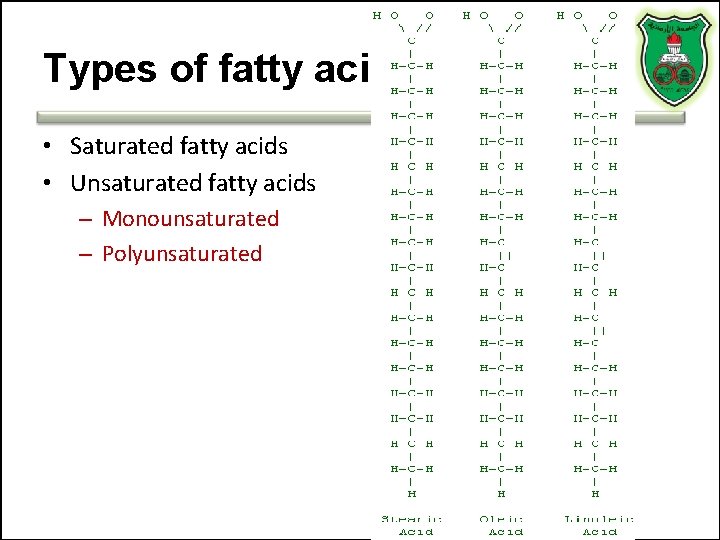
Types of fatty acids • Saturated fatty acids • Unsaturated fatty acids – Monounsaturated – Polyunsaturated
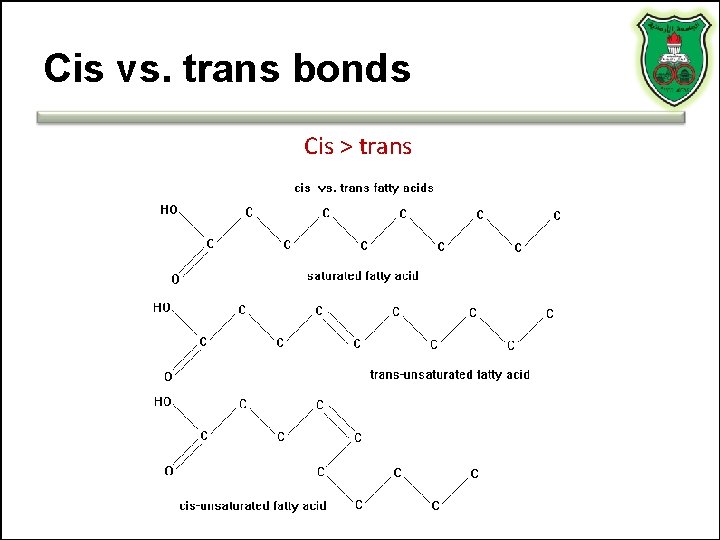
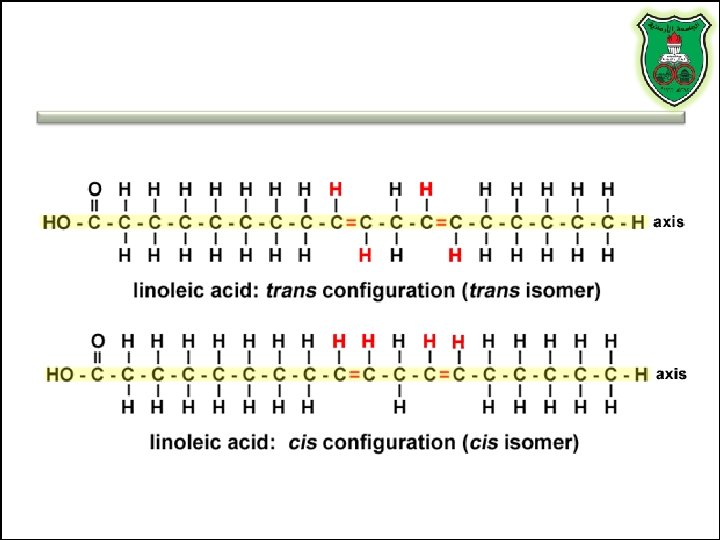
Cis vs. trans bonds Cis > trans
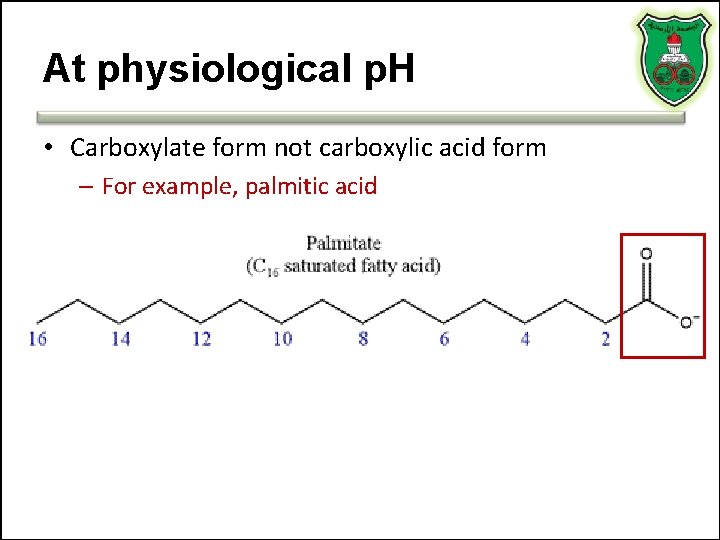
At physiological p. H • Carboxylate form not carboxylic acid form – For example, palmitic acid
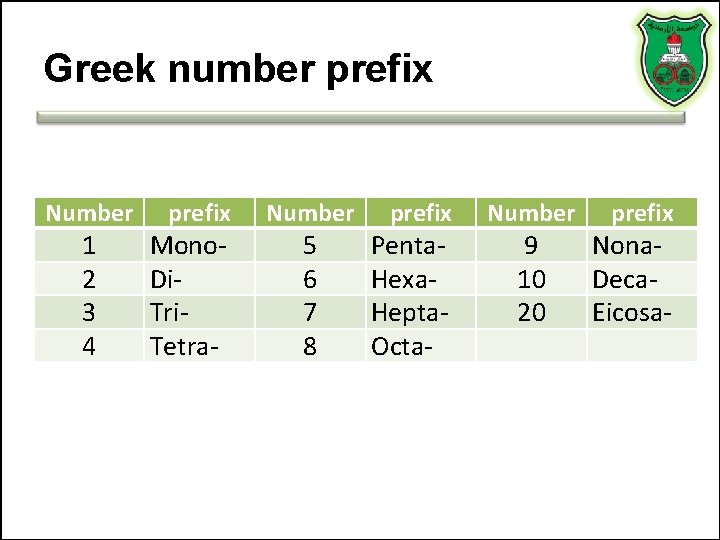
Greek number prefix Number 1 2 3 4 prefix Mono. Di. Tri. Tetra- Number 5 6 7 8 prefix Penta. Hexa. Hepta. Octa- Number 9 10 20 prefix Nona. Deca. Eicosa-
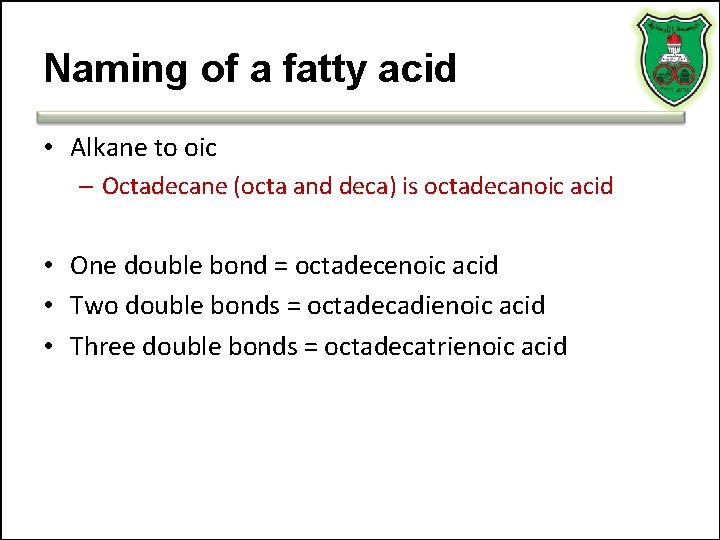
Naming of a fatty acid • Alkane to oic – Octadecane (octa and deca) is octadecanoic acid • One double bond = octadecenoic acid • Two double bonds = octadecadienoic acid • Three double bonds = octadecatrienoic acid
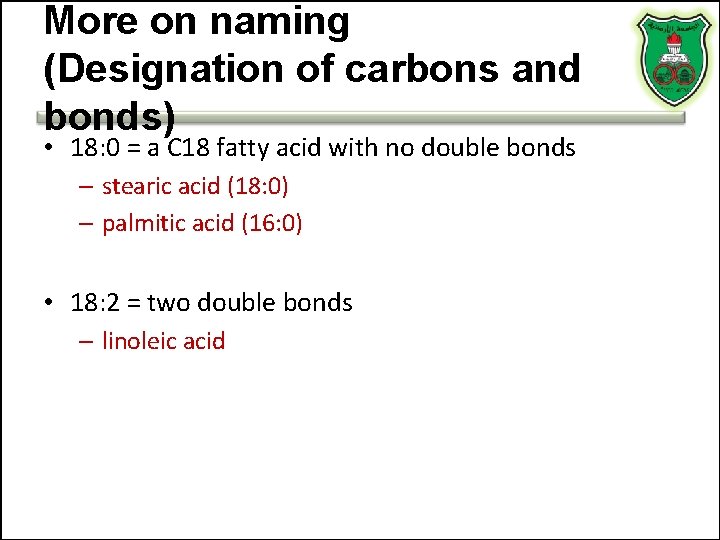
More on naming (Designation of carbons and bonds) • 18: 0 = a C 18 fatty acid with no double bonds – stearic acid (18: 0) – palmitic acid (16: 0) • 18: 2 = two double bonds – linoleic acid
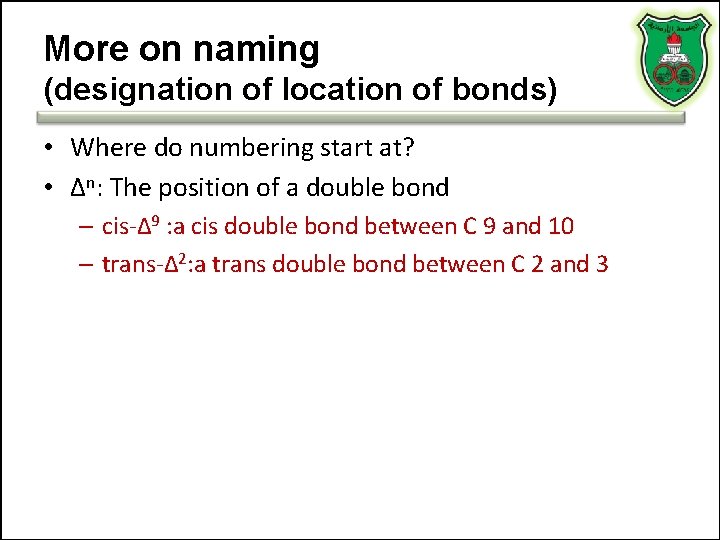
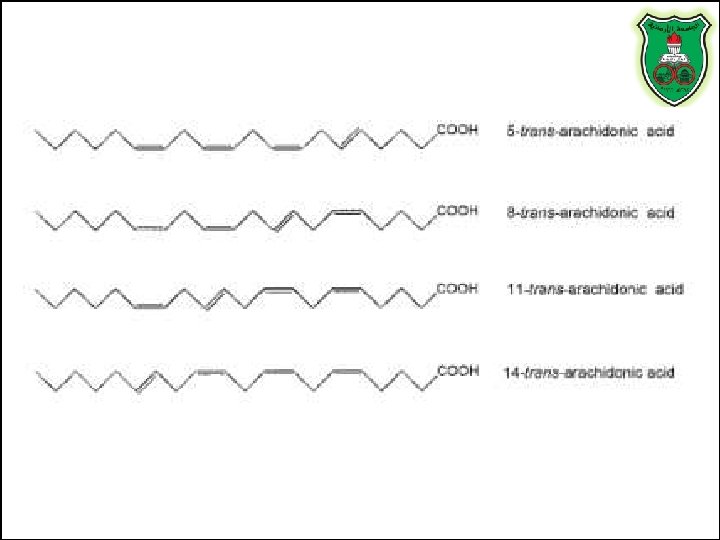
More on naming (designation of location of bonds) • Where do numbering start at? • Δn: The position of a double bond – cis-Δ 9 : a cis double bond between C 9 and 10 – trans-Δ 2: a trans double bond between C 2 and 3
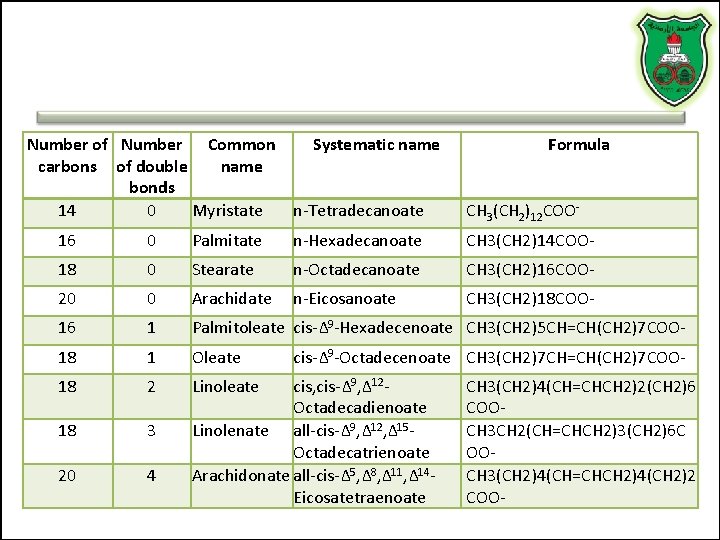
Number of Number Common Systematic name carbons of double name bonds 14 0 Myristate n-Tetradecanoate Formula CH 3(CH 2)12 COO- 16 0 Palmitate n-Hexadecanoate CH 3(CH 2)14 COO- 18 0 Stearate n-Octadecanoate CH 3(CH 2)16 COO- 20 0 Arachidate n-Eicosanoate CH 3(CH 2)18 COO- 16 1 Palmitoleate cis-Δ 9 -Hexadecenoate CH 3(CH 2)5 CH=CH(CH 2)7 COO- 18 1 Oleate 18 2 Linoleate 18 3 20 4 cis-Δ 9 -Octadecenoate CH 3(CH 2)7 CH=CH(CH 2)7 COO- cis, cis-Δ 9, Δ 12 Octadecadienoate Linolenate all-cis-Δ 9, Δ 12, Δ 15 Octadecatrienoate Arachidonate all-cis-Δ 5, Δ 8, Δ 11, Δ 14 Eicosatetraenoate CH 3(CH 2)4(CH=CHCH 2)2(CH 2)6 COOCH 3 CH 2(CH=CHCH 2)3(CH 2)6 C OOCH 3(CH 2)4(CH=CHCH 2)4(CH 2)2 COO-
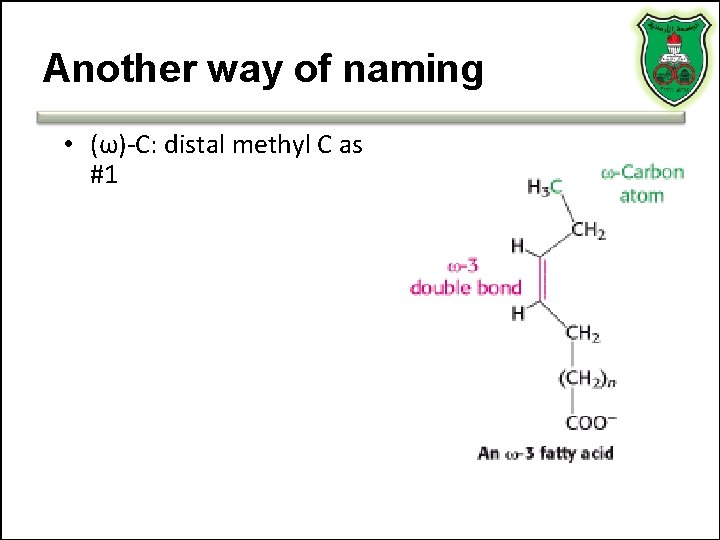
Another way of naming • (ω)-C: distal methyl C as #1
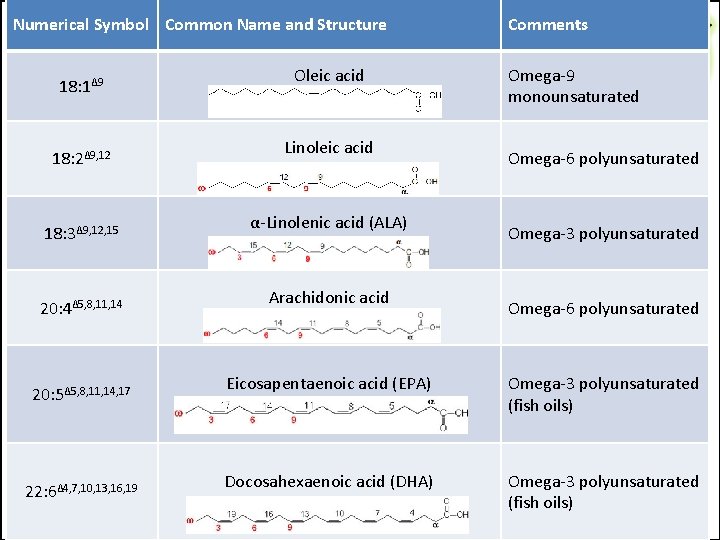
Numerical Symbol Common Name and Structure 18: 1Δ 9 18: 2Δ 9, 12 18: 3Δ 9, 12, 15 20: 4Δ 5, 8, 11, 14 20: 5Δ 5, 8, 11, 14, 17 22: 6Δ 4, 7, 10, 13, 16, 19 Oleic acid Linoleic acid α-Linolenic acid (ALA) Arachidonic acid Comments Omega-9 monounsaturated Omega-6 polyunsaturated Omega-3 polyunsaturated Omega-6 polyunsaturated Eicosapentaenoic acid (EPA) Omega-3 polyunsaturated (fish oils) Docosahexaenoic acid (DHA) Omega-3 polyunsaturated (fish oils)
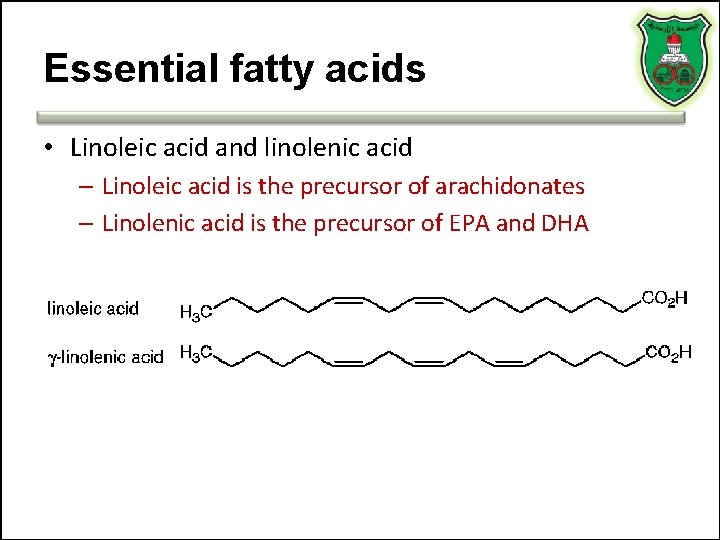
Essential fatty acids • Linoleic acid and linolenic acid – Linoleic acid is the precursor of arachidonates – Linolenic acid is the precursor of EPA and DHA
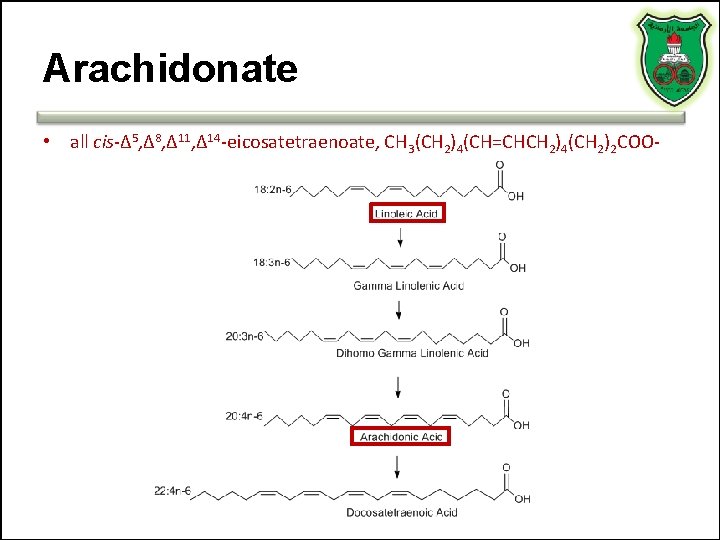
Arachidonate • all cis-Δ 5, Δ 8, Δ 11, Δ 14 -eicosatetraenoate, CH 3(CH 2)4(CH=CHCH 2)4(CH 2)2 COO-
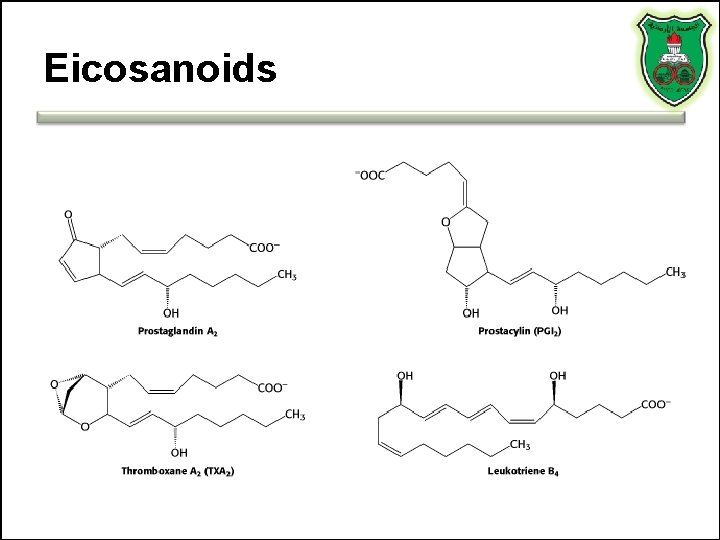
Eicosanoids
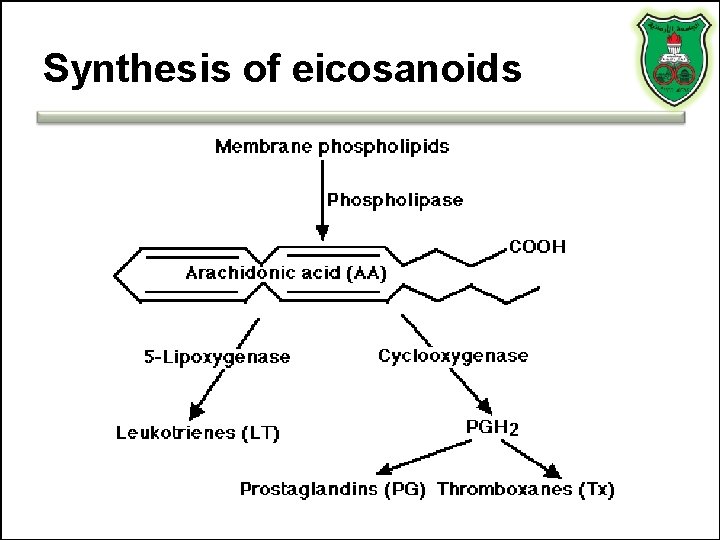
Synthesis of eicosanoids
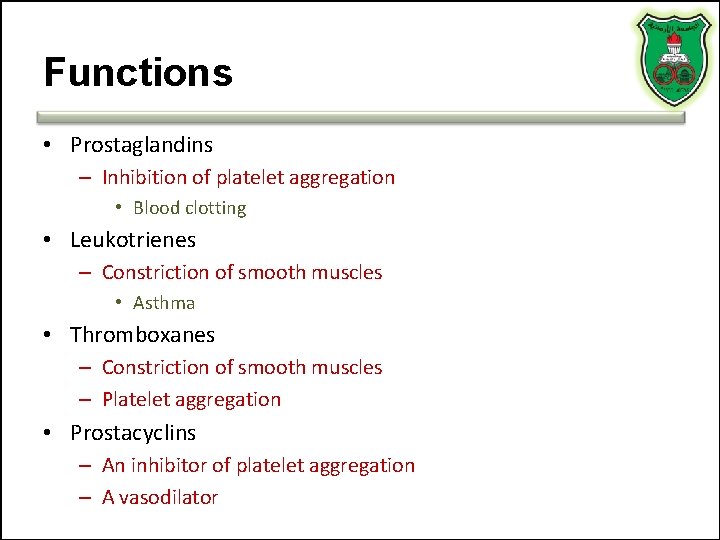
Functions • Prostaglandins – Inhibition of platelet aggregation • Blood clotting • Leukotrienes – Constriction of smooth muscles • Asthma • Thromboxanes – Constriction of smooth muscles – Platelet aggregation • Prostacyclins – An inhibitor of platelet aggregation – A vasodilator
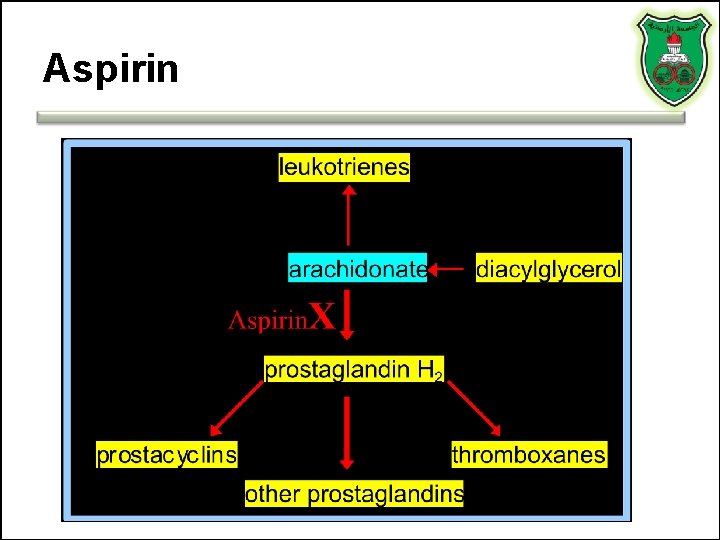
Aspirin
Omega-3 PUFAs • α-linolenic acid eicosapentaenoic acid (EPA) docosahexaenoic acid (DHA) • Clinically speaking – Reduce inflammatory reactions by • Reducing conversion of arachidonic acid into eicosanoids • Promoting synthesis of anti-inflammatory molecules – Brain development and function http: //supplementscience. org/pufas. html
Omega -6 PUFAs • Arachidonic acid – stimulate platelet and leukocyte activation, – signaling of pain, – induction of bronchoconstriction, – regulation of gastric secretion
Clinical Significance of omega -9 FAs • Oleic acid – Reducing cholesterol in the circulation
Properties of fatty acids • The properties of fatty acids are dependent on chain length and degree of saturation
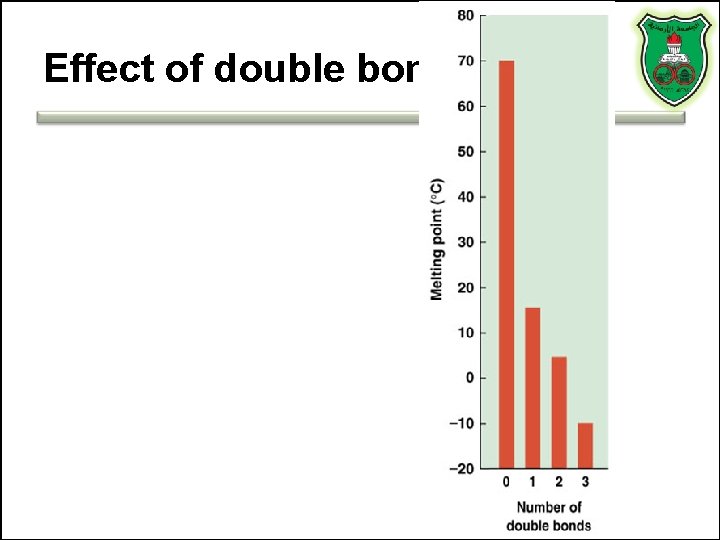
Effect of double bonds
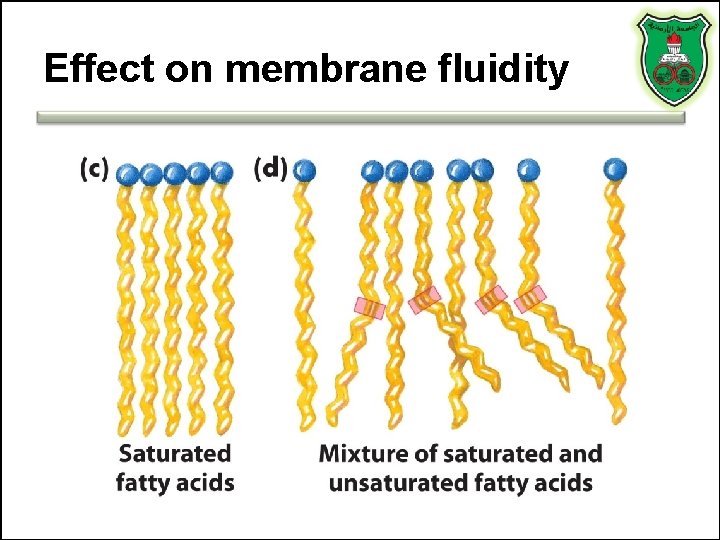
Effect on membrane fluidity
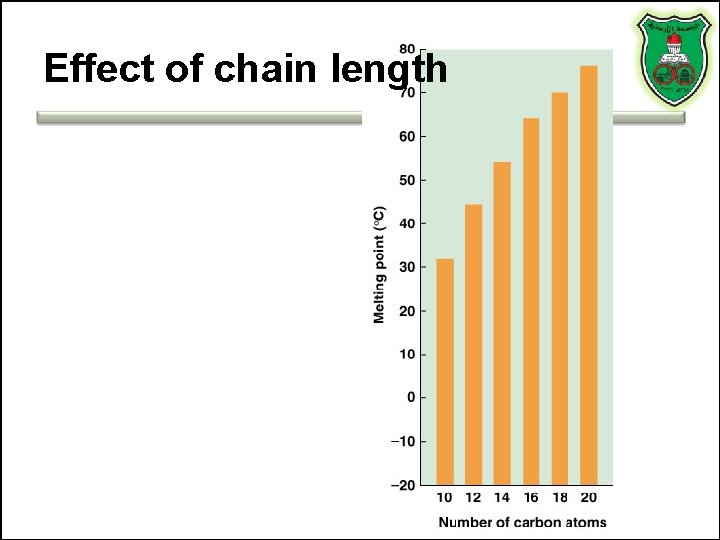
Effect of chain length
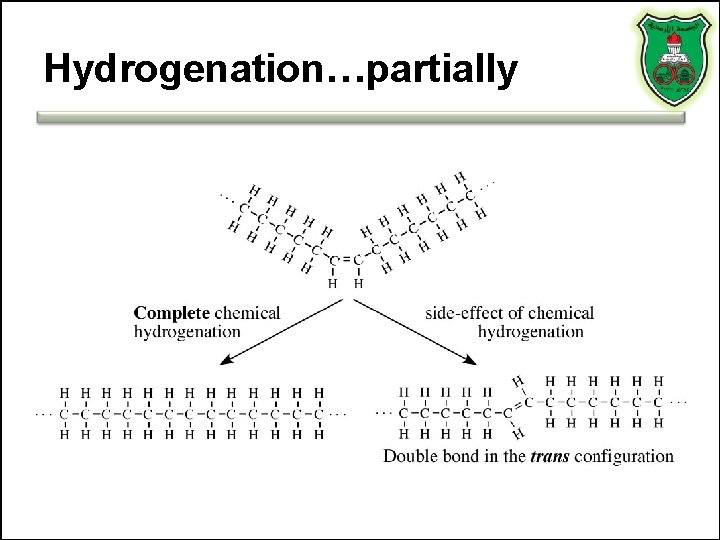
Hydrogenation…partially
Physiological importance of fatty acids • • Building blocks of other lipids Modification of many proteins (lipoproteins) Important fuel molecules Derivatives of important cellular molecules
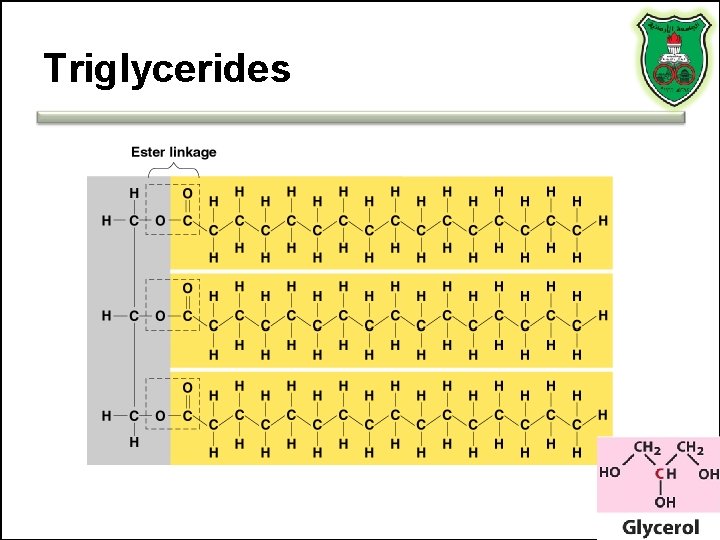
Triglycerides
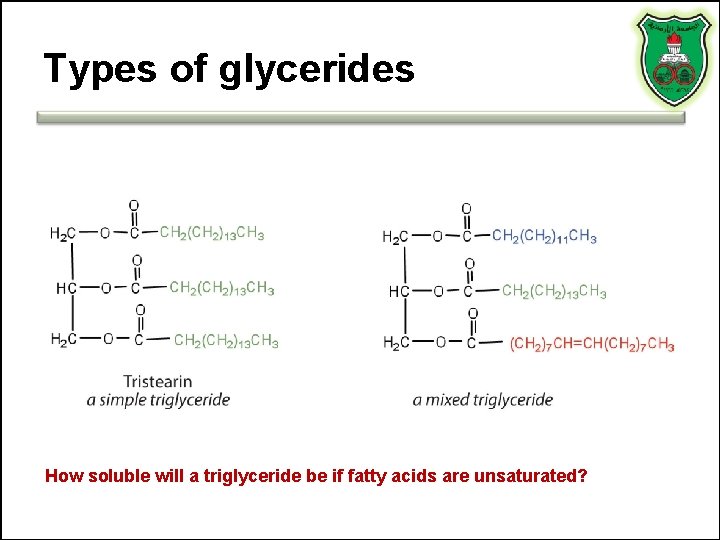
Types of glycerides How soluble will a triglyceride be if fatty acids are unsaturated?
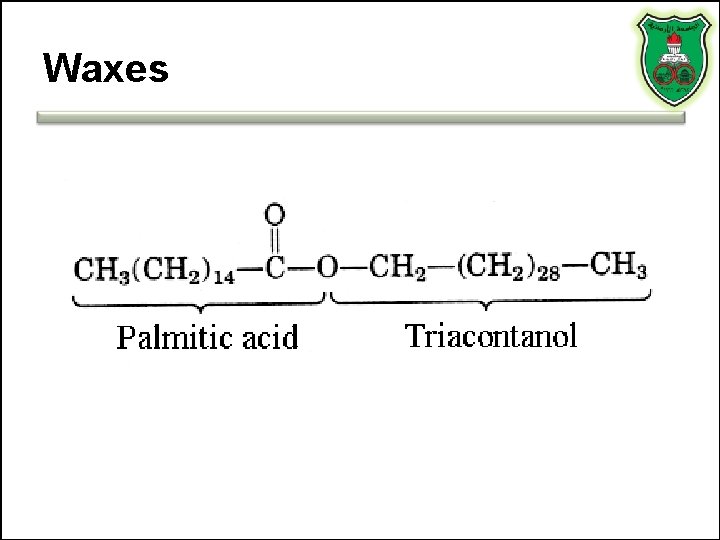
Waxes
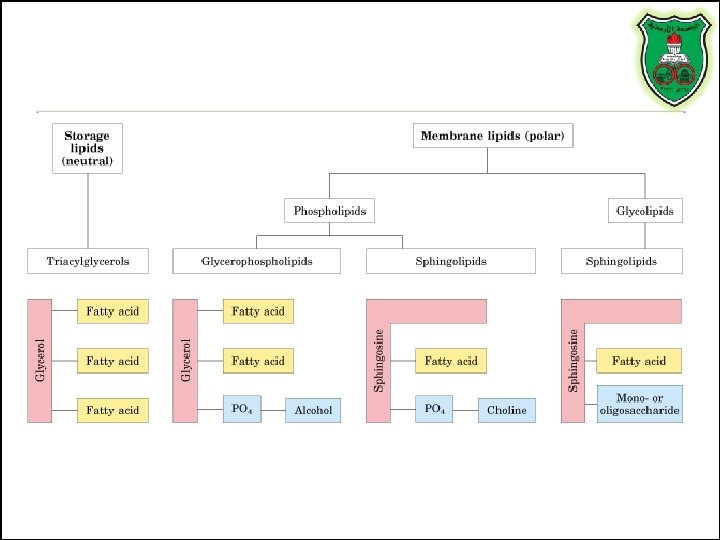
Other lipids • • Phospholipids Sphingolipids Glycolipids Steroids
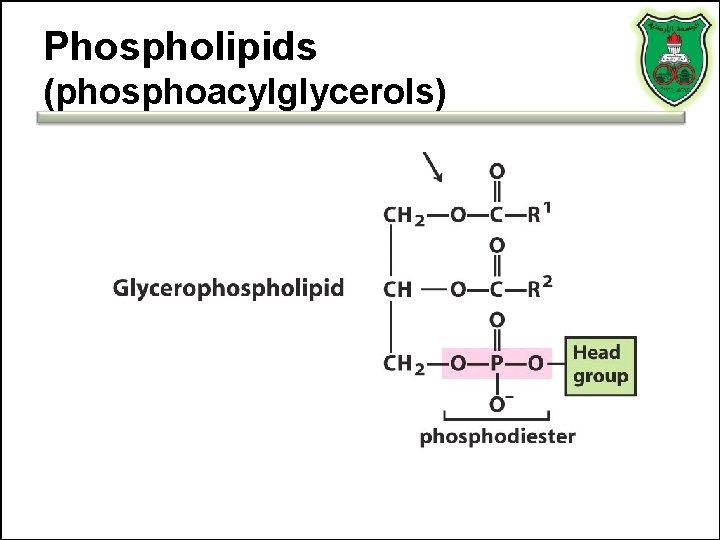
Phospholipids (phosphoacylglycerols)
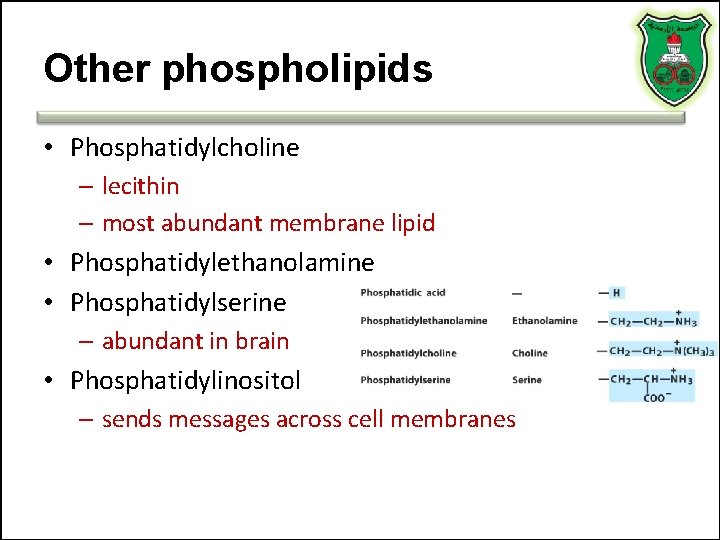
Other phospholipids • Phosphatidylcholine – lecithin – most abundant membrane lipid • Phosphatidylethanolamine • Phosphatidylserine – abundant in brain • Phosphatidylinositol – sends messages across cell membranes
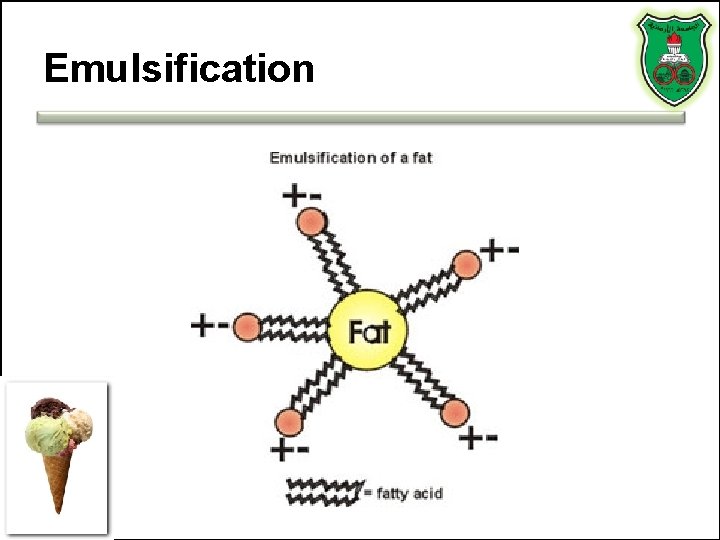
Emulsification
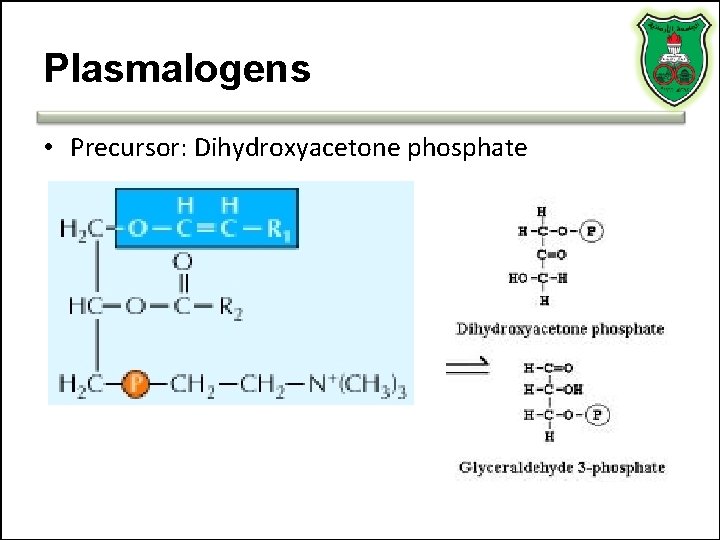
Plasmalogens • Precursor: Dihydroxyacetone phosphate
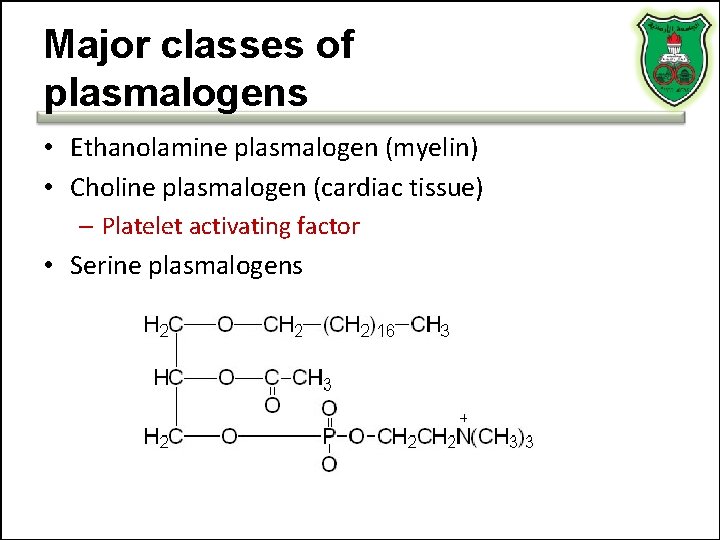
Major classes of plasmalogens • Ethanolamine plasmalogen (myelin) • Choline plasmalogen (cardiac tissue) – Platelet activating factor • Serine plasmalogens
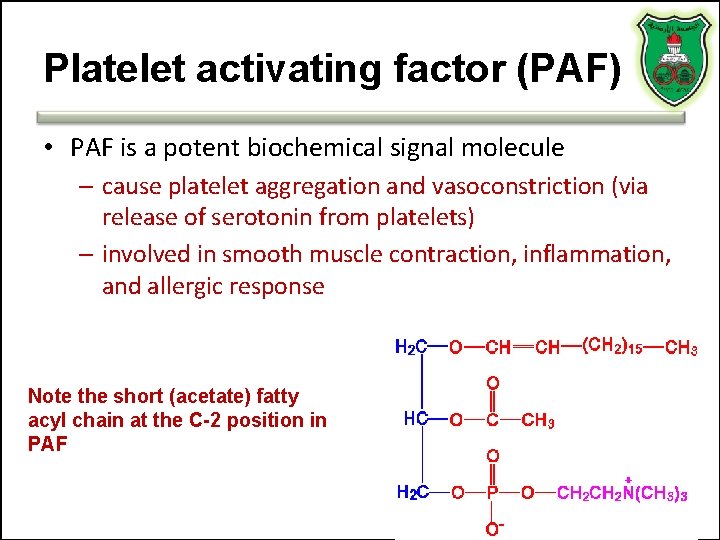
Platelet activating factor (PAF) • PAF is a potent biochemical signal molecule – cause platelet aggregation and vasoconstriction (via release of serotonin from platelets) – involved in smooth muscle contraction, inflammation, and allergic response Note the short (acetate) fatty acyl chain at the C-2 position in PAF
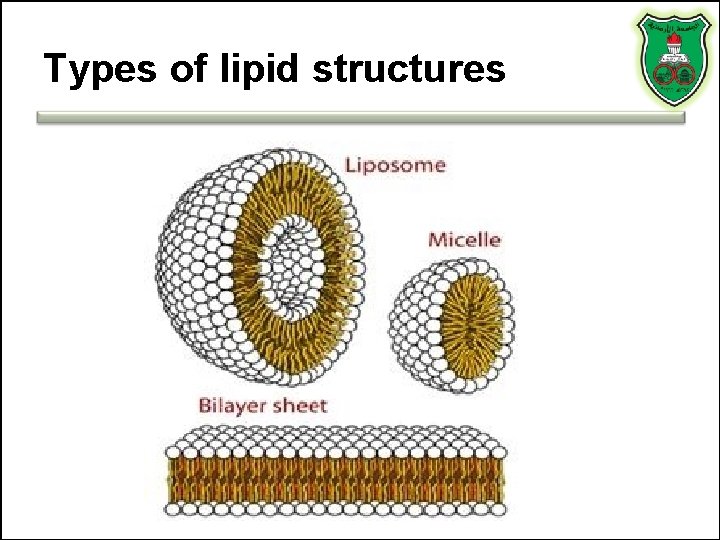
Types of lipid structures
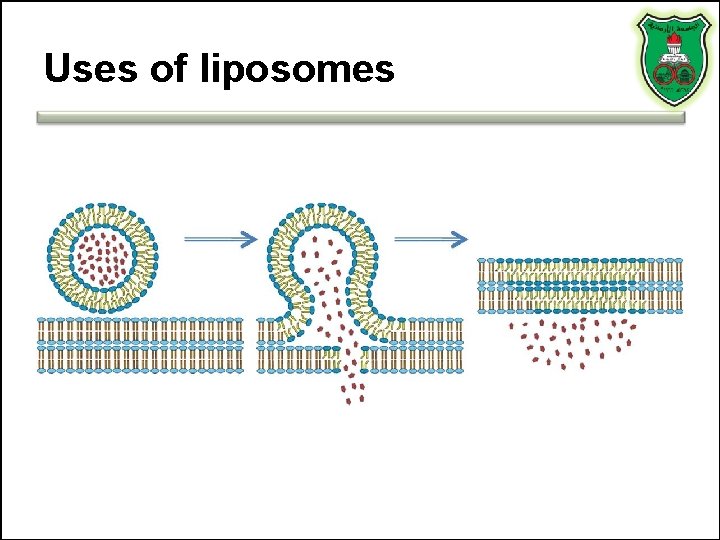
Uses of liposomes
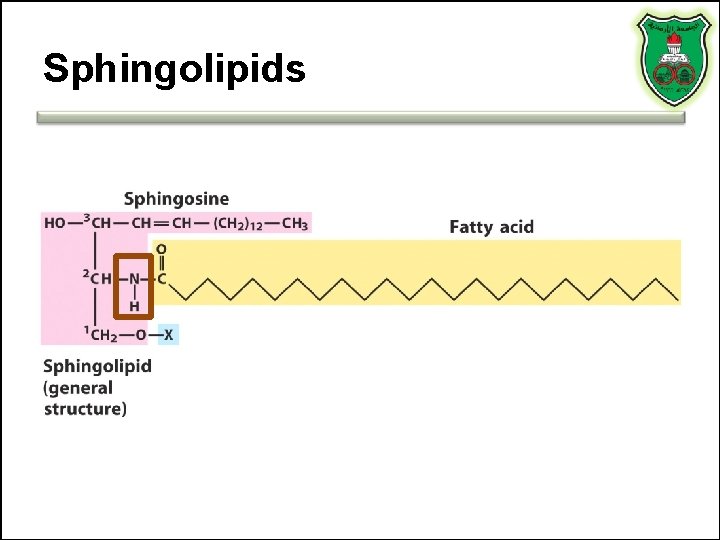
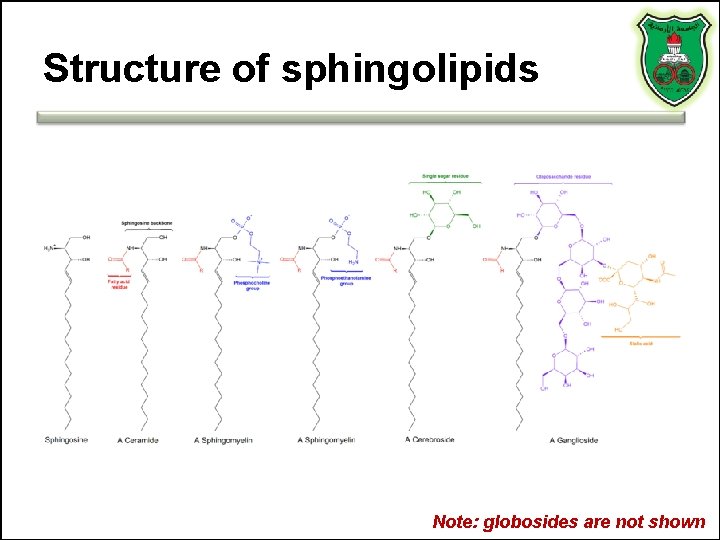
Sphingolipids
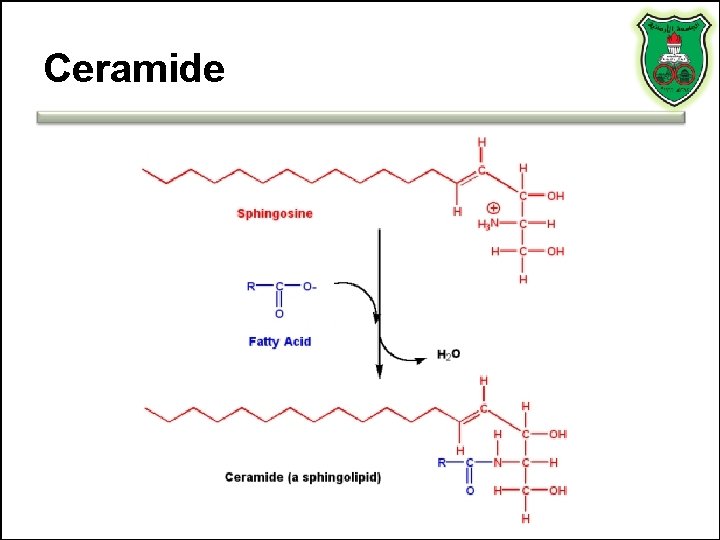
Ceramide
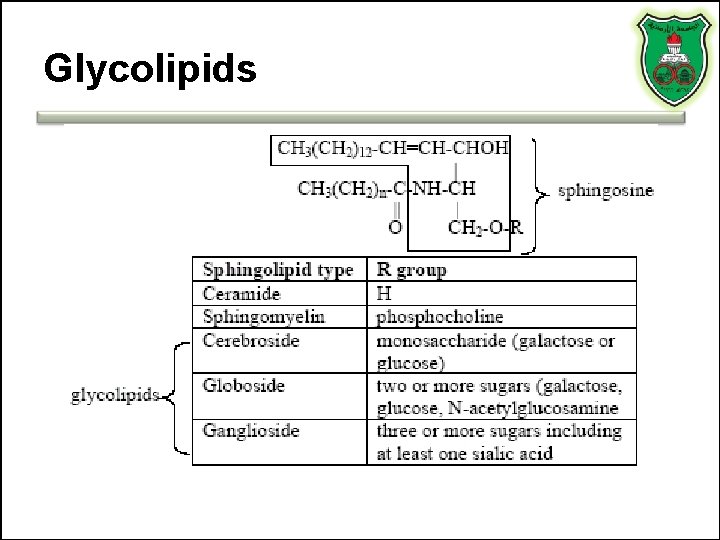
Types of sphingolipids • The sphingolipids are divided into the two subcategories: – Sphingomyelins – Glycosphingolipid (or glycolipids)
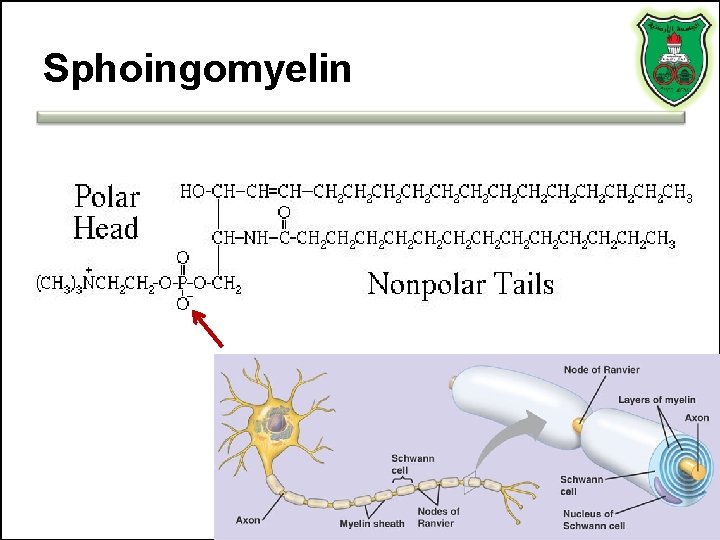
Sphoingomyelin
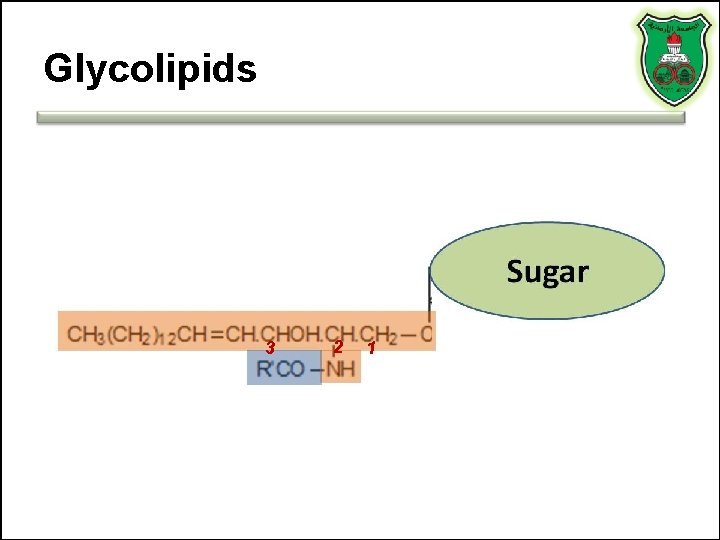
Glycolipids 3 2 1
Glycolipids
Structure of sphingolipids Note: globosides are not shown
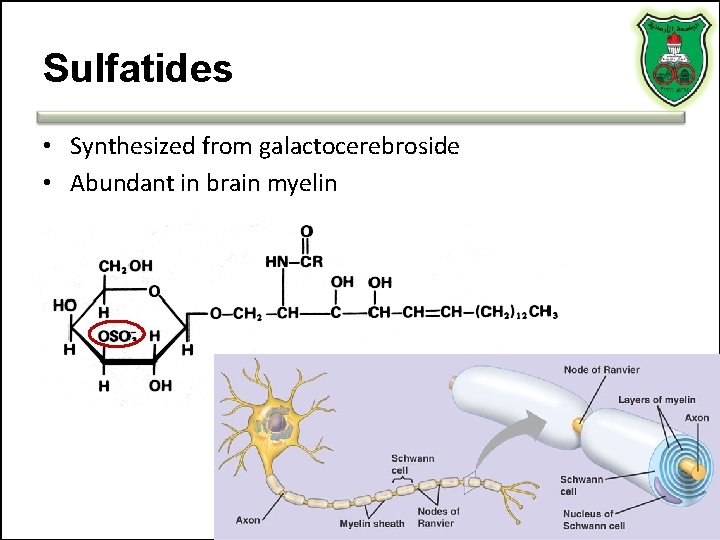
Sulfatides • Synthesized from galactocerebroside • Abundant in brain myelin
Blood groups
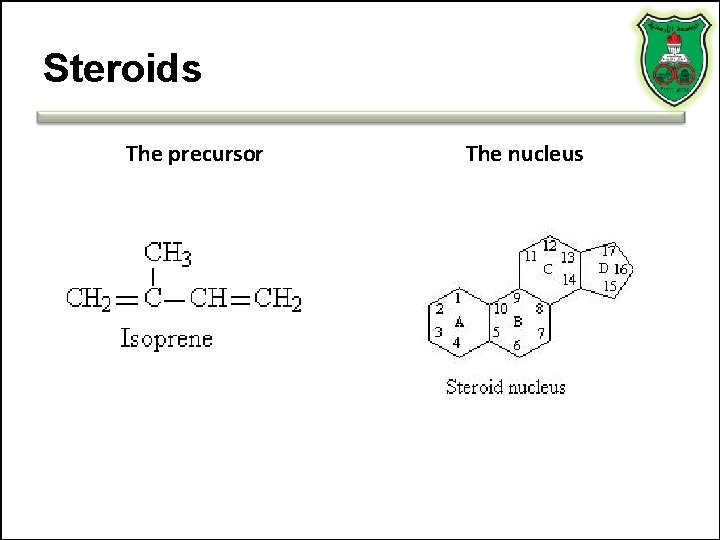
Steroids The precursor The nucleus
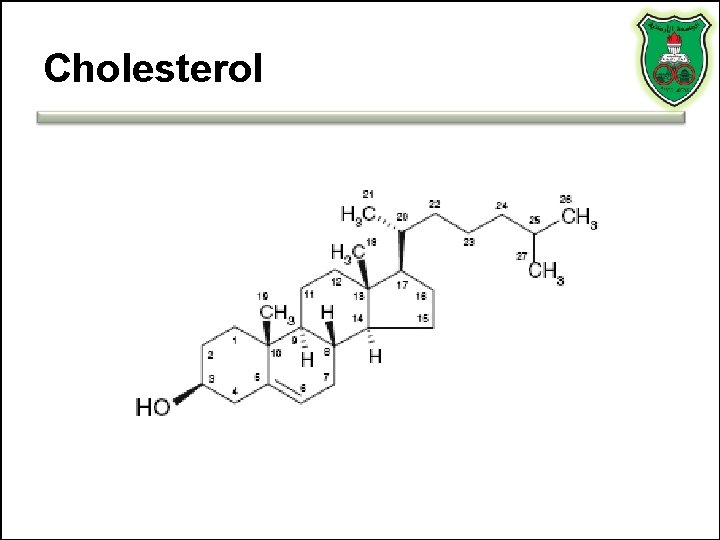
Cholesterol
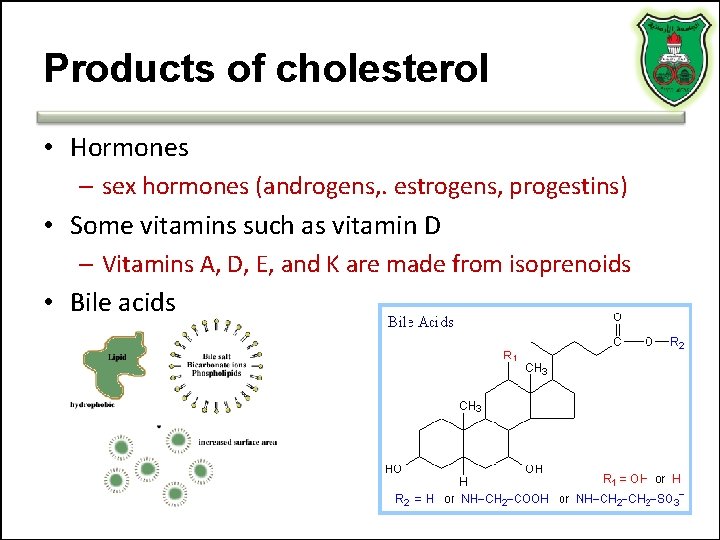
Products of cholesterol • Hormones – sex hormones (androgens, . estrogens, progestins) • Some vitamins such as vitamin D – Vitamins A, D, E, and K are made from isoprenoids • Bile acids
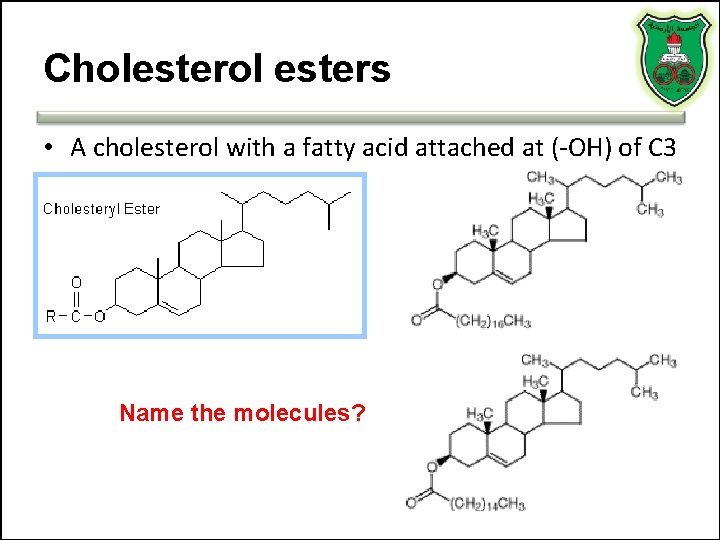
Cholesterol esters • A cholesterol with a fatty acid attached at (-OH) of C 3 Name the molecules?
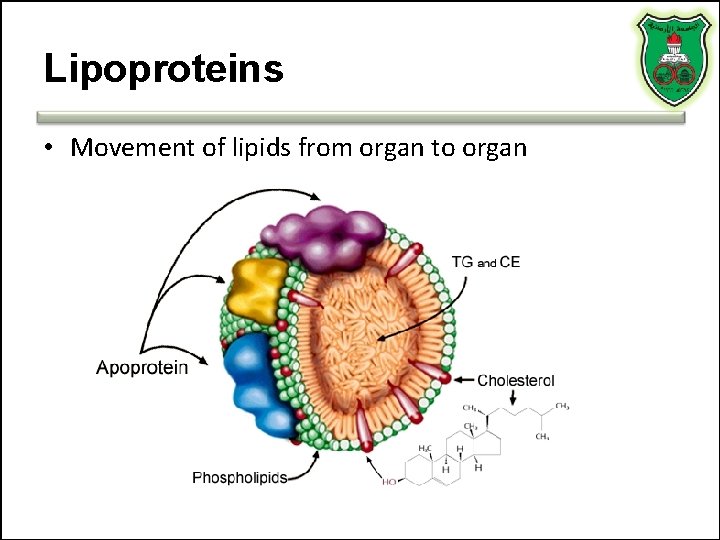
Lipoproteins • Movement of lipids from organ to organ
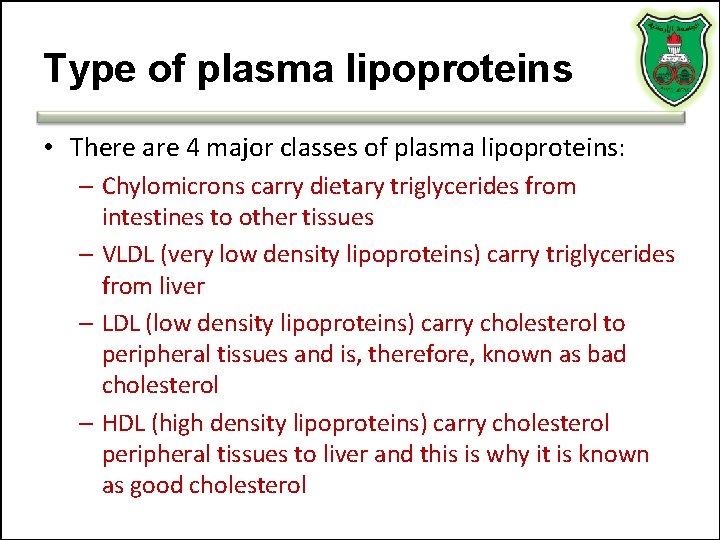
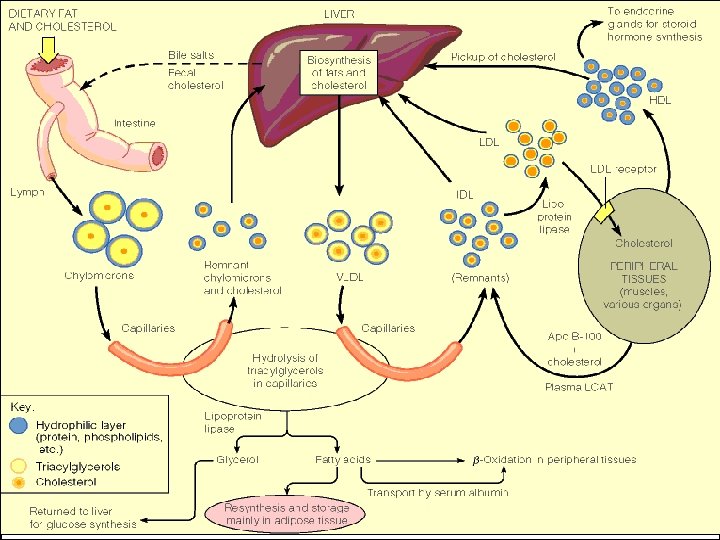
Type of plasma lipoproteins • There are 4 major classes of plasma lipoproteins: – Chylomicrons carry dietary triglycerides from intestines to other tissues – VLDL (very low density lipoproteins) carry triglycerides from liver – LDL (low density lipoproteins) carry cholesterol to peripheral tissues and is, therefore, known as bad cholesterol – HDL (high density lipoproteins) carry cholesterol peripheral tissues to liver and this is why it is known as good cholesterol
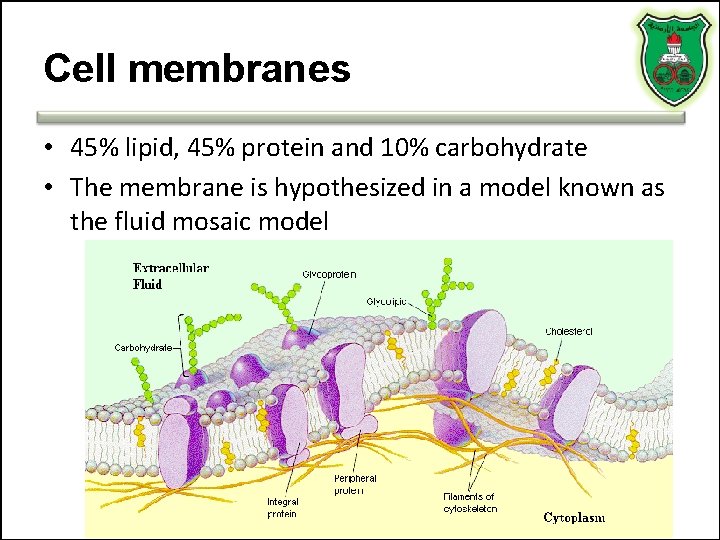
Cell membranes • 45% lipid, 45% protein and 10% carbohydrate • The membrane is hypothesized in a model known as the fluid mosaic model
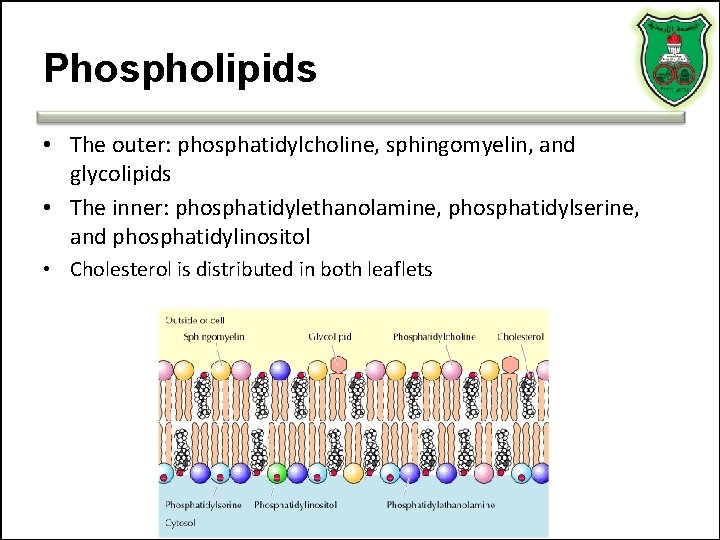
Phospholipids • The outer: phosphatidylcholine, sphingomyelin, and glycolipids • The inner: phosphatidylethanolamine, phosphatidylserine, and phosphatidylinositol • Cholesterol is distributed in both leaflets
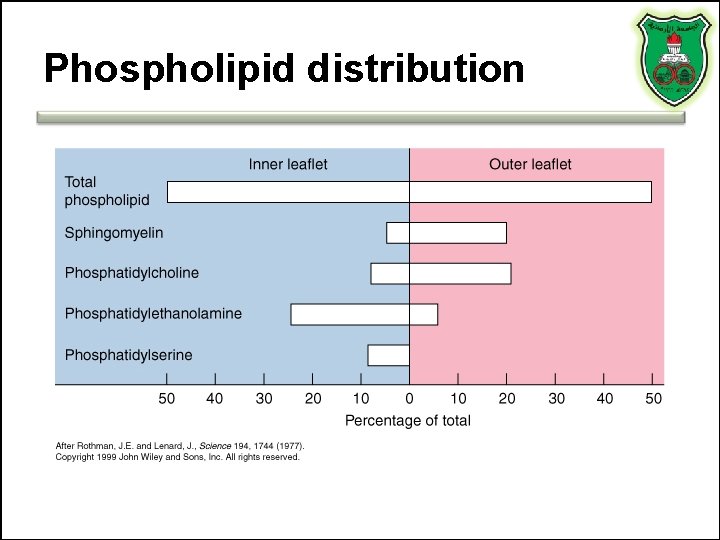
Phospholipid distribution
Features of phospholipid bilayers • Impermeable barrier • Viscous fluid
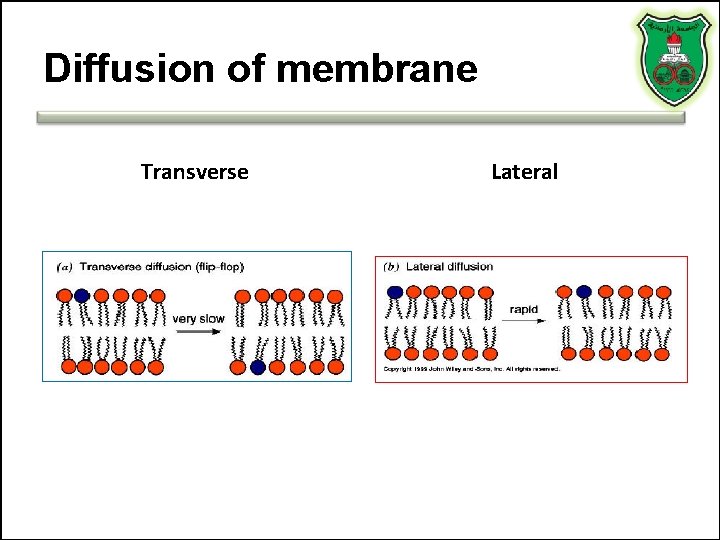
Diffusion of membrane Transverse Lateral
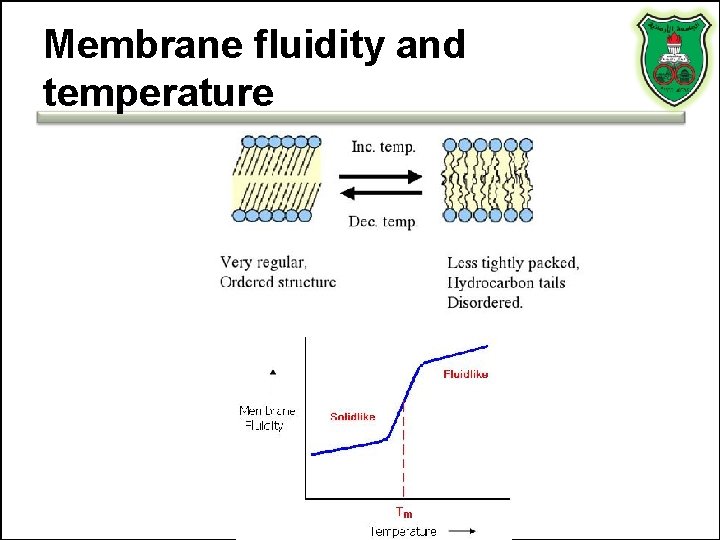
Membrane fluidity and temperature
Effect on membrane fluidity • Cholesterol influences the fluidity of plasma membranes • Cholesterol makes a membrane less solid at low temperatures and more solid at high temperatures
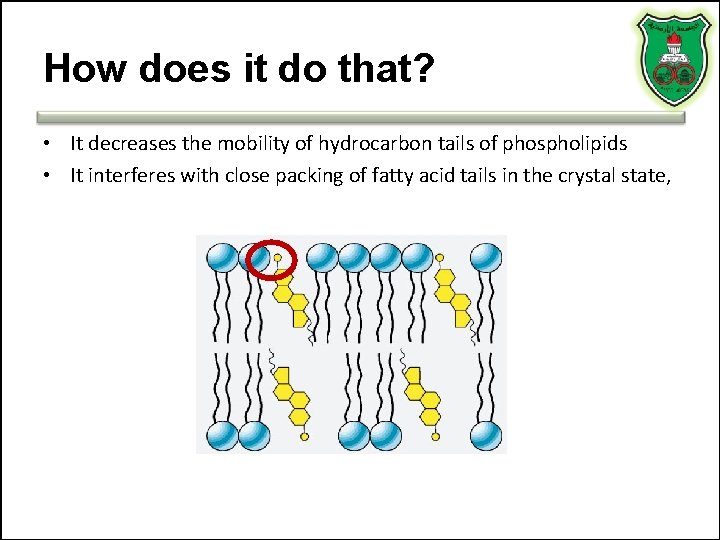
How does it do that? • It decreases the mobility of hydrocarbon tails of phospholipids • It interferes with close packing of fatty acid tails in the crystal state,
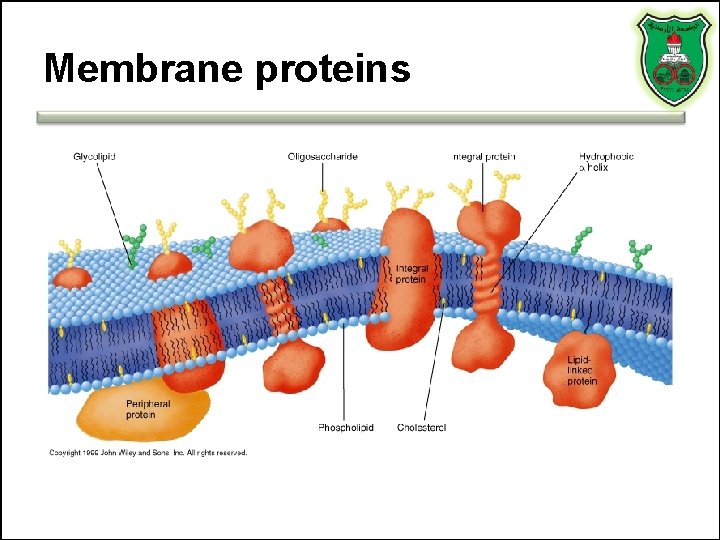
Membrane proteins
Types of membrane proteins • Peripheral proteins: – are associated with the exterior of membranes via noncovalent interactions • Integral membrane proteins: – anchored into membrane via hydrophobic regions • Lipid-anchored: – associated via a lipid group
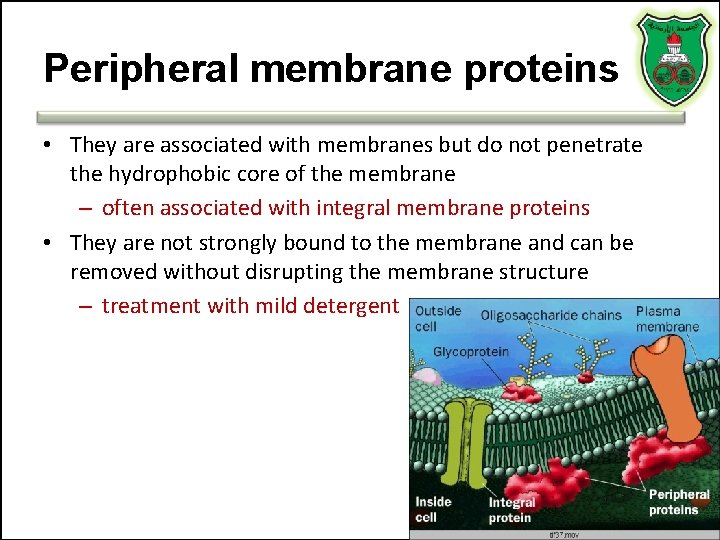
Peripheral membrane proteins • They are associated with membranes but do not penetrate the hydrophobic core of the membrane – often associated with integral membrane proteins • They are not strongly bound to the membrane and can be removed without disrupting the membrane structure – treatment with mild detergent
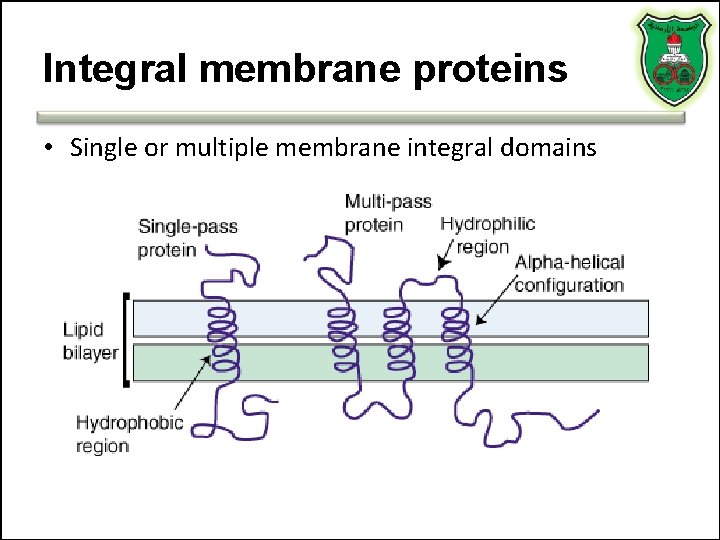
Integral membrane proteins • Single or multiple membrane integral domains
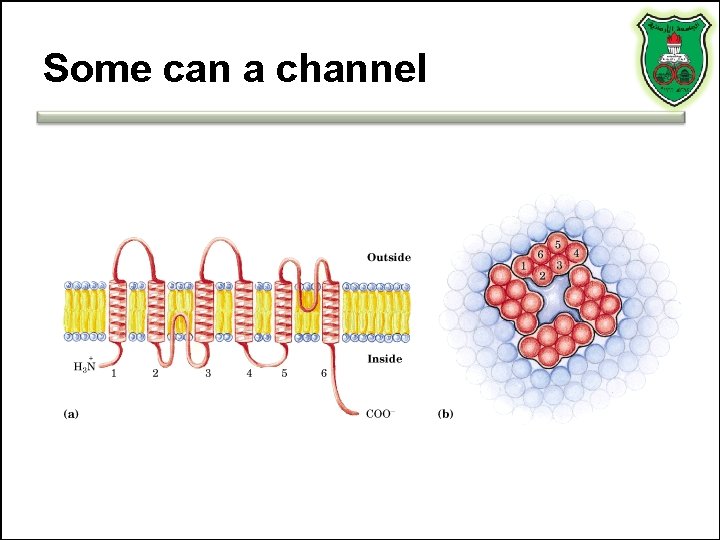
Some can a channel
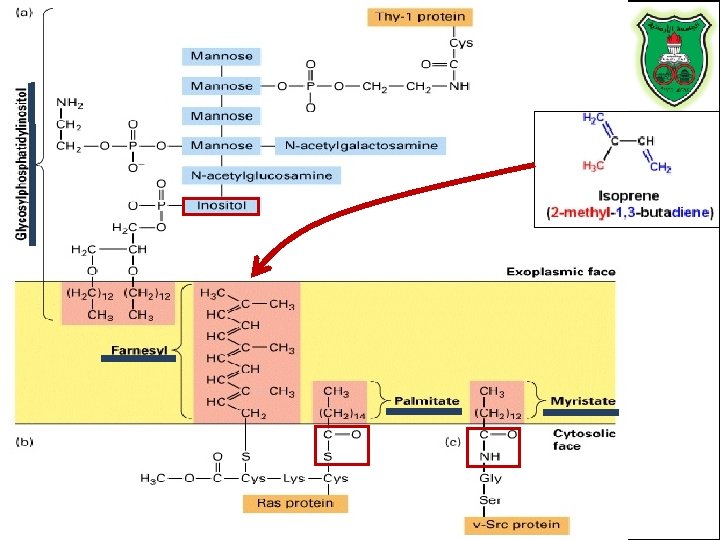
Lipid-anchored membrane proteins • Four types have been found: – Amide-linked myristoyl anchors • Always myristic acid – Thioester-linked fatty acyl anchors • myristate, palmitate, stearate, oleate – Thioether-linked prenyl anchors • Prenylation refers to linking of "isoprene"-based groups – Glycosyl phosphatidylinositol anchors • Ethanolamine link to an oligosaccharide linked in turn to inositol of PI
MEMBRANE TRANSPORT
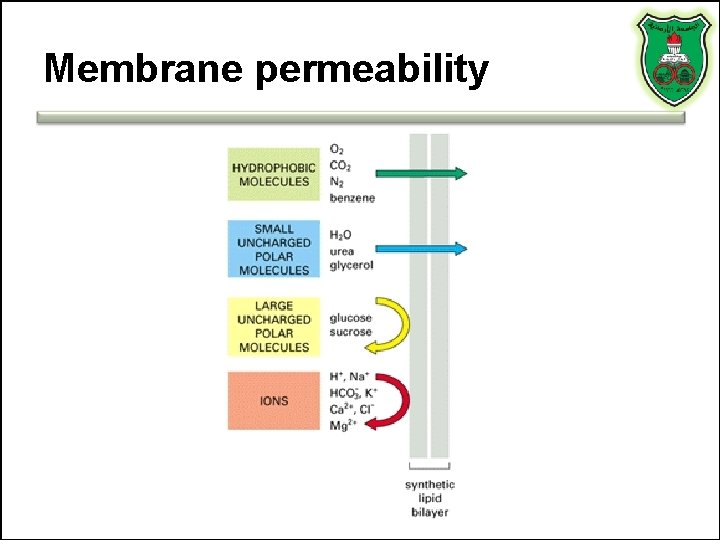
Membrane permeability
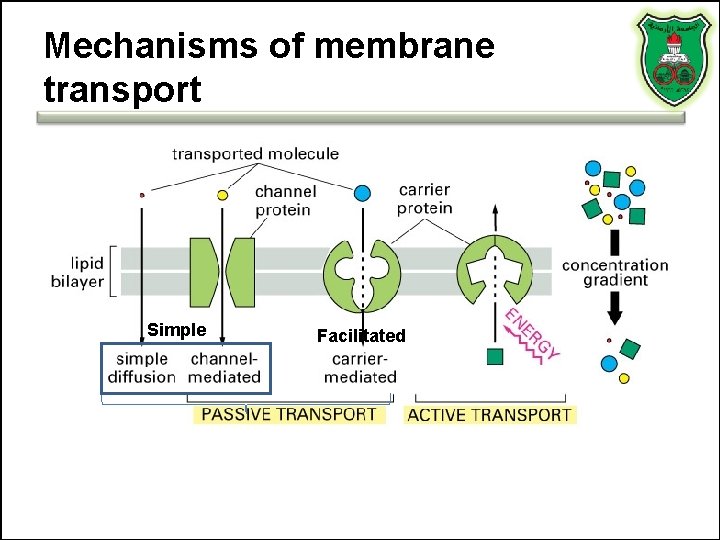
Mechanisms of membrane transport Simple Facilitated
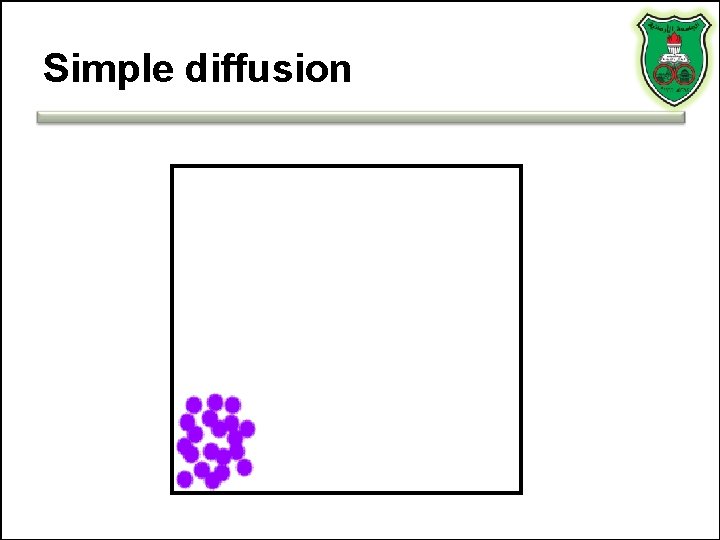
Simple diffusion
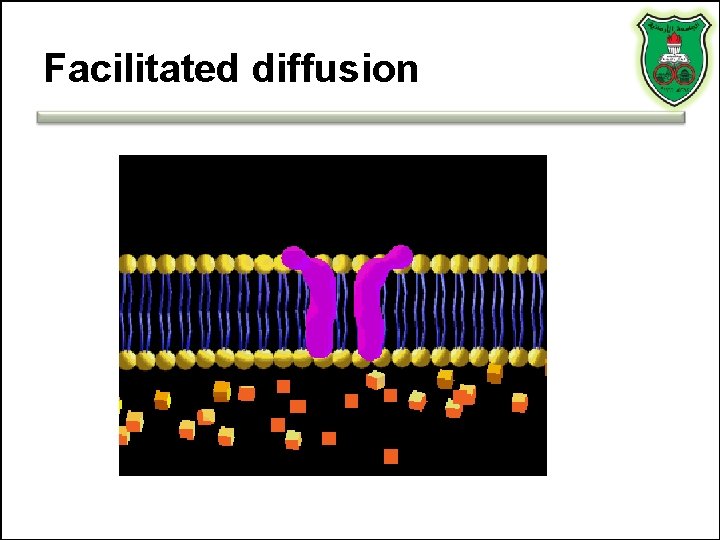
Facilitated diffusion
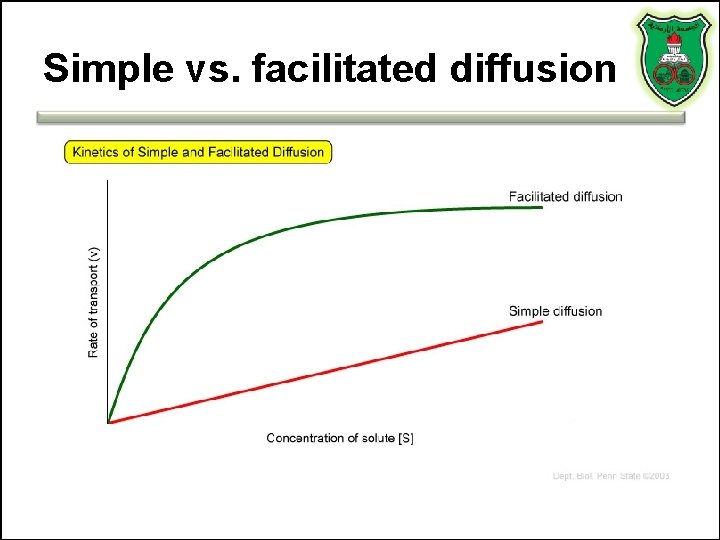
Simple vs. facilitated diffusion
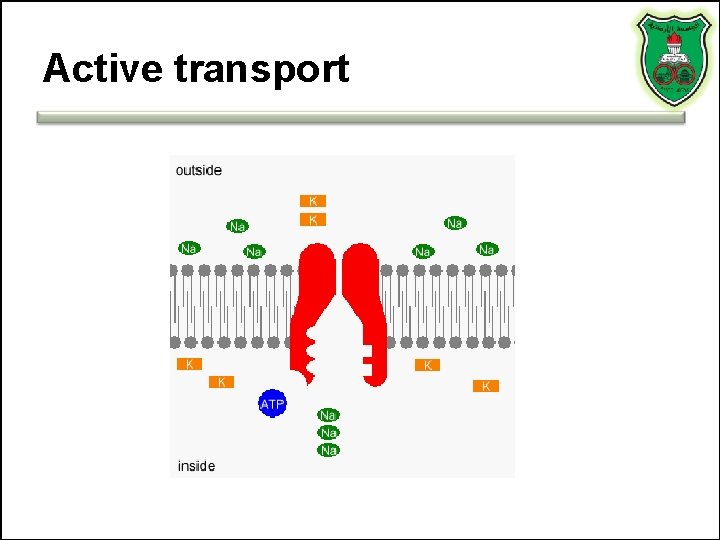
Active transport
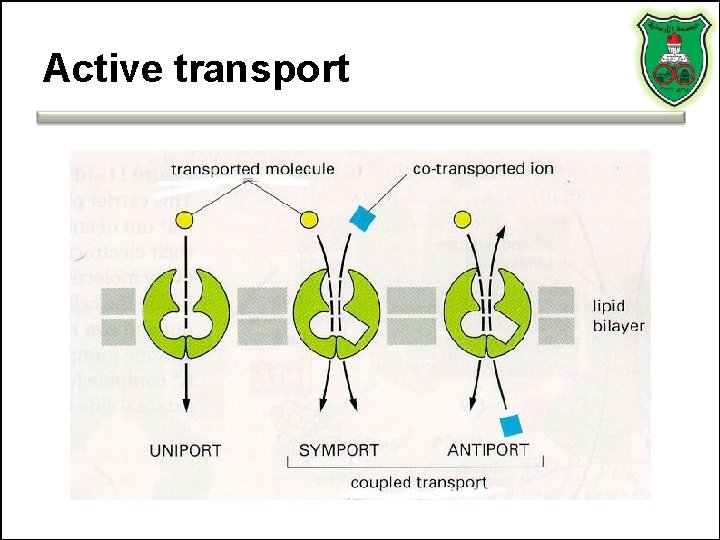
Active transport
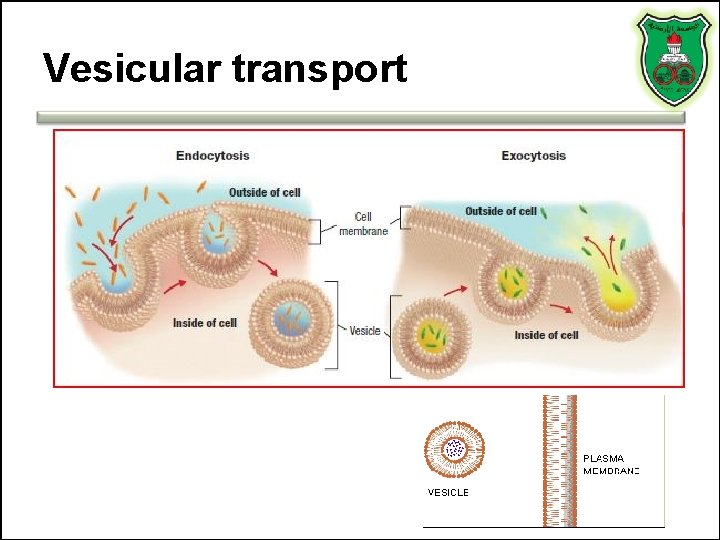
Vesicular transport
VITAMINS
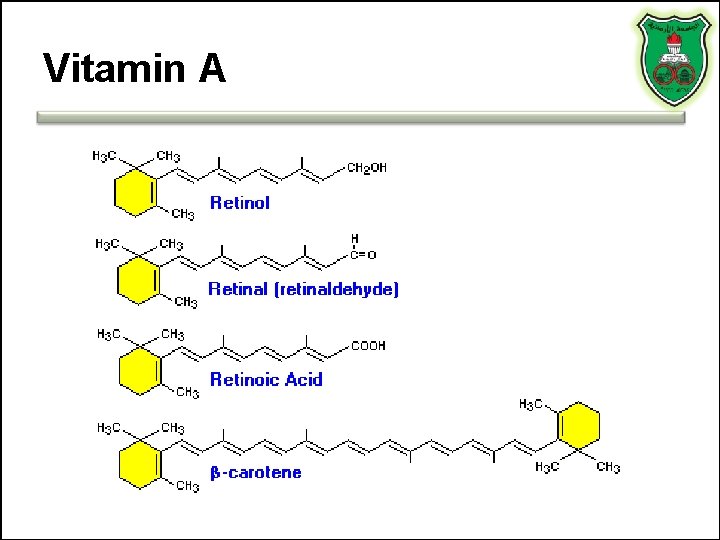
Vitamin A
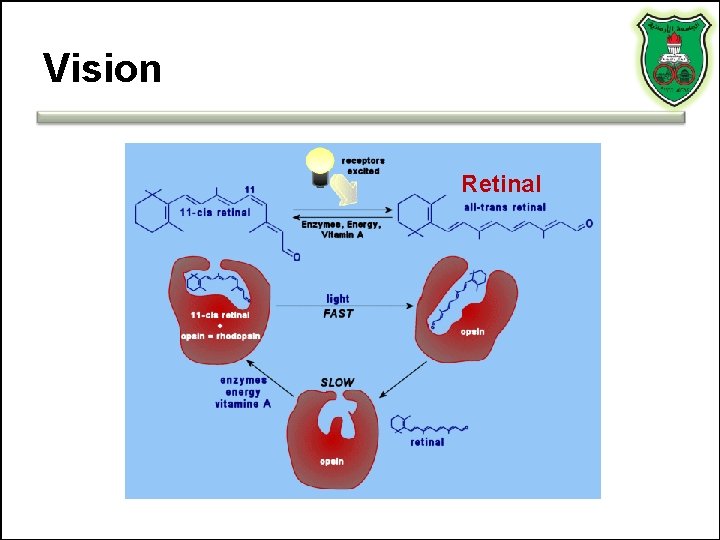
Vision Retinal
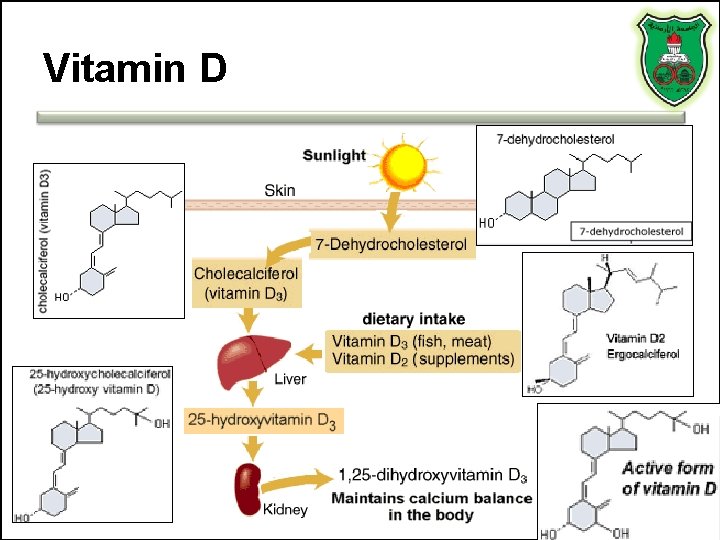
Vitamin D
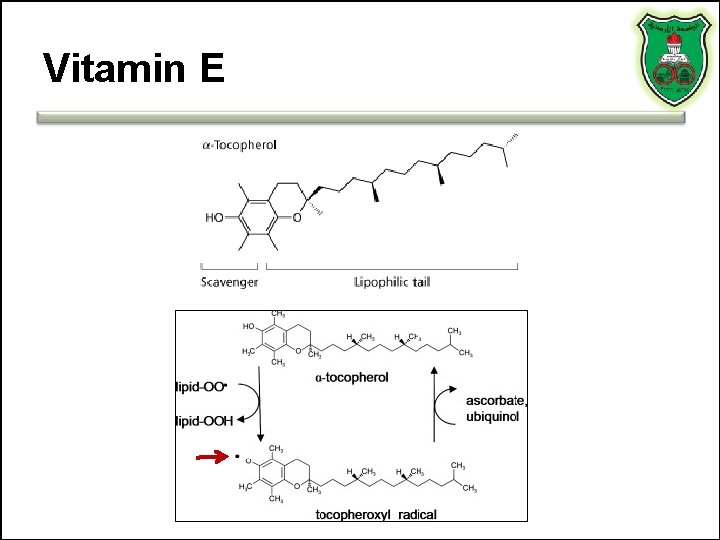
Vitamin E
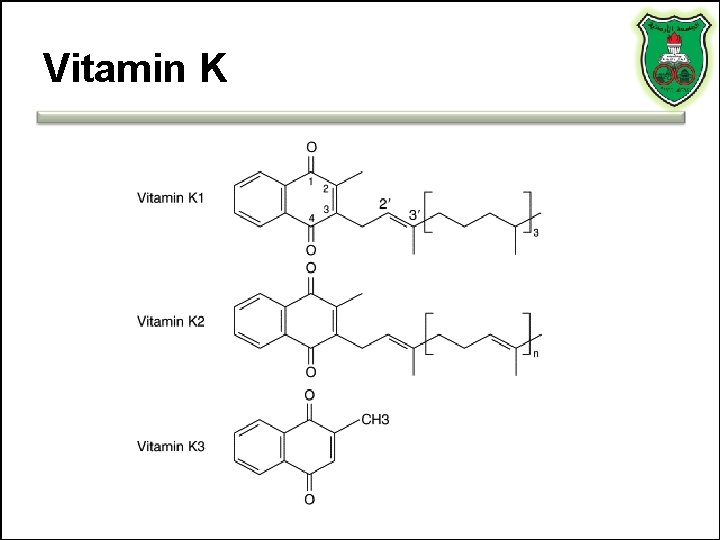
Vitamin K
- Slides: 93