
LIPIDS C H O 2016 Paul Billiet ODWS
LIPIDS C, H, O © 2016 Paul Billiet ODWS
Lipids • More hydrogen (more reduced) than carbohydrates • Insoluble in water, soluble in organic solvents (alcohols, acetone, chloroform etc). © 2016 Paul Billiet ODWS
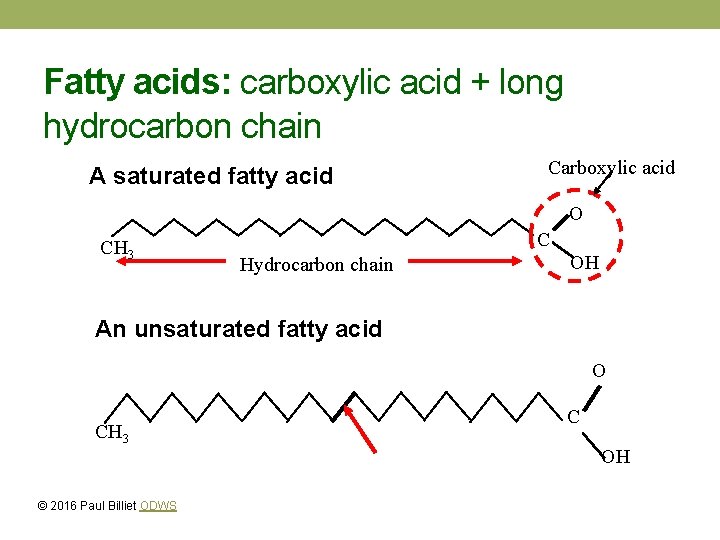
Fatty acids: carboxylic acid + long hydrocarbon chain A saturated fatty acid Carboxylic acid O CH 3 C Hydrocarbon chain OH An unsaturated fatty acid O CH 3 © 2016 Paul Billiet ODWS C OH
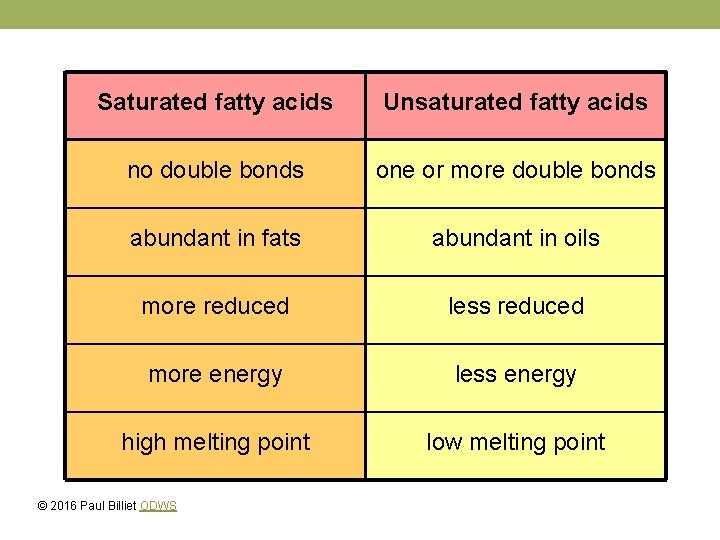
Saturated fatty acids Unsaturated fatty acids no double bonds one or more double bonds abundant in fats abundant in oils more reduced less reduced more energy less energy high melting point low melting point © 2016 Paul Billiet ODWS
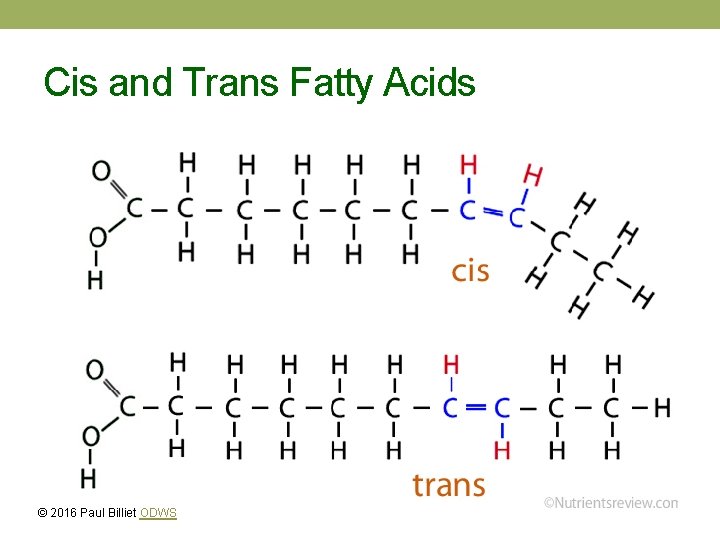
Cis and Trans Fatty Acids © 2016 Paul Billiet ODWS

Cis & trans fats compared Occurance Cis fat Natural Characteristics Lower melting point. Molecule bent Health effects Generally good © 2016 Paul Billiet ODWS Trans fat Some in meat & dairy products but mostly from processed foods e. g. margerine Higher melting point Molecule straight Bad for plaque build up CVD Lowers HDLs and raises LDLs
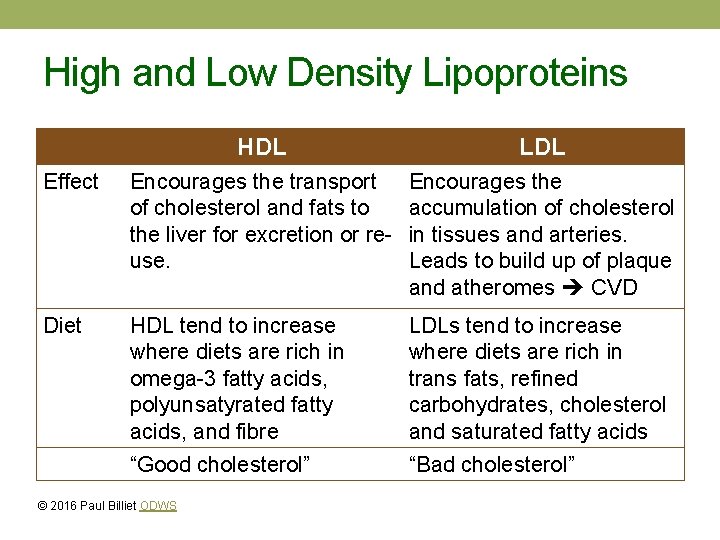
High and Low Density Lipoproteins HDL LDL Effect Encourages the transport of cholesterol and fats to the liver for excretion or reuse. Encourages the accumulation of cholesterol in tissues and arteries. Leads to build up of plaque and atheromes CVD Diet HDL tend to increase where diets are rich in omega-3 fatty acids, polyunsatyrated fatty acids, and fibre LDLs tend to increase where diets are rich in trans fats, refined carbohydrates, cholesterol and saturated fatty acids “Good cholesterol” “Bad cholesterol” © 2016 Paul Billiet ODWS
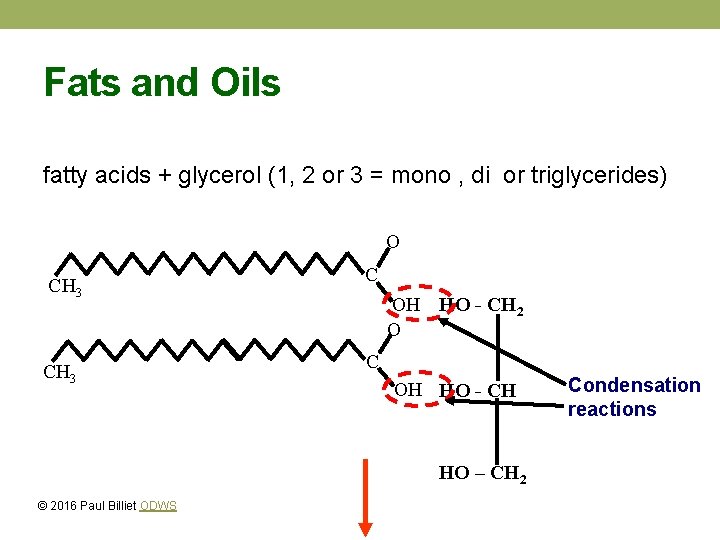
Fats and Oils fatty acids + glycerol (1, 2 or 3 = mono , di or triglycerides) O CH 3 C OH HO - CH 2 O C OH HO - CH HO – CH 2 © 2016 Paul Billiet ODWS Condensation reactions
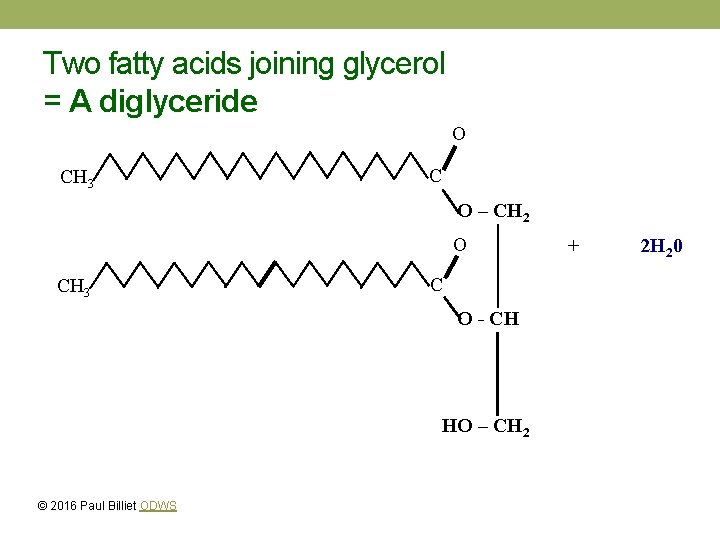
Two fatty acids joining glycerol = A diglyceride O CH 3 C O – CH 2 O CH 3 C O - CH HO – CH 2 © 2016 Paul Billiet ODWS + 2 H 20
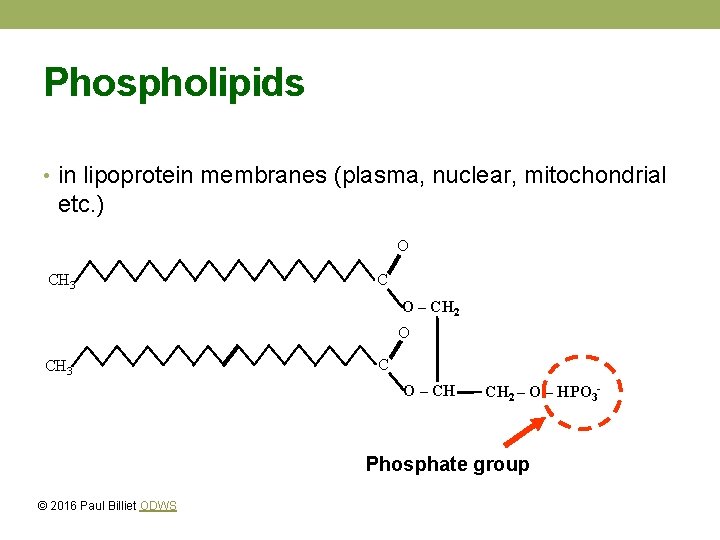
Phospholipids • in lipoprotein membranes (plasma, nuclear, mitochondrial etc. ) O CH 3 C O – CH 2 O CH 3 C O – CH CH 2 – O – HPO 3 - Phosphate group © 2016 Paul Billiet ODWS
Other lipids Steroids: multiple ring structures (e. g. cholesterol) • Functions: cell membrane structure, digestion (help to emulsify fats), hormones (testosterone etc), vitamins (e. g. Vitamin D), poisons Waxes: long chain alcohol + fatty acids • Water proof coating to leaves, fur, feathers, insect exoskeletons. • Used by bees to construct their honey combs. © 2016 Paul Billiet ODWS
LIPID FUNCTIONS IN GENERAL • STRUCTURAL: biological membranes (phospholipids, steroids, glycolipids), cushioning (fat deposits round the kidneys) • ELECTRICAL INSULATION: myelin sheath round axons • THERMAL INSULATION: subcutaneous fat deposits • WATER PROOFING: waxes and oils • ENERGY STORE AND SUBSTRATE: very condensed form of energy (37 k. J g-1) used by animals and seeds • HORMONES: steroids • VITAMINS: precursor to Vit D • BUOYANCY: oil droplets in plankton. © 2016 Paul Billiet ODWS
- Slides: 12