
LIPIDS By D Jones Characteristics of Lipids little
LIPIDS By D. Jones
Characteristics of Lipids little or no affinity for water n NOT polymers n mostly hydrocarbons (small amount of O) n
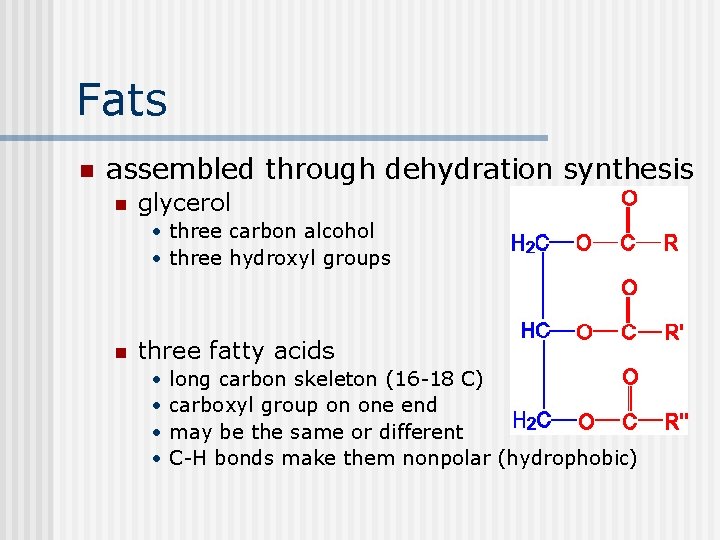
Fats n assembled through dehydration synthesis n glycerol • three carbon alcohol • three hydroxyl groups n three fatty acids • • long carbon skeleton (16 -18 C) carboxyl group on one end may be the same or different C-H bonds make them nonpolar (hydrophobic)
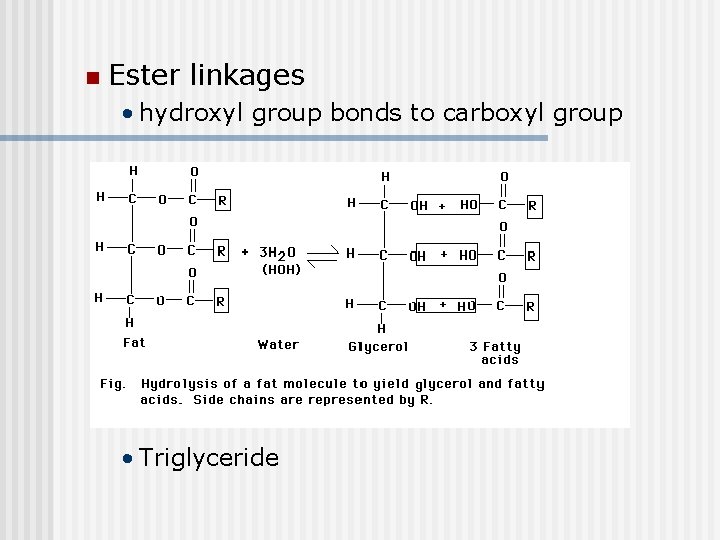
n Ester linkages • hydroxyl group bonds to carboxyl group • Triglyceride
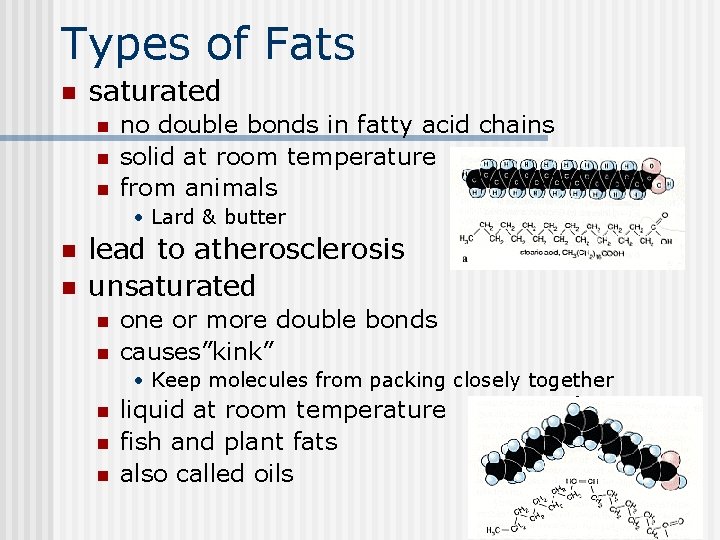
Types of Fats n saturated n no double bonds in fatty acid chains solid at room temperature from animals • Lard & butter n n lead to atherosclerosis unsaturated n n one or more double bonds causes”kink” • Keep molecules from packing closely together n n n liquid at room temperature fish and plant fats also called oils
n hydrogenated oils unsaturated fats prepared by adding hydrogen n Margarine, peanut butter, Crisco n
Health recommendations n Limit saturated fats and transfatty acids animal fats, coconut oil & palm oil n hydrogenation produces transfatty acids n Avoid commercial baked goods and fast foods. n n These cause cardiovascular disease.
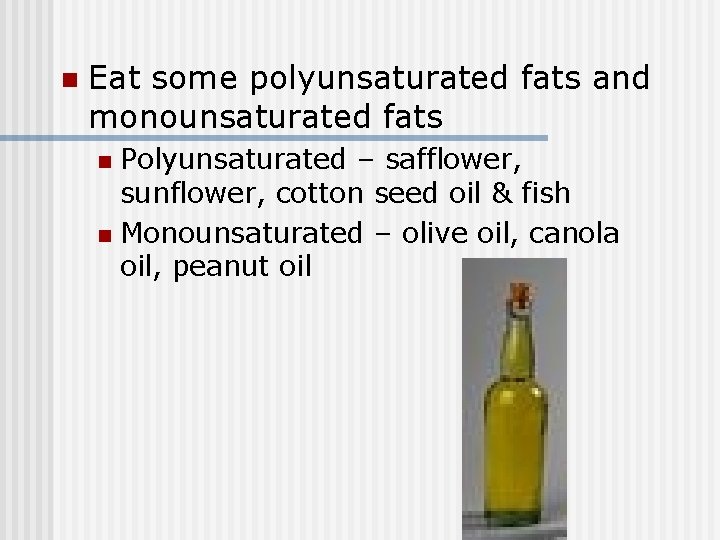
n Eat some polyunsaturated fats and monounsaturated fats Polyunsaturated – safflower, sunflower, cotton seed oil & fish n Monounsaturated – olive oil, canola oil, peanut oil n
Fat Substitutes Taken from Web MD n Fat substitutes added to commercial foods or used in baking, deliver some of the desirable qualities of fat, but do not add as many calories. Some replacers, such as the cellulose gel Avicel, Carrageenan (made from seaweed), guar gum, and gum arabic, have been used for decades in many commercial foods and are generally recognized as safe. New, synthetic fat substitutes are now available, but little is known about their long-term effects. Olestra (Olean) passes through the body without leaving behind any calories from fat. (It should be noted, however, that foods containing olestra still have calories from carbohydrates and proteins. ) Early reports of cramps and diarrhea after eating food containing olestra have not proven to be significant. Of greater concern is the fact that even small amounts of olestra deplete the body of certain vitamins and nutrients that are important for protection against serious diseases, including cancer. The FDA requires that the missing vitamins be added back to olestra products, but not other nutrients.
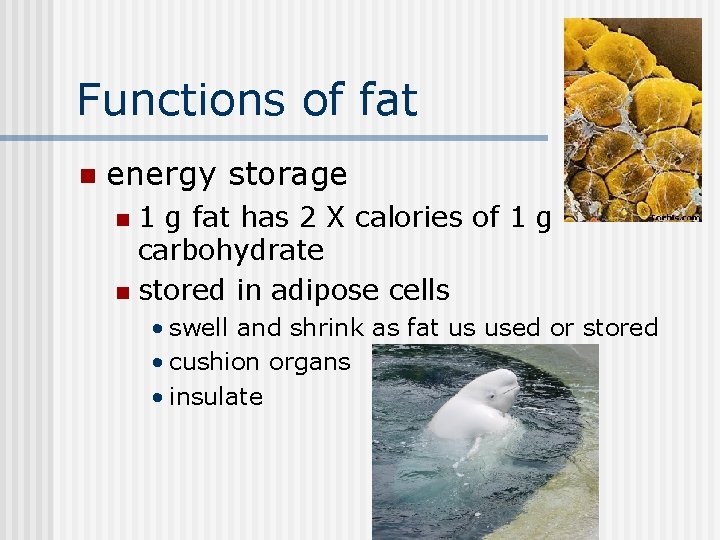
Functions of fat n energy storage 1 g fat has 2 X calories of 1 g carbohydrate n stored in adipose cells n • swell and shrink as fat us used or stored • cushion organs • insulate
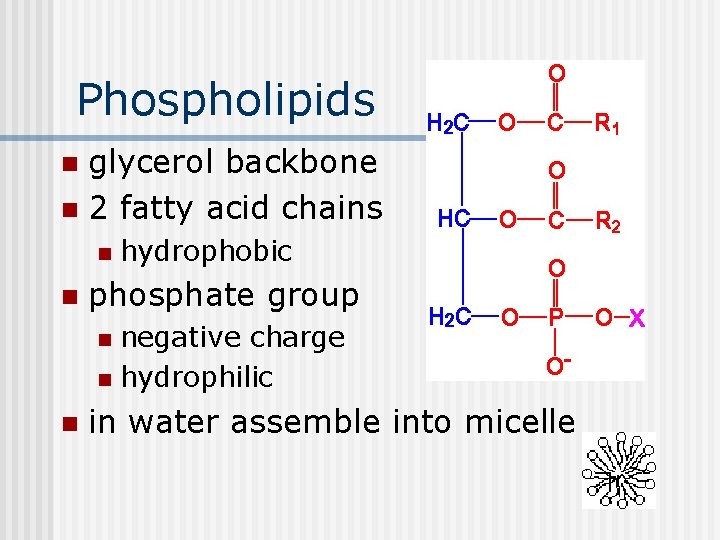
Phospholipids glycerol backbone n 2 fatty acid chains n n n hydrophobic phosphate group negative charge n hydrophilic n n in water assemble into micelle
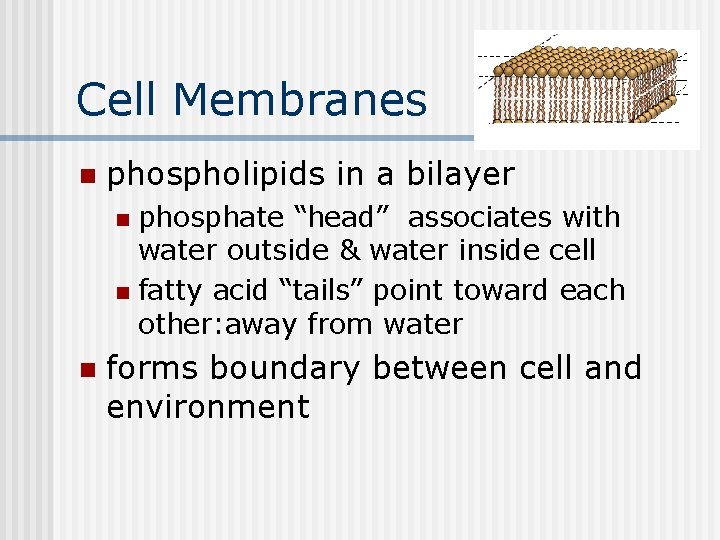
Cell Membranes n phospholipids in a bilayer phosphate “head” associates with water outside & water inside cell n fatty acid “tails” point toward each other: away from water n n forms boundary between cell and environment
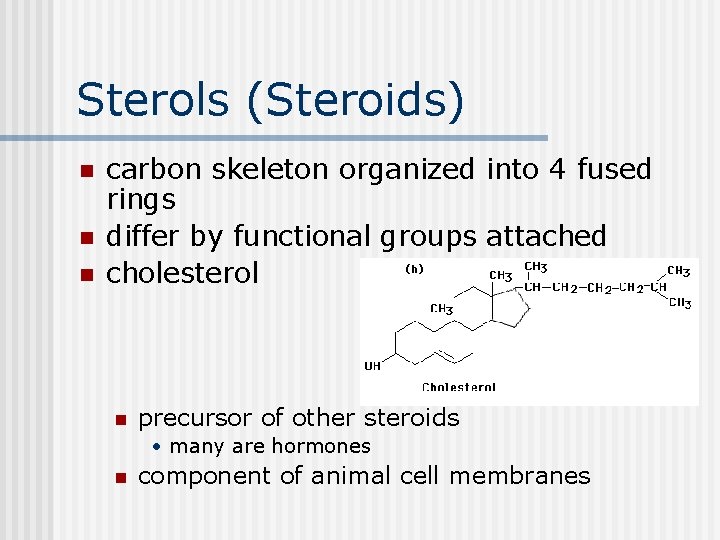
Sterols (Steroids) n n n carbon skeleton organized into 4 fused rings differ by functional groups attached cholesterol n precursor of other steroids • many are hormones n component of animal cell membranes
Waxes fats combined with alcohol n differ from fats in that glycerol is replaced by a sterol or by higher even-numbered aliphatic (straight chain) alcohols from C 16 to C 36 n protect from water loss in plants n
- Slides: 14