
Lipids and DNA Lipids A group of chemicals
- Slides: 9
Lipids and DNA
Lipids A group of chemicals that includes fats, oils, waxes, phospholipids, steroids, and sterols (steroid + alcohols). � Fats and oils provide long-term energy storage. � Fats provide insulation � Fats are mostly insoluble in water � Phospholipids form the cell membrane � Steroids are both structural and functional chemicals. � Sterols are combinations of alcohols + steroids (ex. Cholesterol) � Some lipids are beneficial!
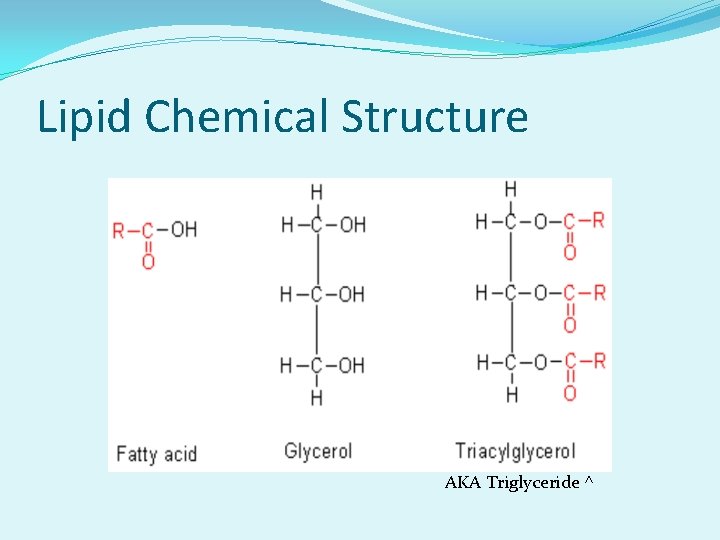
Lipid Chemical Structure AKA Triglyceride ^
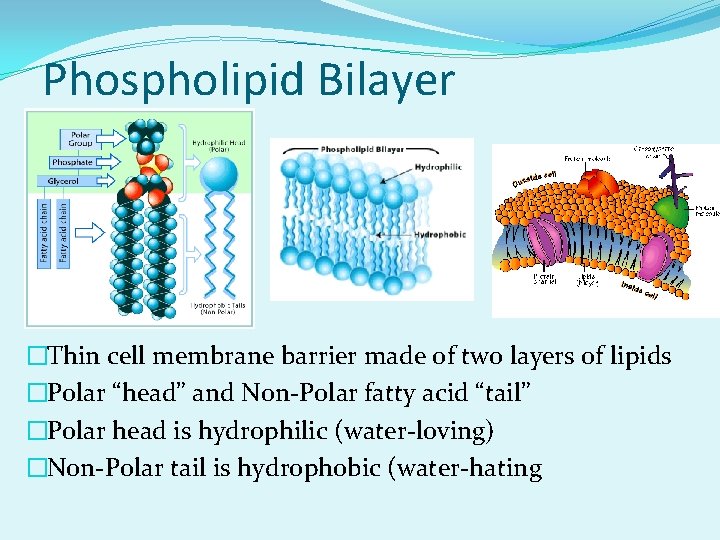
Phospholipid Bilayer �Thin cell membrane barrier made of two layers of lipids �Polar “head” and Non-Polar fatty acid “tail” �Polar head is hydrophilic (water-loving) �Non-Polar tail is hydrophobic (water-hating
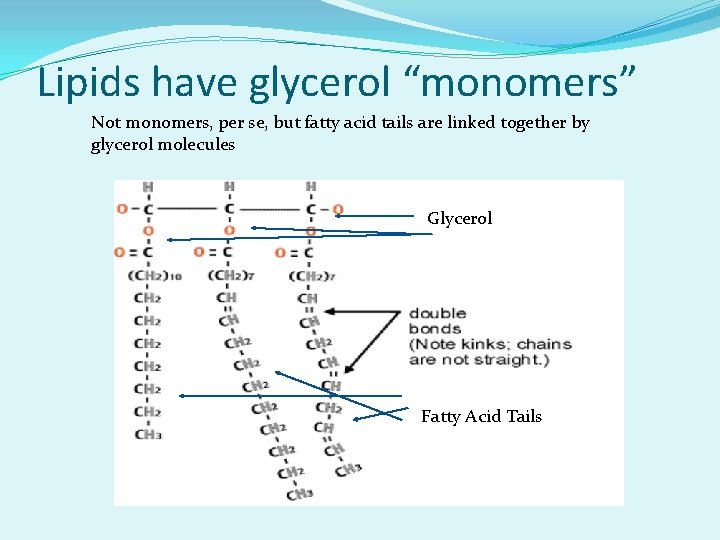
Lipids have glycerol “monomers” Not monomers, per se, but fatty acid tails are linked together by glycerol molecules Glycerol Fatty Acid Tails
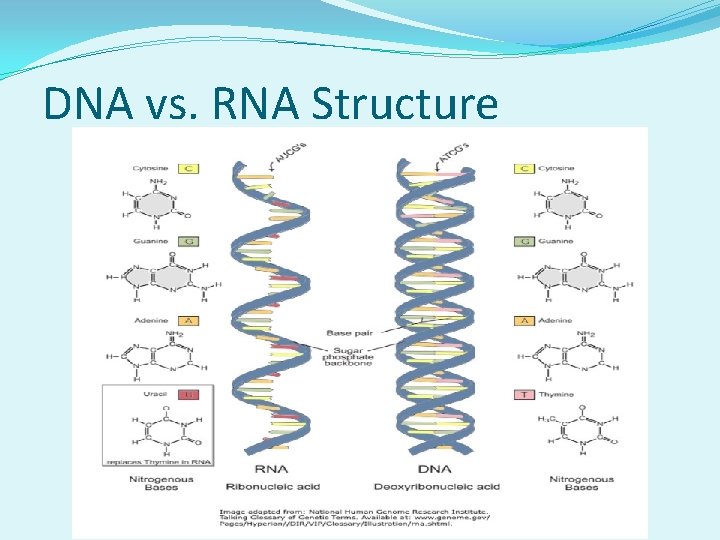
Nucleic Acids �Large complex molecules that contain hereditary or inherited information. �Responsible for inherited characteristics. �Make up the structure of DNA and RNA � DNA is blueprint for making an individual (genetic code) � RNA is blueprint for making individual proteins
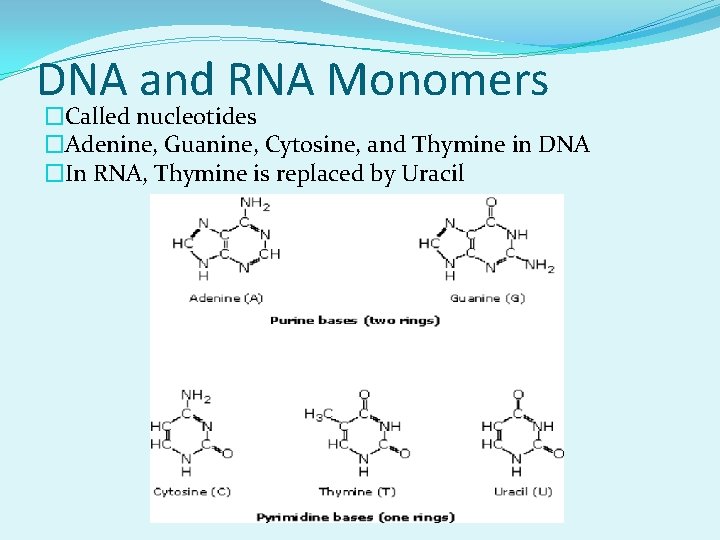
DNA and RNA Monomers �Called nucleotides �Adenine, Guanine, Cytosine, and Thymine in DNA �In RNA, Thymine is replaced by Uracil
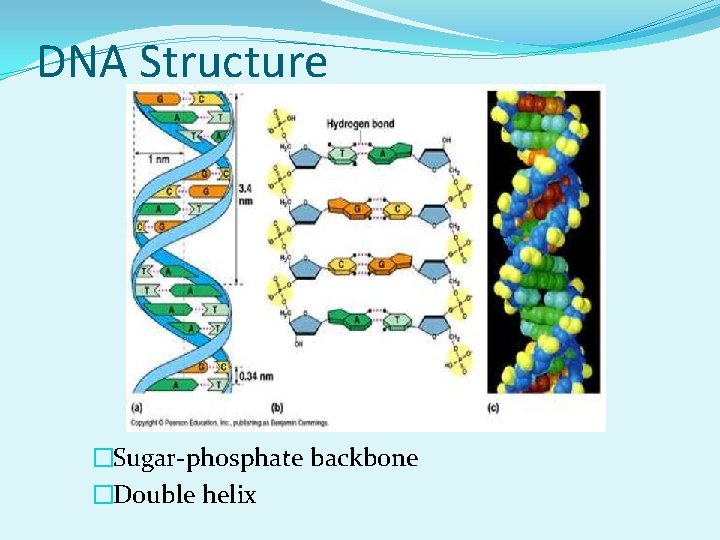
DNA Structure �Sugar-phosphate backbone �Double helix
DNA vs. RNA Structure