
Lipids and Cell Membrane Structure Lipids make up
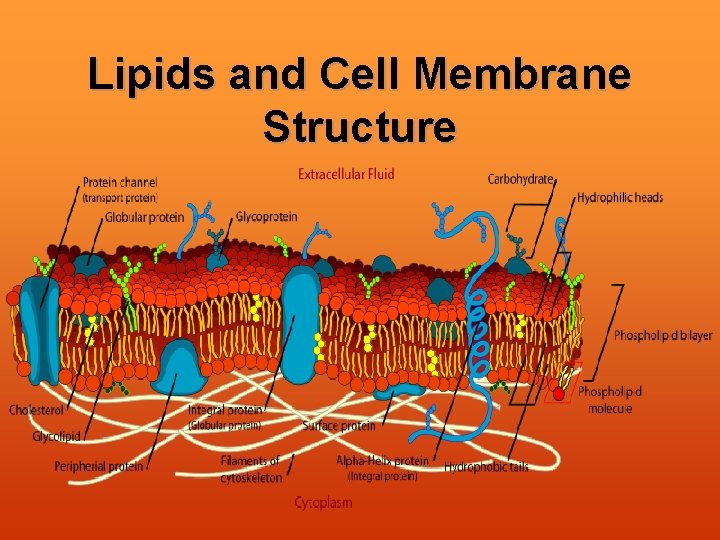
Lipids and Cell Membrane Structure
Lipids make up MOST of the cell membrane • Lipids are not soluble in water • Lipids store large amounts of energy • The monomers (smallest part of a lipid) are called fatty acids • Fatty acids can combine to make complex lipids by a reaction called dehydration synthesis (aka condensation)
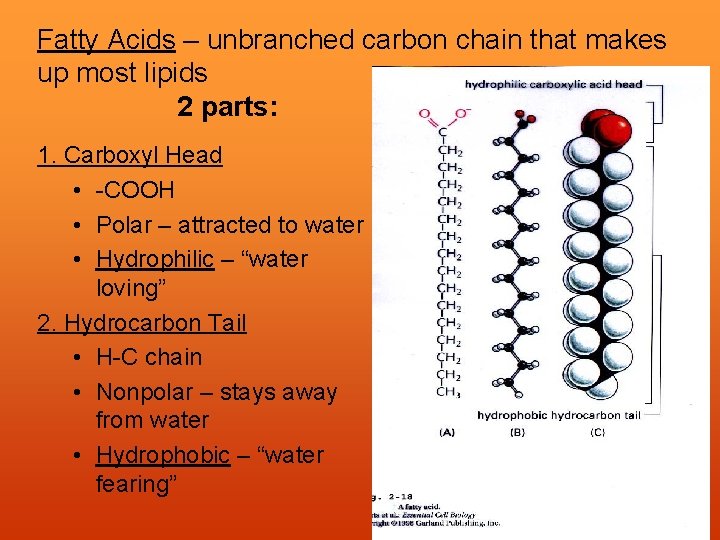
Fatty Acids – unbranched carbon chain that makes up most lipids 2 parts: 1. Carboxyl Head • -COOH • Polar – attracted to water • Hydrophilic – “water loving” 2. Hydrocarbon Tail • H-C chain • Nonpolar – stays away from water • Hydrophobic – “water fearing”
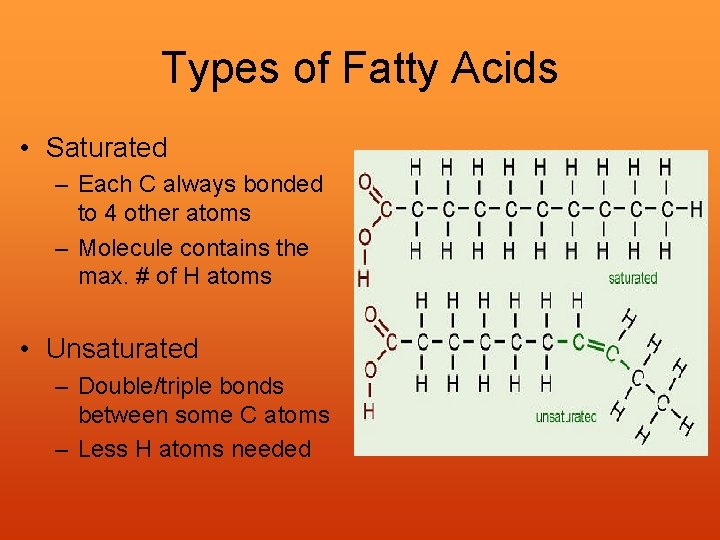
Types of Fatty Acids • Saturated – Each C always bonded to 4 other atoms – Molecule contains the max. # of H atoms • Unsaturated – Double/triple bonds between some C atoms – Less H atoms needed
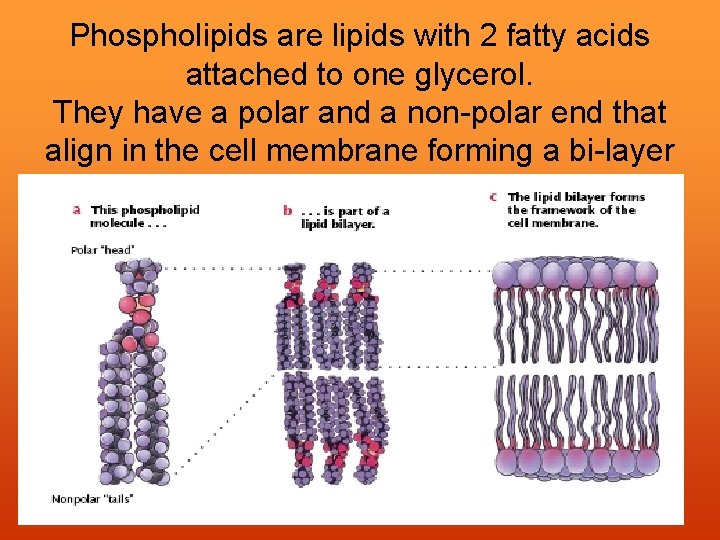
Phospholipids are lipids with 2 fatty acids attached to one glycerol. They have a polar and a non-polar end that align in the cell membrane forming a bi-layer

Cell Membrane Structure • The cell membrane contains fats, proteins, and carbohydrates.
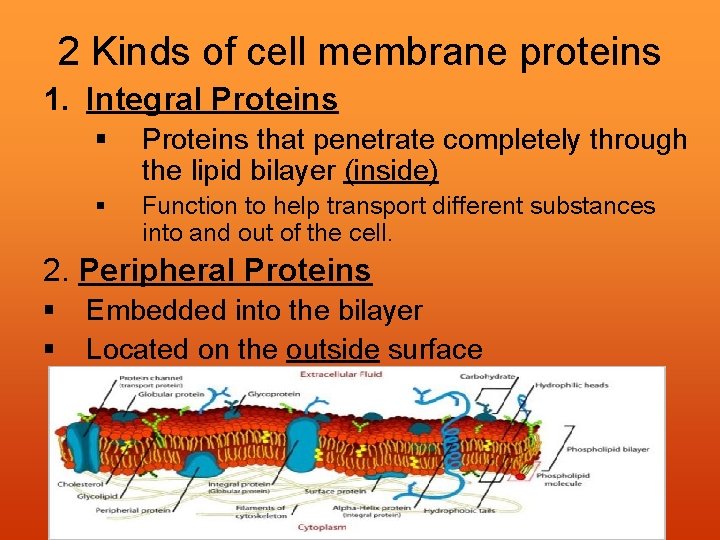
2 Kinds of cell membrane proteins 1. Integral Proteins § Proteins that penetrate completely through the lipid bilayer (inside) § Function to help transport different substances into and out of the cell. 2. Peripheral Proteins § § Embedded into the bilayer Located on the outside surface fluid mosaic model
Cell Membrane Functions • It controls what enters and exits the cell. It is considered selectively permeable since it only lets certain molecules into and out of the cell • It maintains the cell shape • It connects each cell to other cells near it • It can allow movement of the cell because the parts can move around each other, called the fluid mosaic model
- Slides: 8