
LIPIDS 3 4 What Are Lipids Lipids are
- Slides: 25
LIPIDS
3. 4 What Are Lipids? • Lipids are a diverse group of molecules that contain regions composed almost entirely of hydrogen and carbon • All lipids contain large chains of nonpolar hydrocarbons • Most lipids are therefore hydrophobic and water insoluble
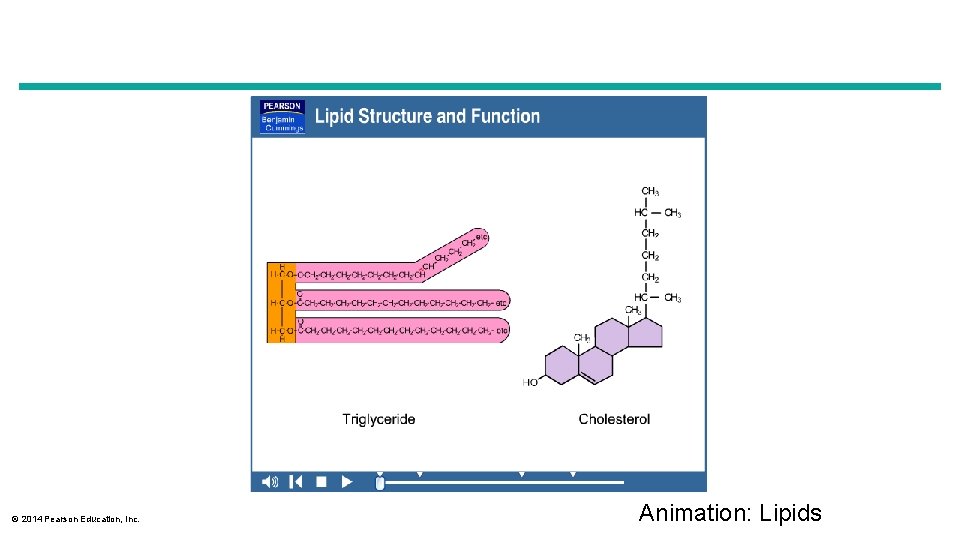
© 2014 Pearson Education, Inc. Animation: Lipids
3. 4 What Are Lipids? • Lipids are diverse in structure and serve a variety of functions • • They are used for energy storage They form waterproof coverings on plant and animal bodies They serve as the primary component of cellular membranes Still others are hormones
3. 4 What Are Lipids? • Lipids are classified into three major groups • Oils, fats, and waxes • Phospholipids • Steroids containing rings of carbon, hydrogen, and oxygen
3. 4 What Are Lipids? • Oils, fats, and waxes are lipids containing only carbon, hydrogen, and oxygen • Oils, fats, and waxes are made of one or more fatty acid subunits
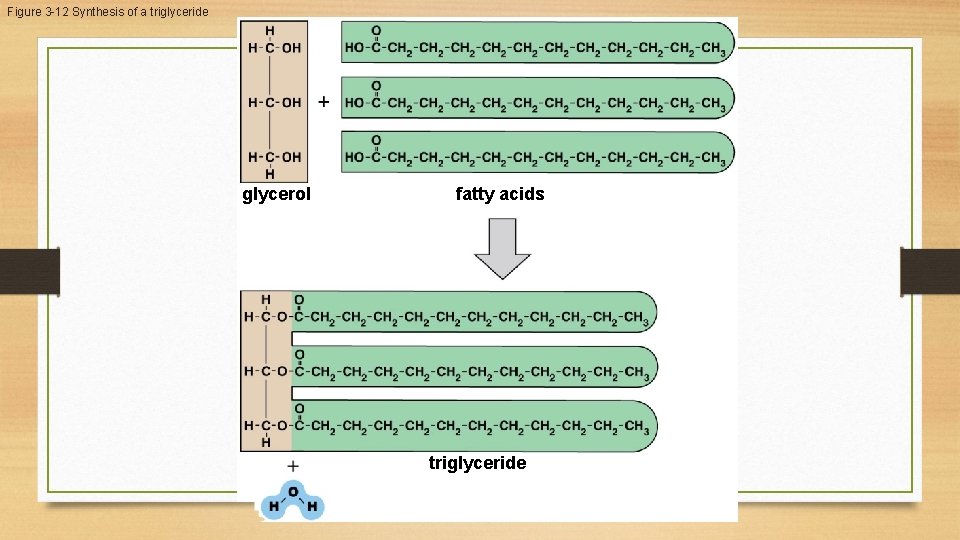
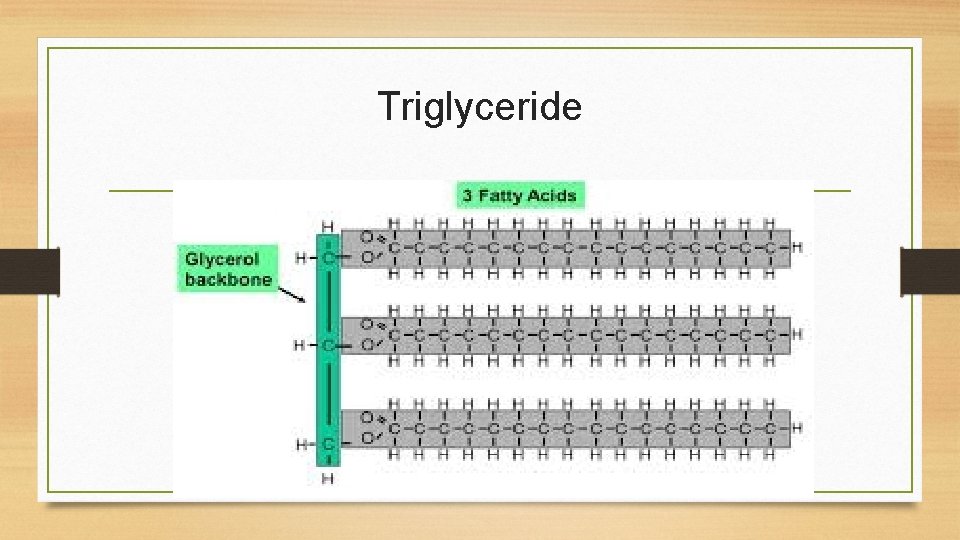
3. 4 What Are Lipids? • Oils, fats, and waxes are lipids containing only carbon, hydrogen, and oxygen (continued) • Fats and oils • Are used primarily as energy-storage molecules, containing twice as many calories per gram as carbohydrates and proteins • Are formed by dehydration synthesis • Three fatty acids glycerol triglyceride
Figure 3 -12 Synthesis of a triglyceride glycerol fatty acids triglyceride
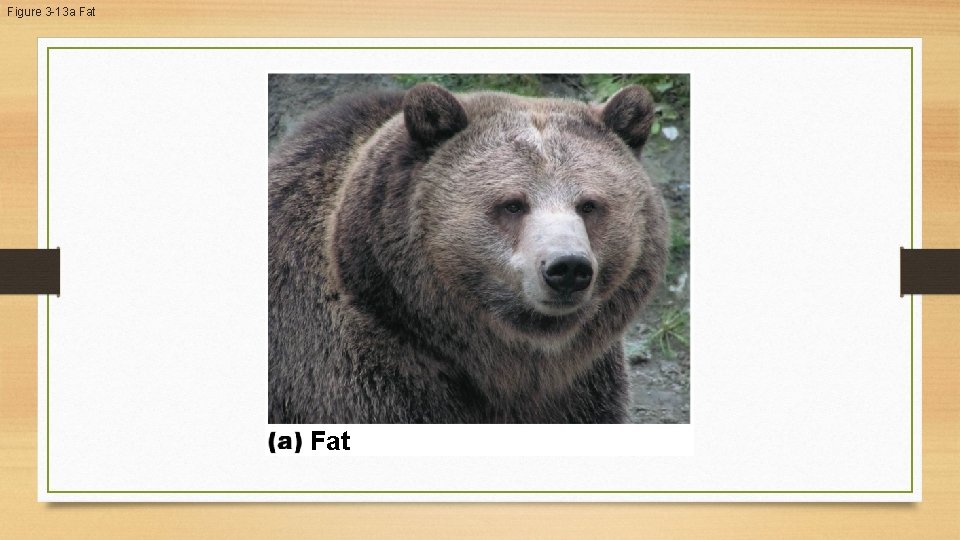
Figure 3 -13 a Fat
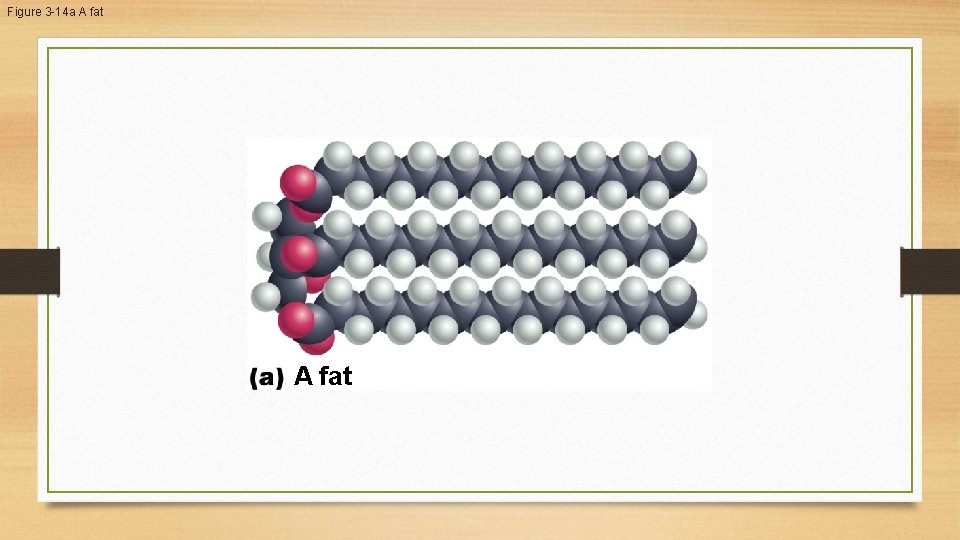
3. 4 What Are Lipids? • Oils, fats, and waxes are lipids containing only carbon, hydrogen, and oxygen (continued) • Fats that are solid at room temperature are saturated (the carbon chain has as many hydrogen atoms as possible, and mostly or all C–C bonds); for example, beef fat
Figure 3 -14 a A fat
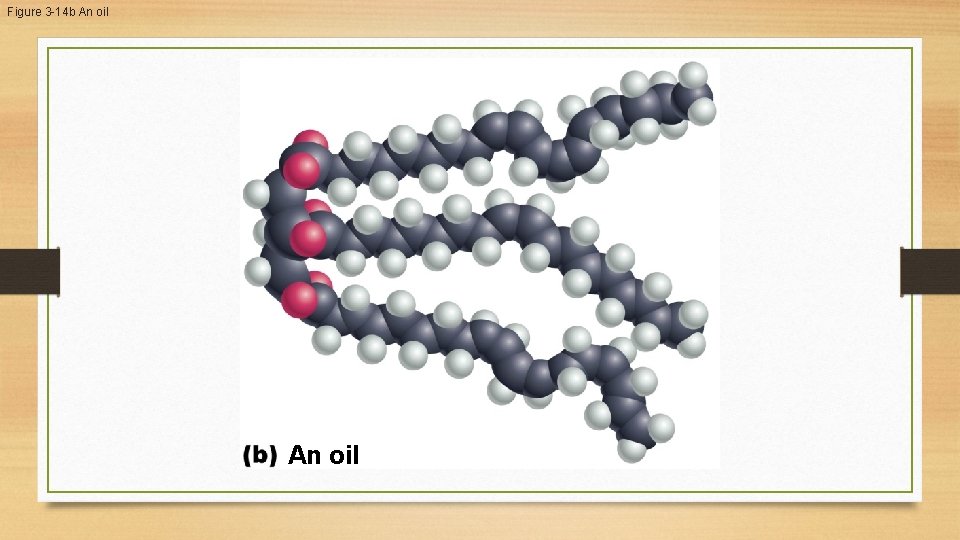
3. 4 What Are Lipids? • Oils, fats, and waxes are lipids containing only carbon, hydrogen, and oxygen (continued) • Fats that are liquid at room temperature are unsaturated (with fewer hydrogen atoms, and many C C bonds); for example, corn oil • Unsaturated trans fats have been linked to heart disease
Figure 3 -14 b An oil
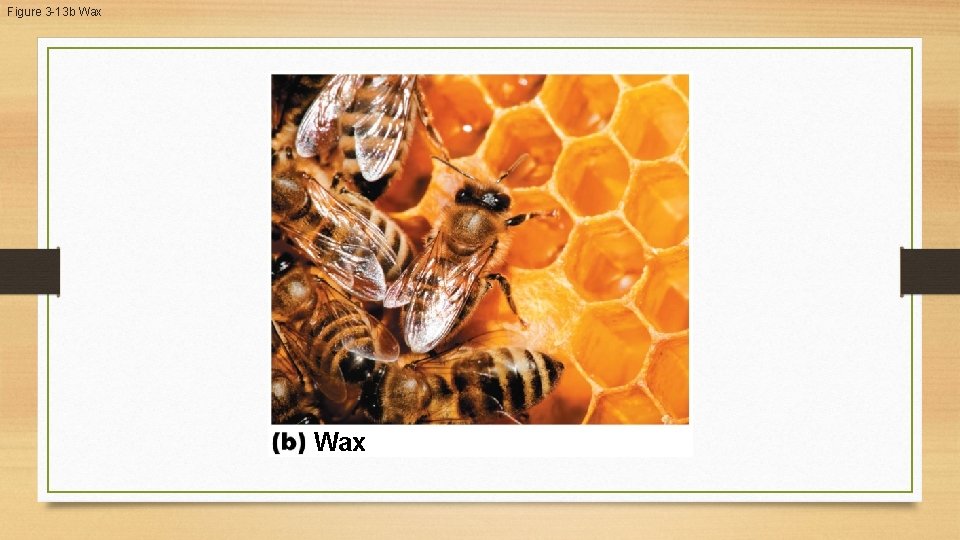
3. 4 What Are Lipids? • Oils, fats, and waxes are lipids containing only carbon, hydrogen, and oxygen (continued) • Waxes are highly saturated and solid at room temperature • Waxes form waterproof coatings such as on • Leaves and stems in plants • Fur in mammals • Insect exoskeletons • Waxes are also used to build honeycomb structures
Figure 3 -13 b Wax
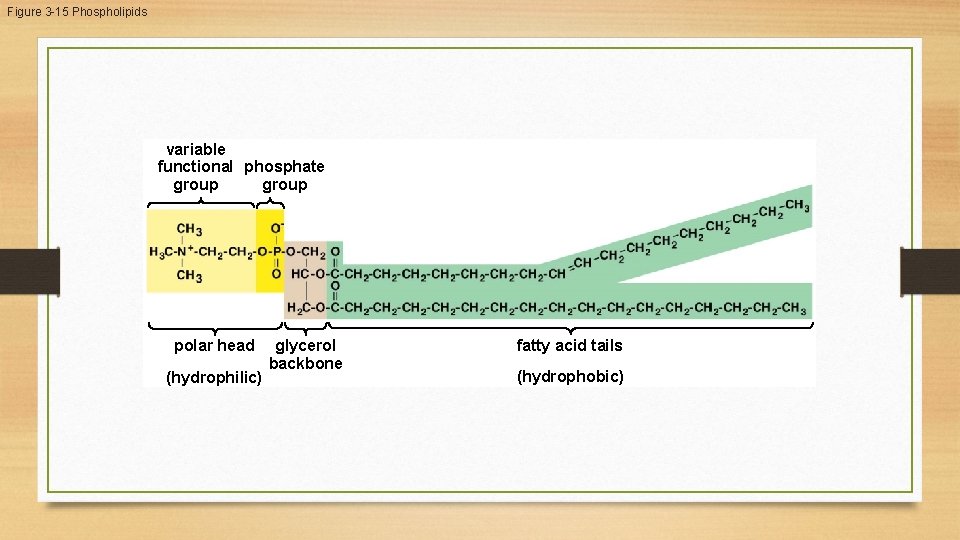
3. 4 What Are Lipids? • Phospholipids have water-soluble “heads” and water-insoluble “tails” • These form plasma membranes around all cells • Phospholipids consist of two fatty acids glycerol a short polar functional group • They have hydrophobic and hydrophilic portions • The polar functional groups form the “head” and are water soluble • The nonpolar fatty acids form the “tails” and are water insoluble
Figure 3 -15 Phospholipids variable functional phosphate group polar head (hydrophilic) glycerol backbone fatty acid tails (hydrophobic)
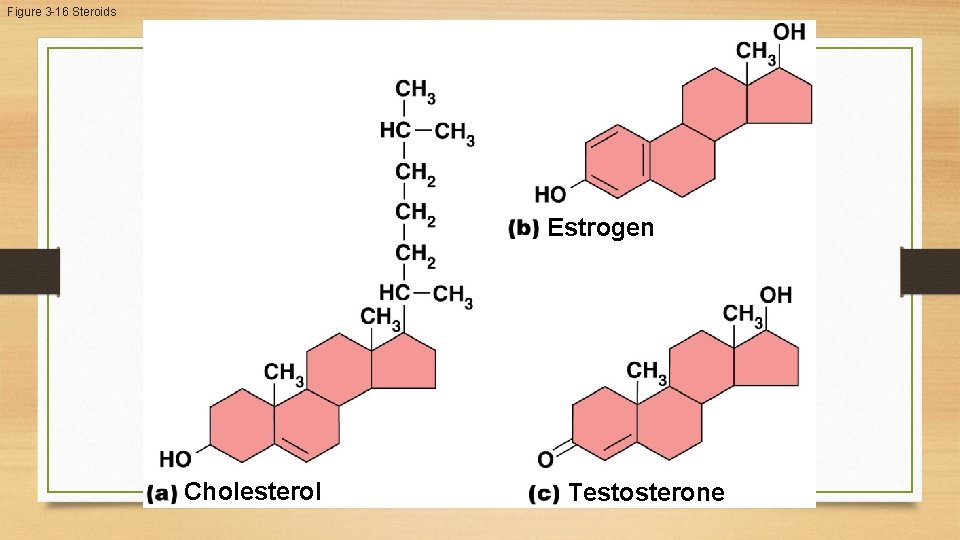
3. 4 What Are Lipids? • Steroids contain four fused carbon rings • Steroids are composed of four carbon rings fused together with various functional groups protruding from them • Examples of steroids include cholesterol • Found in the membranes of animal cells • Component of male and female sex hormones • Makes up 2% of human brain • Excessive cholesterol contributes to cardiovascular disease
Figure 3 -16 Steroids Estrogen Cholesterol Testosterone
Building Triglycerides and Olestra
Triglyceride
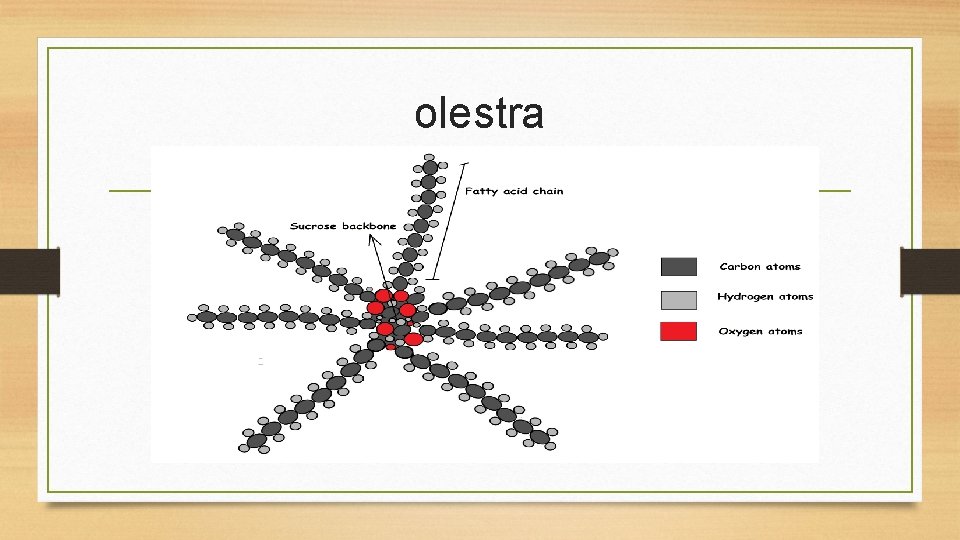
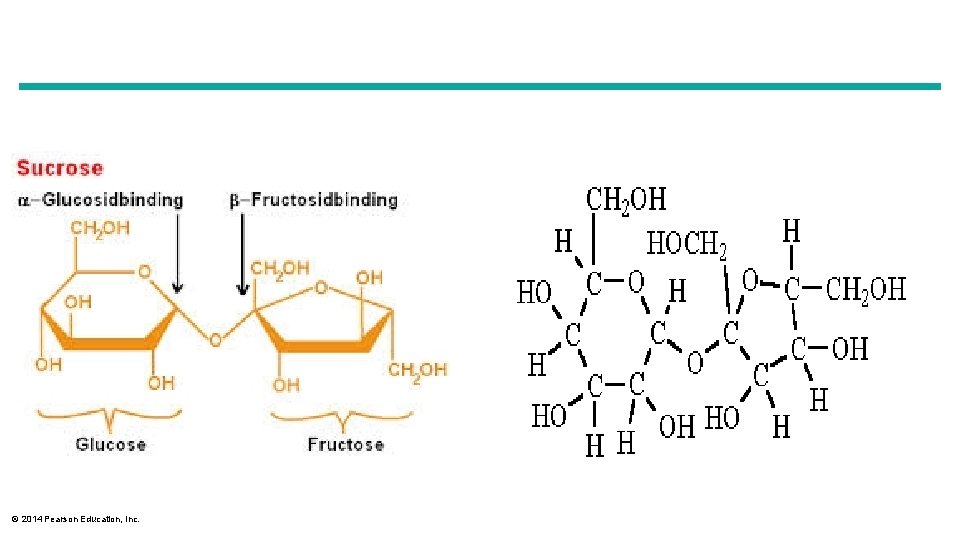
Olestra • Olestra is a large water insoluble sucrose polyester made of 6 -8 fatty acids bonded to sucrose. The type and number of fatty acids determine the physical properties of Olestra The fatty acids come from edible oils such as cottonseed, corn, and soybean oils
Olestra is a food ingredient which is chemically prepared with similar properties of fats. Olestra is a fat-substitute will sucrose backbone. As it is not absorbed, its calorific value is zero. They are not absorbed in the intestines. This is due to their large size. A tri-ester of fatty acid can be easily absorbed but a polymer of 6 -8 fatty acids with a sucrose molecule as backbone is a large compound impossible to absorbed and metabolized. This fat substitute is stable at higher temperatures also. It has zero saturated and trans fat but tastes like fat. However, there are problems with this chemically synthesized compound too. Many cases with digestive upset were observed as this molecule will directly excreted in stools because it is not absorbed in intestines. Also, vitamin and phyto-chemical losses occur. Olestra was produced by Olean company.
olestra
© 2014 Pearson Education, Inc.