
LIPID METABOLISM Why Fatty Acids For energy storage
LIPID METABOLISM
Why Fatty Acids? (For energy storage? ) • Two reasons: – The carbon in fatty acids (mostly CH 2) is almost completely reduced (so its oxidation yields the most energy possible). – Fatty acids are not hydrated (as mono- and polysaccharides are), so they can pack more closely in storage tissues
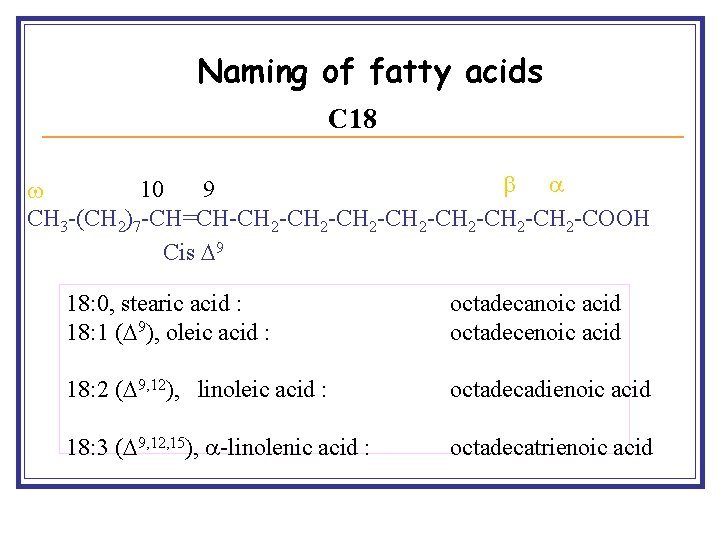
Naming of fatty acids C 18 10 9 CH 3 -(CH 2)7 -CH=CH-CH 2 -CH 2 -CH 2 -COOH Cis 9 18: 0, stearic acid : 18: 1 ( 9), oleic acid : octadecanoic acid octadecenoic acid 18: 2 ( 9, 12), linoleic acid : octadecadienoic acid 18: 3 ( 9, 12, 15), -linolenic acid : octadecatrienoic acid
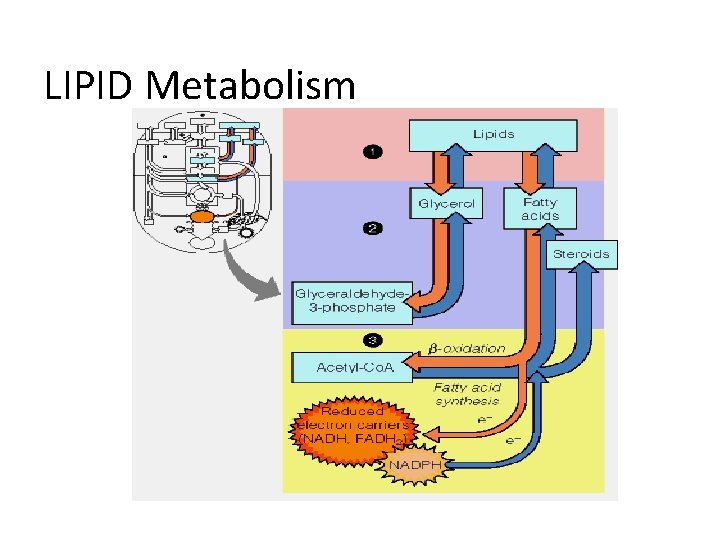
LIPID Metabolism
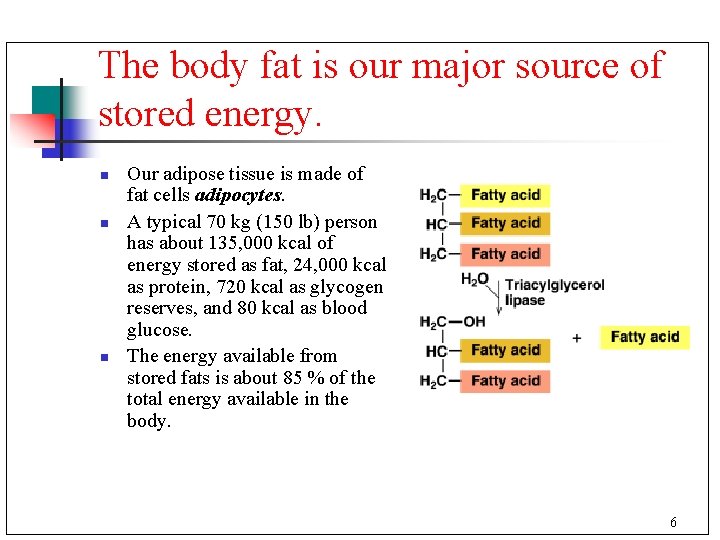
The body fat is our major source of stored energy. n n n Our adipose tissue is made of fat cells adipocytes. A typical 70 kg (150 lb) person has about 135, 000 kcal of energy stored as fat, 24, 000 kcal as protein, 720 kcal as glycogen reserves, and 80 kcal as blood glucose. The energy available from stored fats is about 85 % of the total energy available in the body. 6
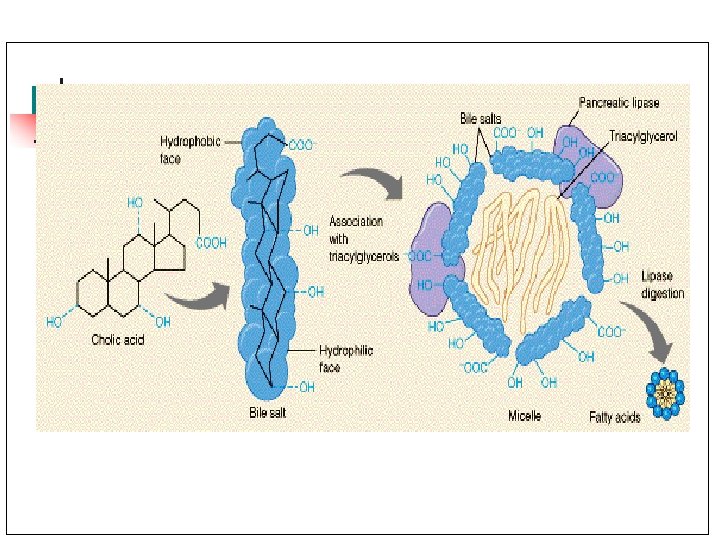
Digestion of Triacylglycerols In the digestion of fats (triacylglycerols): n Bile salts break fat globules into micelles in the small intestine. n Pancreatic lipases hydrolyze ester bonds to form monoacylglycerols and fatty acids, which recombine in the intestinal lining. n Lipoproteins form and transport triacylglycerols to the cells of the heart, muscle, and adipose tissues. n Brain and red blood cells cannot utilize fatty acids, because fatty acids cannot diffuse across the blood-brain barrier, and red blood cells have no mitochondria, where fatty acids are oxidized. (Glucose and glycogen are the only source of energy for the brain and red blood cells. ) 7
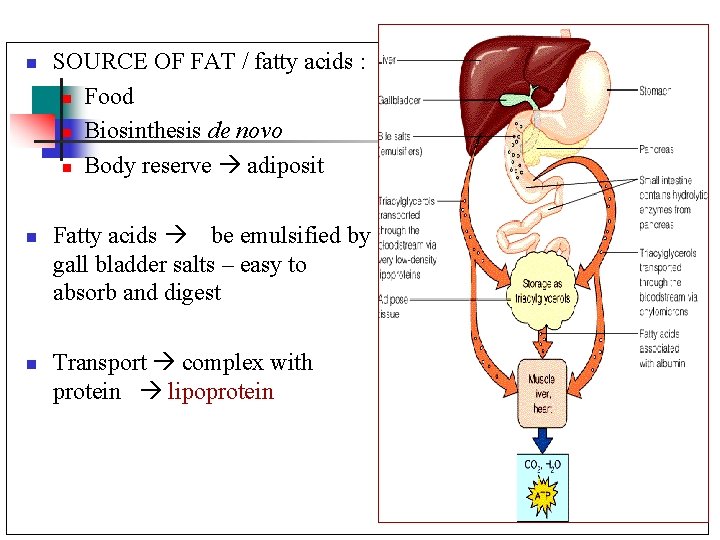
n n n SOURCE OF FAT / fatty acids : n Food n Biosinthesis de novo n Body reserve adiposit Fatty acids be emulsified by gall bladder salts – easy to absorb and digest Transport complex with protein lipoprotein
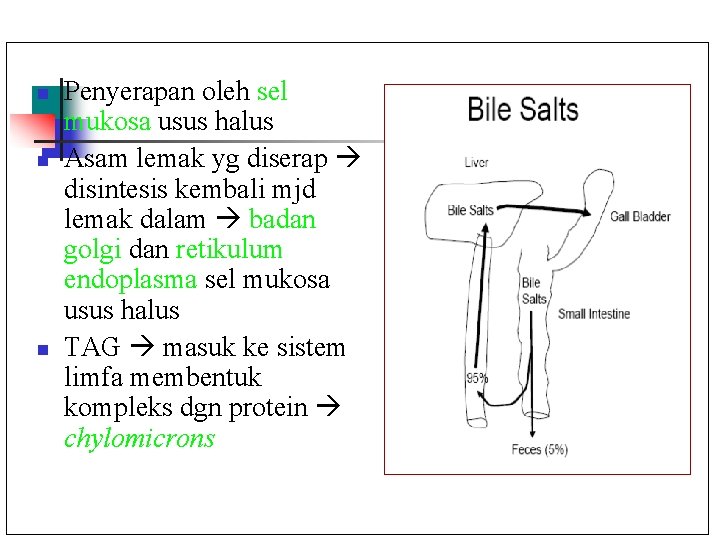
n n n Penyerapan oleh sel mukosa usus halus Asam lemak yg diserap disintesis kembali mjd lemak dalam badan golgi dan retikulum endoplasma sel mukosa usus halus TAG masuk ke sistem limfa membentuk kompleks dgn protein chylomicrons
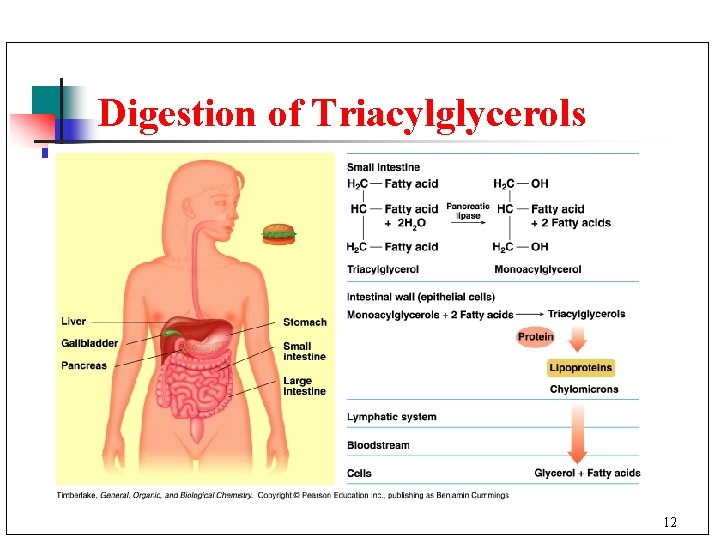
Digestion of Triacylglycerols 12
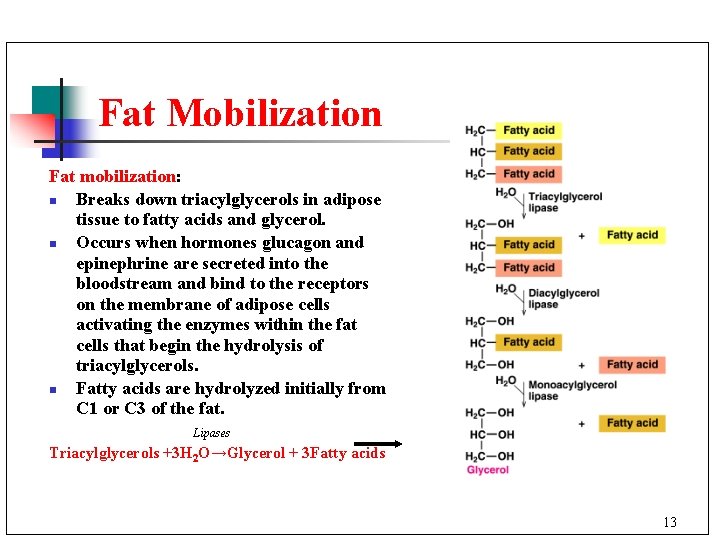
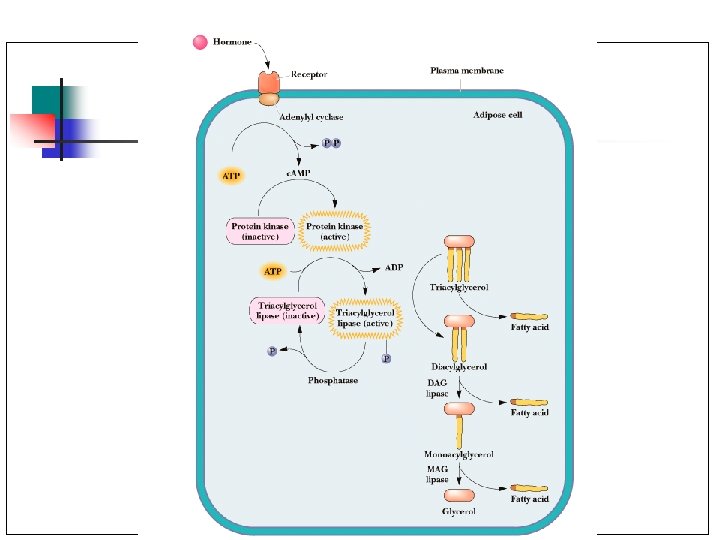
Fat Mobilization Fat mobilization: n Breaks down triacylglycerols in adipose tissue to fatty acids and glycerol. n Occurs when hormones glucagon and epinephrine are secreted into the bloodstream and bind to the receptors on the membrane of adipose cells activating the enzymes within the fat cells that begin the hydrolysis of triacylglycerols. n Fatty acids are hydrolyzed initially from C 1 or C 3 of the fat. Lipases Triacylglycerols +3 H 2 O→Glycerol + 3 Fatty acids 13
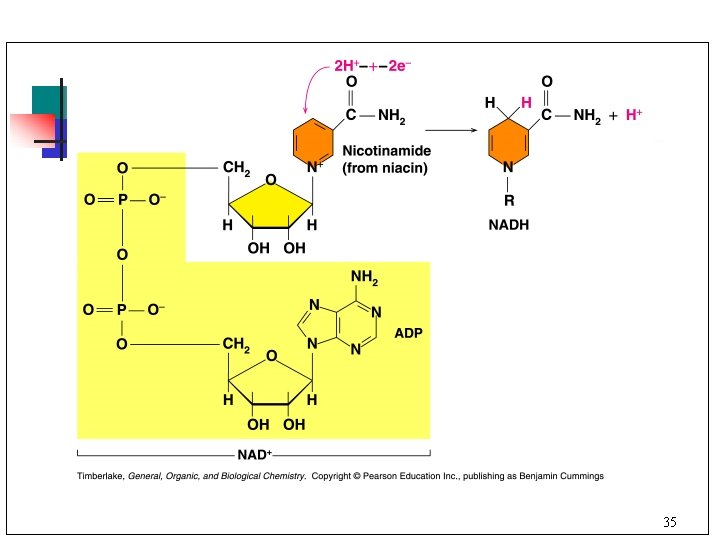
Metabolism of Glycerol. n n n Using two steps, enzymes in the liver convert glycerol to dihydroxyacetone phosphate, which is an intermediate in several metabolic pathways including glycolysis and gluconeogenesis. st n 1 step: glycerol is phosphorylated using ATP to yield glycerol-3 -phosphate. nd step: the hydroxyl group is oxidized to yield n 2 dihydroxyacetone phosphate. The overall reaction : Glycerol + ATP + NAD+ → Dihydroxyacetone phosphate + ADP + NADH + H+ 14
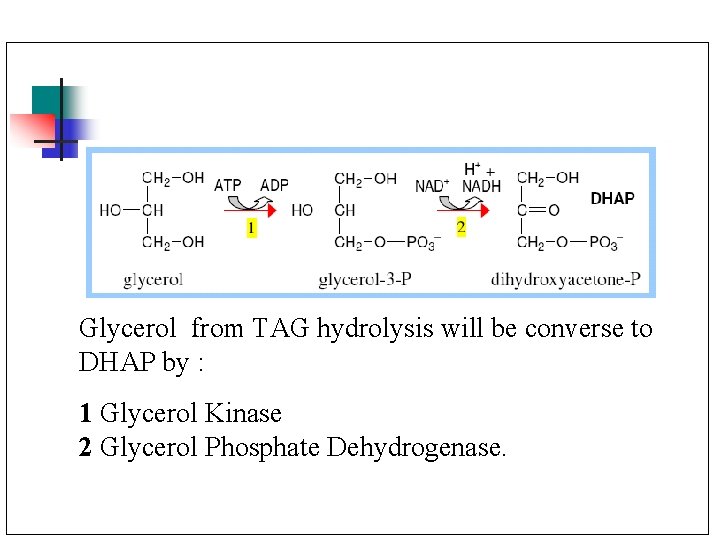
Glycerol from TAG hydrolysis will be converse to DHAP by : 1 Glycerol Kinase 2 Glycerol Phosphate Dehydrogenase.
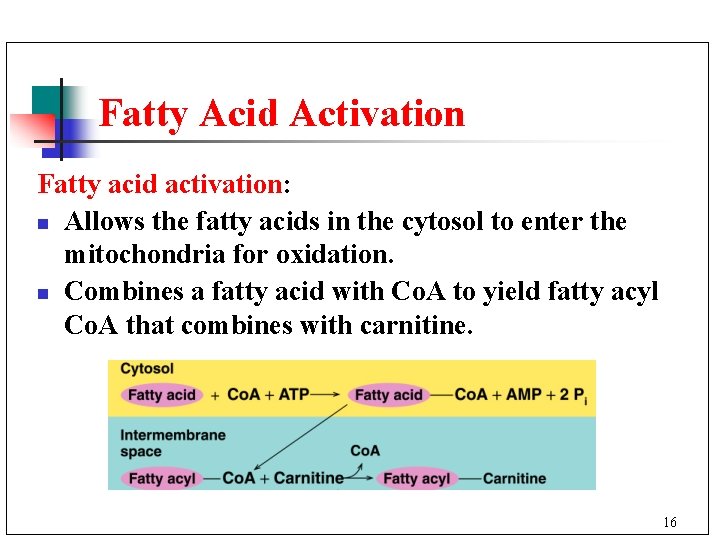
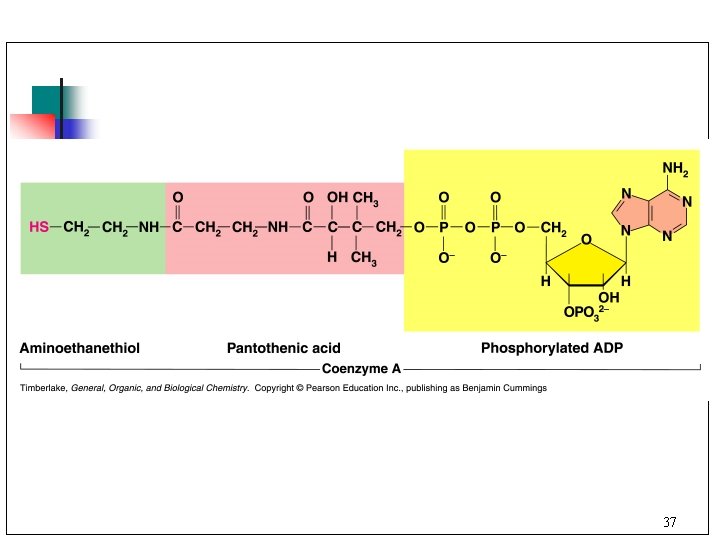
Fatty Acid Activation Fatty acid activation: n Allows the fatty acids in the cytosol to enter the mitochondria for oxidation. n Combines a fatty acid with Co. A to yield fatty acyl Co. A that combines with carnitine. 16
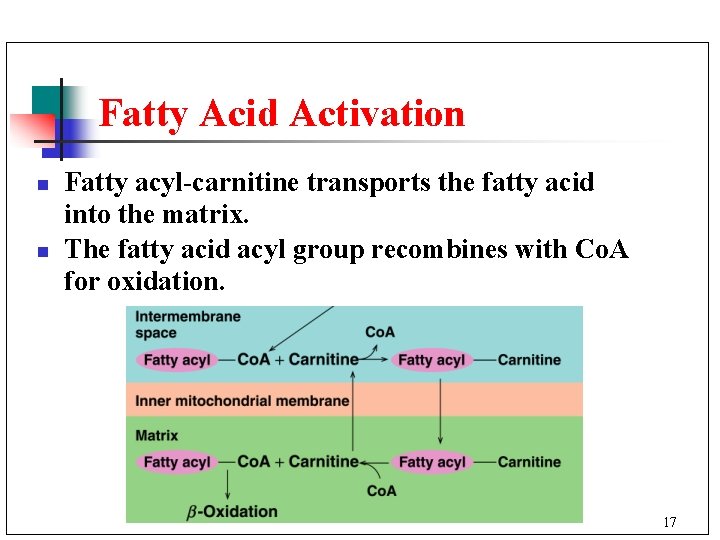
Fatty Acid Activation n n Fatty acyl-carnitine transports the fatty acid into the matrix. The fatty acid acyl group recombines with Co. A for oxidation. 17
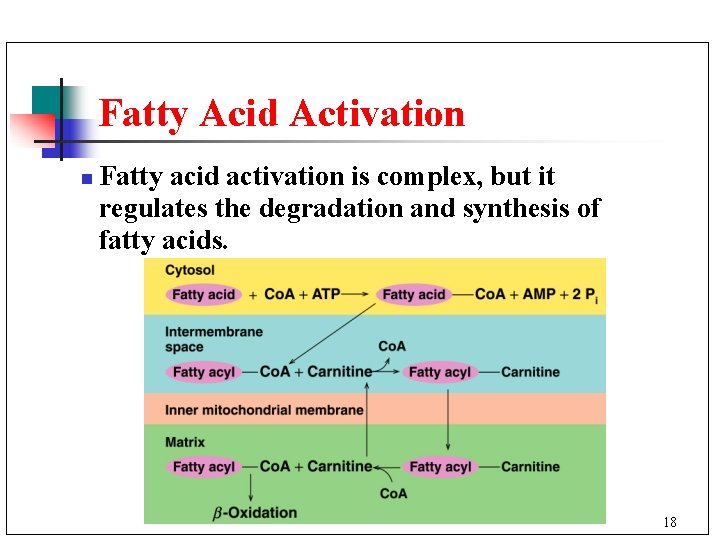
Fatty Acid Activation n Fatty acid activation is complex, but it regulates the degradation and synthesis of fatty acids. 18
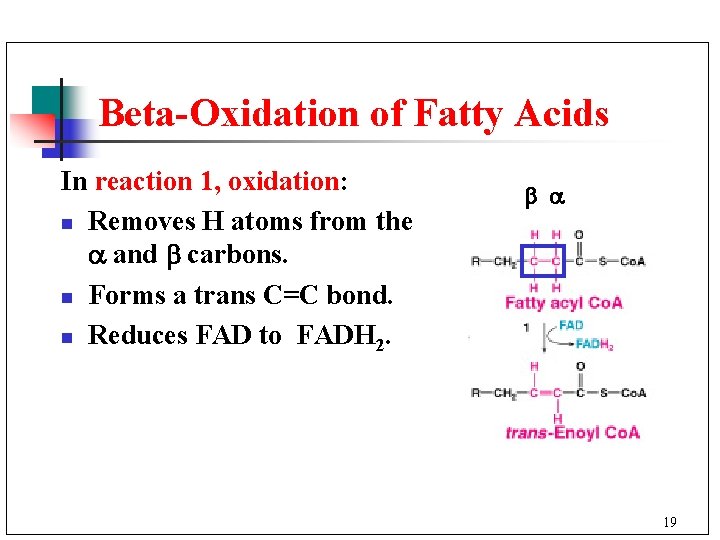
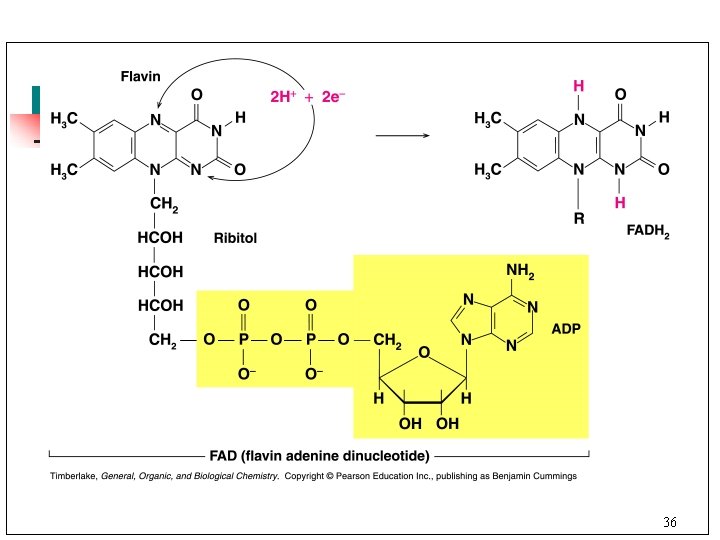
Beta-Oxidation of Fatty Acids In reaction 1, oxidation: n Removes H atoms from the and carbons. n Forms a trans C=C bond. n Reduces FAD to FADH 2. 19
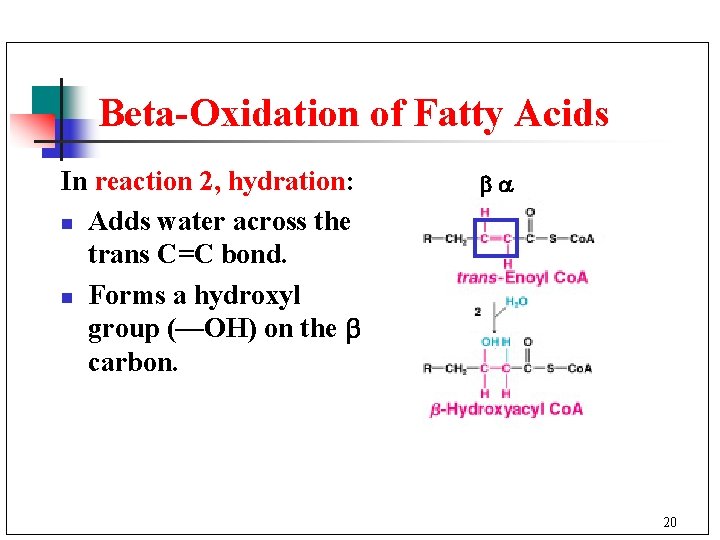
Beta-Oxidation of Fatty Acids In reaction 2, hydration: n Adds water across the trans C=C bond. n Forms a hydroxyl group (—OH) on the carbon. 20
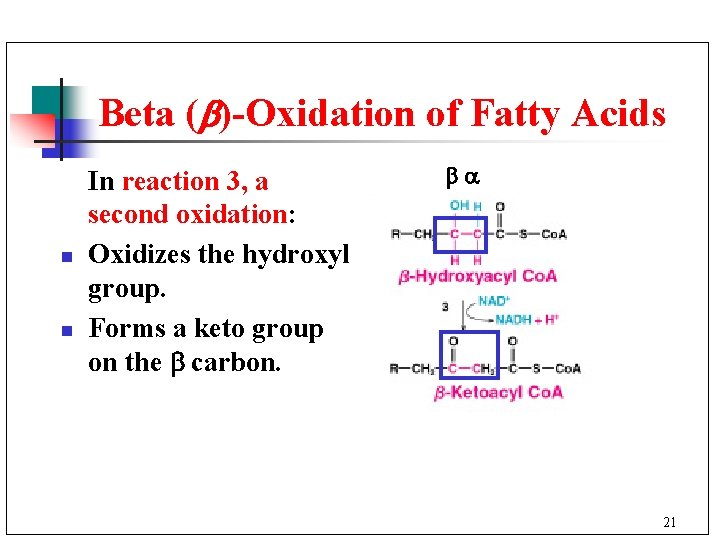
Beta ( )-Oxidation of Fatty Acids n n In reaction 3, a second oxidation: Oxidizes the hydroxyl group. Forms a keto group on the carbon. 21
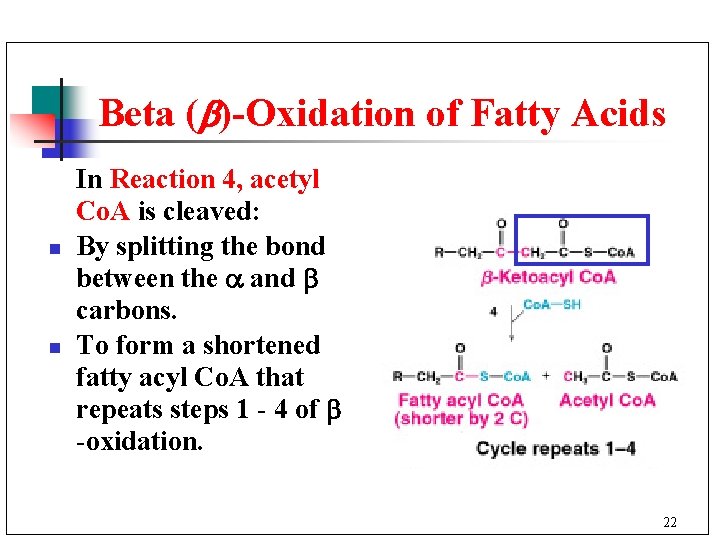
Beta ( )-Oxidation of Fatty Acids n n In Reaction 4, acetyl Co. A is cleaved: By splitting the bond between the and carbons. To form a shortened fatty acyl Co. A that repeats steps 1 - 4 of -oxidation. 22
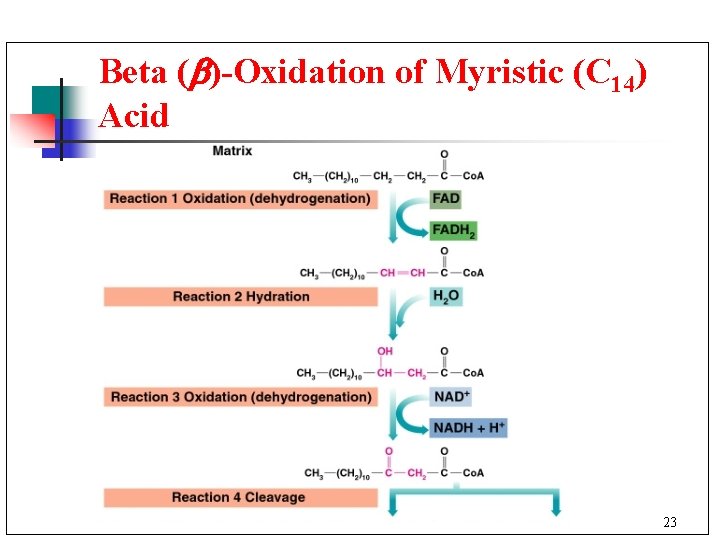
Beta ( )-Oxidation of Myristic (C 14) Acid 23
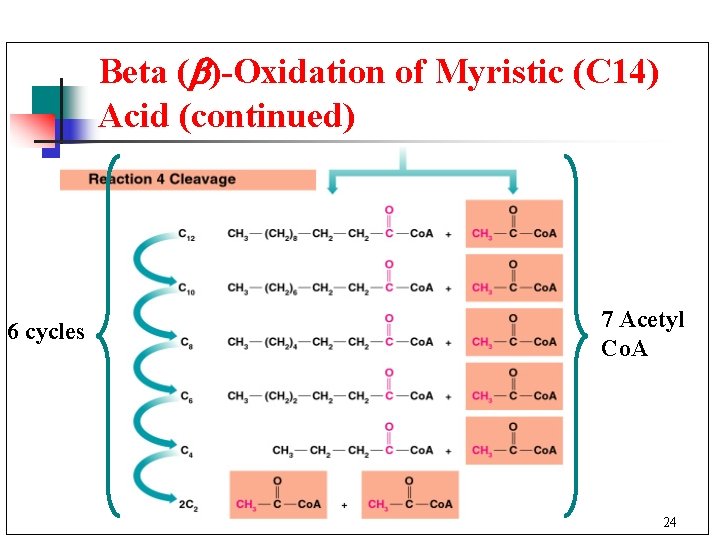
Beta ( )-Oxidation of Myristic (C 14) Acid (continued) 6 cycles 7 Acetyl Co. A 24
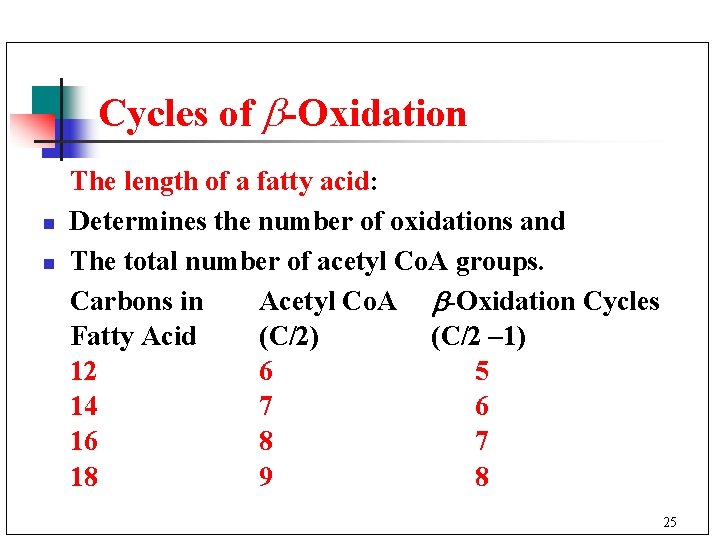
Cycles of -Oxidation n n The length of a fatty acid: Determines the number of oxidations and The total number of acetyl Co. A groups. Carbons in Acetyl Co. A -Oxidation Cycles Fatty Acid (C/2) (C/2 – 1) 12 6 5 14 7 6 16 8 7 18 9 8 25
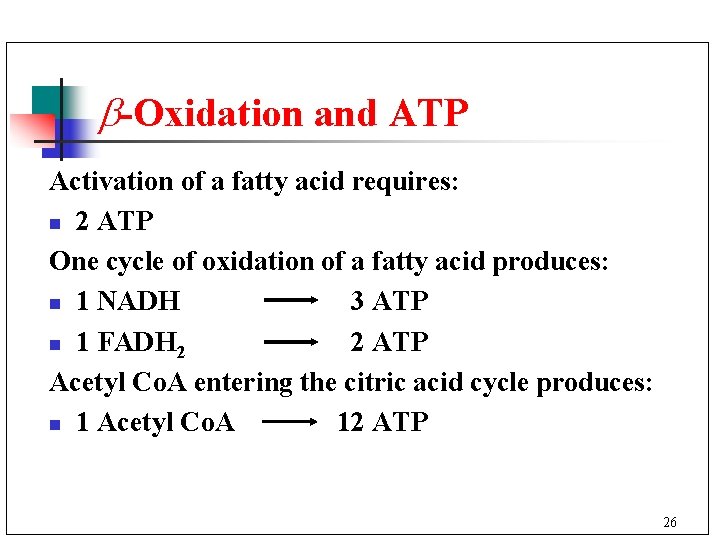
-Oxidation and ATP Activation of a fatty acid requires: n 2 ATP One cycle of oxidation of a fatty acid produces: n 1 NADH 3 ATP n 1 FADH 2 2 ATP Acetyl Co. A entering the citric acid cycle produces: n 1 Acetyl Co. A 12 ATP 26
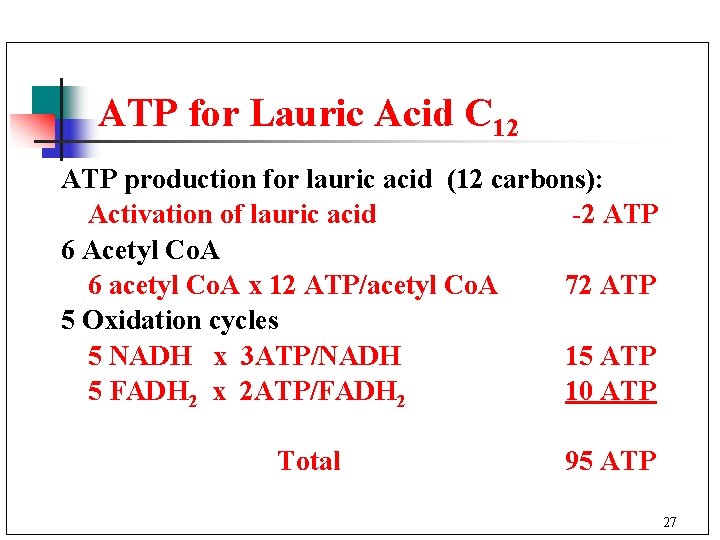
ATP for Lauric Acid C 12 ATP production for lauric acid (12 carbons): Activation of lauric acid -2 ATP 6 Acetyl Co. A 6 acetyl Co. A x 12 ATP/acetyl Co. A 72 ATP 5 Oxidation cycles 5 NADH x 3 ATP/NADH 15 ATP 5 FADH 2 x 2 ATP/FADH 2 10 ATP Total 95 ATP 27
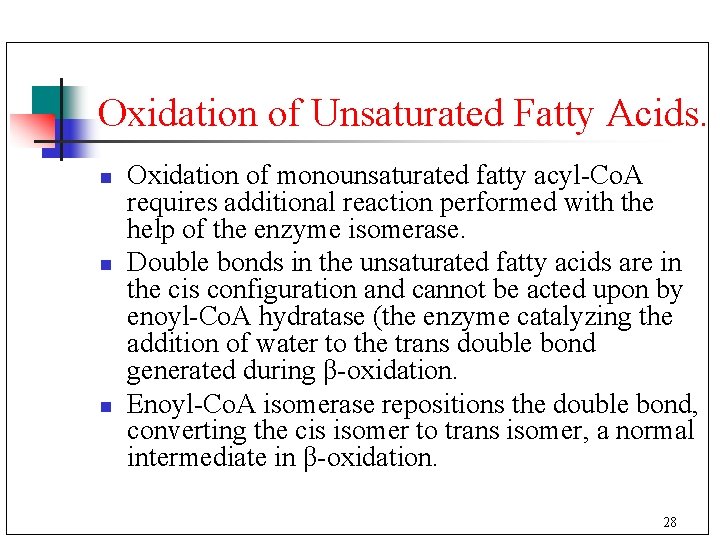
Oxidation of Unsaturated Fatty Acids. n n n Oxidation of monounsaturated fatty acyl-Co. A requires additional reaction performed with the help of the enzyme isomerase. Double bonds in the unsaturated fatty acids are in the cis configuration and cannot be acted upon by enoyl-Co. A hydratase (the enzyme catalyzing the addition of water to the trans double bond generated during β-oxidation. Enoyl-Co. A isomerase repositions the double bond, converting the cis isomer to trans isomer, a normal intermediate in β-oxidation. 28
Oxidation of polyunsaturated fatty acids. n n Requires two additional reactions and a second enzyme, reductase, in addition to isomerase. NADPH-dependent 2, 4 -dienoyl-Co. A reductase converts trans-2, cis-4 -dienoyl. Co. A intermediate into the trans-2 -enoyl. Co. A substrate necessary for β-oxidation. 29
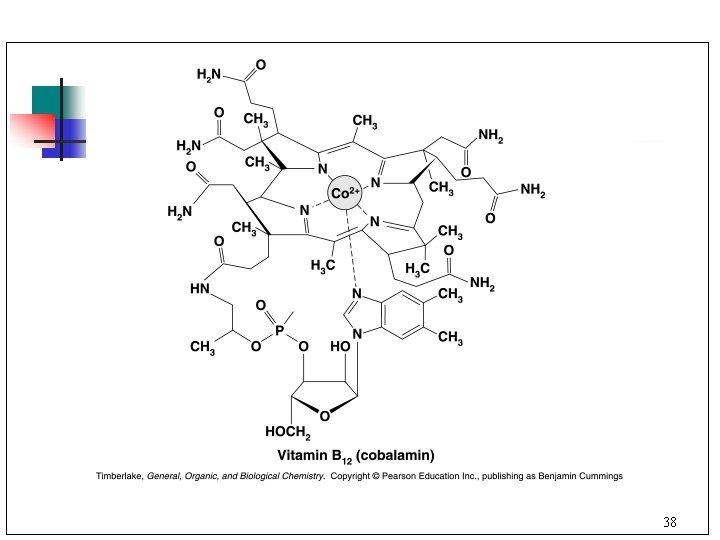
Oxidation of odd-chain fatty acids. n n n Odd-carbon fatty acids are oxidized by the same pathway as evencarbon acids until three-carbon propionyl-Co. A is formed. After that, three additional reactions are required involving three enzymes. Propionyl-Co. A is carboxylated by propionyl-Co. A carboxylase (with the cofactor biotin) to form the D stereoisomer of methylmalonyl. Co. A (The formation of the carboxybiotin intermediate requires energy from ATP). D-methylmalonyl-Co. A is changed into L-methylmalonyl-Co. A by methylmalonyl-Co. A epimerase. L-methylmalonyl-Co. A undergoes an intramolecular rearrangment to form succinyl-Co. A, which enters the citric acid cycle. This rearrangment is catalyzed by methylmalonyl-Co. A mutase, which requires coenzyme B 12, derived from vitamin B 12 (cobalamin). 30
31
32
33
34
35
36
37
38

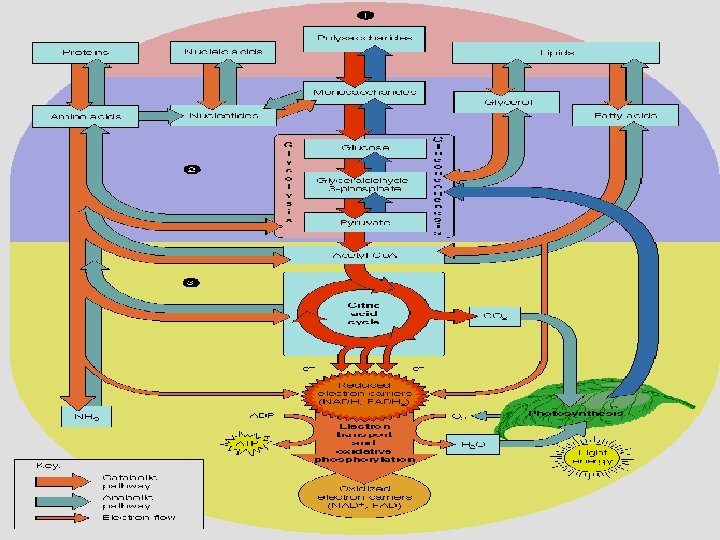
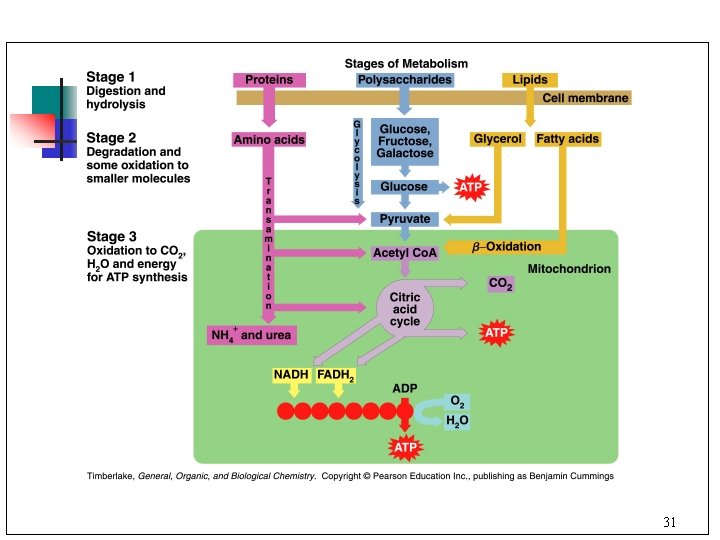
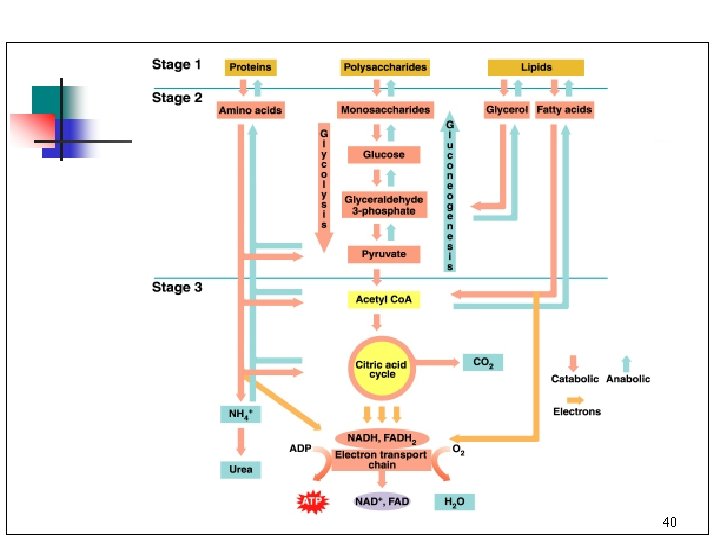
Overview of Metabolism In metabolism: n Catabolic pathways degrade large molecules. n Anabolic pathway synthesize molecules. n Branch points determine which compounds are degraded to acetyl Co. A to meet energy needs or converted to glycogen for storage. 39
40
- Slides: 41