
Lipid Metabolism Remember fats Triacylglycerols major form of
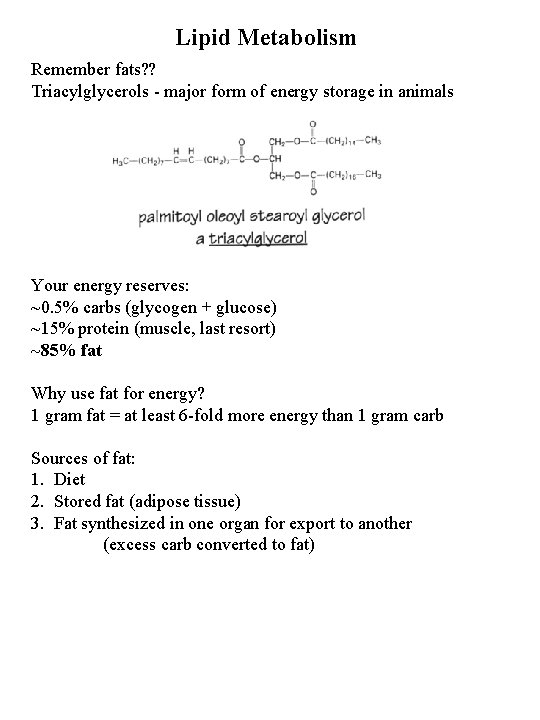
Lipid Metabolism Remember fats? ? Triacylglycerols - major form of energy storage in animals Your energy reserves: ~0. 5% carbs (glycogen + glucose) ~15% protein (muscle, last resort) ~85% fat Why use fat for energy? 1 gram fat = at least 6 -fold more energy than 1 gram carb Sources of fat: 1. Diet 2. Stored fat (adipose tissue) 3. Fat synthesized in one organ for export to another (excess carb converted to fat)
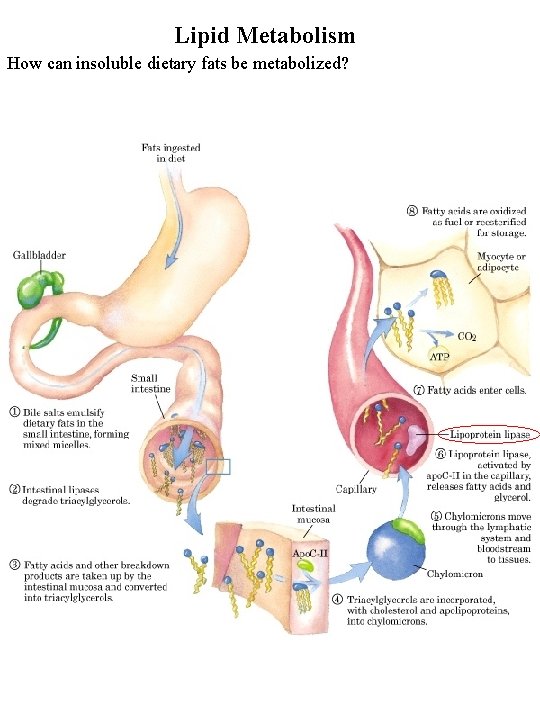
Lipid Metabolism How can insoluble dietary fats be metabolized?
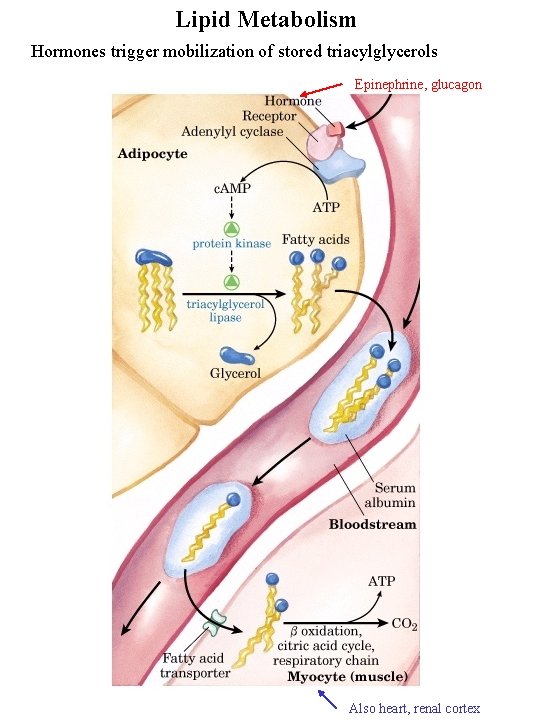
Lipid Metabolism Hormones trigger mobilization of stored triacylglycerols Epinephrine, glucagon Also heart, renal cortex
Lipid Metabolism How are fatty acids burned for energy? 1. Transported to mitochondria 2. Oxidized to produce acetyl Co. A, NADH, FADH 2 3. Acetyl Co. A goes to citric acid cycle NADH, FADH 2 donate e- to oxidative phos
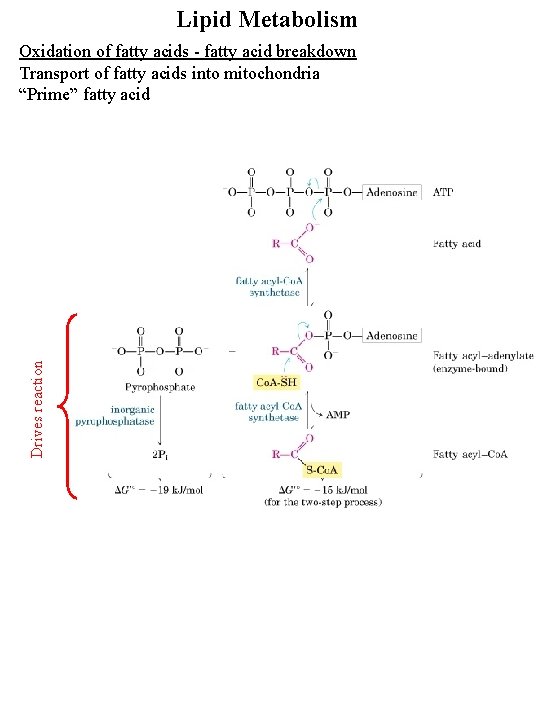
Lipid Metabolism Drives reaction Oxidation of fatty acids - fatty acid breakdown Transport of fatty acids into mitochondria “Prime” fatty acid
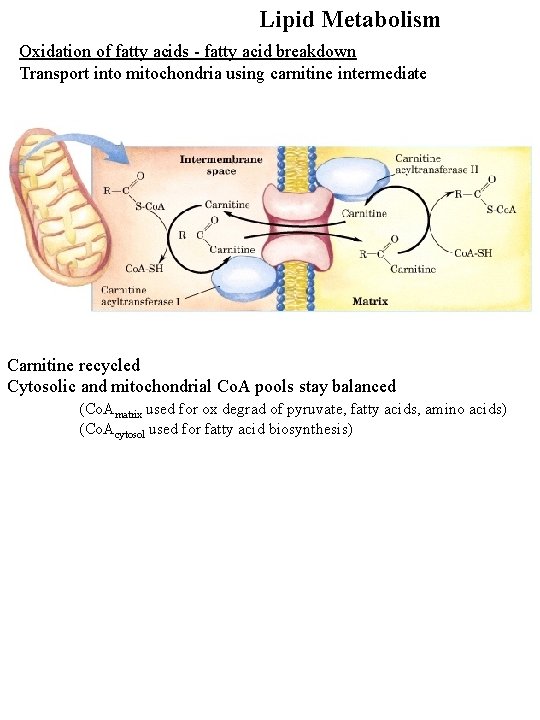
Lipid Metabolism Oxidation of fatty acids - fatty acid breakdown Transport into mitochondria using carnitine intermediate Carnitine recycled Cytosolic and mitochondrial Co. A pools stay balanced (Co. Amatrix used for ox degrad of pyruvate, fatty acids, amino acids) (Co. Acytosol used for fatty acid biosynthesis)
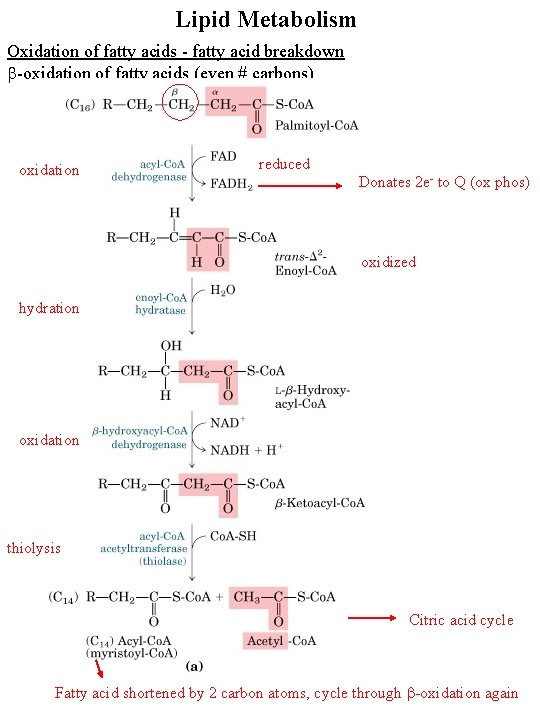
Lipid Metabolism Oxidation of fatty acids - fatty acid breakdown b-oxidation of fatty acids (even # carbons) oxidation reduced Donates 2 e- to Q (ox phos) oxidized hydration oxidation thiolysis Citric acid cycle Fatty acid shortened by 2 carbon atoms, cycle through b-oxidation again
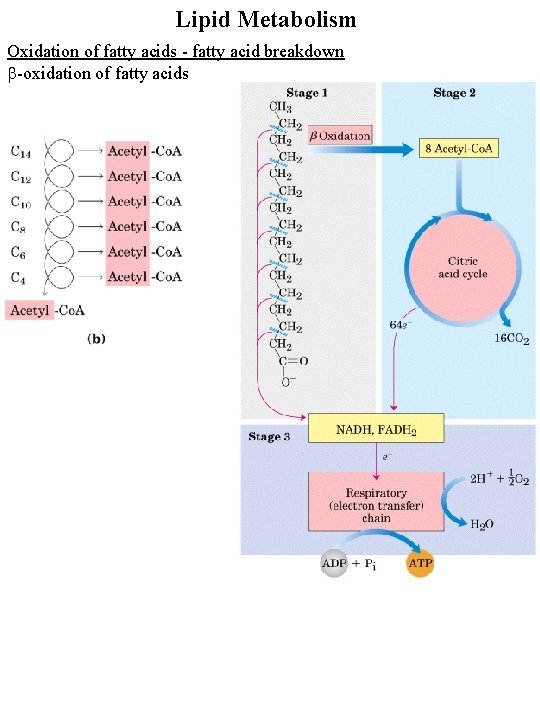
Lipid Metabolism Oxidation of fatty acids - fatty acid breakdown b-oxidation of fatty acids
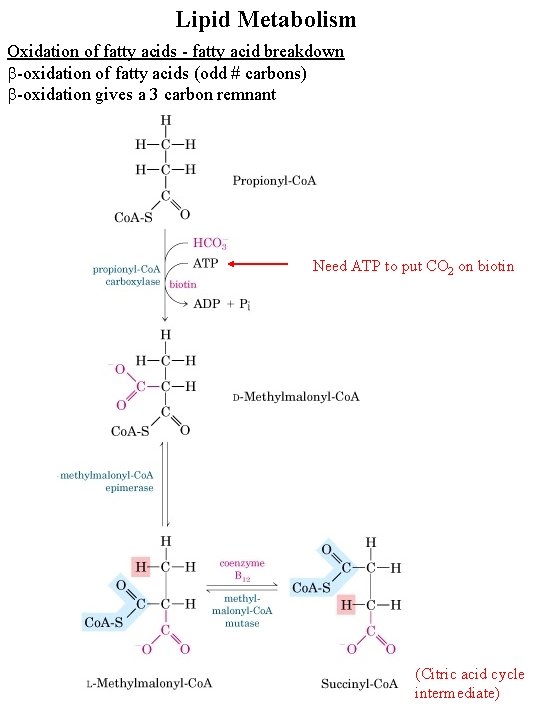
Lipid Metabolism Oxidation of fatty acids - fatty acid breakdown b-oxidation of fatty acids (odd # carbons) b-oxidation gives a 3 carbon remnant Need ATP to put CO 2 on biotin (Citric acid cycle intermediate)
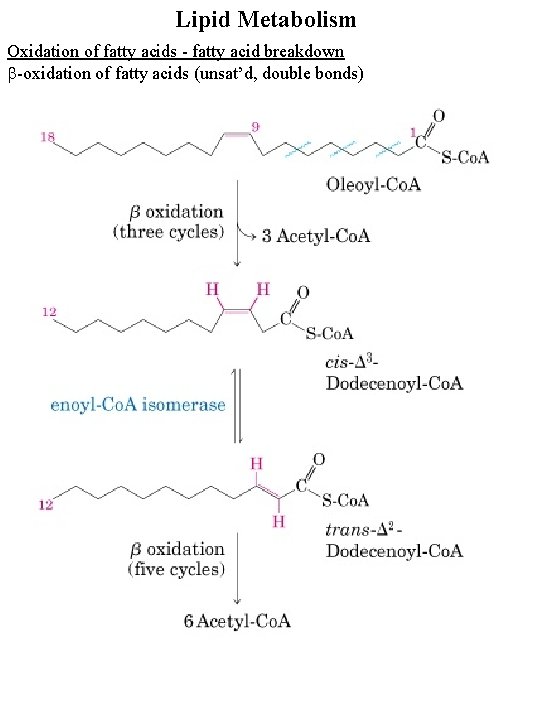
Lipid Metabolism Oxidation of fatty acids - fatty acid breakdown b-oxidation of fatty acids (unsat’d, double bonds)
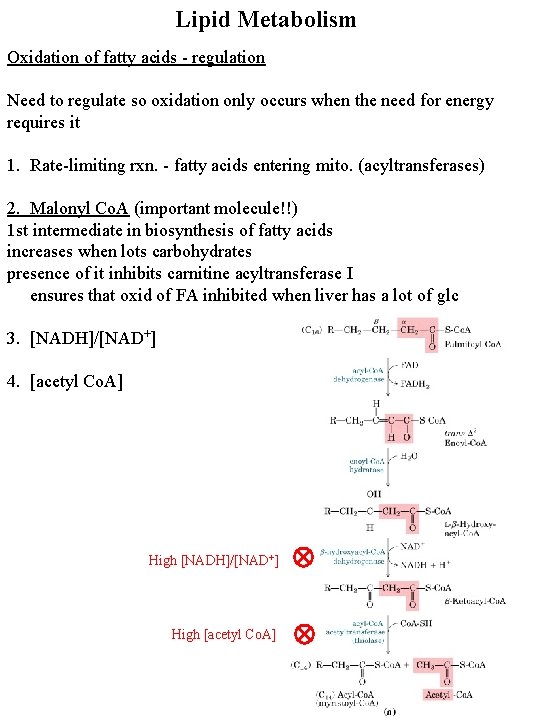
Lipid Metabolism Oxidation of fatty acids - regulation Need to regulate so oxidation only occurs when the need for energy requires it 1. Rate-limiting rxn. - fatty acids entering mito. (acyltransferases) 2. Malonyl Co. A (important molecule!!) 1 st intermediate in biosynthesis of fatty acids increases when lots carbohydrates presence of it inhibits carnitine acyltransferase I ensures that oxid of FA inhibited when liver has a lot of glc 3. [NADH]/[NAD+] 4. [acetyl Co. A] High [NADH]/[NAD+] High [acetyl Co. A]
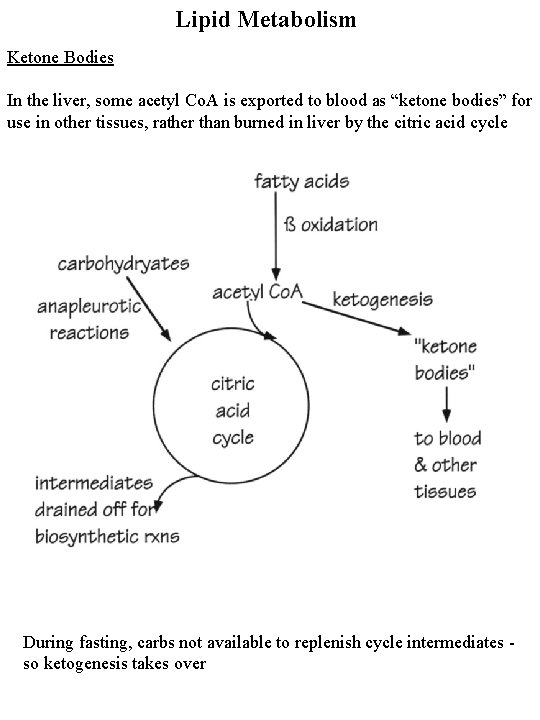
Lipid Metabolism Ketone Bodies In the liver, some acetyl Co. A is exported to blood as “ketone bodies” for use in other tissues, rather than burned in liver by the citric acid cycle During fasting, carbs not available to replenish cycle intermediates so ketogenesis takes over
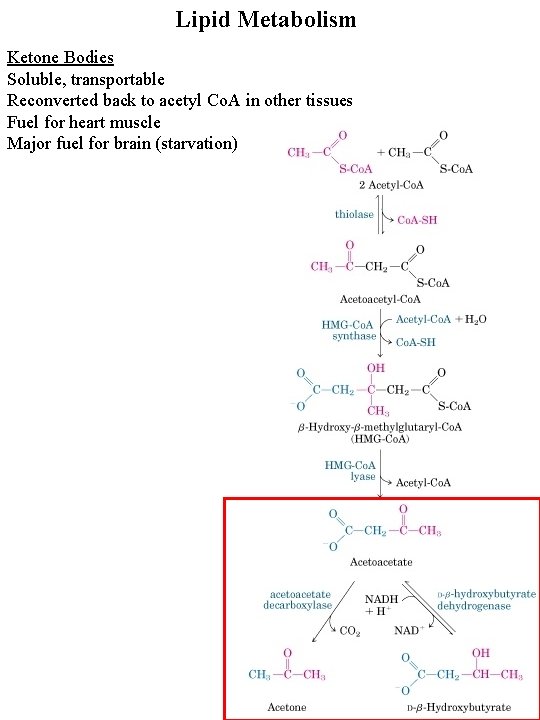
Lipid Metabolism Ketone Bodies Soluble, transportable Reconverted back to acetyl Co. A in other tissues Fuel for heart muscle Major fuel for brain (starvation)
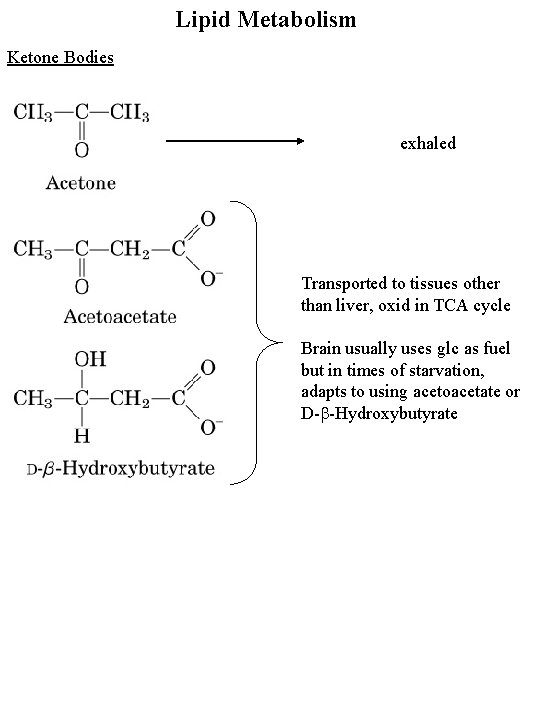
Lipid Metabolism Ketone Bodies exhaled Transported to tissues other than liver, oxid in TCA cycle Brain usually uses glc as fuel but in times of starvation, adapts to using acetoacetate or D-b-Hydroxybutyrate
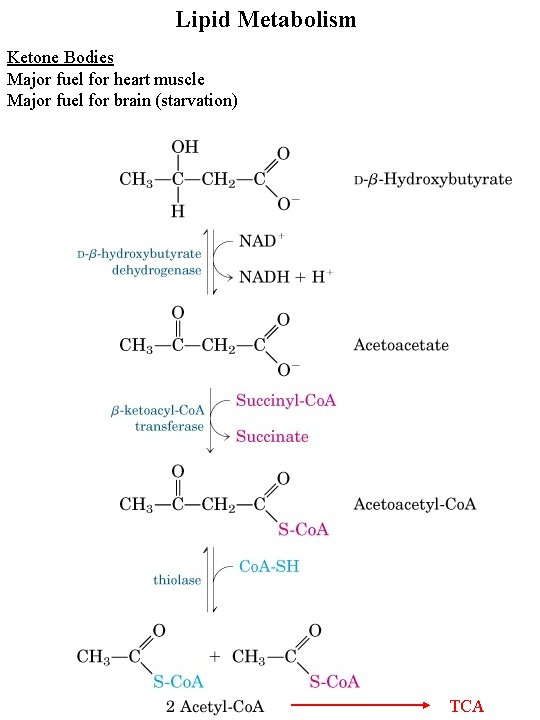
Lipid Metabolism Ketone Bodies Major fuel for heart muscle Major fuel for brain (starvation) TCA
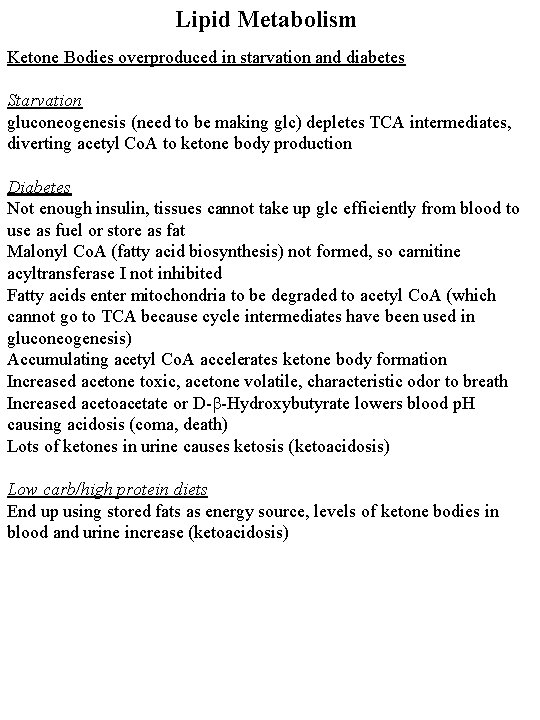
Lipid Metabolism Ketone Bodies overproduced in starvation and diabetes Starvation gluconeogenesis (need to be making glc) depletes TCA intermediates, diverting acetyl Co. A to ketone body production Diabetes Not enough insulin, tissues cannot take up glc efficiently from blood to use as fuel or store as fat Malonyl Co. A (fatty acid biosynthesis) not formed, so carnitine acyltransferase I not inhibited Fatty acids enter mitochondria to be degraded to acetyl Co. A (which cannot go to TCA because cycle intermediates have been used in gluconeogenesis) Accumulating acetyl Co. A accelerates ketone body formation Increased acetone toxic, acetone volatile, characteristic odor to breath Increased acetoacetate or D-b-Hydroxybutyrate lowers blood p. H causing acidosis (coma, death) Lots of ketones in urine causes ketosis (ketoacidosis) Low carb/high protein diets End up using stored fats as energy source, levels of ketone bodies in blood and urine increase (ketoacidosis)
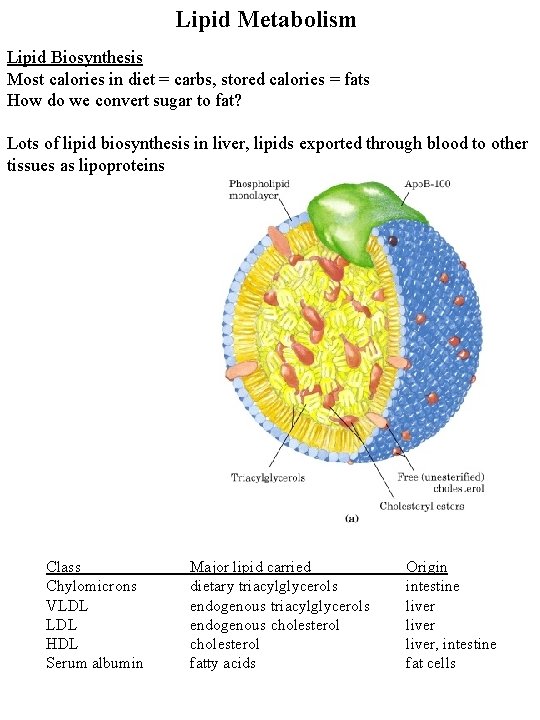
Lipid Metabolism Lipid Biosynthesis Most calories in diet = carbs, stored calories = fats How do we convert sugar to fat? Lots of lipid biosynthesis in liver, lipids exported through blood to other tissues as lipoproteins Class Chylomicrons VLDL HDL Serum albumin Major lipid carried dietary triacylglycerols endogenous cholesterol fatty acids Origin intestine liver, intestine fat cells
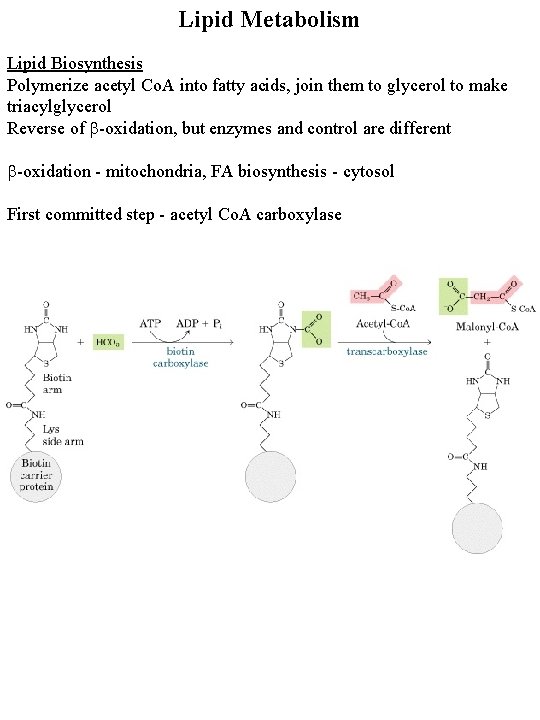
Lipid Metabolism Lipid Biosynthesis Polymerize acetyl Co. A into fatty acids, join them to glycerol to make triacylglycerol Reverse of b-oxidation, but enzymes and control are different b-oxidation - mitochondria, FA biosynthesis - cytosol First committed step - acetyl Co. A carboxylase
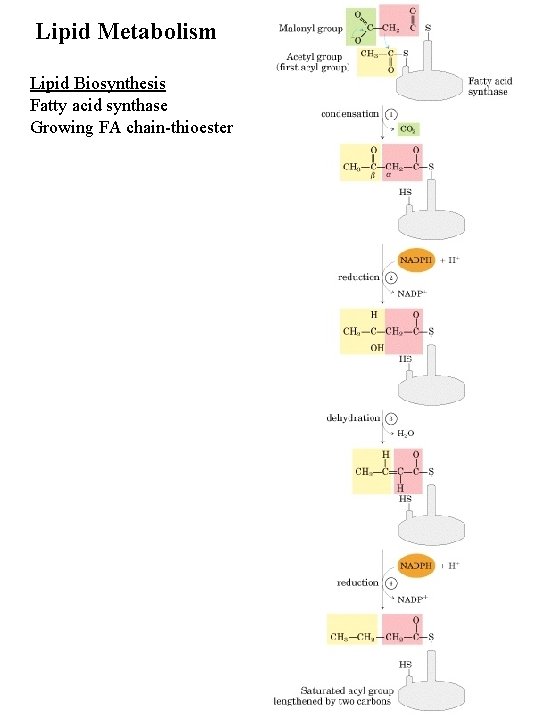
Lipid Metabolism Lipid Biosynthesis Fatty acid synthase Growing FA chain-thioester
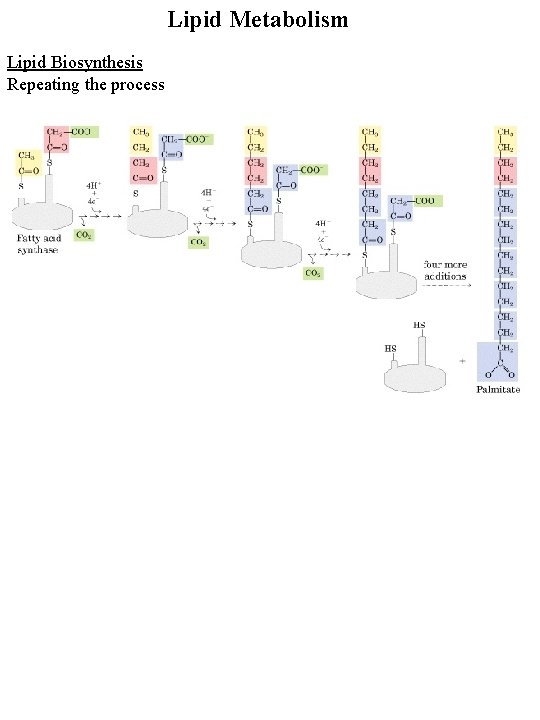
Lipid Metabolism Lipid Biosynthesis Repeating the process
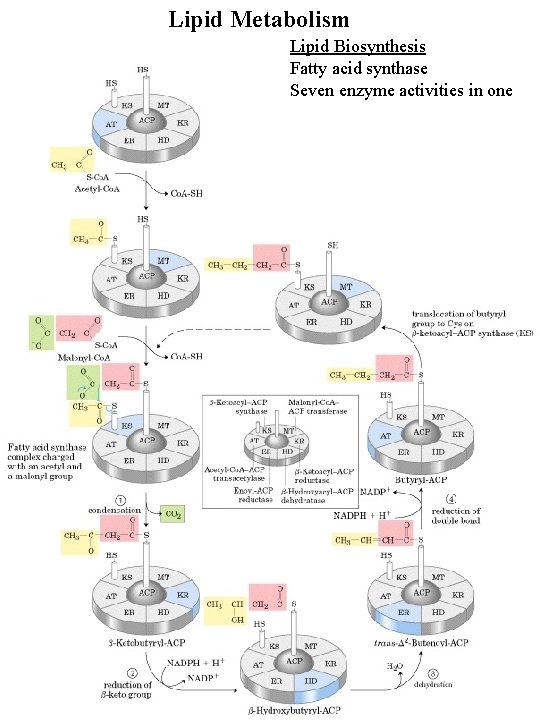
Lipid Metabolism Lipid Biosynthesis Fatty acid synthase Seven enzyme activities in one
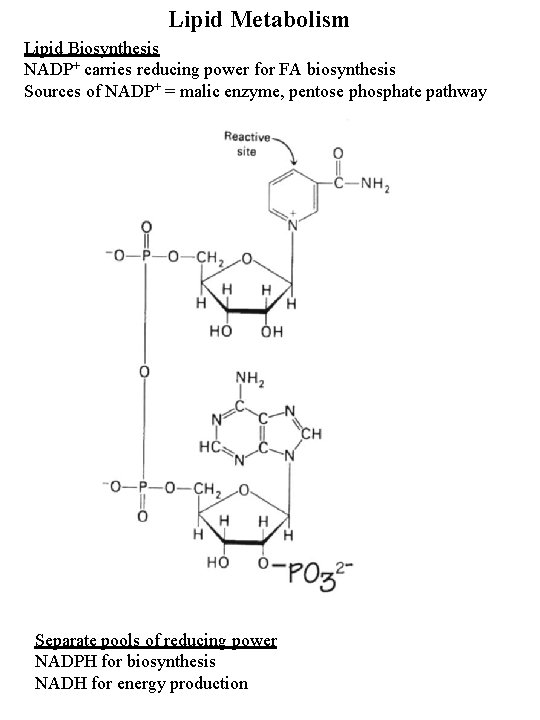
Lipid Metabolism Lipid Biosynthesis NADP+ carries reducing power for FA biosynthesis Sources of NADP+ = malic enzyme, pentose phosphate pathway Separate pools of reducing power NADPH for biosynthesis NADH for energy production
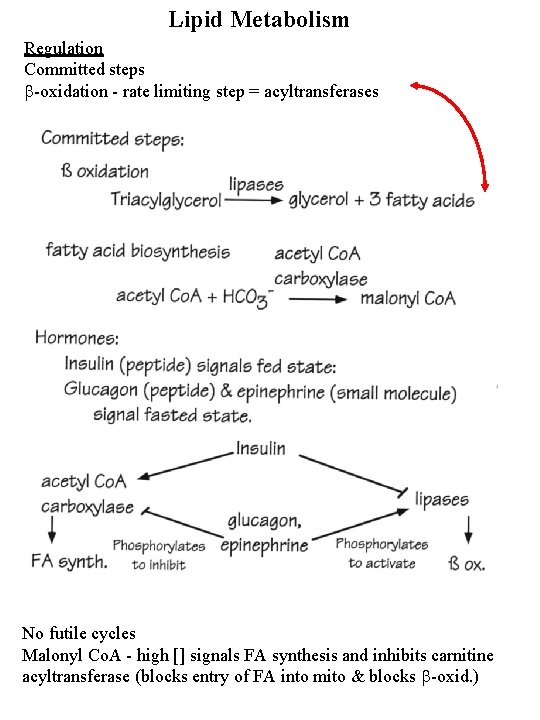
Lipid Metabolism Regulation Committed steps b-oxidation - rate limiting step = acyltransferases No futile cycles Malonyl Co. A - high [] signals FA synthesis and inhibits carnitine acyltransferase (blocks entry of FA into mito & blocks b-oxid. )
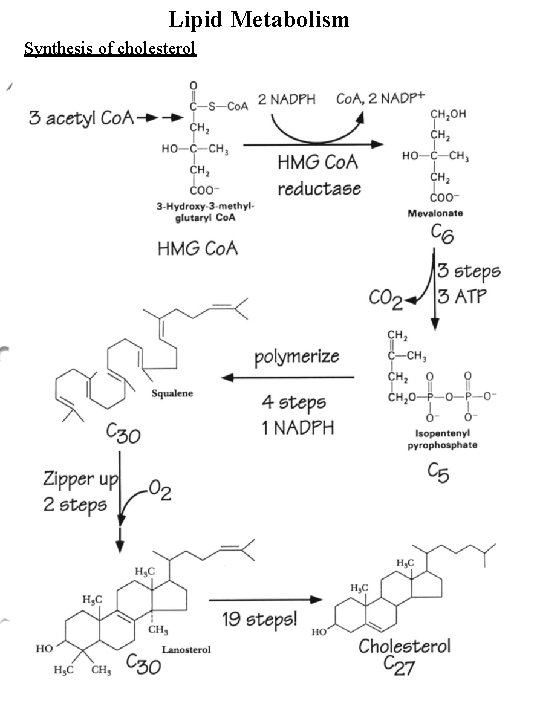
Lipid Metabolism Synthesis of cholesterol
Lipid Metabolism Synthesis of cholesterol - regulation 1. HMG Co. A reductase is nonequilibrium rxn and committed step 2. Cholesterol inhibits HMG Co. A reductase (feedback inhibition) 3. Metabolites in cholesterol biosyn. pathway inhibit HMG Co. A reductase (feedback inhibition) 4. Cholesterol also activates a protease that degrades HMG Co. A reductase
Lipid Metabolism Synthesis of cholesterol Cholesterol synthesized in liver Delivered to tissues through blood as LDL/HDL particles LDL receptor on cell surface binds protein component of LDL and allows cell to internalize LDL Heart disease & cholesterol Cholesterol in blood forms deposits inside arteries (narrowed) Heart disease correlates with high serum cholesterol <175 mg/100 m. L is “good” Familial hypercholesterolemia Homozygous: 600 mg/100 m. L - die in childhood Heterozygous: 300 mg/100 m. L - variable results Primary defect: LDL receptors absent, [cholesterol] in cell low, so HMG Co. A reductase always ON full blast!!
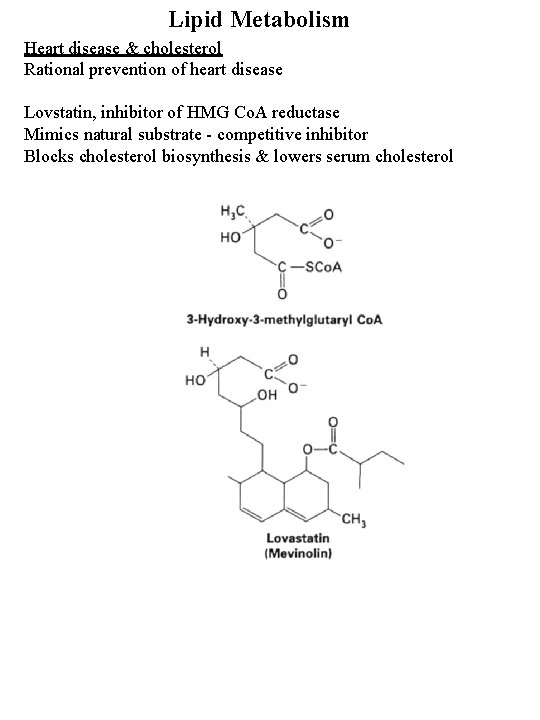
Lipid Metabolism Heart disease & cholesterol Rational prevention of heart disease Lovstatin, inhibitor of HMG Co. A reductase Mimics natural substrate - competitive inhibitor Blocks cholesterol biosynthesis & lowers serum cholesterol
- Slides: 27