
Lipid metabolism Most are glycerolipids fatty acids bonded
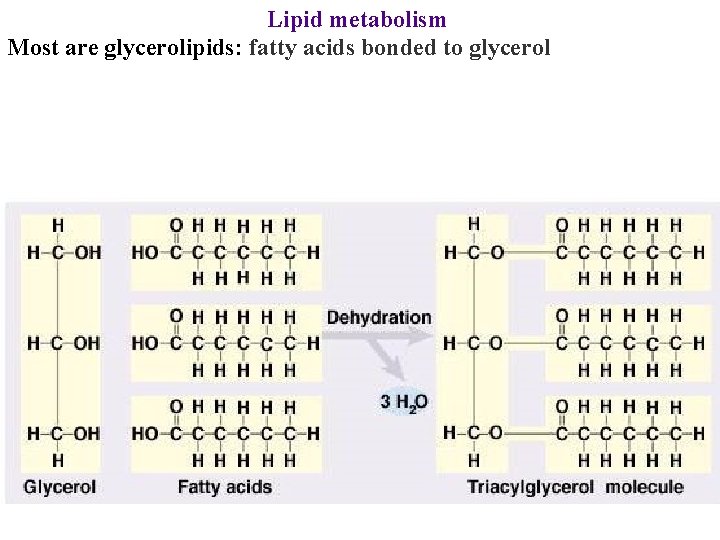
Lipid metabolism Most are glycerolipids: fatty acids bonded to glycerol

GLYCEROLIPIDS Triacylglycerols = FAs on all 3 C • store energy

GLYCEROLIPIDS Bond FA to glycerol Diacylglycerols = FAs on 2 Cs, headgroup on C 3

GLYCEROLIPIDS Diacylglycerols = FAs on 2 Cs, headgroup on C 3 Form bilayers in water
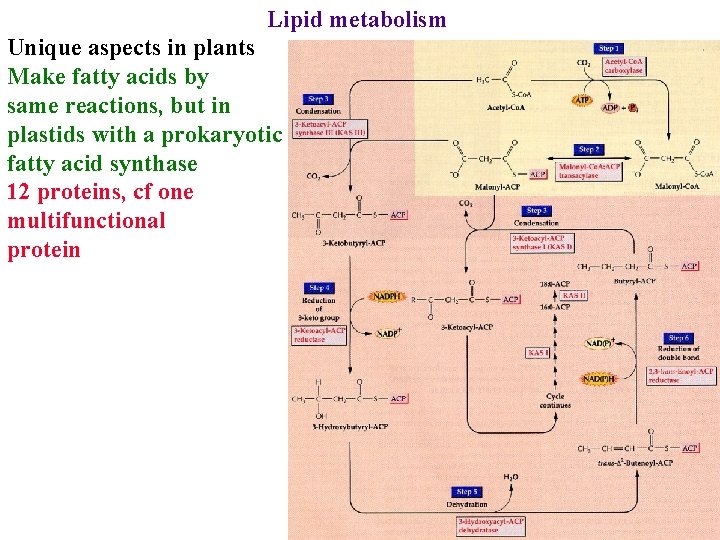
Lipid metabolism Unique aspects in plants Make fatty acids by same reactions, but in plastids with a prokaryotic fatty acid synthase 12 proteins, cf one multifunctional protein
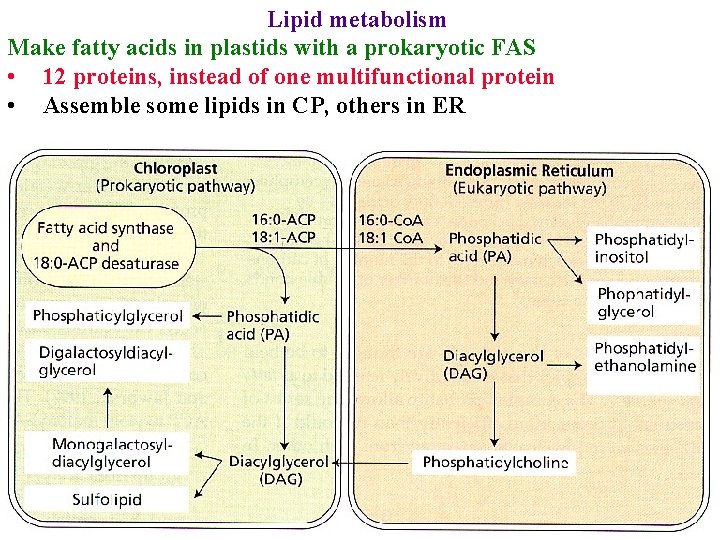
Lipid metabolism Make fatty acids in plastids with a prokaryotic FAS • 12 proteins, instead of one multifunctional protein • Assemble some lipids in CP, others in ER
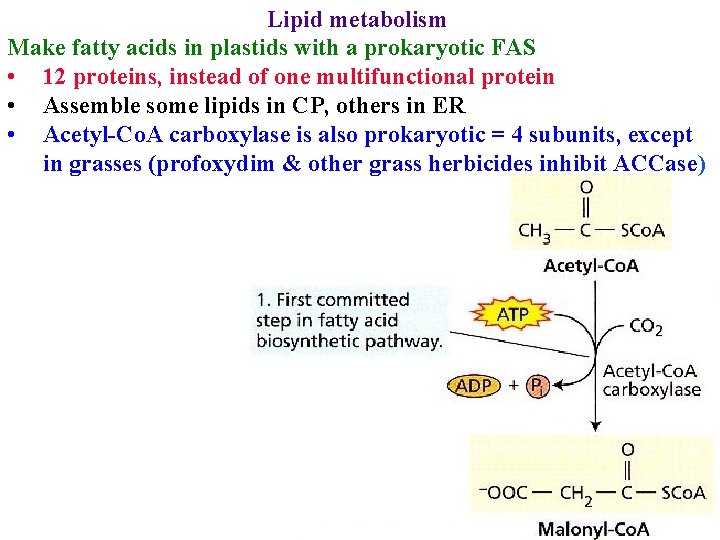
Lipid metabolism Make fatty acids in plastids with a prokaryotic FAS • 12 proteins, instead of one multifunctional protein • Assemble some lipids in CP, others in ER • Acetyl-Co. A carboxylase is also prokaryotic = 4 subunits, except in grasses (profoxydim & other grass herbicides inhibit ACCase)
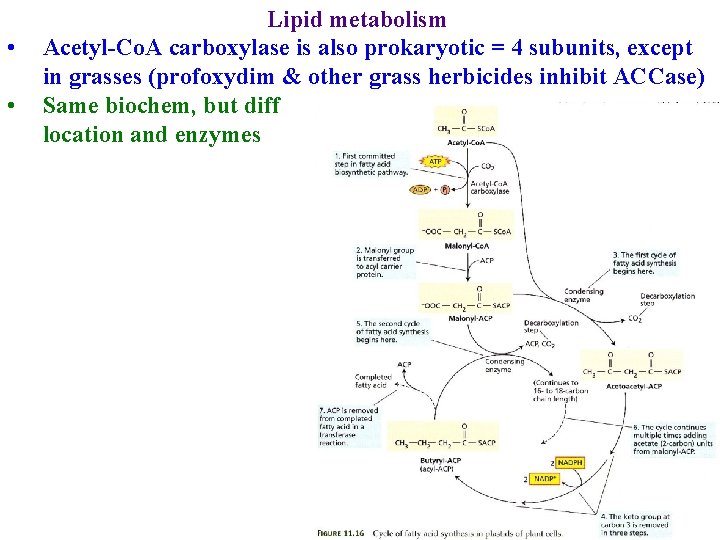
• • Lipid metabolism Acetyl-Co. A carboxylase is also prokaryotic = 4 subunits, except in grasses (profoxydim & other grass herbicides inhibit ACCase) Same biochem, but diff location and enzymes
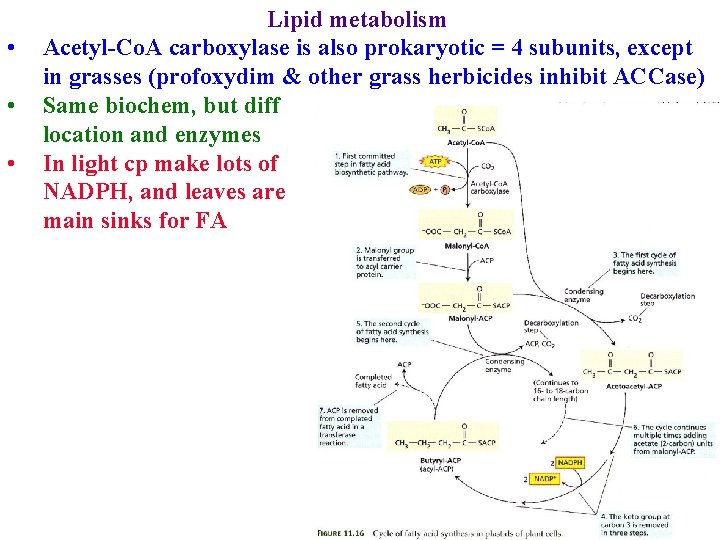
• • • Lipid metabolism Acetyl-Co. A carboxylase is also prokaryotic = 4 subunits, except in grasses (profoxydim & other grass herbicides inhibit ACCase) Same biochem, but diff location and enzymes In light cp make lots of NADPH, and leaves are main sinks for FA
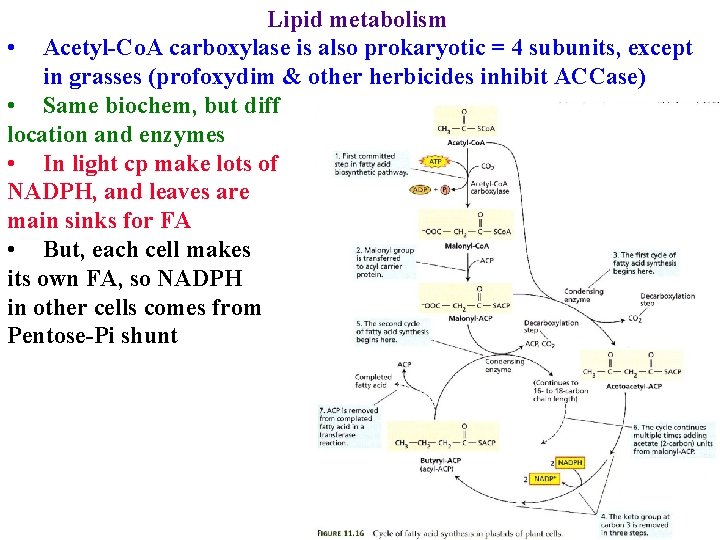
Lipid metabolism • Acetyl-Co. A carboxylase is also prokaryotic = 4 subunits, except in grasses (profoxydim & other herbicides inhibit ACCase) • Same biochem, but diff location and enzymes • In light cp make lots of NADPH, and leaves are main sinks for FA • But, each cell makes its own FA, so NADPH in other cells comes from Pentose-Pi shunt
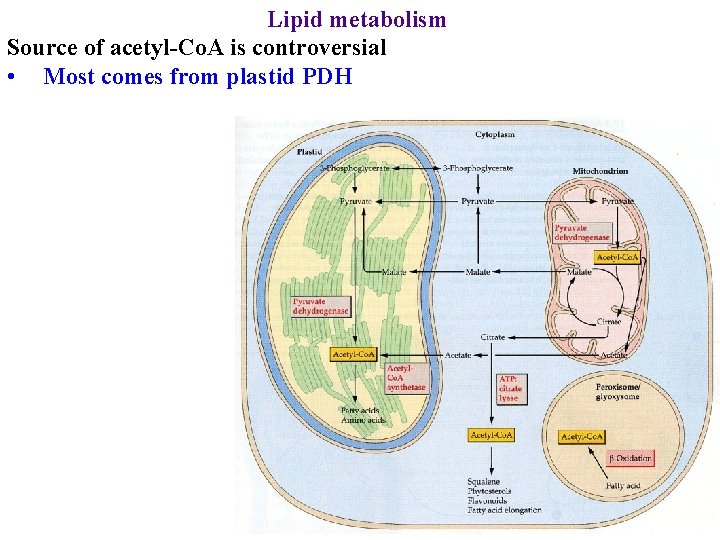
Lipid metabolism Source of acetyl-Co. A is controversial • Most comes from plastid PDH
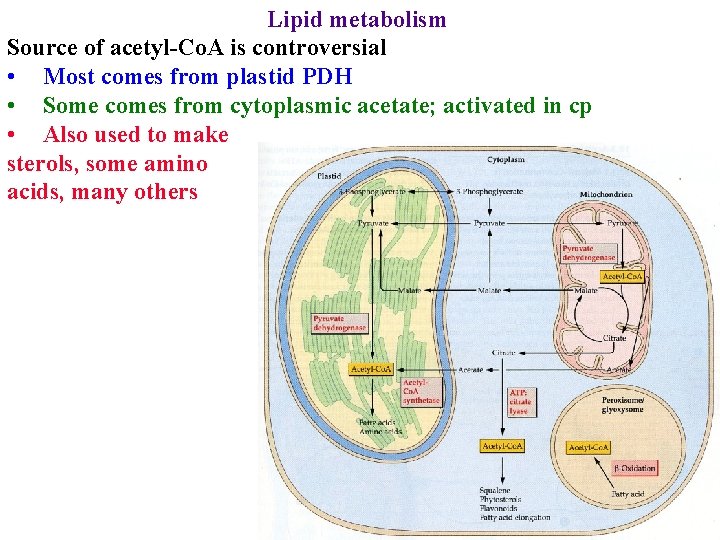
Lipid metabolism Source of acetyl-Co. A is controversial • Most comes from plastid PDH • Some comes from cytoplasmic acetate; activated in cp • Also used to make sterols, some amino acids, many others
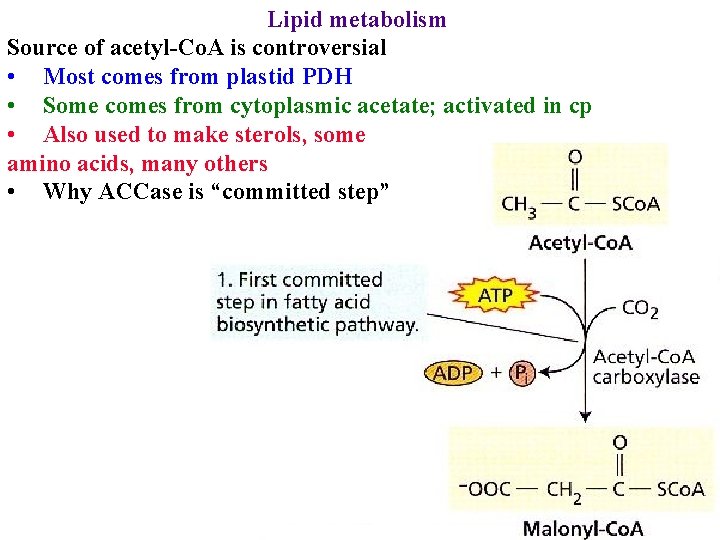
Lipid metabolism Source of acetyl-Co. A is controversial • Most comes from plastid PDH • Some comes from cytoplasmic acetate; activated in cp • Also used to make sterols, some amino acids, many others • Why ACCase is “committed step”
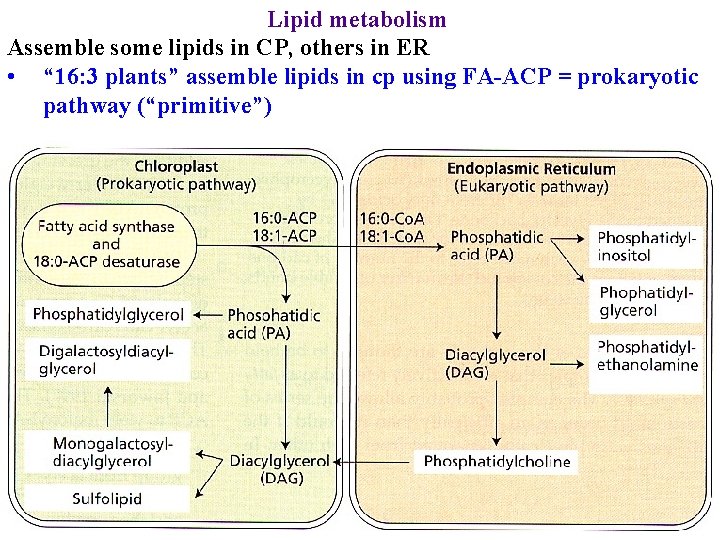
Lipid metabolism Assemble some lipids in CP, others in ER • “ 16: 3 plants” assemble lipids in cp using FA-ACP = prokaryotic pathway (“primitive”)
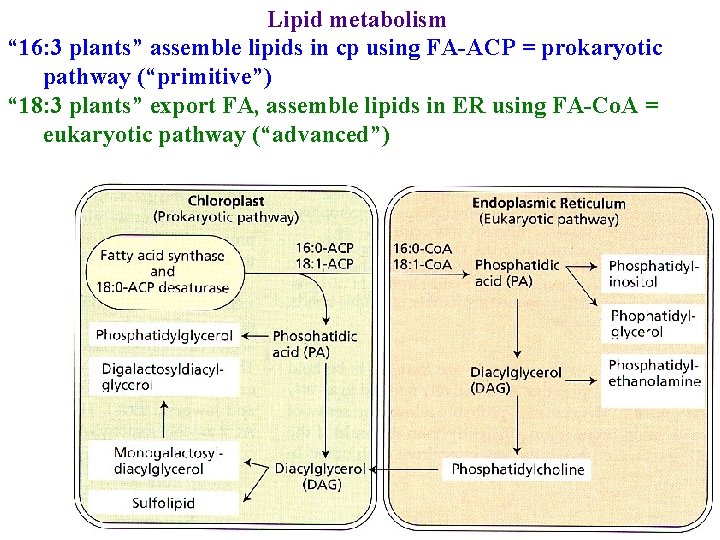
Lipid metabolism “ 16: 3 plants” assemble lipids in cp using FA-ACP = prokaryotic pathway (“primitive”) “ 18: 3 plants” export FA, assemble lipids in ER using FA-Co. A = eukaryotic pathway (“advanced”)
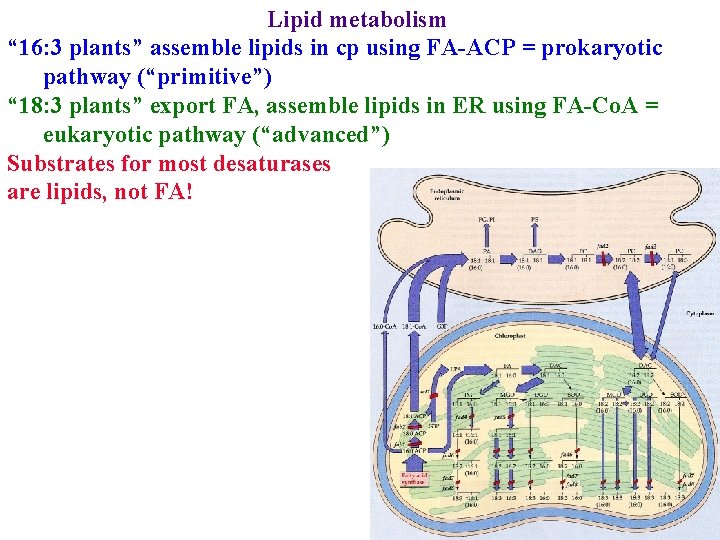
Lipid metabolism “ 16: 3 plants” assemble lipids in cp using FA-ACP = prokaryotic pathway (“primitive”) “ 18: 3 plants” export FA, assemble lipids in ER using FA-Co. A = eukaryotic pathway (“advanced”) Substrates for most desaturases are lipids, not FA!
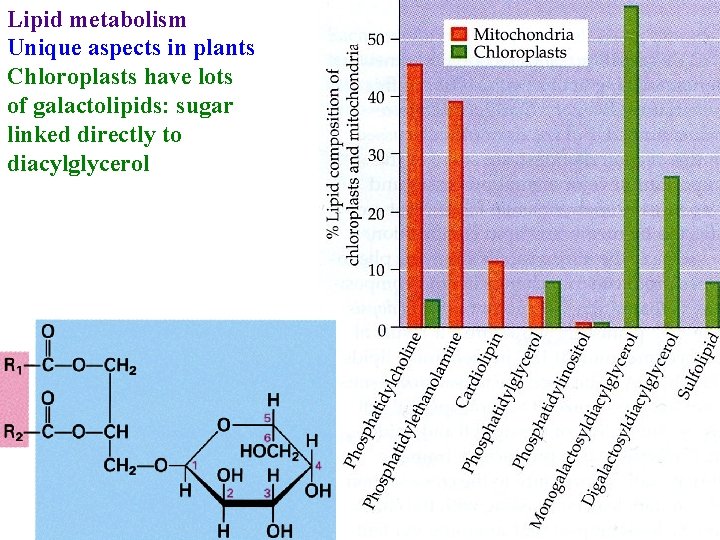
Lipid metabolism Unique aspects in plants Chloroplasts have lots of galactolipids: sugar linked directly to diacylglycerol
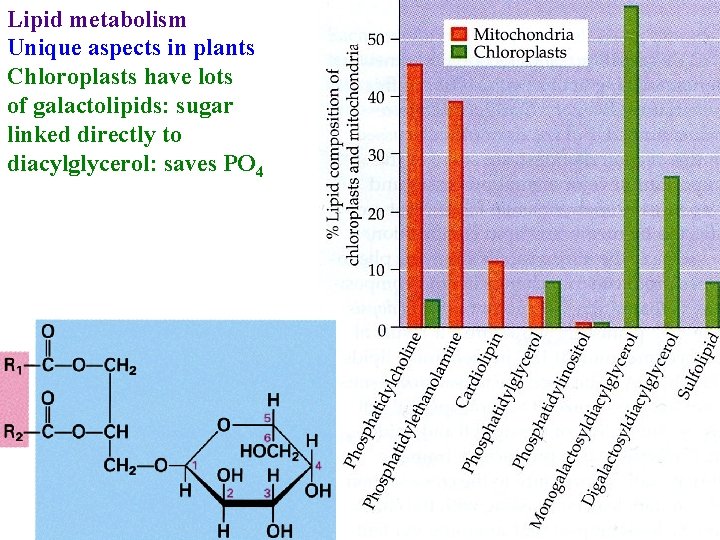
Lipid metabolism Unique aspects in plants Chloroplasts have lots of galactolipids: sugar linked directly to diacylglycerol: saves PO 4

Lipid metabolism Unique aspects in plants Chloroplasts have lots of galactolipids: sugar linked directly to diacylglycerol : saves PO 4 A) MGDG (Monogalactosyl diacylglycerol) 50% cp -> most abundant lipid on earth!
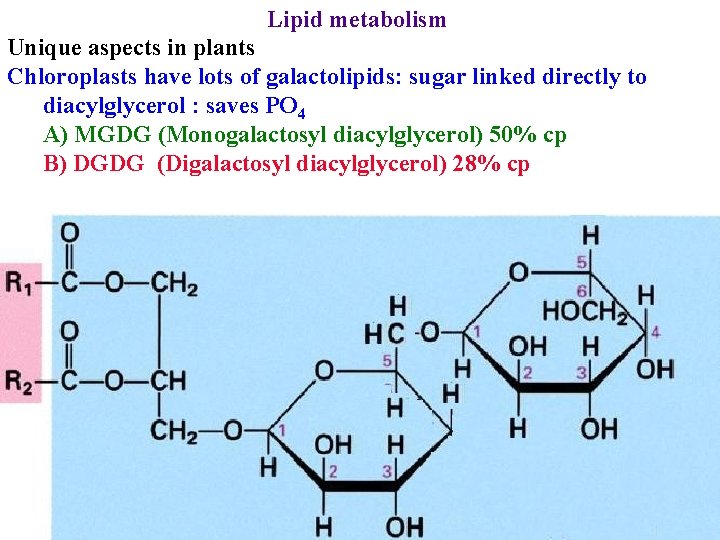
Lipid metabolism Unique aspects in plants Chloroplasts have lots of galactolipids: sugar linked directly to diacylglycerol : saves PO 4 A) MGDG (Monogalactosyl diacylglycerol) 50% cp B) DGDG (Digalactosyl diacylglycerol) 28% cp
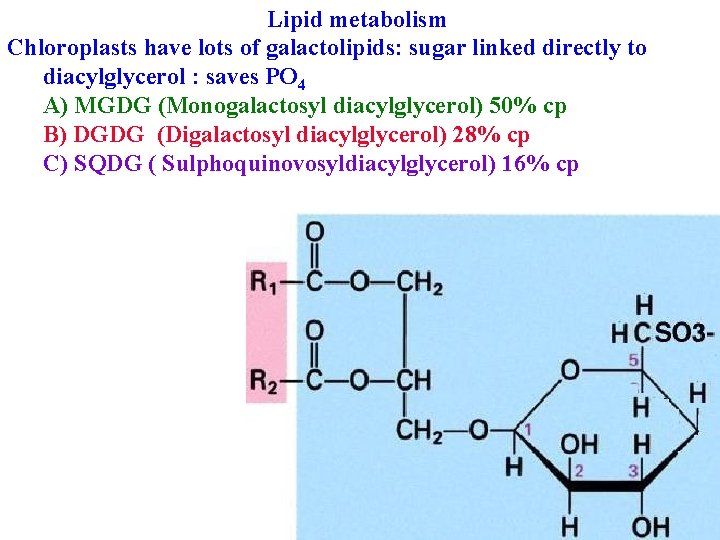
Lipid metabolism Chloroplasts have lots of galactolipids: sugar linked directly to diacylglycerol : saves PO 4 A) MGDG (Monogalactosyl diacylglycerol) 50% cp B) DGDG (Digalactosyl diacylglycerol) 28% cp C) SQDG ( Sulphoquinovosyldiacylglycerol) 16% cp
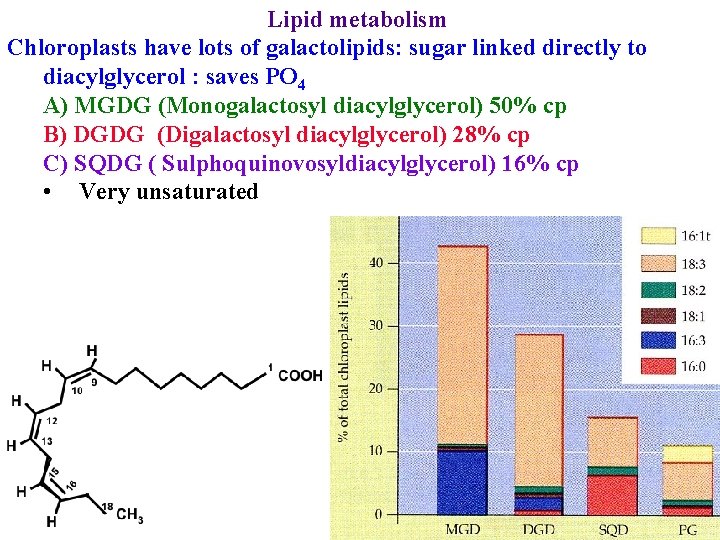
Lipid metabolism Chloroplasts have lots of galactolipids: sugar linked directly to diacylglycerol : saves PO 4 A) MGDG (Monogalactosyl diacylglycerol) 50% cp B) DGDG (Digalactosyl diacylglycerol) 28% cp C) SQDG ( Sulphoquinovosyldiacylglycerol) 16% cp • Very unsaturated
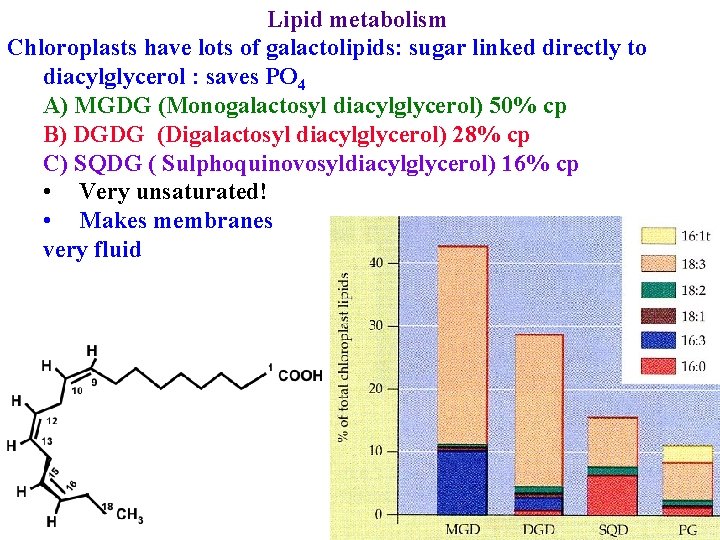
Lipid metabolism Chloroplasts have lots of galactolipids: sugar linked directly to diacylglycerol : saves PO 4 A) MGDG (Monogalactosyl diacylglycerol) 50% cp B) DGDG (Digalactosyl diacylglycerol) 28% cp C) SQDG ( Sulphoquinovosyldiacylglycerol) 16% cp • Very unsaturated! • Makes membranes very fluid
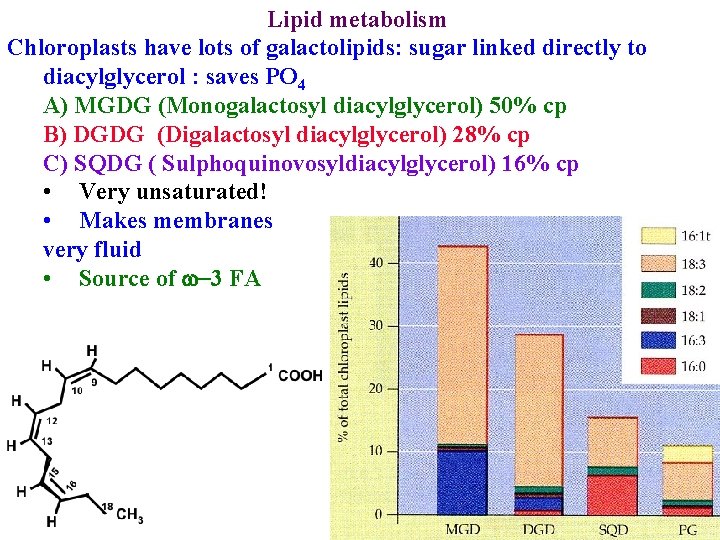
Lipid metabolism Chloroplasts have lots of galactolipids: sugar linked directly to diacylglycerol : saves PO 4 A) MGDG (Monogalactosyl diacylglycerol) 50% cp B) DGDG (Digalactosyl diacylglycerol) 28% cp C) SQDG ( Sulphoquinovosyldiacylglycerol) 16% cp • Very unsaturated! • Makes membranes very fluid • Source of 3 FA
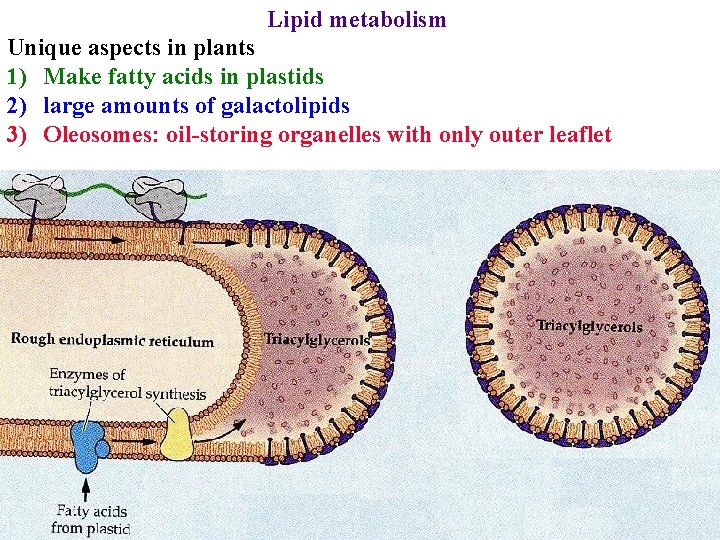
Lipid metabolism Unique aspects in plants 1) Make fatty acids in plastids 2) large amounts of galactolipids 3) Oleosomes: oil-storing organelles with only outer leaflet
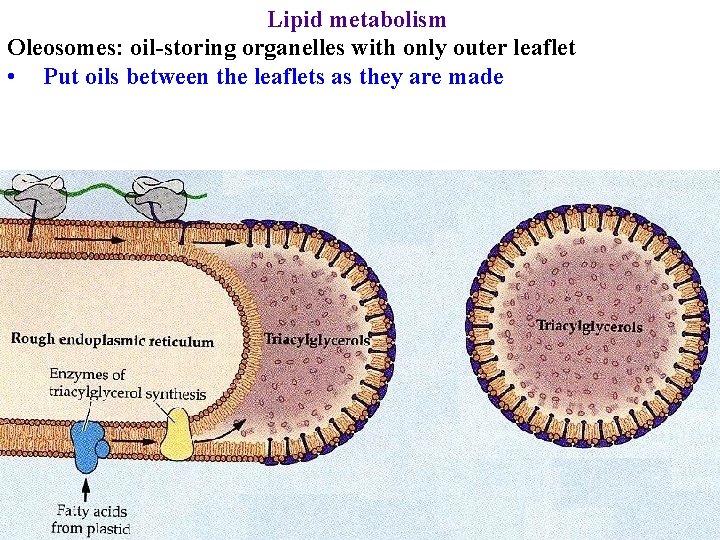
Lipid metabolism Oleosomes: oil-storing organelles with only outer leaflet • Put oils between the leaflets as they are made
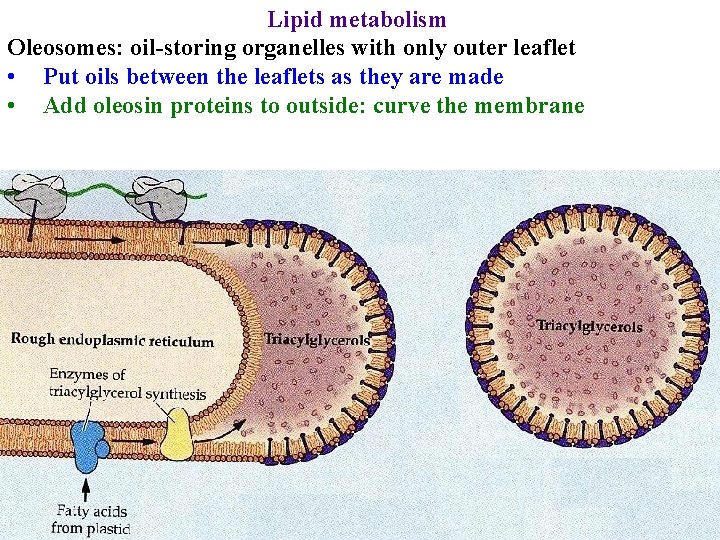
Lipid metabolism Oleosomes: oil-storing organelles with only outer leaflet • Put oils between the leaflets as they are made • Add oleosin proteins to outside: curve the membrane
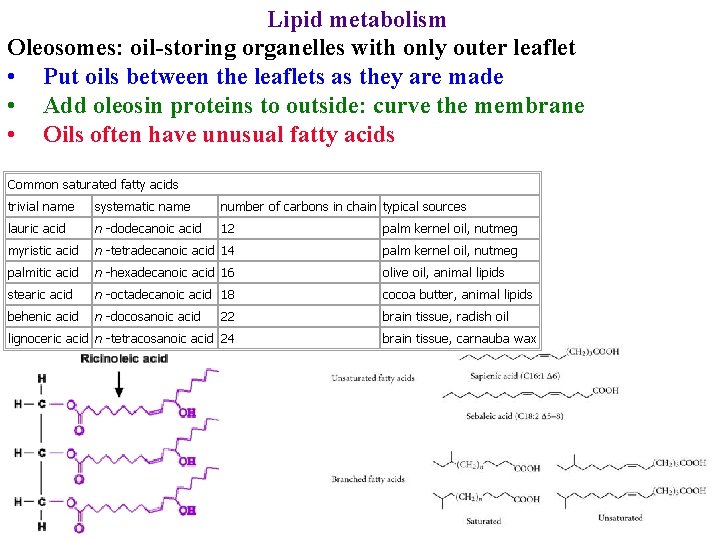
Lipid metabolism Oleosomes: oil-storing organelles with only outer leaflet • Put oils between the leaflets as they are made • Add oleosin proteins to outside: curve the membrane • Oils often have unusual fatty acids
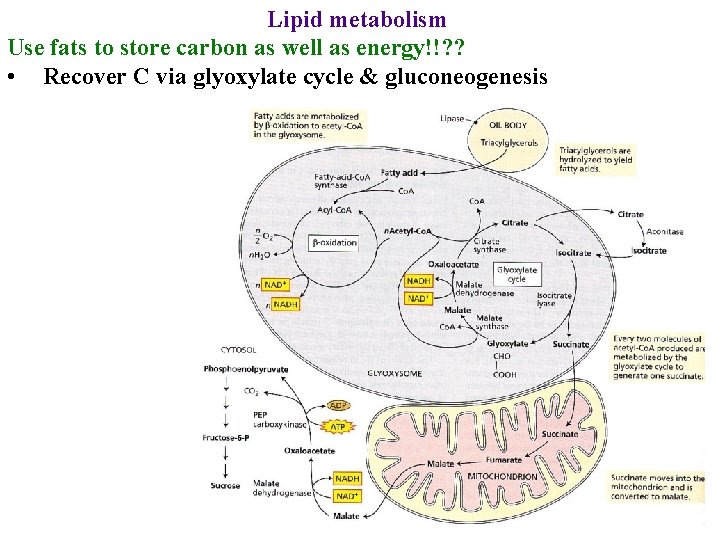
Lipid metabolism Use fats to store carbon as well as energy!!? ? • Recover C via glyoxylate cycle & gluconeogenesis
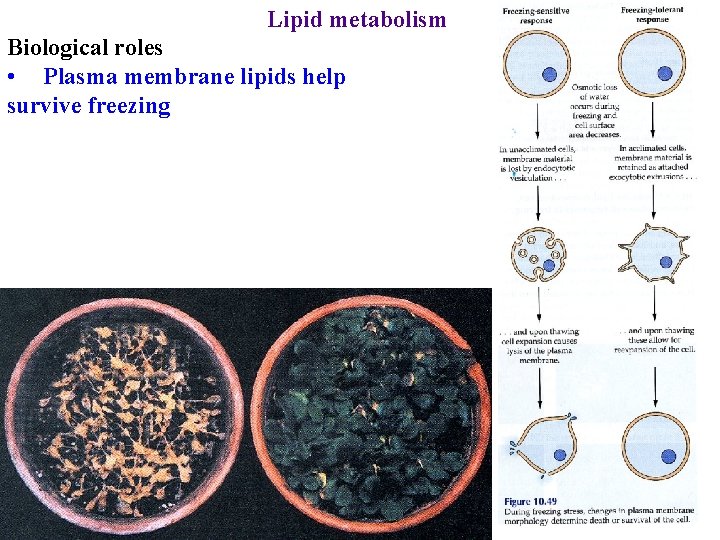
Lipid metabolism Biological roles • Plasma membrane lipids help survive freezing
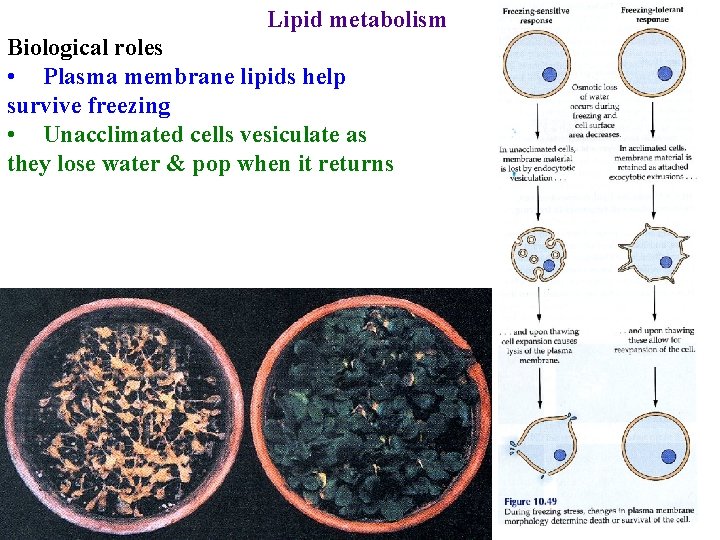
Lipid metabolism Biological roles • Plasma membrane lipids help survive freezing • Unacclimated cells vesiculate as they lose water & pop when it returns
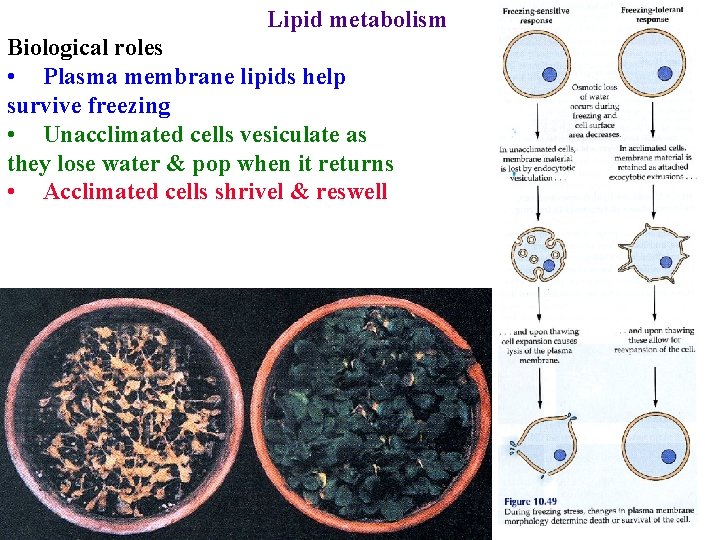
Lipid metabolism Biological roles • Plasma membrane lipids help survive freezing • Unacclimated cells vesiculate as they lose water & pop when it returns • Acclimated cells shrivel & reswell
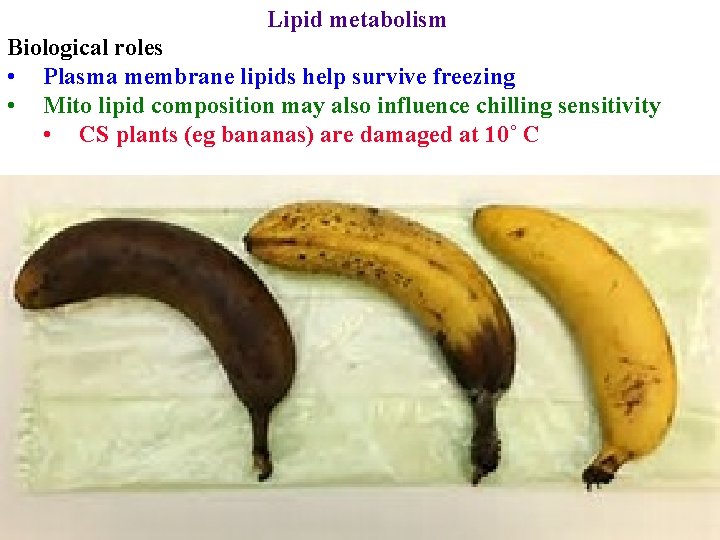
Lipid metabolism Biological roles • Plasma membrane lipids help survive freezing • Mito lipid composition may also influence chilling sensitivity • CS plants (eg bananas) are damaged at 10˚ C
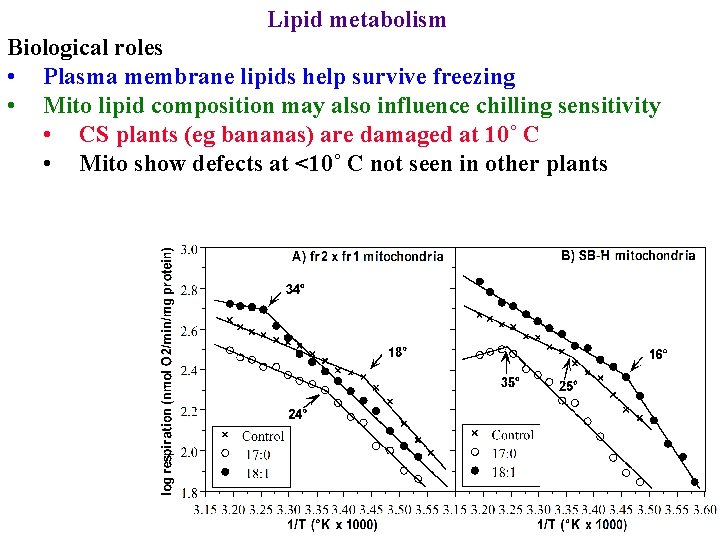
Lipid metabolism Biological roles • Plasma membrane lipids help survive freezing • Mito lipid composition may also influence chilling sensitivity • CS plants (eg bananas) are damaged at 10˚ C • Mito show defects at <10˚ C not seen in other plants
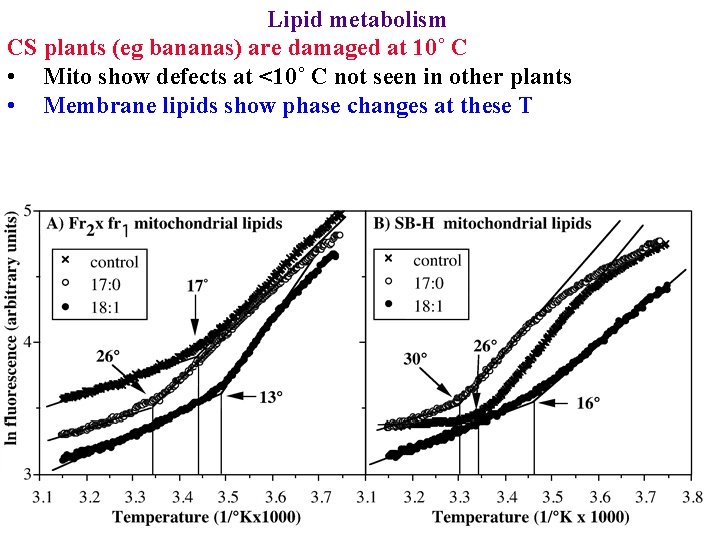
Lipid metabolism CS plants (eg bananas) are damaged at 10˚ C • Mito show defects at <10˚ C not seen in other plants • Membrane lipids show phase changes at these T
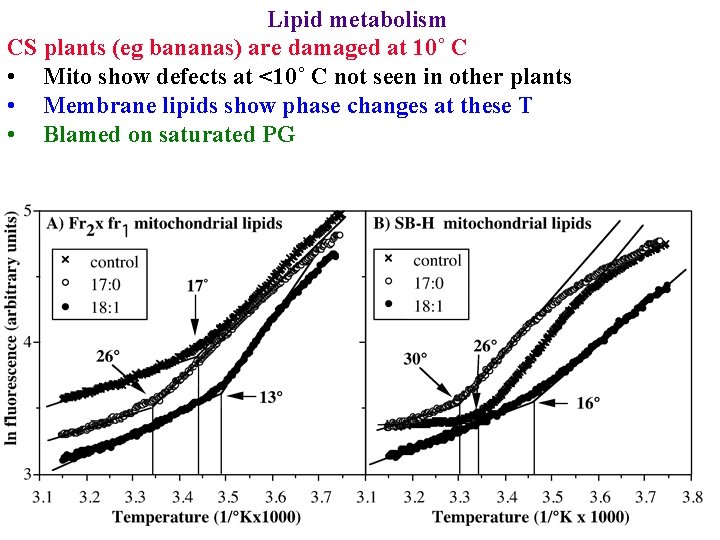
Lipid metabolism CS plants (eg bananas) are damaged at 10˚ C • Mito show defects at <10˚ C not seen in other plants • Membrane lipids show phase changes at these T • Blamed on saturated PG
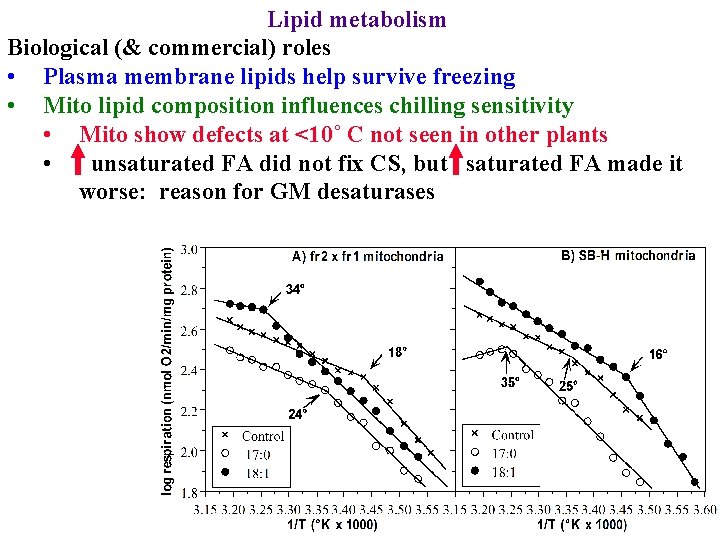
Lipid metabolism Biological (& commercial) roles • Plasma membrane lipids help survive freezing • Mito lipid composition influences chilling sensitivity • Mito show defects at <10˚ C not seen in other plants • unsaturated FA did not fix CS, but saturated FA made it worse: reason for GM desaturases
Lipid metabolism Other commercial aspects • Yield and quality of seed oil is very important: 12 million tons/year
Lipid metabolism Other commercial aspects • Yield and quality (especially unsaturation) of seed oil is very important: 12 million tons/year • Want more double bonds, especially w-3, for health • Want less double bonds for shelf life and taste • Each double bond increases p(oxidation) 40 x
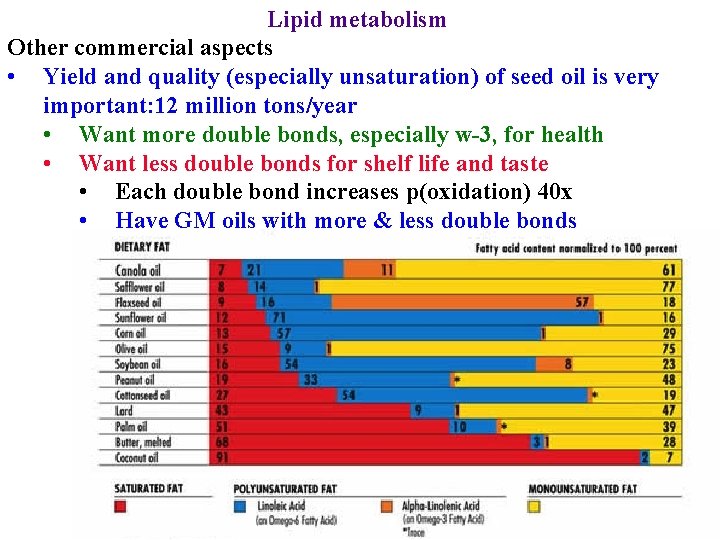
Lipid metabolism Other commercial aspects • Yield and quality (especially unsaturation) of seed oil is very important: 12 million tons/year • Want more double bonds, especially w-3, for health • Want less double bonds for shelf life and taste • Each double bond increases p(oxidation) 40 x • Have GM oils with more & less double bonds
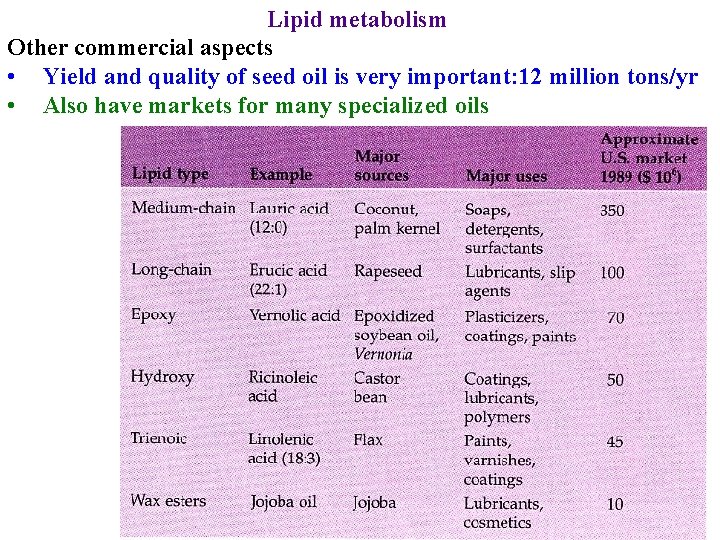
Lipid metabolism Other commercial aspects • Yield and quality of seed oil is very important: 12 million tons/yr • Also have markets for many specialized oils
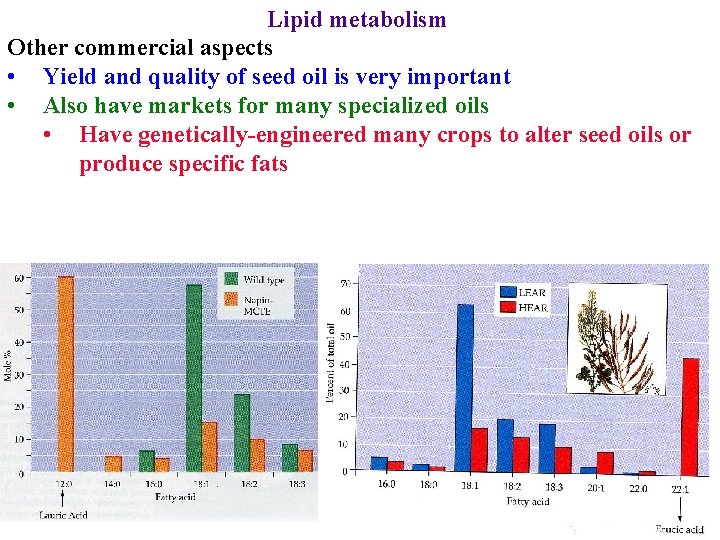
Lipid metabolism Other commercial aspects • Yield and quality of seed oil is very important • Also have markets for many specialized oils • Have genetically-engineered many crops to alter seed oils or produce specific fats
- Slides: 42