
Lipid metabolism II Phospholipids and glycolipids Eicosanoids Synthesis
Lipid metabolism II Phospholipids and glycolipids Eicosanoids. Synthesis and metabolism of cholesterol and bille acids Biochemistry I Lecture 9 2012 (E. T. ) 1
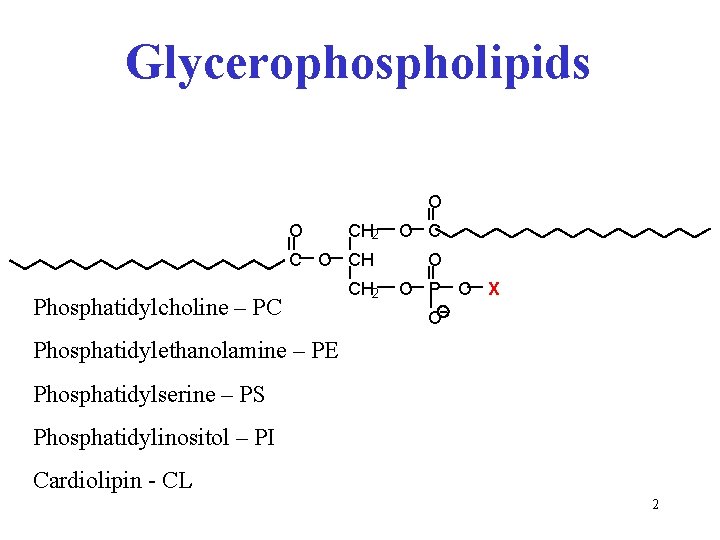
Glycerophospholipids O O CH 2 C O CH Phosphatidylcholine – PC CH 2 O C O O P O X O Phosphatidylethanolamine – PE Phosphatidylserine – PS Phosphatidylinositol – PI Cardiolipin - CL 2
Biosynthesis of glycerophospholipids • located in all cells with exception of erytrocytes • the initial steps of synthesis are similar to those of triacylglycerol synthesis 3
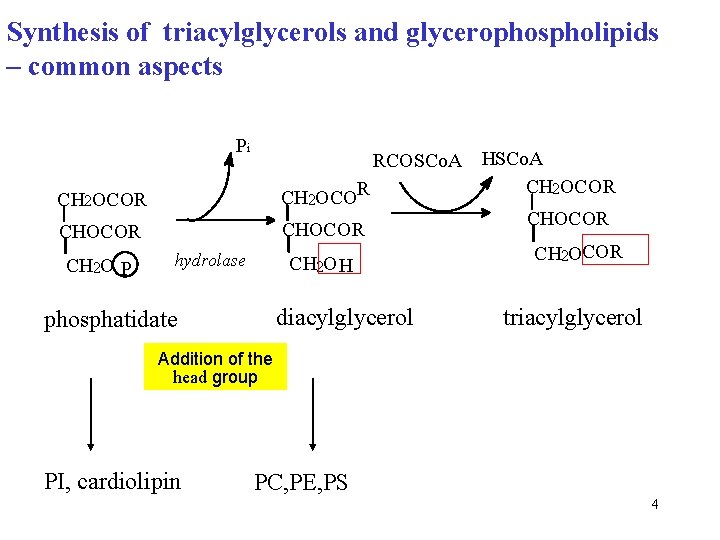
Synthesis of triacylglycerols and glycerophospholipids – common aspects Pi RCOSCo. A HSCo. A CH 2 OCOR CHOCOR CH 2 OCOR CH 2 O H CH 2 OCOR CH 2 O P hydrolase diacylglycerol phosphatidate triacylglycerol Addition of the head group PI, cardiolipin PC, PE, PS 4
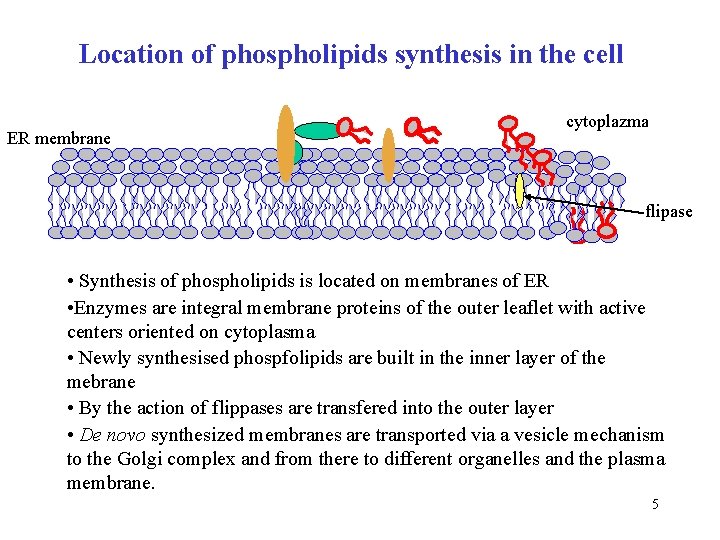
Location of phospholipids synthesis in the cell ER membrane cytoplazma flipase • Synthesis of phospholipids is located on membranes of ER • Enzymes are integral membrane proteins of the outer leaflet with active centers oriented on cytoplasma • Newly synthesised phospfolipids are built in the inner layer of the mebrane • By the action of flippases are transfered into the outer layer • De novo synthesized membranes are transported via a vesicle mechanism to the Golgi complex and from there to different organelles and the plasma membrane. 5
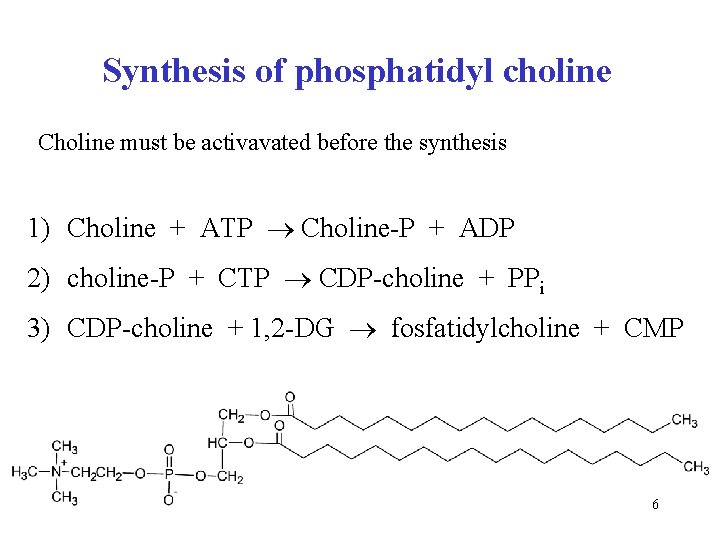
Synthesis of phosphatidyl choline Choline must be activavated before the synthesis 1) Choline + ATP Choline-P + ADP 2) choline-P + CTP CDP-choline + PPi 3) CDP-choline + 1, 2 -DG fosfatidylcholine + CMP 6
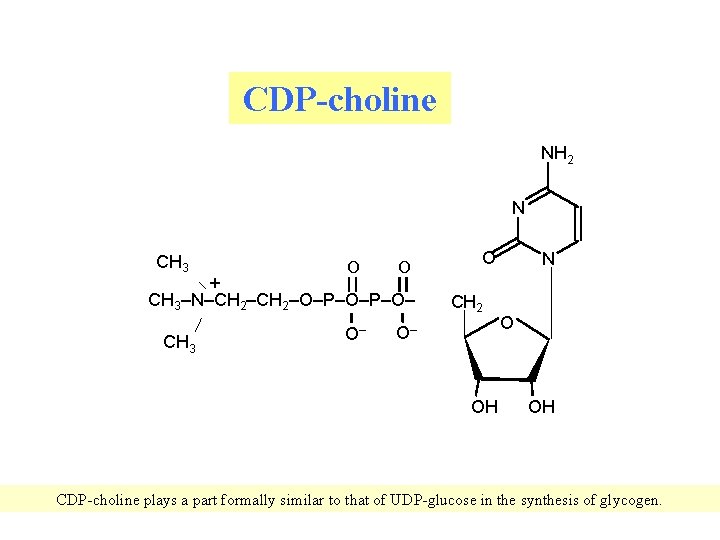
CDP-choline NH 2 N CH 3 + O O CH 3–N–CH 2–O–P–O– CH 3 O– O CH 2 O– OH N O OH CDP-choline plays a part formally similar to that of UDP-glucose in the synthesis of glycogen. 7
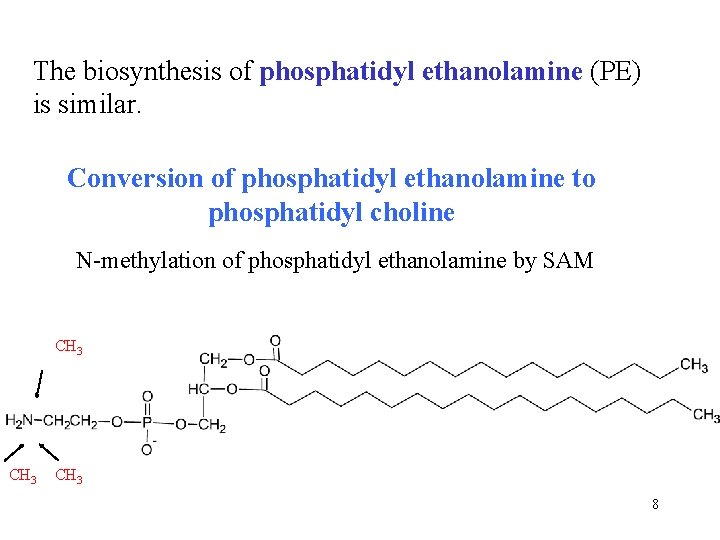
The biosynthesis of phosphatidyl ethanolamine (PE) is similar. Conversion of phosphatidyl ethanolamine to phosphatidyl choline N-methylation of phosphatidyl ethanolamine by SAM CH 3 8
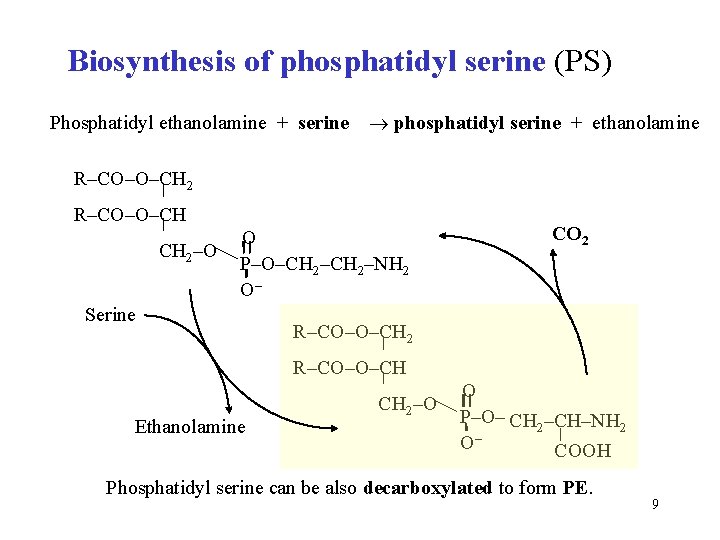
Biosynthesis of phosphatidyl serine (PS) Phosphatidyl ethanolamine + serine phosphatidyl serine + ethanolamine R–CO–O–CH 2 R–CO–O–CH CH 2–O O P–O–CH 2–NH 2 O– Serine CO 2 R–CO–O–CH Ethanolamine CH 2–O O P–O– CH 2–CH–NH 2 O– COOH Phosphatidyl serine can be also decarboxylated to form PE. 9
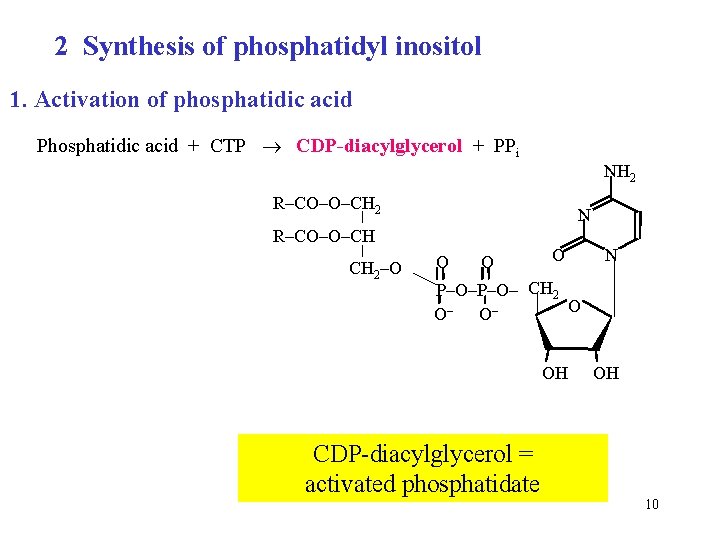
2 Synthesis of phosphatidyl inositol 1. Activation of phosphatidic acid Phosphatidic acid + CTP CDP-diacylglycerol + PPi NH 2 R–CO–O–CH 2 N R–CO–O–CH CH 2–O O N P–O– CH 2 O O– O– OH CDP-diacylglycerol = activated phosphatidate OH 10
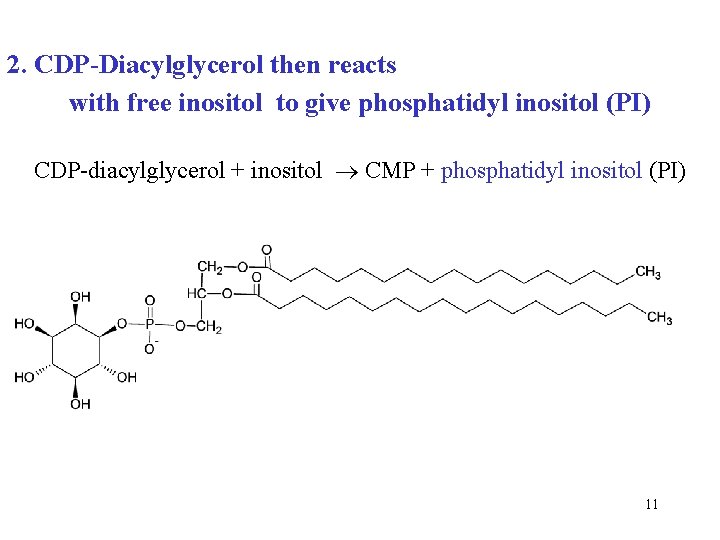
2. CDP-Diacylglycerol then reacts with free inositol to give phosphatidyl inositol (PI) CDP-diacylglycerol + inositol CMP + phosphatidyl inositol (PI) 11
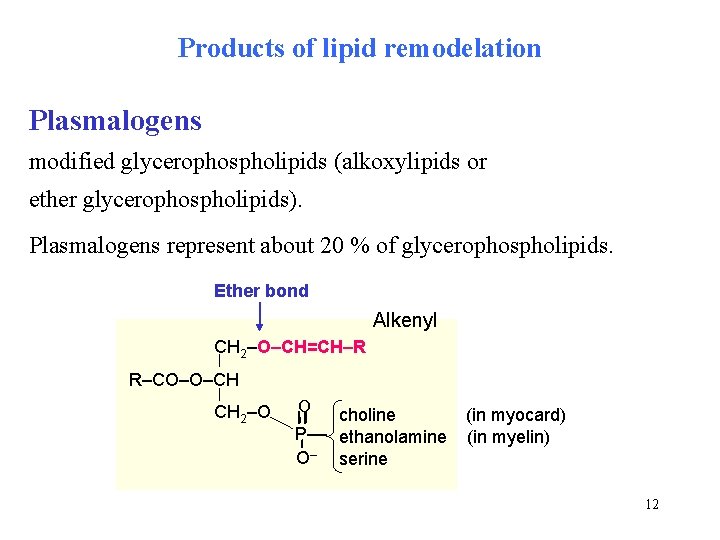
Products of lipid remodelation Plasmalogens modified glycerophospholipids (alkoxylipids or ether glycerophospholipids). Plasmalogens represent about 20 % of glycerophospholipids. Ether bond Alkenyl CH 2–O–CH=CH–R R–CO–O–CH CH 2–O O choline P–– ethanolamine O– serine (in myocard) (in myelin) 12
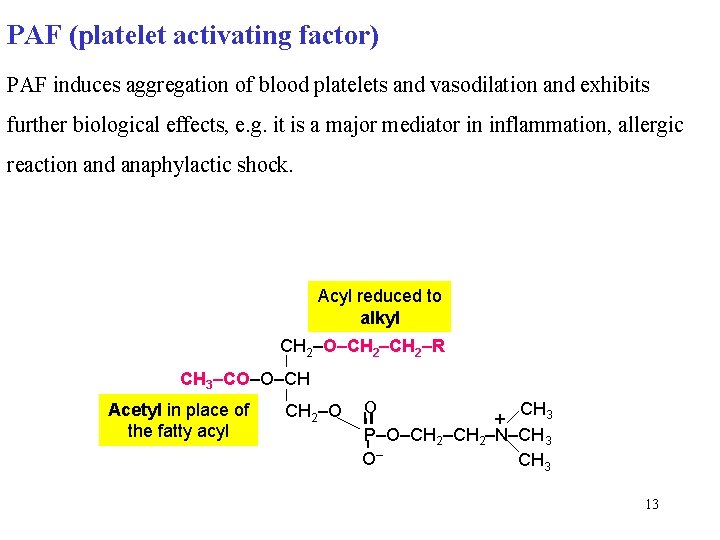
PAF (platelet activating factor) PAF induces aggregation of blood platelets and vasodilation and exhibits further biological effects, e. g. it is a major mediator in inflammation, allergic reaction and anaphylactic shock. Acyl reduced to alkyl CH 2–O–CH 2–R CH 3–CO–O–CH Acetyl in place of the fatty acyl CH 2–O O CH 3 P–O–CH 2–N–CH 3 O– CH 3 + 13
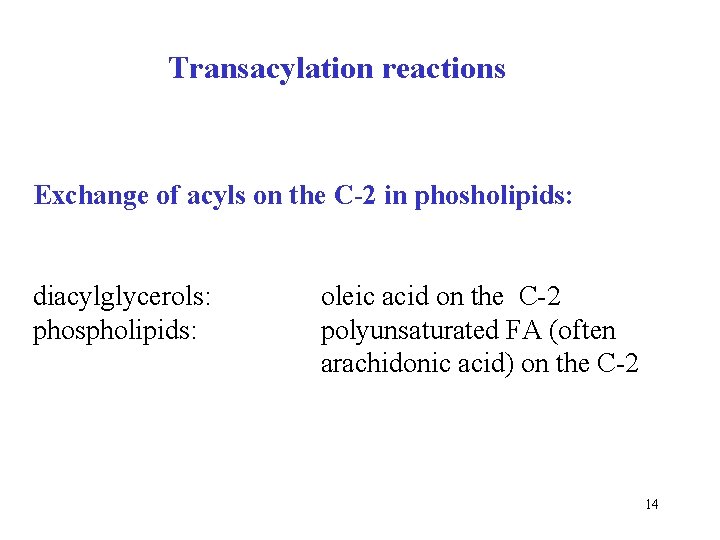
Transacylation reactions Exchange of acyls on the C-2 in phosholipids: diacylglycerols: phospholipids: oleic acid on the C-2 polyunsaturated FA (often arachidonic acid) on the C-2 14
Significance of glycerophospholipids • essential structural components of all biological membranes • essential components of lipoproteins in blood • supply polyunsaturated fatty acids for the synthesis of eicosanoids • act in anchoring of some (glyco)proteins to membranes, • serve as a component of lung surfactant • phosphatidyl inositols are precursors of second messengers (PIP 2, DG) 15
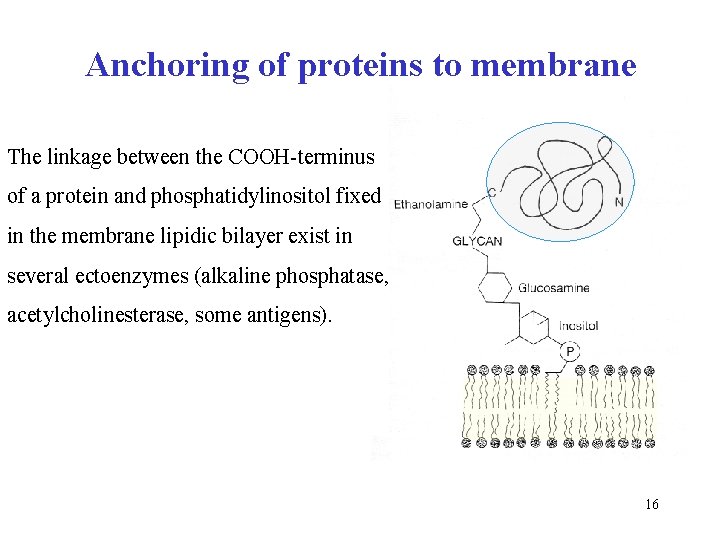
Anchoring of proteins to membrane The linkage between the COOH-terminus of a protein and phosphatidylinositol fixed in the membrane lipidic bilayer exist in several ectoenzymes (alkaline phosphatase, acetylcholinesterase, some antigens). 16
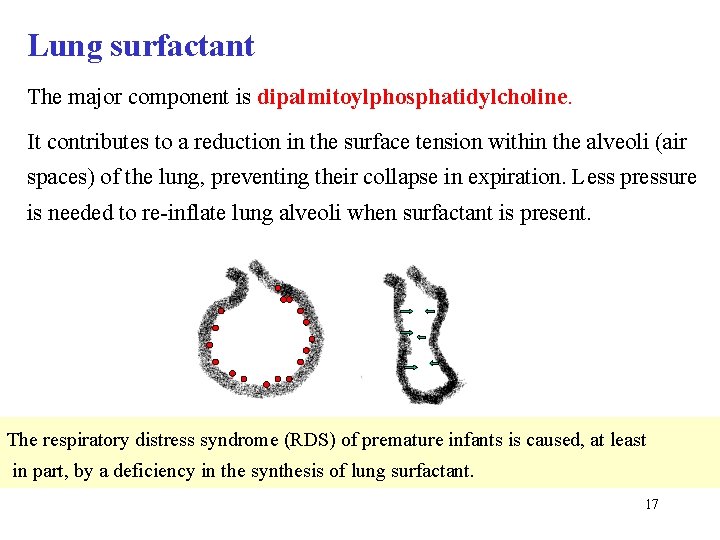
Lung surfactant The major component is dipalmitoylphosphatidylcholine. It contributes to a reduction in the surface tension within the alveoli (air spaces) of the lung, preventing their collapse in expiration. Less pressure is needed to re-inflate lung alveoli when surfactant is present. The respiratory distress syndrome (RDS) of premature infants is caused, at least in part, by a deficiency in the synthesis of lung surfactant. 17
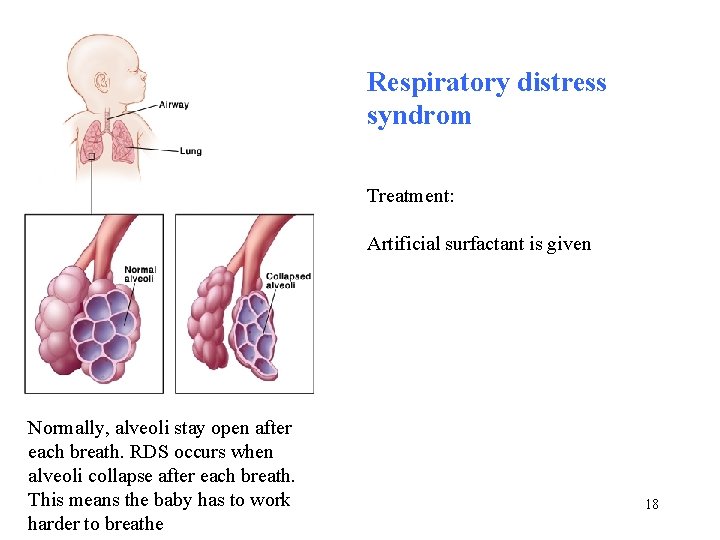
Respiratory distress syndrom Treatment: Artificial surfactant is given Normally, alveoli stay open after each breath. RDS occurs when alveoli collapse after each breath. This means the baby has to work harder to breathe 18
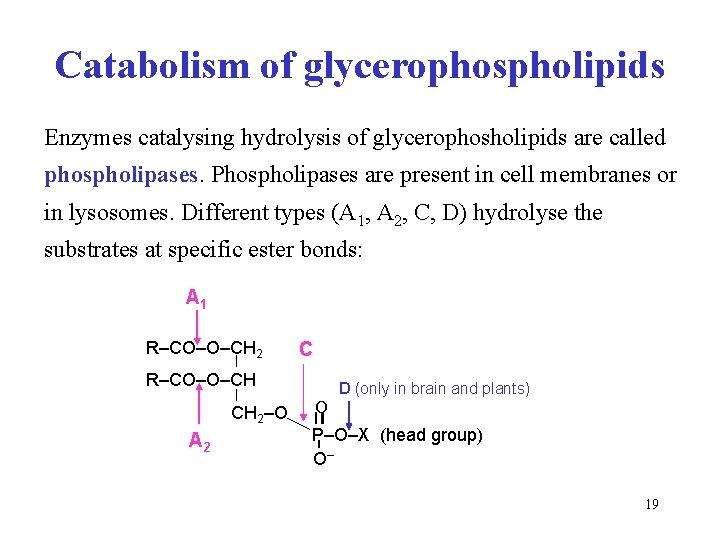
Catabolism of glycerophospholipids Enzymes catalysing hydrolysis of glycerophosholipids are called phospholipases. Phospholipases are present in cell membranes or in lysosomes. Different types (A 1, A 2, C, D) hydrolyse the substrates at specific ester bonds: A 1 R–CO–O–CH 2 C R–CO–O–CH CH 2–O A 2 O D (only in brain and plants) P–O–X (head group) O– 19
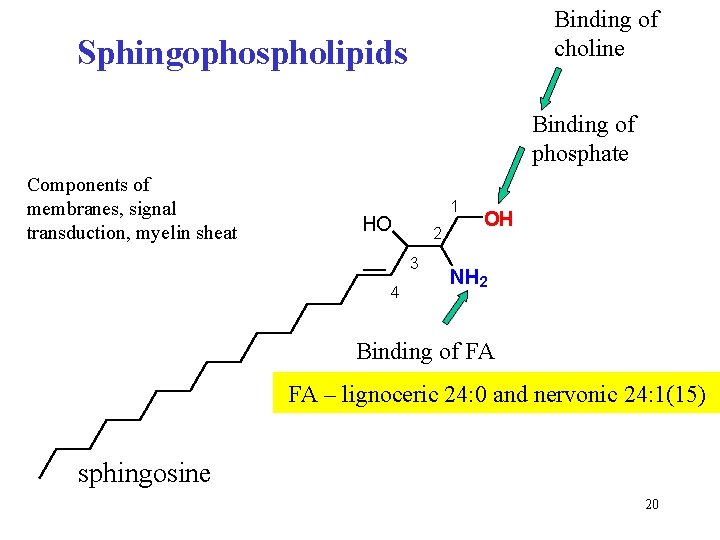
Binding of choline Sphingophospholipids Binding of phosphate Components of membranes, signal transduction, myelin sheat 1 HO 2 3 4 OH NH 2 Binding of FA FA – lignoceric 24: 0 and nervonic 24: 1(15) sphingosine 20
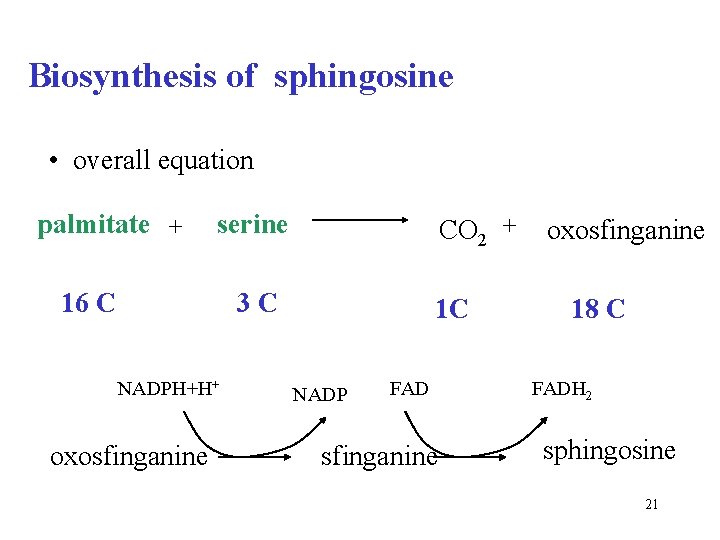
Biosynthesis of sphingosine • overall equation palmitate + serine 16 C CO 2 + 3 C NADPH+H+ oxosfinganine 1 C NADP FAD sfinganine oxosfinganine 18 C FADH 2 sphingosine 21
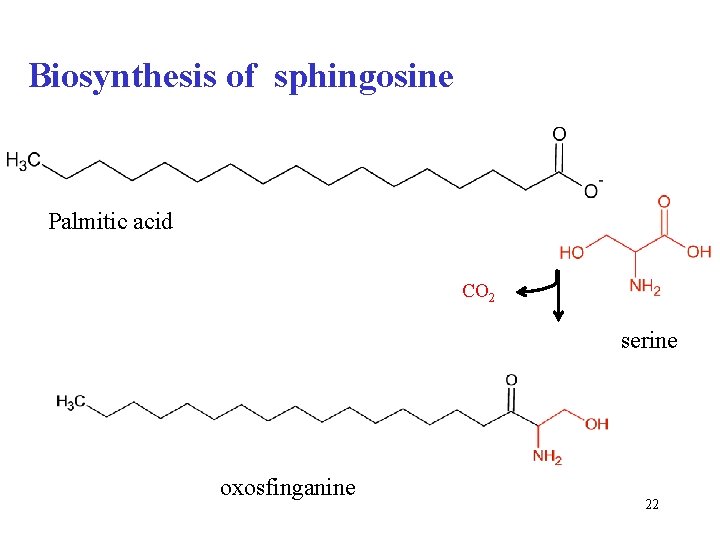
Biosynthesis of sphingosine Palmitic acid CO 2 serine oxosfinganine 22
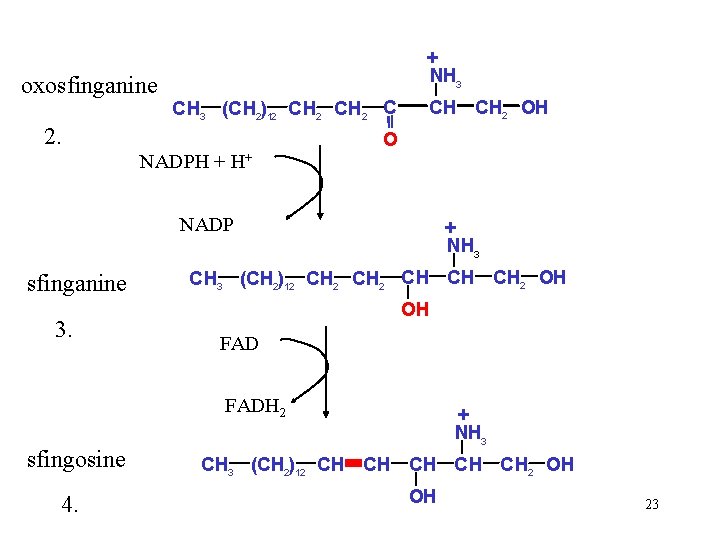
oxosfinganine + NH 3 CH 3 (CH 2)12 CH 2 C 2. CH CH 2 OH O NADPH + H+ NADP sfinganine 3. + NH 3 CH 3 (CH 2)12 CH CH CH 2 OH OH FADH 2 sfingosine 4. + NH 3 CH 3 (CH 2)12 CH CH CH 2 OH OH 23
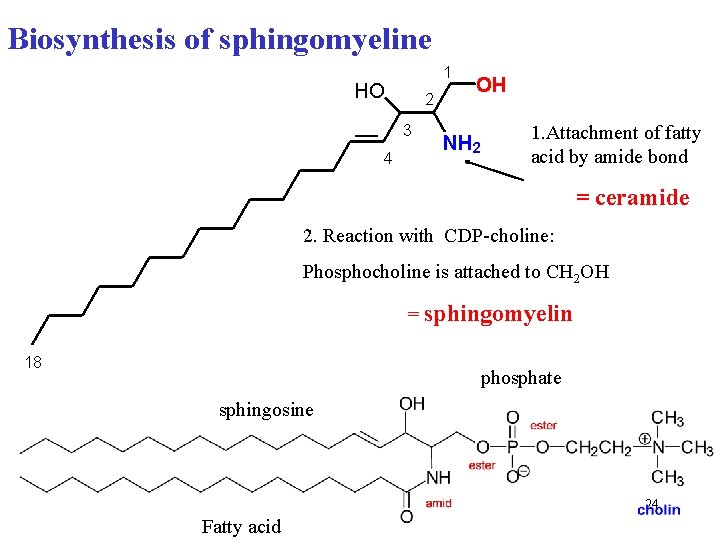
Biosynthesis of sphingomyeline 1 HO 2 3 4 OH NH 2 1. Attachment of fatty acid by amide bond = ceramide 2. Reaction with CDP-choline: Phosphocholine is attached to CH 2 OH = sphingomyelin 18 phosphate sphingosine 24 Fatty acid
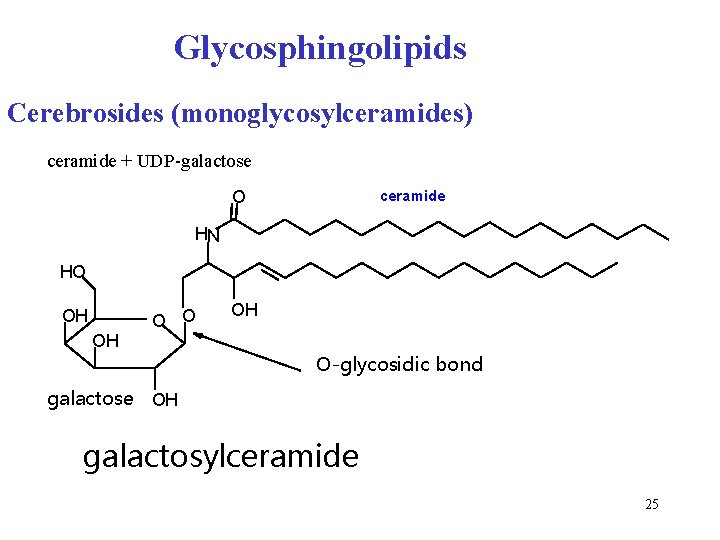
Glycosphingolipids Cerebrosides (monoglycosylceramides) ceramide + UDP-galactose O ceramide HN HO OH OH O O OH O-glycosidic bond galactose OH galactosylceramide 25
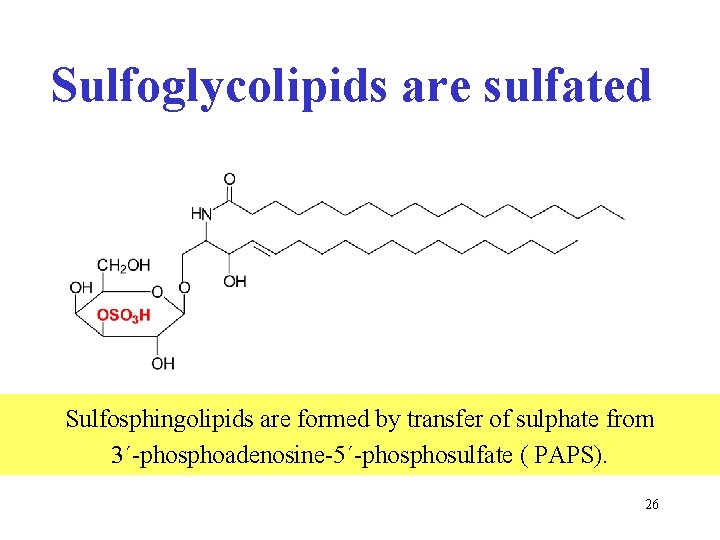
Sulfoglycolipids are sulfated Sulfosphingolipids are formed by transfer of sulphate from 3´-phosphoadenosine-5´-phosulfate ( PAPS). 26
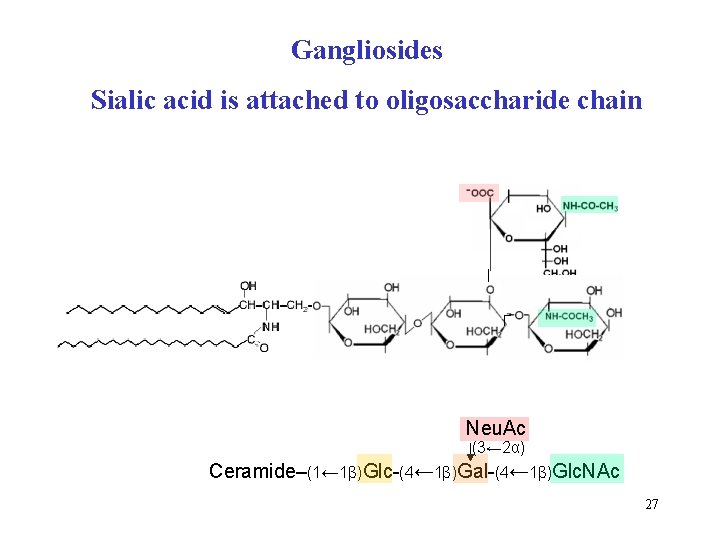
Gangliosides Sialic acid is attached to oligosaccharide chain Neu. Ac (3← 2α) Ceramide–(1← 1β)Glc-(4← 1β)Gal-(4← 1β)Glc. NAc 27
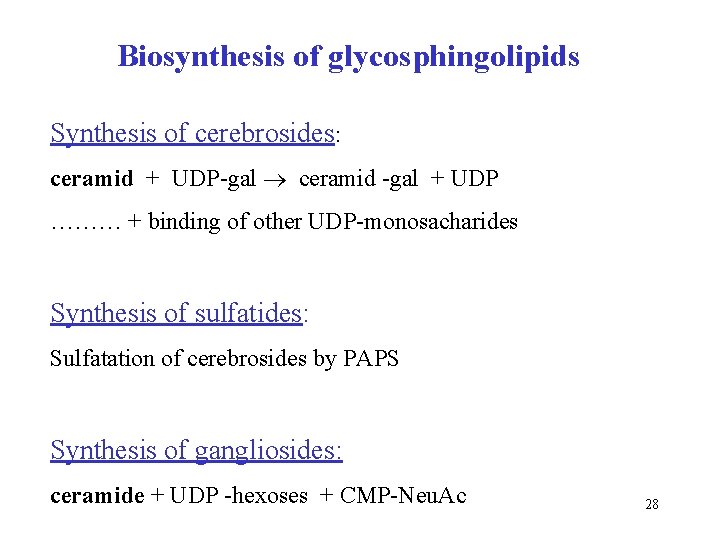
Biosynthesis of glycosphingolipids Synthesis of cerebrosides: ceramid + UDP-gal ceramid -gal + UDP ……… + binding of other UDP-monosacharides Synthesis of sulfatides: Sulfatation of cerebrosides by PAPS Synthesis of gangliosides: ceramide + UDP -hexoses + CMP-Neu. Ac 28
Degradation of sphingolipids in lysosomes In lysosomes, a number of specific enzymes catalyse hydrolysis of ester and glycosidic linkages of sphingolipids. Sphingomyelins loose phosphocholine to give ceramide. Glycolipids due to the action of various specific glycosidases get rid of the saccharidic component to give ceramide. Ceramide is hydrolysed (ceramidase) to fatty acid and sphingosine. Sphingosine is decomposed in the pathway that looks nearly like the reversal of its biosynthesis from palmitoyl-Co. A and serine. After phosphorylation, sphingosine is broken down to phosphoethanolamine (decarboxylated serine) and palmitaldehyde, that is oxidized to palmitate. 29
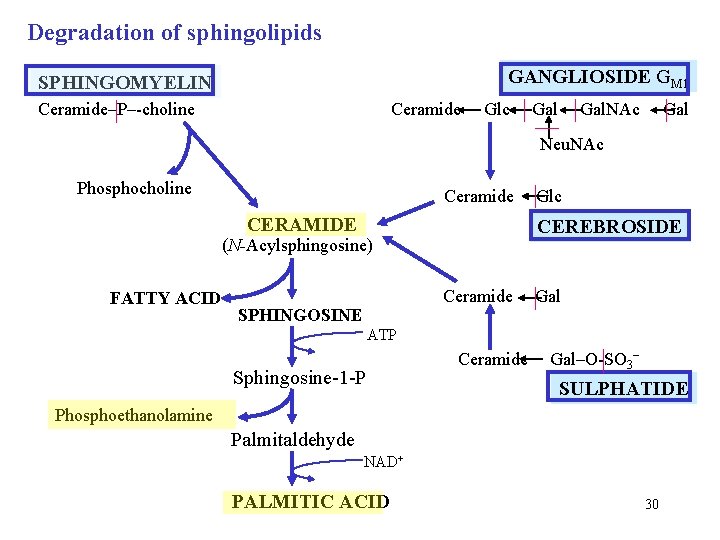
Degradation of sphingolipids GANGLIOSIDE GM 1 SPHINGOMYELIN Ceramide–P–-choline Glc Gal. NAc Gal Neu. NAc Phosphocholine Ceramide CERAMIDE CEREBROSIDE (N-Acylsphingosine) FATTY ACID Ceramide SPHINGOSINE Glc Gal ATP Sphingosine-1 -P Ceramide Gal–O-SO 3– SULPHATIDE Phosphoethanolamine Palmitaldehyde NAD+ PALMITIC ACID 30
Sphingolipidosis Lipid storage disorders Inherited defects in production of the enzymes that catabolize sphingolipids. They result in accumulation of their substrates in lysosomes, leading to lysosomal damage and to disruption of the cell as new lysosomes continue to be formed and their large number interferes with other cellular functions. In the sphingolipidosis mainly the cells of the central nervous system (including brain and retina) are affected. 31
Eicosanoids 32
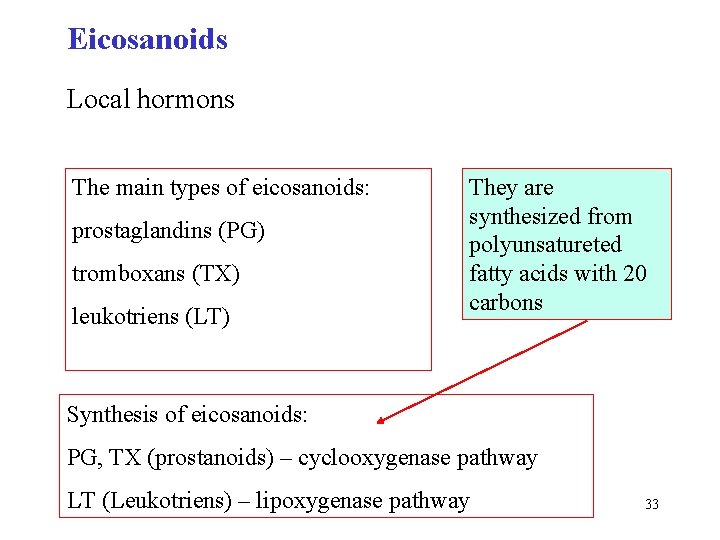
Eicosanoids Local hormons The main types of eicosanoids: prostaglandins (PG) tromboxans (TX) leukotriens (LT) They are synthesized from polyunsatureted fatty acids with 20 carbons Synthesis of eicosanoids: PG, TX (prostanoids) – cyclooxygenase pathway LT (Leukotriens) – lipoxygenase pathway 33
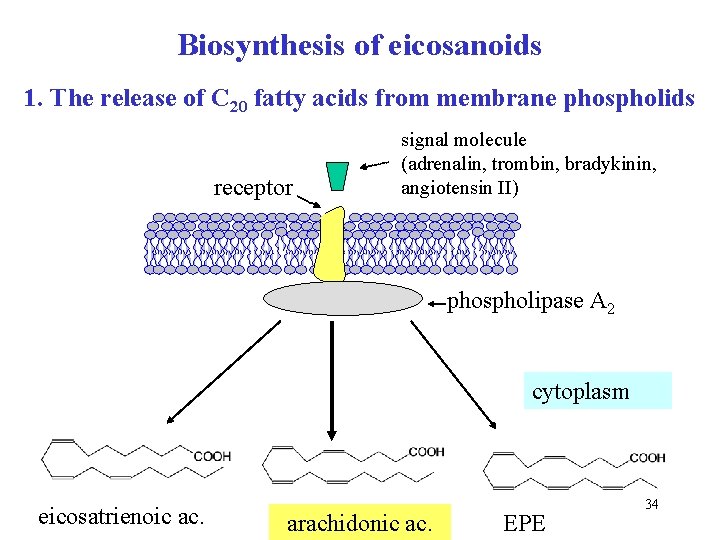
Biosynthesis of eicosanoids 1. The release of C 20 fatty acids from membrane phospholids receptor signal molecule (adrenalin, trombin, bradykinin, angiotensin II) phospholipase A 2 cytoplasm eicosatrienoic ac. arachidonic ac. EPE 34
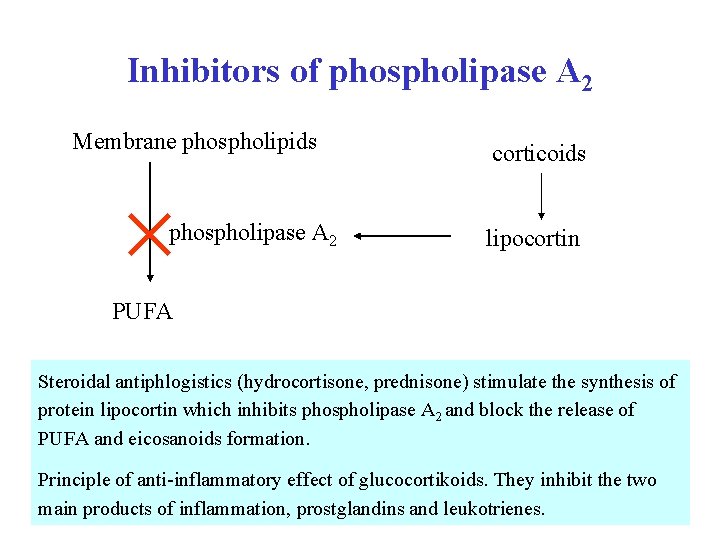
Inhibitors of phospholipase A 2 Membrane phospholipids phospholipase A 2 corticoids lipocortin PUFA Steroidal antiphlogistics (hydrocortisone, prednisone) stimulate the synthesis of protein lipocortin which inhibits phospholipase A 2 and block the release of PUFA and eicosanoids formation. Principle of anti-inflammatory effect of glucocortikoids. They inhibit the two 35 main products of inflammation, prostglandins and leukotrienes.
Prostanoids: prostaglandins and prostacyclins • they are produced in nearly all cell types • endoplasmic reticulum • the site of their synthesis depends on expression of genes for the enzymes which take part in the synthetic pathways. • they have various effect (many types of receptors) 36
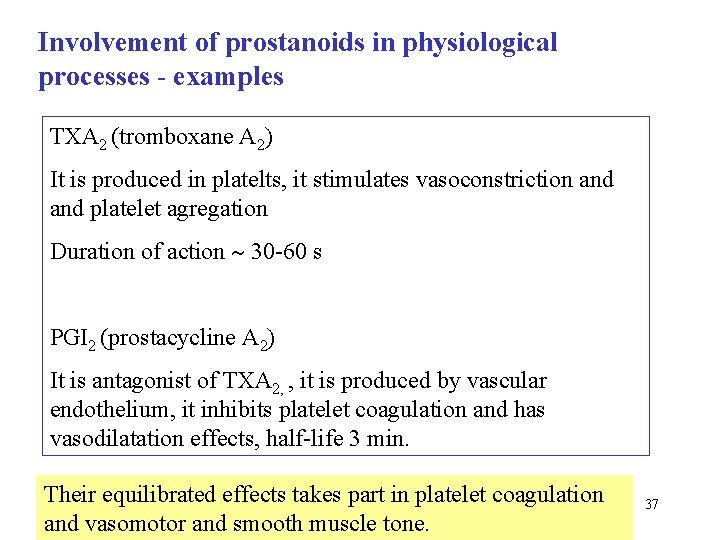
Involvement of prostanoids in physiological processes - examples TXA 2 (tromboxane A 2) It is produced in platelts, it stimulates vasoconstriction and platelet agregation Duration of action 30 -60 s PGI 2 (prostacycline A 2) It is antagonist of TXA 2, , it is produced by vascular endothelium, it inhibits platelet coagulation and has vasodilatation effects, half-life 3 min. Their equilibrated effects takes part in platelet coagulation and vasomotor and smooth muscle tone. 37
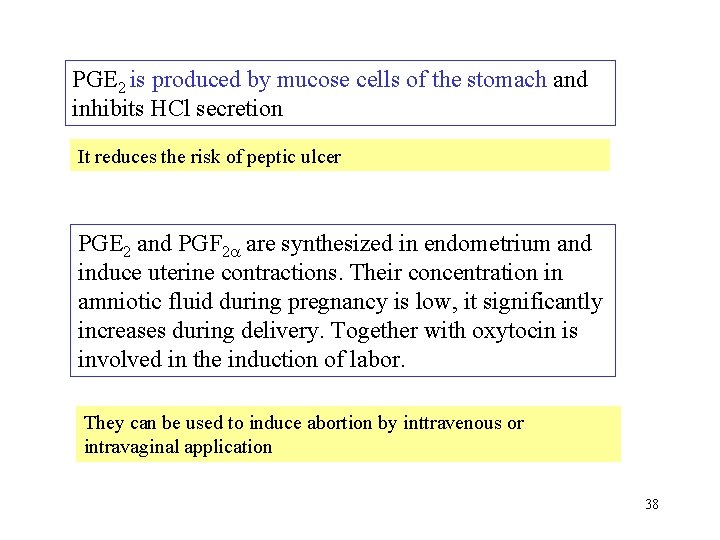
PGE 2 is produced by mucose cells of the stomach and inhibits HCl secretion It reduces the risk of peptic ulcer PGE 2 and PGF 2 are synthesized in endometrium and induce uterine contractions. Their concentration in amniotic fluid during pregnancy is low, it significantly increases during delivery. Together with oxytocin is involved in the induction of labor. They can be used to induce abortion by inttravenous or intravaginal application 38
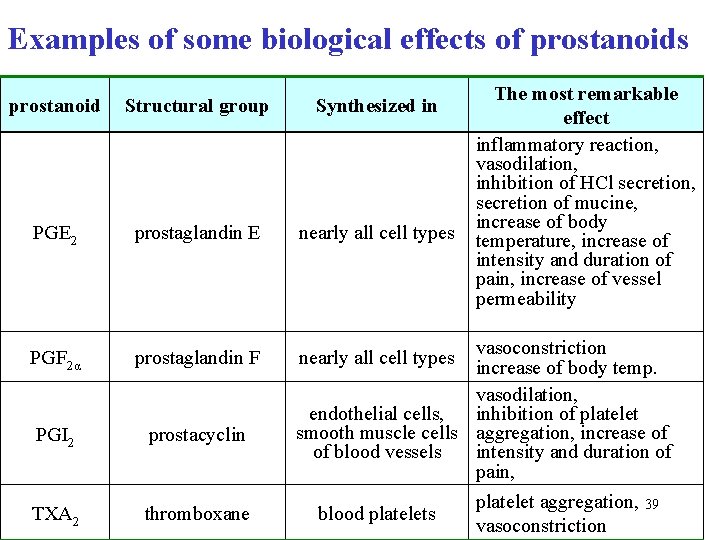
Examples of some biological effects of prostanoids The most remarkable effect inflammatory reaction, vasodilation, inhibition of HCl secretion, secretion of mucine, increase of body temperature, increase of intensity and duration of pain, increase of vessel permeability prostanoid Structural group Synthesized in PGE 2 prostaglandin E nearly all cell types PGF 2α prostaglandin F PGI 2 prostacyclin vasoconstriction increase of body temp. vasodilation, inhibition of platelet endothelial cells, smooth muscle cells aggregation, increase of intensity and duration of of blood vessels pain, TXA 2 thromboxane nearly all cell types blood platelets platelet aggregation, 39 vasoconstriction
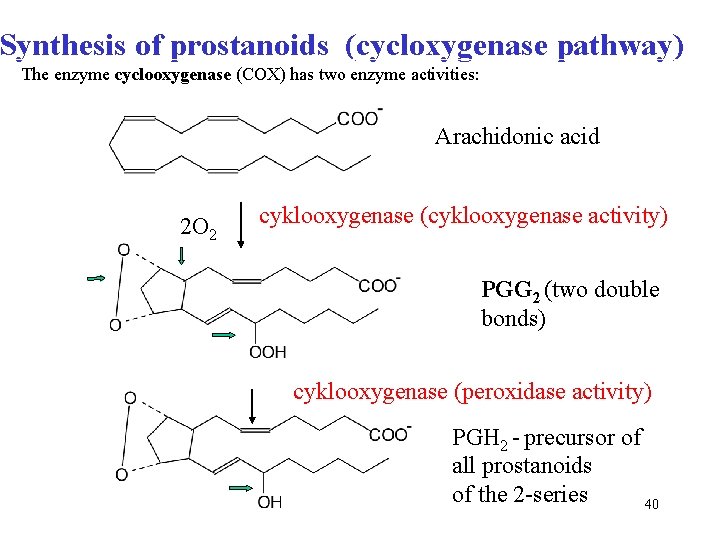
Synthesis of prostanoids (cycloxygenase pathway) The enzyme cyclooxygenase (COX) has two enzyme activities: Arachidonic acid 2 O 2 cyklooxygenase (cyklooxygenase activity) PGG 2 (two double bonds) cyklooxygenase (peroxidase activity) PGH 2 - precursor of all prostanoids of the 2 -series 40
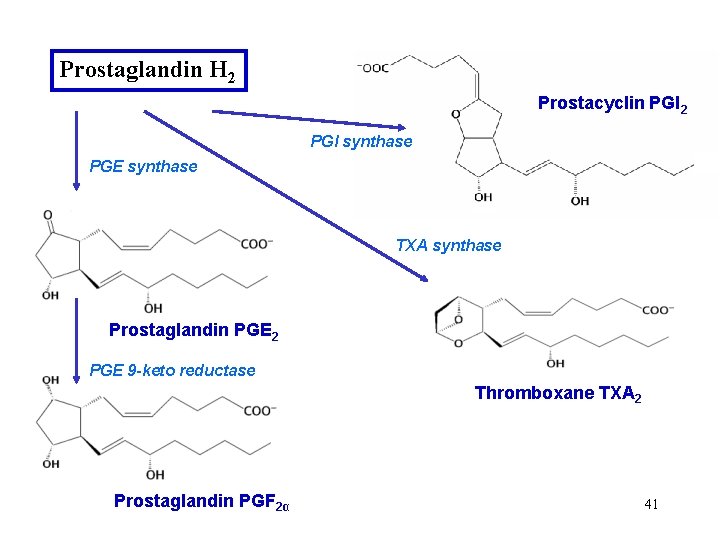
Prostaglandin H 2 Prostacyclin PGI 2 PGI synthase PGE synthase TXA synthase Prostaglandin PGE 2 PGE 9 -keto reductase Thromboxane TXA 2 Prostaglandin PGF 2α 41
The enzyme equipment of various tissues is different E. g. , in the lung and the spleen, the enzyme equipment enables biosynthesis of all eicosanoid types. In blood platelets, only thromboxan synthase is present. The endothelial cells of blood vessels synthesize only prostacyclins. The catabolism of prostanoids is very rapid - Enzyme catalyzed ( t 1/2 ~0, 1 -10 min) - non-enzymic hydrolysis (t 1/2 sec-min) 42
Cyclooxygenase (COX) exists in two forms COX-1: constitutive (still present) – involved into the synthesis of prostanoids at physiological conditions • COX-2: predomintly inducible – its synthesis is induced during inflammation (stimulation by cytokines, growth factors) Prostanoids mediate, at least partly, the inflammatory response (they activate inflammatory response, production of pain, and fever) 43
Inhibitors of cyclooxygenase Because of importance of prostaglandins in mediating the inflammatory response, drugs that blocks prostaglandin production should provide relief from pain The main COX inhibitors are the nonsteroidal anti-inflammatory drugs (NSAIDs, analgetics-antipyretics): • acetylsalicylic acid (Aspirin) – irreversible inhibition • acetaminophen (Tylenol), ibuprofen – reversible inhibition They inhibit the both forms of COX 44
Inhibition of cyclooxygenase suppresses the effects of prostanoids … it has the positive effects (the antiinflammatory effect, relief of pain, mitigation of fever. …) …. on the contrary, there may be some undesirable effects of blocked prostanoid production, e. g. decline in blood platelet aggregation, decreased protection of endothelial cells and of gastric mucosa. Therefore drugs are being developed which would act as selective inhibitors of COX-2 without the adverse gastrointestinal and antiplatelet side effects of non-specific inhibitors of COX. 45
COX-2 inhibitors They are proposed to act as potent anti-inflammatory agents by inhibiting COX -2 activity, without the gastrointestinal (stomach ulcer) and antiplatelet side effects associated with NSAIDs Examples: celecoxib, rofecoxib However further studies indicated that specific COX-2 inhibitors may have a negative effect on cardiovascular function. Coxibs were withdrawn from the market by its manufacturer because of negative patients study Nimesulid (AULIN, COXTRAL), meloxikam (ANTREND, LORMED, MELOBAX) – are still used, they inhibit more COX-2 than COX-1 and must be used with caution 46
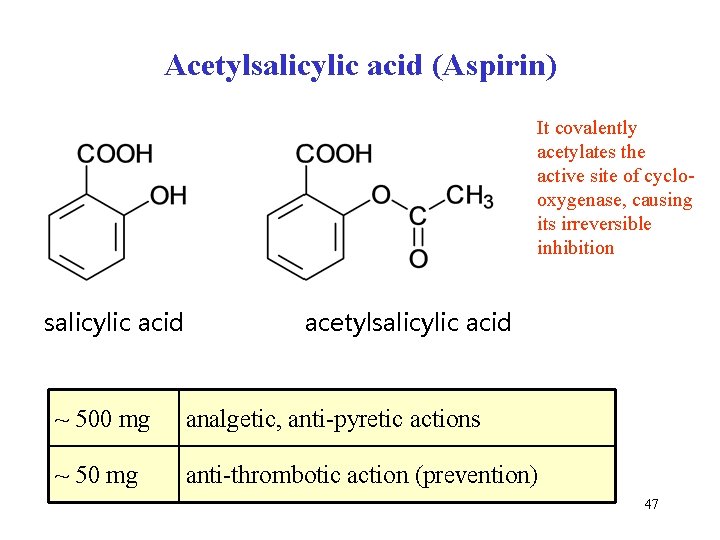
Acetylsalicylic acid (Aspirin) It covalently acetylates the active site of cyclooxygenase, causing its irreversible inhibition salicylic acid acetylsalicylic acid ~ 500 mg analgetic, anti-pyretic actions ~ 50 mg anti-thrombotic action (prevention) 47
Protective effect of acetylsalicylic acid Low-doses of aspirin (ASA, 81 -325 mg daily) has been shown to be effective in prevention of acute myocardial infarction. Aspirin blocks the production of TXA 2. by inhibition of COX The principal effect of TXA 2 is the stimulation of platelets aggregation. It may initiate the formation of trombus at sites of vascular injury or in the vicinity of ruptured atherosclerotic plaque. Such thrombi may cause sudden total occlusion of vascular lumen. By aspirin treatment the effects of thromboxane are attenuated. 48
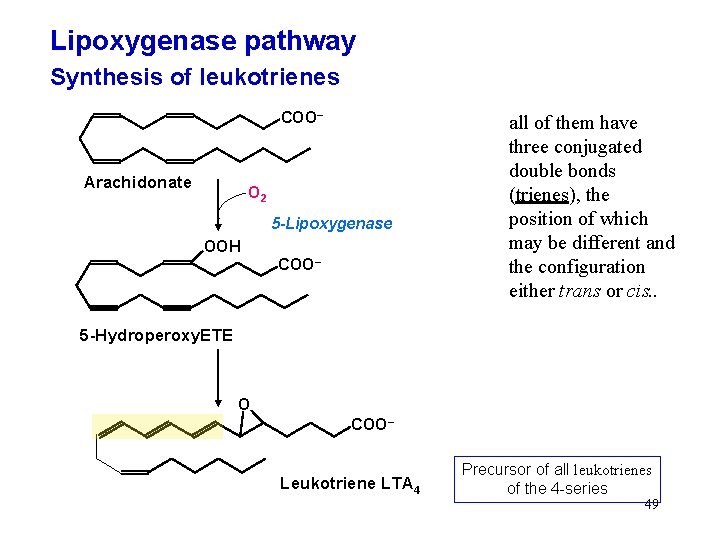
Lipoxygenase pathway Synthesis of leukotrienes COO– Arachidonate O 2 5 -Lipoxygenase OOH COO– all of them have three conjugated double bonds (trienes), the position of which may be different and the configuration either trans or cis. . 5 -Hydroperoxy. ETE O COO– Leukotriene LTA 4 Precursor of all leukotrienes of the 4 -series 49
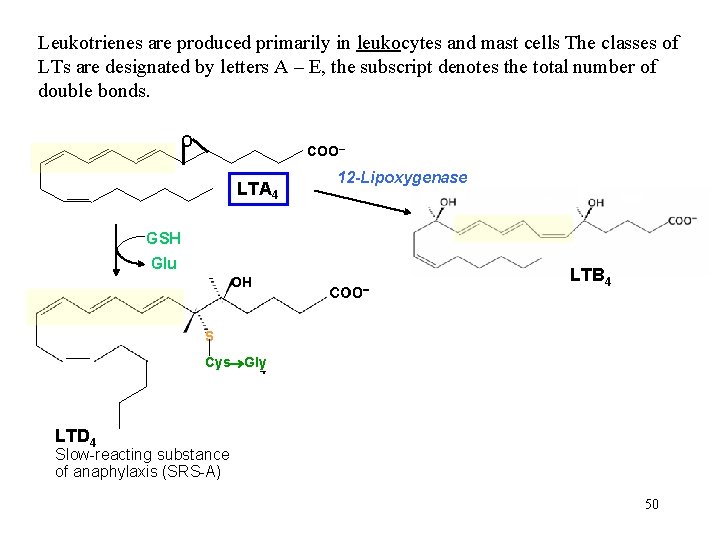
Leukotrienes are produced primarily in leukocytes and mast cells The classes of LTs are designated by letters A – E, the subscript denotes the total number of double bonds. O COO– LTA 4 12 -Lipoxygenase GSH Glu LTB 4 OH S Cys Gly LTB 4 LTD 4 Slow-reacting substance of anaphylaxis (SRS-A) 50
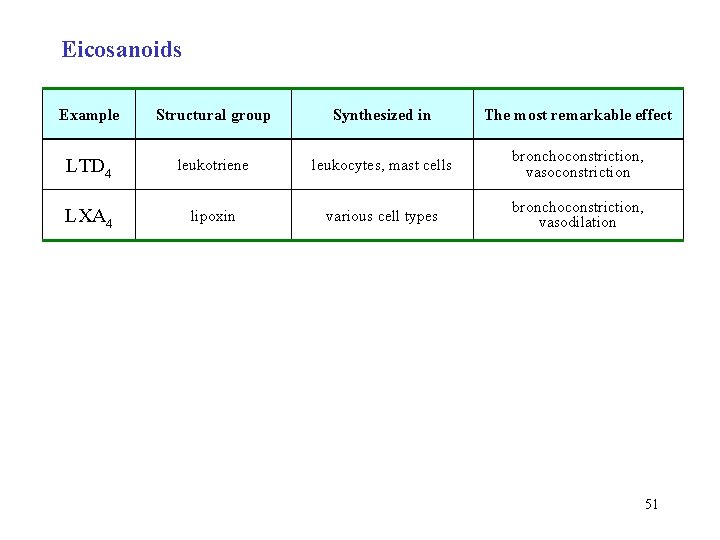
Eicosanoids Example Structural group Synthesized in The most remarkable effect LTD 4 leukotriene leukocytes, mast cells bronchoconstriction, vasoconstriction LXA 4 lipoxin various cell types bronchoconstriction, vasodilation 51
Cholesterol 52
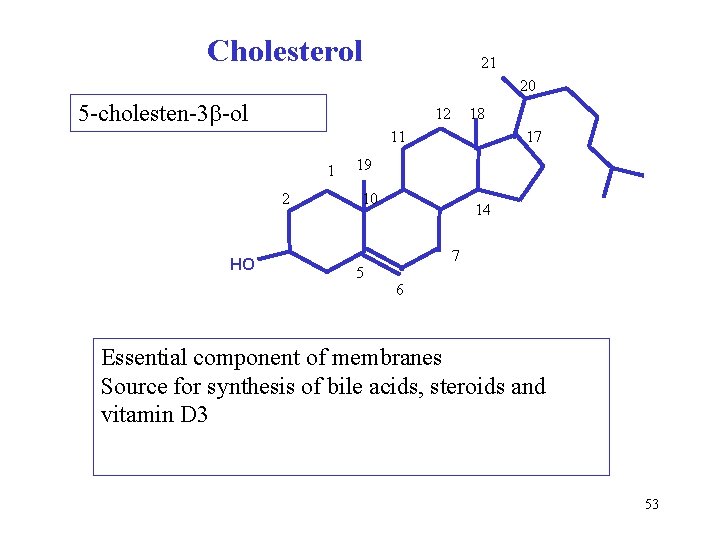
Cholesterol 21 20 5 -cholesten-3 -ol 12 18 11 1 2 HO 17 19 10 5 14 7 6 Essential component of membranes Source for synthesis of bile acids, steroids and vitamin D 3 53
Biosynthesis of cholesterol • where: most of cells, mainly liver, adrenal cortex, red blood cells, reproductive tissues…. • where in the cell: cytoplasma, some enzymes located on ER • initial substrate: acetyl. Co. A • balance of synthesis: 18 acetyl. Co. A, 36 ATP, 16 NADPH 54
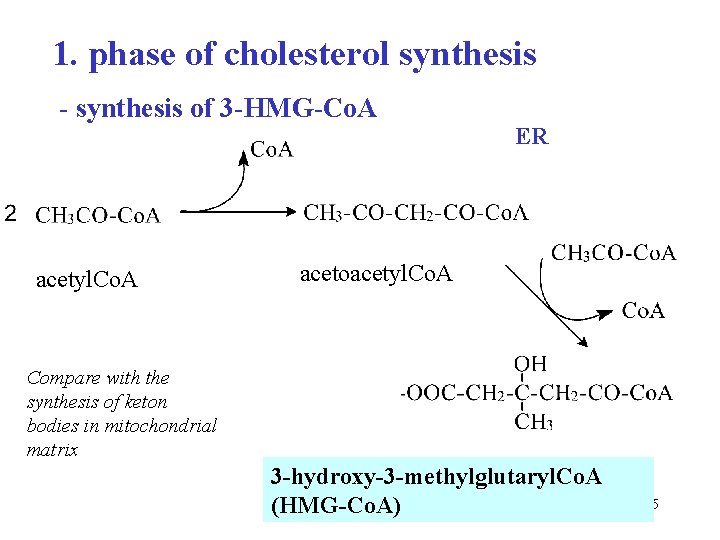
1. phase of cholesterol synthesis - synthesis of 3 -HMG-Co. A acetyl. Co. A ER acetoacetyl. Co. A Compare with the synthesis of keton bodies in mitochondrial matrix 3 -hydroxy-3 -methylglutaryl. Co. A (HMG-Co. A) 55
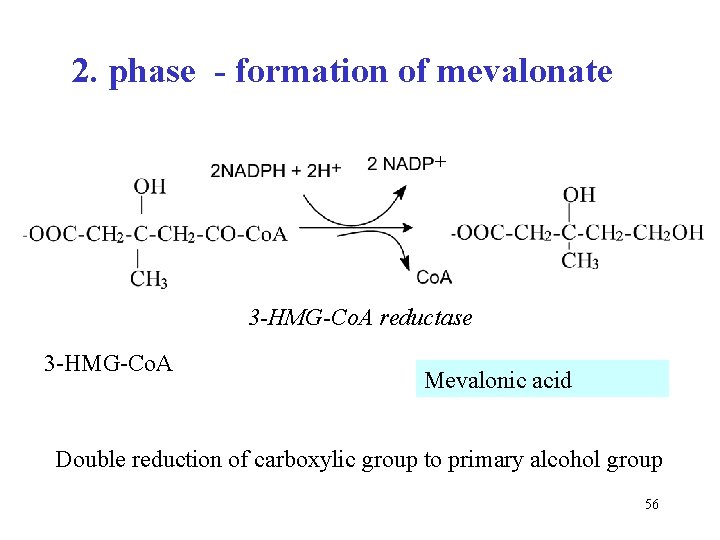
2. phase - formation of mevalonate + 3 -HMG-Co. A reductase 3 -HMG-Co. A Mevalonic acid Double reduction of carboxylic group to primary alcohol group 56
Synthesis of mevalonate determines the overal rate of the cholesterol synthesis Enzyme 3 -HMG-Co. A reductase • bonded on the ER membrane • major control point of the synthesis • inhibited by some drugs 57
3 -HMG-Co. A reductase Kinds of metabolic control • control of enzyme synthesis by sterol level • control of enzyme proteolysis by sterol level • control of enzyme activity by covalent modification (phosphorylation) • competitive inhibition by drugs – statins (e. g. lovastatin, pravastatin, cerivastatin) 58
Control of 3 -HMG-Co. A reductase synthesis by cholesterol • affection of gene transcription by transcription factor SREBP (sterol regulatory element binding protein) • SREBP is activated at low level of cholesterol • SREBP binds DNA at sterol regulatory element (SRE) • the transcription is accelerated after SREBP binding 59
Regulation of HMG-Co. A reductase proteolysis by sterols • Degradation of the enzyme is stimulated by cholesterol, mevalonate and farnesol. • Enzyme includes transmembrane sterol-sensitive region, that is resposible for ubiquitination of the enzyme at high level of sterols 60
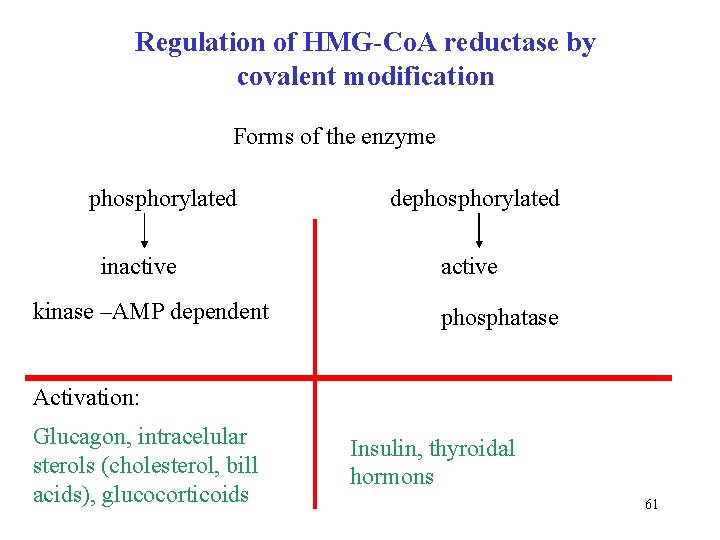
Regulation of HMG-Co. A reductase by covalent modification Forms of the enzyme phosphorylated inactive kinase –AMP dependent dephosphorylated active phosphatase Activation: Glucagon, intracelular sterols (cholesterol, bill acids), glucocorticoids Insulin, thyroidal hormons 61
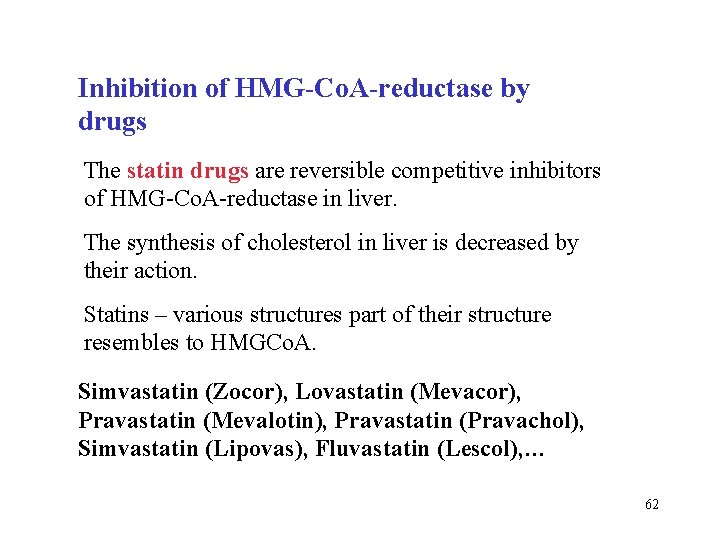
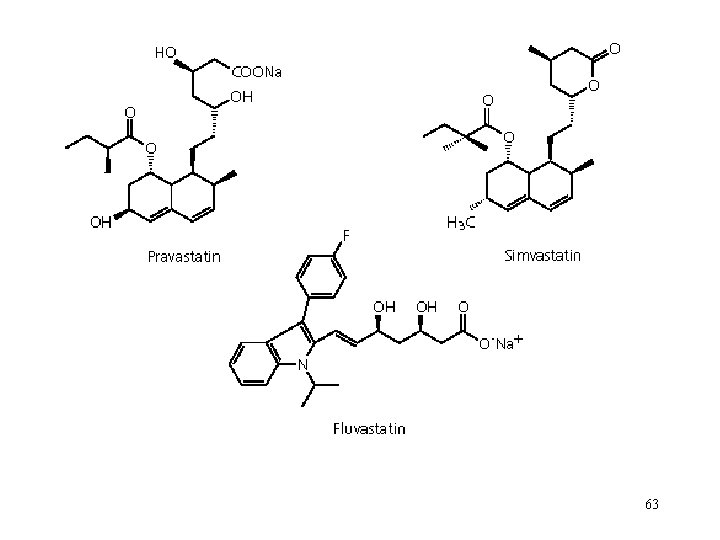
Inhibition of HMG-Co. A-reductase by drugs The statin drugs are reversible competitive inhibitors of HMG-Co. A-reductase in liver. The synthesis of cholesterol in liver is decreased by their action. Statins – various structures part of their structure resembles to HMGCo. A. Simvastatin (Zocor), Lovastatin (Mevacor), Pravastatin (Mevalotin), Pravastatin (Pravachol), Simvastatin (Lipovas), Fluvastatin (Lescol), … 62
63
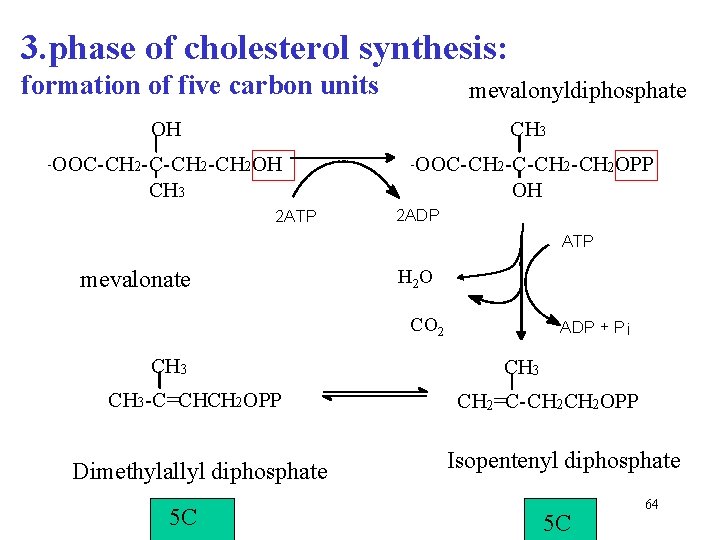
3. phase of cholesterol synthesis: formation of five carbon units mevalonyldiphosphate OH CH 3 - OOC-CH 2 OH - OOC-CH 2 OPP CH 3 OH 2 ATP 2 ADP ATP mevalonate H 2 O CO 2 CH 3 -C=CHCH 2 OPP Dimethylallyl diphosphate 5 C ADP + P i CH 3 CH 2 =C-CH 2 OPP Isopentenyl diphosphate 5 C 64
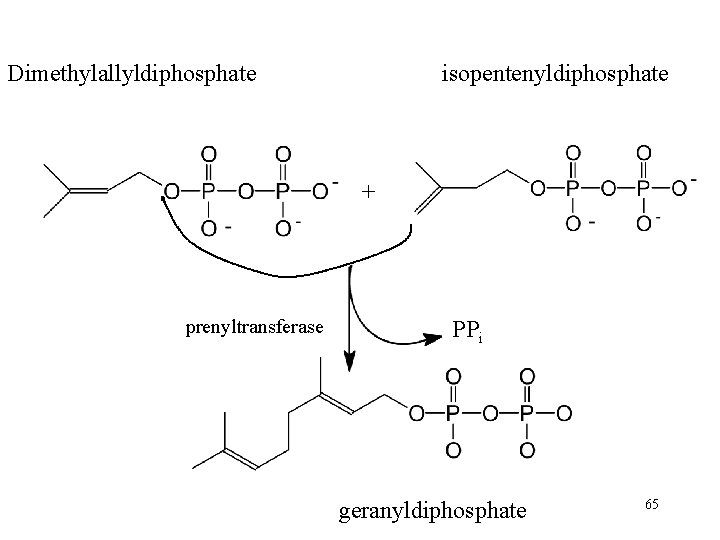
Dimethylallyldiphosphate isopentenyldiphosphate + prenyltransferase PPi geranyldiphosphate 65
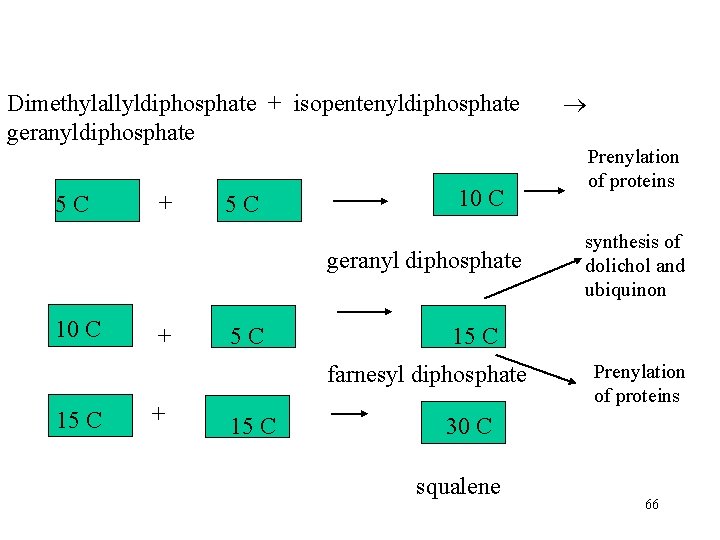
Dimethylallyldiphosphate + isopentenyldiphosphate geranyldiphosphate 5 C + 5 C 10 C geranyl diphosphate 10 C + 5 C + 15 C Prenylation of proteins synthesis of dolichol and ubiquinon 15 C farnesyl diphosphate 15 15 CC 15 C Prenylation of proteins 30 C squalene 66
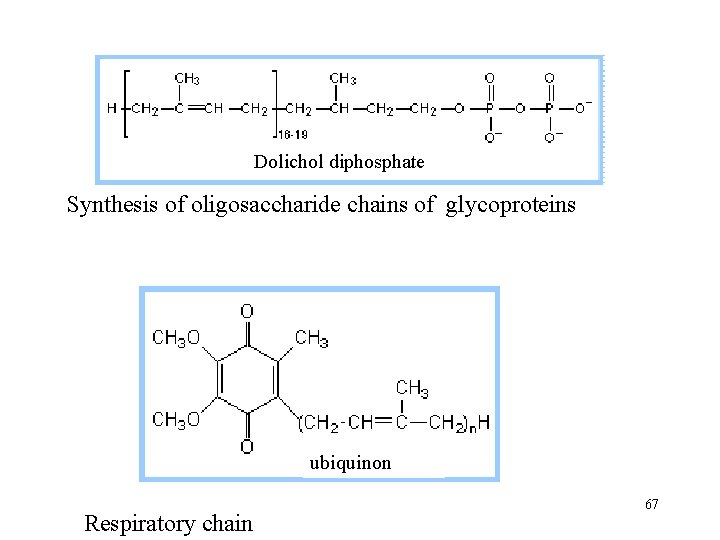
Dolichol diphosphate Synthesis of oligosaccharide chains of glycoproteins ubiquinon Respiratory chain 67
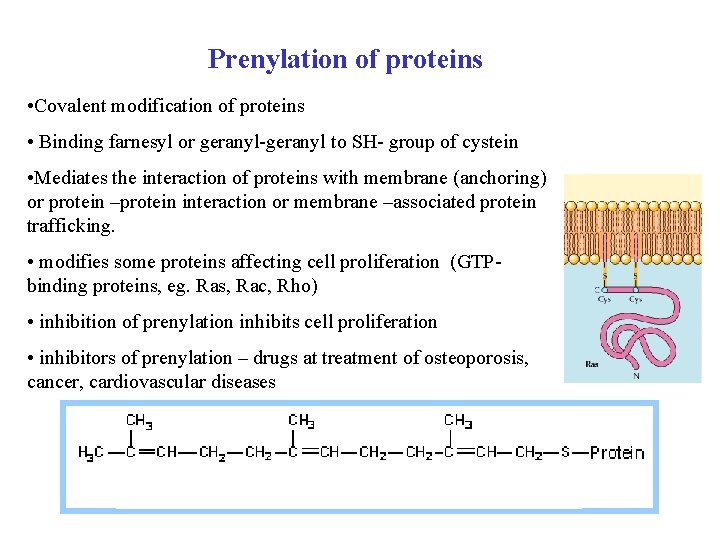
Prenylation of proteins • Covalent modification of proteins • Binding farnesyl or geranyl-geranyl to SH- group of cystein • Mediates the interaction of proteins with membrane (anchoring) or protein –protein interaction or membrane –associated protein trafficking. • modifies some proteins affecting cell proliferation (GTPbinding proteins, eg. Ras, Rac, Rho) • inhibition of prenylation inhibits cell proliferation • inhibitors of prenylation – drugs at treatment of osteoporosis, cancer, cardiovascular diseases 68
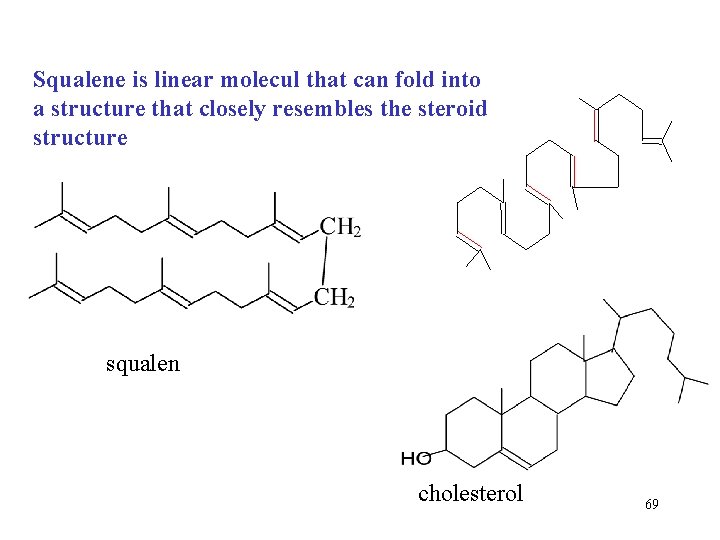
Squalene is linear molecul that can fold into a structure that closely resembles the steroid structure squalen cholesterol 69
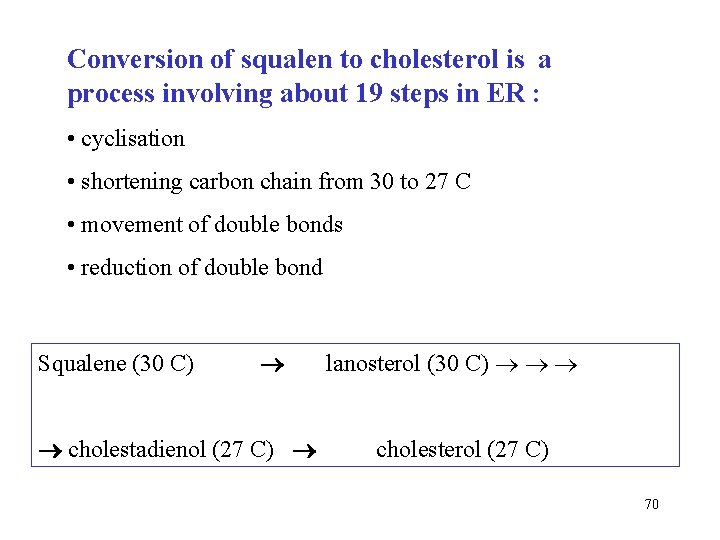
Conversion of squalen to cholesterol is a process involving about 19 steps in ER : • cyclisation • shortening carbon chain from 30 to 27 C • movement of double bonds • reduction of double bond Squalene (30 C) cholestadienol (27 C) lanosterol (30 C) cholesterol (27 C) 70
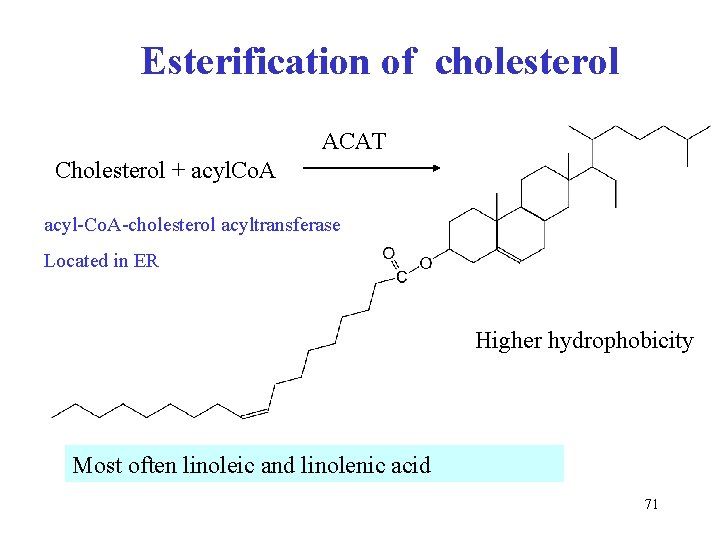
Esterification of cholesterol ACAT Cholesterol + acyl. Co. A acyl-Co. A-cholesterol acyltransferase Located in ER Higher hydrophobicity Most often linoleic and linolenic acid 71
Transport of cholesterol in blood in form of lipoproteins From liver transported in form of VLDL Most of VLDL is converted to LDL after the utilization of main part of TG contained in them LDL transfers cholesterol into the periferal tissues Reverse transport of cholesterol to the liver - HDL 25 -40% - esterified cholesterol 72
Cholesterol in blood Recommended value < 5 mmol/l When the total cholesterol level exceeds 5 mmol/l further investigation of lipid metabolism is necessary, especially the finding of the cholesterol distribution in the lipoprotein fractions LDL-cholesterol = „bad“ cholesterol HDL-cholesterol = „good“ cholesterol A high proportion of serum total cholesterol incorporated in HDL is considered as a sign of the satisfactory ability of an organism to eliminate undesirable excess cholesterol. On the contrary, an increased concentration of LDLcholesterol represents the high coronary risk involved in hypercholesterolaemia. See Biochemistry II – 4. semestr 73
„Degradation of cholesterol“ • in higher animals steroid nucleus of cholesterol is neither decomposed to simple products nor oxidized to CO 2 a H 2 O • only liver have ability to eliminate cholesterol • two ways of cholesterol elimination: conversion to bile acids and their excretion of free cholesterol in bile • small amount is used for synthesis of steroid hormones and vitamin D • minimum amount of cholesterol is lost by sebum and earwax, in secluded enterocytes 74
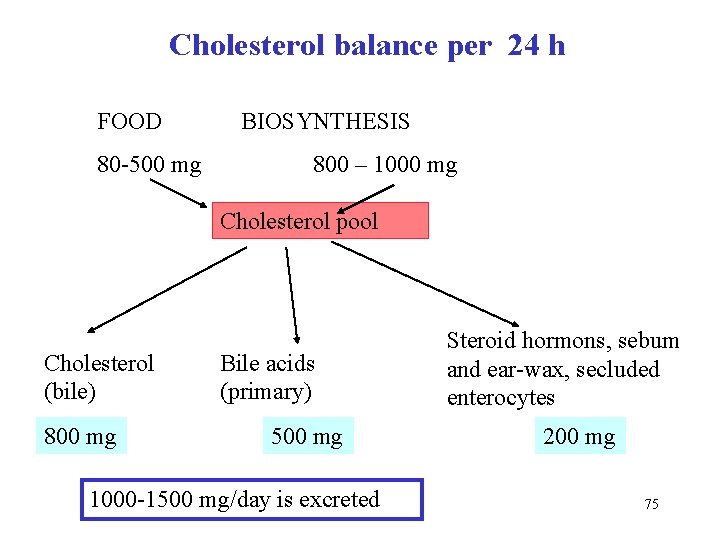
Cholesterol balance per 24 h FOOD 80 -500 mg BIOSYNTHESIS 800 – 1000 mg Cholesterol pool Cholesterol (bile) 800 mg Bile acids (primary) 500 mg 1000 -1500 mg/day is excreted Steroid hormons, sebum and ear-wax, secluded enterocytes 200 mg 75
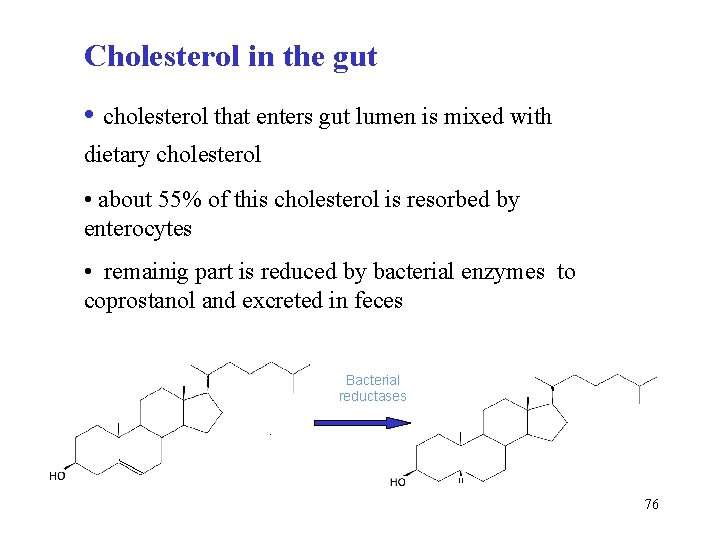
Cholesterol in the gut • cholesterol that enters gut lumen is mixed with dietary cholesterol • about 55% of this cholesterol is resorbed by enterocytes • remainig part is reduced by bacterial enzymes to coprostanol and excreted in feces Bacterial reductases 76
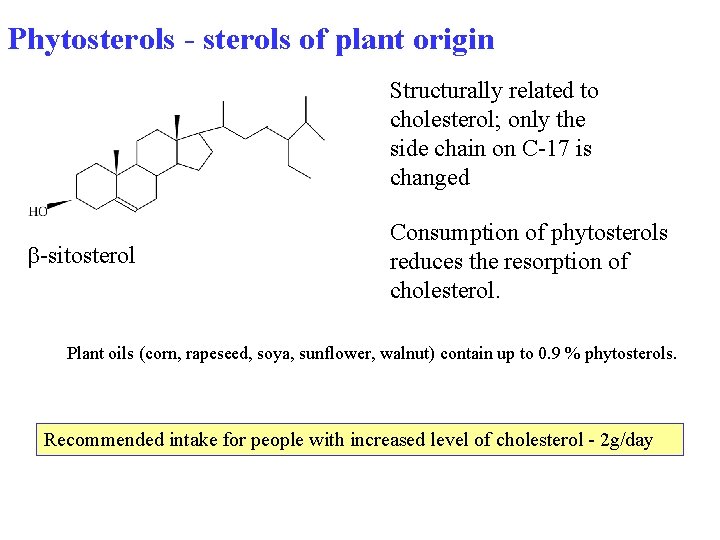
Phytosterols - sterols of plant origin Structurally related to cholesterol; only the side chain on C-17 is changed -sitosterol Consumption of phytosterols reduces the resorption of cholesterol. Plant oils (corn, rapeseed, soya, sunflower, walnut) contain up to 0. 9 % phytosterols. Recommended intake for people with increased level of cholesterol - 2 g/day 77
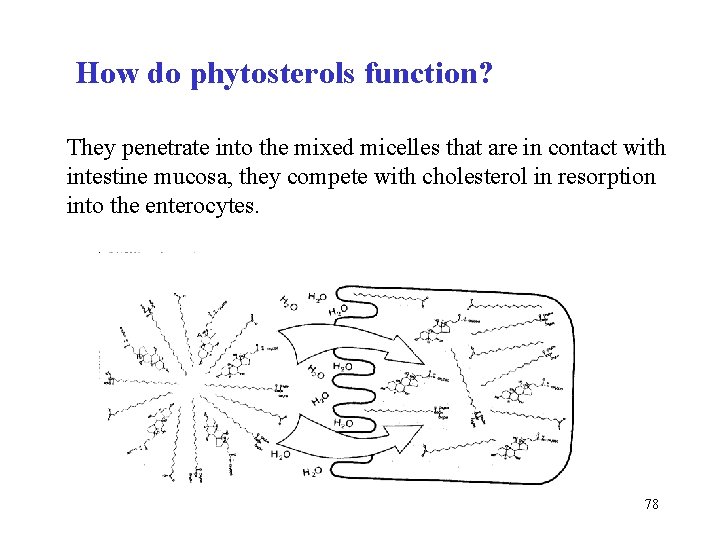
How do phytosterols function? They penetrate into the mixed micelles that are in contact with intestine mucosa, they compete with cholesterol in resorption into the enterocytes. 78
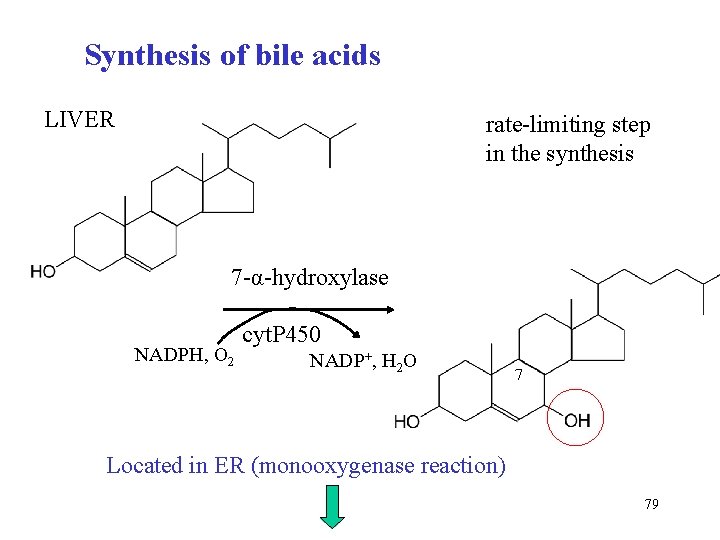
Synthesis of bile acids LIVER rate-limiting step in the synthesis 7 -α-hydroxylase NADPH, O 2 cyt. P 450 NADP+, H 2 O 7 Located in ER (monooxygenase reaction) 79
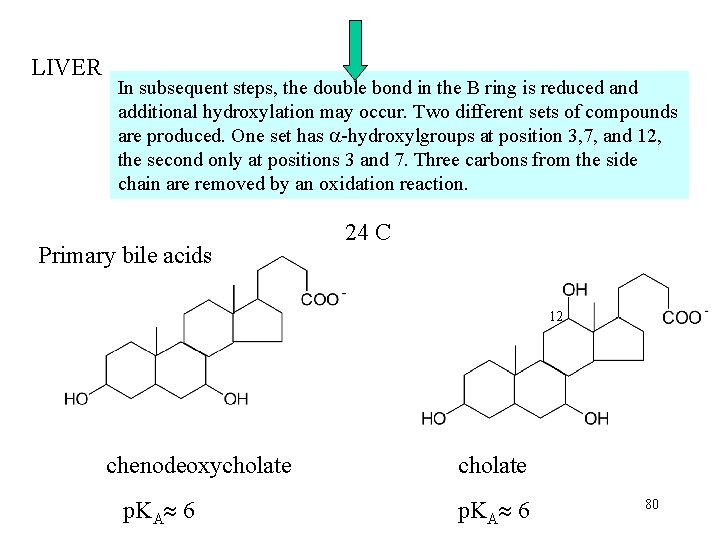
LIVER In subsequent steps, the double bond in the B ring is reduced and additional hydroxylation may occur. Two different sets of compounds are produced. One set has -hydroxylgroups at position 3, 7, and 12, the second only at positions 3 and 7. Three carbons from the side chain are removed by an oxidation reaction. Primary bile acids 24 C 12 chenodeoxycholate p. KA 6 80
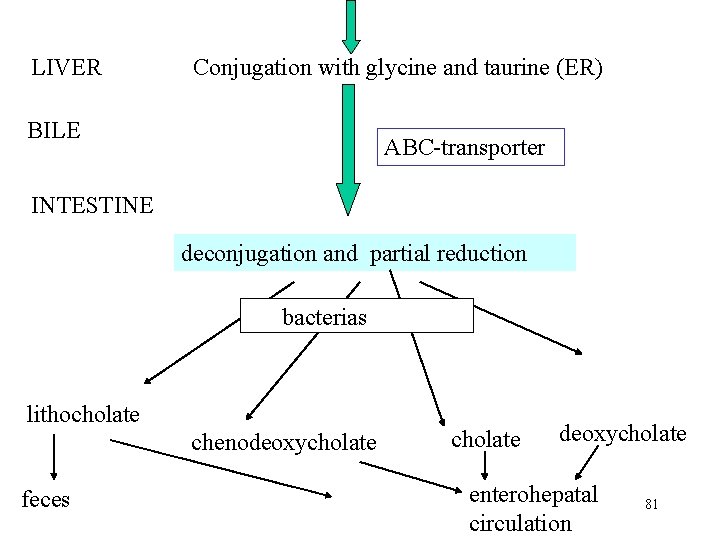
LIVER Conjugation with glycine and taurine (ER) BILE ABC-transporter INTESTINE deconjugation and partial reduction bacterias lithocholate chenodeoxycholate feces cholate deoxycholate enterohepatal circulation 81
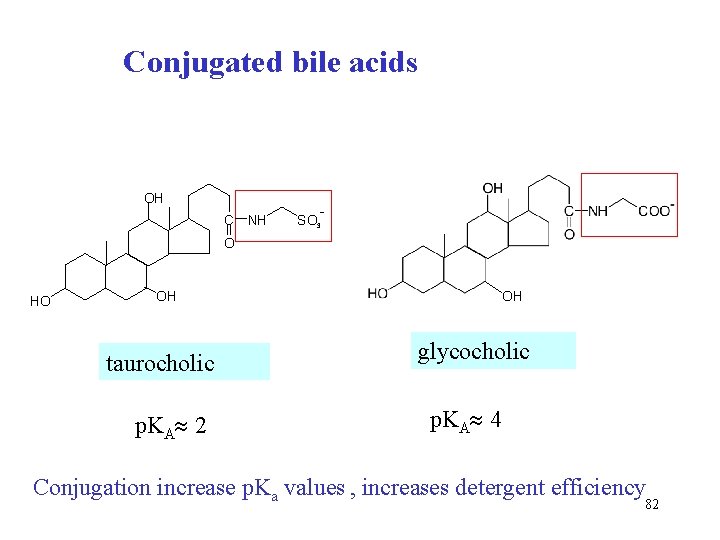
Conjugated bile acids OH C NH SO 3 O HO OH taurocholic p. KA 2 OH glycocholic p. KA 4 Conjugation increase p. Ka values , increases detergent efficiency 82
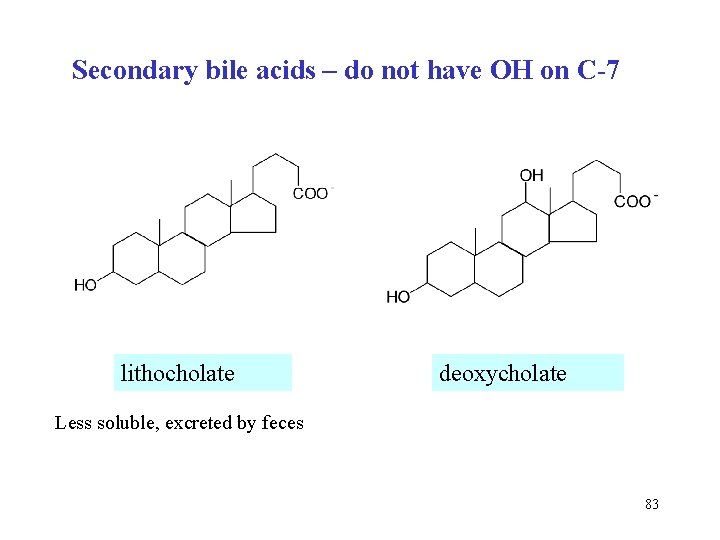
Secondary bile acids – do not have OH on C-7 lithocholate deoxycholate Less soluble, excreted by feces 83
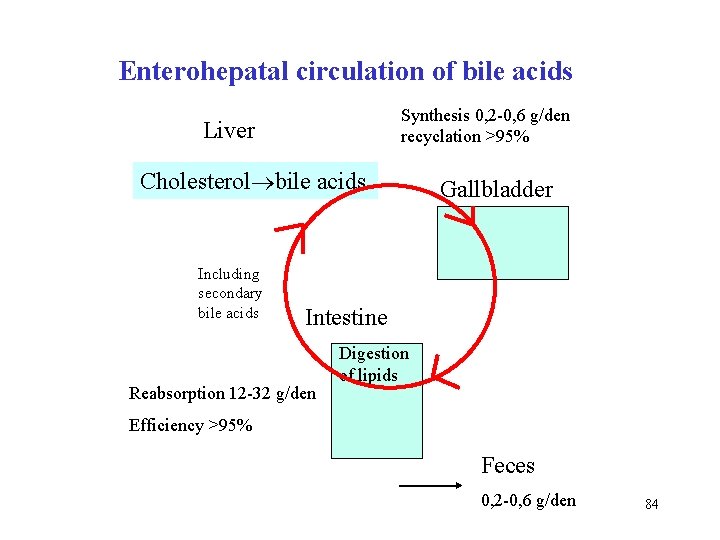
Enterohepatal circulation of bile acids Synthesis 0, 2 -0, 6 g/den recyclation >95% Liver Cholesterol bile acids Including secondary bile acids Gallbladder Intestine Reabsorption 12 -32 g/den Digestion of lipids Efficiency >95% Feces 0, 2 -0, 6 g/den 84
- Slides: 84