
Lipid Disorder Management Evidence Based Approach Dr Gaurav
Lipid Disorder Management Evidence Based Approach…. Dr Gaurav Chaudhary MD, DM Cardiology Assistant Professsor Department of Cardiology
Global Health Estimates: Key figures and tables June 2014 Department of Health Statistics and Information Systems

Burden of CVD Is Enormous
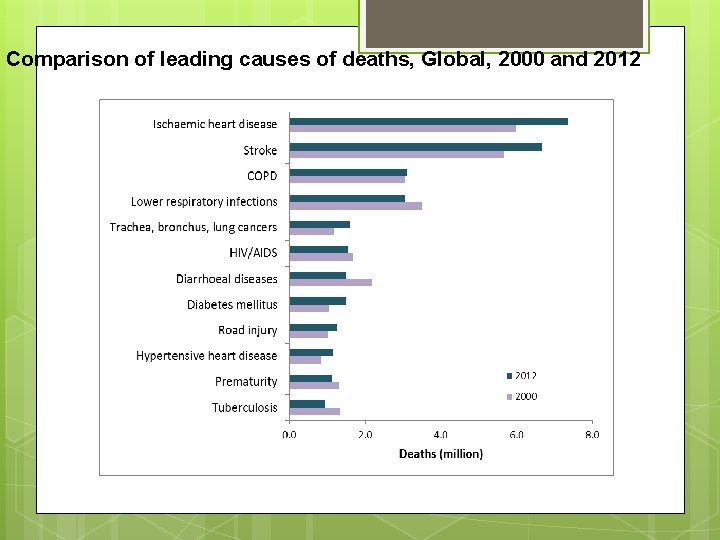
Comparison of leading causes of deaths, Global, 2000 and 2012
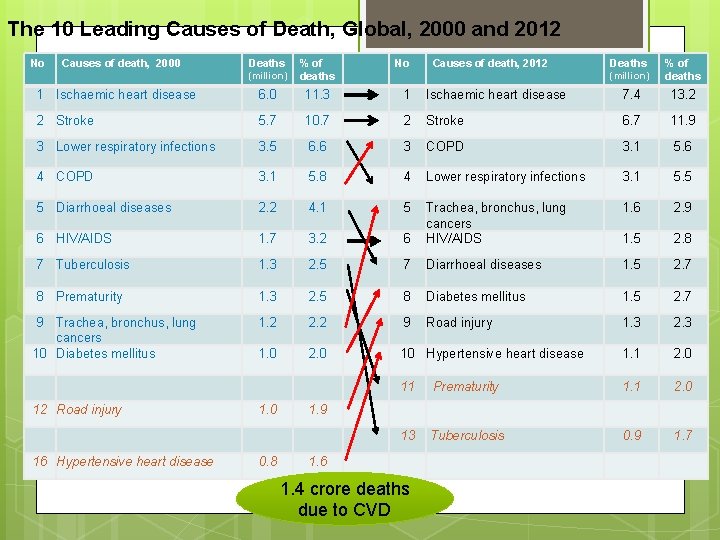
The 10 Leading Causes of Death, Global, 2000 and 2012 No Causes of death, 2000 (million) % of deaths 1 Ischaemic heart disease 6. 0 11. 3 1 Ischaemic heart disease 7. 4 13. 2 2 Stroke 5. 7 10. 7 2 Stroke 6. 7 11. 9 3 Lower respiratory infections 3. 5 6. 6 3 COPD 3. 1 5. 6 4 COPD 3. 1 5. 8 4 Lower respiratory infections 3. 1 5. 5 5 Diarrhoeal diseases 2. 2 4. 1 5 1. 6 2. 9 6 HIV/AIDS 1. 7 3. 2 6 Trachea, bronchus, lung cancers HIV/AIDS 1. 5 2. 8 7 Tuberculosis 1. 3 2. 5 7 Diarrhoeal diseases 1. 5 2. 7 8 Prematurity 1. 3 2. 5 8 Diabetes mellitus 1. 5 2. 7 9 Trachea, bronchus, lung cancers 10 Diabetes mellitus 1. 2 2. 2 9 Road injury 1. 3 2. 3 1. 0 2. 0 10 Hypertensive heart disease 1. 1 2. 0 11 Prematurity 1. 1 2. 0 13 Tuberculosis 0. 9 1. 7 12 Road injury 16 Hypertensive heart disease Deaths 1. 0 0. 8 No Causes of death, 2012 Deaths 1. 9 1. 6 1. 4 crore deaths due to CVD
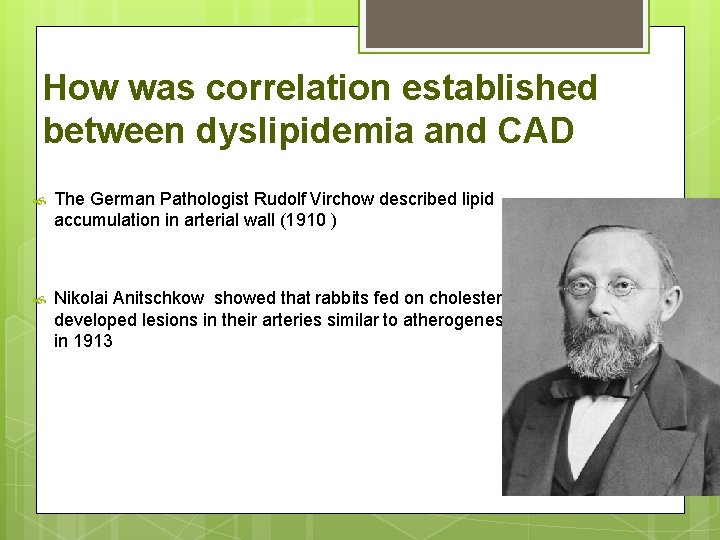
How was correlation established between dyslipidemia and CAD The German Pathologist Rudolf Virchow described lipid accumulation in arterial wall (1910 ) Nikolai Anitschkow showed that rabbits fed on cholesterol developed lesions in their arteries similar to atherogenesis in 1913

Thirteen Nobel Prizes have been awarded to scientists who devoted major parts of their careers to cholesterol research.
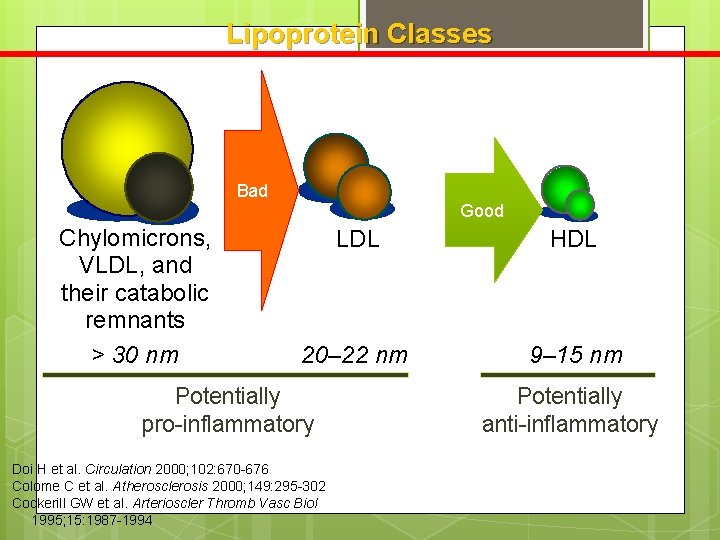
Lipoprotein Classes Bad Chylomicrons, VLDL, and their catabolic remnants > 30 nm Good LDL HDL 20– 22 nm 9– 15 nm Potentially pro-inflammatory Doi H et al. Circulation 2000; 102: 670 -676 Colome C et al. Atherosclerosis 2000; 149: 295 -302 Cockerill GW et al. Arterioscler Thromb Vasc Biol 1995; 15: 1987 -1994 Potentially anti-inflammatory
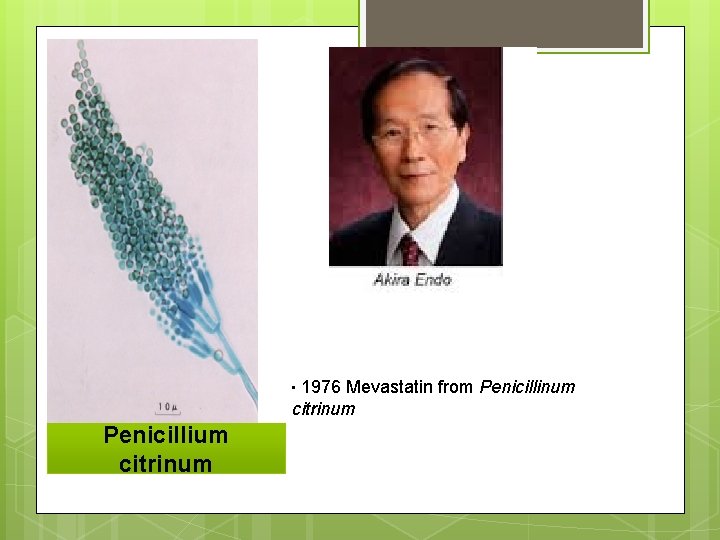
• 1976 Mevastatin from Penicillinum citrinum Penicillium citrinum
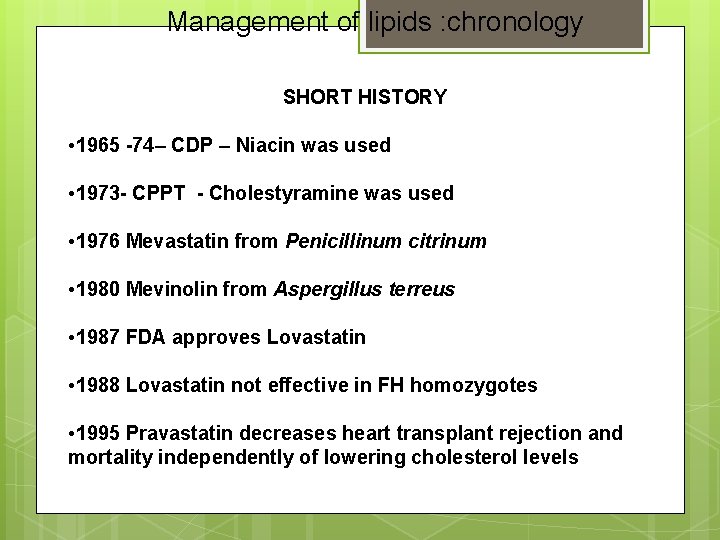
Management of lipids : chronology SHORT HISTORY • 1965 -74– CDP – Niacin was used • 1973 - CPPT - Cholestyramine was used • 1976 Mevastatin from Penicillinum citrinum • 1980 Mevinolin from Aspergillus terreus • 1987 FDA approves Lovastatin • 1988 Lovastatin not effective in FH homozygotes • 1995 Pravastatin decreases heart transplant rejection and mortality independently of lowering cholesterol levels

What was the approach till 2 year back ……. 12
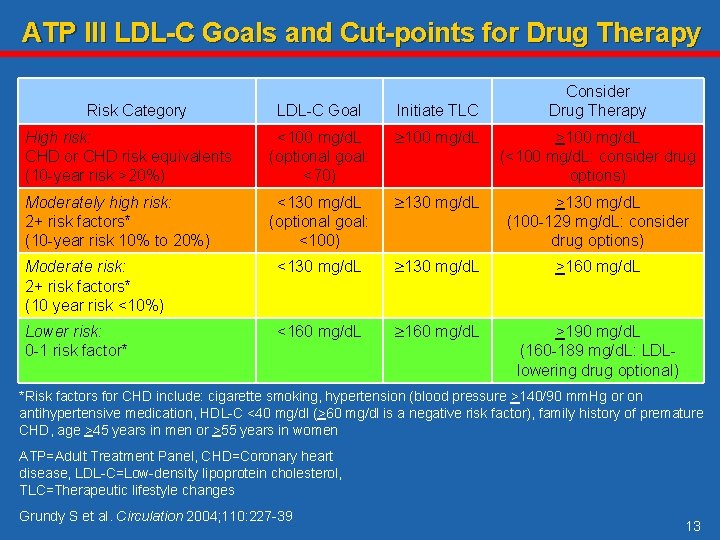
ATP III LDL-C Goals and Cut-points for Drug Therapy Risk Category Consider Drug Therapy LDL-C Goal Initiate TLC High risk: CHD or CHD risk equivalents (10 -year risk >20%) <100 mg/d. L (optional goal: <70) 100 mg/d. L >100 mg/d. L (<100 mg/d. L: consider drug options) Moderately high risk: 2+ risk factors* (10 -year risk 10% to 20%) <130 mg/d. L (optional goal: <100) 130 mg/d. L >130 mg/d. L (100 -129 mg/d. L: consider drug options) Moderate risk: 2+ risk factors* (10 year risk <10%) <130 mg/d. L >160 mg/d. L Lower risk: 0 -1 risk factor* <160 mg/d. L >190 mg/d. L (160 -189 mg/d. L: LDLlowering drug optional) *Risk factors for CHD include: cigarette smoking, hypertension (blood pressure >140/90 mm. Hg or on antihypertensive medication, HDL-C <40 mg/dl (>60 mg/dl is a negative risk factor), family history of premature CHD, age >45 years in men or >55 years in women ATP=Adult Treatment Panel, CHD=Coronary heart disease, LDL-C=Low-density lipoprotein cholesterol, TLC=Therapeutic lifestyle changes Grundy S et al. Circulation 2004; 110: 227 -39 13
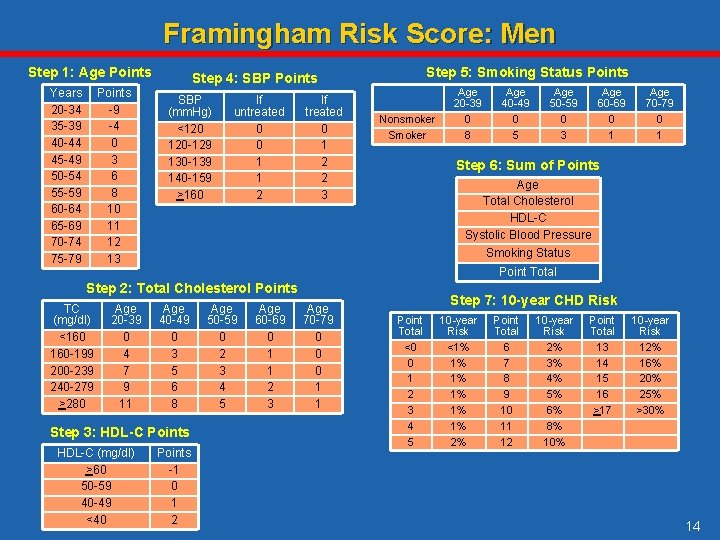
Framingham Risk Score: Men Step 1: Age Points Years 20 -34 35 -39 40 -44 45 -49 50 -54 55 -59 60 -64 65 -69 70 -74 75 -79 Points -9 -4 0 3 6 8 10 11 12 13 Step 5: Smoking Status Points Step 4: SBP Points SBP (mm. Hg) <120 120 -129 130 -139 140 -159 >160 If untreated 0 0 1 1 2 If treated 0 1 2 2 3 Nonsmoker Smoker Age 20 -39 0 4 7 9 11 Age 50 -59 0 3 Age 60 -69 0 1 Age 70 -79 0 1 Age Total Cholesterol HDL-C Systolic Blood Pressure Smoking Status Point Total Age 40 -49 0 3 5 6 8 Step 3: HDL-C Points HDL-C (mg/dl) >60 50 -59 40 -49 <40 Age 40 -49 0 5 Step 6: Sum of Points Step 2: Total Cholesterol Points TC (mg/dl) <160 160 -199 200 -239 240 -279 >280 Age 20 -39 0 8 Points -1 0 1 2 Age 50 -59 0 2 3 4 5 Age 60 -69 0 1 1 2 3 Age 70 -79 0 0 0 1 1 Step 7: 10 -year CHD Risk Point Total <0 0 1 2 3 4 5 10 -year Risk <1% 1% 1% 2% Point Total 6 7 8 9 10 11 12 10 -year Risk 2% 3% 4% 5% 6% 8% 10% Point Total 13 14 15 16 >17 10 -year Risk 12% 16% 20% 25% >30% 14
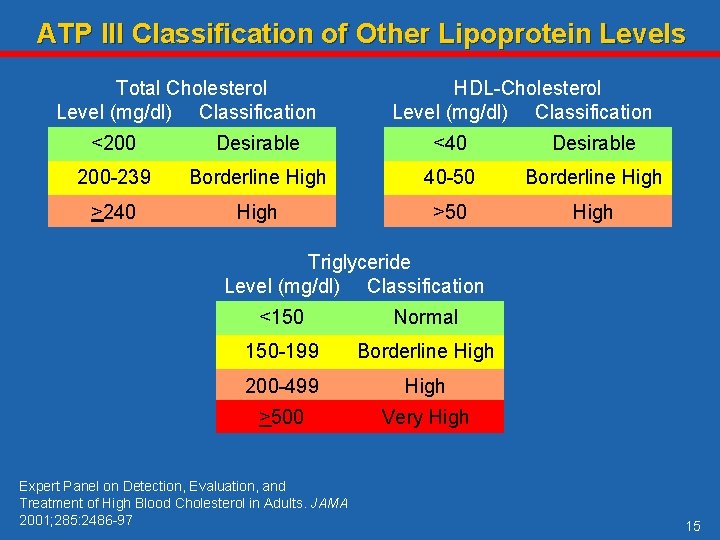
ATP III Classification of Other Lipoprotein Levels Total Cholesterol Level (mg/dl) Classification HDL-Cholesterol Level (mg/dl) Classification <200 Desirable <40 Desirable 200 -239 Borderline High 40 -50 Borderline High >240 High >50 High Triglyceride Level (mg/dl) Classification <150 Normal 150 -199 Borderline High 200 -499 High >500 Very High Expert Panel on Detection, Evaluation, and Treatment of High Blood Cholesterol in Adults. JAMA 2001; 285: 2486 -97 15
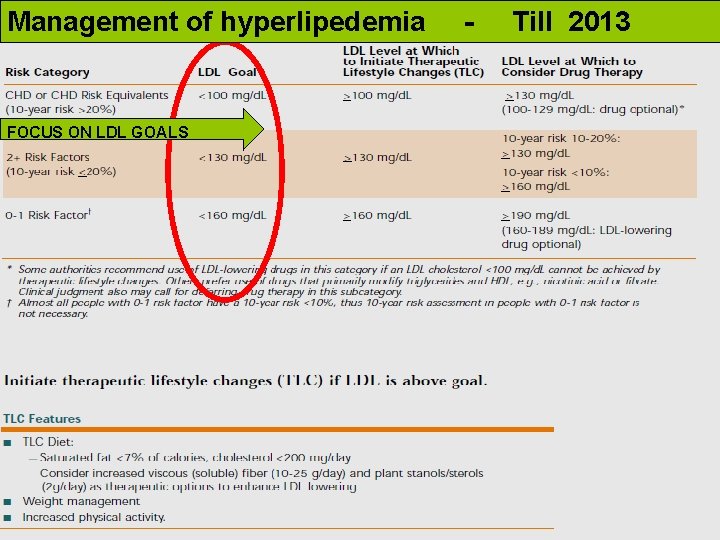
Management of hyperlipedemia FOCUS ON LDL GOALS - Till 2013

Drammatic change in New guidelines ….
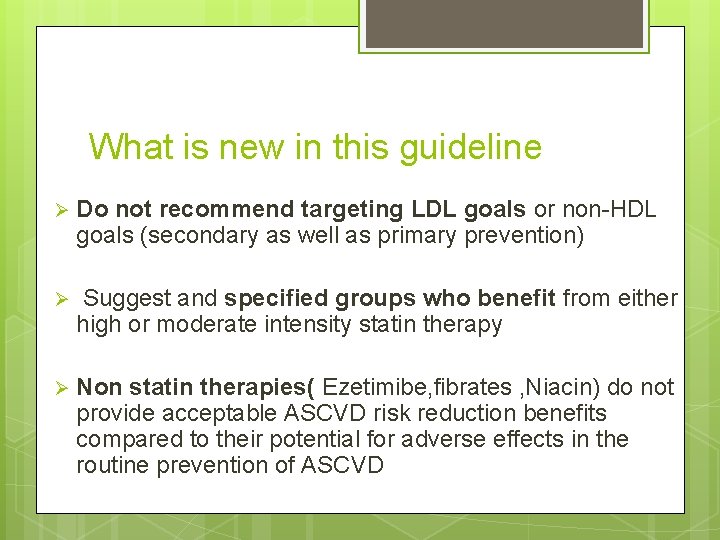
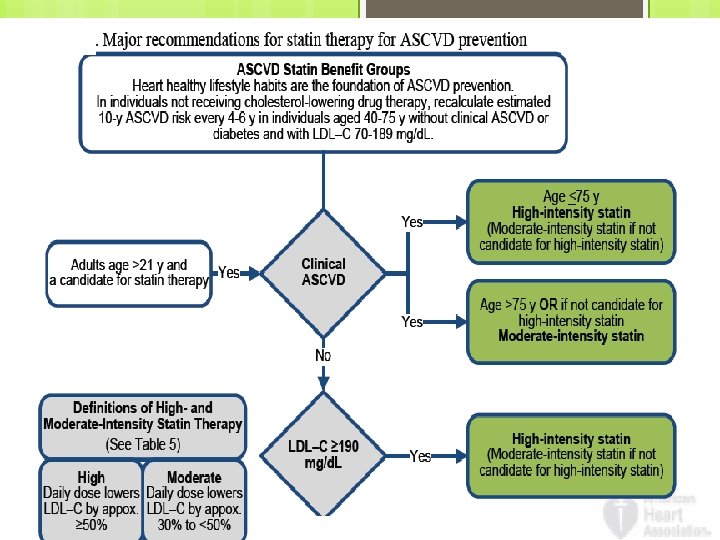
What is new in this guideline Ø Do not recommend targeting LDL goals or non-HDL goals (secondary as well as primary prevention) Ø Suggest and specified groups who benefit from either high or moderate intensity statin therapy Ø Non statin therapies( Ezetimibe, fibrates , Niacin) do not provide acceptable ASCVD risk reduction benefits compared to their potential for adverse effects in the routine prevention of ASCVD
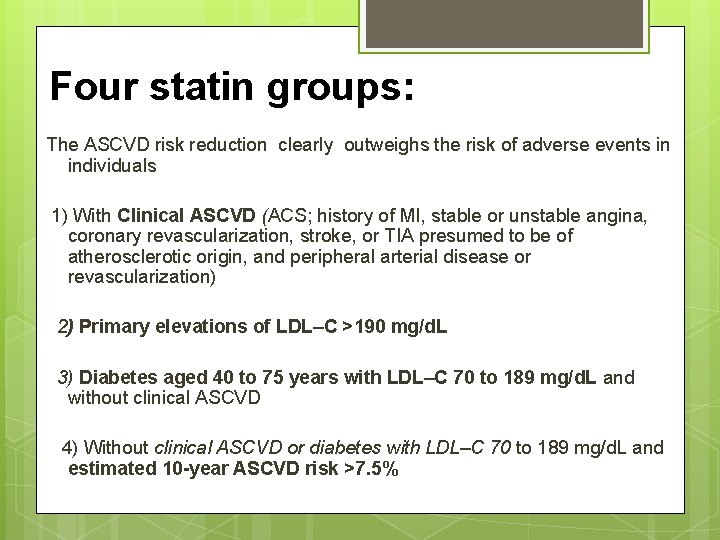
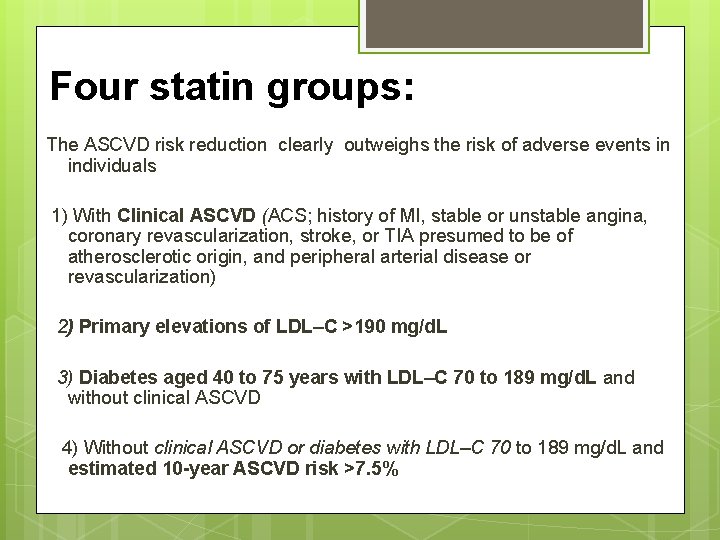
Four statin groups: The ASCVD risk reduction clearly outweighs the risk of adverse events in individuals 1) With Clinical ASCVD (ACS; history of MI, stable or unstable angina, coronary revascularization, stroke, or TIA presumed to be of atherosclerotic origin, and peripheral arterial disease or revascularization) 2) Primary elevations of LDL–C >190 mg/d. L 3) Diabetes aged 40 to 75 years with LDL–C 70 to 189 mg/d. L and without clinical ASCVD 4) Without clinical ASCVD or diabetes with LDL–C 70 to 189 mg/d. L and estimated 10 -year ASCVD risk >7. 5%
What is Clinical ASCVD Defined by the inclusion criteria for the secondary prevention statin RCTs Acute coronary syndromes History of MI, Stable or unstable angina, Coronary or other arterial revascularization Stroke TIA Peripheral arterial disease presumed to be of atherosclerotic origin).
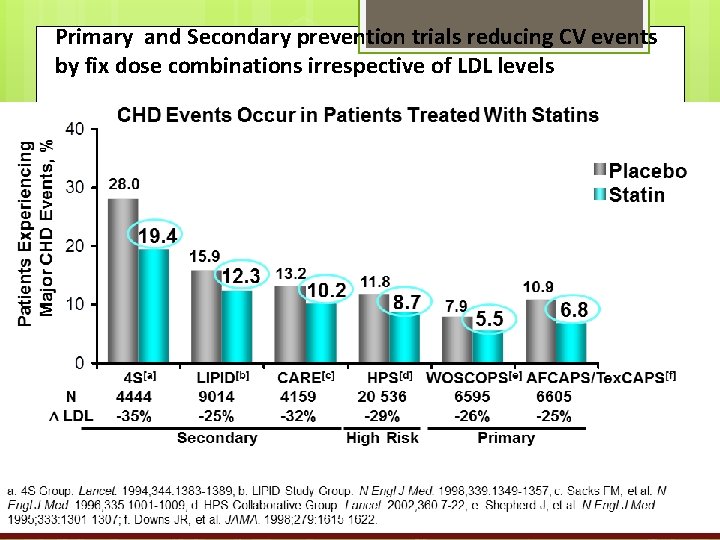
Primary and Secondary prevention trials reducing CV events by fix dose combinations irrespective of LDL levels
Primary prevention trials : The Expert Panel did not find any RCTs that evaluated titration of all individuals in a treatment group to specific LDL–C targets <100 mg/d. L or <70 mg/d. L Nor were any RCTs comparing 2 LDL–C treatment targets identified. No trials reported on-treatment non. HDL–C levels
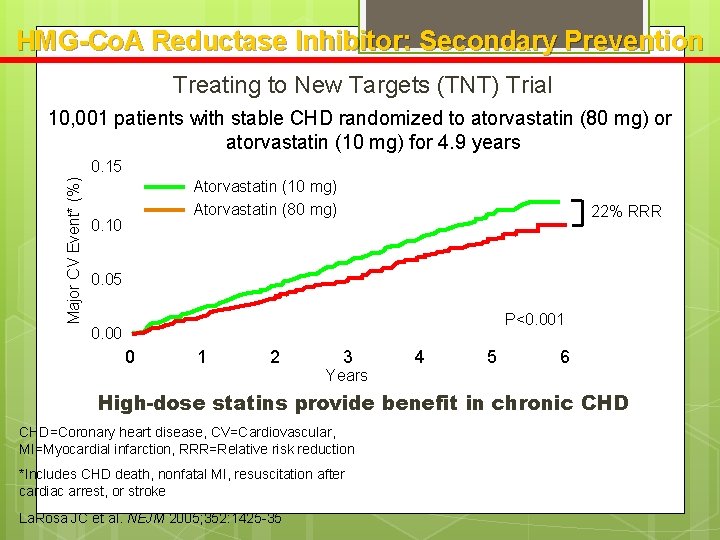
HMG-Co. A Reductase Inhibitor: Secondary Prevention Treating to New Targets (TNT) Trial 10, 001 patients with stable CHD randomized to atorvastatin (80 mg) or atorvastatin (10 mg) for 4. 9 years Major CV Event* (%) 0. 15 Atorvastatin (10 mg) Atorvastatin (80 mg) 0. 10 22% RRR 0. 05 P<0. 001 0. 00 0 1 2 3 Years 4 5 6 High-dose statins provide benefit in chronic CHD=Coronary heart disease, CV=Cardiovascular, MI=Myocardial infarction, RRR=Relative risk reduction *Includes CHD death, nonfatal MI, resuscitation after cardiac arrest, or stroke La. Rosa JC et al. NEJM 2005; 352: 1425 -35
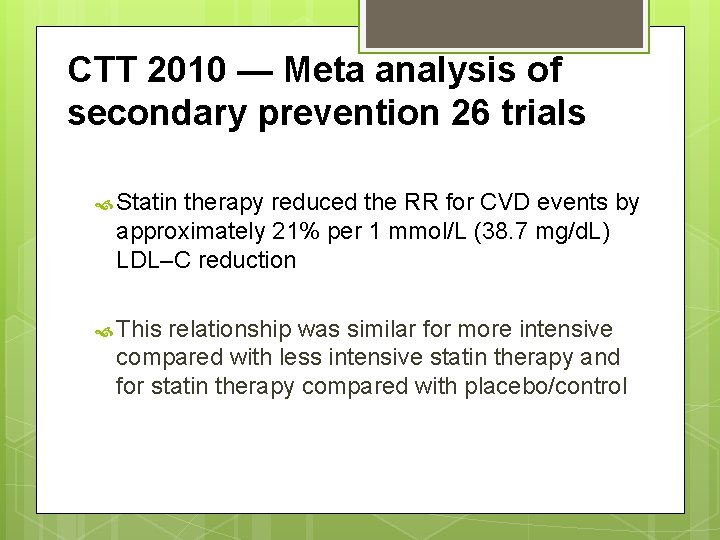
CTT 2010 — Meta analysis of secondary prevention 26 trials Statin therapy reduced the RR for CVD events by approximately 21% per 1 mmol/L (38. 7 mg/d. L) LDL–C reduction This relationship was similar for more intensive compared with less intensive statin therapy and for statin therapy compared with placebo/control
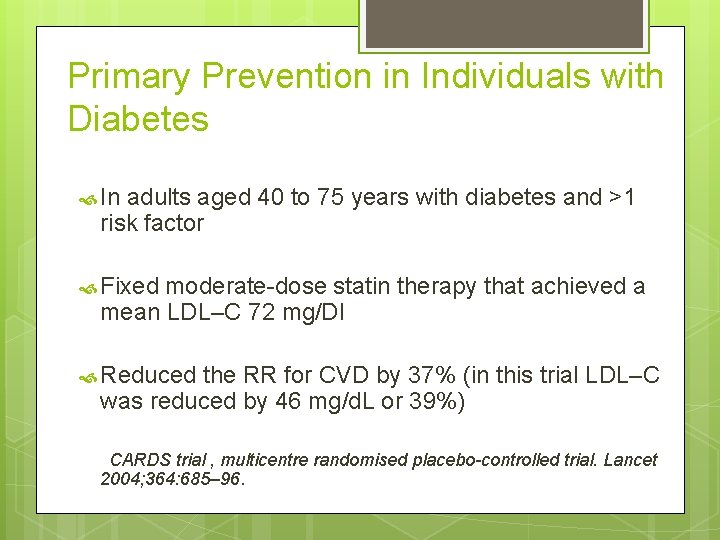
Primary Prevention in Individuals with Diabetes In adults aged 40 to 75 years with diabetes and >1 risk factor Fixed moderate-dose statin therapy that achieved a mean LDL–C 72 mg/Dl Reduced the RR for CVD by 37% (in this trial LDL–C was reduced by 46 mg/d. L or 39%) CARDS trial , multicentre randomised placebo-controlled trial. Lancet 2004; 364: 685– 96.
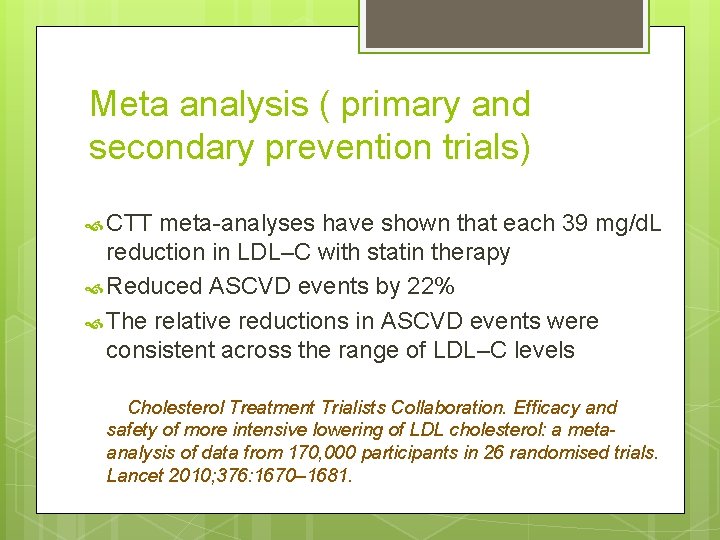
Meta analysis ( primary and secondary prevention trials) CTT meta-analyses have shown that each 39 mg/d. L reduction in LDL–C with statin therapy Reduced ASCVD events by 22% The relative reductions in ASCVD events were consistent across the range of LDL–C levels Cholesterol Treatment Trialists Collaboration. Efficacy and safety of more intensive lowering of LDL cholesterol: a metaanalysis of data from 170, 000 participants in 26 randomised trials. Lancet 2010; 376: 1670– 1681.
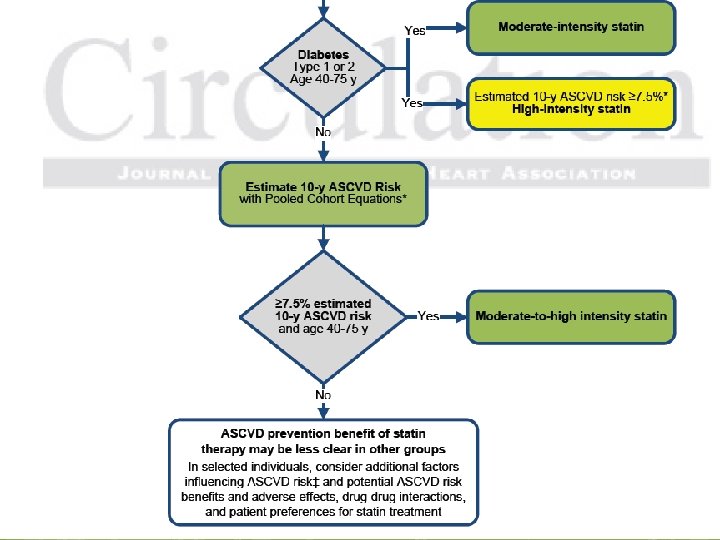
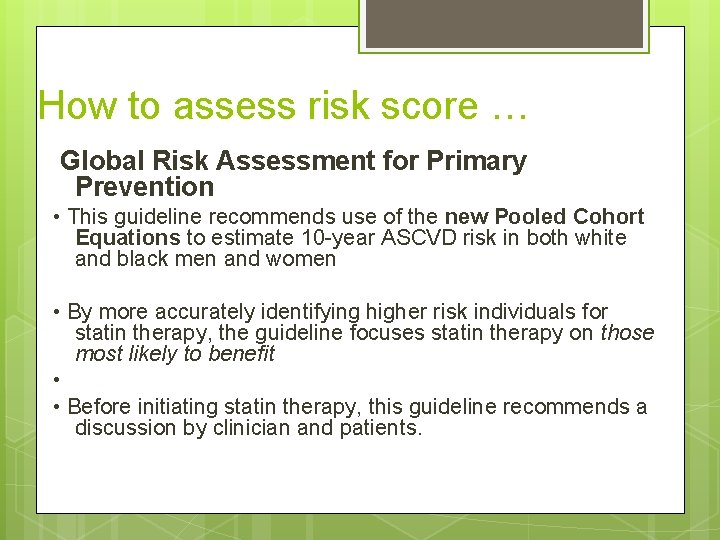
How to assess risk score … Global Risk Assessment for Primary Prevention • This guideline recommends use of the new Pooled Cohort Equations to estimate 10 -year ASCVD risk in both white and black men and women • By more accurately identifying higher risk individuals for statin therapy, the guideline focuses statin therapy on those most likely to benefit • • Before initiating statin therapy, this guideline recommends a discussion by clinician and patients.
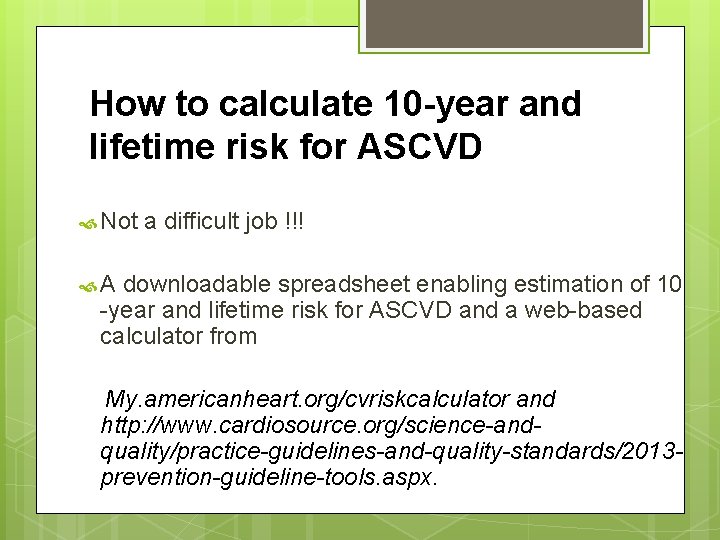
How to calculate 10 -year and lifetime risk for ASCVD Not a difficult job !!! A downloadable spreadsheet enabling estimation of 10 -year and lifetime risk for ASCVD and a web-based calculator from My. americanheart. org/cvriskcalculator and http: //www. cardiosource. org/science-andquality/practice-guidelines-and-quality-standards/2013 prevention-guideline-tools. aspx.
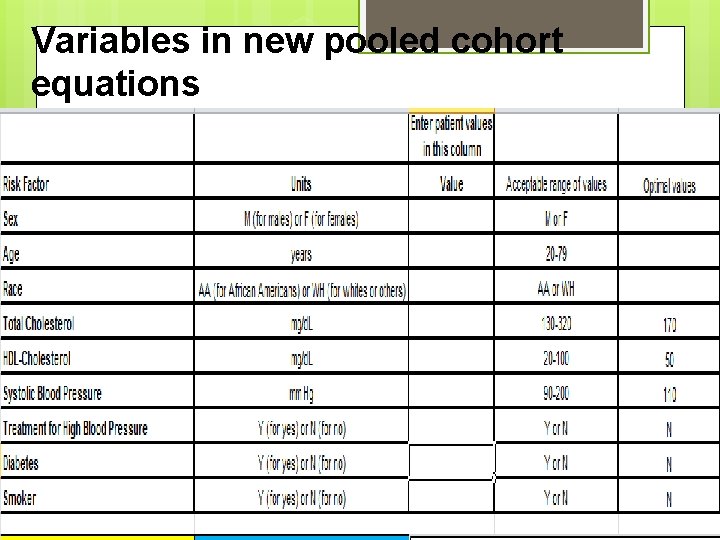
Variables in new pooled cohort equations


Case Based Approach …….
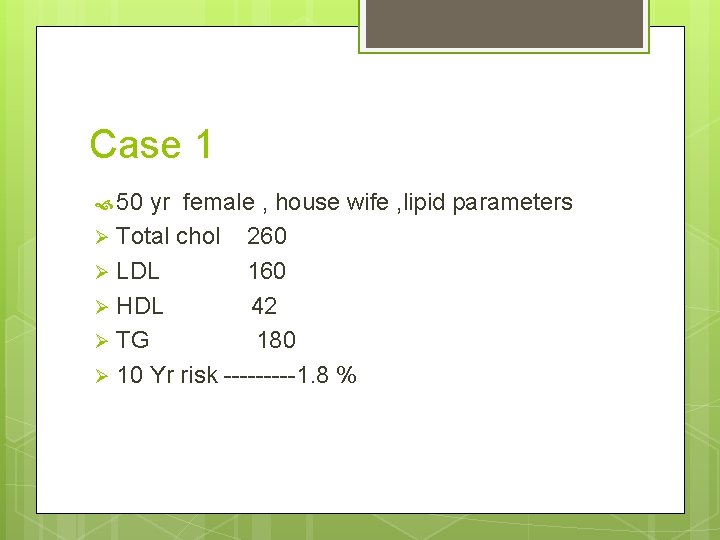
Case 1 50 yr female , house wife , lipid parameters Ø Total chol 260 Ø LDL 160 Ø HDL 42 Ø TG 180 Ø 10 Yr risk -----1. 8 %
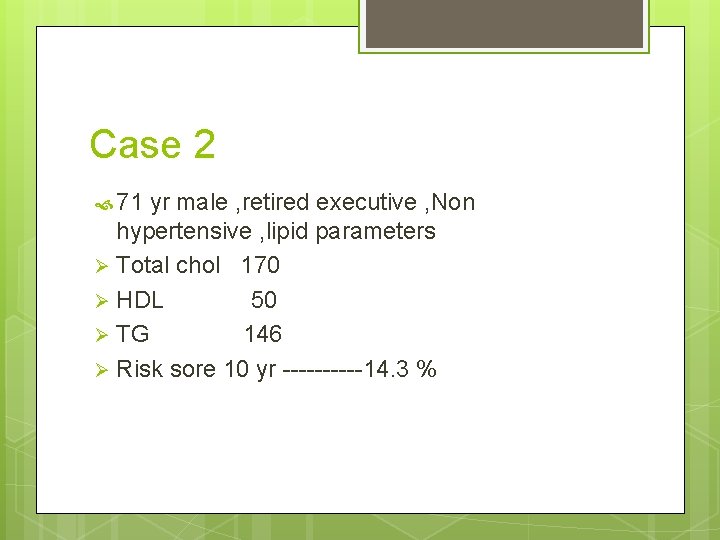
Case 2 71 yr male , retired executive , Non hypertensive , lipid parameters Ø Total chol 170 Ø HDL 50 Ø TG 146 Ø Risk sore 10 yr -----14. 3 %
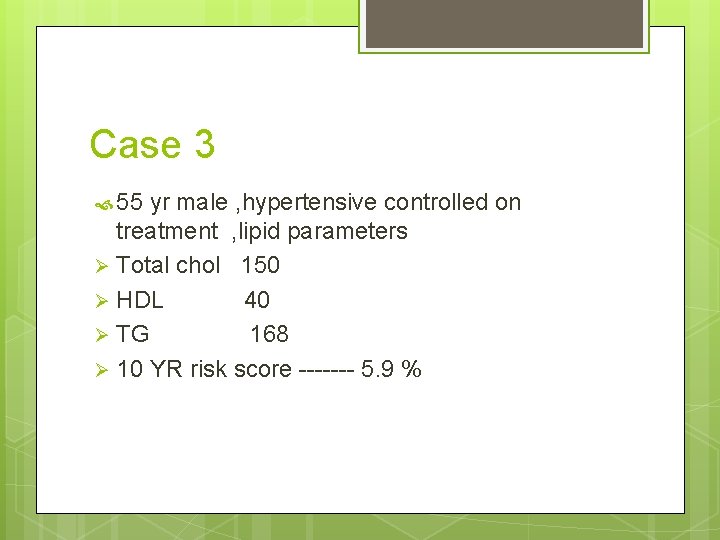
Case 3 55 yr male , hypertensive controlled on treatment , lipid parameters Ø Total chol 150 Ø HDL 40 Ø TG 168 Ø 10 YR risk score ------- 5. 9 %
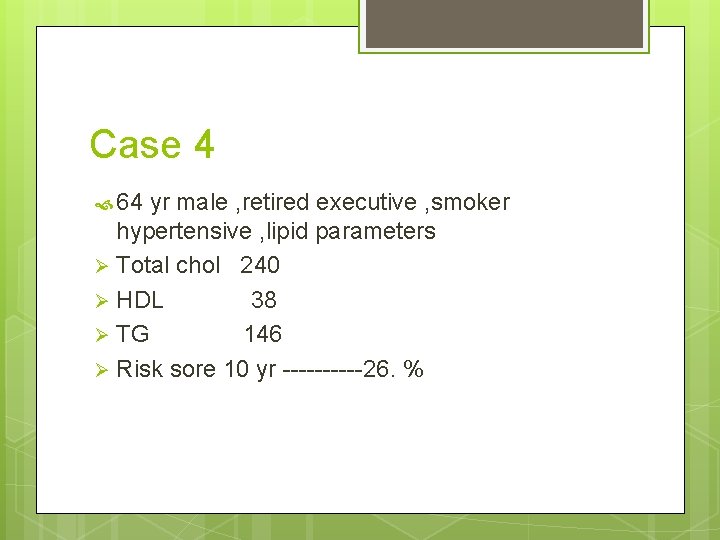
Case 4 64 yr male , retired executive , smoker hypertensive , lipid parameters Ø Total chol 240 Ø HDL 38 Ø TG 146 Ø Risk sore 10 yr -----26. %
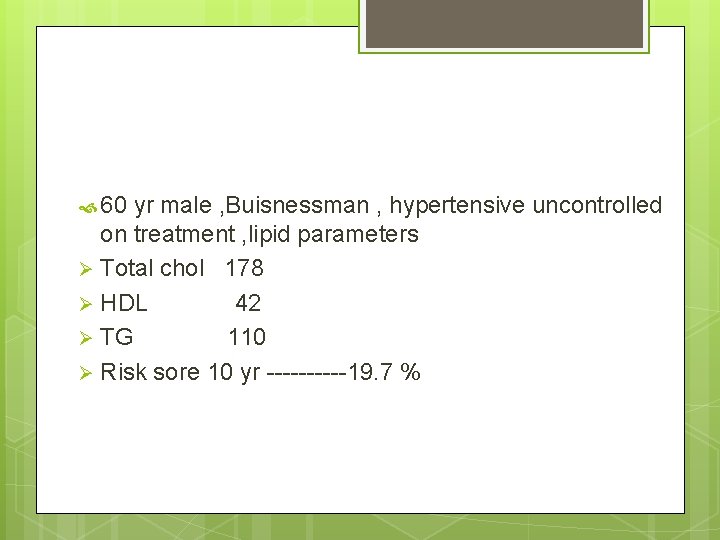
60 yr male , Buisnessman , hypertensive uncontrolled on treatment , lipid parameters Ø Total chol 178 Ø HDL 42 Ø TG 110 Ø Risk sore 10 yr -----19. 7 %

Safetyand. . . . Monitoring Safety concerns … 40 Dr. Sarma@works
Monitoring Recommends the use of an initial fasting lipid panel (total cholesterol, triglycerides, HDL–C, and calculated LDL–C) Followed by a second lipid panel 4 to 12 weeks after initiation of statin therapy, to determine a patient’s adherence. Thereafter, assessments should be performed every 3 to 12 months as clinically indicated
Statin induced Diabetes mellitus Statins use is associated with an excess risk of new onset diabetes in RCTs and metaanalyses of RCTs (i. e. , 0. 1 excess case per 100 individuals treated 1 year with moderateintensity statin therapy And 0. 3 excess cases per 100 individuals treated for 1 year with high-intensity statin therapy.
Conclusion. . These recommendations arose from careful consideration of an extensive body of higher quality evidence derived from RCTs and systematic reviews and meta-analyses of RCTs. Rather than LDL–C or non-HDL– C targets, this guideline used the intensity of statin therapy as the goal of treatment. Through a rigorous process, 4 groups of individuals were identified for whom an extensive body of RCT evidence demonstrated a reduction in ASCVD events with a good margin of safety from moderate- or high-intensity statin therapy:
Four statin groups: The ASCVD risk reduction clearly outweighs the risk of adverse events in individuals 1) With Clinical ASCVD (ACS; history of MI, stable or unstable angina, coronary revascularization, stroke, or TIA presumed to be of atherosclerotic origin, and peripheral arterial disease or revascularization) 2) Primary elevations of LDL–C >190 mg/d. L 3) Diabetes aged 40 to 75 years with LDL–C 70 to 189 mg/d. L and without clinical ASCVD 4) Without clinical ASCVD or diabetes with LDL–C 70 to 189 mg/d. L and estimated 10 -year ASCVD risk >7. 5%
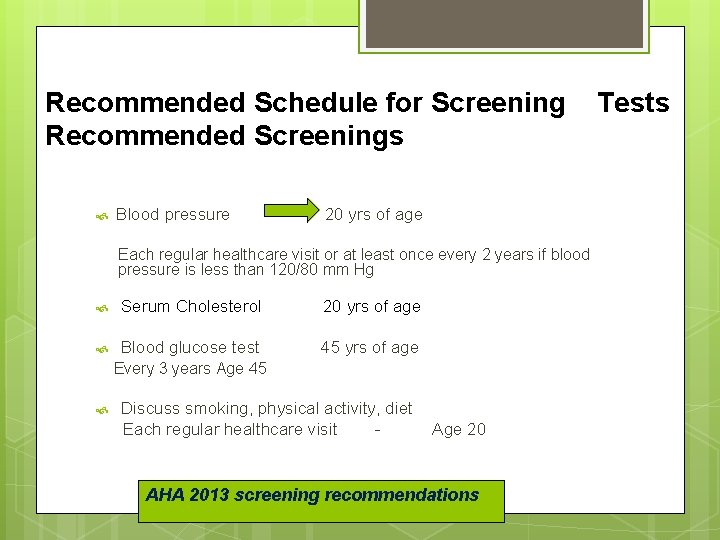
Recommended Schedule for Screening Recommended Screenings Blood pressure 20 yrs of age Each regular healthcare visit or at least once every 2 years if blood pressure is less than 120/80 mm Hg Serum Cholesterol 20 yrs of age Blood glucose test 45 yrs of age Every 3 years Age 45 Discuss smoking, physical activity, diet Each regular healthcare visit - Age 20 AHA 2013 screening recommendations Tests

Thank You Thank you ……
- Slides: 46