
Lipid Compounds of Physiological Significance By REEM M

Lipid Compounds of Physiological Significance By REEM M. SALLAM, MD, Ph. D
Objectives • Functions of lipid compounds • Clinical problems • Lipid compounds of physiological importance • Complex lipids: Phospholipids, glycolipids and lipoproteins
Functions of lipid compounds • Major energy source for the body • Structural component of cell membranes • Important regulatory molecules: e. g. , Fat-soluble vitamins Steroid hormones Prostaglandins Signaling molecules: Inositol triphosphate (IP 3)
Lipids and Related Clinical Problems • Obesity • Atherosclerosis and hypertension • Coronary heart diseases
Lipid Compounds • Heterogeneous group • Relatively water-insoluble (? Exception) • Soluble in non-polar solvents
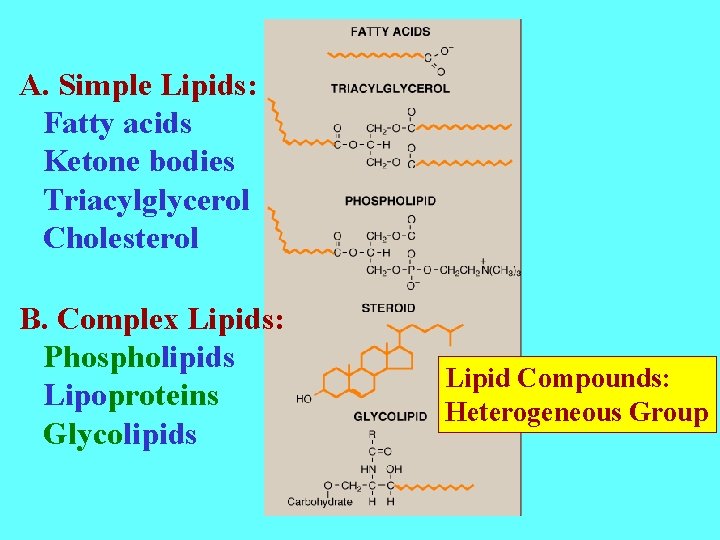
A. Simple Lipids: Fatty acids Ketone bodies Triacylglycerol Cholesterol B. Complex Lipids: Phospholipids Lipoproteins Glycolipids Lipid Compounds: Heterogeneous Group
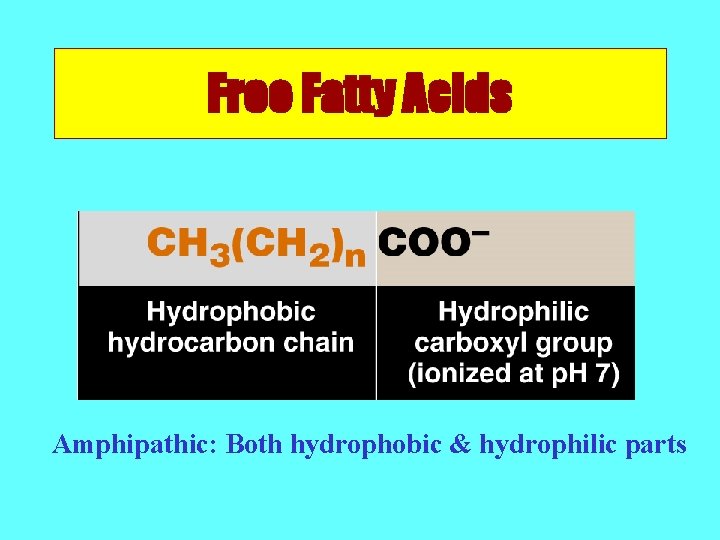
Free Fatty Acids Amphipathic: Both hydrophobic & hydrophilic parts
Free Fatty Acids (FFA) 1. Chain length: Short-chain and Medium-Chain Long-Chain e. g. , Palmitic acid 16: 0 Very long-chain e. g. , Nervonic acid 24: 1 2. Degree of saturation: Saturated: No double bonds Unsaturated: Mono- or poly-unsaturated Cis- or trans-form 3. Branched Vs straight-chain 4. Essential fatty acids
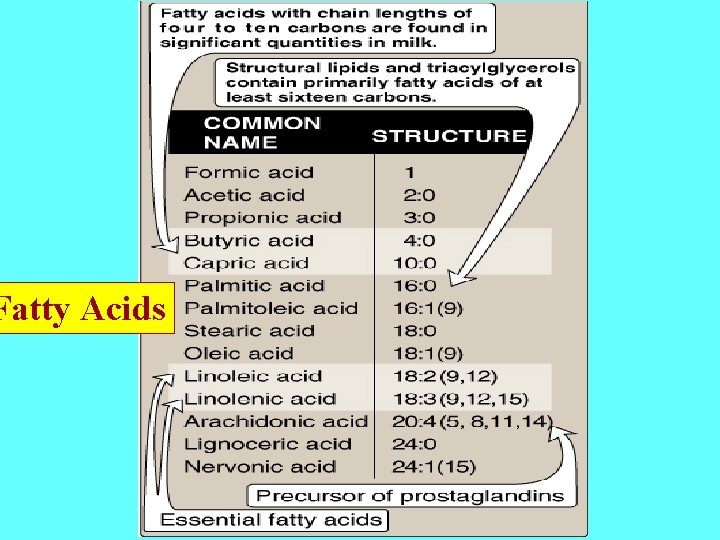
Fatty Acids
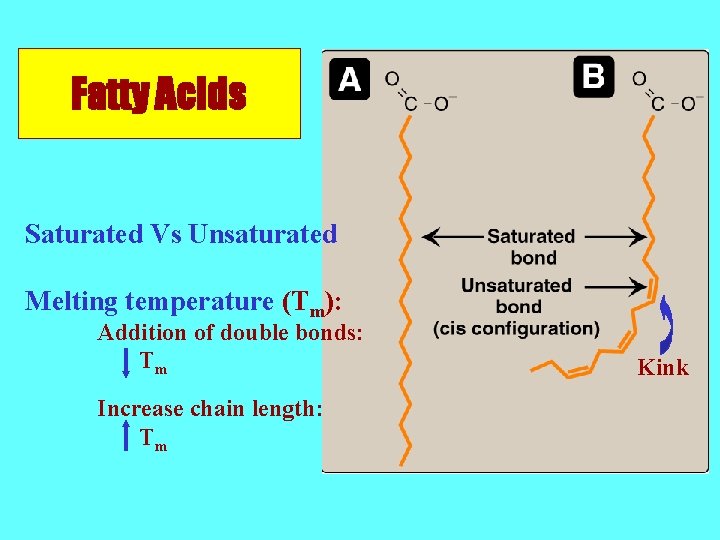
Fatty Acids Saturated Vs Unsaturated Melting temperature (Tm): Addition of double bonds: Tm Increase chain length: Tm Kink
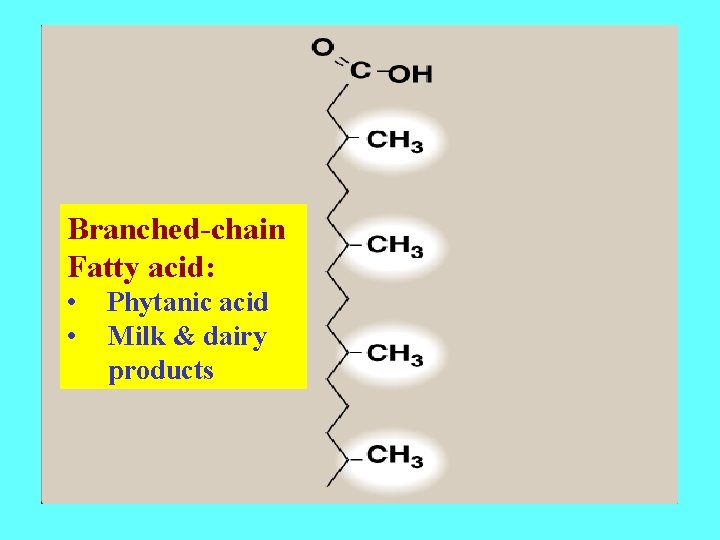
Branched-chain Fatty acid: • • Phytanic acid Milk & dairy products
Plasma Fatty Acids Esterified form (~90%): In triacylglycerol, cholesterol ester, phospholipids (as part of lipoproteins) Free-form (unesterified): Transported in association with albumin
Triacylglycerols • Storage form in adipose tissue • ~ 90% of dietary lipids • Glycerol plus 3 fatty acids • Blood transport: Chylomicrons and VLDL
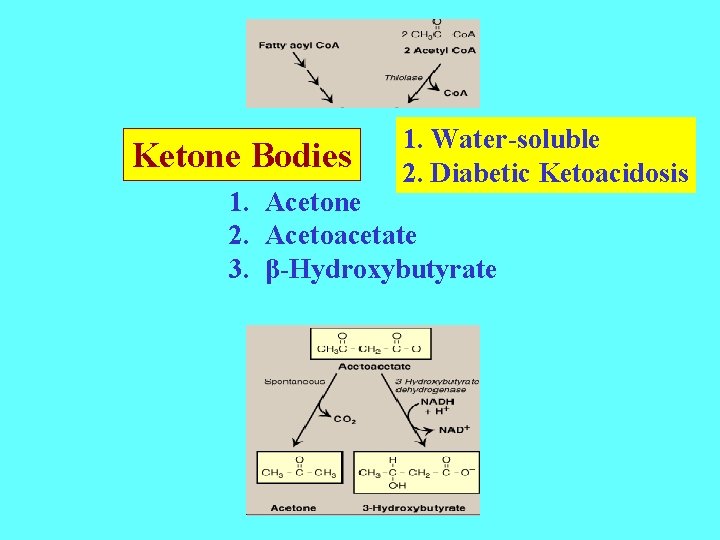
Ketone Bodies 1. Water-soluble 2. Diabetic Ketoacidosis 1. Acetone 2. Acetoacetate 3. β-Hydroxybutyrate
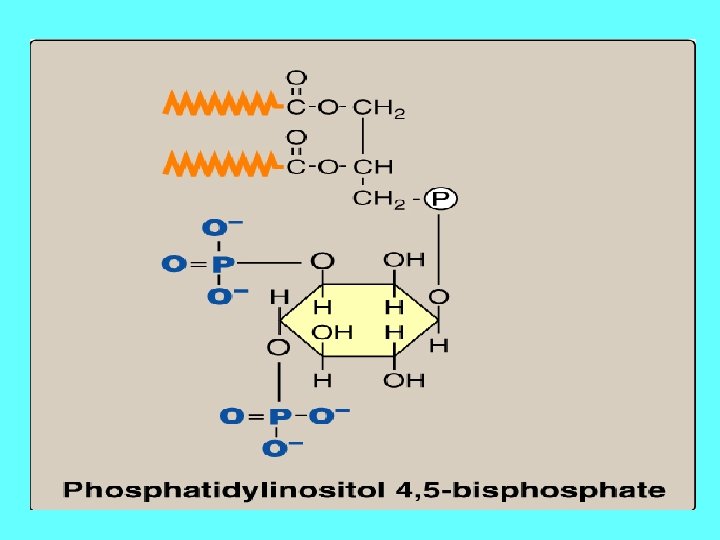
Phospholipids A. Glycerophospholipids Glycerol-containing phospholipids 1. Phosphatidylcholine (Lecithin) e. g. , Surfactant (Dipalmitoylecithin) 2. Cardiolipin (antigenic) 3. Phosphatidyl inositol (signaling molecule) B. Sphingo-phospholipids: Sphingosine-containing phospholipids: e. g. , sphingomyelin (Myelin sheath)
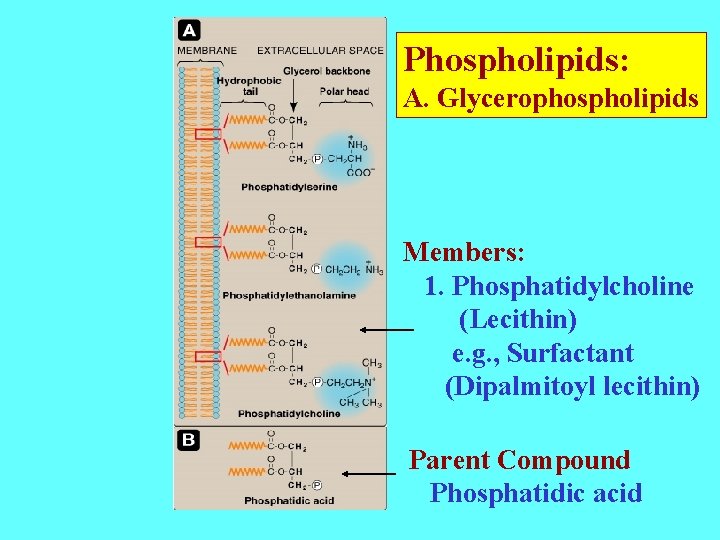
Phospholipids: A. Glycerophospholipids Members: 1. Phosphatidylcholine (Lecithin) e. g. , Surfactant (Dipalmitoyl lecithin) Parent Compound Phosphatidic acid
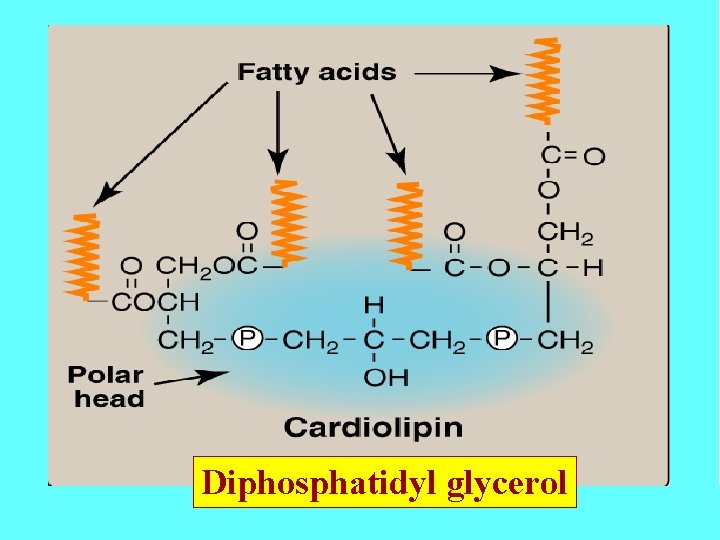
Diphosphatidyl glycerol
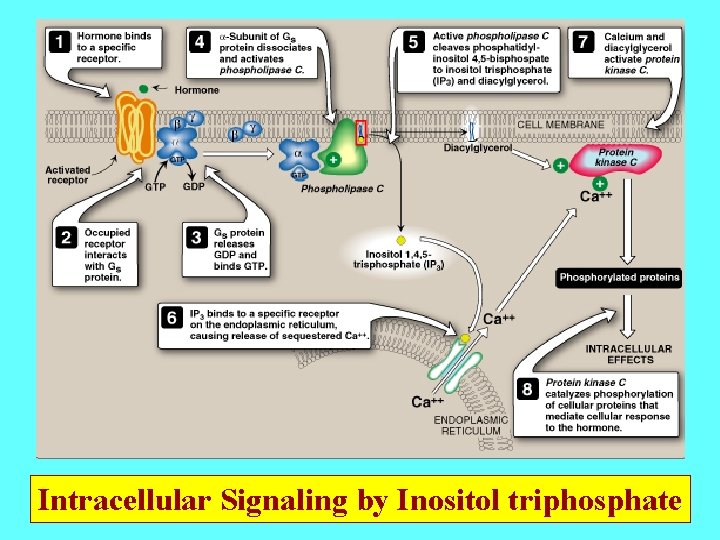
Intracellular Signaling by Inositol triphosphate
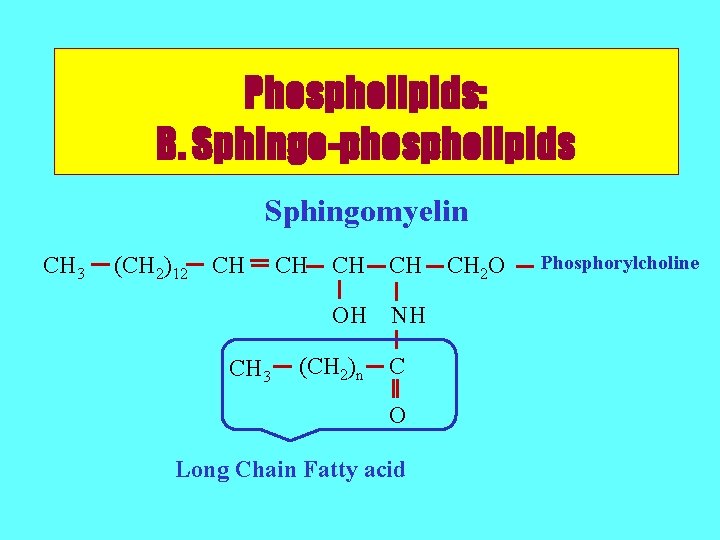
Phospholipids: B. Sphingo-phospholipids Sphingomyelin CH 3 (CH 2)12 CH CH 3 CH CH CH OH NH (CH 2)n C O Long Chain Fatty acid CH 2 O Phosphorylcholine
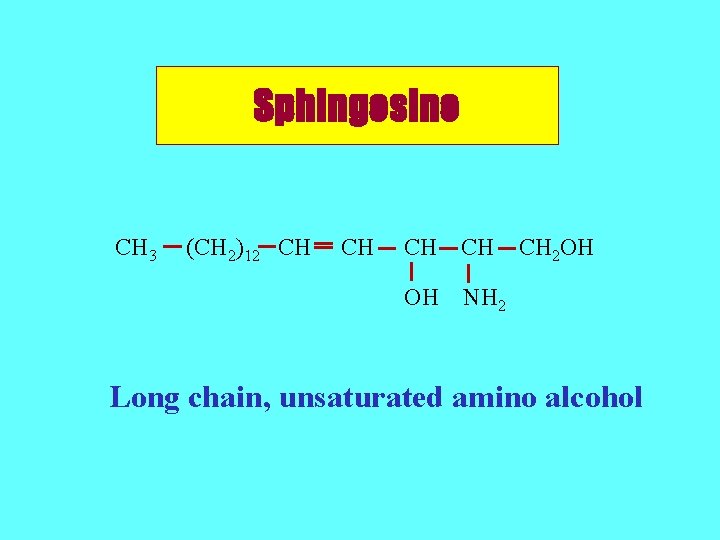
Sphingosine CH 3 (CH 2)12 CH CH OH NH 2 CH 2 OH Long chain, unsaturated amino alcohol
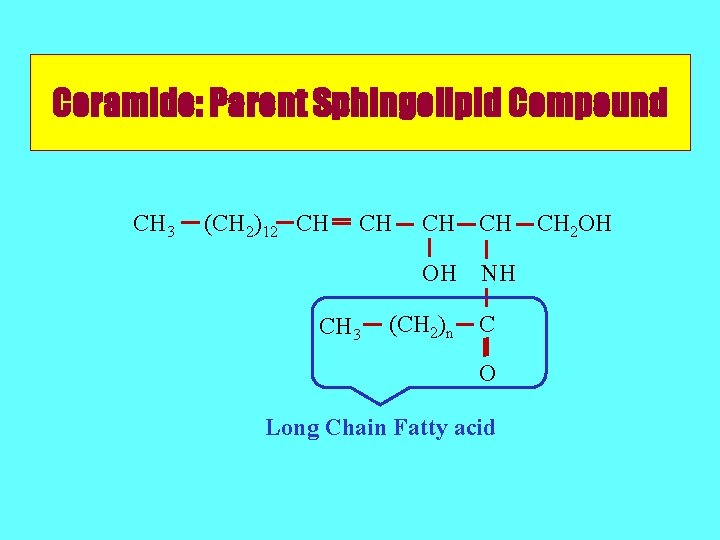
Ceramide: Parent Sphingolipid Compound CH 3 (CH 2)12 CH CH CH 3 CH CH OH NH (CH 2)n C O Long Chain Fatty acid CH 2 OH
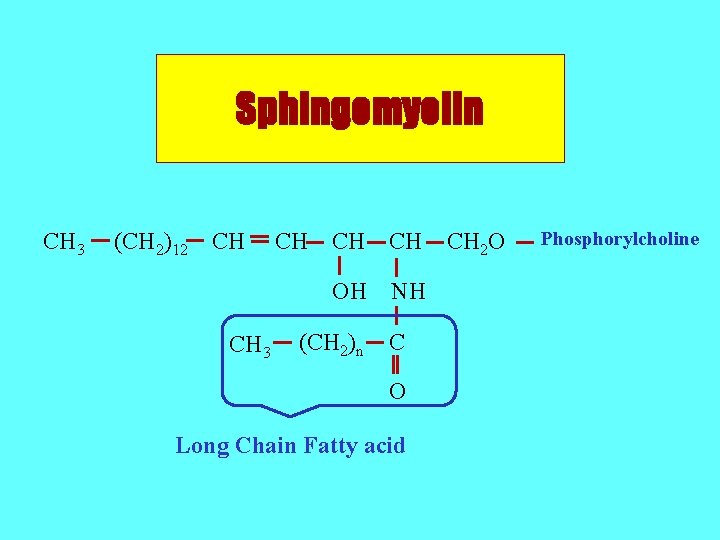
Sphingomyelin CH 3 (CH 2)12 CH CH 3 CH CH CH OH NH (CH 2)n C O Long Chain Fatty acid CH 2 O Phosphorylcholine
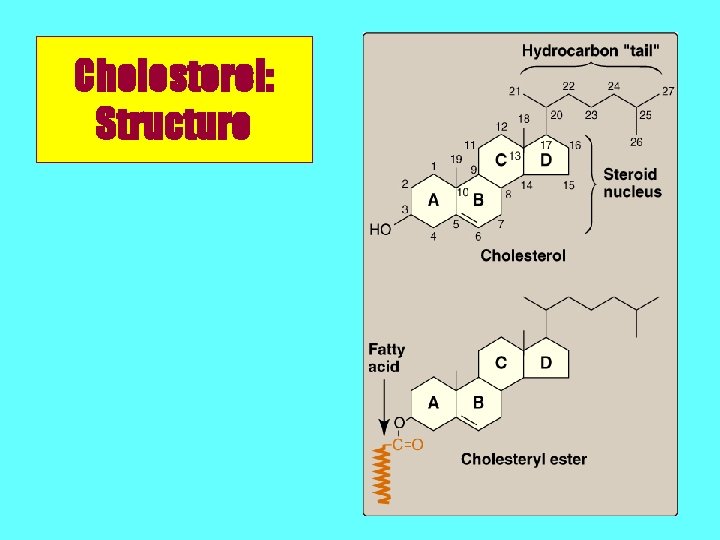
Cholesterol: Structure
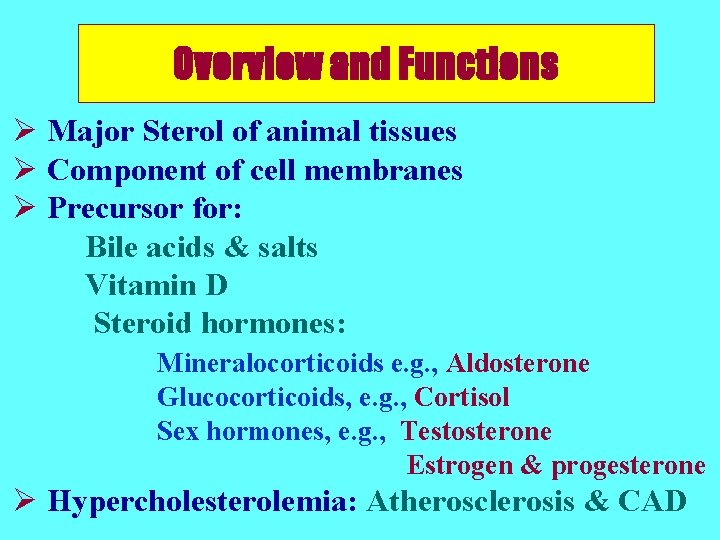
Overview and Functions Ø Major Sterol of animal tissues Ø Component of cell membranes Ø Precursor for: Bile acids & salts Vitamin D Steroid hormones: Mineralocorticoids e. g. , Aldosterone Glucocorticoids, e. g. , Cortisol Sex hormones, e. g. , Testosterone Estrogen & progesterone Ø Hypercholesterolemia: Atherosclerosis & CAD
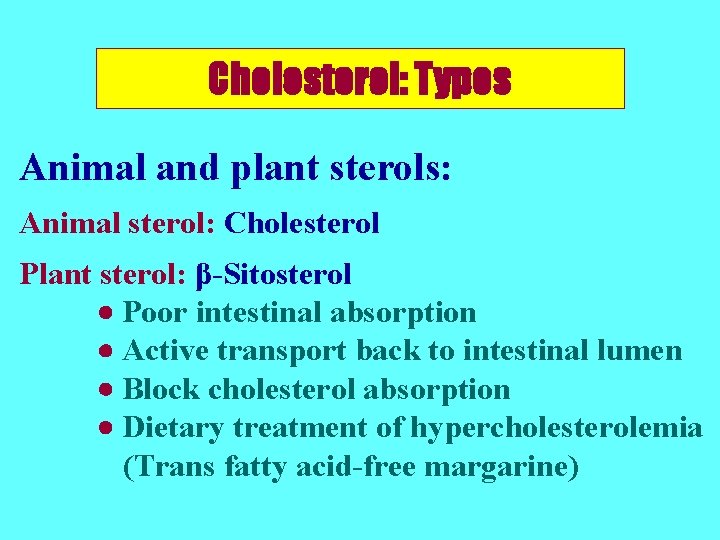
Cholesterol: Types Animal and plant sterols: Animal sterol: Cholesterol Plant sterol: β-Sitosterol Poor intestinal absorption Active transport back to intestinal lumen Block cholesterol absorption Dietary treatment of hypercholesterolemia (Trans fatty acid-free margarine)
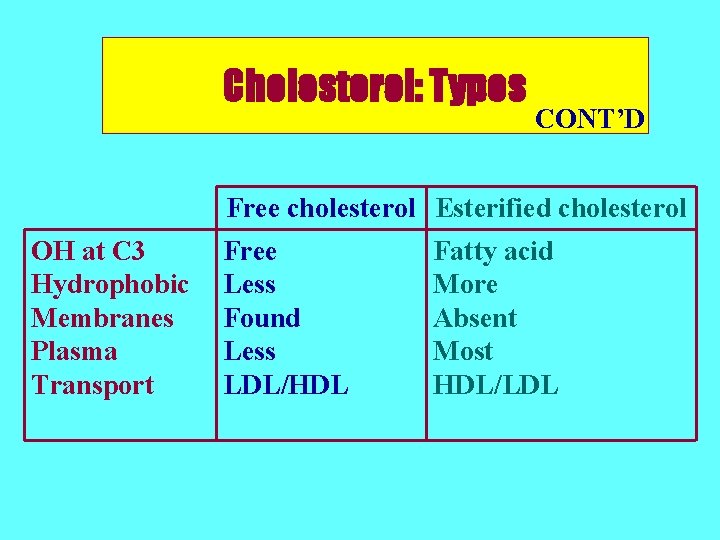
Cholesterol: Types CONT’D Free cholesterol Esterified cholesterol OH at C 3 Hydrophobic Membranes Plasma Transport Free Less Found Less LDL/HDL Fatty acid More Absent Most HDL/LDL
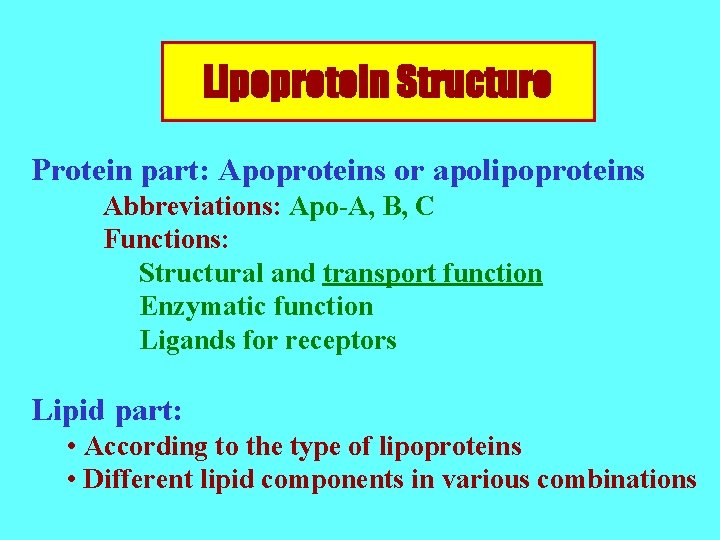
Lipoprotein Structure Protein part: Apoproteins or apolipoproteins Abbreviations: Apo-A, B, C Functions: Structural and transport function Enzymatic function Ligands for receptors Lipid part: • According to the type of lipoproteins • Different lipid components in various combinations
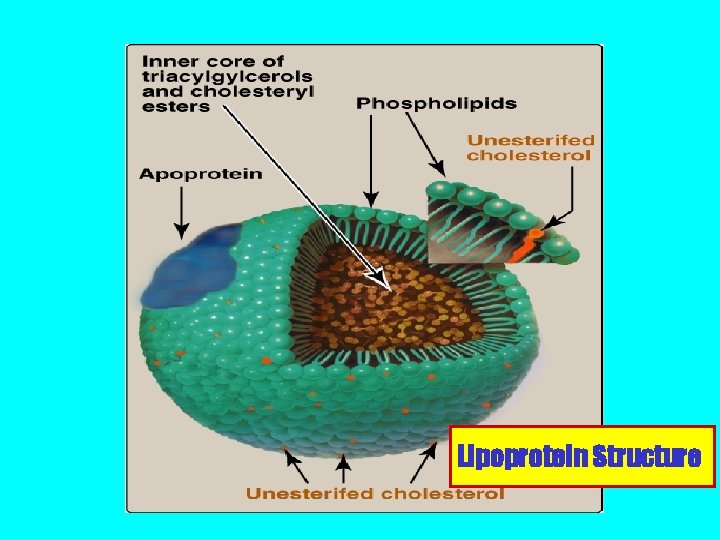
Lipoprotein Structure
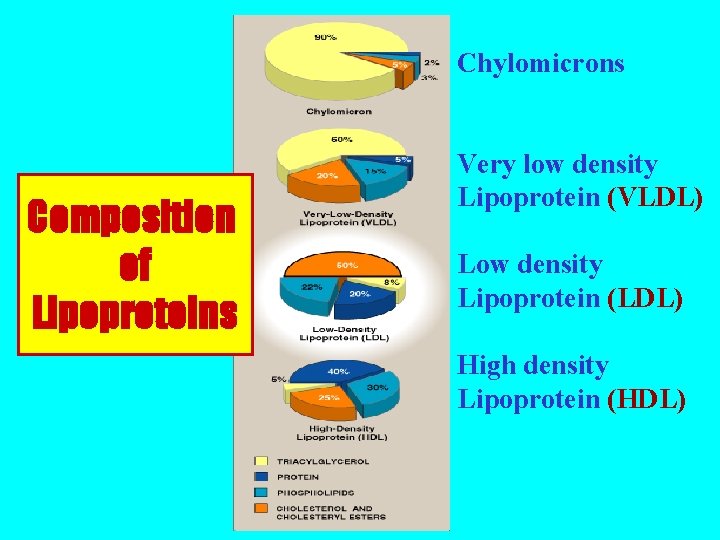
Chylomicrons Composition of Lipoproteins Very low density Lipoprotein (VLDL) Low density Lipoprotein (LDL) High density Lipoprotein (HDL)
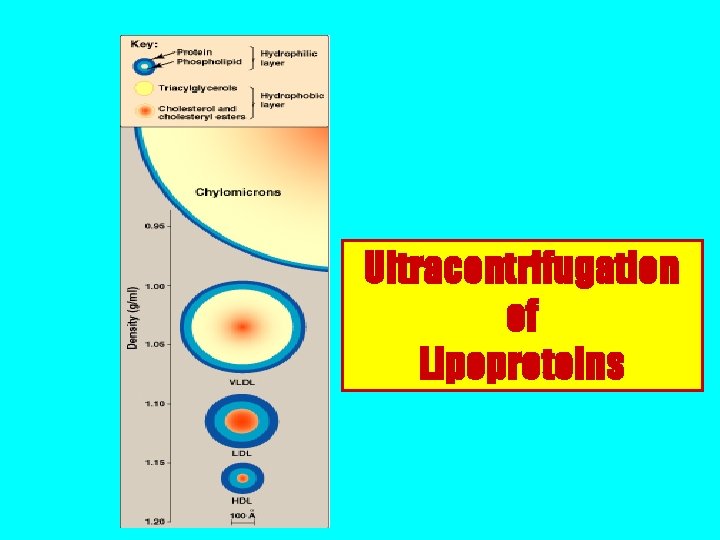
Ultracentrifugation of Lipoproteins
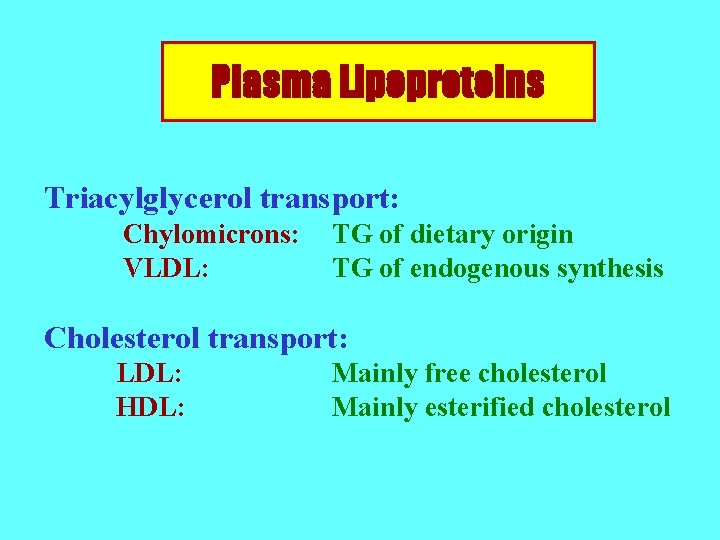
Plasma Lipoproteins Triacylglycerol transport: Chylomicrons: VLDL: TG of dietary origin TG of endogenous synthesis Cholesterol transport: LDL: HDL: Mainly free cholesterol Mainly esterified cholesterol
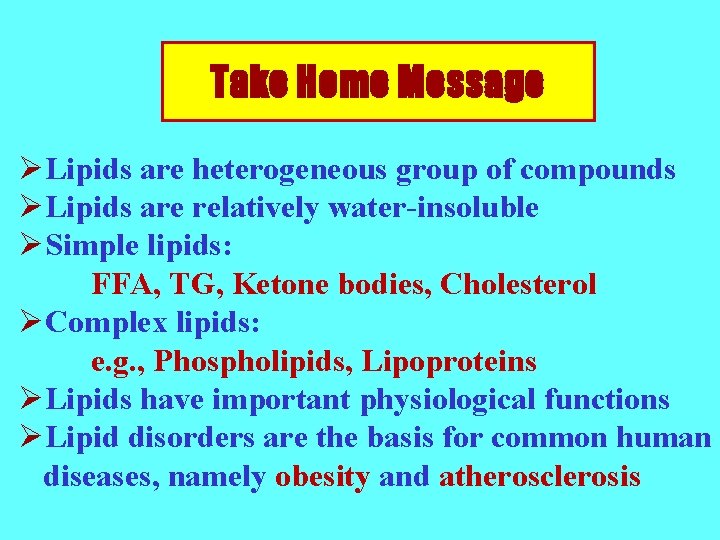
Take Home Message ØLipids are heterogeneous group of compounds ØLipids are relatively water-insoluble ØSimple lipids: FFA, TG, Ketone bodies, Cholesterol ØComplex lipids: e. g. , Phospholipids, Lipoproteins ØLipids have important physiological functions ØLipid disorders are the basis for common human diseases, namely obesity and atherosclerosis
- Slides: 34