
Linking Sustainable Drainage Systems Su DS and ecosystem
Linking Sustainable Drainage Systems (Su. DS) and ecosystem services: new connections in urban ecology Chunglim Mak 1, Philip James 1, and Miklas Scholz 2 1 Ecosystems & Environment Research Centre, School of Environment & Life Sciences, Peel Building 2 Civil Engineering Research Group, School of Computing, Science and Engineering, Newton Building
Content • Introduction – Urban Diffuse Pollution • Current Situation • The Idea • Explanations and demonstration – River Irwell Catchment • Further Research
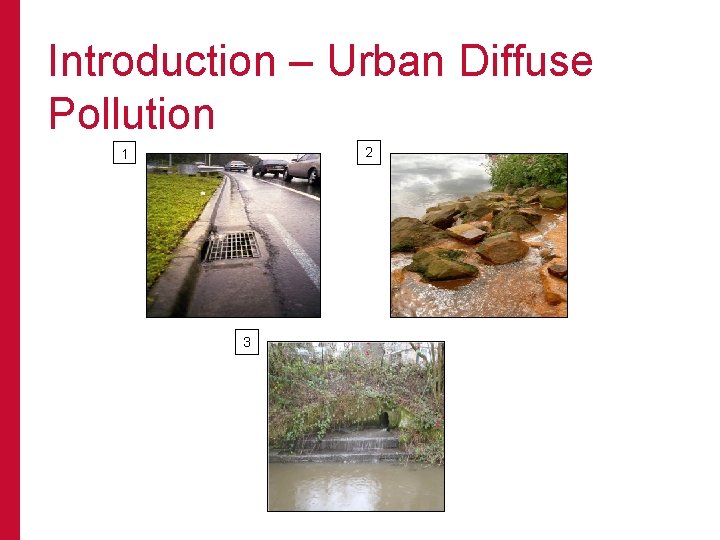
Introduction – Urban Diffuse Pollution 2 1 3
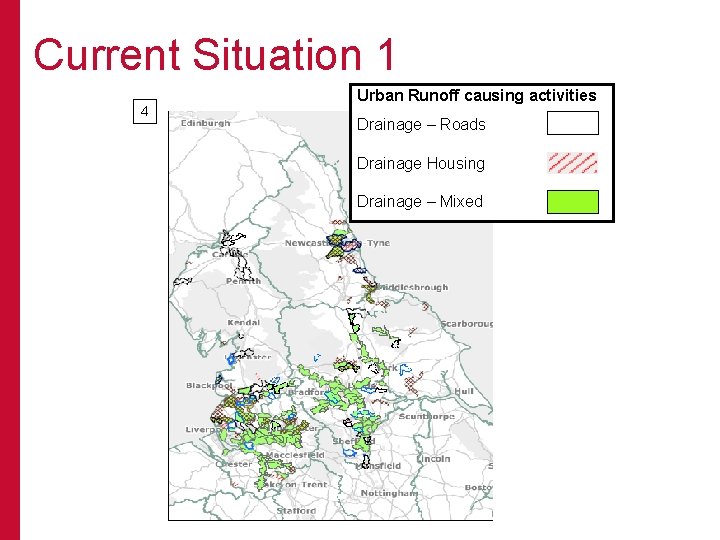
Current Situation 1 4 Urban Runoff causing activities Drainage – Roads Drainage Housing Drainage – Mixed
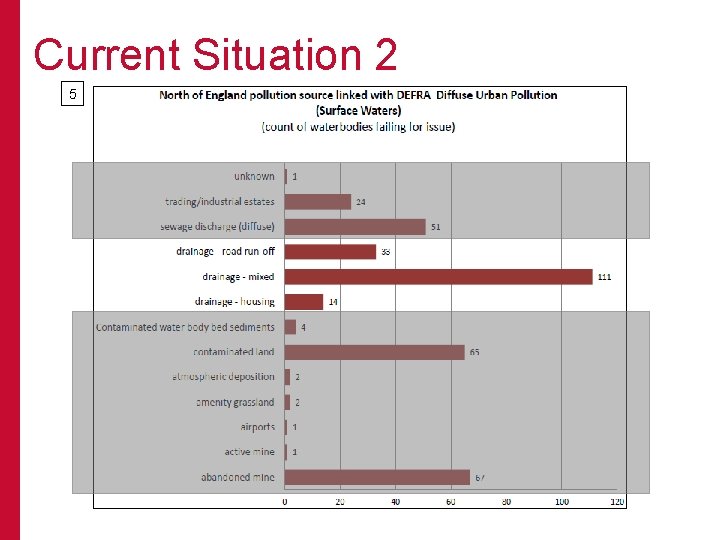
Current Situation 2 5
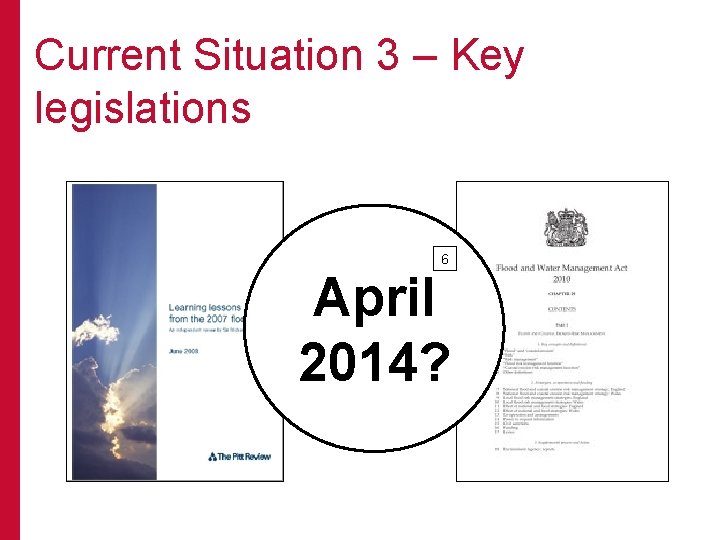
Current Situation 3 – Key legislations 6 April 2014?
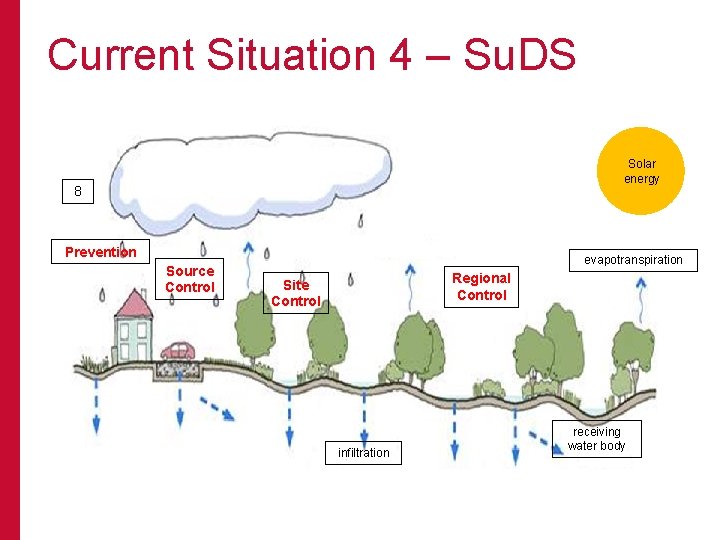
Current Situation 4 – Su. DS Solar energy 7 8 Prevention Source Control evapotranspiration Regional Control Site Control infiltration receiving water body
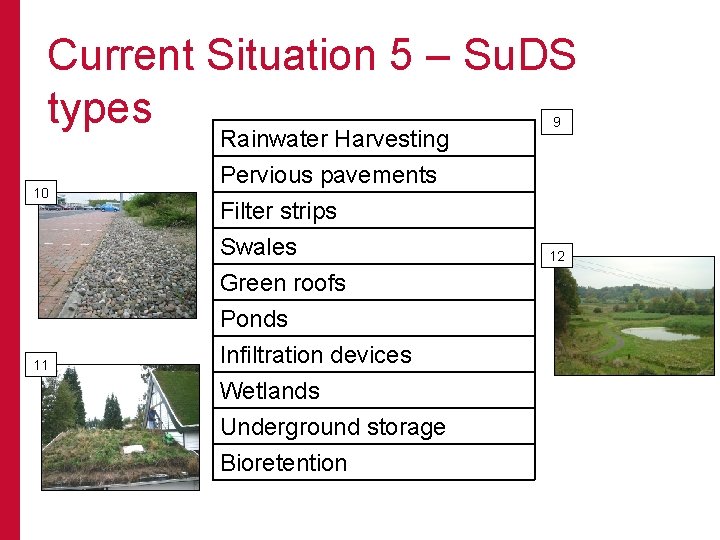
Current Situation 5 – Su. DS types 10 11 Rainwater Harvesting Pervious pavements Filter strips Swales Green roofs Ponds Infiltration devices Wetlands Underground storage Bioretention 9 12
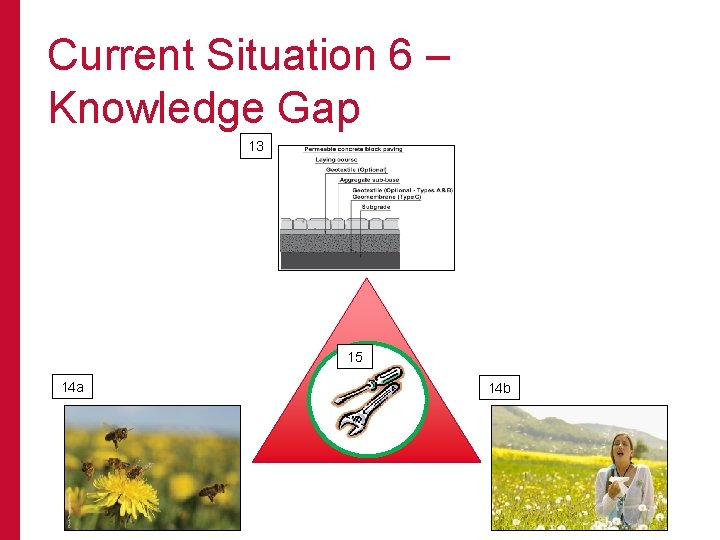
Current Situation 6 – Knowledge Gap 13 15 14 a 14 b
The Idea • Su. DS Planning Tool using the ecosystem services and disservices approach.
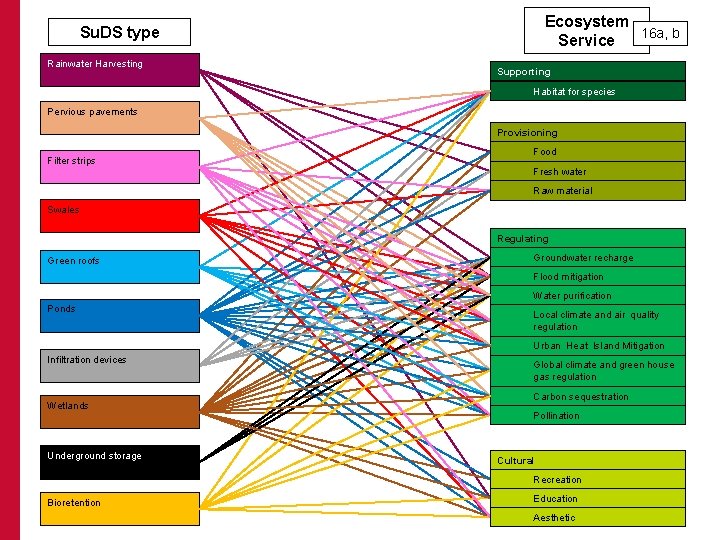
Ecosystem 16 a, b Service Su. DS type Rainwater Harvesting Supporting Habitat for species Pervious pavements Provisioning Filter strips Food Fresh water Raw material Swales Regulating Green roofs Groundwater recharge Flood mitigation Water purification Ponds Local climate and air quality regulation Urban Heat Island Mitigation Infiltration devices Wetlands Underground storage Global climate and green house gas regulation Carbon sequestration Pollination Cultural Recreation Bioretention Education Aesthetic
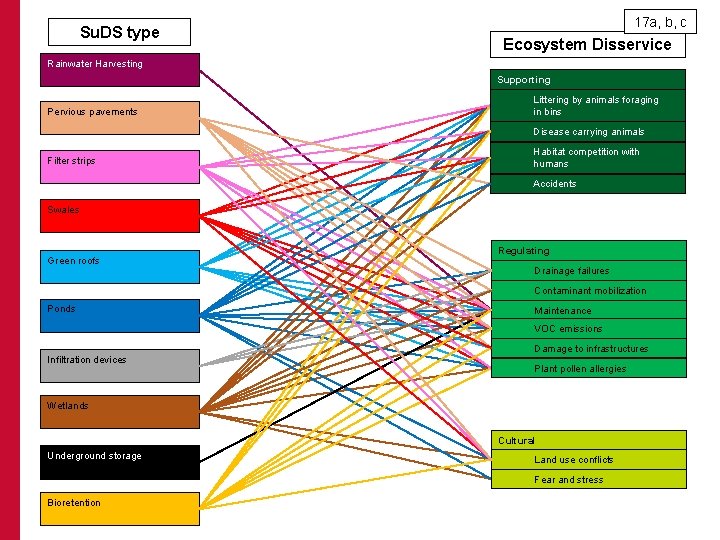
Su. DS type 17 a, b, c Ecosystem Disservice Rainwater Harvesting Supporting Pervious pavements Littering by animals foraging in bins Disease carrying animals Filter strips Habitat competition with humans Accidents Swales Green roofs Regulating Drainage failures Contaminant mobilization Ponds Maintenance VOC emissions Damage to infrastructures Infiltration devices Plant pollen allergies Wetlands Cultural Underground storage Land use conflicts Fear and stress Bioretention
Explanation 1 - usage • Web based user interface, with clickable links containing specific, detailed information to aid the following tasks: o Deciding on where to locate a new Su. DS development. o Analysing an existing Su. DS system. o Designing a new Su. DS system. o Compiling public policy documents.
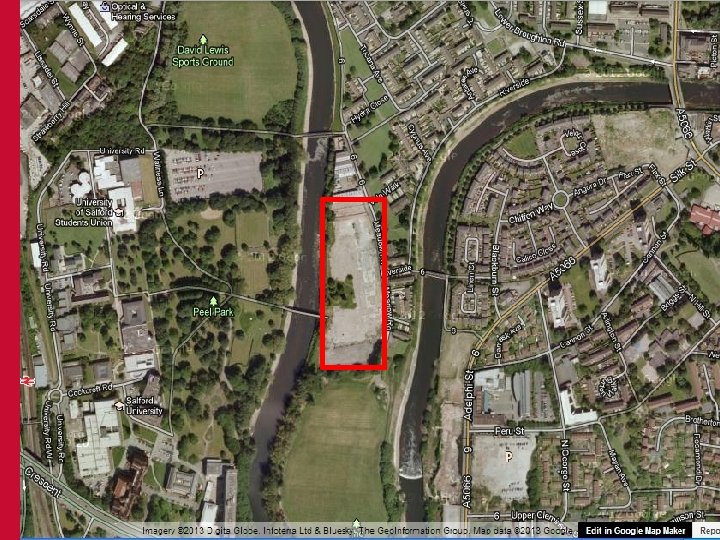
Demonstration – River Irwell Catchment • River Irwell Catchment Pilot – Rivers Return
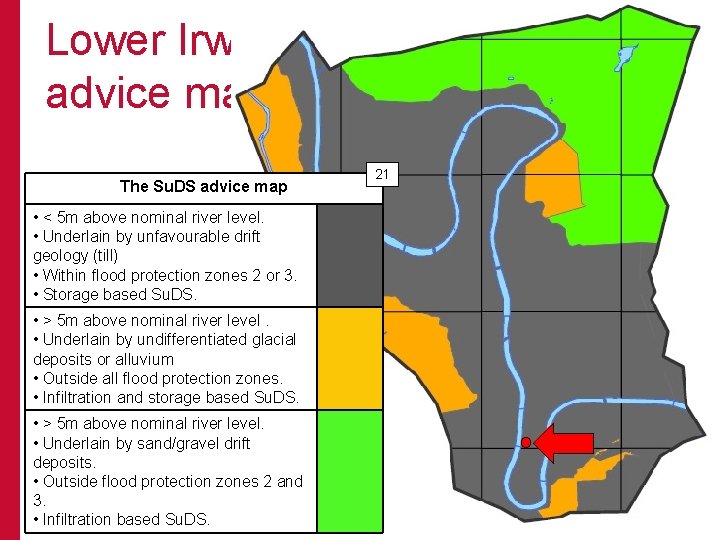
Lower Irwell Valley – Su. DS advice map The Su. DS advice map • < 5 m above nominal river level. • Underlain by unfavourable drift geology (till) • Within flood protection zones 2 or 3. • Storage based Su. DS. • > 5 m above nominal river level. • Underlain by undifferentiated glacial deposits or alluvium • Outside all flood protection zones. • Infiltration and storage based Su. DS. • > 5 m above nominal river level. • Underlain by sand/gravel drift deposits. • Outside flood protection zones 2 and 3. • Infiltration based Su. DS. 21
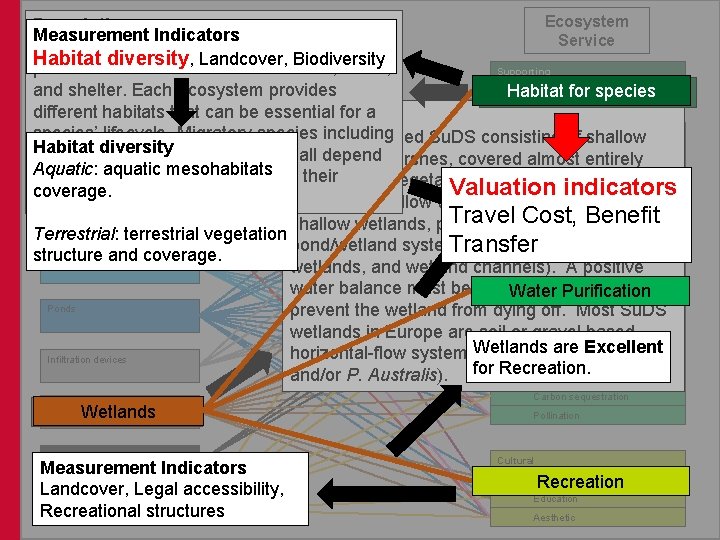
Ecosystem Description Su. DS type Measurement Indicators Service Habitats provide everything that an individual Habitat diversity, Landcover, Biodiversity Rainwater Harvesting plant or animal needs to survive: food, water, Supporting Habitat for species and shelter. Each ecosystem provides Habitat for species Pervious pavements different habitats that can be essential for a Definition Provisioning species’ lifecycle. Migratory species including A Storage based Su. DS consisting of shallow Habitat diversity Food birds, fish, mammals and insectsponds all depend Filter strips and marshes, covered almost entirely Fresh water Aquatic: aquatic mesohabitats upon different ecosystems duringwith their aquatic vegetation. Six types of Su. DS Wetlands Excellent Raw are material Valuation indicators coverage. movements. wetlands (shallow wetlands, extended detention for Habitat for Species Swales Travel Cost, Benefit shallow wetlands, pocket wetlands, and Water Purification. Terrestrial: terrestrial vegetation Regulating pond/wetland systems, submerged gravel Transfer Groundwater recharge structure Green roofs and coverage. wetlands, and wetland channels). A positive Flood mitigation water balance must be maintained in order to Water Purification purification Ponds prevent the wetland from dying. Local off. climate Most Su. DS and air quality regulation wetlands in Europe are soil or gravel based Urban Heat. Excellent Island Mitigation are horizontal-flow systems. Wetlands planted. Global with T. Latifolia Infiltration devices climate and green house gas regulation and/or P. Australis). for Recreation. Wetlands Underground storage Measurement Indicators Landcover, Legal accessibility, Bioretention Recreational structures Carbon sequestration Pollination Cultural Recreation Education Aesthetic
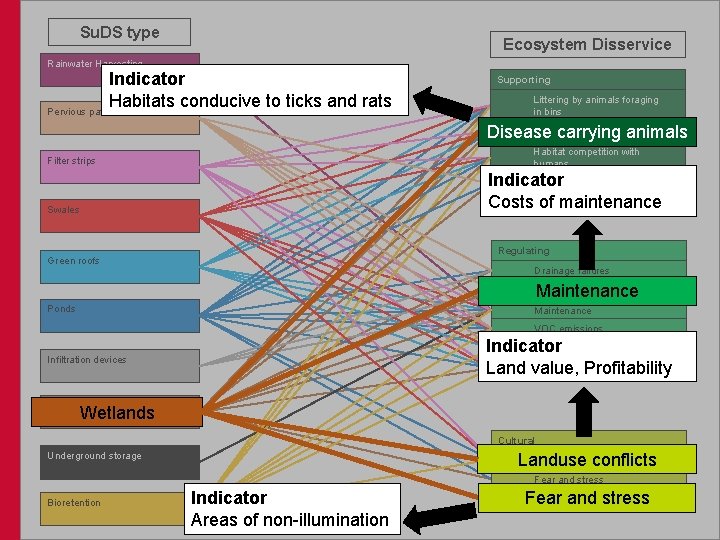
Su. DS type Ecosystem Disservice Rainwater Harvesting Indicator Habitats conducive to ticks and rats Pervious pavements Supporting Littering by animals foraging in bins Disease carrying animals Habitat competition with humans Filter strips Indicator Accidents Costs of maintenance Swales Regulating Green roofs Drainage failures Maintenance Contaminant mobilization Ponds Maintenance VOC emissions Damage to infrastructures Indicator Plant pollen. Profitability allergies Land value, Infiltration devices Wetlands Cultural Land use conflicts Landuse conflicts Underground storage Fear and stress Bioretention Indicator Areas of non-illumination Fear and stress
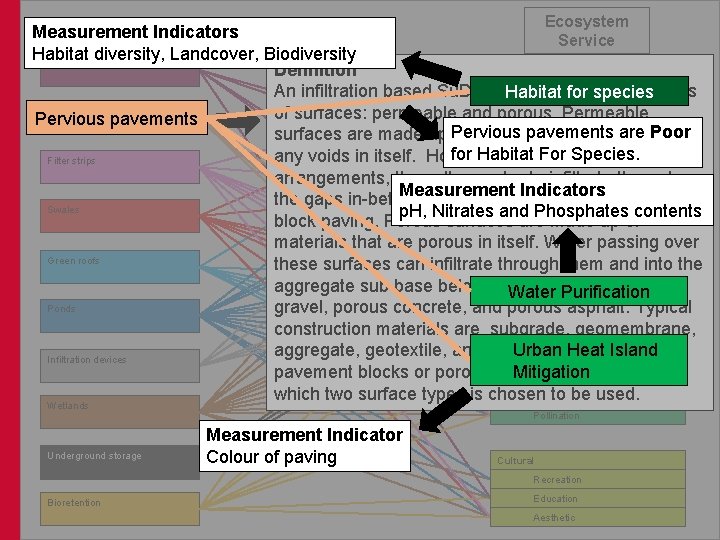
Ecosystem Su. DS type. Indicators Measurement Service Habitat diversity, Landcover, Biodiversity Rainwater Harvesting Supporting Definition Habitat for species An infiltration based Su. DS categorized into two types Habitat species Pervious pavements of surfaces: permeable and porous. Permeable Pervious pavements Provisioning pavements arecontain Poor surfaces are made up Pervious of materials that do not Food for Habitat For Species. any voids in itself. However, through surfacing Filter strips Fresh water arrangements, they allow water to infiltrate through Raw material Measurement Indicators the gaps in-between. An example would be concrete Swales p. H, Nitrates and Phosphates contents block paving. Porous surfaces are made up of Regulating materials that are porous in itself. Water passing over Groundwater recharge Green roofs these surfaces can infiltrate through them and into the Flood mitigation aggregate sub base below. Examples are grass, Water Purification purification Ponds gravel, porous concrete, and porous asphalt. Typical Local climate and air quality regulationgeomembrane, construction materials are subgrade, Urban Heat Island Mitigation Urban Heat Island aggregate, geotextile, and either impermeable Infiltration devices Global climate and green house Mitigation pavement blocks or porous surfaces, depending on gas regulation which two surface types is chosen to sequestration be used. Carbon Wetlands Underground storage Pollination Measurement Indicator Colour of paving Cultural Recreation Bioretention Education Aesthetic
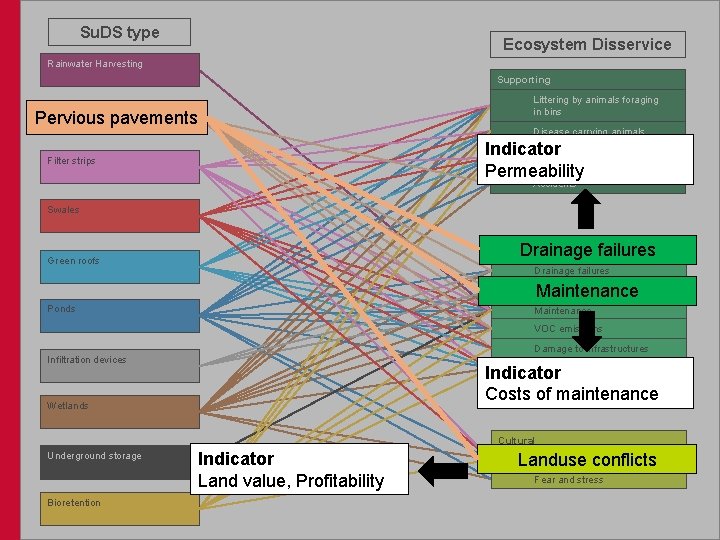
Su. DS type Ecosystem Disservice Rainwater Harvesting Supporting Pervious pavements Littering by animals foraging in bins Disease carrying animals Indicator Habitat competition with humans Permeability Filter strips Accidents Swales Drainage failures Regulating Green roofs Drainage failures Maintenance Contaminant mobilization Ponds Maintenance VOC emissions Damage to infrastructures Infiltration devices Plant pollen allergies Indicator Costs of maintenance Wetlands Cultural Underground storage Bioretention Indicator Land value, Profitability Land use conflicts Landuse conflicts Fear and stress
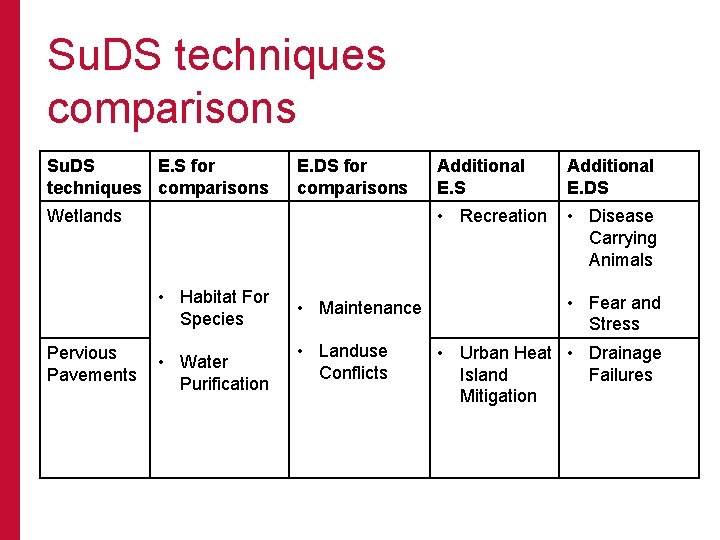
Su. DS techniques comparisons Su. DS E. S for techniques comparisons E. DS for comparisons Wetlands • Habitat For Species Pervious Pavements • Water Purification • Maintenance • Landuse Conflicts Additional E. S Additional E. DS • Recreation • Disease Carrying Animals • Fear and Stress • Urban Heat • Drainage Island Failures Mitigation
Further Development • Su. DS type, ecosystem service and disservices linkages validation. • Research on the strength class definitions. • Ecosystem services and disservices valuation indicators and methods. • Web site development. • Su. DS sites to trial planning tool.

Chunglim Mak c. mak@edu. salford. ac. uk
Reference 1 1, 2, and 3. JAMES, P. , ATKINSON, S. , BARLOW, D. , BATES, A. , COMYN, F. , DUDDY, M. , DUTTON, D. , FRASER, J. , HORSFALL, W. , HOTHERSALL, A. , LOWRY, K. , MOORE, A. , ROTHWELL, J. , SCHOFIELD, M. , SMITH, A. , SURTEES, A. , TAYLOR, D. , TOLLITT, B. , TOWERS, C. , TZOULAS, K. , WHITAKER, G. & CAUSER, K. 2012. The Irwell Catchment Pilot: The Rivers Return. In: THE ENVIRONMENT AGENCY (ed. ). Warrington. James, P. , et al. (2012). The Irwell Catchment Pilot: The Rivers Return. The Environment Agency. Warrington. 4. ENVIRONMENT AGENCY 2013. Urban Diffuse Pollution Challenge - Evidence Pack. In: APPENDIX 2 - URBAN DIFFUSE POLLUTION SOURCES 2 (ed. ). 5. ENVIRONMENT AGENCY 2013. Urban Diffuse Pollution Challenge - Evidence Pack. In: NORTH OF ENGLAND POLLUTION SOURCE LINKED WITH DEFRA DIFFUSE URBAN POLLUTION (SURFACE WATERS) - COUNT OF WATERBODIES FAILING FOR ISSUE (ed. ). 6. ANNE MCINTOSH MP 2012. Flooding. In: DEFRA (ed. ). 7, 9, 13, 18. B. WOODS-BALLARD, R. KELLAGHER, P. MARTIN, C. JEFFERIES, R. BRAY & P. SHAFFER 2007. C 697 The SUDS Manual. C 697. London: CIRIA. 8. CIRIA 2012. Su. DS management train. In: SUDS MANAGEMENT TRAIN (ed. ).
Reference 2 10. SUDSNET 2008. Permeable paving. In: PERMEABLE PAVING AND FILTER DRAIN AT SUPERMARKET (ed. ). 11. WAGNER, T. 2012. Troy's Green Roof. In: TROYS_GREENROOF 10 (ed. ). 12. FORBES, G. , FOY, B. & MULHOLLAND, M. 2010. The role of Constructed Wetlands in treating farmyard dirty water. In: THE CONSTRUCTED WETLAND AT GREENMOUNT CAMPUS, C. (ed. ). The Department of Agriculture and Rural Development - Northern Ireland. 14 a. GOLDMAN, R. L. 2010. Ecosystem Services: How People Benefit from Nature. In: ECOSYSTEM SERVICES: HOW PEOPLE BENEFIT FROM NATURE (ed. ). Environment - Science and Policy for Sustainable Development. 14 b. SNOW, S. 2008. Green Eyes On: Bee Pollen Cures Allergies. www. treehugger. com/green-food/green-eyes-on-bee-pollen-cures-allergies. html. 15. Microsoft. 2013. 16 a. MILLENIUM ECOSYSTEM ASSESSMENT. 2005. Chapter 2: Ecosystems and their services. Ecosystems and Human Well-being: A Framework for Assessment.
Reference 3 16 b, 19. TEEB. 2010. TEEB Manual for Cities: Ecosystem Services in Urban Management. www. teebweb. org. 17 a. LYYTIMAKI, J. , PETERSEN, L. K. , NORMANDER, B. & BEZAK, P. 2008. Nature as a nuisance? Ecosystem services and disservices to urban lifestyle. Environmental Sciences, 5, 161 -172. 17 b. GOMEZ-BAGGETHUM, E. & BARTON, N. D. 2013. Classifying and valuing ecosystem services for urban planning. Ecological Economics, 86, 235 -245. 17 c. Antia, D. J. D. 2009. Formation and Control of Self-Sealing High Permeability Groundwater Mounds in Impermeable Sediment: Implications for SUDS and Sustainable Pressure Mound Management. Sustainability, 1, 855 -923. 20. KSIAZEK, K. , FANT, J. & SKOGEN, K. 2012. An assessment of pollen limitation on Chicago green roofs. Landscape and Urban Planning, 107, 401 -408. 21. DONCASTER, S. , STOVIN, V. & MORROW, B. 2008. Lower Irwell Valley, Salford Integrated Urban Drainage Pilot Project TRE 344 Final Report.
- Slides: 25