
Linked genes Recombination and Chromosome Mapping Chromosome Map
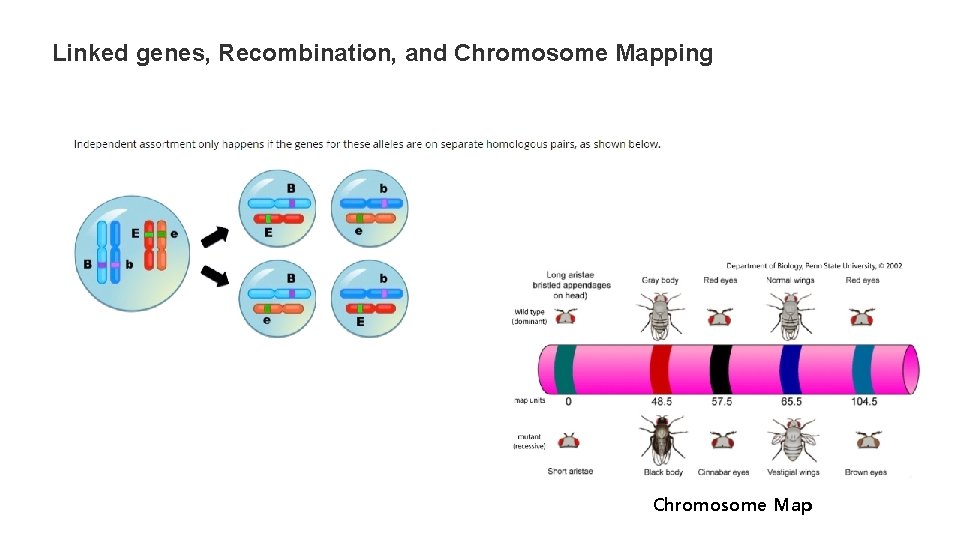
Linked genes, Recombination, and Chromosome Mapping Chromosome Map
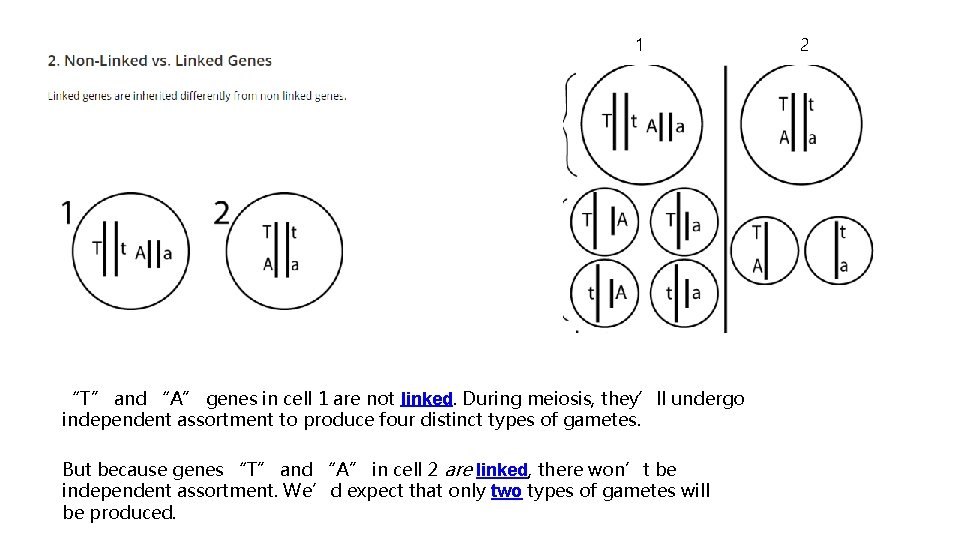
1 “T” and “A” genes in cell 1 are not linked. During meiosis, they’ll undergo independent assortment to produce four distinct types of gametes. But because genes “T” and “A” in cell 2 are linked, there won’t be independent assortment. We’d expect that only two types of gametes will be produced. 2
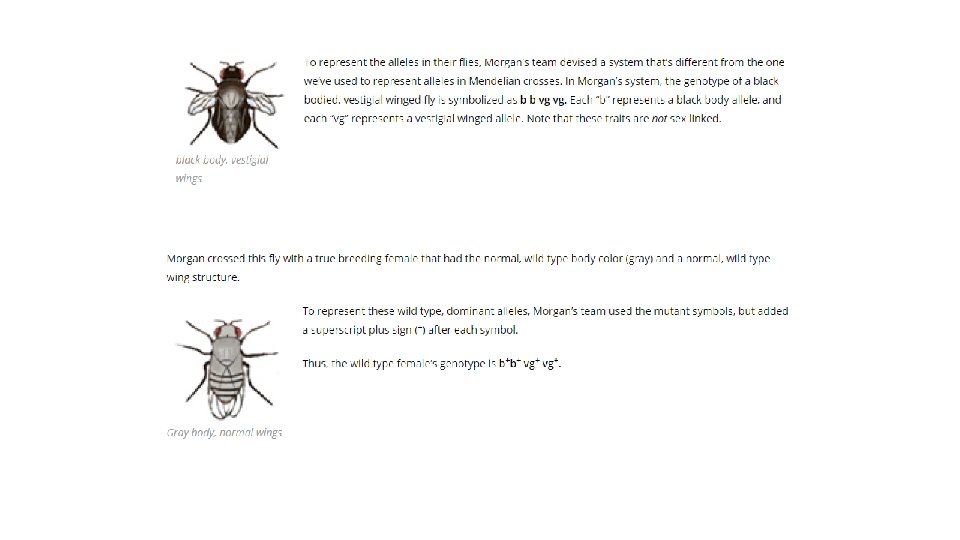
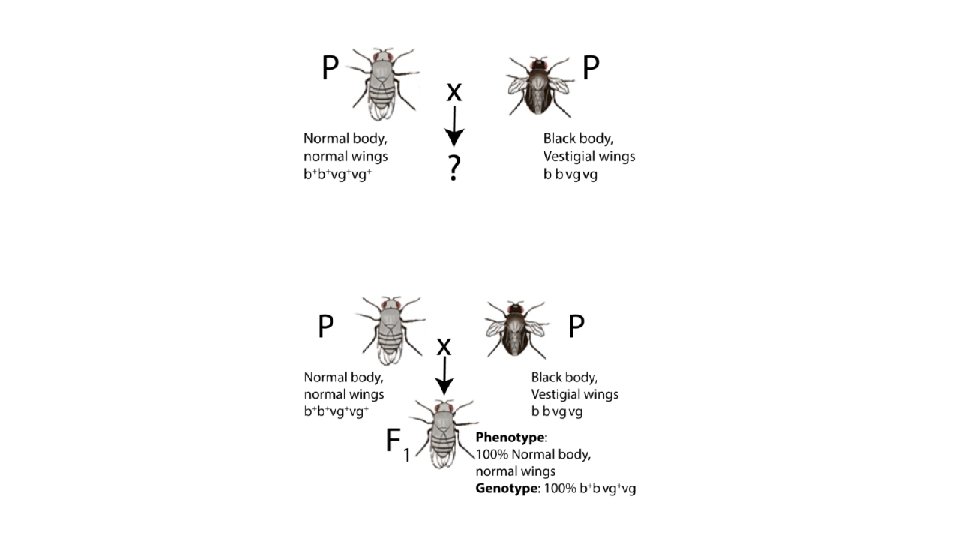
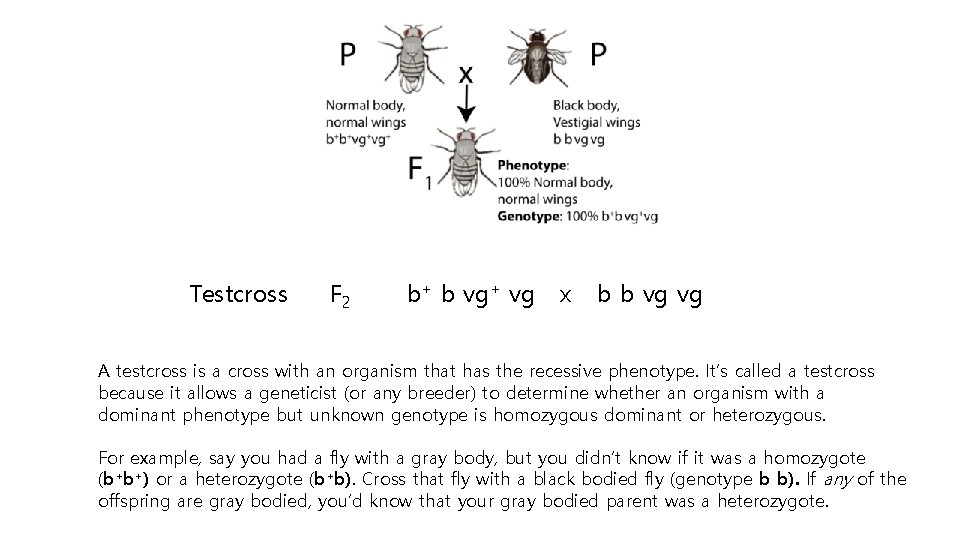
Testcross F 2 b+ b vg+ vg x b b vg vg A testcross is a cross with an organism that has the recessive phenotype. It’s called a testcross because it allows a geneticist (or any breeder) to determine whether an organism with a dominant phenotype but unknown genotype is homozygous dominant or heterozygous. For example, say you had a fly with a gray body, but you didn’t know if it was a homozygote (b+b+) or a heterozygote (b+b). Cross that fly with a black bodied fly (genotype b b). If any of the offspring are gray bodied, you’d know that your gray bodied parent was a heterozygote.
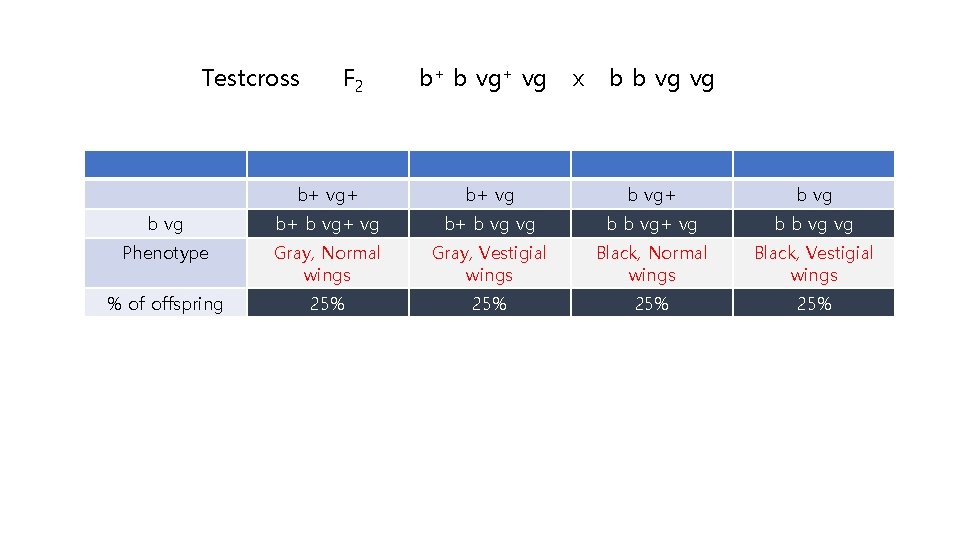
Testcross F 2 b+ b vg+ vg x b b vg vg b+ vg+ b+ vg b vg+ b vg b+ b vg+ vg b+ b vg vg b b vg+ vg b b vg vg Phenotype Gray, Normal wings Gray, Vestigial wings Black, Normal wings Black, Vestigial wings % of offspring 25% 25%
Testcross F 2 b+ b vg+ vg x b b vg vg
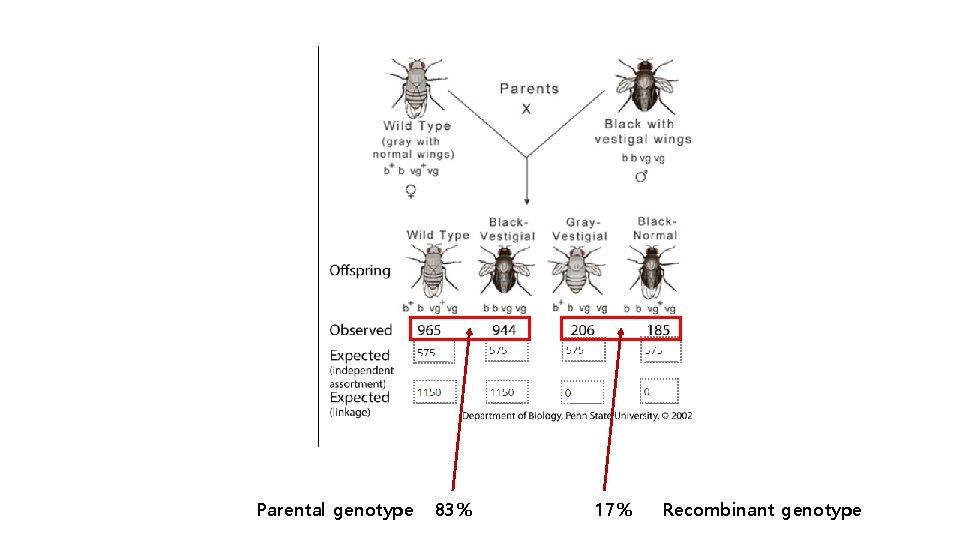
Parental genotype 83% 17% Recombinant genotype

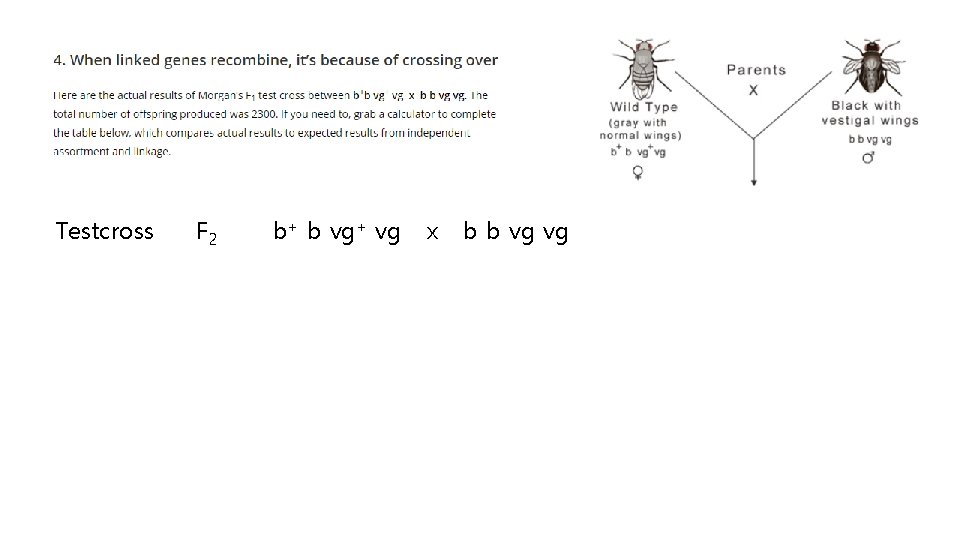
Letter “a” shows the F 1, dihybrid female. Letter “b” shows the chromosomes in her germ cells (the cells that undergo meiosis to make egg cells). Chromosome # 1 was inherited from her mother, a wild type, purebred, gray-bodied, normal-winged fly whose genotype was b+b+ vg+. Chromosome # 2 was inherited from her father, a double mutant purebred black-bodied, vestigialwinged fly whose genotype was b b vg vg. Letter “c” represents meiosis I. During prophase 1 of meiosis I, the homologous paired up (shown at “d”), and crossing over led to recombination (shown at “e”). In chromosome # 3, the upper chromatid has a recombinant genotype of b+ vg. In chromosome # 4, the lower chromatid has the recombinant genotype b vg+. Letter “f” represents meiosis II, during which sister chromatids are pulled apart. The result is four haploid eggs (represented at “g”). Two of these eggs (“h”) have recombinant genotypes (b+ vg and b vg+). The other two eggs (at “i”) have parental genotypes (b+ vg+ and b vg). (Note that Drosophila has four homologous pairs of chromosomes: we’re only focusing on the one with the alleles that we’re following). Letter “j” shows the double mutant father used in this testcross. Because his genotype was b b vg vg, the only allele combination that’s possible for the haploid sperm that he creates through meiosis (“k”) are b vg, as shown in the sperm cell at letter “l. ” Letter “m” shows the offspring. Of the 2300 offspring produced, 391 had recombinant phenotypes (phenotypes “n” and “p”). The rest of the offspring (at “o” and “q”) have parental phenotypes. You can the use frequency of recombinants to calculate a recombination frequency. Divide 391 by 2300, which gives you 0. 17, or 17%. That’s how often the body color and wing type alleles crossed over with one another during meiosis.



- Slides: 18