
Lingual Contact Occlusion as it applies to Implant




- Slides: 32
Lingual Contact Occlusion as it applies to Implant Restoration Dr. Gabie Ingraham
S H Payne and Edison Farmer Dental Digest 1941
Different Occlusal Schemes Why not use one that is uncomplicated and easy to understand teach, as long as it does not compromise the esthetic and functional requirements of the patient?
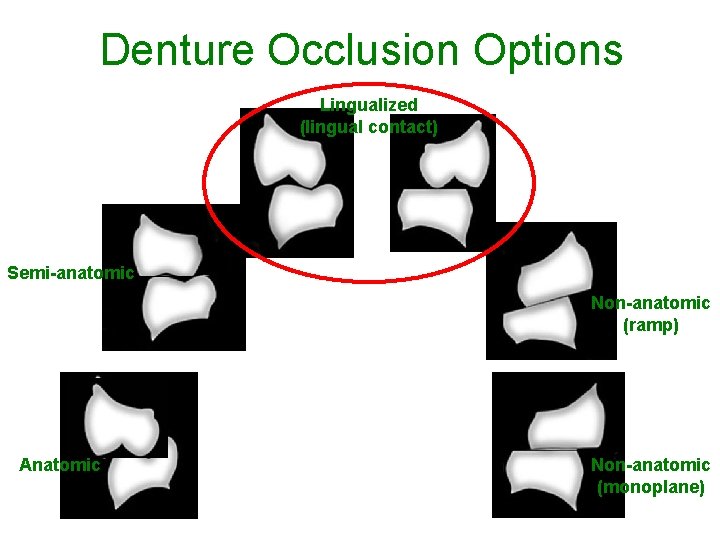
Denture Occlusion Options Lingualized (lingual contact) Semi-anatomic Non-anatomic (ramp) Anatomic Non-anatomic (monoplane) 7
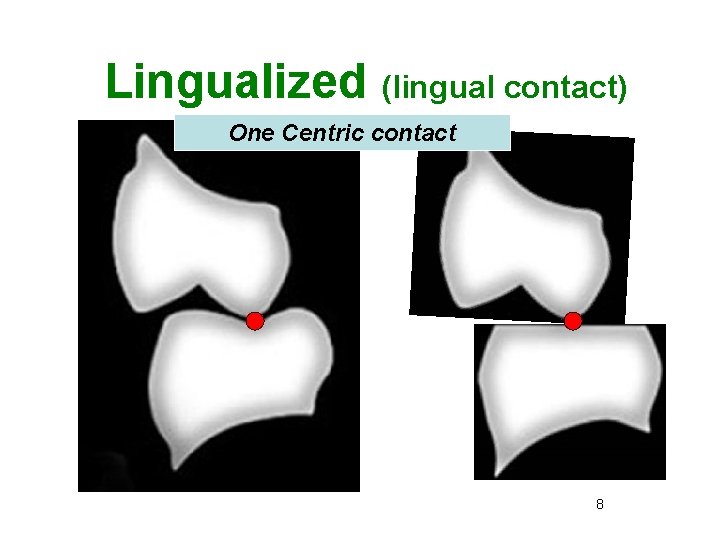
Lingualized (lingual contact) One Centric contact 8
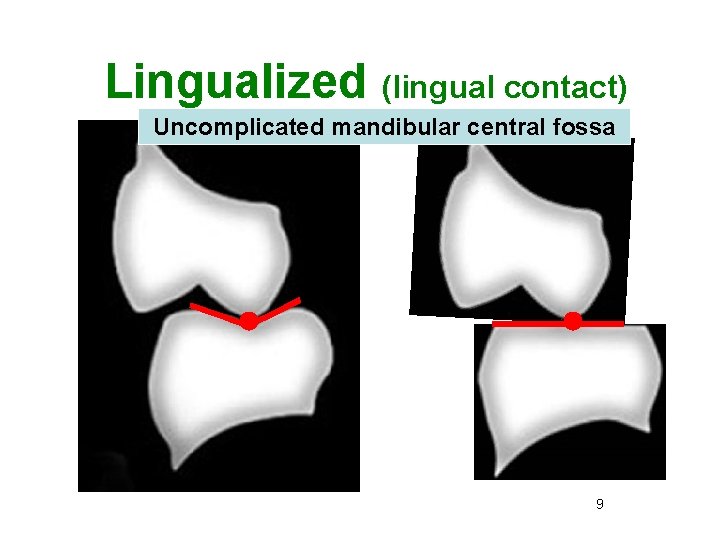
Lingualized (lingual contact) Uncomplicated mandibular central fossa 9
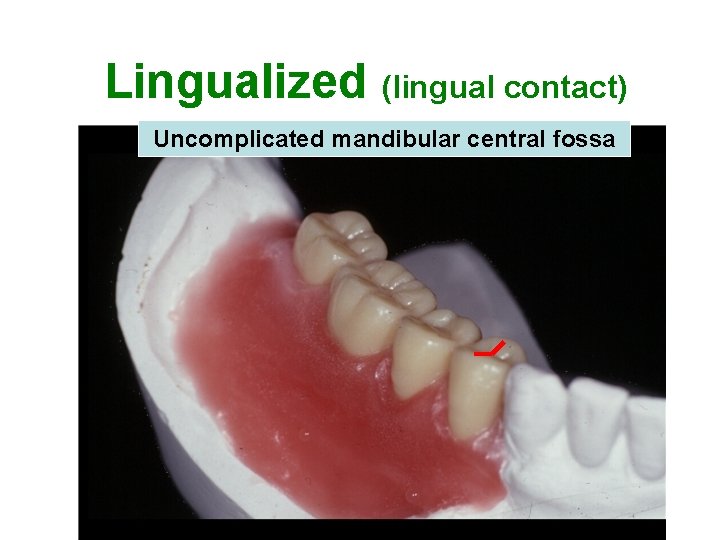
Lingualized (lingual contact) Uncomplicated mandibular central fossa 10
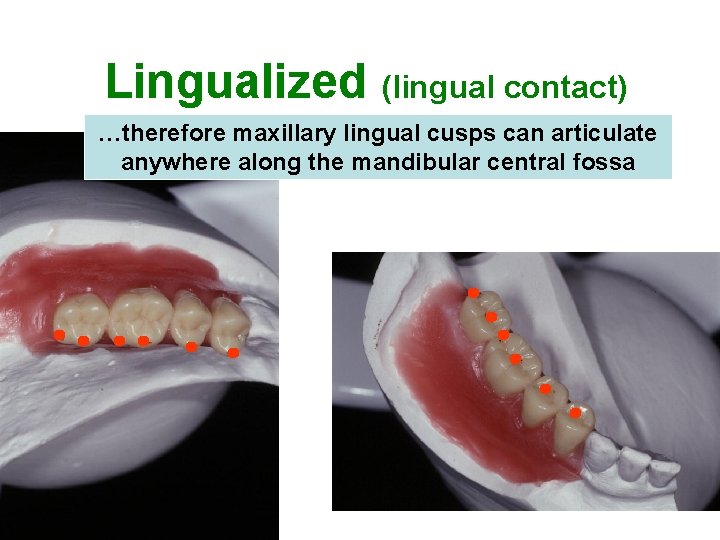
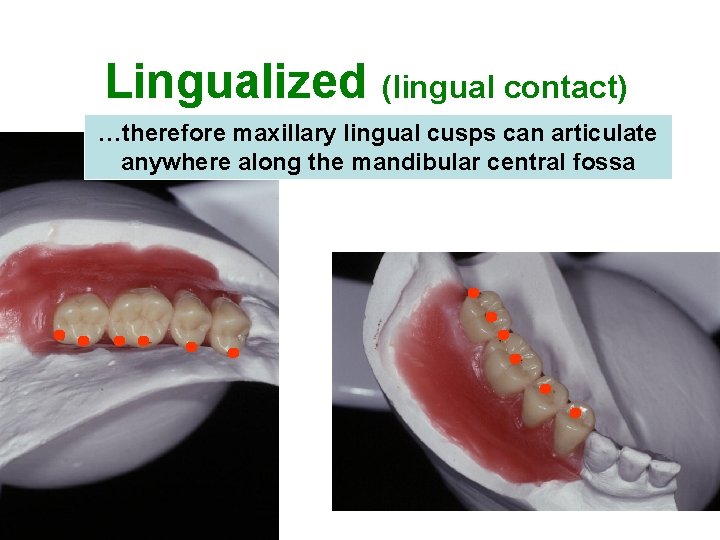
Lingualized (lingual contact) …therefore maxillary lingual cusps can articulate anywhere along the mandibular central fossa 11
Lingualized (lingual contact) …therefore maxillary lingual cusps can articulate anywhere along the mandibular central fossa 12
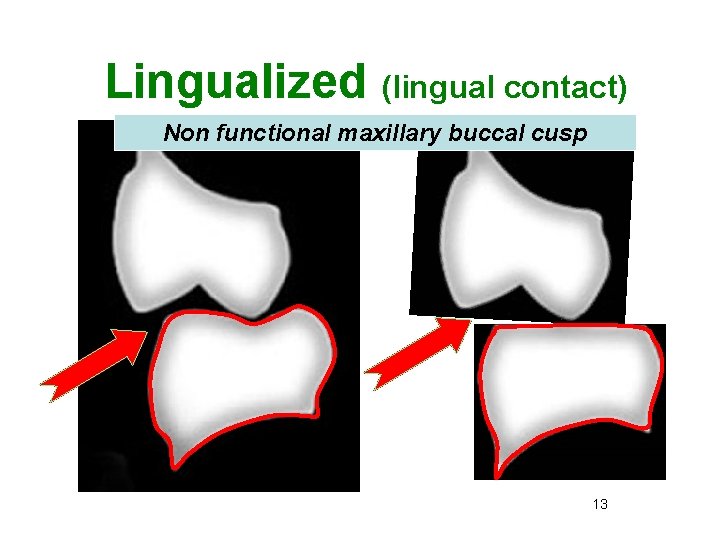
Lingualized (lingual contact) Non functional maxillary buccal cusp 13
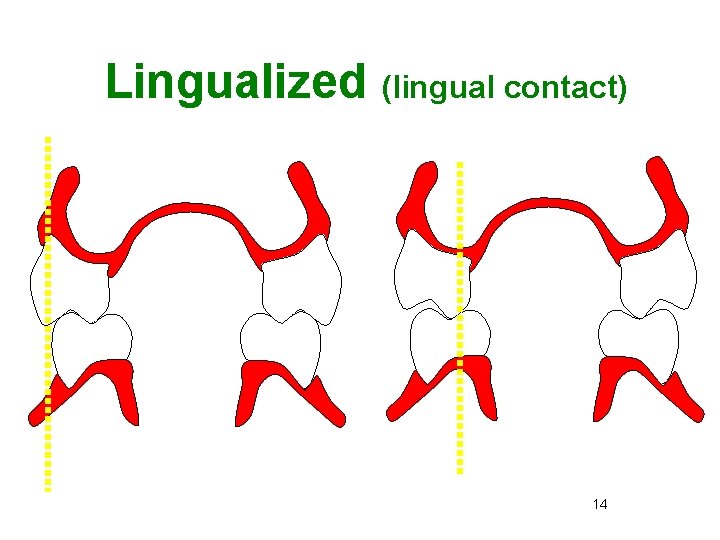
Lingualized (lingual contact) Anatomic Lingualized 14
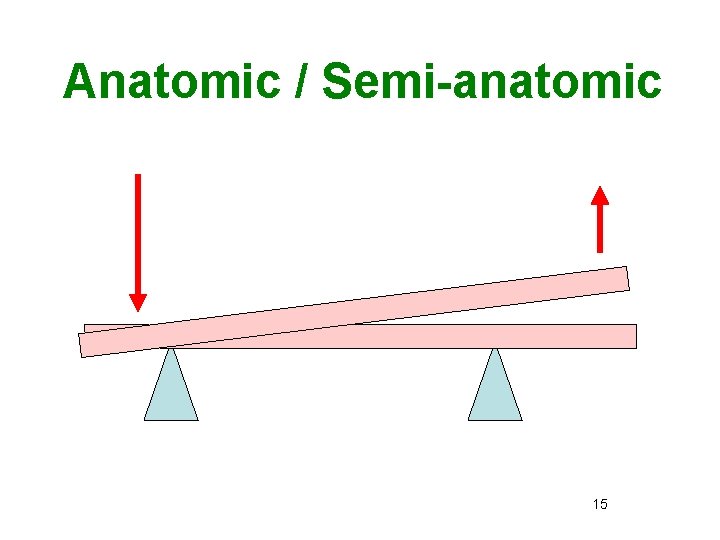
Anatomic / Semi-anatomic Forces “buccal” to crest of ridge 15
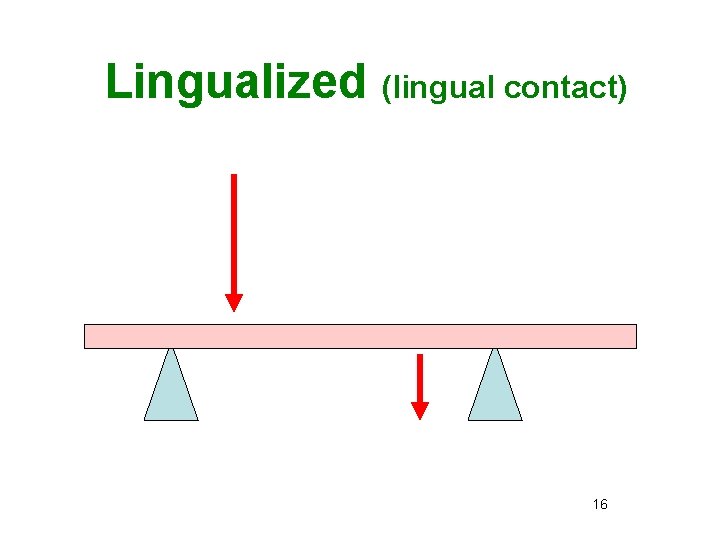
Lingualized (lingual contact) Forces “lingual” to crest of ridge 16
Lingualized or Lingual Contact Occlusion
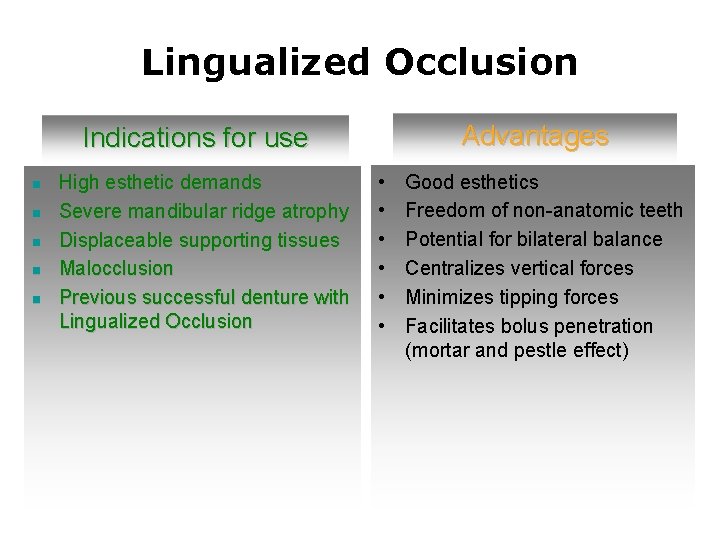
Lingualized Occlusion Advantages Indications for use n n n High esthetic demands Severe mandibular ridge atrophy Displaceable supporting tissues Malocclusion Previous successful denture with Lingualized Occlusion • • • Good esthetics Freedom of non-anatomic teeth Potential for bilateral balance Centralizes vertical forces Minimizes tipping forces Facilitates bolus penetration (mortar and pestle effect)
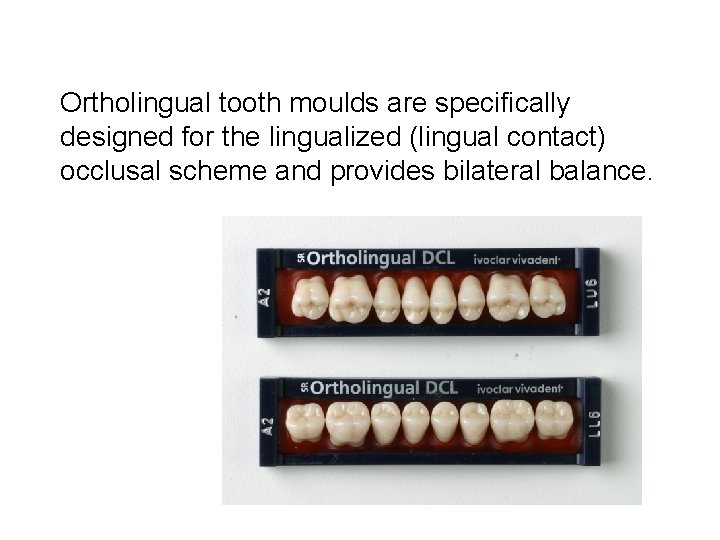
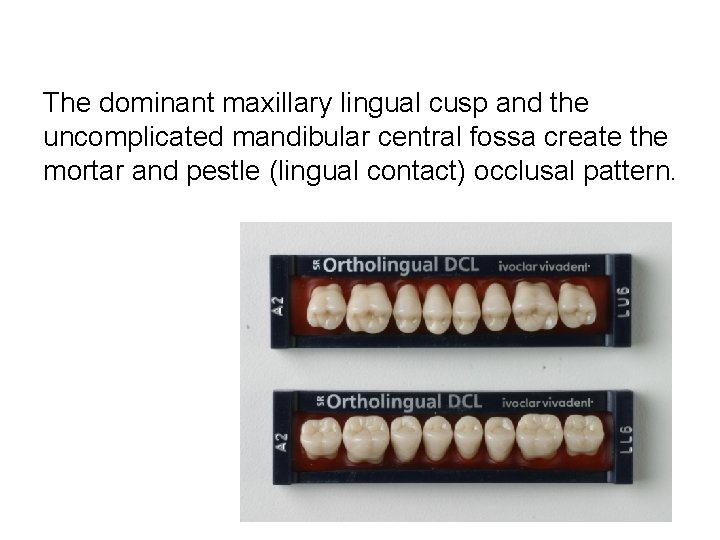
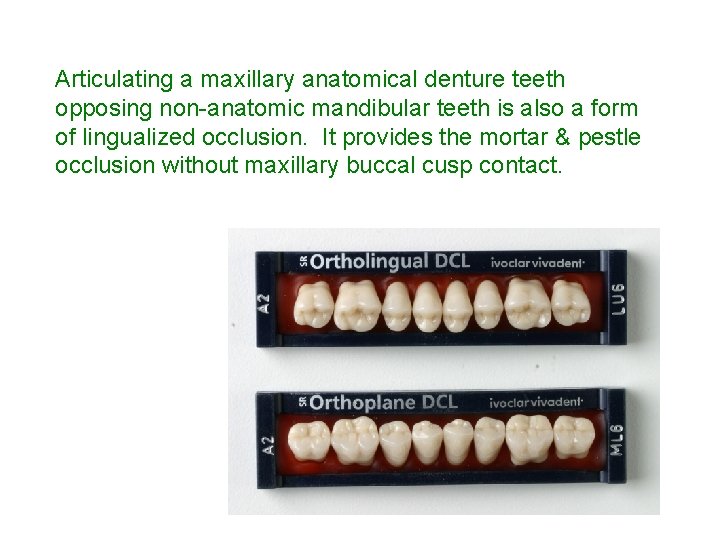
Ortholingual tooth moulds are specifically designed for the lingualized (lingual contact) occlusal scheme and provides bilateral balance.
The dominant maxillary lingual cusp and the uncomplicated mandibular central fossa create the mortar and pestle (lingual contact) occlusal pattern.
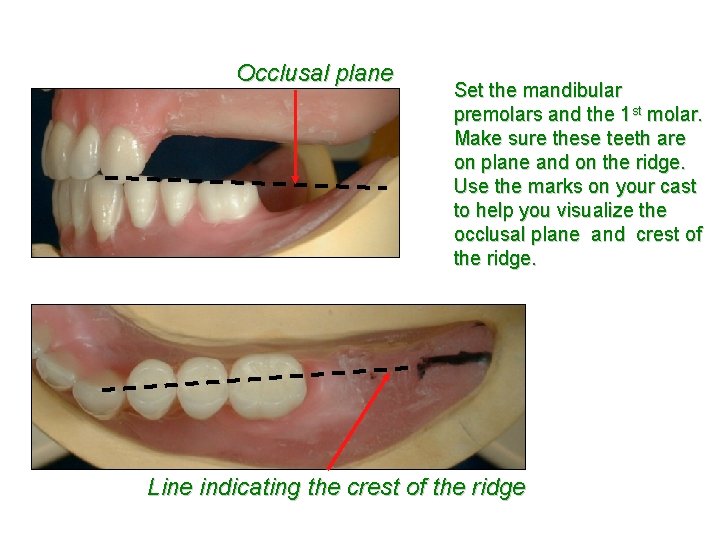
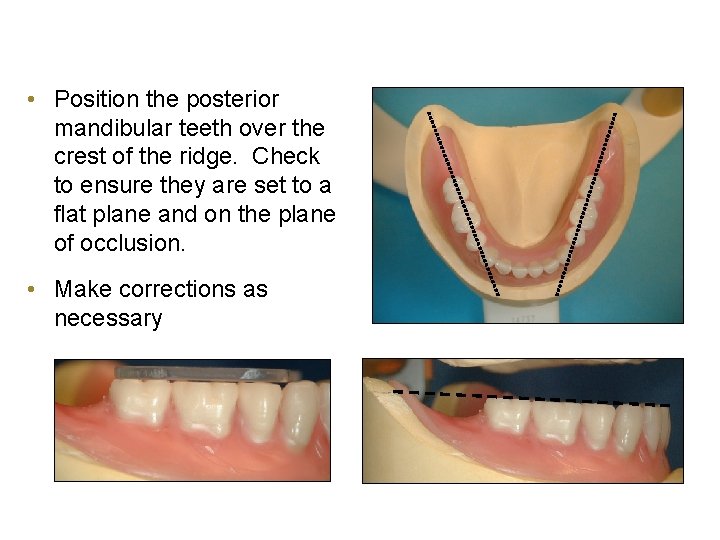
Occlusal plane Set the mandibular premolars and the 1 st molar. Make sure these teeth are on plane and on the ridge. Use the marks on your cast to help you visualize the occlusal plane and crest of the ridge. Line indicating the crest of the ridge
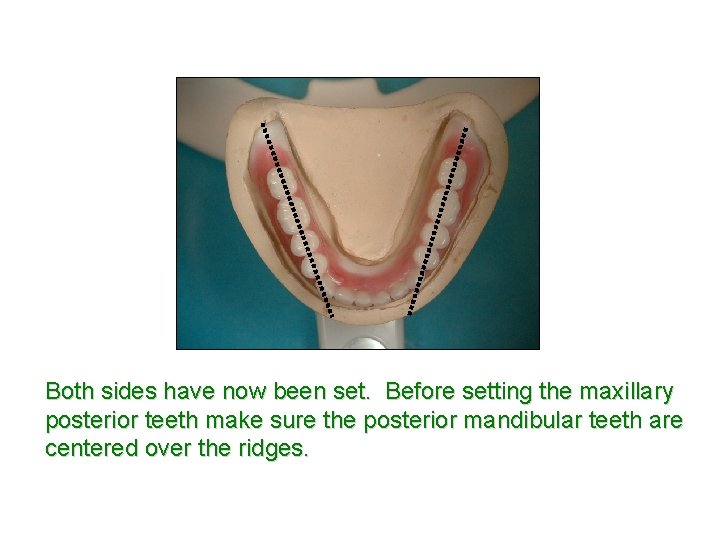
Both sides have now been set. Before setting the maxillary posterior teeth make sure the posterior mandibular teeth are centered over the ridges.
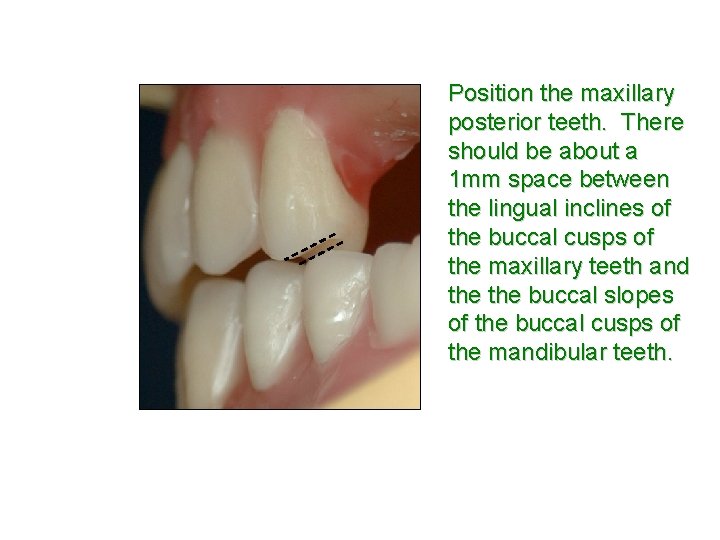
Position the maxillary posterior teeth. There should be about a 1 mm space between the lingual inclines of the buccal cusps of the maxillary teeth and the buccal slopes of the buccal cusps of the mandibular teeth.
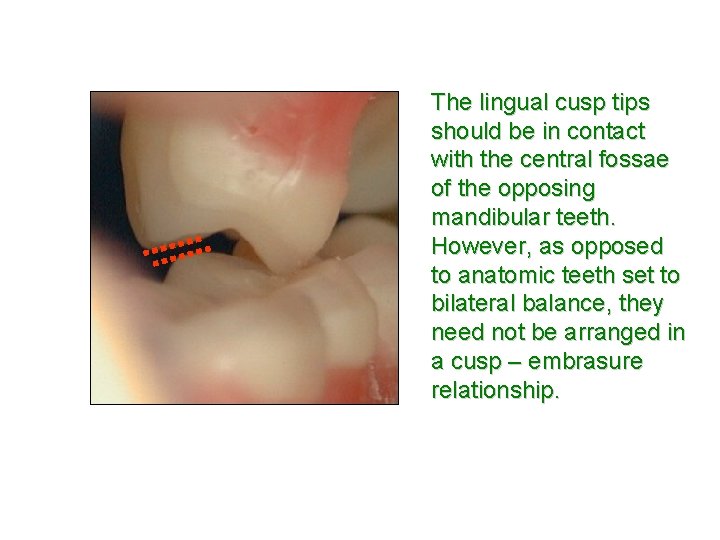
The lingual cusp tips should be in contact with the central fossae of the opposing mandibular teeth. However, as opposed to anatomic teeth set to bilateral balance, they need not be arranged in a cusp – embrasure relationship.
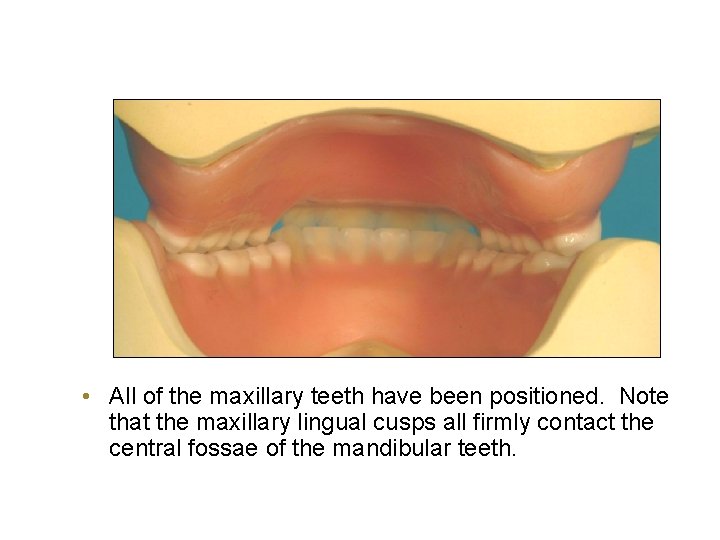
• All of the maxillary teeth have been positioned. Note that the maxillary lingual cusps all firmly contact the central fossae of the mandibular teeth.
Articulating a maxillary anatomical denture teeth opposing non-anatomic mandibular teeth is also a form of lingualized occlusion. It provides the mortar & pestle occlusion without maxillary buccal cusp contact.
Setting the posterior teeth (Neutrocentric concept) • The number and combination of the denture teeth utilized varies depending on the arch length of the patient. • The mandibular occlusal table should end prior to the ascending ramus. • Ideally, the distal surface of most posterior maxillary denture teeth should extend 1 -2 mm distal to the most posterior mandibular denture teeth.
• Position the posterior mandibular teeth over the crest of the ridge. Check to ensure they are set to a flat plane and on the plane of occlusion. • Make corrections as necessary
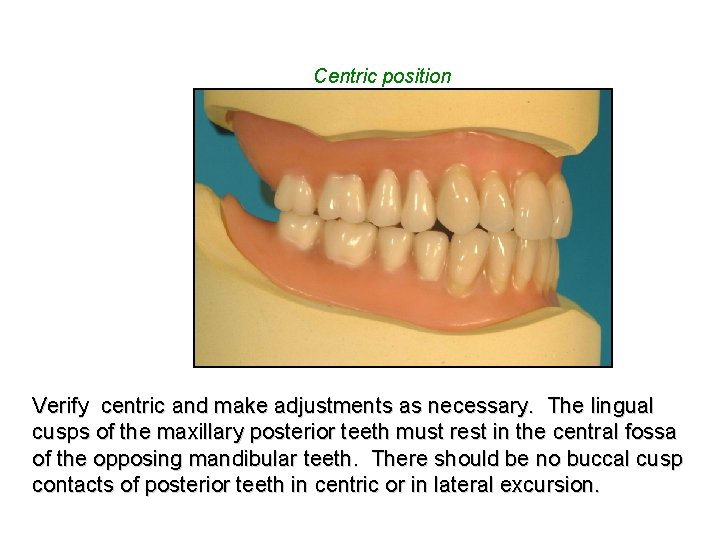
Centric position Verify centric and make adjustments as necessary. The lingual cusps of the maxillary posterior teeth must rest in the central fossa of the opposing mandibular teeth. There should be no buccal cusp contacts of posterior teeth in centric or in lateral excursion.
In Summary…… The concept of lingualized (lingual contact) occlusion has become the occlusal scheme of choice for implant-supported removable denture restorations in an attempt to minimize lateral forces.
Questions?