
Linear Perspective One Point Perspective What is wrong


- Slides: 31
Linear Perspective (One Point Perspective)
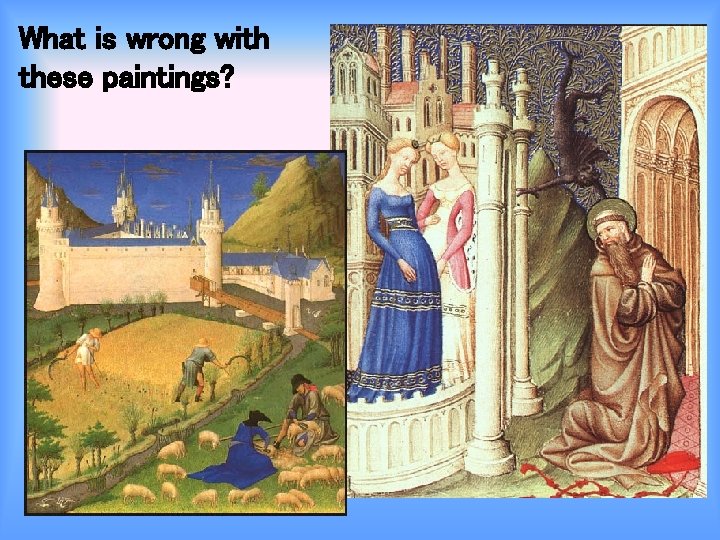
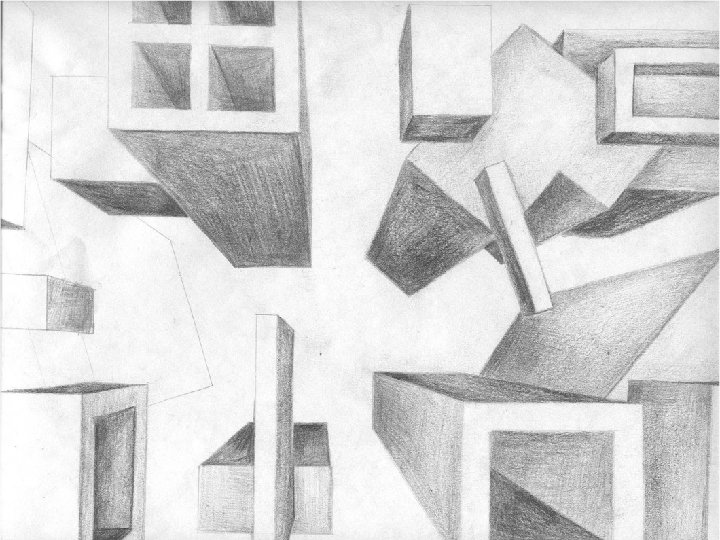
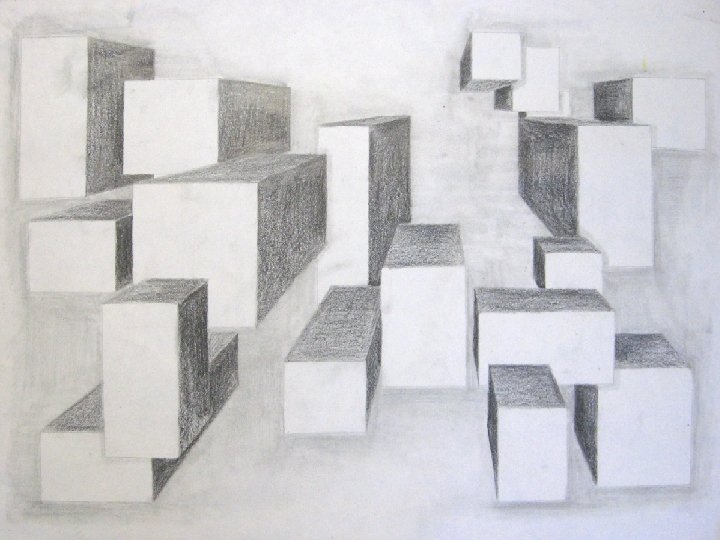
What is wrong with these paintings?
Vocabulary
Perspective • Any graphic system used to create the illusion of threedimensional images and/or spatial relationships on a two-dimensional surface.
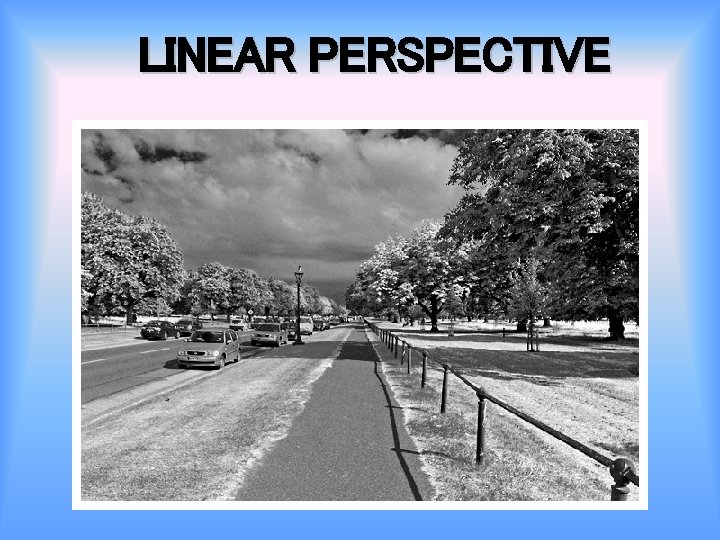
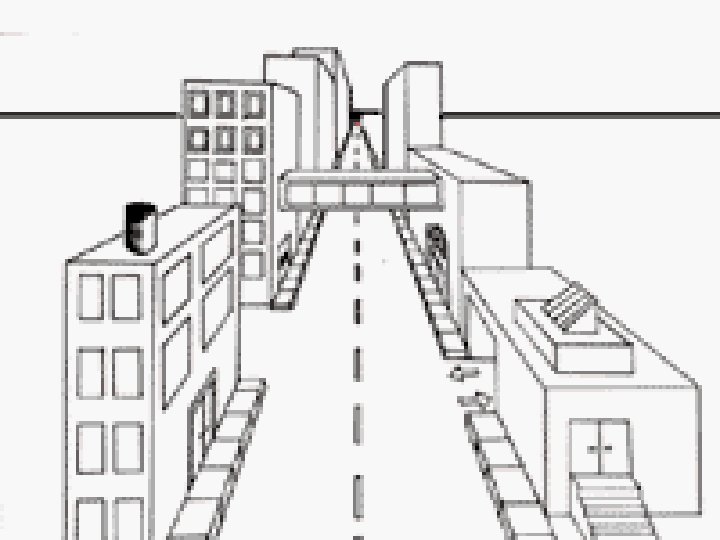
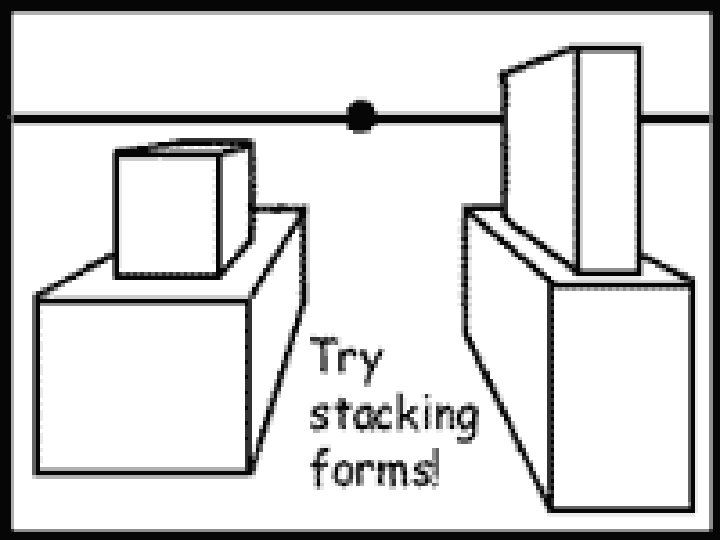
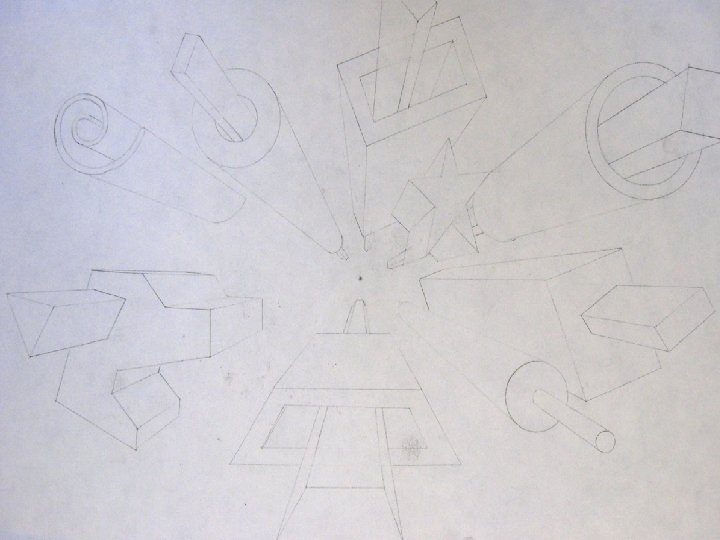
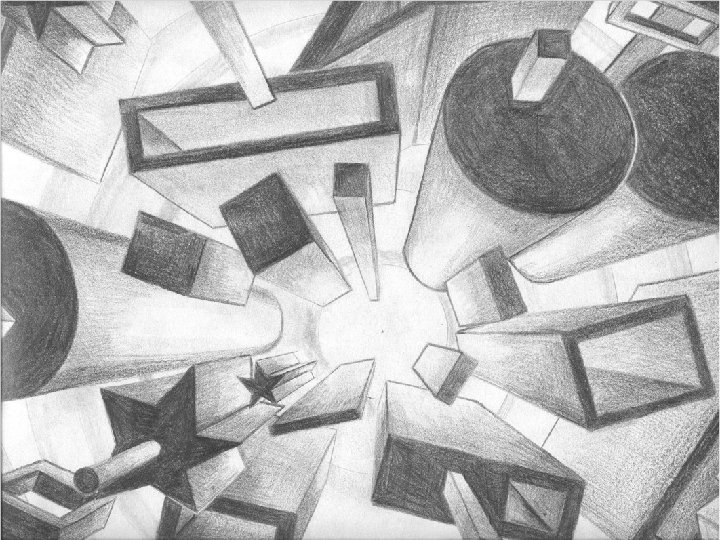
LINEAR PERSPECTIVE (One Point Perspective) • Perspective that depicts three -dimensional objects receding or proceeding from a vanishing point on a two-dimensional surface.
LINEAR PERSPECTIVE
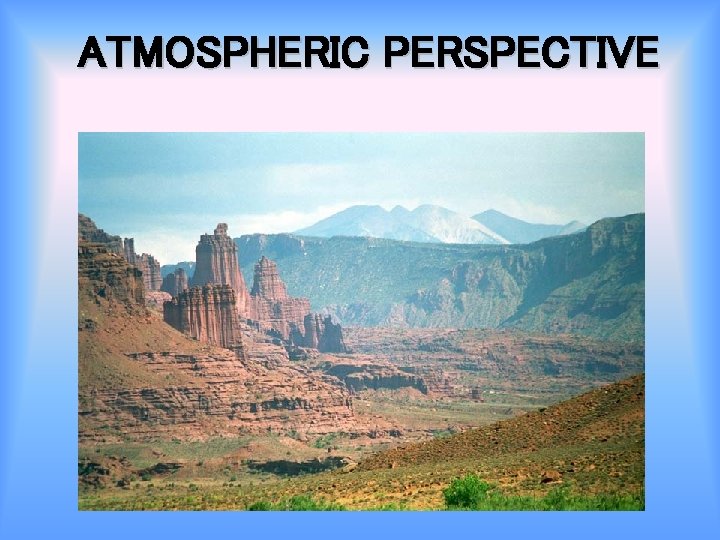
ATMOSPHERIC PERSPECTIVE
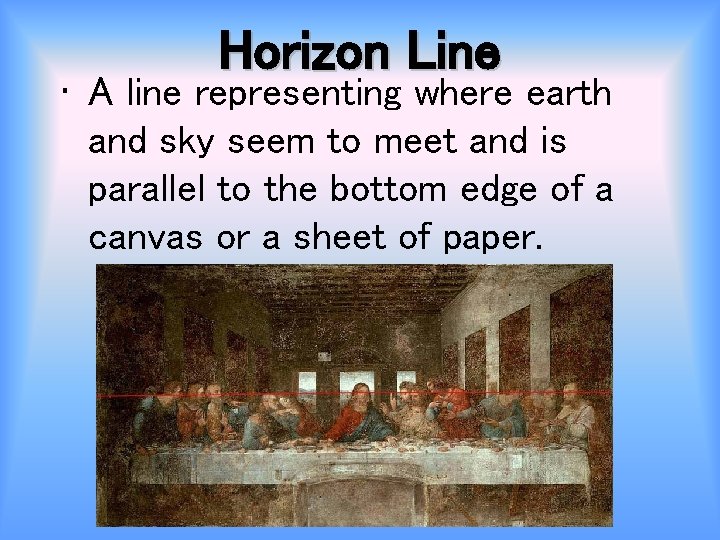
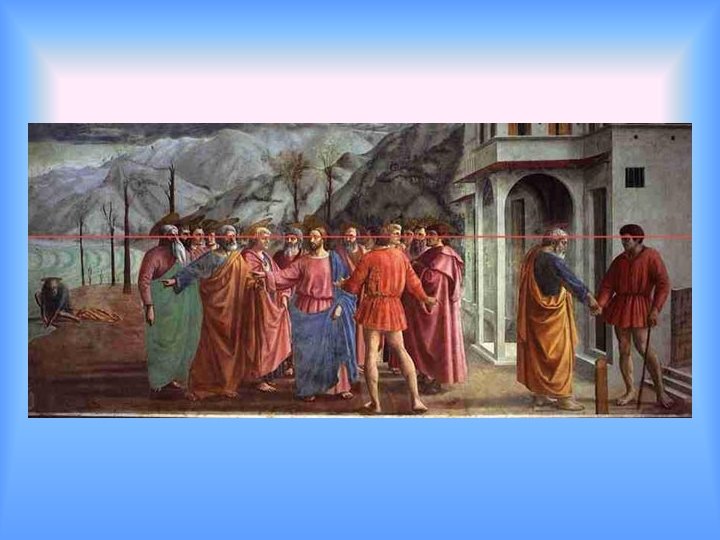
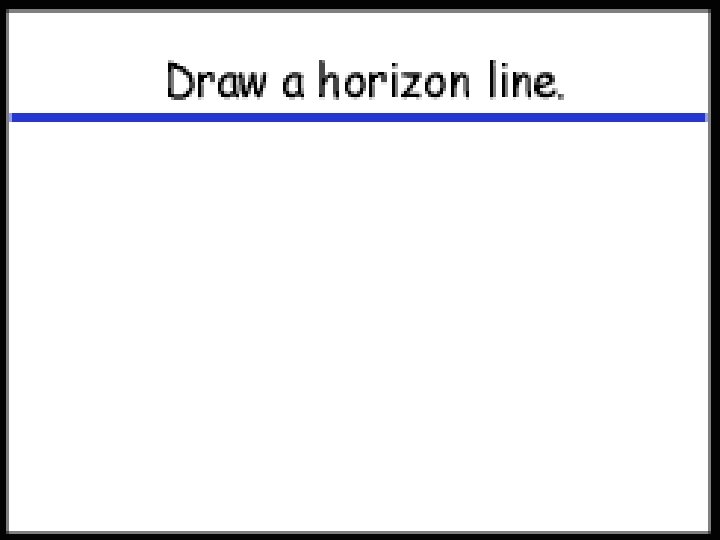
Horizon Line • A line representing where earth and sky seem to meet and is parallel to the bottom edge of a canvas or a sheet of paper.
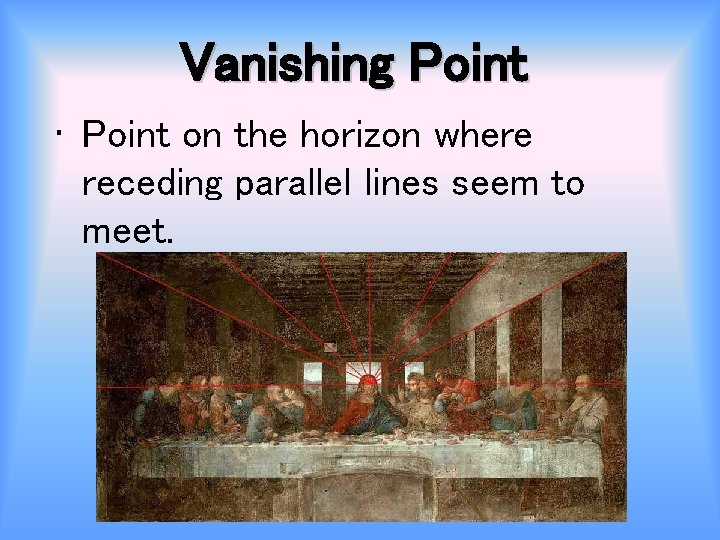
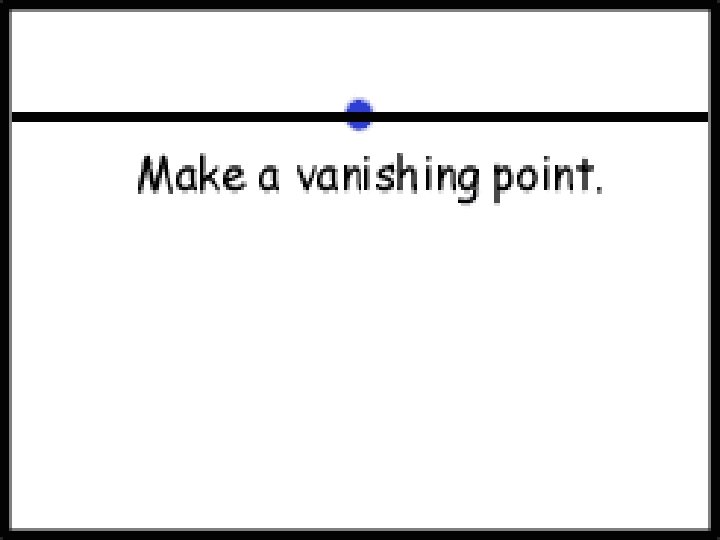
Vanishing Point • Point on the horizon where receding parallel lines seem to meet.
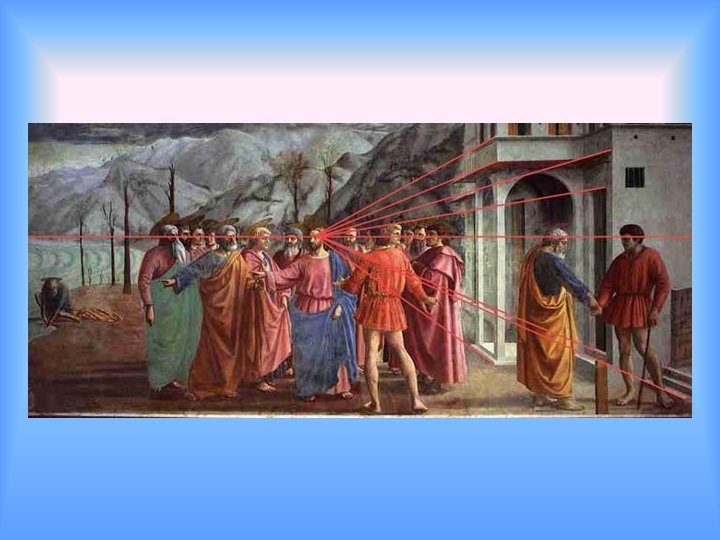
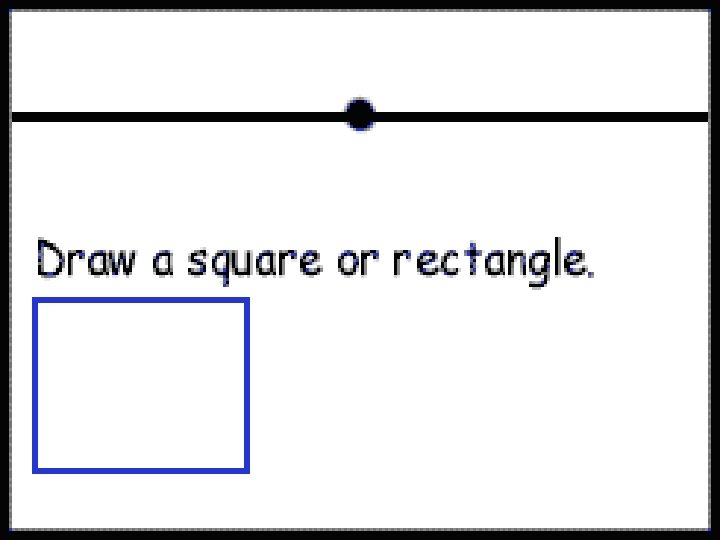
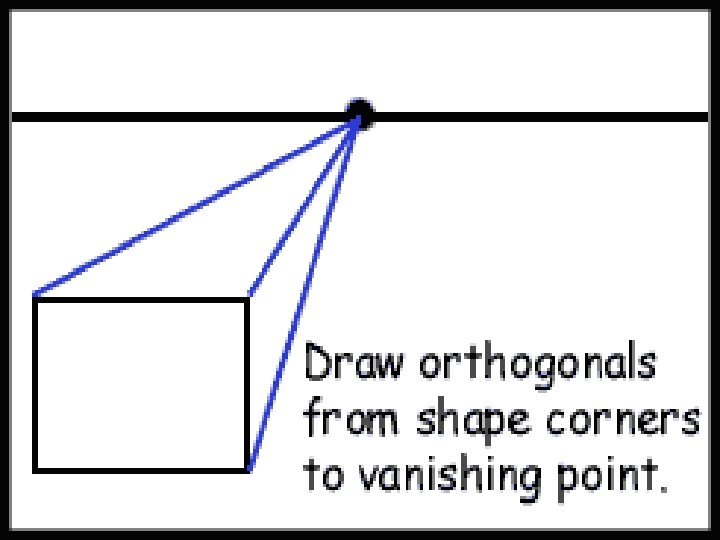
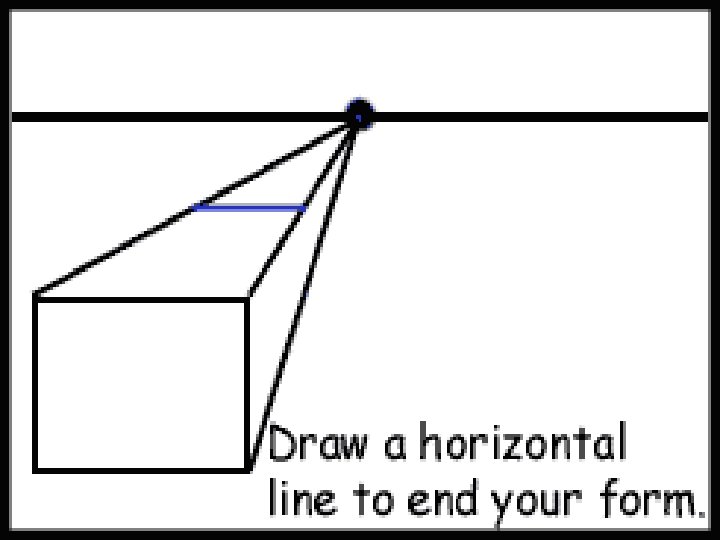
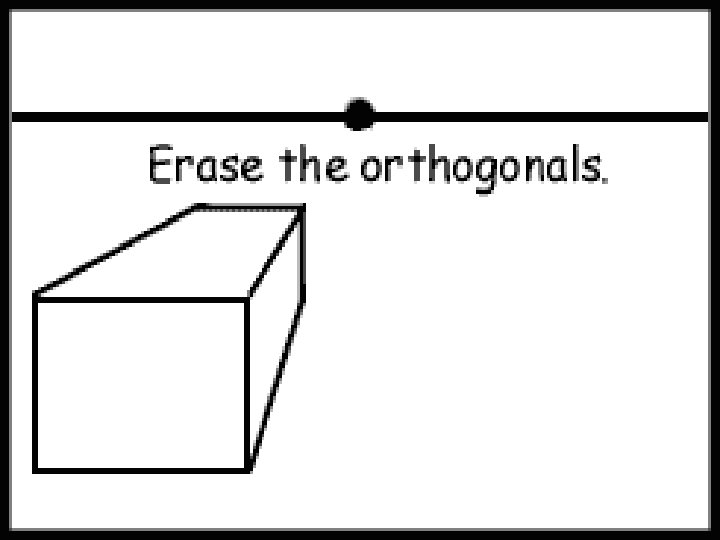
Orthogonal Lines • Lines that are drawn from the corners or edges of a twodimensional shape to a vanishing point to add threedimensional qualities to the shape.
• Shadows:
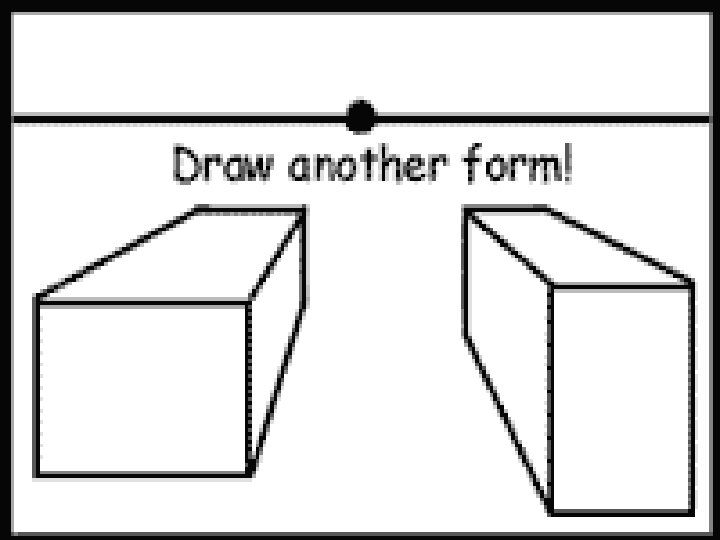
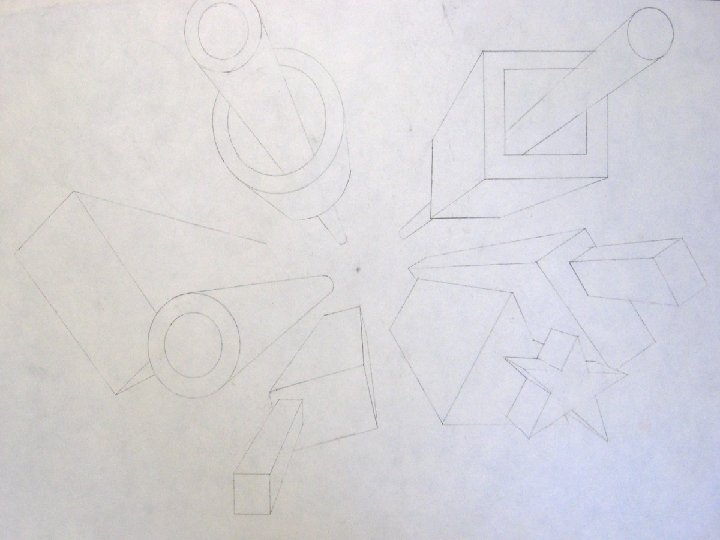
• Guidelines: Use 12”x 18” white paper • Draw a horizon line. Draw a vanishing point in the center of the line. • Draw at least 12 geometric shapes using a ruler, compass and stencils only. (no free-hand drawings) • Use a ruler to draw the orthogonal lines for each shape to the vanishing point, making it look 3 -D. Make sure the 3 -D shapes are different lengths. • You must include at least one open shape. • Model all the 3 -D shapes by using the shading value technique. Draw a Light Vanishing Point for the light source, and a Shadow Vanishing Point to add cast shadows and values to all shapes.
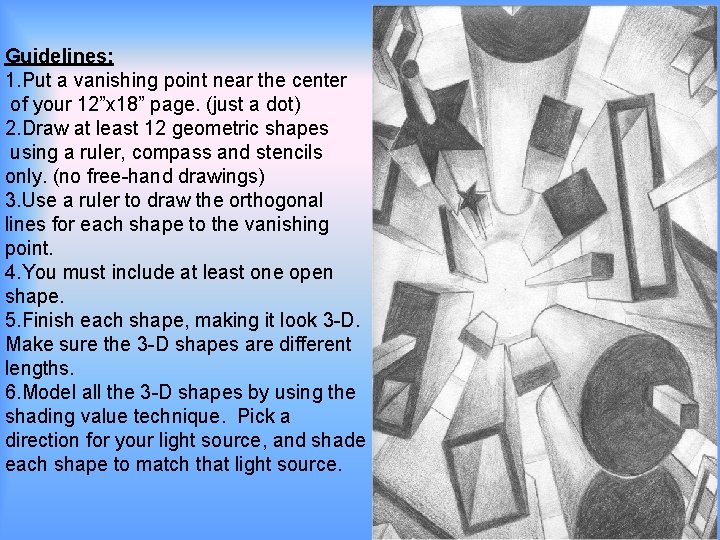
Guidelines: 1. Put a vanishing point near the center of your 12”x 18” page. (just a dot) 2. Draw at least 12 geometric shapes using a ruler, compass and stencils only. (no free-hand drawings) 3. Use a ruler to draw the orthogonal lines for each shape to the vanishing point. 4. You must include at least one open shape. 5. Finish each shape, making it look 3 -D. Make sure the 3 -D shapes are different lengths. 6. Model all the 3 -D shapes by using the shading value technique. Pick a direction for your light source, and shade each shape to match that light source.