
Linear Dropout Regulator based Power Distribution Design under
Linear Dropout Regulator based Power Distribution Design under Worst Loading Amirali Shayan, Xiang Hu Christopher Pan Wenjian Yu Huawei Tsinghua University Chung-Kuan Cheng University of California San Diego
Agenda Introduction and Motivation LDO based PDN Design under Worst Loading Worst case current synthesis Poles/Zeros based Methodology Experimental Results and Trade offs Conclusion Remarks Page 2
Introduction LDO design will enable: – Localized on die regulation – Relax off chip impedance – Power saving – Finer grain power management LDO design challenges – Power consumption – Area of the power MOSFET – Stability of the feedback loop – Physical design Page 3
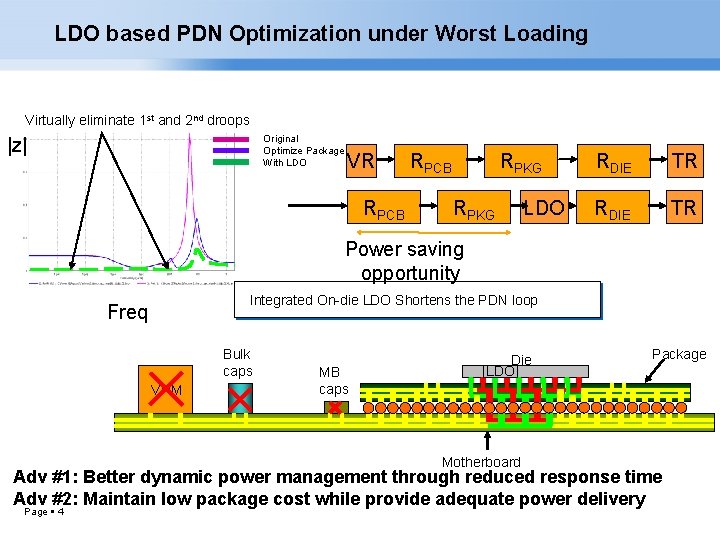
LDO based PDN Optimization under Worst Loading Virtually eliminate 1 st and 2 nd droops Original Optimize Package With LDO |z| VR RPCB RPKG LDO RDIE TR Power saving opportunity Integrated On-die LDO Shortens the PDN loop Freq Bulk caps VRM MB caps Die LDO Motherboard Package Adv #1: Better dynamic power management through reduced response time Adv #2: Maintain low package cost while provide adequate power delivery Page 4
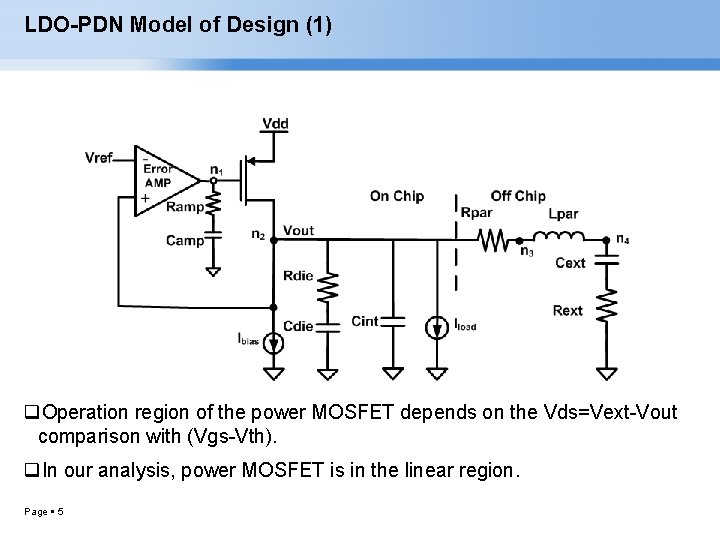
LDO-PDN Model of Design (1) q. Operation region of the power MOSFET depends on the Vds=Vext-Vout comparison with (Vgs-Vth). q. In our analysis, power MOSFET is in the linear region. Page 5
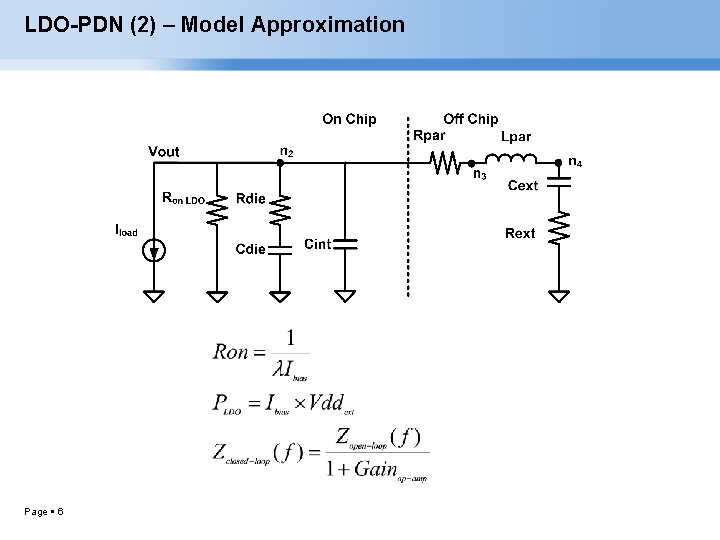
LDO-PDN (2) – Model Approximation Page 6
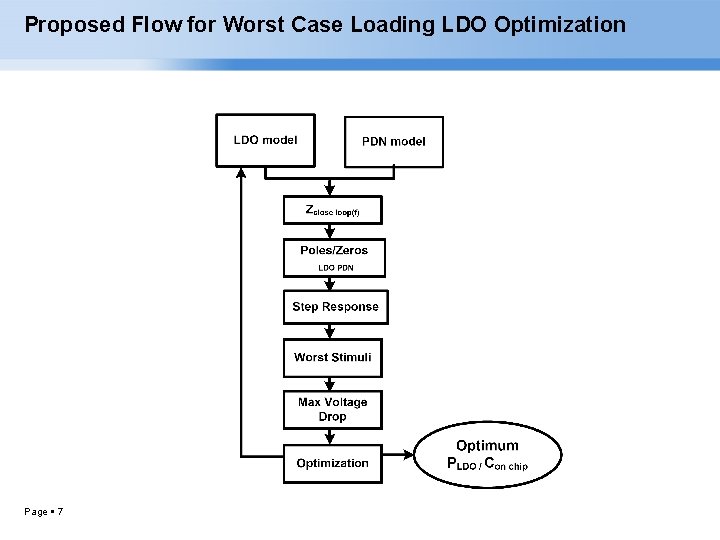
Proposed Flow for Worst Case Loading LDO Optimization Page 7
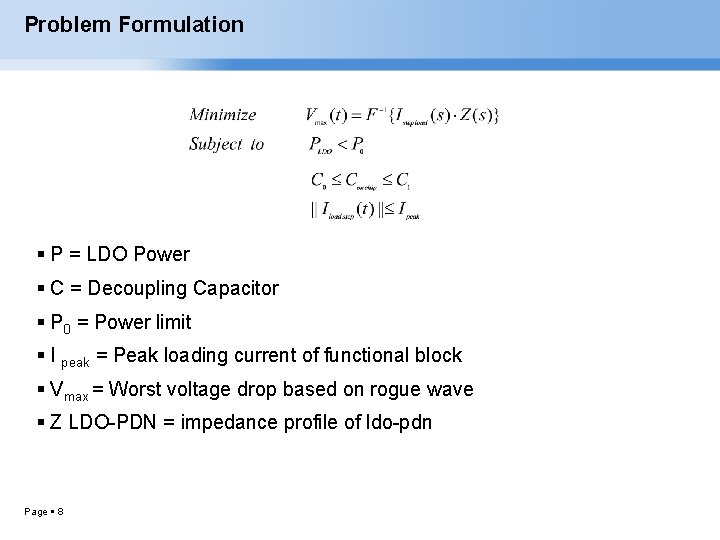
Problem Formulation P = LDO Power C = Decoupling Capacitor P 0 = Power limit I peak = Peak loading current of functional block Vmax = Worst voltage drop based on rogue wave Z LDO-PDN = impedance profile of ldo-pdn Page 8
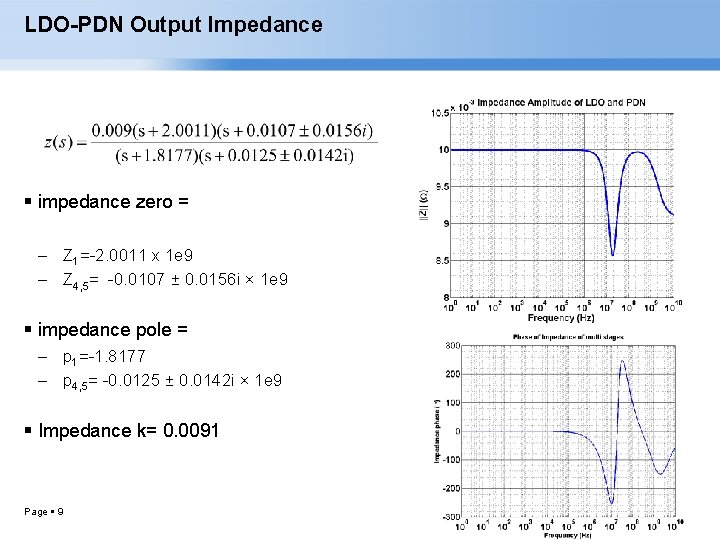
LDO-PDN Output Impedance impedance zero = – Z 1=-2. 0011 x 1 e 9 – Z 4, 5= -0. 0107 ± 0. 0156 i × 1 e 9 impedance pole = – p 1=-1. 8177 – p 4, 5= -0. 0125 ± 0. 0142 i × 1 e 9 Impedance k= 0. 0091 Page 9
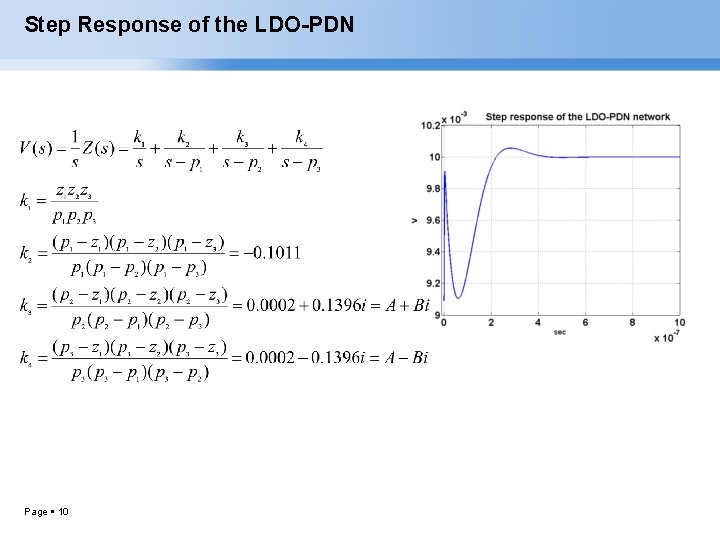
Step Response of the LDO-PDN Page 10
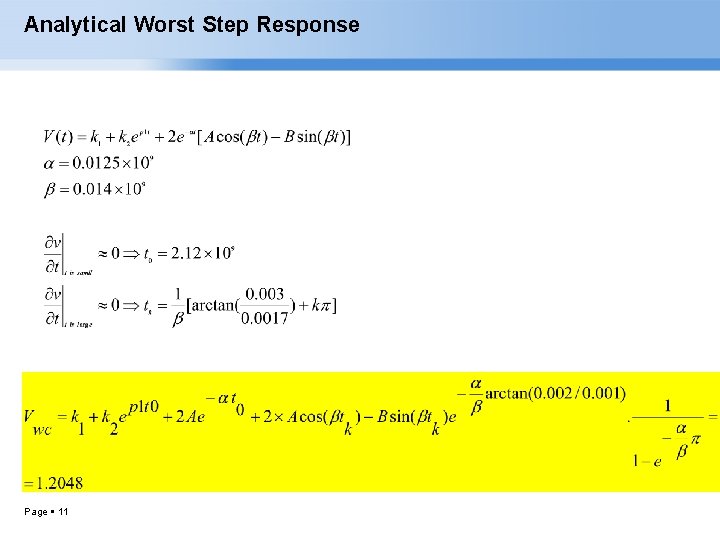
Analytical Worst Step Response Page 11
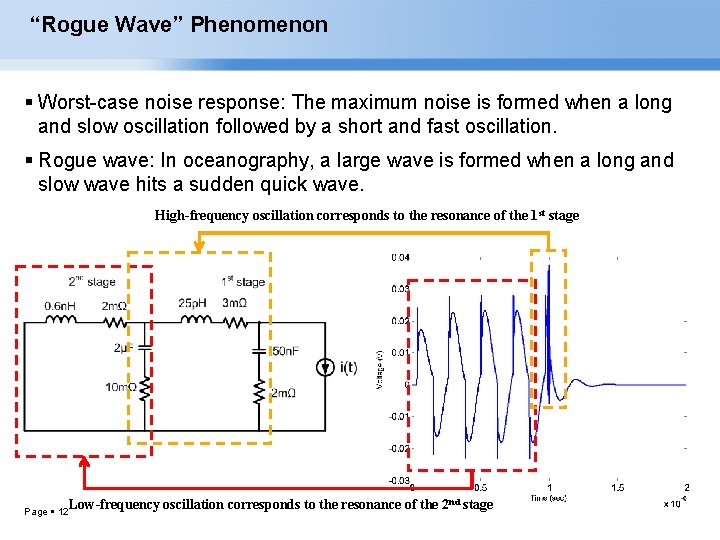
“Rogue Wave” Phenomenon Worst-case noise response: The maximum noise is formed when a long and slow oscillation followed by a short and fast oscillation. Rogue wave: In oceanography, a large wave is formed when a long and slow wave hits a sudden quick wave. High-frequency oscillation corresponds to the resonance of the 1 st stage Page 12 Low-frequency oscillation corresponds to the resonance of the 2 nd stage
![Ideal Worst-Case PDN Noise Problem formulation I PDN noise: Worst-case current [Xiang ’ 09]:](http://slidetodoc.com/presentation_image_h/fc6b1c3483774ee82a1052f19b9d973a/image-13.jpg "Ideal Worst-Case PDN Noise Problem formulation I PDN noise: Worst-case current [Xiang ’ 09]:")
Ideal Worst-Case PDN Noise Problem formulation I PDN noise: Worst-case current [Xiang ’ 09]: Zero current transition time. Unrealistic! Page 13
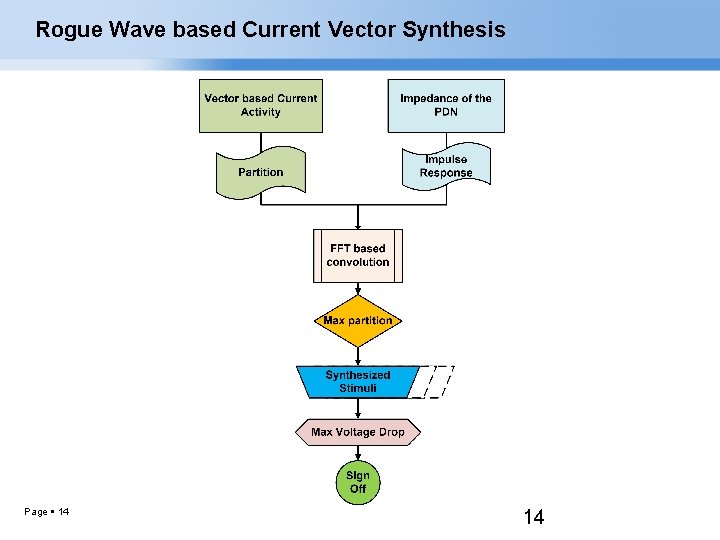
Rogue Wave based Current Vector Synthesis Page 14 14
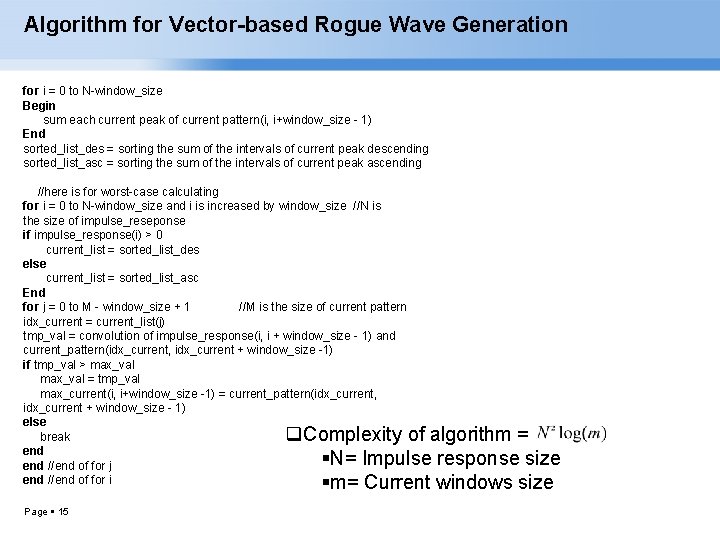
Algorithm for Vector-based Rogue Wave Generation for i = 0 to N-window_size Begin sum each current peak of current pattern(i, i+window_size - 1) End sorted_list_des = sorting the sum of the intervals of current peak descending sorted_list_asc = sorting the sum of the intervals of current peak ascending //here is for worst-case calculating for i = 0 to N-window_size and i is increased by window_size //N is the size of impulse_reseponse if impulse_response(i) > 0 current_list = sorted_list_des else current_list = sorted_list_asc End for j = 0 to M - window_size + 1 //M is the size of current pattern idx_current = current_list(j) tmp_val = convolution of impulse_response(i, i + window_size - 1) and current_pattern(idx_current, idx_current + window_size -1) if tmp_val > max_val = tmp_val max_current(i, i+window_size -1) = current_pattern(idx_current, idx_current + window_size - 1) else break end //end of for j end //end of for i q. Complexity of algorithm = N= Impulse response size m= Current windows size Page 15
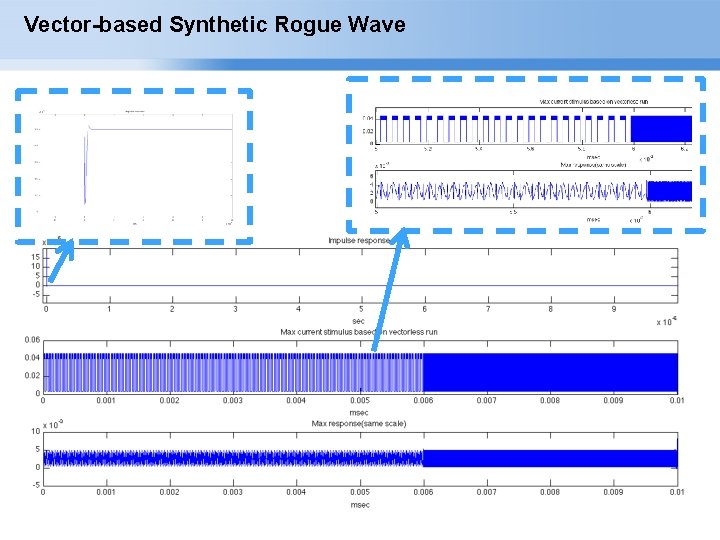
Vector-based Synthetic Rogue Wave Page 16
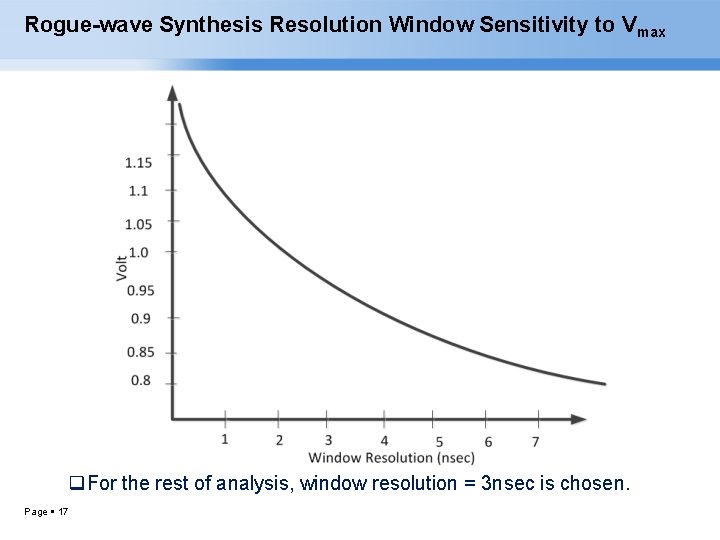
Rogue-wave Synthesis Resolution Window Sensitivity to V max q. For the rest of analysis, window resolution = 3 nsec is chosen. Page 17
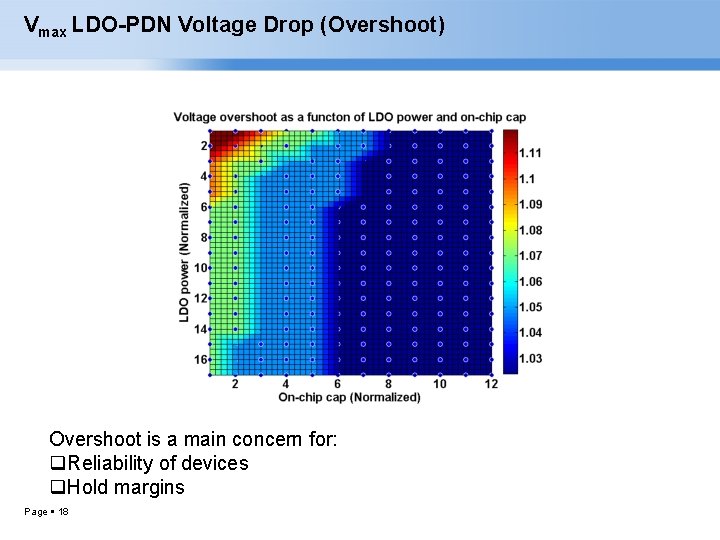
Vmax LDO-PDN Voltage Drop (Overshoot) Overshoot is a main concern for: q. Reliability of devices q. Hold margins Page 18
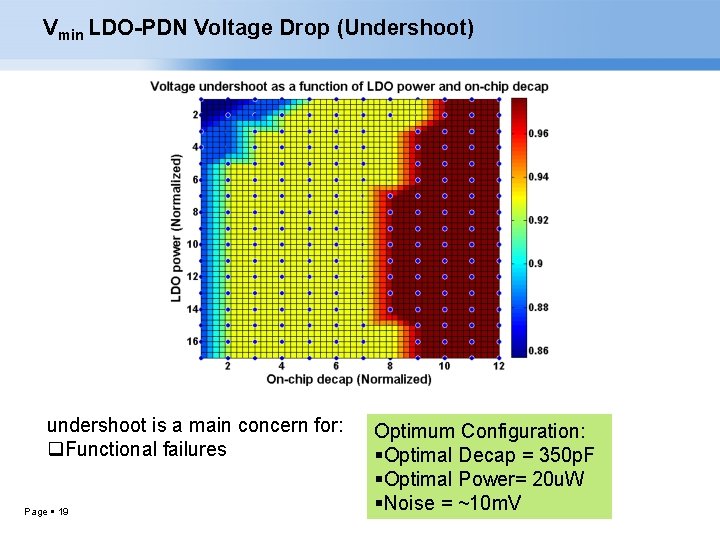
Vmin LDO-PDN Voltage Drop (Undershoot) undershoot is a main concern for: q. Functional failures Page 19 Optimum Configuration: Optimal Decap = 350 p. F Optimal Power= 20 u. W Noise = ~10 m. V
Conclusion and Summary Introduced a design flow for worst case loading based on LDO poles and zeros. Proposed an optimization based on the step response and rogue wave in LDO system. Analyzed LDO power and decap area trade off in the LDO based system. Experimental result show the target voltage drop budget will be met under worst loading with optimum LDO power and decoupling value. Page 20
- Slides: 20