
Line Strength Measurements in the n 2 band
Line Strength Measurements in the n 2 band of H 218 O Yu. I. Baranov, a P. Chelin, b J. Orphal, b and L. H. Coudertb a. Institute of Experimental Meteorology, Obninsk, Russia b. LISA, CNRS/Paris 12 University, Créteil, France
Overview • Line position analysis: data and results • The new spectra • Analysis of the n 2 band line strengths Natural abundance of H 218 O is 0. 2%. Used to monitor water vapor transport in the atmosphere. 1 1. Keith, J. Geophysical Research Atmospheres 105, 15167 (2000).
Line position analysis 3 sets of data: • Experimental energy levels • Wavenumbers of FIR and IR transitions • Frequencies of Terahertz and microwave lines The anomalous centrifugal distortion is accounted for using the Bending-rotation approach. 1 1. Coudert et al. , J. Molec. Spectrosc. 251, 339 (2008).
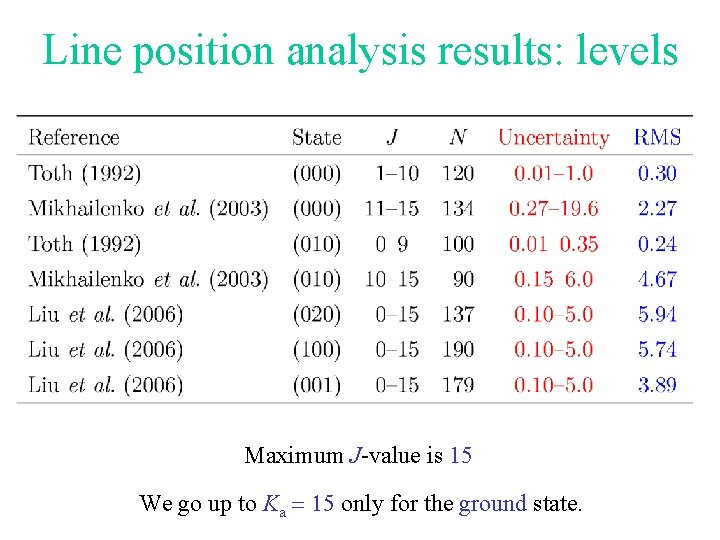
Line position analysis results: levels Maximum J-value is 15 We go up to Ka = 15 only for the ground state.
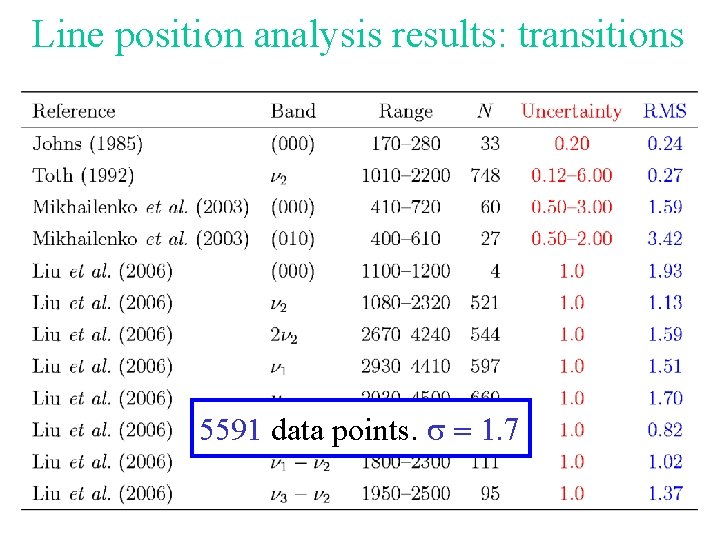
Line position analysis results: transitions 5591 data points. s = 1. 7
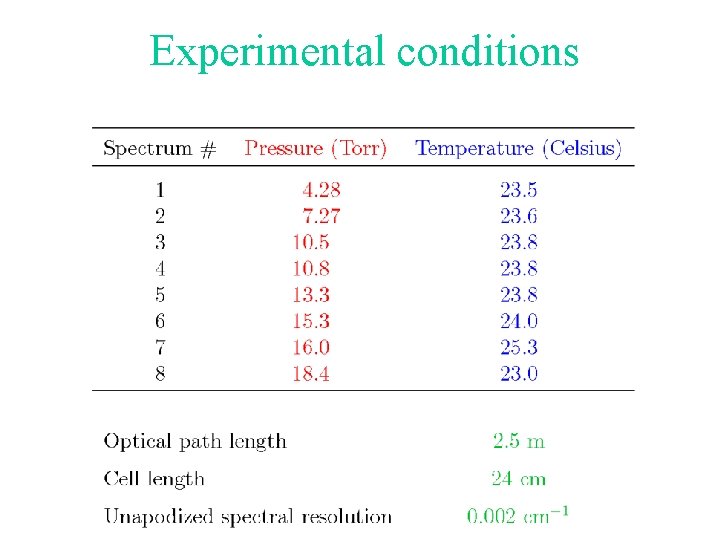
Experimental conditions
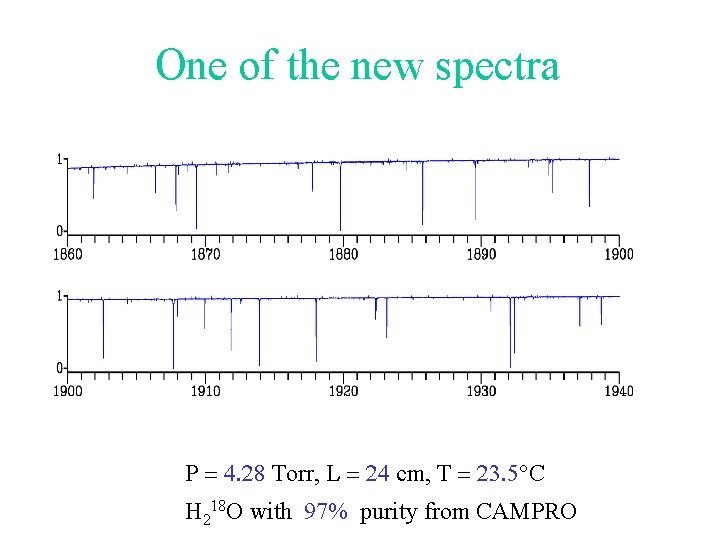
One of the new spectra P = 4. 28 Torr, L = 24 cm, T = 23. 5°C H 218 O with 97% purity from CAMPRO
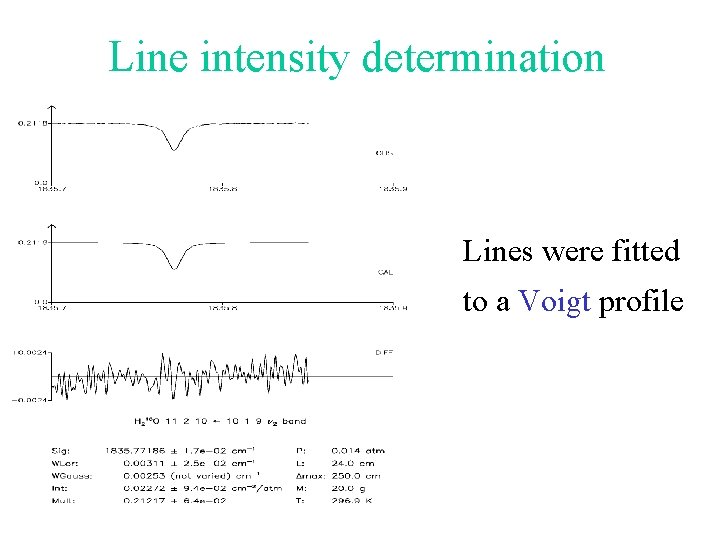
Line intensity determination Lines were fitted to a Voigt profile
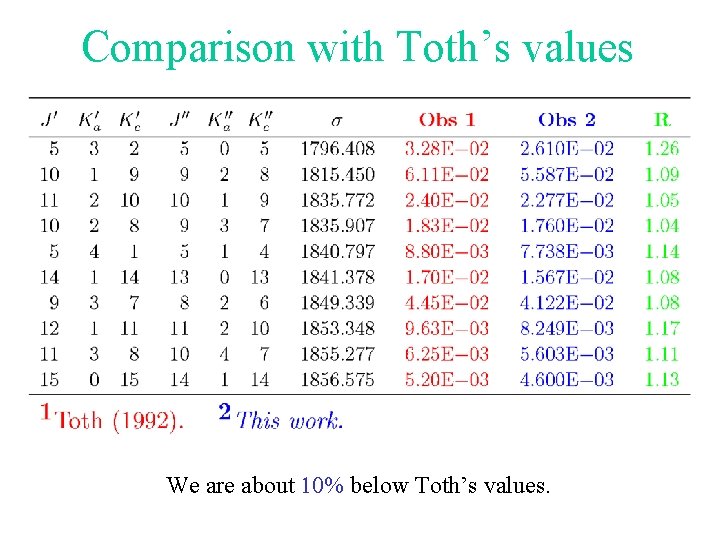
Comparison with Toth’s values We are about 10% below Toth’s values.
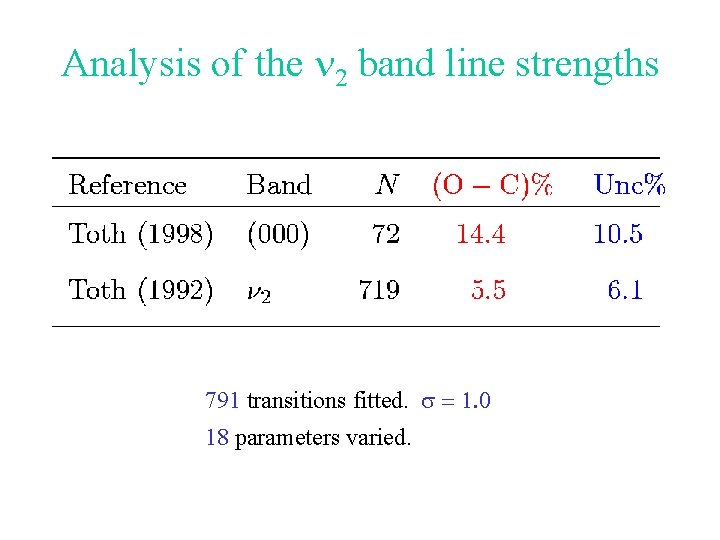
Analysis of the n 2 band line strengths 791 transitions fitted. s = 1. 0 18 parameters varied.
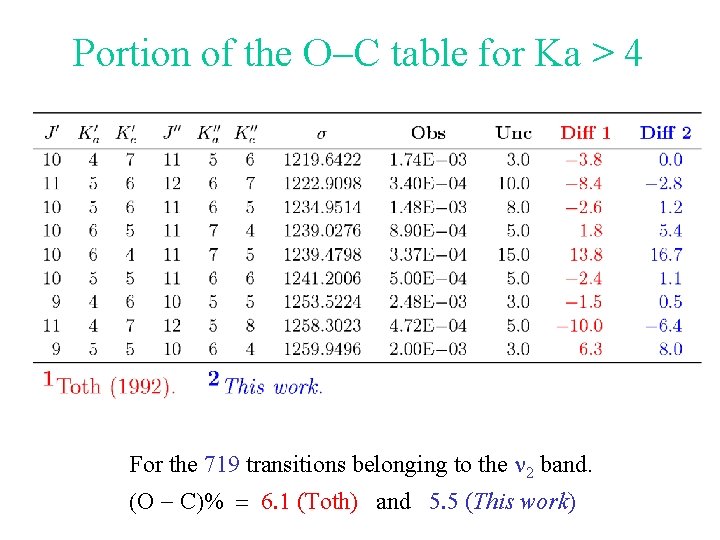
Portion of the O-C table for Ka > 4 For the 719 transitions belonging to the n 2 band. (O - C)% = 6. 1 (Toth) and 5. 5 (This work)
Building a data base Using the results of both analyses, a data base was built and the spectrum of the n 2 band was computed.
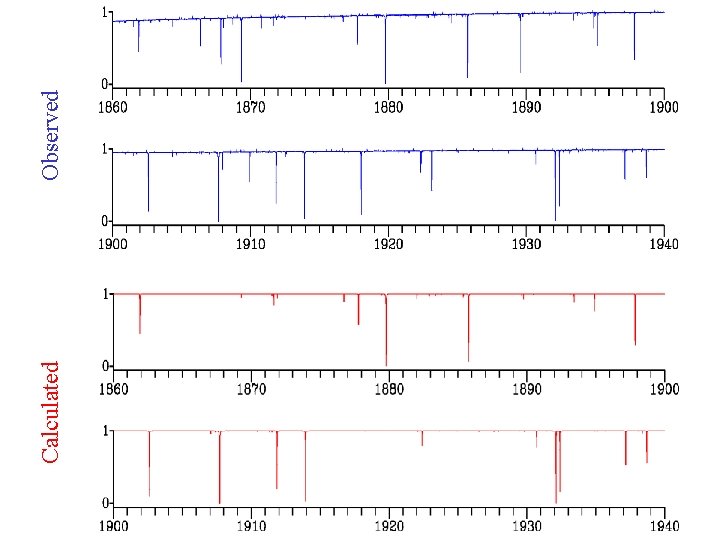
Calculated Observed
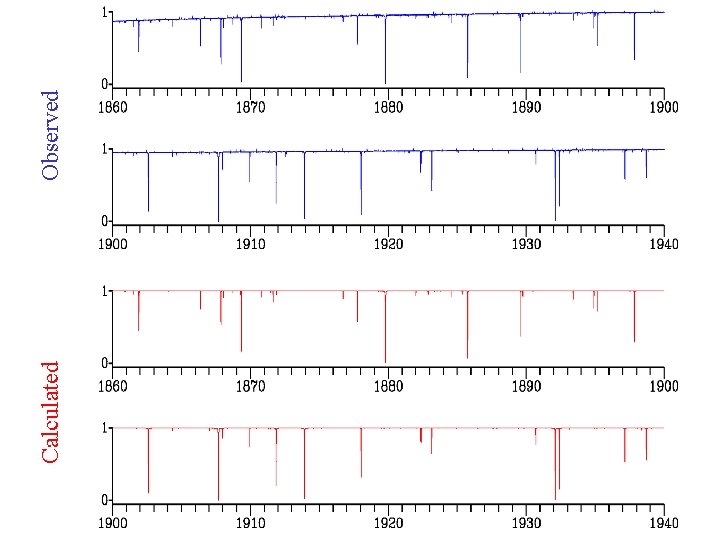
Observed Calculated Adding 0. 3 Torr of H 216 O
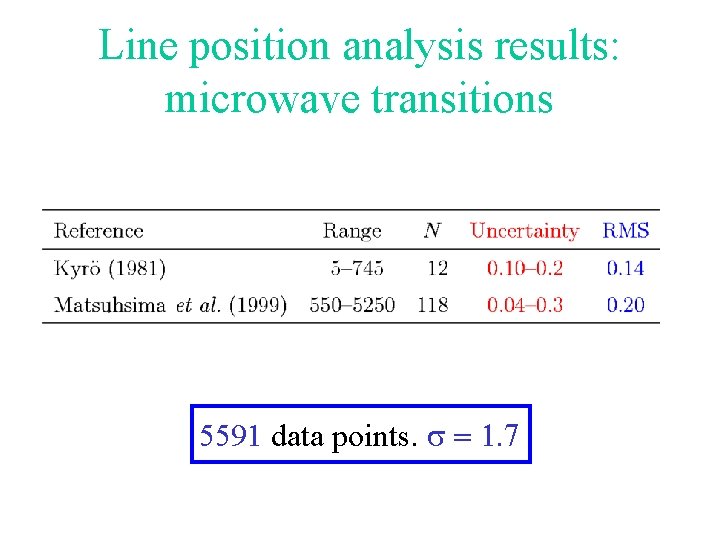
Line position analysis results: microwave transitions 5591 data points. s = 1. 7
- Slides: 15