
Line Arrangements Line Arrangements lead the eye along
- Slides: 29
¦Line Arrangements
¦Line Arrangements ¦lead the eye along an obvious path ¦keep the eye in continuous motion
¦Line ¦must never be broken
¦Three forms ¦of line arrangement ¦straight line ¦curvilinear ¦contemporary free style
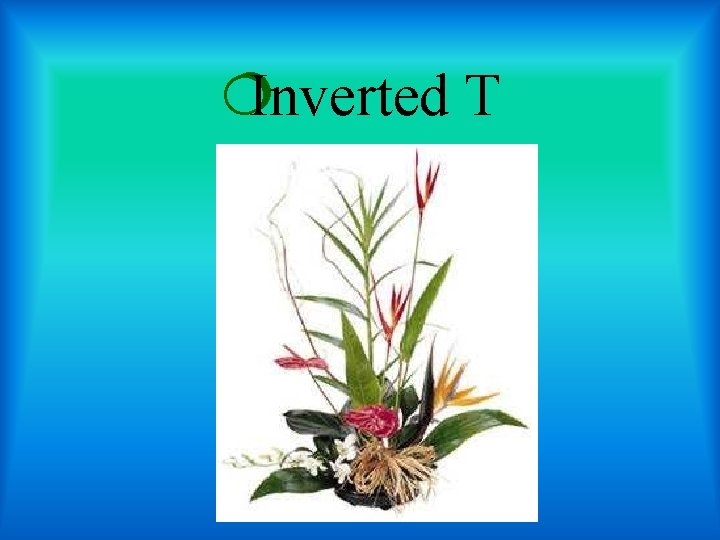
¦Inverted T ¦variation of equilateral triangle ¦points of the design form an equilateral triangle ¦makes use of negative space or areas without flowers
¦Inverted T
¦L Pattern ¦similar to the right triangle ¦more linear since the area between the two major points remains unfilled
¦L Pattern ¦lighter ¦more stylized appearance ¦vertical line is straight up ¦the horizontal line is parallel with the table
¦L Pattern ¦creating a 90 degree angle where the two lines meet ¦may be modified slightly ¦slanting the vertical line to the left, horizontal line sweeps downward
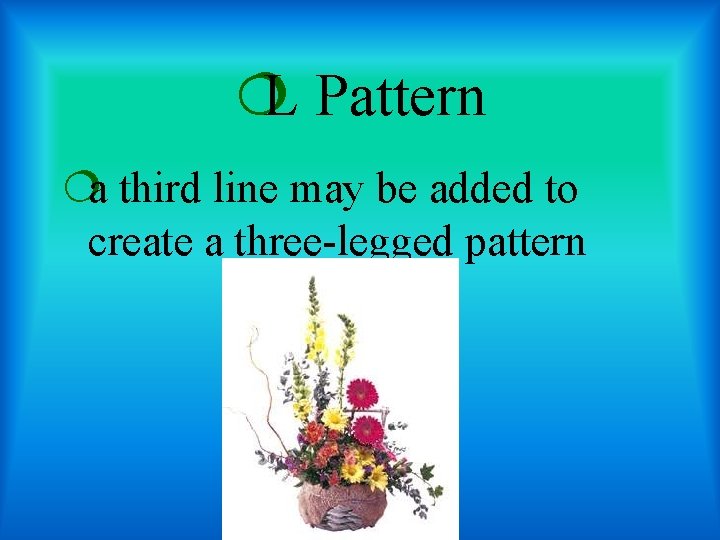
¦L Pattern ¦a third line may be added to create a three-legged pattern
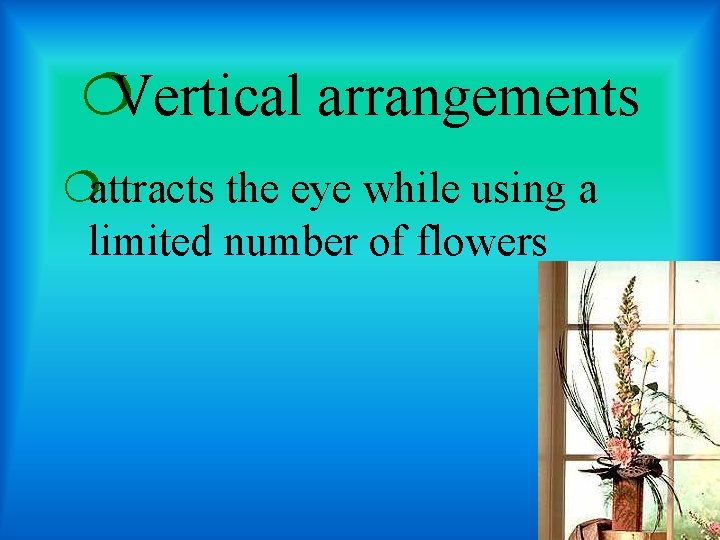
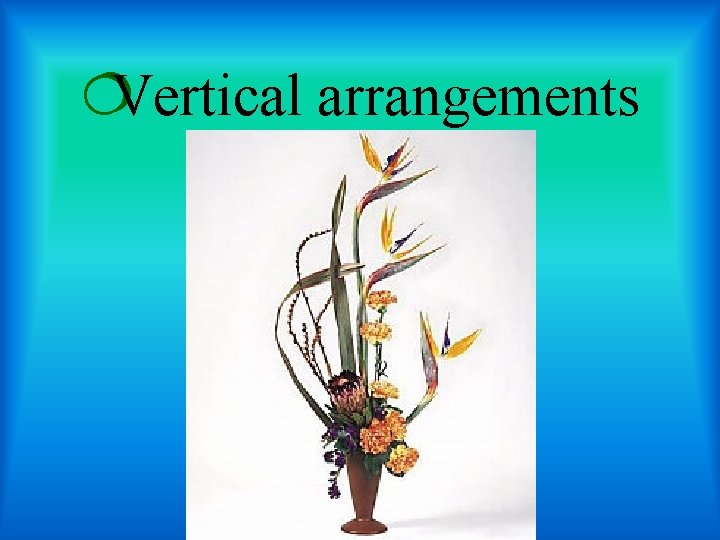
¦Vertical arrangement ¦very strong line ¦makes a bold statement ¦eye tends to continuously move up and down the arrangement
¦Vertical arrangement ¦tall slender vertical arrangements are excellent for hospitals and nursing homes where space is limited
¦Vertical arrangements ¦attracts the eye while using a limited number of flowers
¦Vertical arrangements
¦Crescent arrangements ¦a portion of a circle ¦like the moon in its first quarter ¦sometimes compared to an animals horns
¦Crescent arrangements ¦tips of each horn are pointed and curve down to join at the thicker center
¦Crescent arrangements ¦one horn is longer than the other ¦upper one is twice the length of the lower horn
¦Crescent arrangements ¦focal point of this arrangement is where the base of the two horns meet ¦may be viewed from one or both sides
¦Crescent arrangements ¦if viewed from both sides ¦horns would be finished with flowers
¦Crescent arrangements ¦if viewed from one side ¦some flowers should face backward to give the arrangement depth
¦Hogarth Curve ¦also called an “S” curve ¦named after the English painter William Hogarth
¦Hogarth Curve ¦three types of “S” curve arrangements ¦Classical Vertical ¦Diagonal S Curve ¦Horizontal Curve
Contemporary Freestyle ¦gives the designer the opportunity to express their creativity ¦basic principles of design still apply
Contemporary Freestyle ¦geometric forms can be used in contemporary freestyle ¦great use is made of lines
Contemporary Freestyle ¦lines, such as horizontal, vertical, spirals, curves and diagonals are very prominent
Contemporary Freestyle ¦designers describe contemporary freestyle as personalizing what they have learned about different designs
Contemporary Freestyle ¦involves placing flowers into a pleasing composition ¦without falling into a particular design style
Contemporary Freestyle ¦may mix several styles as long as one is not dominant