
Linda Li PT Ph D ArthritisUBC Using KT

Linda Li, PT, Ph. D @Arthritis_UBC Using KT model and framework to inform implementation: An example from arthritis research Associate Professor & Harold Robinson/Arthritis Society Chair Canada Research Chair in Patient-oriented Knowledge Translation University of British Columbia Arthritis Research Canada 1
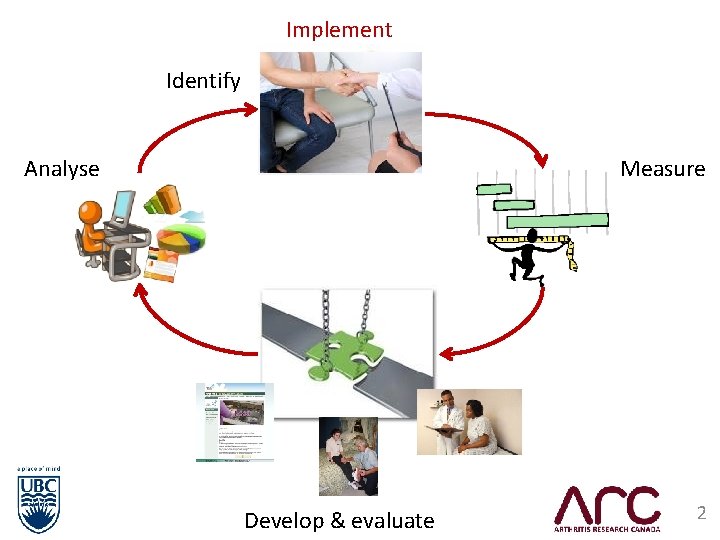
Implement Identify Analyse Measure Develop & evaluate 2

Outline • Discuss the need for investment in knowledge translation (KT). • Illustrate the use of the Knowledge-to-Action (KTA) Process in arthritis research. • Describe a framework, the Consolidated Framework for Implementation Research (CFIR), and its application. 3
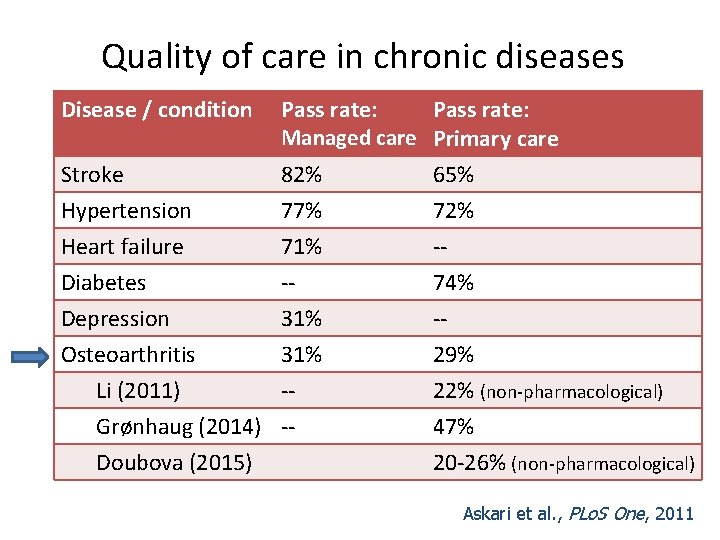
Quality of care in chronic diseases Disease / condition Stroke Hypertension Pass rate: Managed care Primary care 82% 65% 77% 72% Heart failure Diabetes Depression Osteoarthritis 71% -31% Li (2011) -Grønhaug (2014) -Doubova (2015) -74% -29% 22% (non-pharmacological) 47% 20 -26% (non-pharmacological) Askari et al. , PLo. S One, 2011
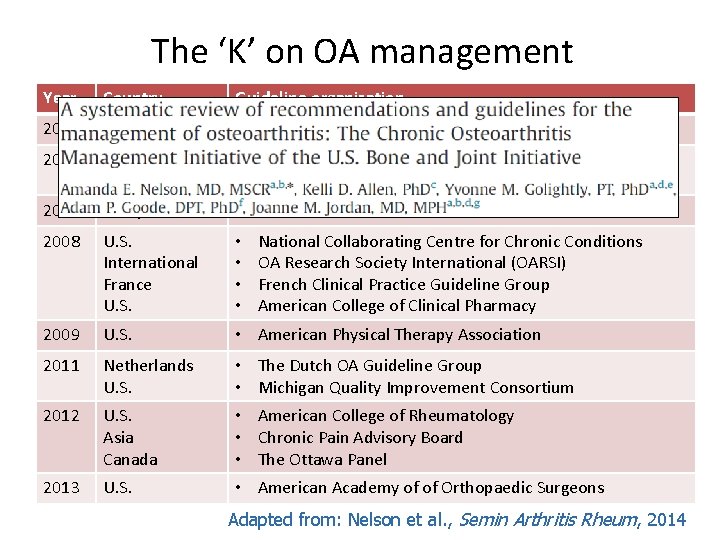
The ‘K’ on OA management Year Country Guideline organization 2003 Europe • EULAR-knee 2005 Europe U. K. • EULAR-hip • MOVE Consensus Group 2007 Europe • EULAR-hand 2008 U. S. International France U. S. • • 2009 U. S. • American Physical Therapy Association 2011 Netherlands U. S. • The Dutch OA Guideline Group • Michigan Quality Improvement Consortium 2012 U. S. Asia Canada • American College of Rheumatology • Chronic Pain Advisory Board • The Ottawa Panel 2013 U. S. • American Academy of of Orthopaedic Surgeons National Collaborating Centre for Chronic Conditions OA Research Society International (OARSI) French Clinical Practice Guideline Group American College of Clinical Pharmacy Adapted from: Nelson et al. , Semin Arthritis Rheum, 2014
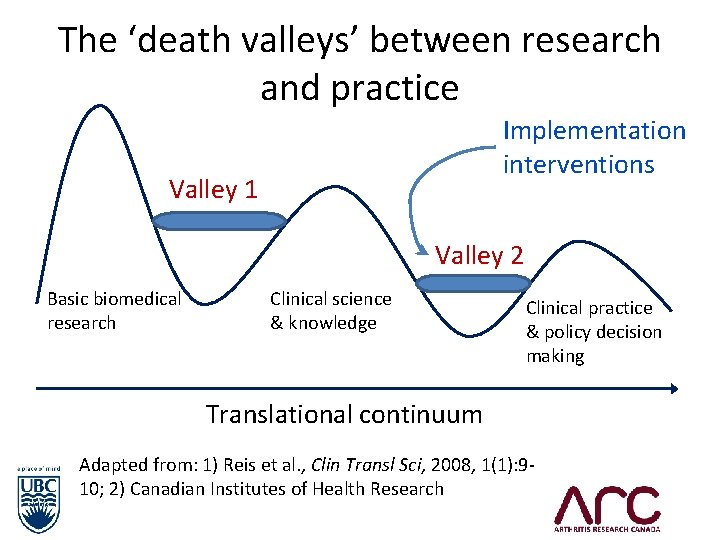
The ‘death valleys’ between research and practice Implementation interventions Valley 1 Valley 2 Basic biomedical research Clinical science & knowledge Clinical practice & policy decision making Translational continuum Adapted from: 1) Reis et al. , Clin Transl Sci, 2008, 1(1): 910; 2) Canadian Institutes of Health Research
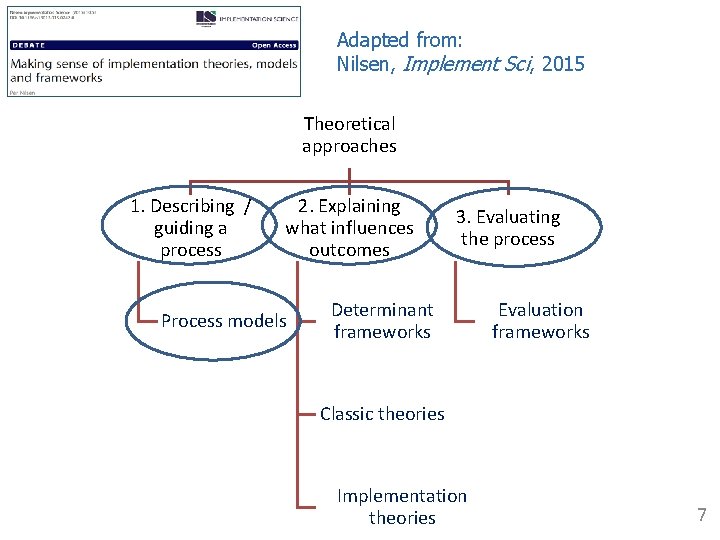
Adapted from: Nilsen, Implement Sci, 2015 Theoretical approaches 1. Describing / guiding a process 2. Explaining what influences outcomes Process models 3. Evaluating the process Determinant frameworks Evaluation frameworks Classic theories Implementation theories 7
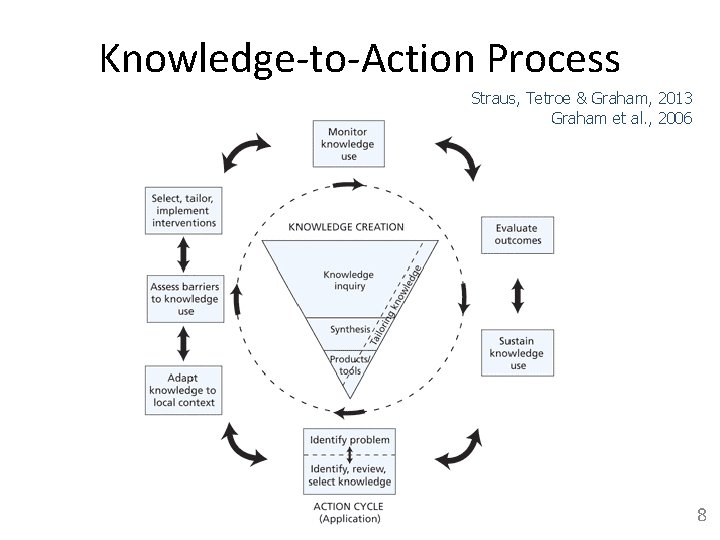
Knowledge-to-Action Process Straus, Tetroe & Graham, 2013 Graham et al. , 2006 8
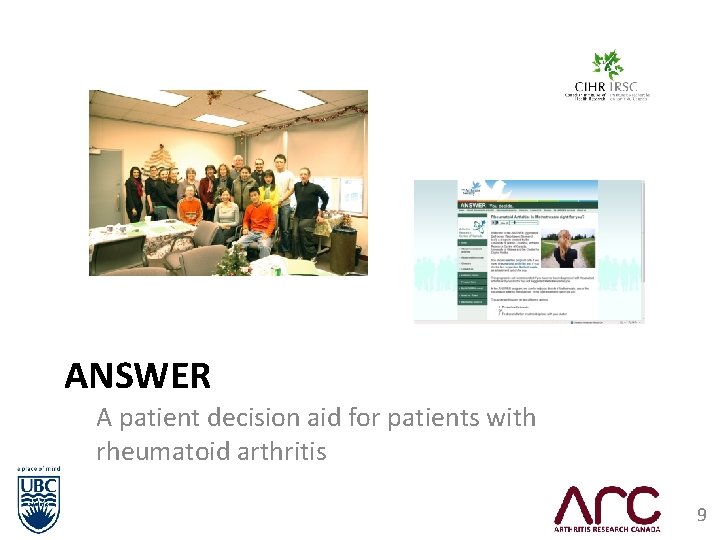
ANSWER A patient decision aid for patients with rheumatoid arthritis 9
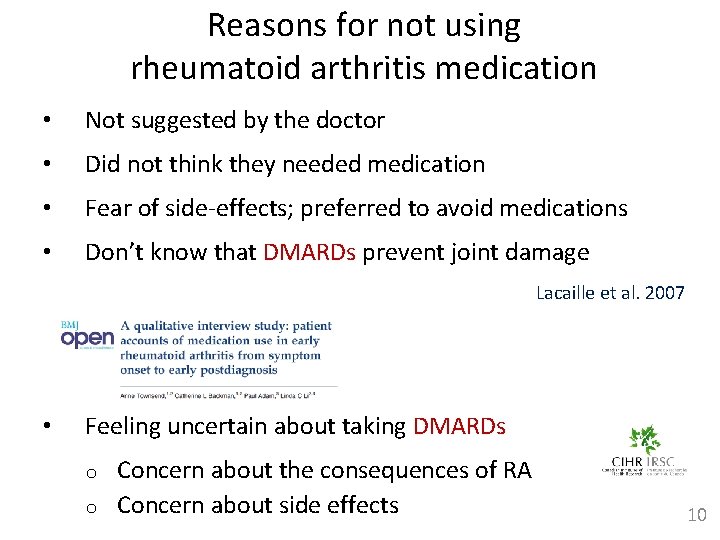
Reasons for not using rheumatoid arthritis medication • Not suggested by the doctor • Did not think they needed medication • Fear of side-effects; preferred to avoid medications • Don’t know that DMARDs prevent joint damage Lacaille et al. 2007 • Feeling uncertain about taking DMARDs Concern about the consequences of RA o Concern about side effects o 10
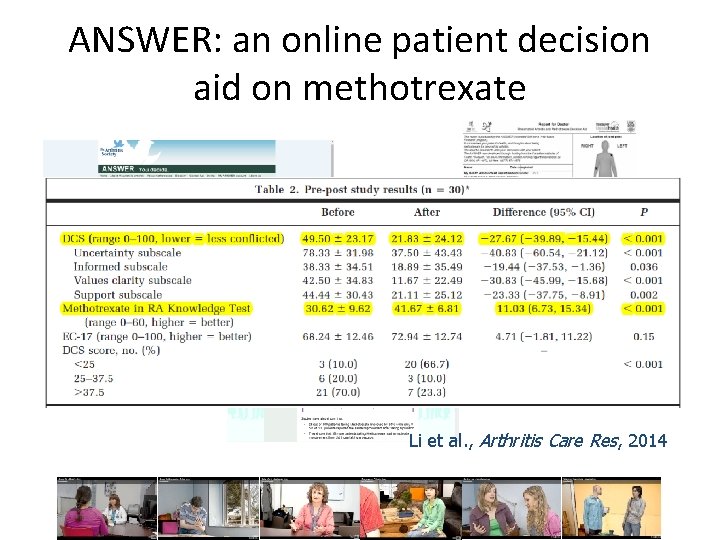
ANSWER: an online patient decision aid on methotrexate Li et al. , Arthritis Care Res, 2014
New issue… • 57% of rheumatologists were unfamiliar with patient decision aids. • 67% felt that their use required reorganization of practice and workflow. • Qualitative interviews: o Did not see a difference between patient decision aids and the existing patient education tools o Information is solely based on RCT findings o Fear of impairing MD-patient communication 12
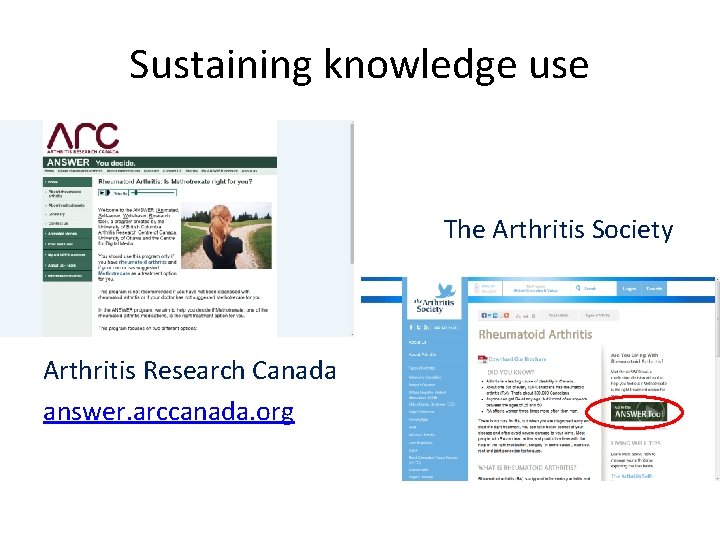
Sustaining knowledge use The Arthritis Society Arthritis Research Canada answer. arccanada. org
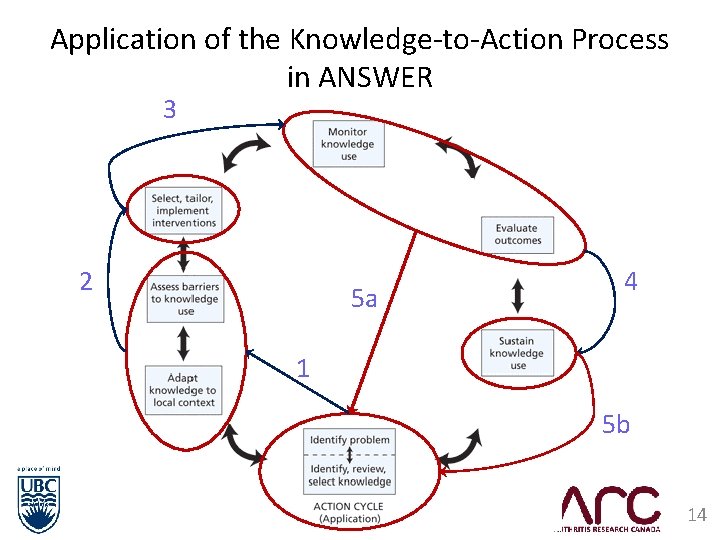
Application of the Knowledge-to-Action Process in ANSWER 3 2 15 a 4 1 5 b 14
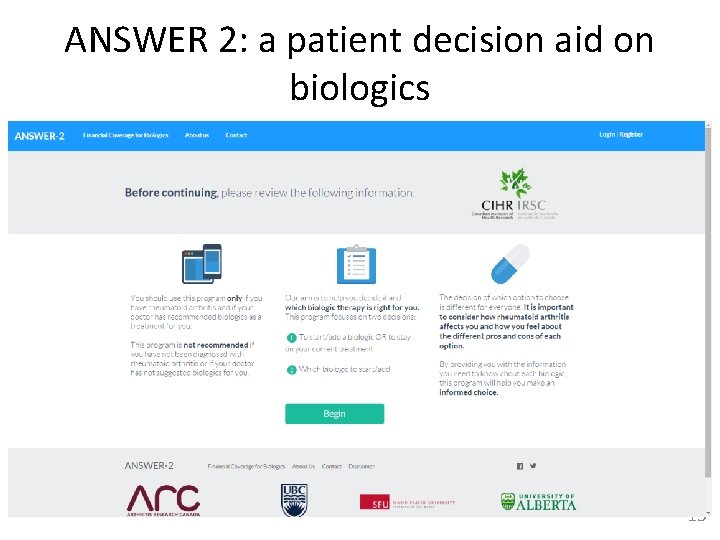
ANSWER 2: a patient decision aid on biologics 15
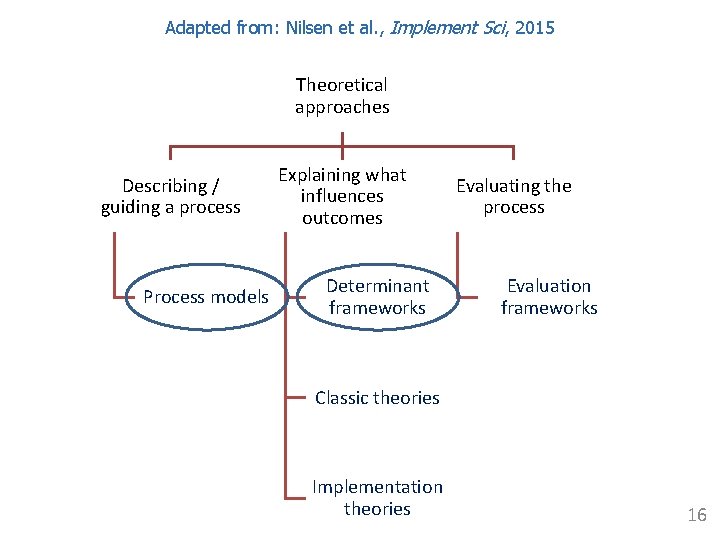
Adapted from: Nilsen et al. , Implement Sci, 2015 Theoretical approaches Describing / guiding a process Process models Explaining what influences outcomes Determinant frameworks Evaluating the process Evaluation frameworks Classic theories Implementation theories 16
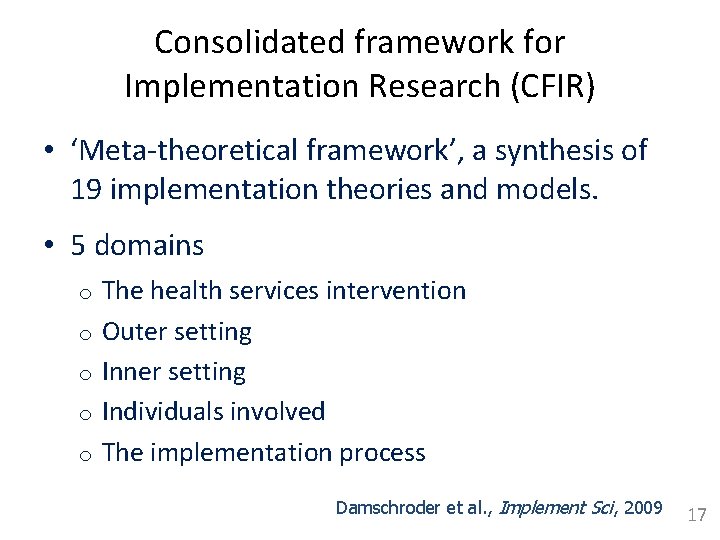
Consolidated framework for Implementation Research (CFIR) • ‘Meta-theoretical framework’, a synthesis of 19 implementation theories and models. • 5 domains o o o The health services intervention Outer setting Inner setting Individuals involved The implementation process Damschroder et al. , Implement Sci, 2009 17
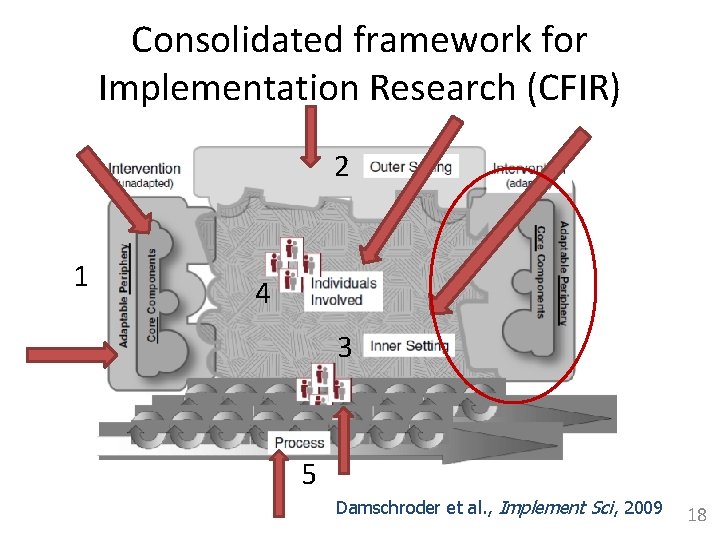
Consolidated framework for Implementation Research (CFIR) 2 1 4 3 5 Damschroder et al. , Implement Sci, 2009 18
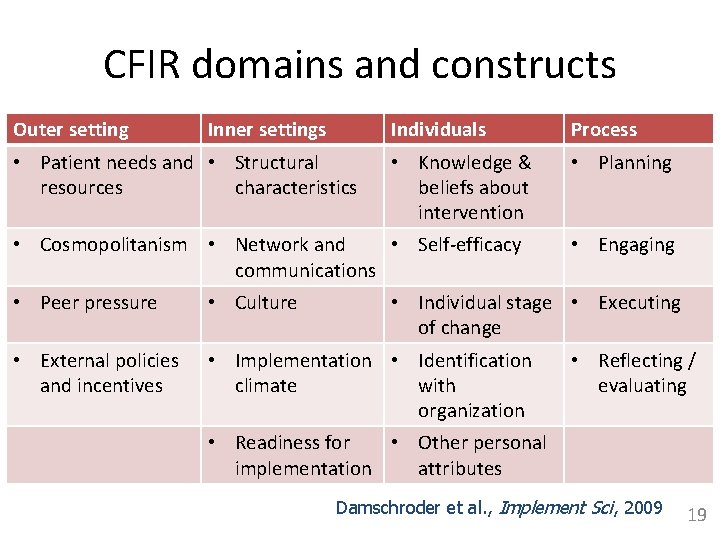
CFIR domains and constructs Outer setting Inner settings • Patient needs and • Structural resources characteristics Individuals Process • Knowledge & beliefs about intervention • Planning • Cosmopolitanism • Network and • Self-efficacy communications • Peer pressure • Culture • External policies and incentives • Implementation • Identification climate with organization • Engaging • Individual stage • Executing of change • Reflecting / evaluating • Readiness for • Other personal implementation attributes Damschroder et al. , Implement Sci, 2009 19
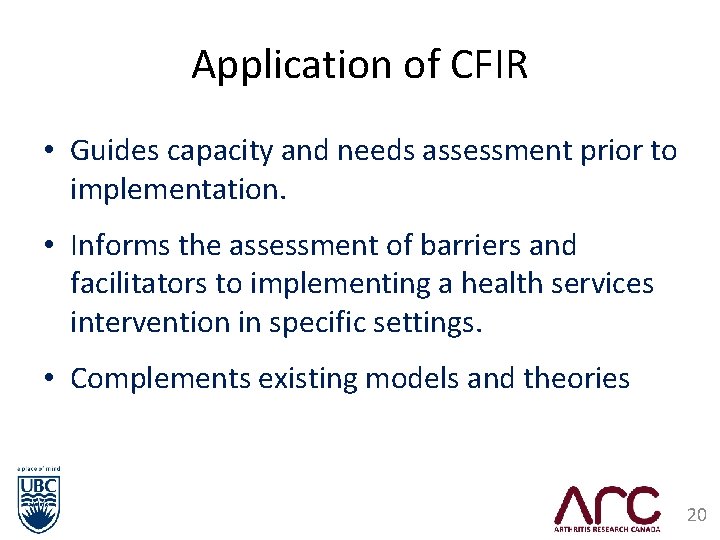
Application of CFIR • Guides capacity and needs assessment prior to implementation. • Informs the assessment of barriers and facilitators to implementing a health services intervention in specific settings. • Complements existing models and theories 20
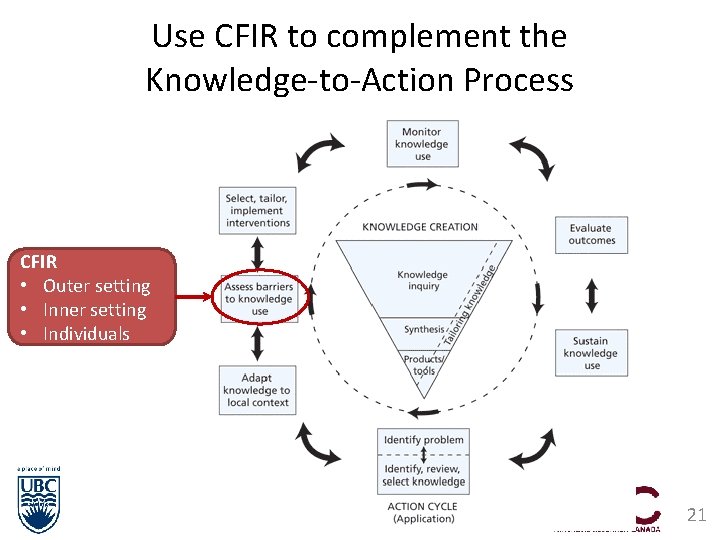
Use CFIR to complement the Knowledge-to-Action Process CFIR • Outer setting • Inner setting • Individuals 21

Physical Therapy, KT & Implementation Science Special Issue, 2015 22
Summary • Investment in KT is necessary. • The Knowledge-to-Action Process can be applied fluidly to guide the KT process. • The Consolidated Framework for Implementation Research (CFIR) provides a structure for adapting and studying a health service intervention for local use. • The use of models and frameworks can help to open the ‘black box’ of implementation 23
Acknowledgements Patient partners: Cheryl Koehn, Alison Hoens, Kelly English, Karen Tsui, Otto Kamensek, Sheila Kerr, Lianne Gulka, Annette Mc. Kinnon, Ruta Cumming, Pam Monte, and many more … Research collaborators Trainees John Esdaile Diane Lacaille Chris Shaw Diane Gromala Aileen Davis Jolanda Cibere Nick Bansback Lynne Feehan Elaine Yacyshyn Allyson Jones Jacek Kopec Paul Adam Alison Hoens Catherine Backman Jenny Leese Bao Chau Tran Cam Clayton Alex Klemm Clayon Hamilton > 25 Master’s students @ Centre for Digital Media, Vancouver Staff members Jasmina Memetovic Navi Grewal Graham Macdonald Eric Sayre Juyoung Yoo
- Slides: 24