
Lincolns House Divided Speech In my opinion it
- Slides: 19
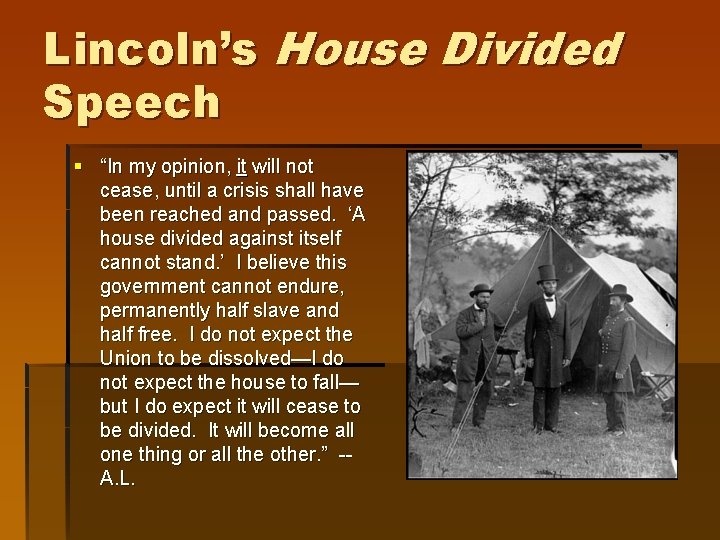
Lincoln’s House Divided Speech § “In my opinion, it will not cease, until a crisis shall have been reached and passed. ‘A house divided against itself cannot stand. ’ I believe this government cannot endure, permanently half slave and half free. I do not expect the Union to be dissolved—I do not expect the house to fall— but I do expect it will cease to be divided. It will become all one thing or all the other. ” -A. L.
IQ’S 1. What does the word “it” refer to in the first line of the text? 2. What, according to Lincoln, threatens the stability of a house? 3. In your opinion, which is more important to Lincoln…ending slavery or preserving the Union? 4. Do you agree with Lincoln’s position? Why or why not?
America…The Resolution Unit 1, Notes 2
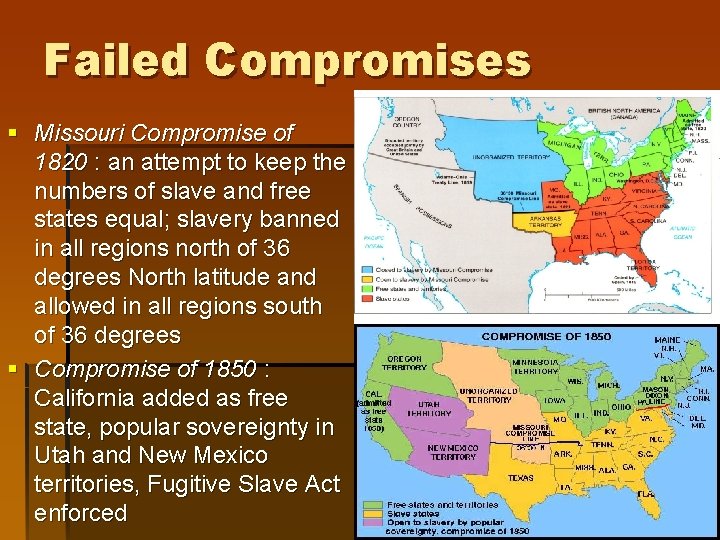
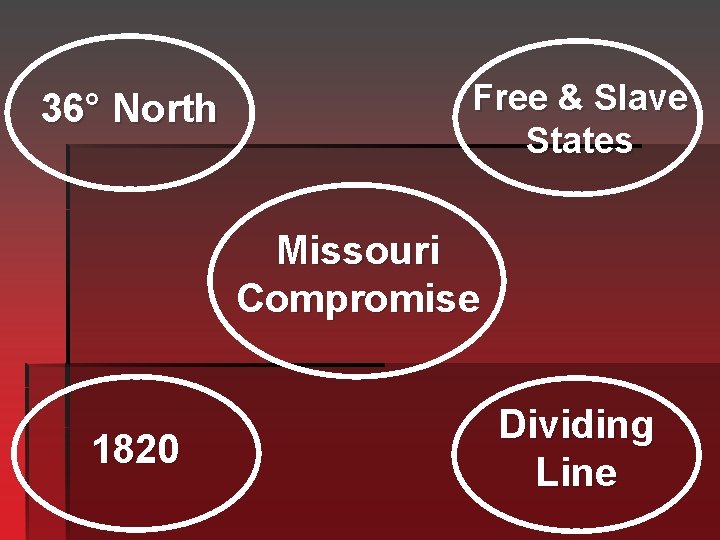
Failed Compromises § Missouri Compromise of 1820 : an attempt to keep the numbers of slave and free states equal; slavery banned in all regions north of 36 degrees North latitude and allowed in all regions south of 36 degrees § Compromise of 1850 : California added as free state, popular sovereignty in Utah and New Mexico territories, Fugitive Slave Act enforced
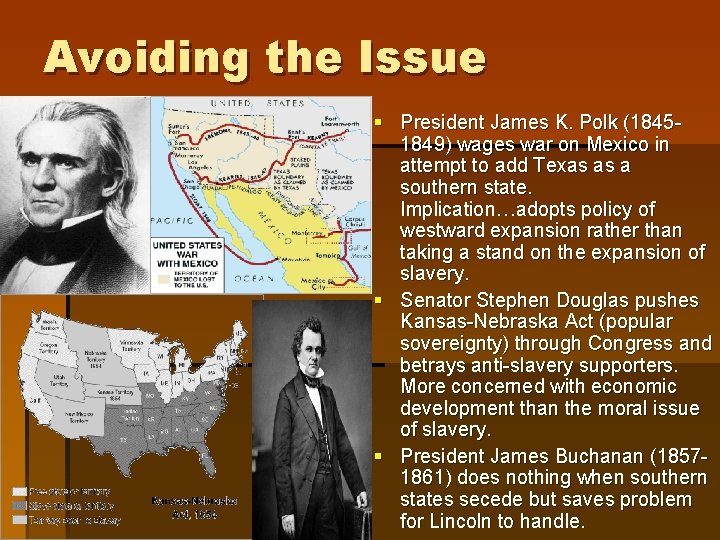
Avoiding the Issue § President James K. Polk (18451849) wages war on Mexico in attempt to add Texas as a southern state. Implication…adopts policy of westward expansion rather than taking a stand on the expansion of slavery. § Senator Stephen Douglas pushes Kansas-Nebraska Act (popular sovereignty) through Congress and betrays anti-slavery supporters. More concerned with economic development than the moral issue of slavery. § President James Buchanan (18571861) does nothing when southern states secede but saves problem for Lincoln to handle.
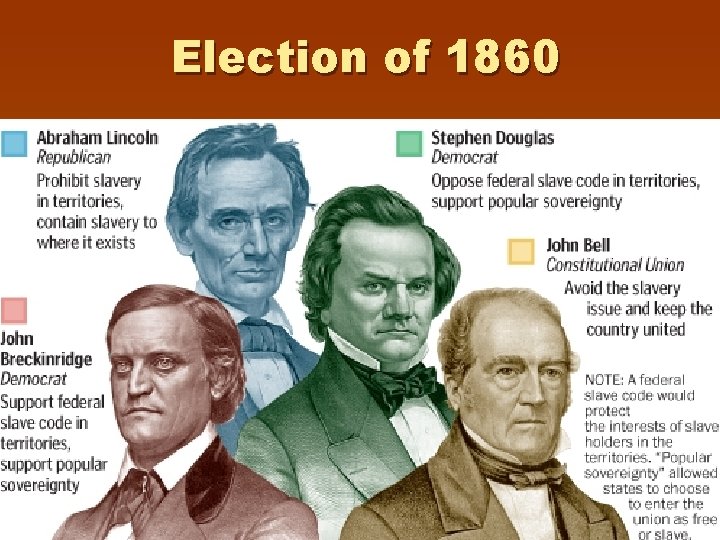
Election of 1860
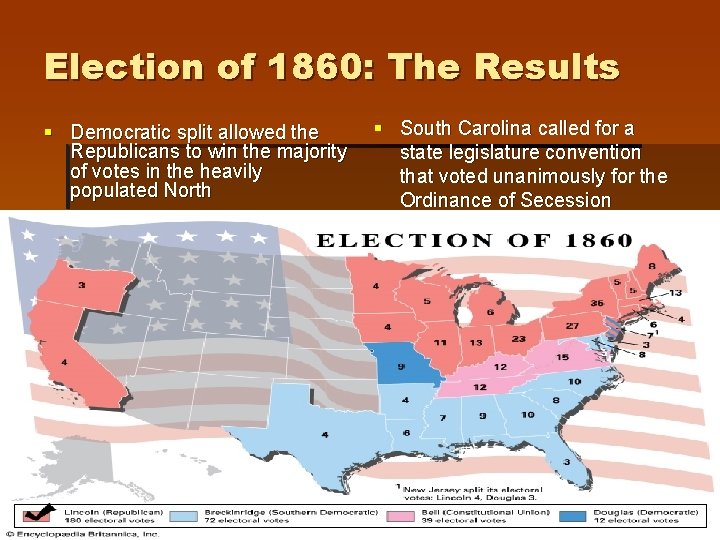
Election of 1860: The Results § Democratic split allowed the Republicans to win the majority of votes in the heavily populated North § Though receiving only 40% of the popular vote, Lincoln carried enough electoral votes to win the election and become the first Republican president § Many Southerners feared the election of the "Black Republicans" was a threat to their society and culture § South Carolina called for a state legislature convention that voted unanimously for the Ordinance of Secession (December 20, 1860)… other states soon followed § Original states of Southern secession (7) v South Carolina v Mississippi v Florida v Alabama v Georgia v Louisiana v Texas
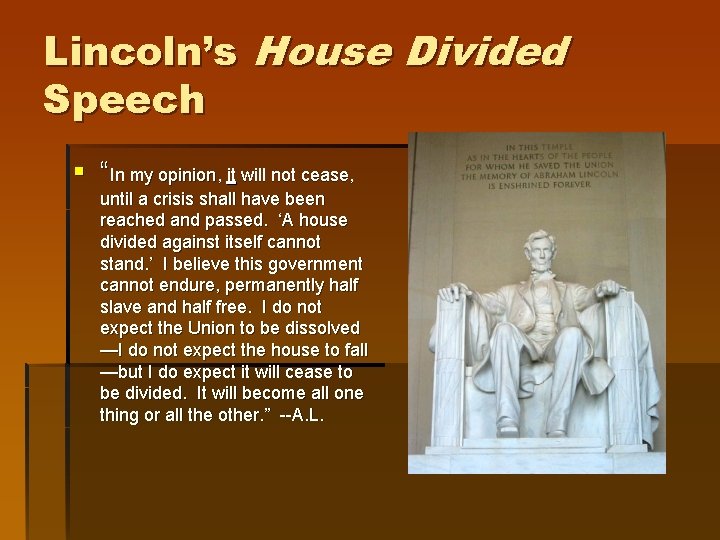
Lincoln’s House Divided Speech § “In my opinion, it will not cease, until a crisis shall have been reached and passed. ‘A house divided against itself cannot stand. ’ I believe this government cannot endure, permanently half slave and half free. I do not expect the Union to be dissolved —I do not expect the house to fall —but I do expect it will cease to be divided. It will become all one thing or all the other. ” --A. L.
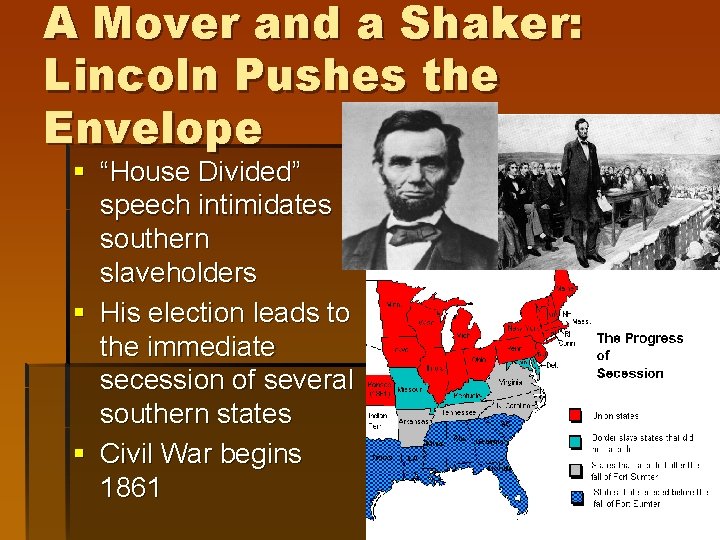
A Mover and a Shaker: Lincoln Pushes the Envelope § “House Divided” speech intimidates southern slaveholders § His election leads to the immediate secession of several southern states § Civil War begins 1861
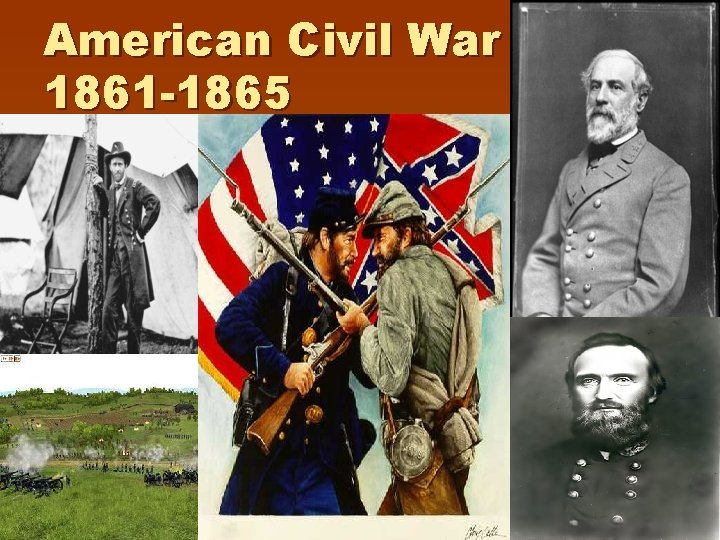
American Civil War 1861 -1865
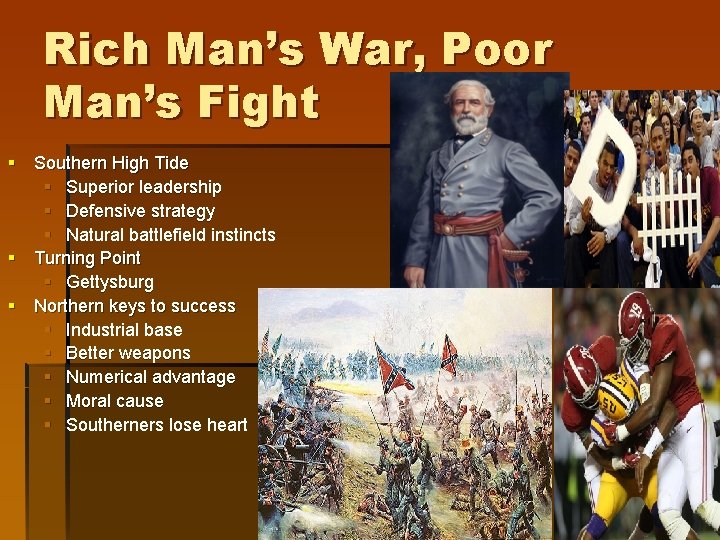
Rich Man’s War, Poor Man’s Fight § Southern High Tide § Superior leadership § Defensive strategy § Natural battlefield instincts § Turning Point § Gettysburg § Northern keys to success § Industrial base § Better weapons § Numerical advantage § Moral cause § Southerners lose heart
Significance § America becomes industrial nation § Crossroads of American History § American identity is born (American first, southerner second) § Triumph of Democracy: “Government of the people, by the people, and for the people” did not perish from the earth
UNIT 1 REVIEW Early American History
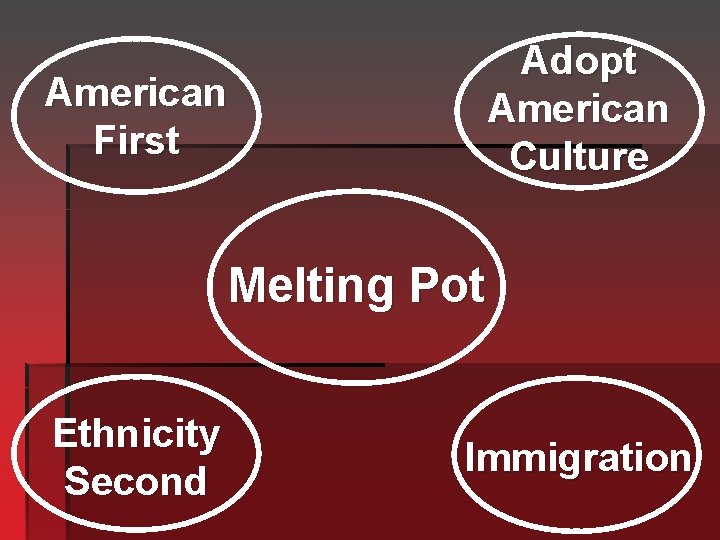
Adopt American Culture American First Melting Pot Ethnicity Second Immigration
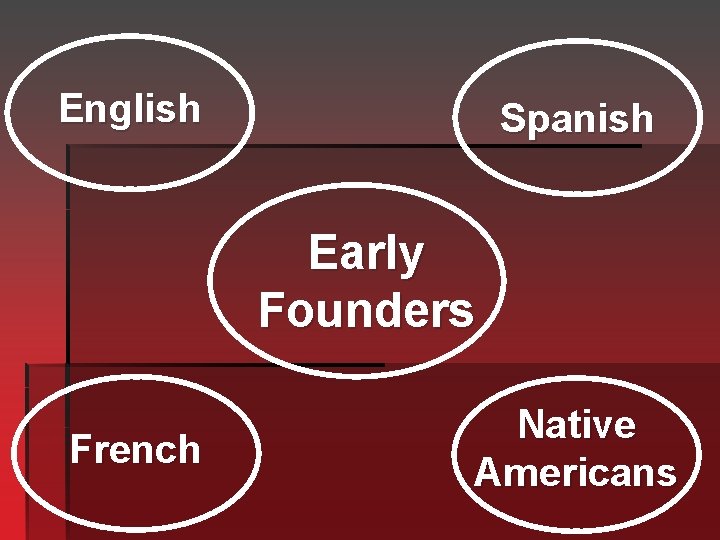
English Spanish Early Founders French Native Americans
36° North Free & Slave States Missouri Compromise 1820 Dividing Line
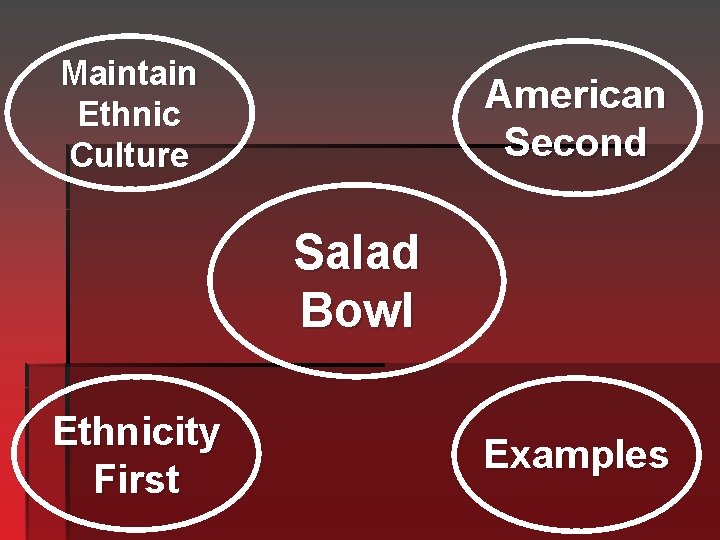
Maintain Ethnic Culture American Second Salad Bowl Ethnicity First Examples
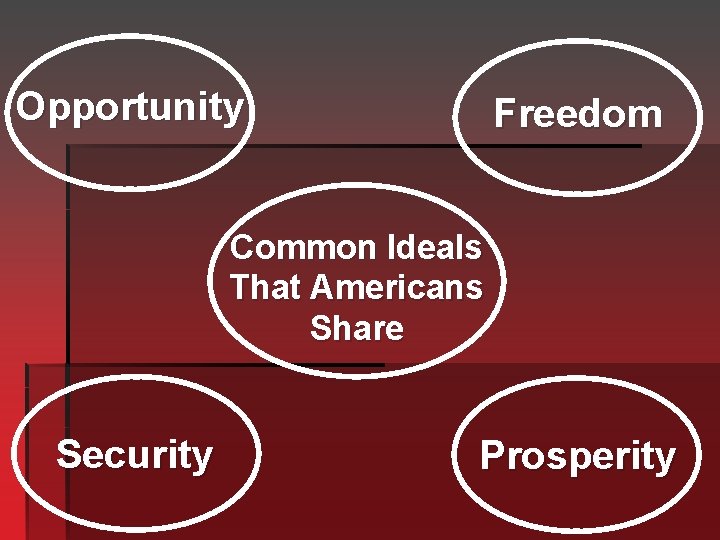
Opportunity Freedom Common Ideals That Americans Share Security Prosperity
Others to Know § § § § § Federalism vs. Anti-Federalism The Great Compromise 3/5’s Compromise James K. Polk Stephen Douglas James Buchanan Kansas-Nebraska Act Compromise of 1850 Lincoln’s House Divided Speech