
LIMPARFAIT The imperfect past tense Youve learned how
- Slides: 8
L'IMPARFAIT (The "imperfect" past tense. )
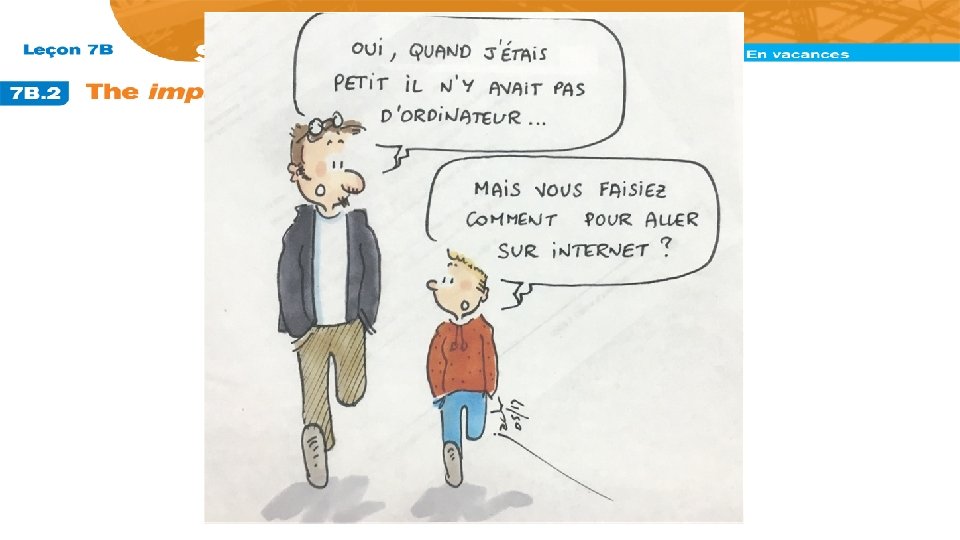
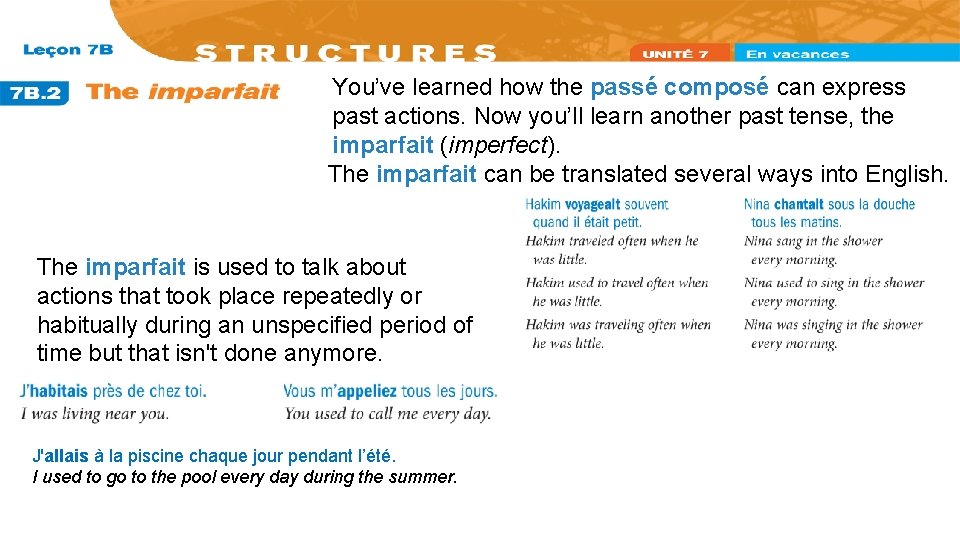
You’ve learned how the passé composé can express past actions. Now you’ll learn another past tense, the imparfait (imperfect). The imparfait can be translated several ways into English. The imparfait is used to talk about actions that took place repeatedly or habitually during an unspecified period of time but that isn't done anymore. J'allais à la piscine chaque jour pendant l’été. I used to go to the pool every day during the summer.
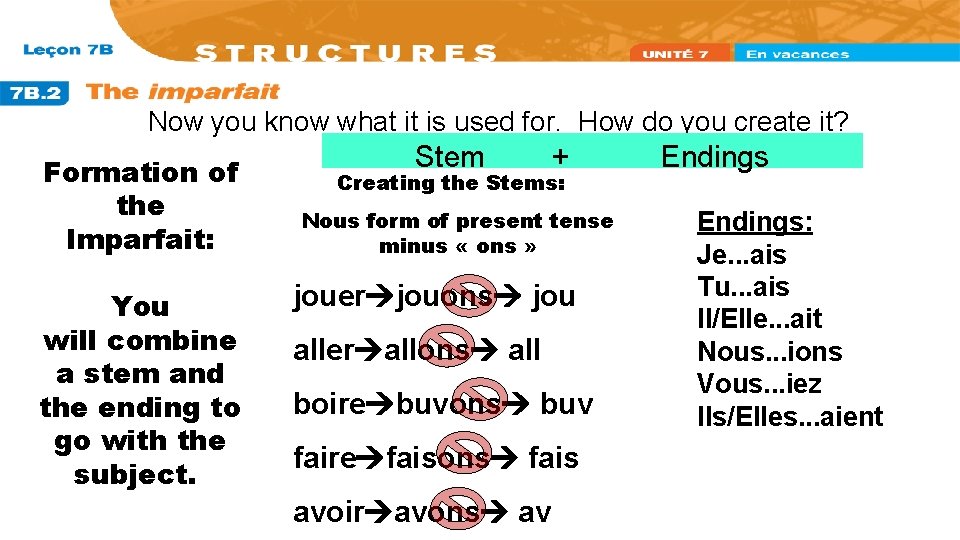
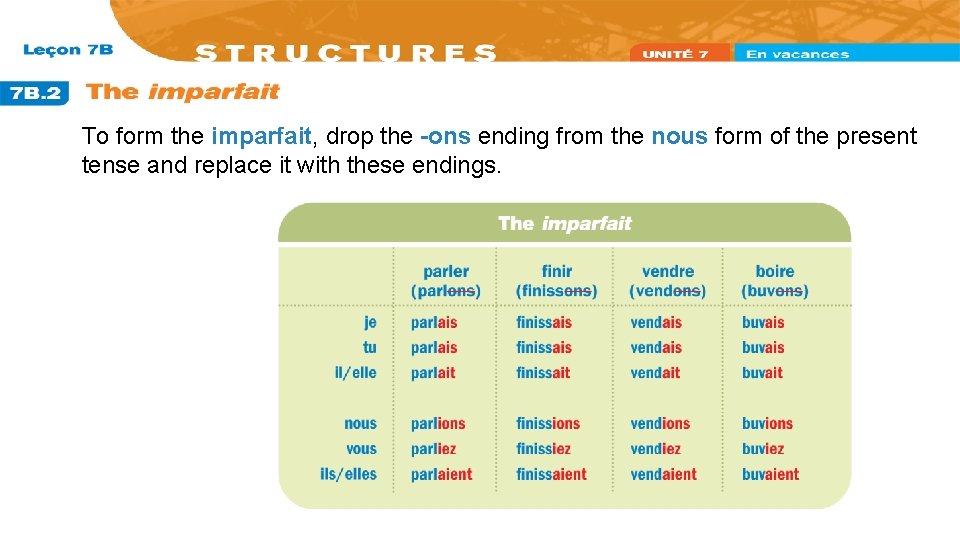
Now you know what it is used for. How do you create it? Formation of the Imparfait: You will combine a stem and the ending to go with the subject. Stem + Creating the Stems: Nous form of present tense minus « ons » jouer jouons jou aller allons all boire buvons buv faire faisons fais avoir avons av Endings: Je. . . ais Tu. . . ais Il/Elle. . . ait Nous. . . ions Vous. . . iez Ils/Elles. . . aient
To form the imparfait, drop the -ons ending from the nous form of the present tense and replace it with these endings.
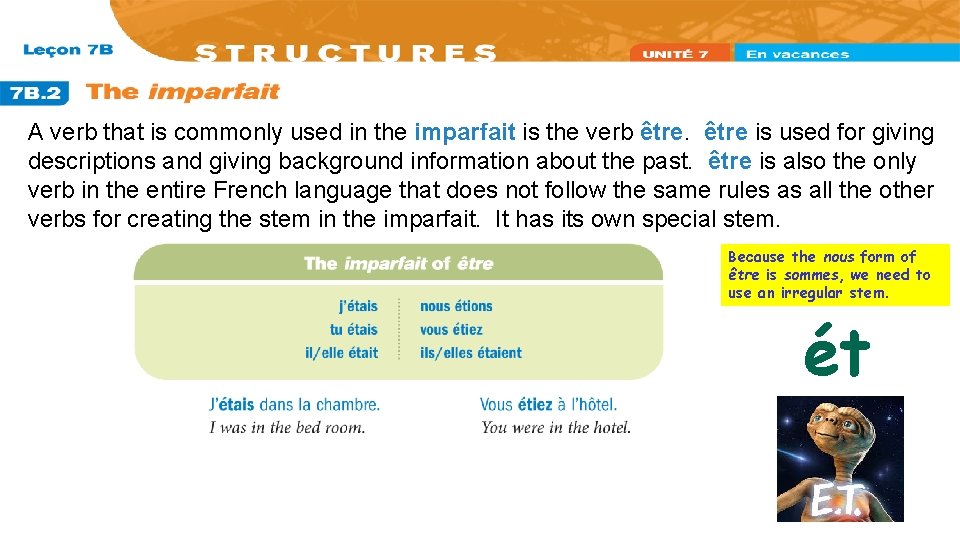
A verb that is commonly used in the imparfait is the verb être is used for giving descriptions and giving background information about the past. être is also the only verb in the entire French language that does not follow the same rules as all the other verbs for creating the stem in the imparfait. It has its own special stem. Because the nous form of être is sommes, we need to use an irregular stem. ét
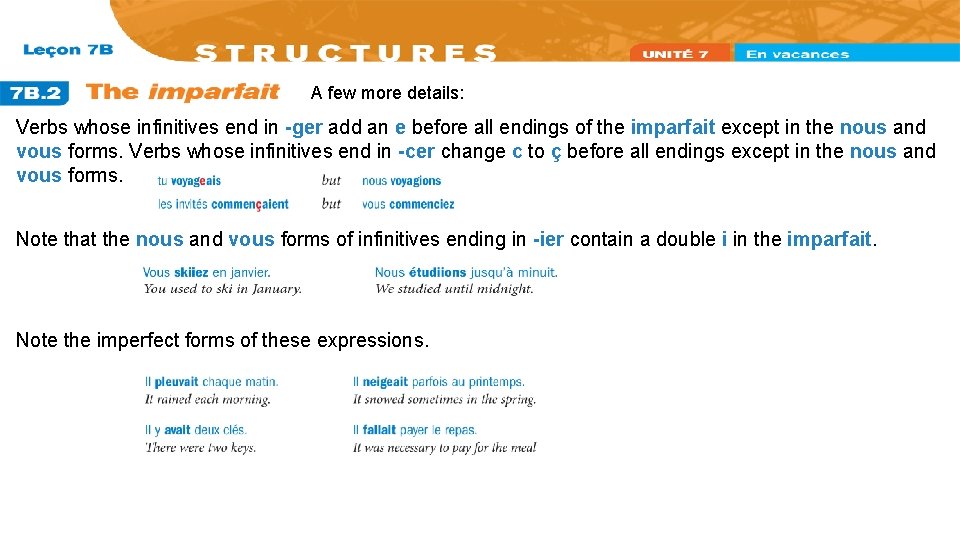
A few more details: Verbs whose infinitives end in -ger add an e before all endings of the imparfait except in the nous and vous forms. Verbs whose infinitives end in -cer change c to ç before all endings except in the nous and vous forms. Note that the nous and vous forms of infinitives ending in -ier contain a double i in the imparfait. Note the imperfect forms of these expressions.
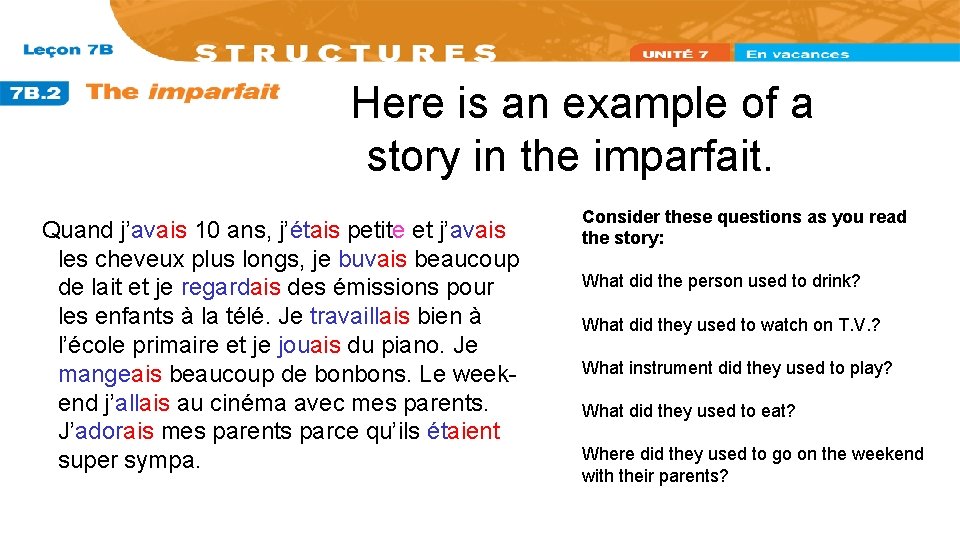
Here is an example of a story in the imparfait. Quand j’avais 10 ans, j’étais petite et j’avais les cheveux plus longs, je buvais beaucoup de lait et je regardais des émissions pour les enfants à la télé. Je travaillais bien à l’école primaire et je jouais du piano. Je mangeais beaucoup de bonbons. Le weekend j’allais au cinéma avec mes parents. J’adorais mes parents parce qu’ils étaient super sympa. Consider these questions as you read the story: What did the person used to drink? What did they used to watch on T. V. ? What instrument did they used to play? What did they used to eat? Where did they used to go on the weekend with their parents?