
Limits and Infinity AKA Asymptotes of Rational Functions

- Slides: 16
Limits and Infinity AKA, Asymptotes of Rational Functions, Calculus Style AP Calculus Ms. Olifer
OBJECTIVES: SWBAT: UNDERSTAND BE ABLE TO APPLY THE BASIC LIMITS LAWS FOR LIMITS AT INFINITY DESCRIBE THE LIMITS AT INFINITY CALCULATE LIMITS AT INFINITY OF A RATIONAL FUNCTION
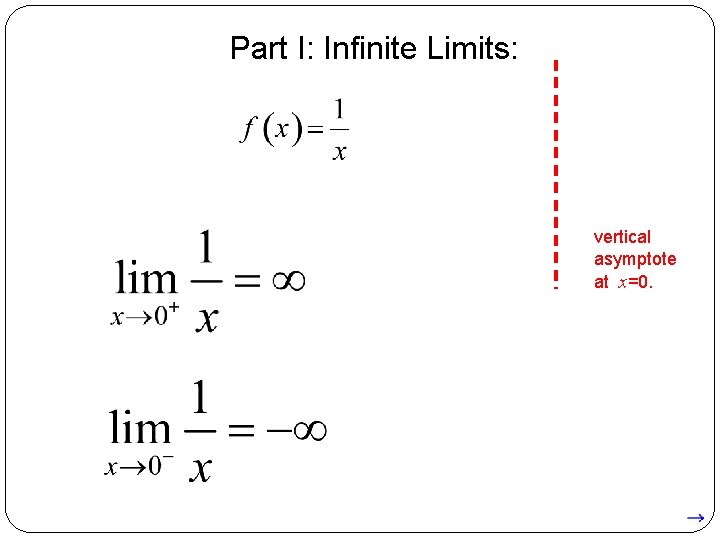
Part I: Infinite Limits: vertical asymptote at x=0.
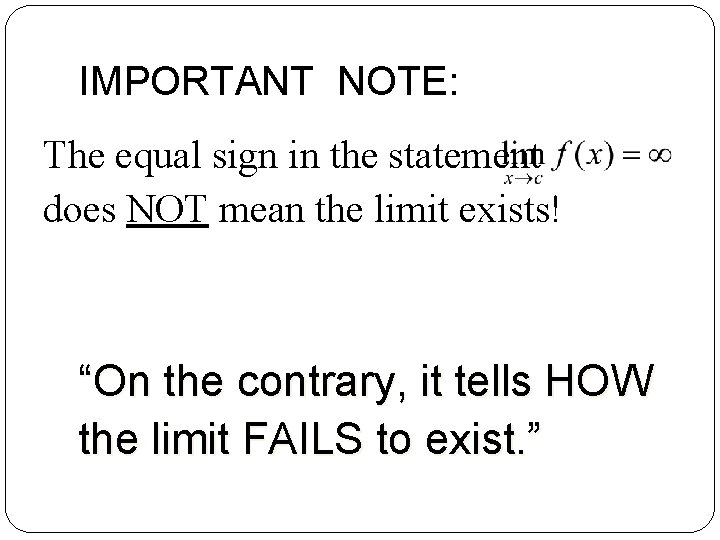
IMPORTANT NOTE: The equal sign in the statement does NOT mean the limit exists! “On the contrary, it tells HOW the limit FAILS to exist. ”
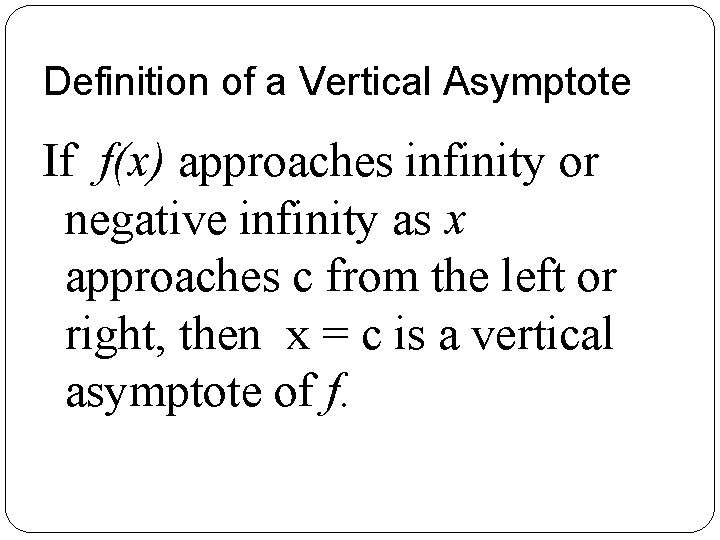
Definition of a Vertical Asymptote If f(x) approaches infinity or negative infinity as x approaches c from the left or right, then x = c is a vertical asymptote of f.
Digging deeper… Infinity is a very special idea. We know we can't reach it, but we can still try to work out the value of functions that have infinity in them.
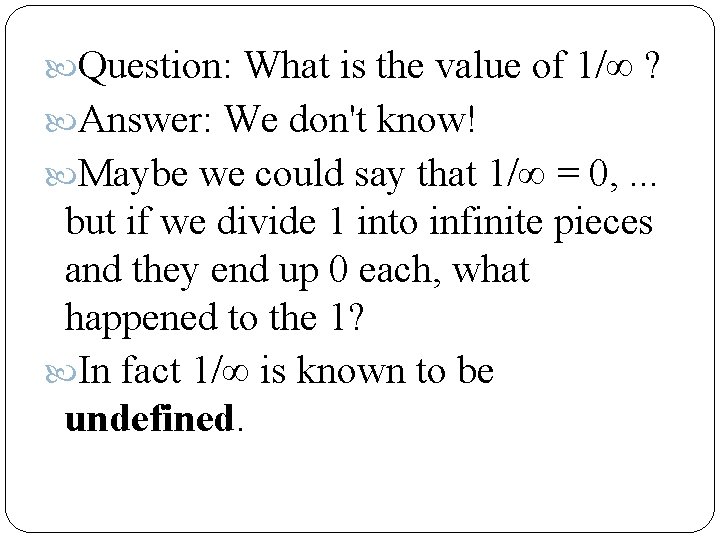
Question: What is the value of 1/∞ ? Answer: We don't know! Maybe we could say that 1/∞ = 0, . . . but if we divide 1 into infinite pieces and they end up 0 each, what happened to the 1? In fact 1/∞ is known to be undefined.
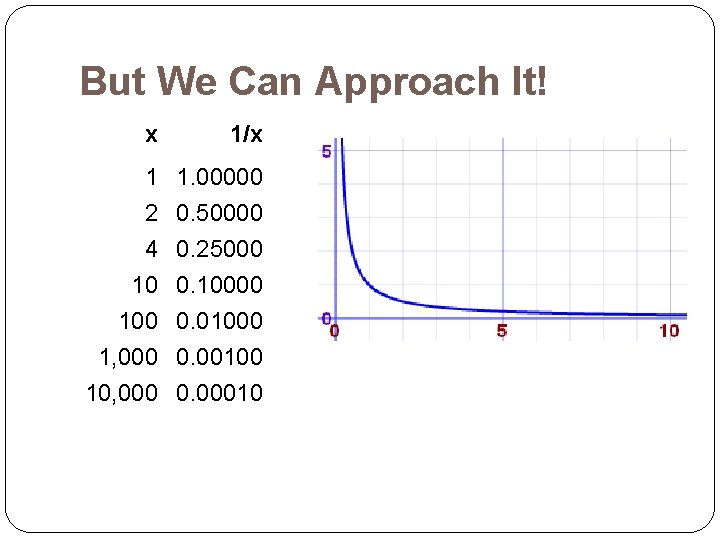
But We Can Approach It! x 1/x 1 1. 00000 2 0. 50000 4 0. 25000 10 100 1, 000 10, 000 0. 10000 0. 01000 0. 00100 0. 00010
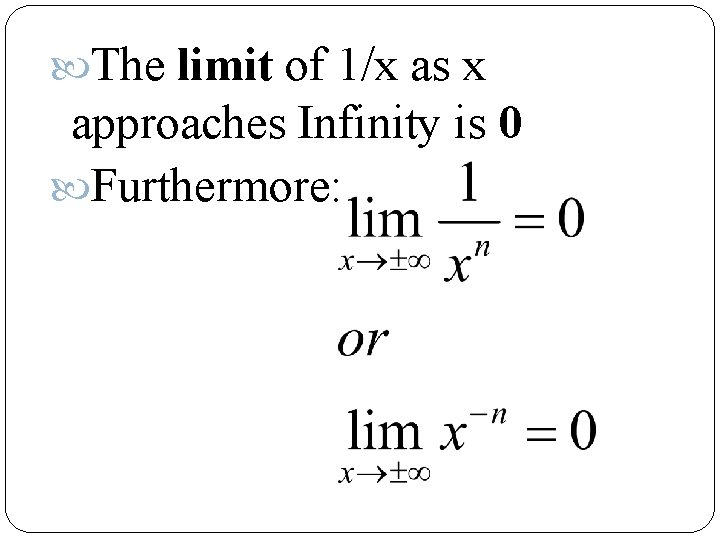
The limit of 1/x as x approaches Infinity is 0 Furthermore:
Horizontal Asymptote Infinite limits describe the asymptotic behavior of a function, which is behavior of the graph as we move out to the right or to the left. Example 1, pg. 100.
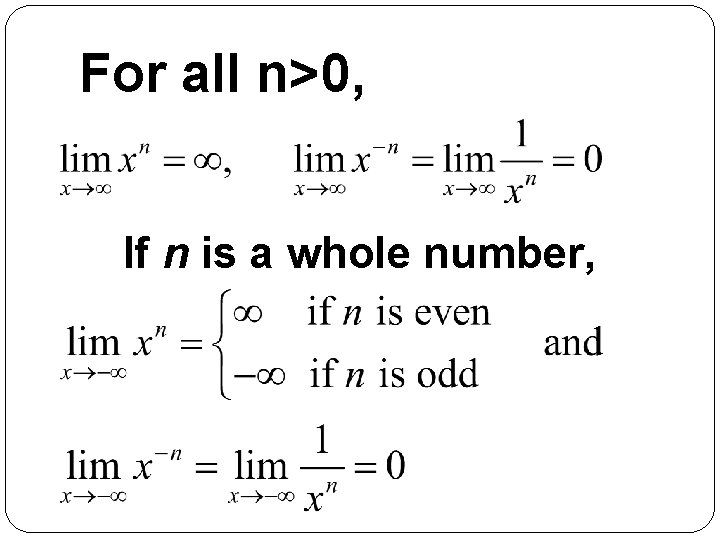
For all n>0, If n is a whole number,
EXAMPLES 2 -4, pgs. 102 -104
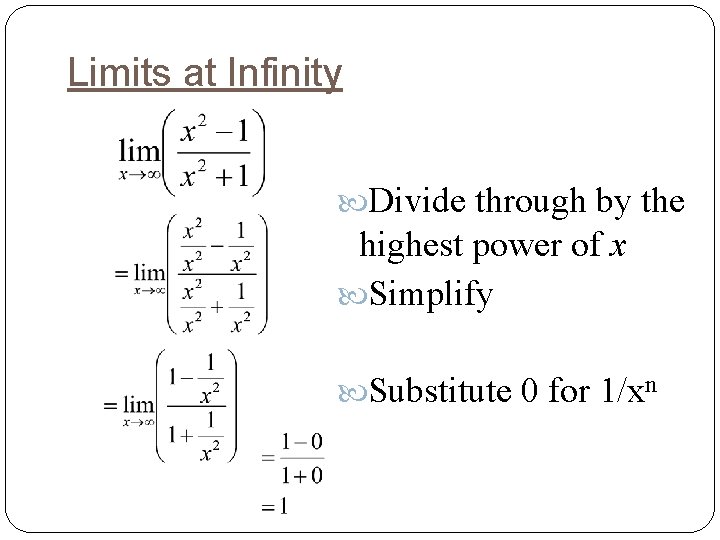
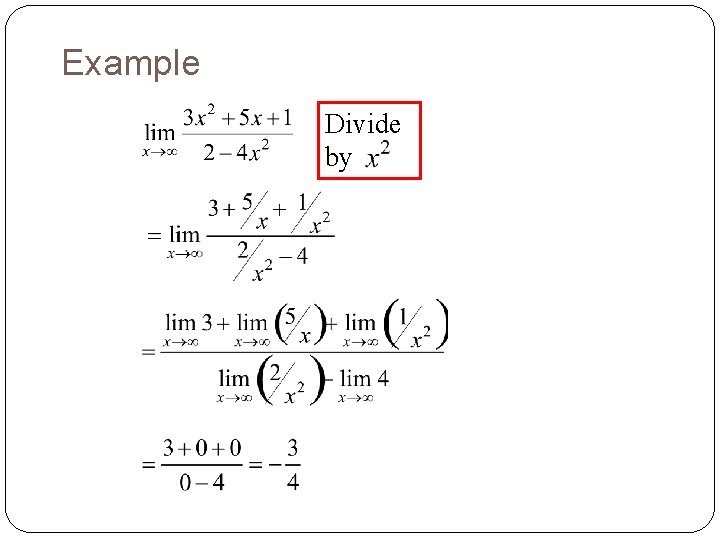
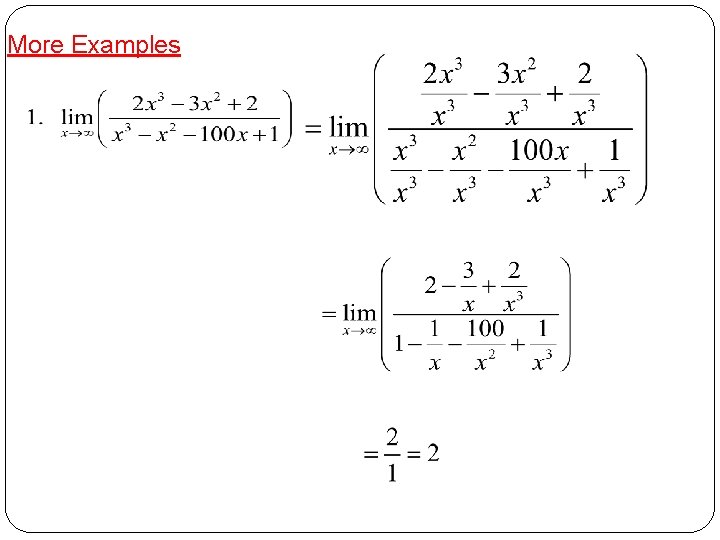
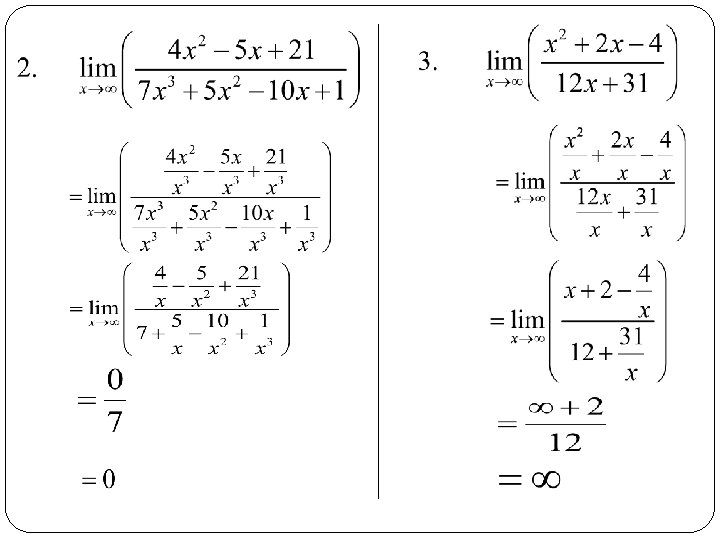
Limits at Infinity Divide through by the highest power of x Simplify Substitute 0 for 1/xn
Example Divide by
More Examples