
Limb LengthGirthVolume Measurement PHT 1261 C Tests and
Limb Length/Girth/Volume Measurement PHT 1261 C Tests and Measurements Dr. Kane
Anthropometric Measurements � Definition – anthropometry ◦ What is it? ◦ Why is it important?
What do we measure?
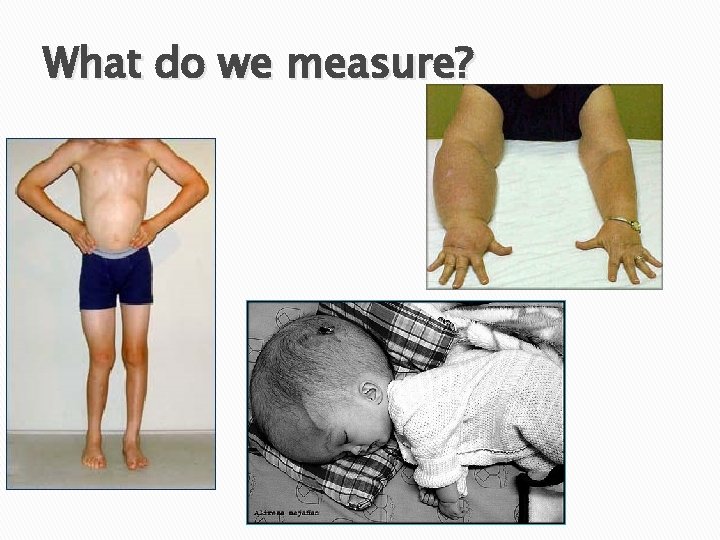
What to measure? � Edema � Localized swelling � Joint effusion � Muscular changes � Asymmetry of body parts � Effects of surgical procedures

Why measure? � Aids clinician in determining pt. 's impairments to provide the appropriate treatment � Provides baseline data information to monitor progress and outcomes � Provides feedback & motivation for patients � Aids in designing equipment and materials for special populations � Provides info in design of objects and spaces used by normal population
What to measure with? � Tape Measure � Steel Tape � Volumeter � Anthropometer � Calipers � Perometry – infrared laser � Bioimpedence
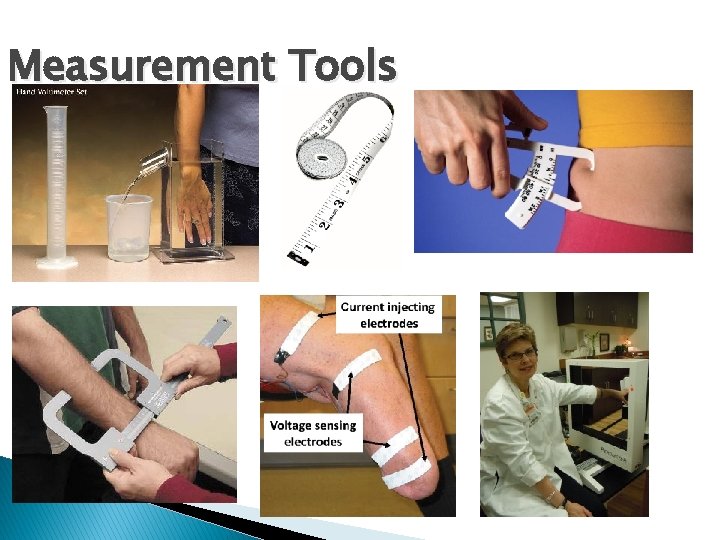
Measurement Tools
Using the Tape Measure � Measure in cm � Place the tape measure flat on the body � The tape measure should be stretched out and not slack � If the segment to be measured is irregular or conical in shape, the proximal part of the tape should be flat � When measuring circumference, surround the body part without undue constricting pressure
Limb Length Measurement � Indications ◦ Upper Extremity �Arm �Forearm ◦ Lower Extremity �Thigh/Femur �Leg
Girth Measurements � Indications � Upper Extremity � Lower Extremity � Other areas ◦ Arm ◦ Forearm ◦ Thigh ◦ Leg ◦ Hands, feet, waist, hips, head
Leg Length Measurement � Indications � True (anatomical) vs. Apparent (functional) ◦ A difference of 1. 0 to 1. 5 cm is still considered normal but may be symptomatic ◦ Valid & Reliable ◦ Sources of error – muscle bulk, clothing, palpation
Leg Length Measurement � True Leg Length ◦ ASIS ◦ Medial Malleolus ◦ Lateral Malleolus � Specific location of difference ◦ ASIS to greater trochanter – hip valgus/varus ◦ Greater trochanter to lateral joint line – femur ◦ Medial joint line of knee to medial malleolus – tibia � Interpreting results
Leg Length Measurement � Apparent Leg Length ◦ Indications ◦ Landmarks: �Umbilicus �Medial Malleolus ◦ Interpretation
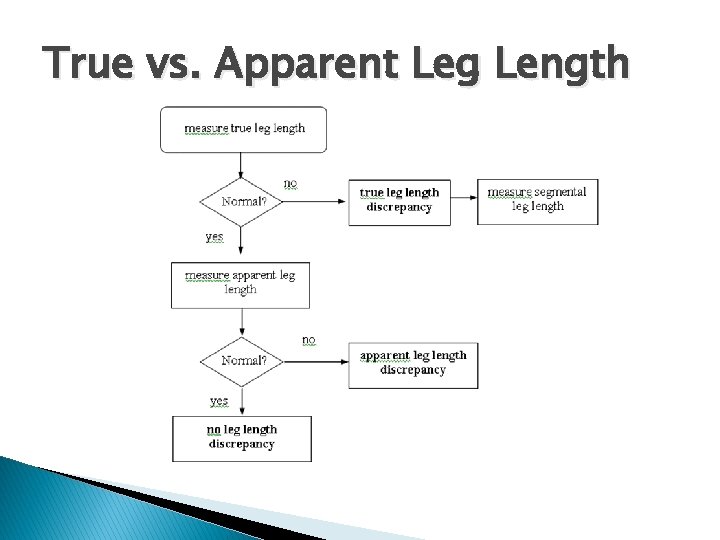
True vs. Apparent Leg Length
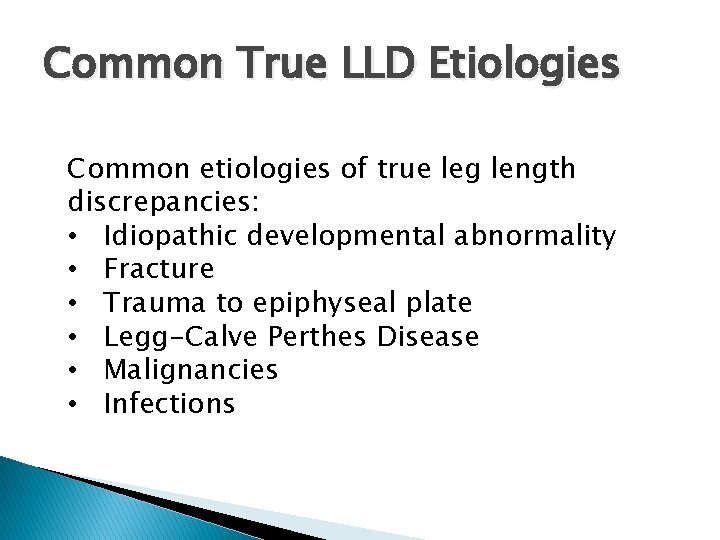
Common True LLD Etiologies Common etiologies of true leg length discrepancies: • Idiopathic developmental abnormality • Fracture • Trauma to epiphyseal plate • Legg-Calve Perthes Disease • Malignancies • Infections
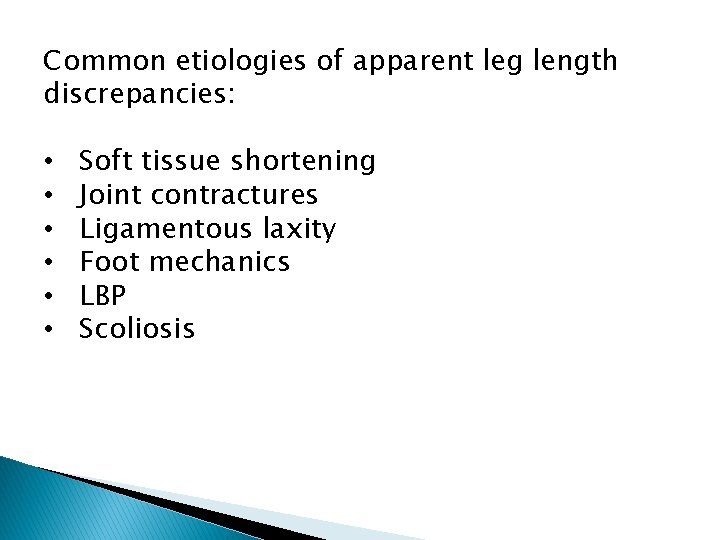
Common etiologies of apparent leg length discrepancies: • • • Soft tissue shortening Joint contractures Ligamentous laxity Foot mechanics LBP Scoliosis
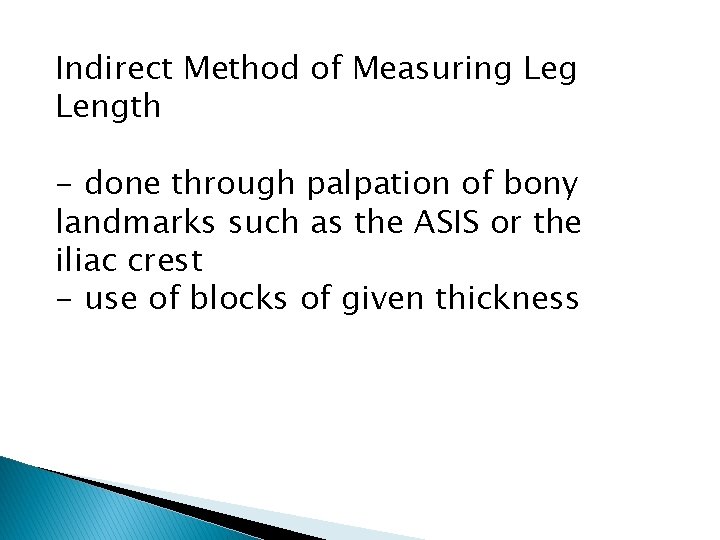
Indirect Method of Measuring Length - done through palpation of bony landmarks such as the ASIS or the iliac crest - use of blocks of given thickness
- Slides: 17