
Limb length and girth measurement By Dr Mahmoud
Limb length and girth measurement By Dr/ Mahmoud Elshazly Lecturer of physical therapy South valley university
Leg length discrepancy Inequality in leg length is commonly associated with compensatory gait abnormalities and may lead to degenerative arthritis of the lower extremity and lumbar spine. Patients with leg-length discrepancy (LLD) can also have angular and torsional deformities as well as soft tissue contractures of the ipsilateral or contralateral extremity that may influence their functional leg lengths.
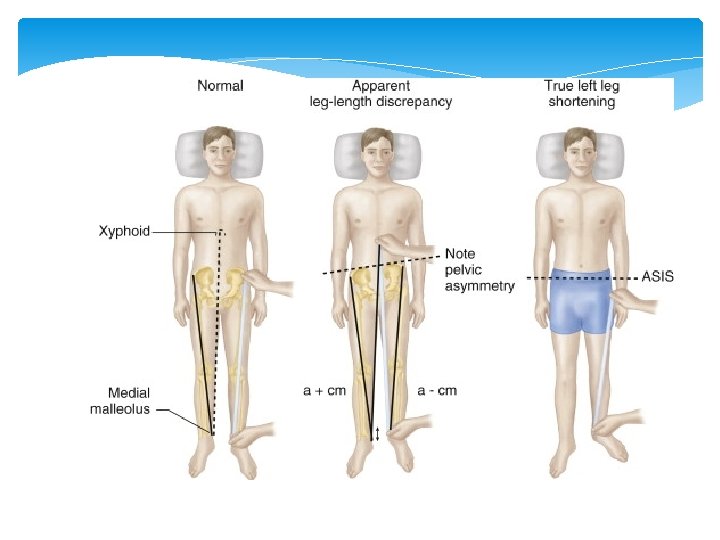
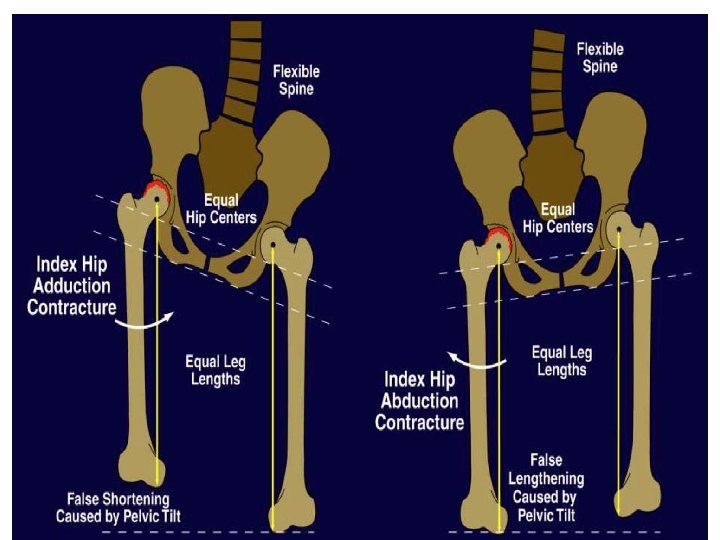
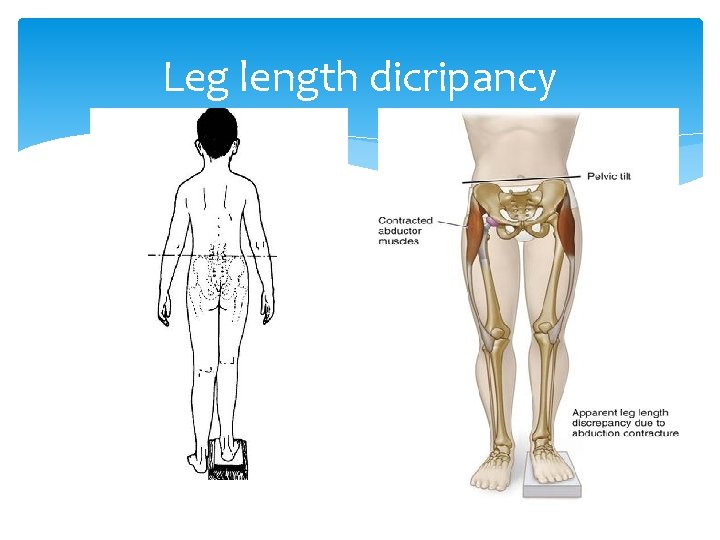
Leg length discrepancy For instance, flexion contractures around the knee and hip can cause apparent shortening of the leg while abduction contractures of the hip and equinus deformity of the ankle tend to functionally lengthen the affected extremity. Besides clinical evaluation, there are several imaging modalities that have been described to quantify LLD. The use of appropriate clinical methods and imaging modalities for measuring the LLD is vital to properly treat a patient with unequal leg lengths or related symptoms.
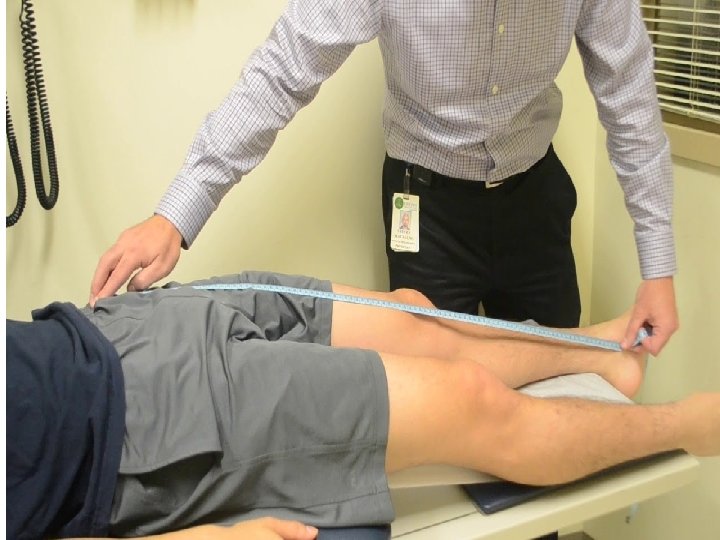
Leg length discrepancy Difference Clinical Techniques for Assessing Leg-length 1 - Tape measure: A tape measure is typically used to measure the length of each lower extremity by measuring the distance between the anterior superior iliac spine (ASIS) and the medial malleolus and is referred to as the ‘‘direct’’ clinical method for measuring LLD. However, differences in the girth of the two limbs, and difficulty in identifying bony prominences as well as angular deformities can contribute to errors using this clinical measurement tool.
Leg length discrepancy Types A- anatomical (true): structural limb length inequality. It’s a physical (osseous) shortening of one lower limb between the trochanter femoral major and the ankle mortise. Congenital conditions include mild developmental abnormalities found at birth or childhood, whereas acquired conditions include trauma, fractures, orthopedic degenerative diseases and surgical disorders such as joint replacement. A systemic review evaluating the prevalence of LLD by radiographic measurements revealed that 90% of the normal population had some type of variance in bony leg length, with 20% exhibiting a difference of >9 mm
Leg length discrepancy Types A- anatomical (true): Etiology 1 -Idiopathic developmental abnormalities 2 -Fracture 3 -Trauma to the epiphyseal endplate prior to skeletal maturity 4 -Degenerative disorders 5 - Legg-Calvé- Perthes Disease 6 -Cancer or neoplastic changes 7 -Infections
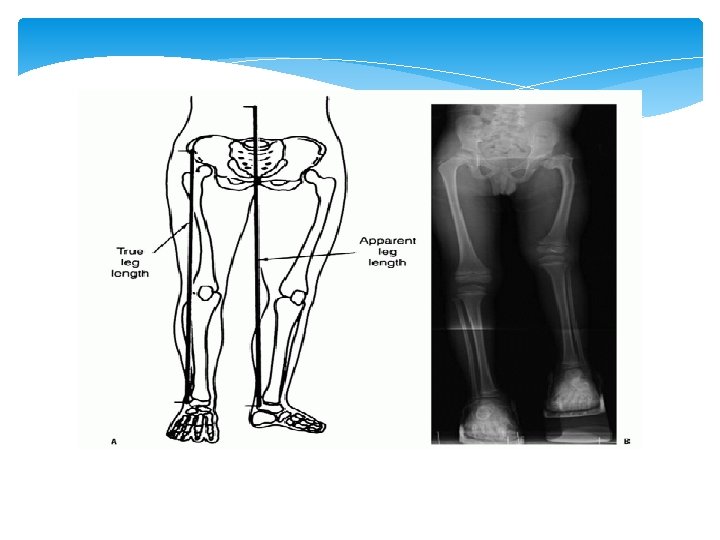
Leg length discrepancy Types A-functional : non-structural shortening. It is a unilateral asymmetry of the lower extremity without any shortening of the osseous components of the lower limb. FLLD may be caused by an alteration of lower limb mechanics, such as joint contracture, static or dynamic mechanical axis malalignment, muscle weakness or shortening. It is impossible to detect these faulty mechanics using a nonfunctional evaluation, such as radiography. FLLD can develop due to an abnormal motion of the hip, knee, ankle or foot in any of the three planes of motion
Leg length discrepancy Types A-functional : Etiology: 1 -Shortening of soft tissues 2 -Joint contractures 3 -Ligamentous laxity 4 -Axial malalignments 5 -Foot biomechanics (such as excessive ankle pronation)
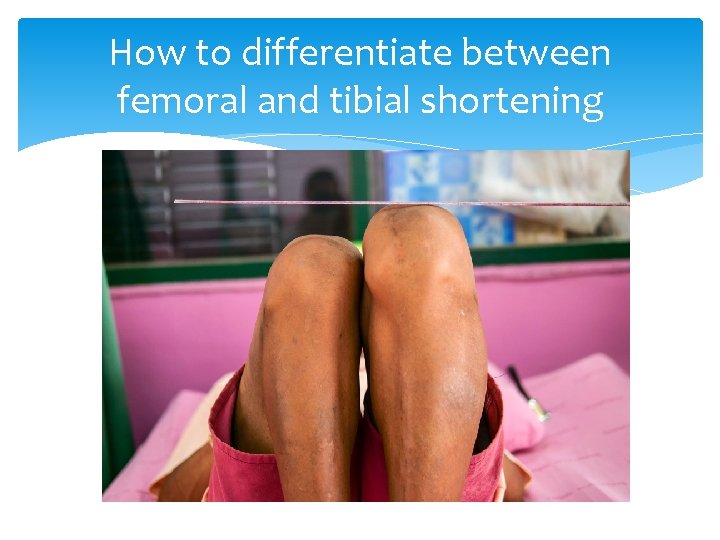
How to differentiate between femoral and tibial shortening
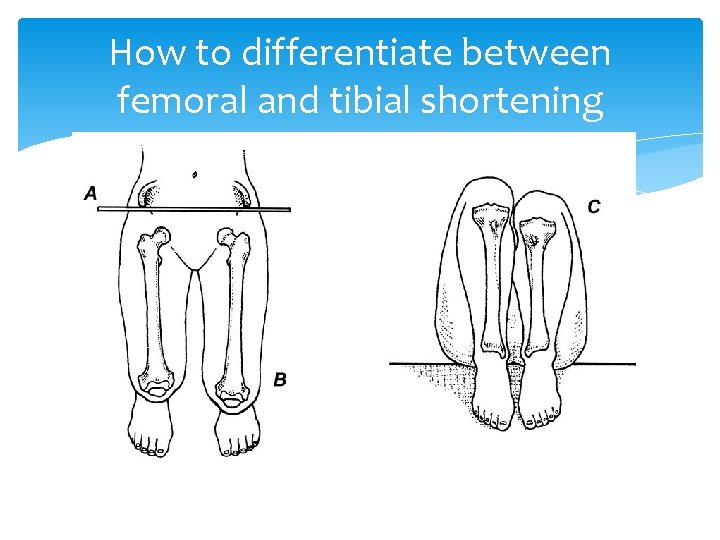
How to differentiate between femoral and tibial shortening
Leg length dicripancy 2 - Standing on Blocks: Another method to measure LLD is to level the pelvis of the erect patient by placing blocks of known height under the short limb. This is referred to as the ‘‘indirect’’ clinical method for measuring LLD (Fig. 3). This method takes into account the disparity in foot height between the two limbs and also aids in determining the functional LLD (which may be different from the actual LLD) by using varying heights of the block to establish the additional length required for the patient to feel level.
Leg length dicripancy
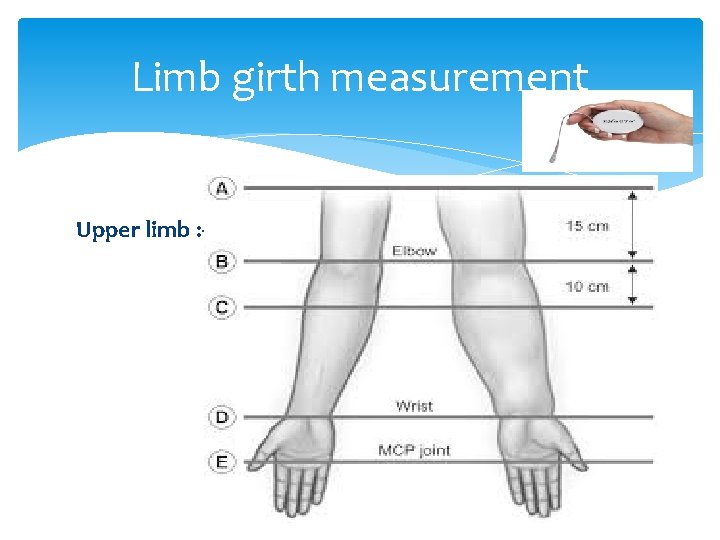
Limb girth measurement Upper limb : -
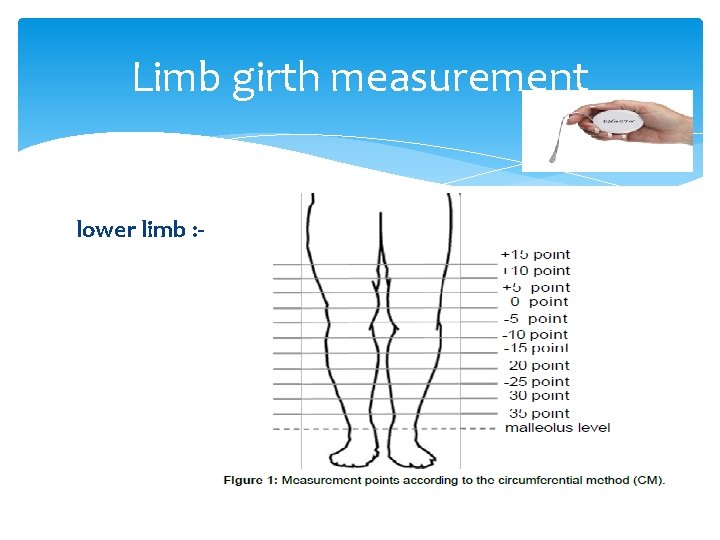
Limb girth measurement lower limb : -

- Slides: 19