
Like our language alphabet can make up all
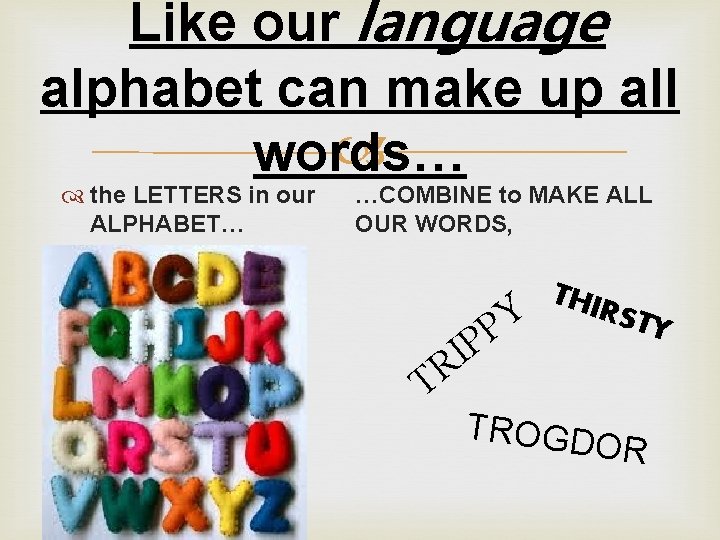
Like our language alphabet can make up all words… the LETTERS in our ALPHABET… …COMBINE to MAKE ALL OUR WORDS, PY T P I R THIR TROGD STY OR
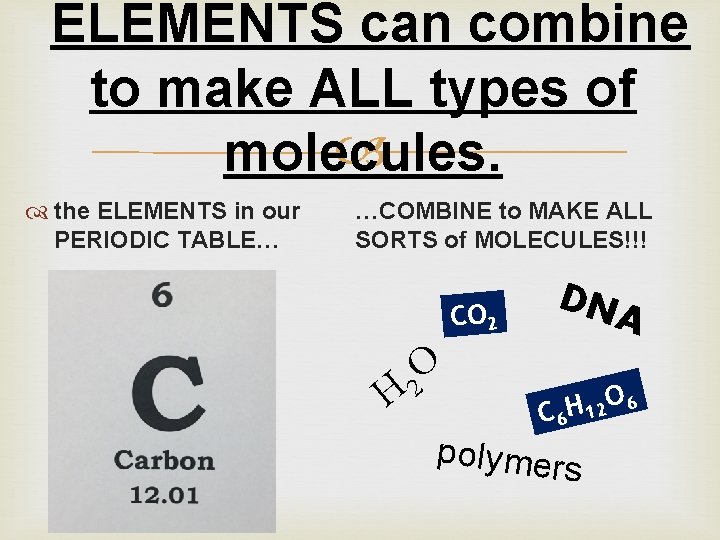
ELEMENTS can combine to make ALL types of molecules. the ELEMENTS in our PERIODIC TABLE… …COMBINE to MAKE ALL SORTS of MOLECULES!!! CO 2 H O 2 DNA O 6 H 2 1 C 6 polymer s
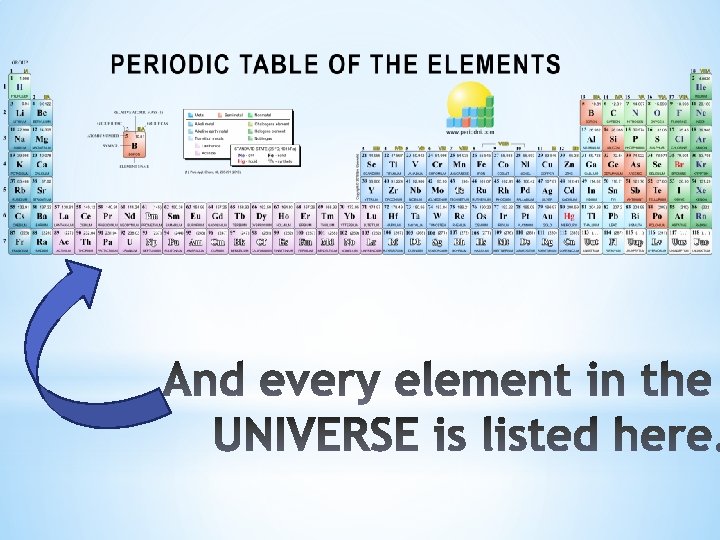
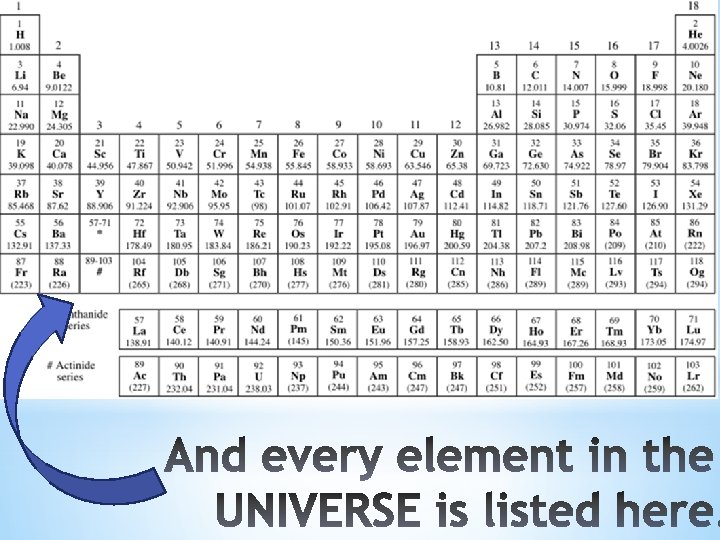

quick note…
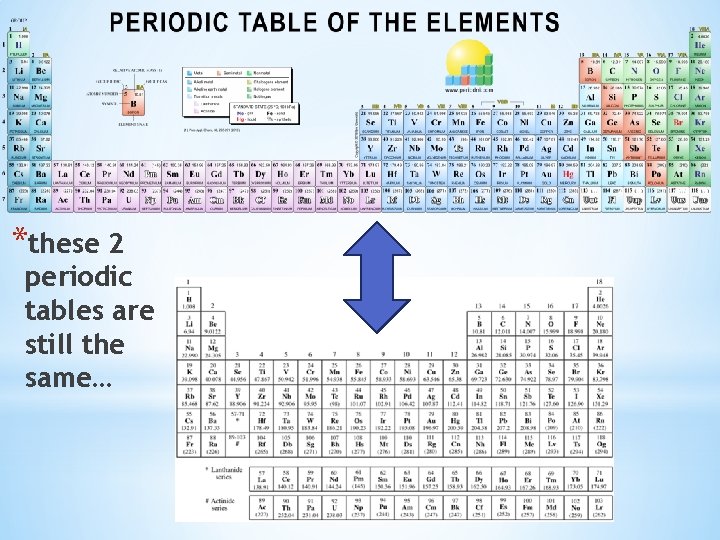
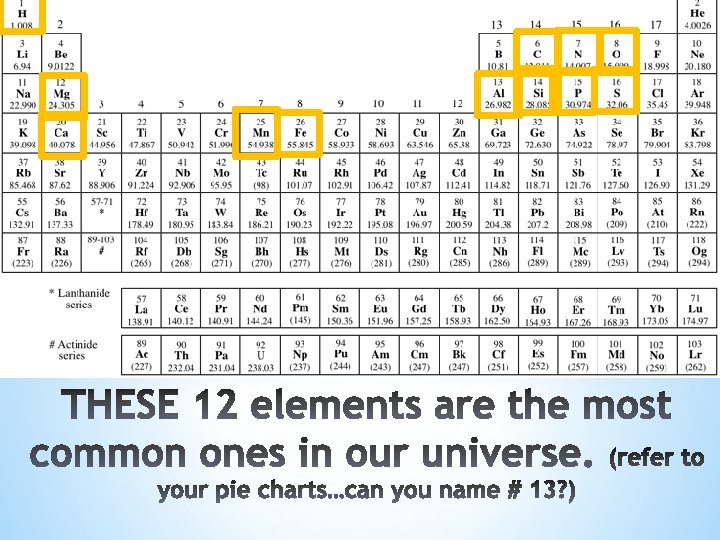
*these 2 periodic tables are still the same…
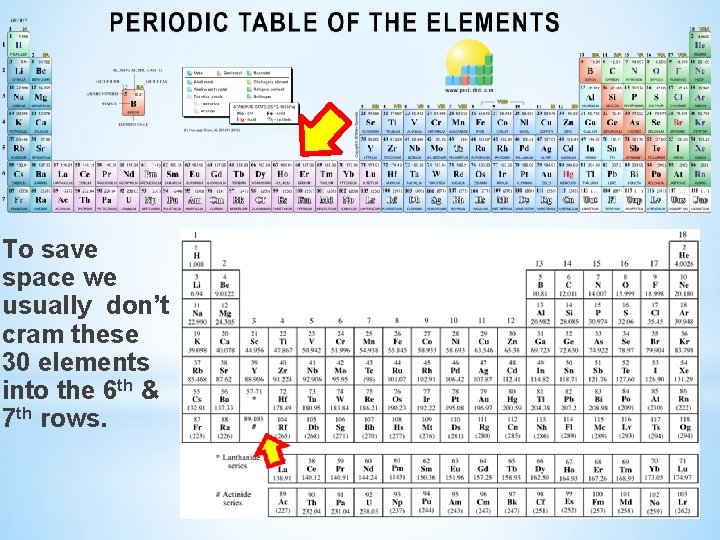
To save space we usually don’t cram these 30 elements into the 6 th & 7 th rows.
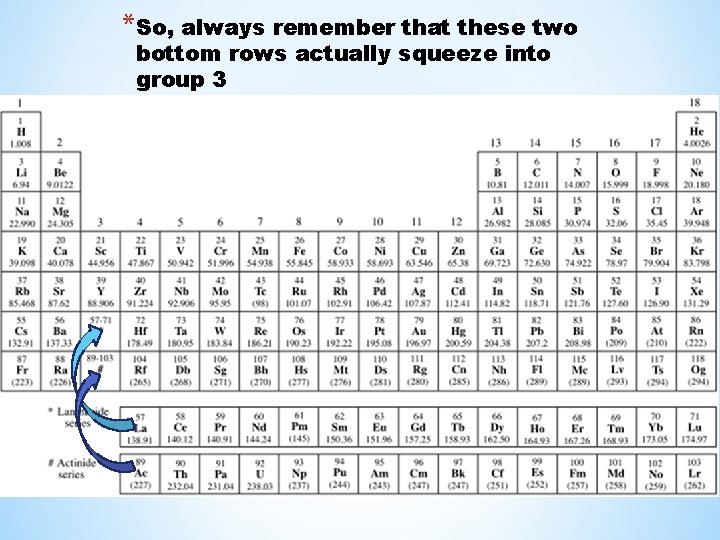
*So, always remember that these two bottom rows actually squeeze into group 3
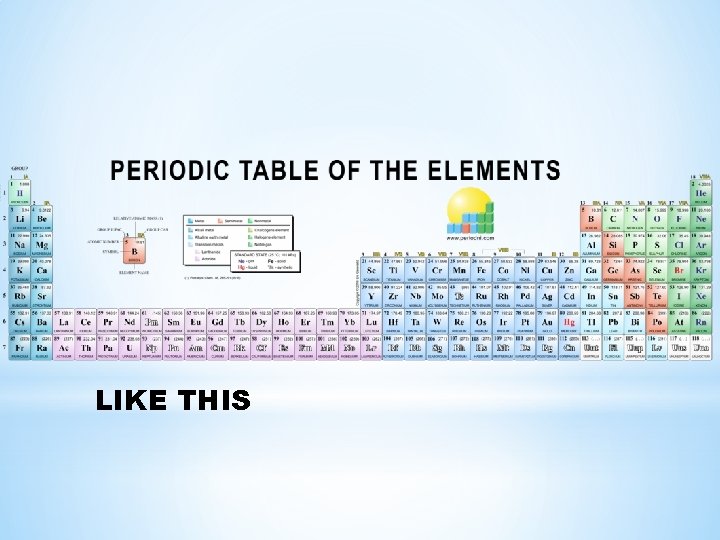
LIKE THIS
How do we know there are only 118 elements in our universe? How do we know the Periodic Table is a complete list of letters in our matter alphabet?
* look at my back wall, show with magnetic atoms and periodic table.
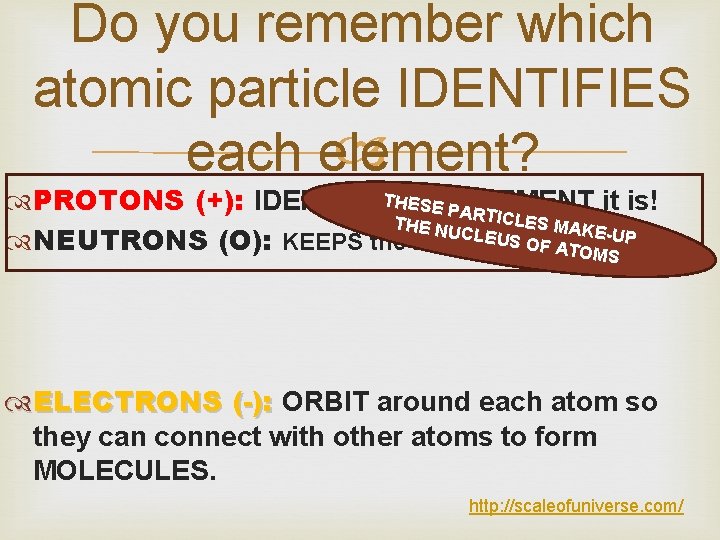
Do you remember which atomic particle IDENTIFIES each element? HESE P ELEMENT it is! PROTONS (+): IDENTIFY Twhat AR THE NU TICLES MAKE CLEUS -U OTOGETHER. NEUTRONS (O): KEEPS the NUCLEUS F ATOM P S ELECTRONS (-): ORBIT around each atom so they can connect with other atoms to form MOLECULES. http: //scaleofuniverse. com/
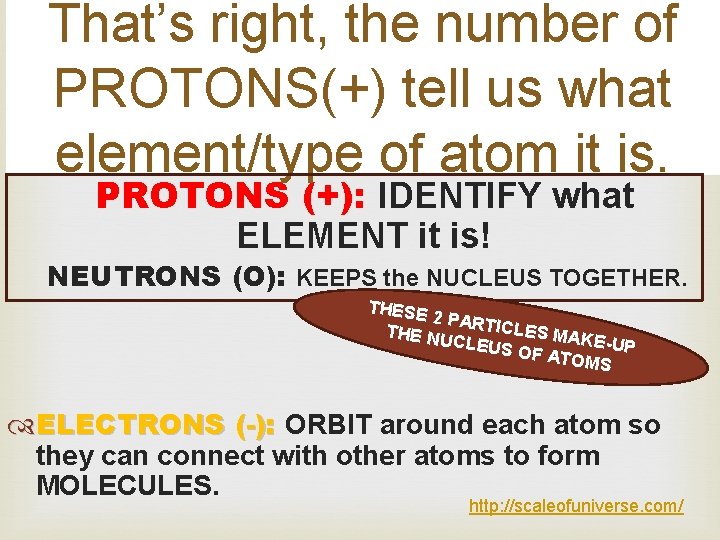
That’s right, the number of PROTONS(+) tell us what of atom it is. element/type PROTONS (+): IDENTIFY what ELEMENT it is! NEUTRONS (O): KEEPS the NUCLEUS TOGETHER. THESE 2 PART ICLE THE NU CLEUS S MAKE-UP OF ATO MS ELECTRONS (-): ORBIT around each atom so they can connect with other atoms to form MOLECULES. http: //scaleofuniverse. com/
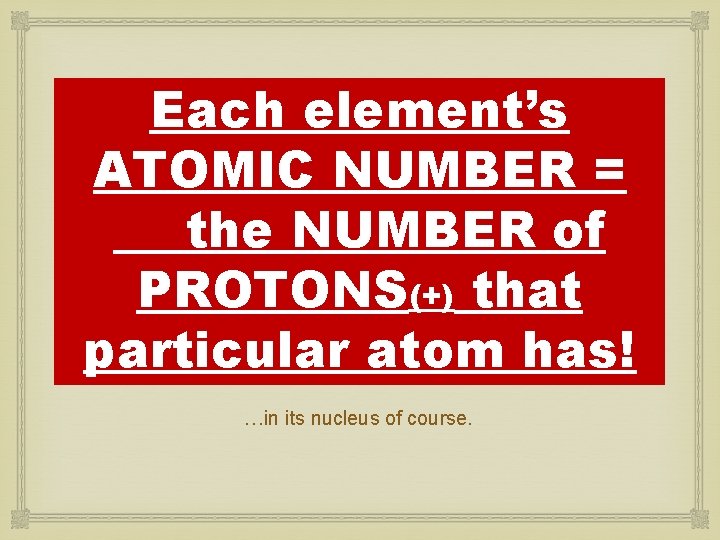
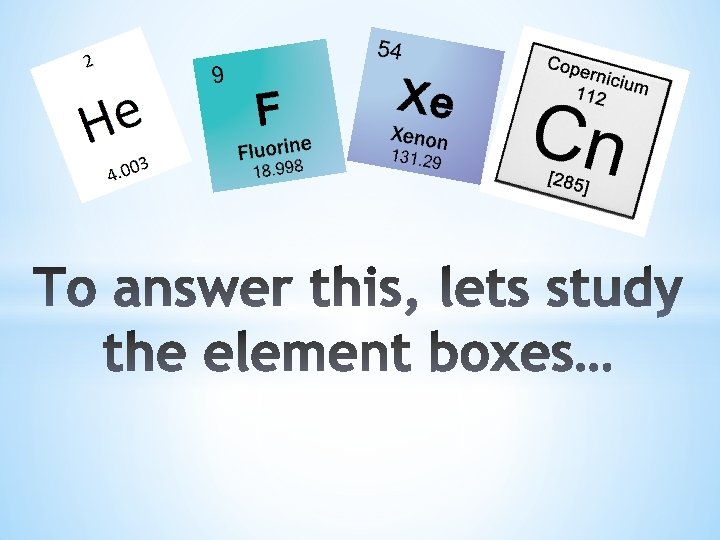
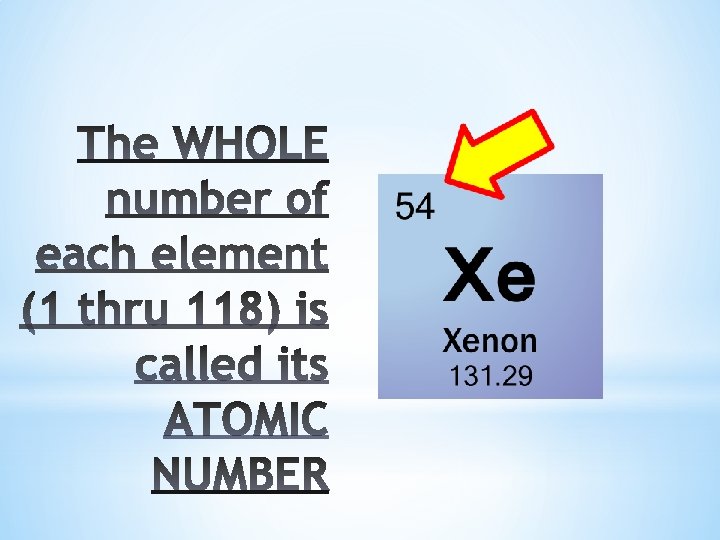
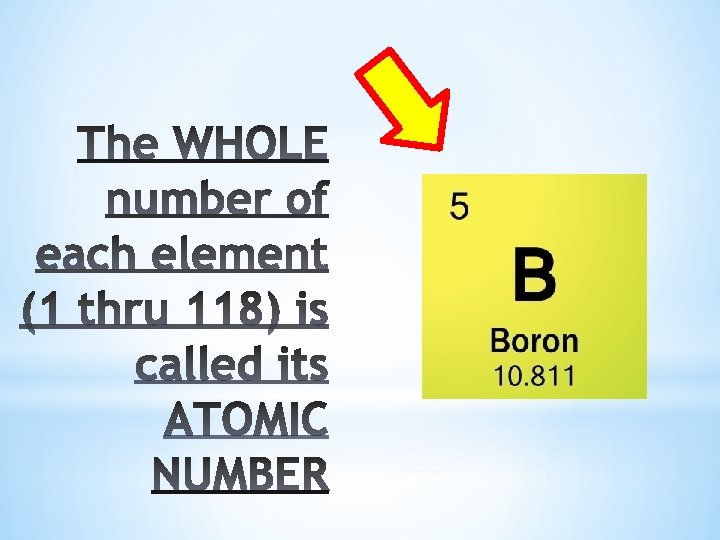
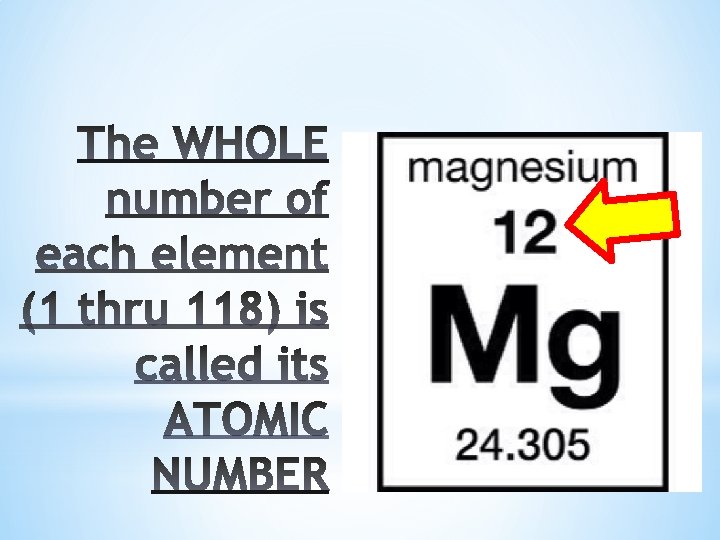
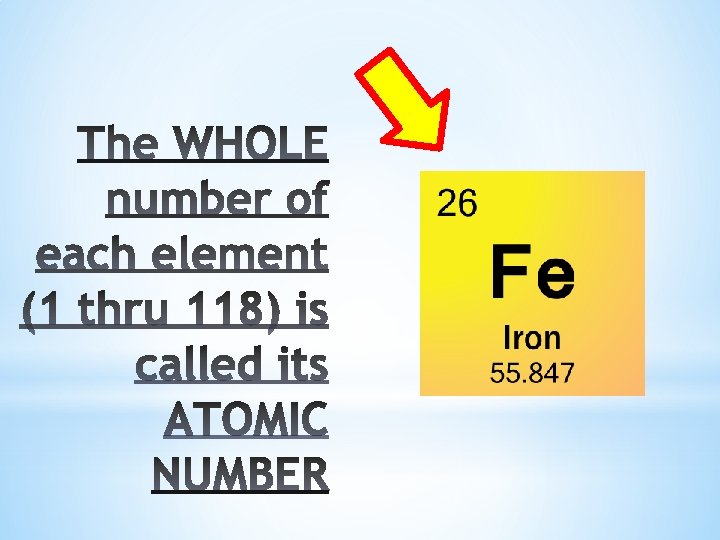
Each element’s ATOMIC NUMBER = the NUMBER of PROTONS(+) that particular atom has! …in its nucleus of course.
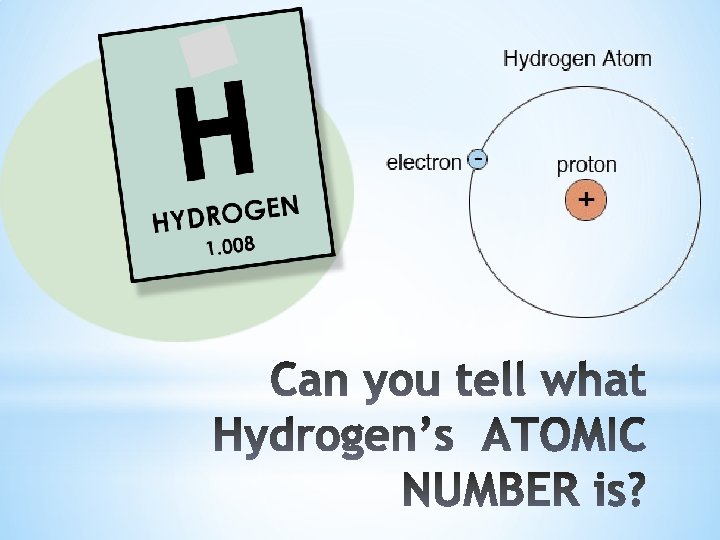
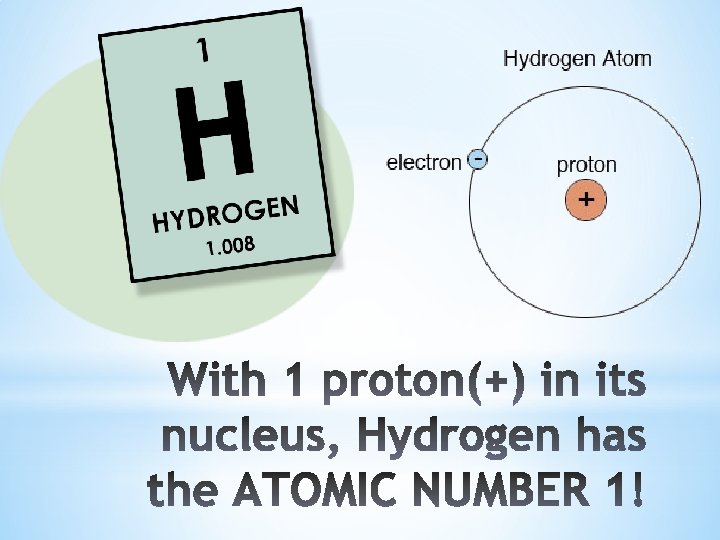
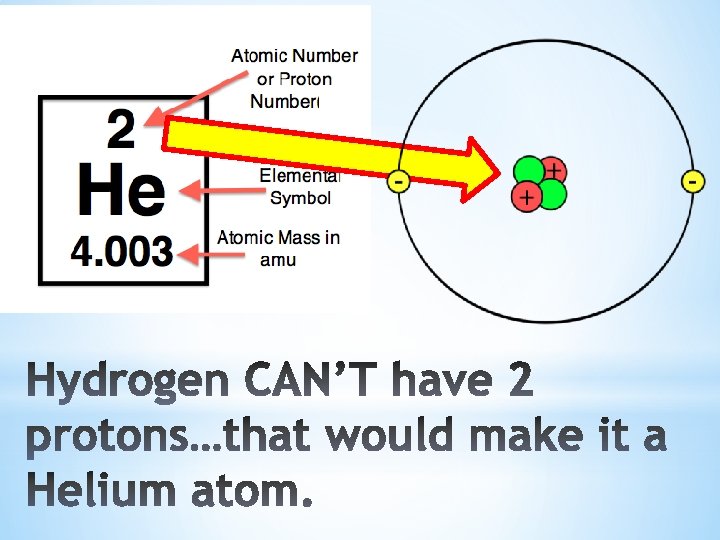
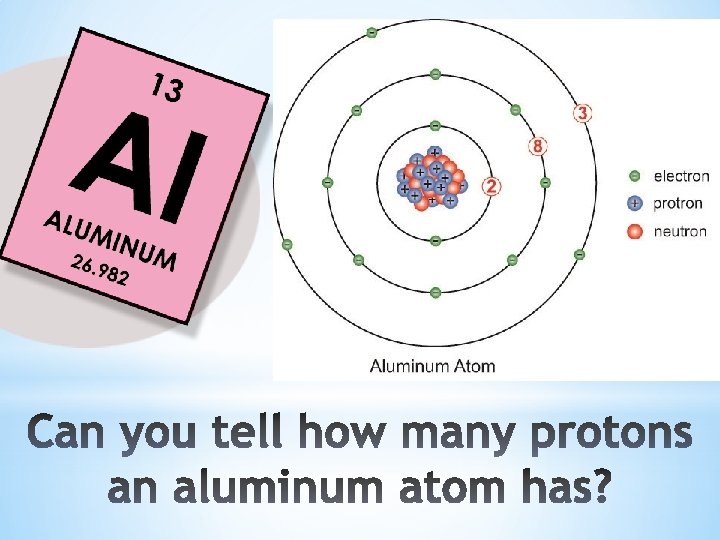
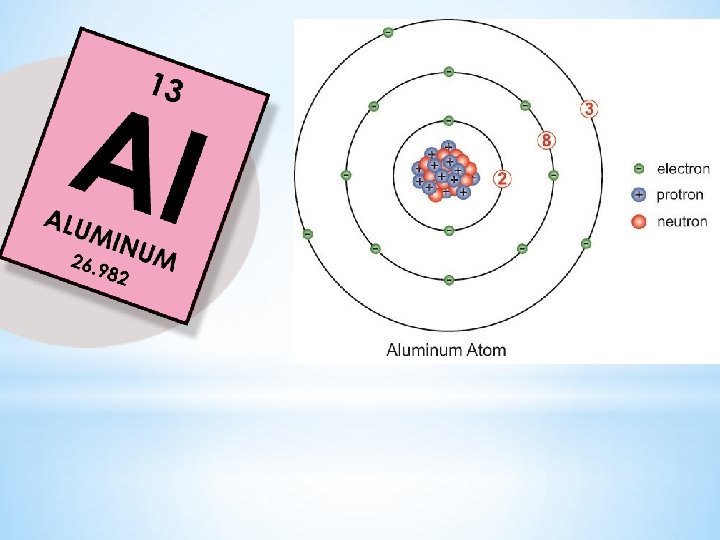
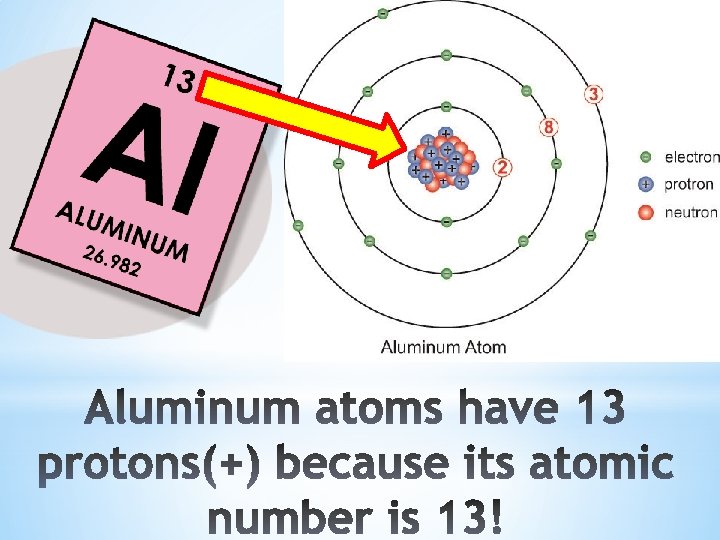
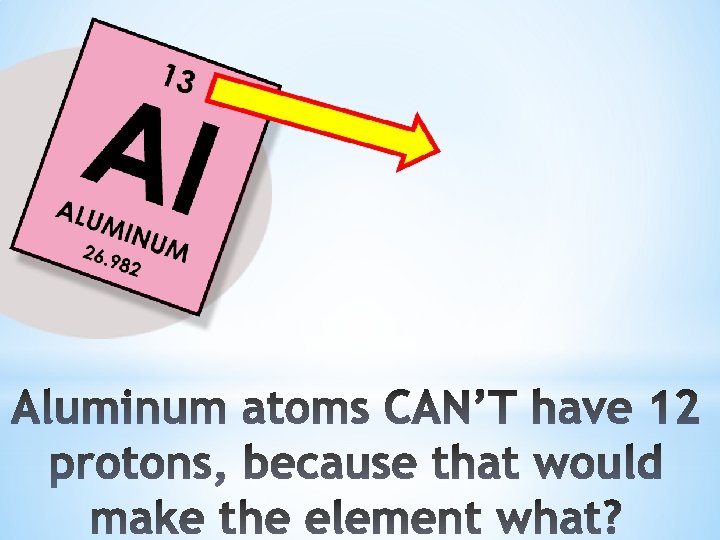
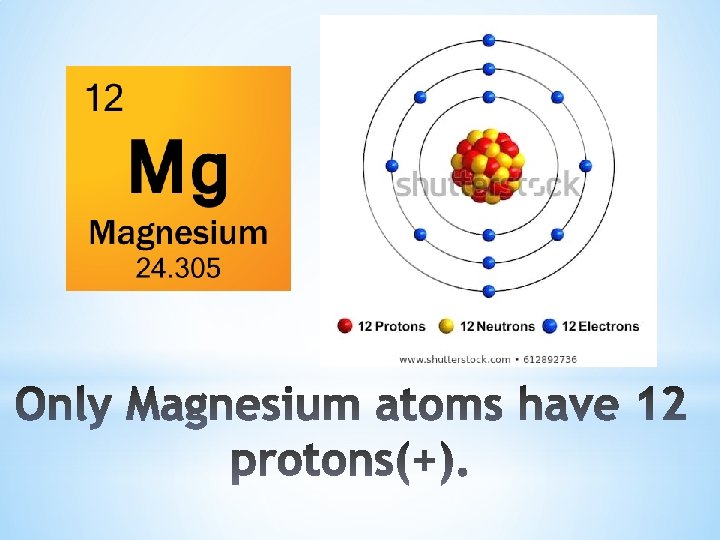
EACH ELEMENT (different type of atom) has their own distinct number of PROTONS(+) in their atomic nucleus. . .
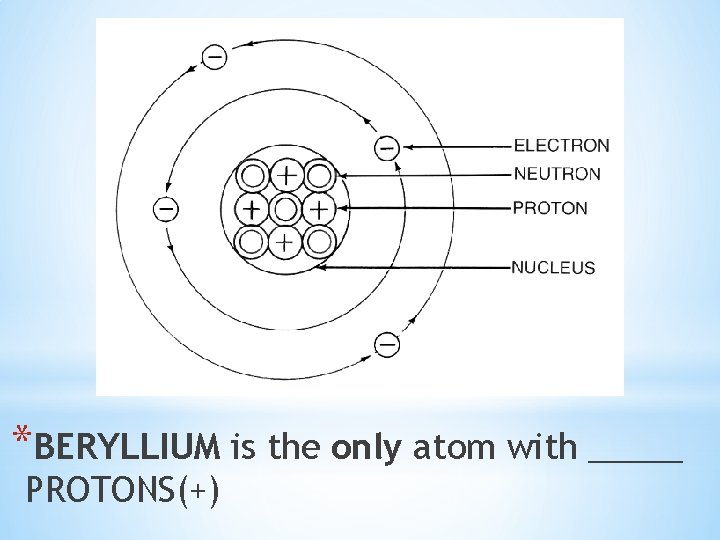
*BERYLLIUM is the only atom with _____ PROTONS(+)
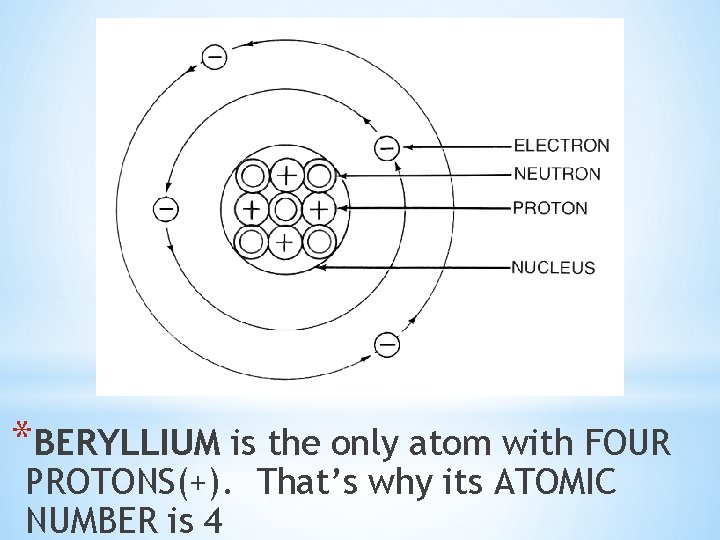
*BERYLLIUM is the only atom with FOUR PROTONS(+). That’s why its ATOMIC NUMBER is 4
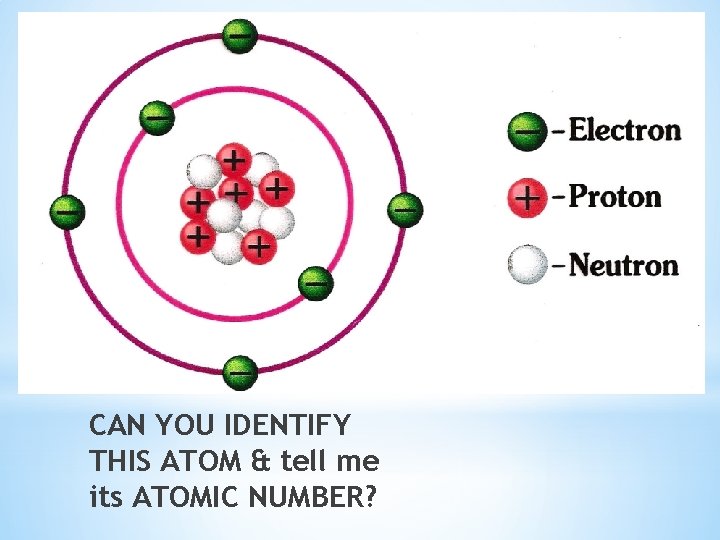
CAN YOU IDENTIFY THIS ATOM & tell me its ATOMIC NUMBER?
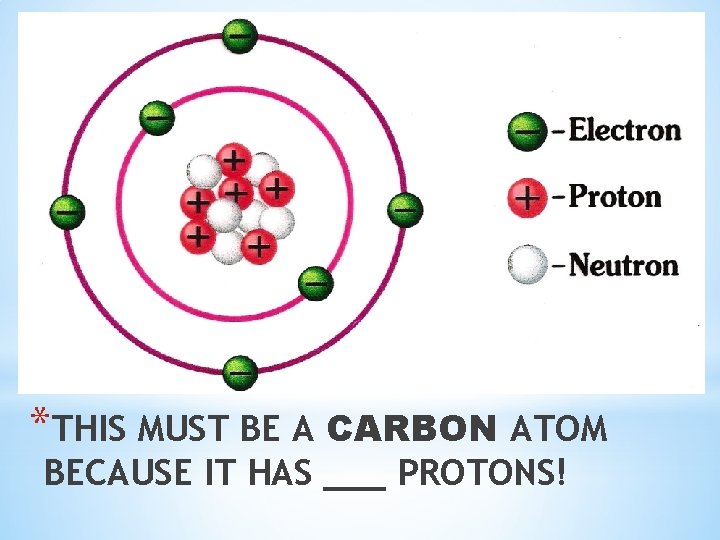
*THIS MUST BE A CARBON ATOM BECAUSE IT HAS ___ PROTONS!
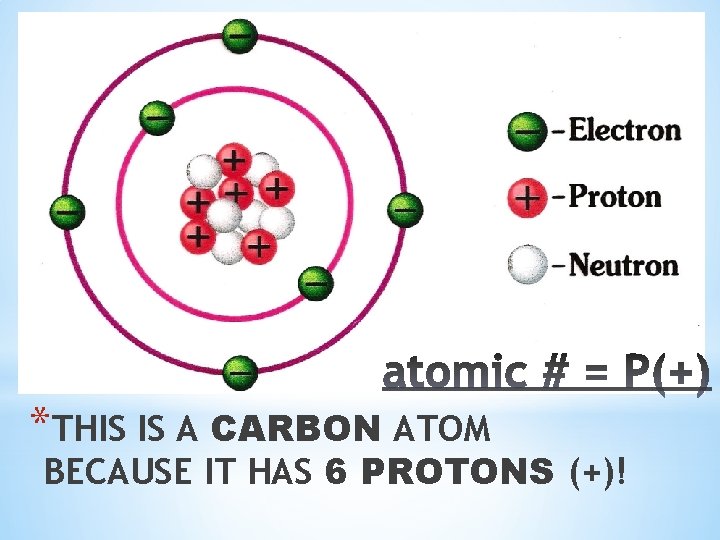
*THIS IS A CARBON ATOM BECAUSE IT HAS 6 PROTONS (+)!
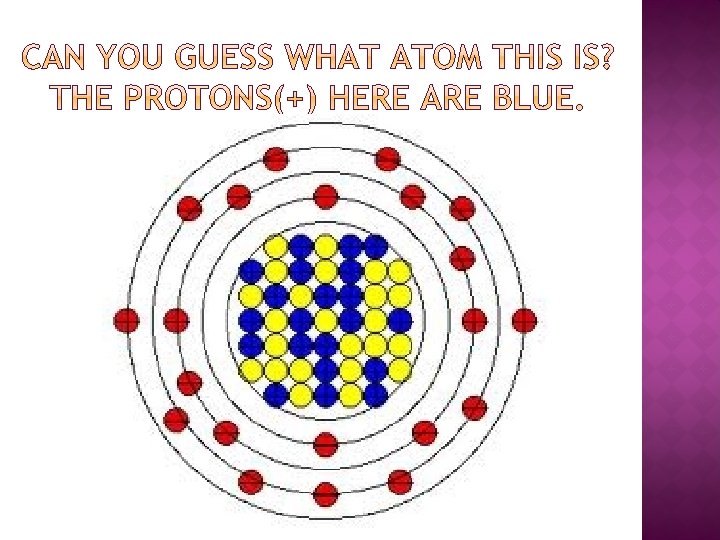
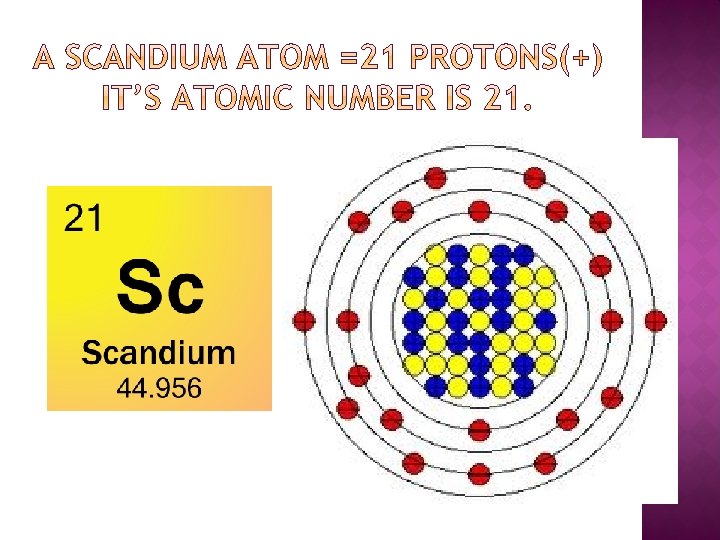
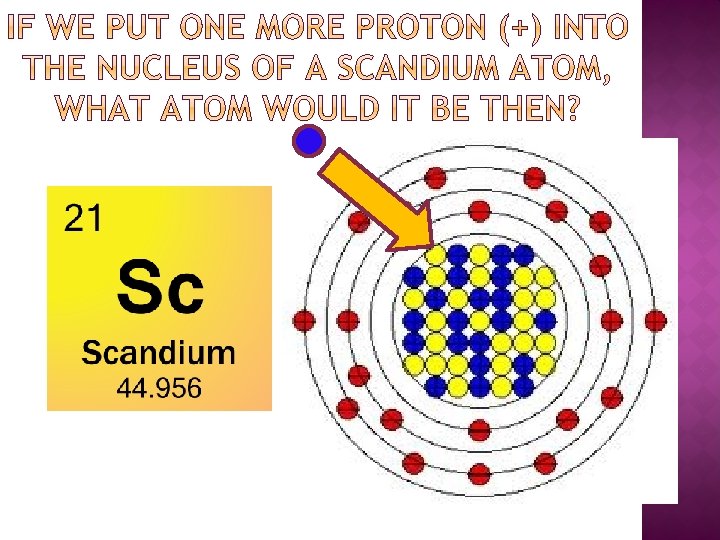
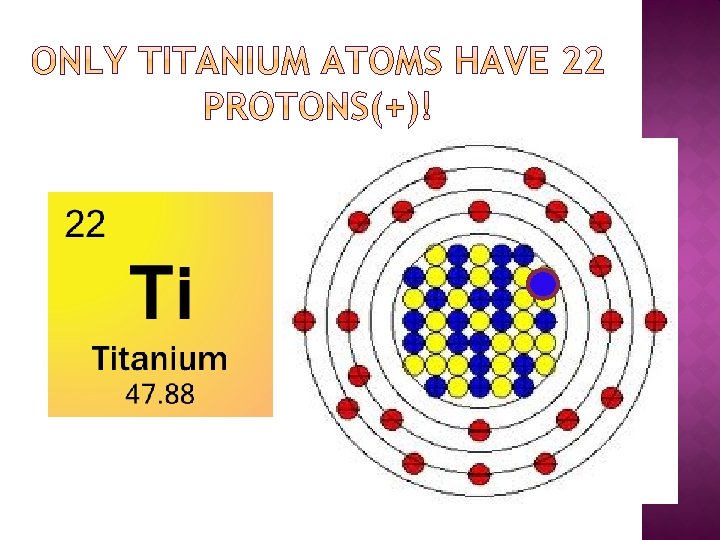
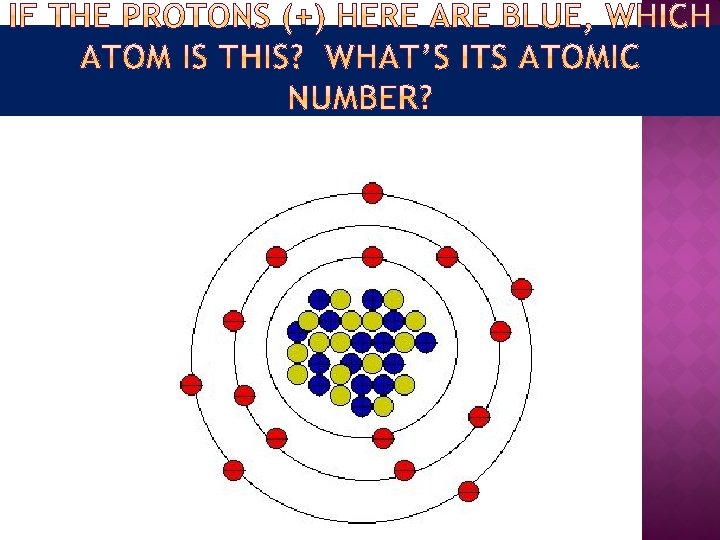
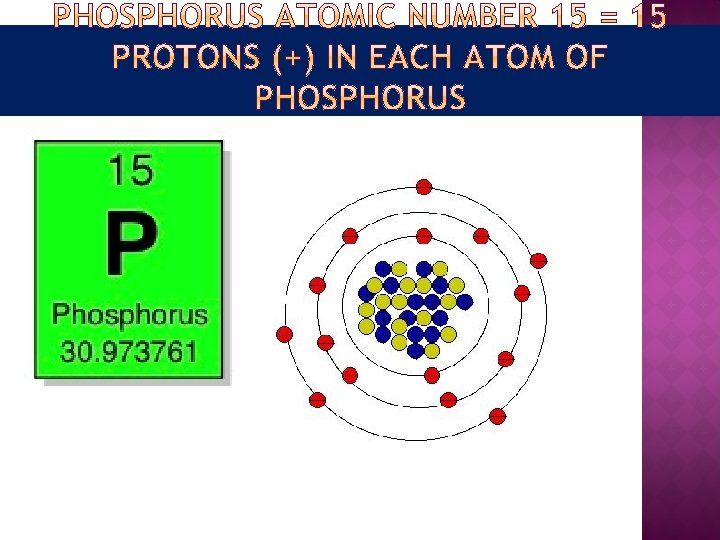
EACH ELEMENT (different type of atom) has their own distinct number of PROTONS(+) in their atomic nucleus… …and that number is known as their ATOMIC NUMBER!
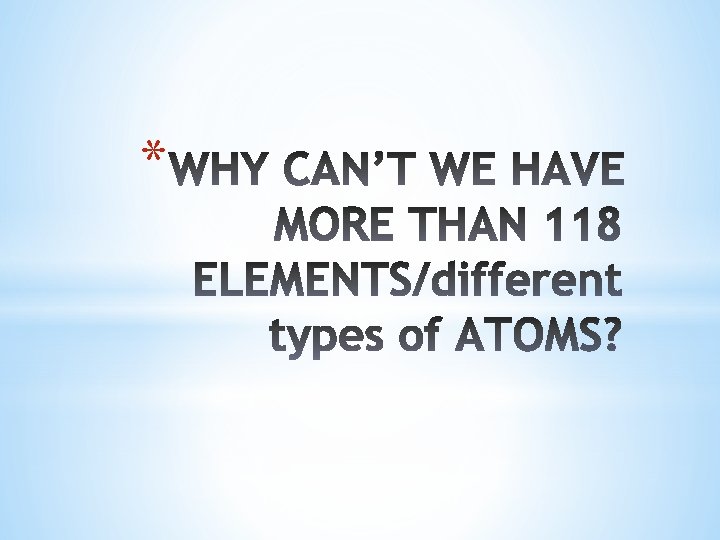
And you can’t have more than 100 or so protons crammed into a single atomic nucleus. �We’ve tried!
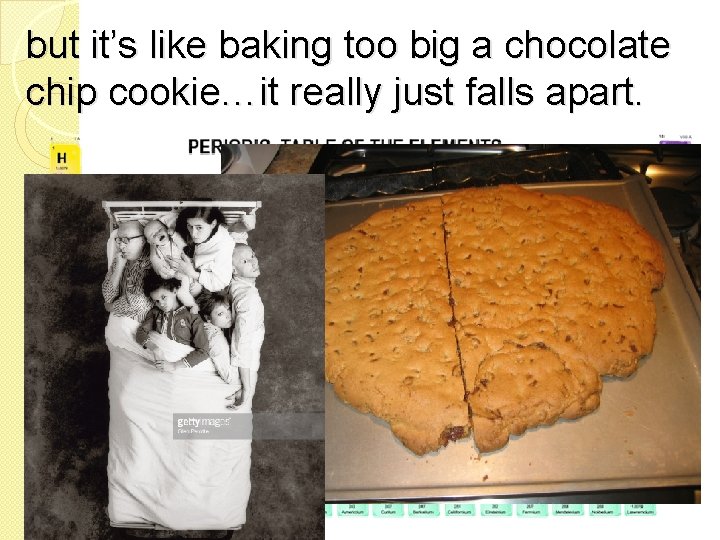
but it’s like baking too big a chocolate chip cookie…it really just falls apart.
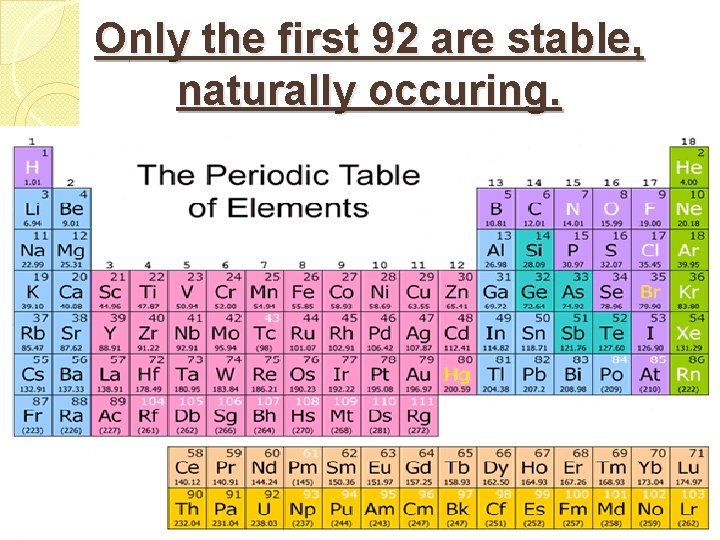
Only the first 92 are stable, naturally occuring.
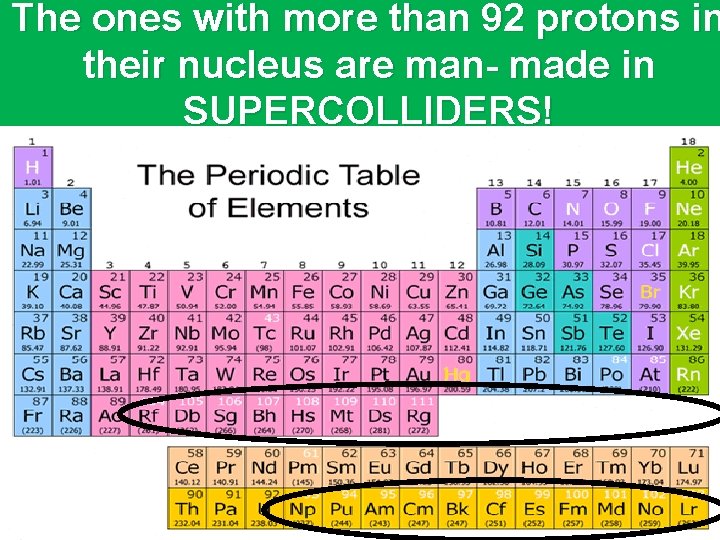
The ones with more than 92 protons in their nucleus are man- made in SUPERCOLLIDERS!
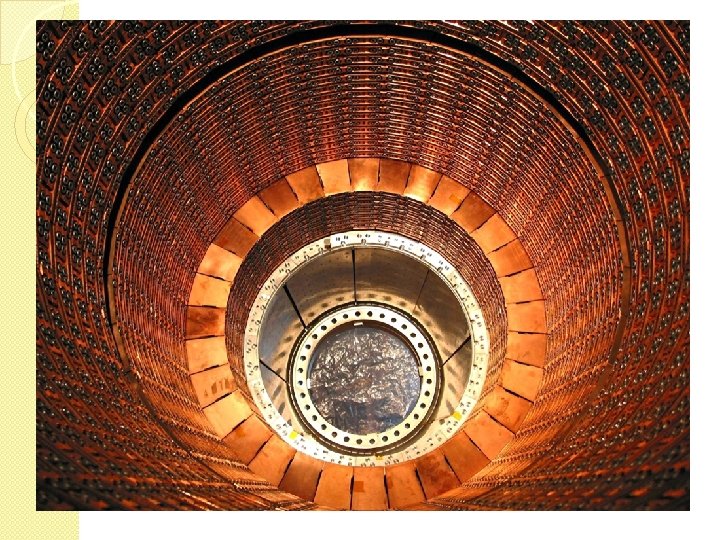
SUPERCOLLIDERS are humongous, city-wide tunnels built underground.
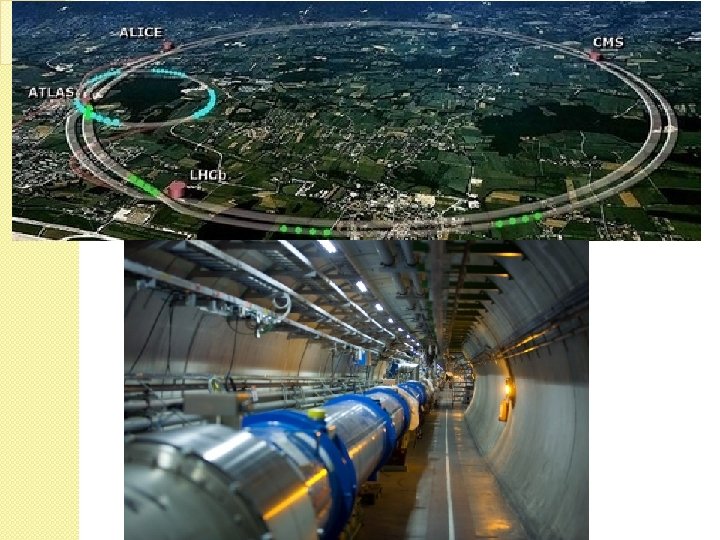
These really long tunnels have super-ridiculous magnets that can accelerate single subatomic particles (like protons(+) or electrons()) round and round, faster and faster. �Why don’t these supercolliders accelerate neutrons(o)?
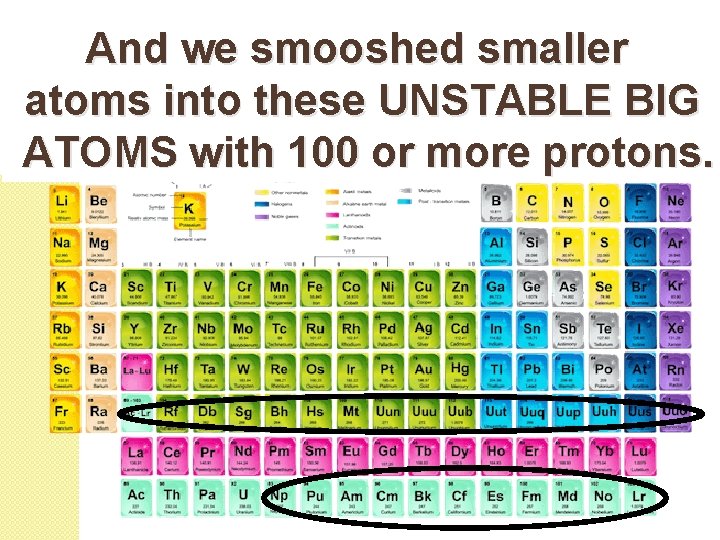
And we smooshed smaller atoms into these UNSTABLE BIG ATOMS with 100 or more protons.
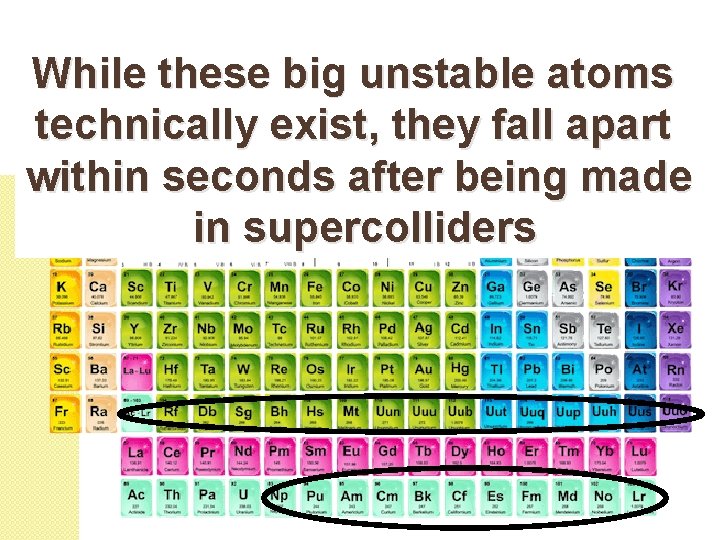
While these big unstable atoms technically exist, they fall apart within seconds after being made in supercolliders
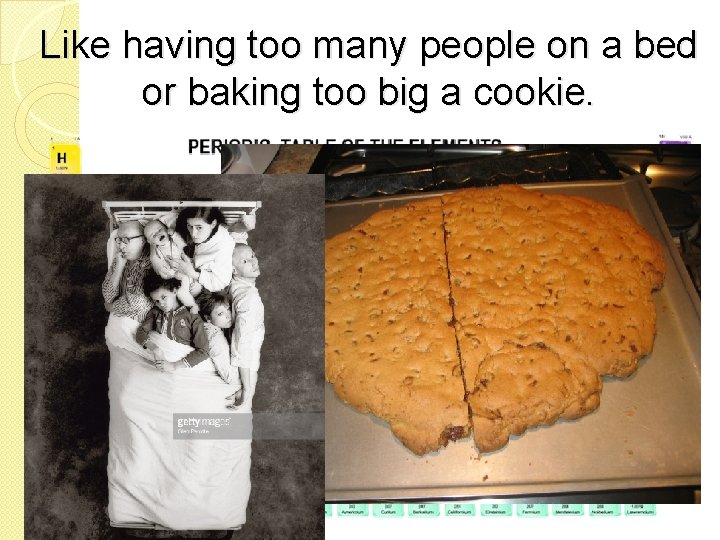
Like having too many people on a bed or baking too big a cookie.
�pre-assessment, hand-out vid notes, start “Hunting the Elements”
* It’s so tiny, tiny!
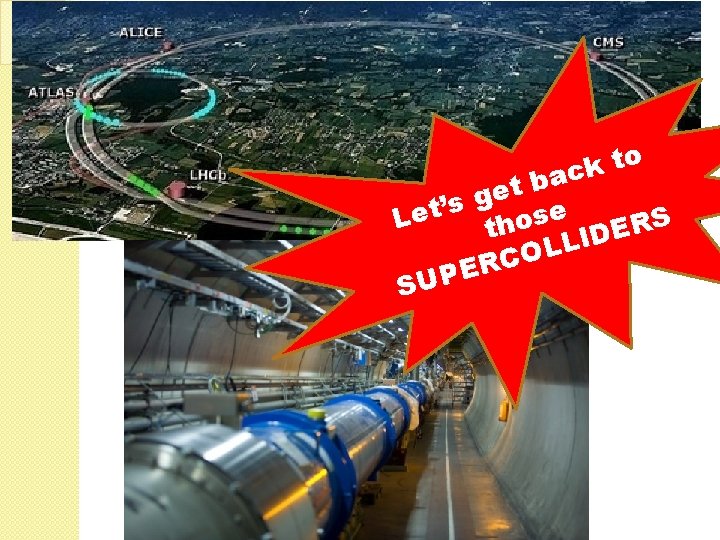
o t k ac b t e g s ’ t e s Le S o R h t E ID L L O C R E P U S
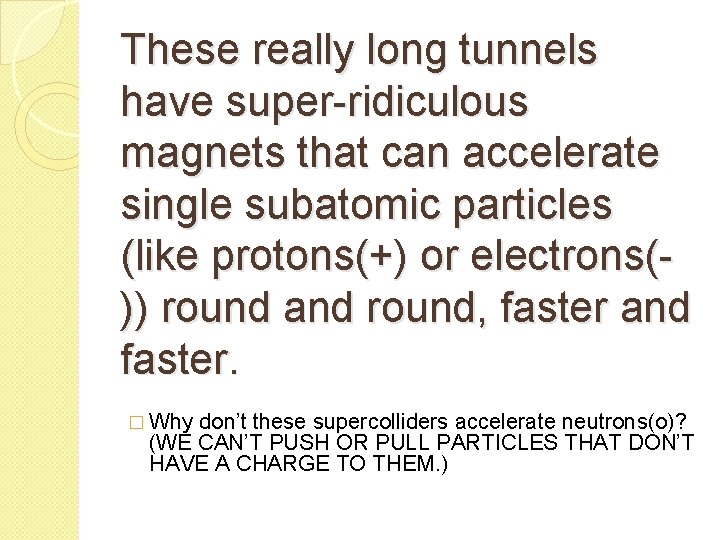
These really long tunnels have super-ridiculous magnets that can accelerate single subatomic particles (like protons(+) or electrons()) round and round, faster and faster. � Why don’t these supercolliders accelerate neutrons(o)? (WE CAN’T PUSH OR PULL PARTICLES THAT DON’T HAVE A CHARGE TO THEM. )
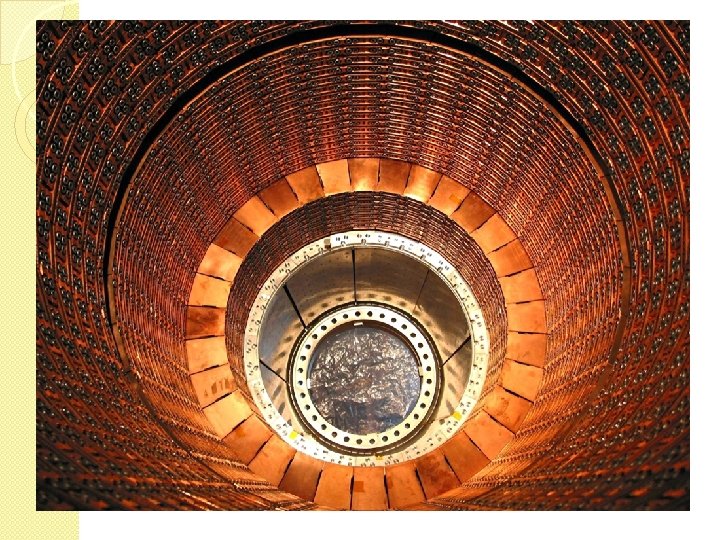
And if the scientists aim these protons(+) or electrons(-) at single atoms floating in this magnetosphere, TWO things can happen with this collision: �(physicists like Sheldon)
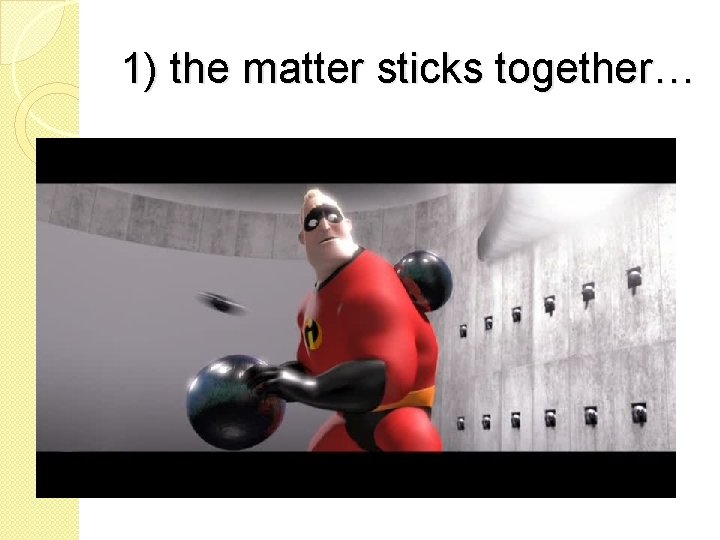
1) the matter sticks together…
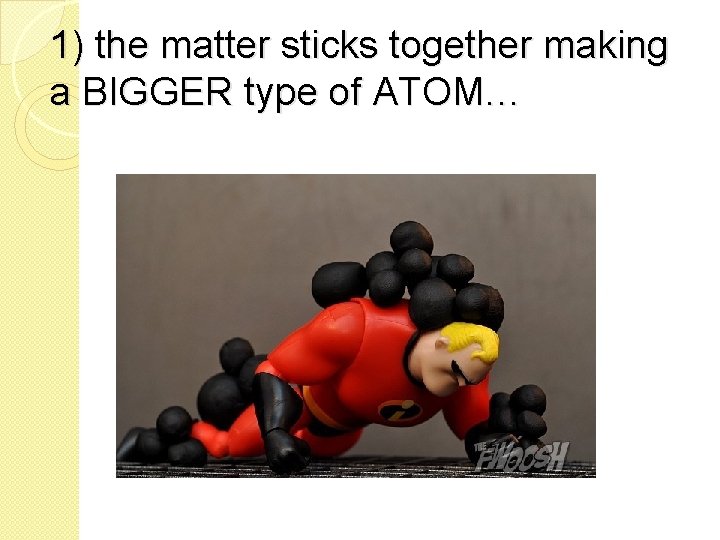
1) the matter sticks together making a BIGGER type of ATOM…
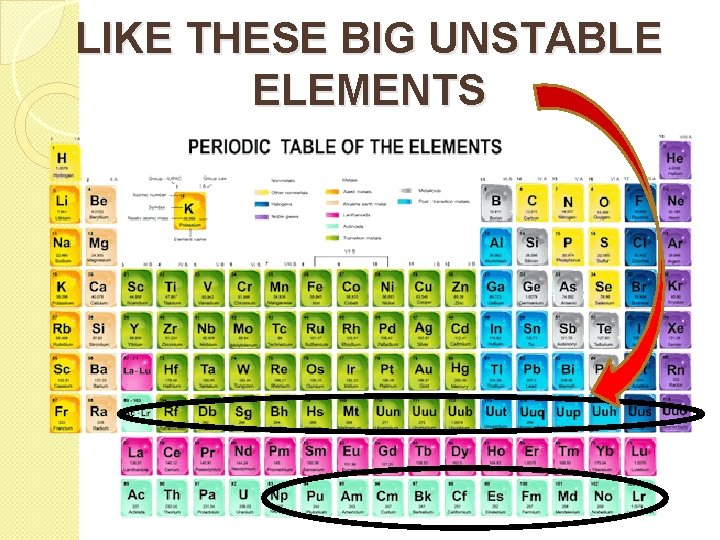
LIKE THESE BIG UNSTABLE ELEMENTS
or
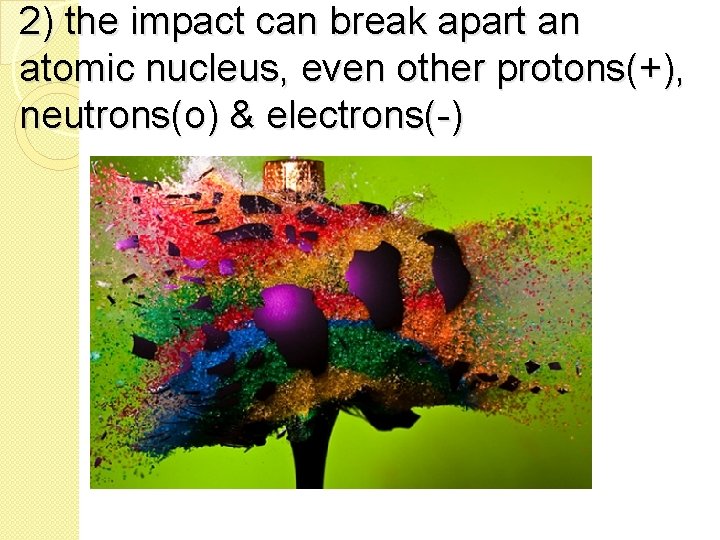
2) the impact can break apart an atomic nucleus, even other protons(+), neutrons(o) & electrons(-)
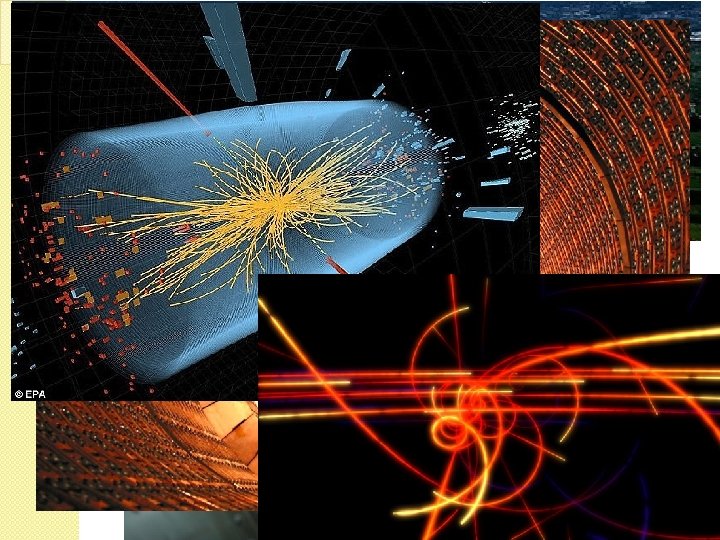
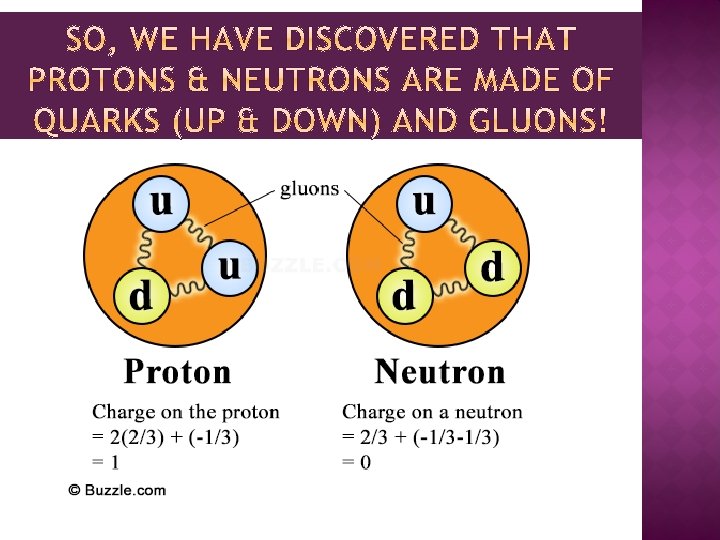
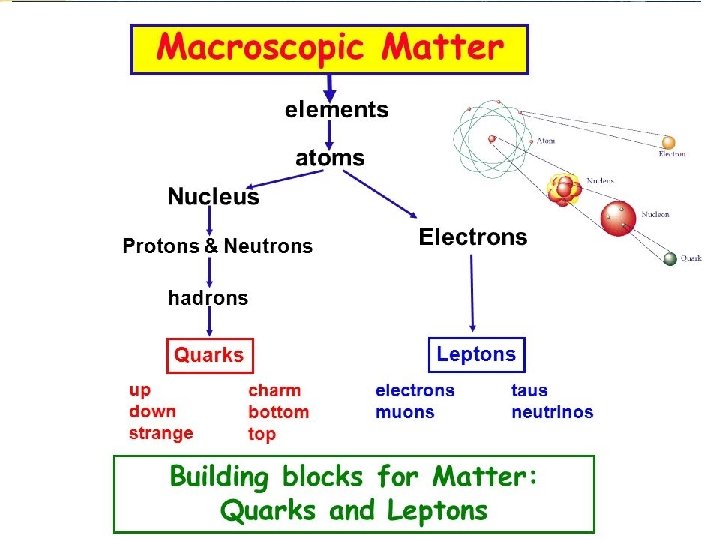
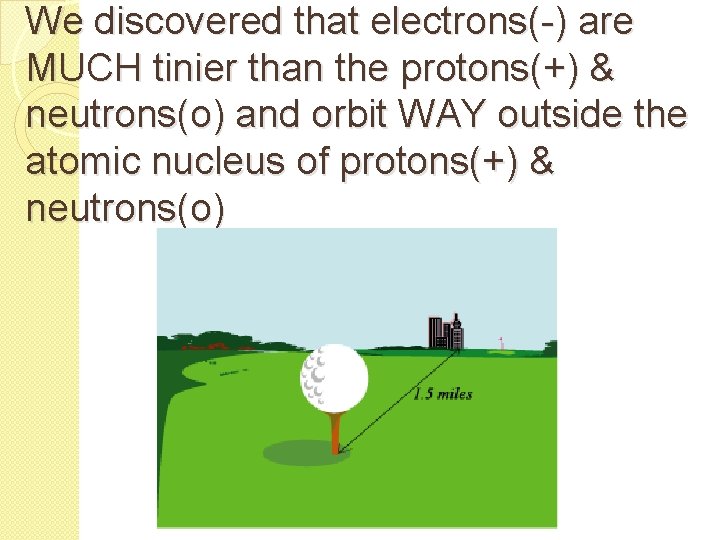
We discovered that electrons(-) are MUCH tinier than the protons(+) & neutrons(o) and orbit WAY outside the atomic nucleus of protons(+) & neutrons(o)
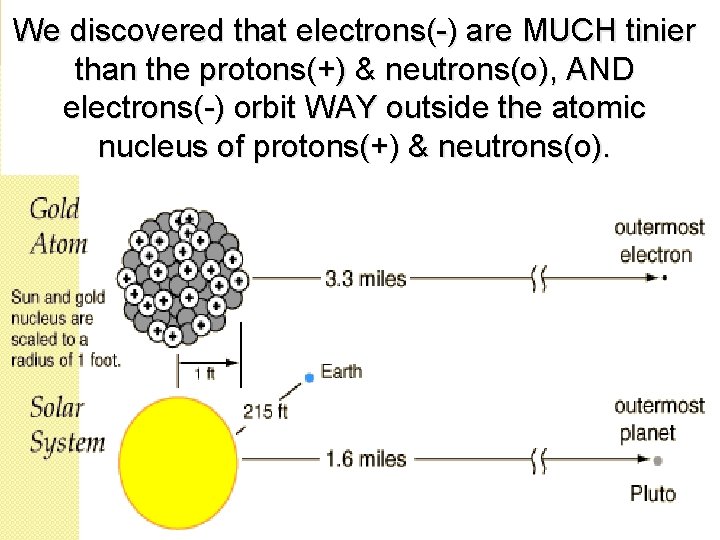
We discovered that electrons(-) are MUCH tinier than the protons(+) & neutrons(o), AND electrons(-) orbit WAY outside the atomic nucleus of protons(+) & neutrons(o).
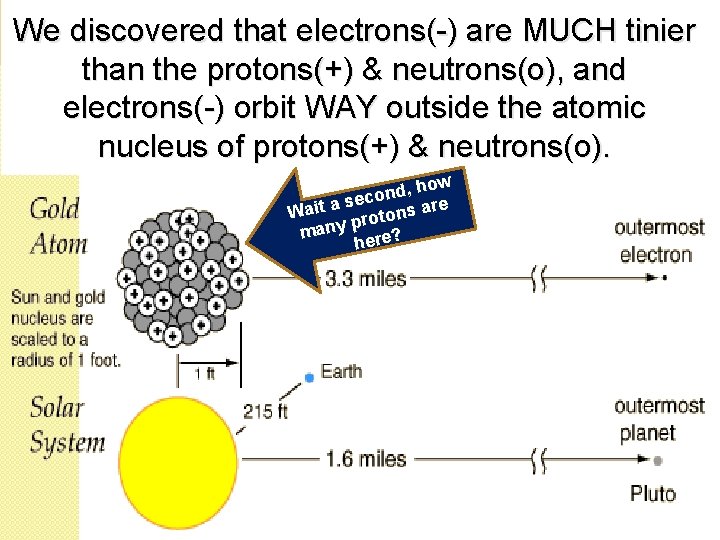
We discovered that electrons(-) are MUCH tinier than the protons(+) & neutrons(o), and electrons(-) orbit WAY outside the atomic nucleus of protons(+) & neutrons(o). , how d n o c se Wait a rotons are p many ere? h
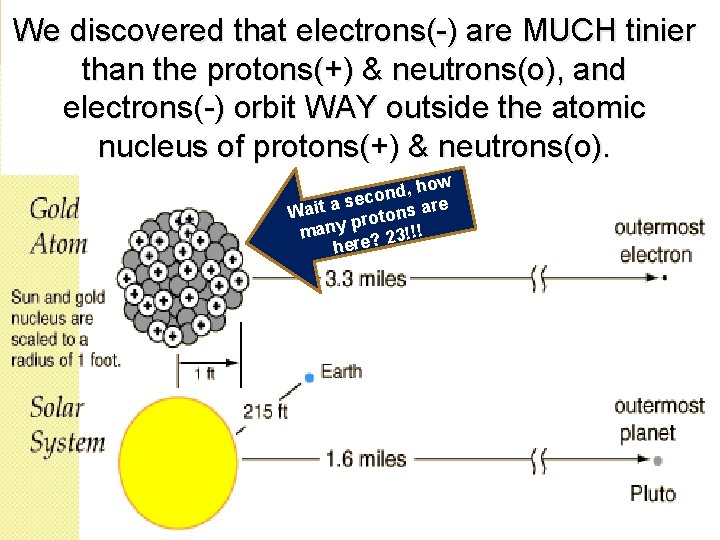
We discovered that electrons(-) are MUCH tinier than the protons(+) & neutrons(o), and electrons(-) orbit WAY outside the atomic nucleus of protons(+) & neutrons(o). , how d n o c se Wait a rotons are p many ? 23!!! here
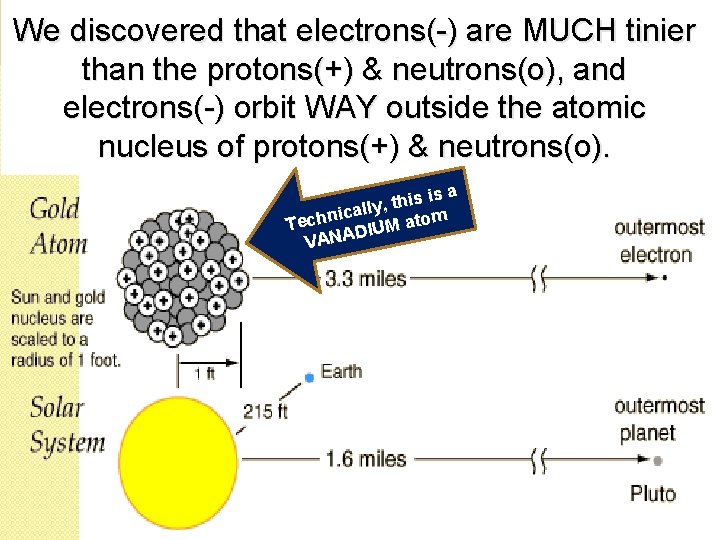
We discovered that electrons(-) are MUCH tinier than the protons(+) & neutrons(o), and electrons(-) orbit WAY outside the atomic nucleus of protons(+) & neutrons(o). is a s i h t , cally i n h c tom a Te M U DI VANA
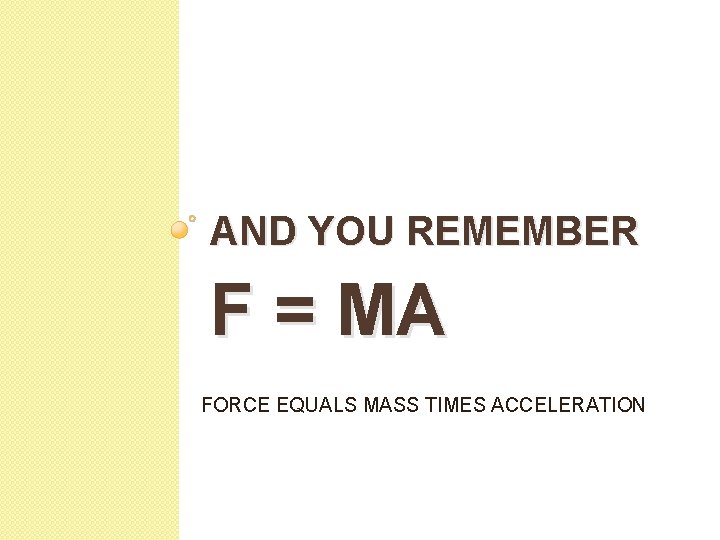
AND YOU REMEMBER F = MA FORCE EQUALS MASS TIMES ACCELERATION
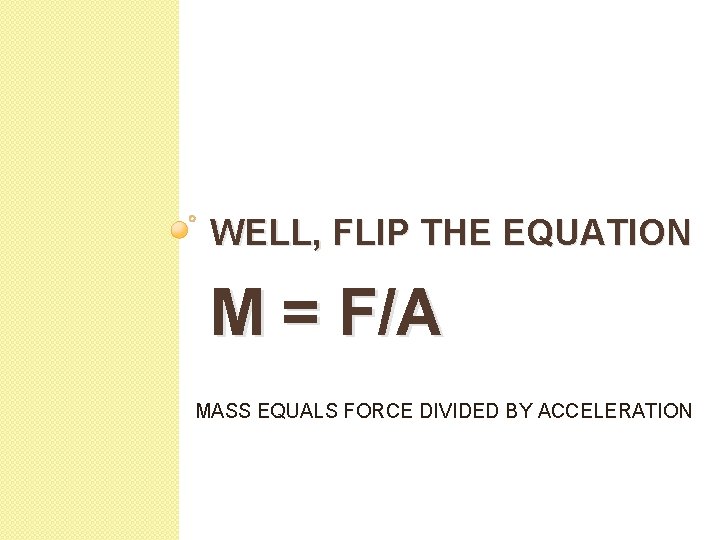
WELL, FLIP THE EQUATION M = F/A MASS EQUALS FORCE DIVIDED BY ACCELERATION
and what did scientists (physicists) discover?
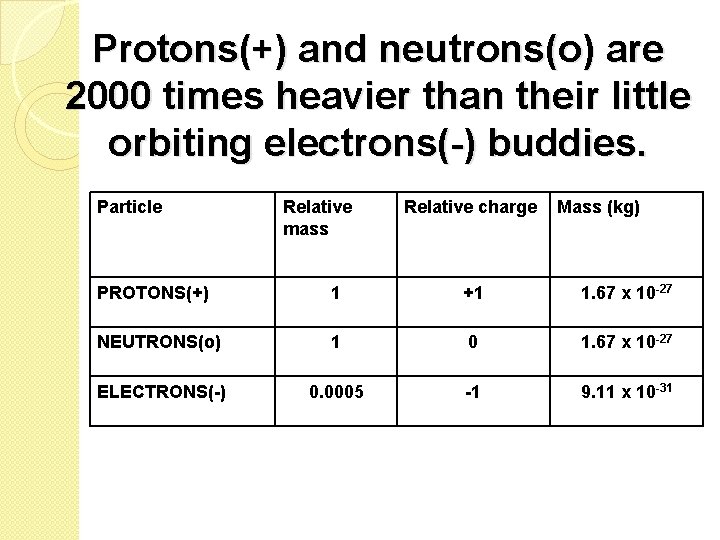
Protons(+) and neutrons(o) are 2000 times heavier than their little orbiting electrons(-) buddies. Particle Relative mass Relative charge Mass (kg) PROTONS(+) 1 +1 1. 67 x 10 -27 NEUTRONS(o) 1 0 1. 67 x 10 -27 ELECTRONS(-) 0. 0005 -1 9. 11 x 10 -31
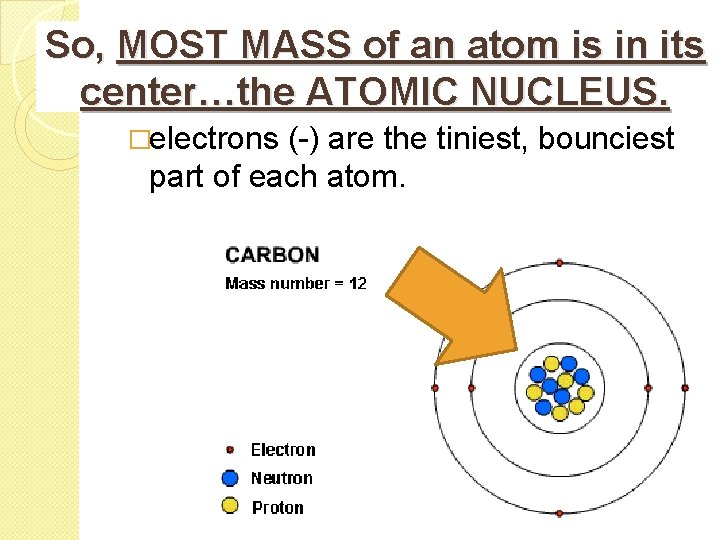
So, MOST MASS of an atom is in its center…the ATOMIC NUCLEUS. �electrons (-) are the tiniest, bounciest part of each atom.
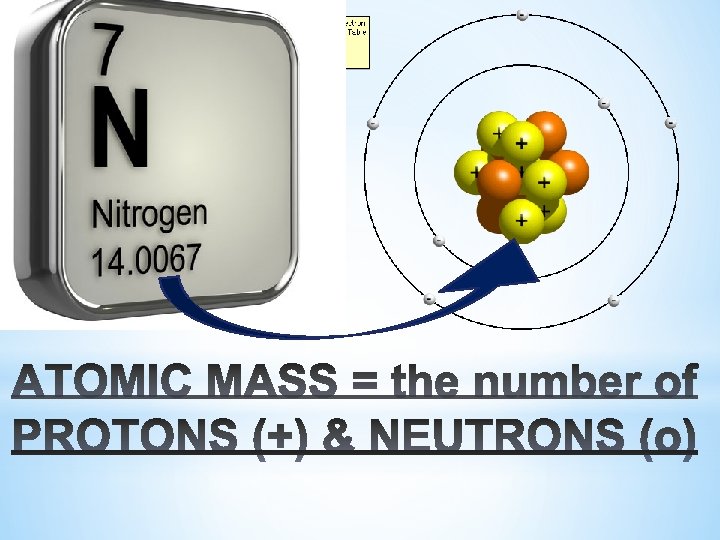
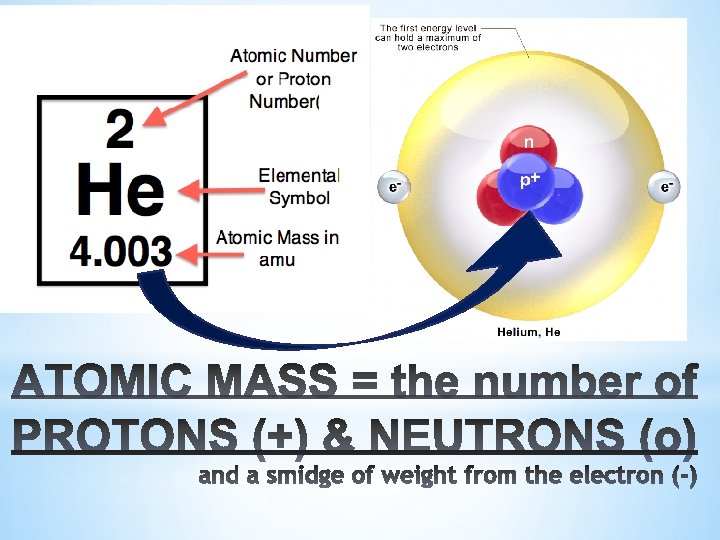
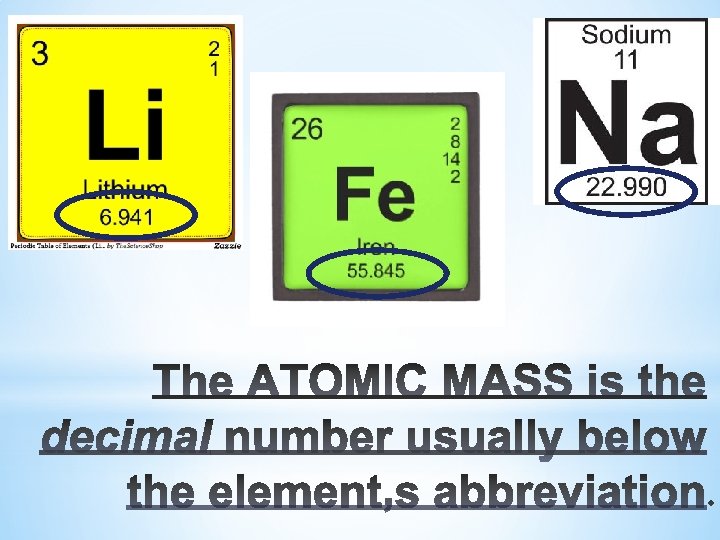
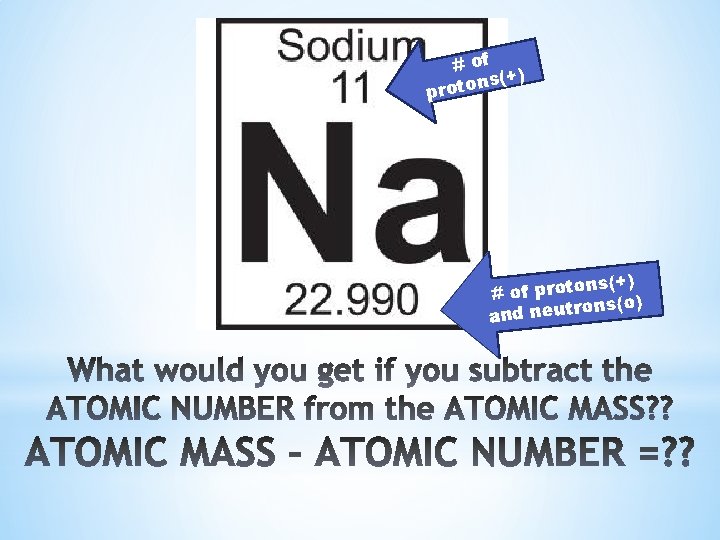
# of s(+) n o t o pr ns(+) o t o r p f o # s(o) n o r t u e n and
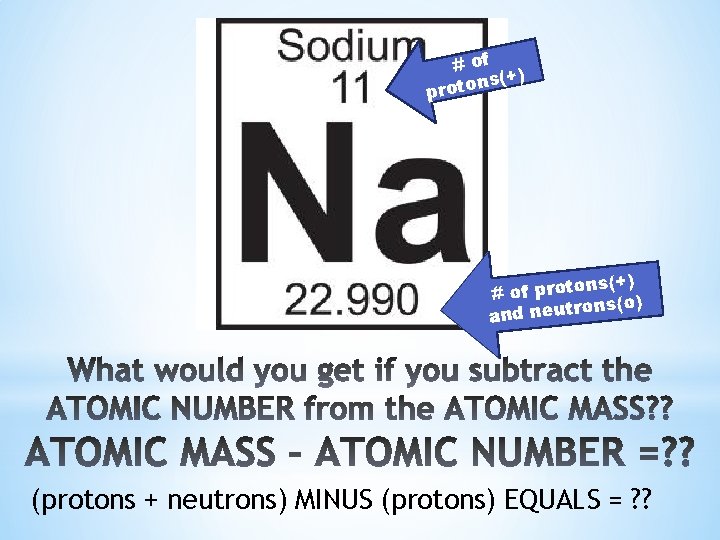
# of s(+) n o t o pr ns(+) o t o r p f o # s(o) n o r t u e n and (protons + neutrons) MINUS (protons) EQUALS = ? ?
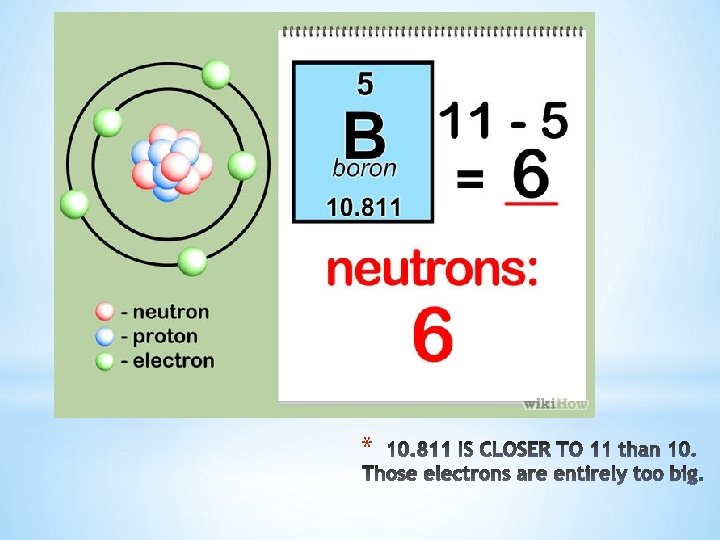
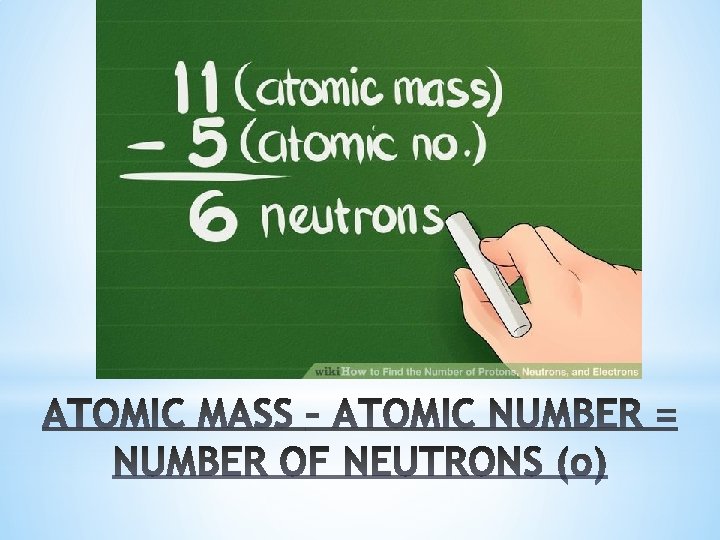
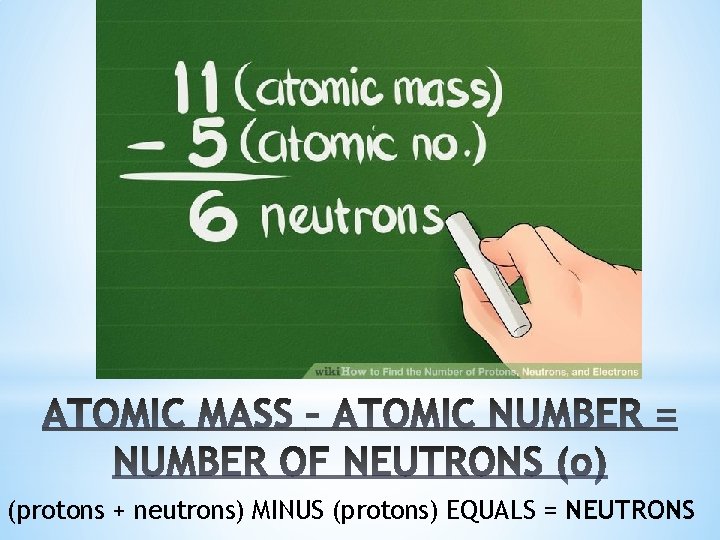
(protons + neutrons) MINUS (protons) EQUALS = NEUTRONS
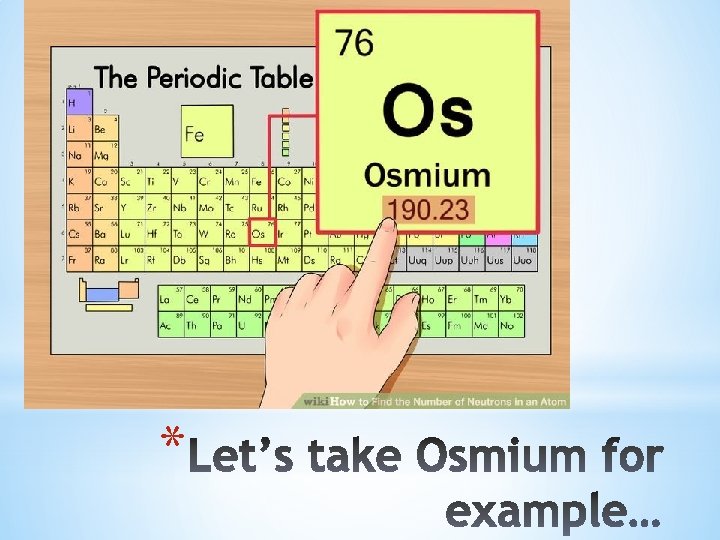
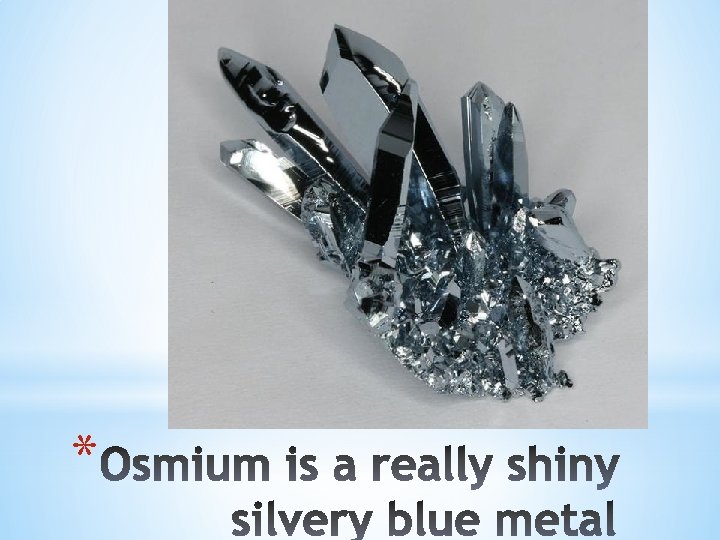
* Because of its high density and extreme hardness, osmium is often alloyed with other precious metals to make long-life products such as instrument pivots, phonograph needles, and electrical contacts. When naturally combined with iridium, it is used in fountain pen tips.
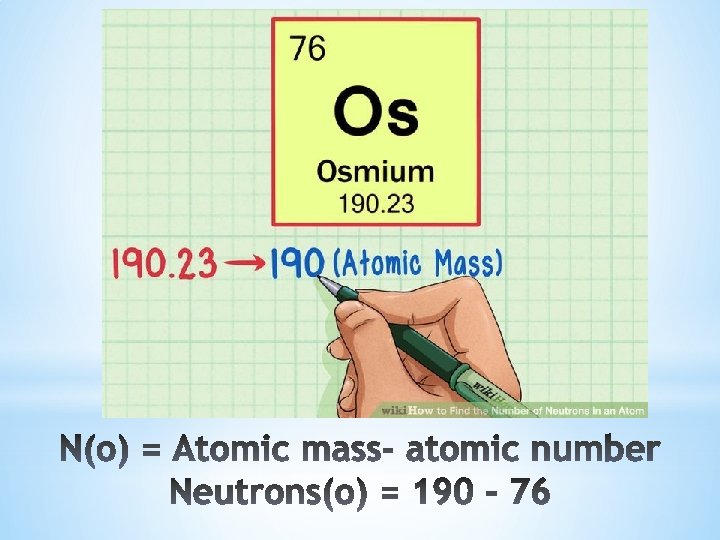

114
Let’s try a couple more…
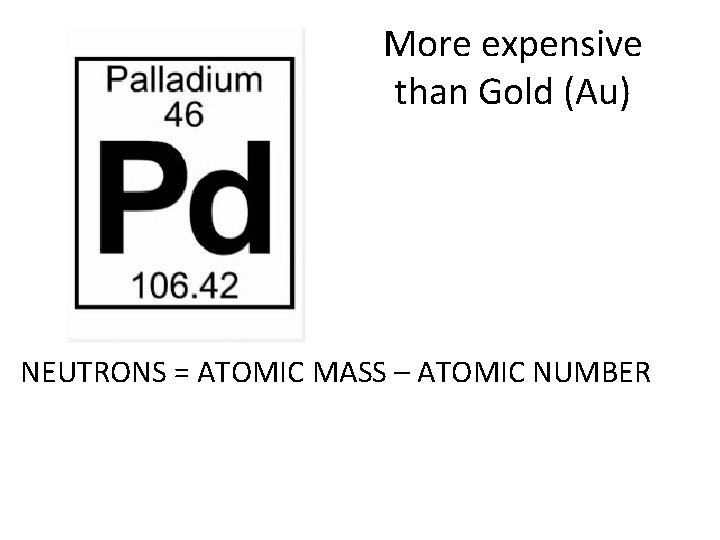
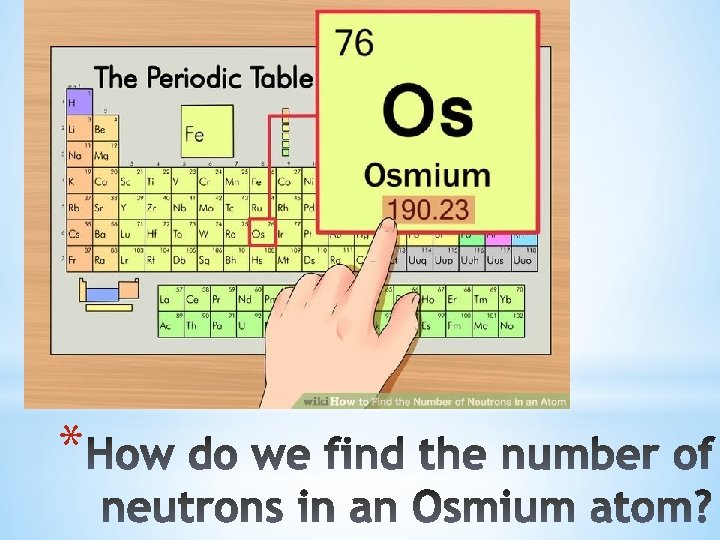
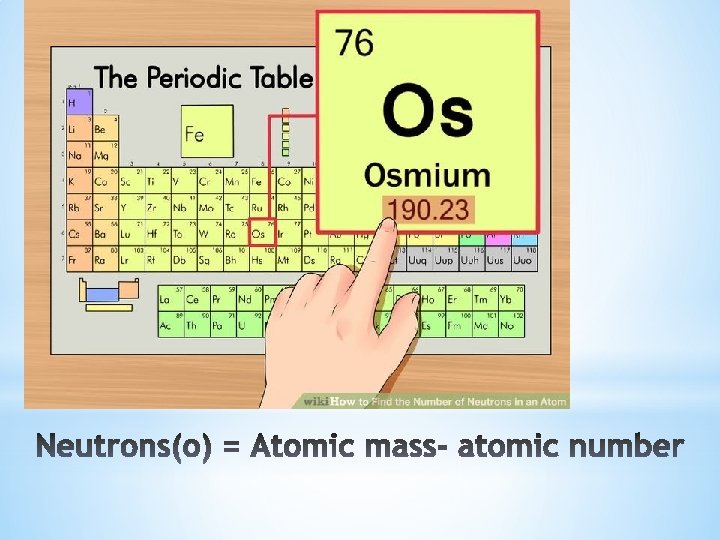
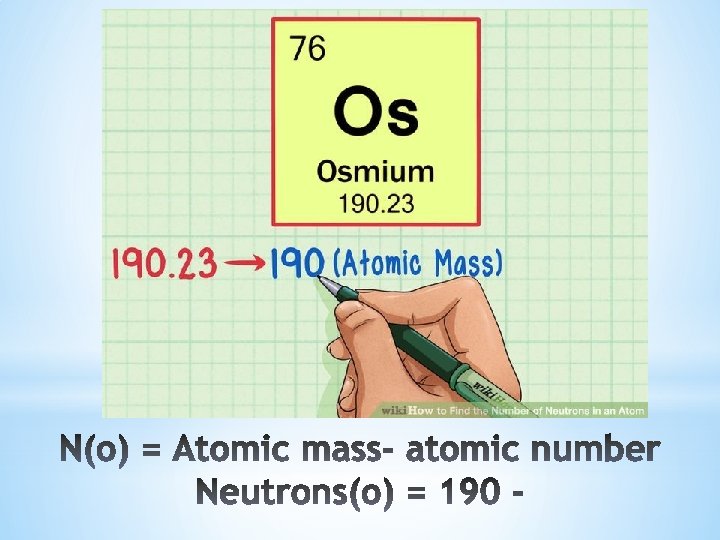
More expensive than Gold (Au) NEUTRONS = ATOMIC MASS – ATOMIC NUMBER
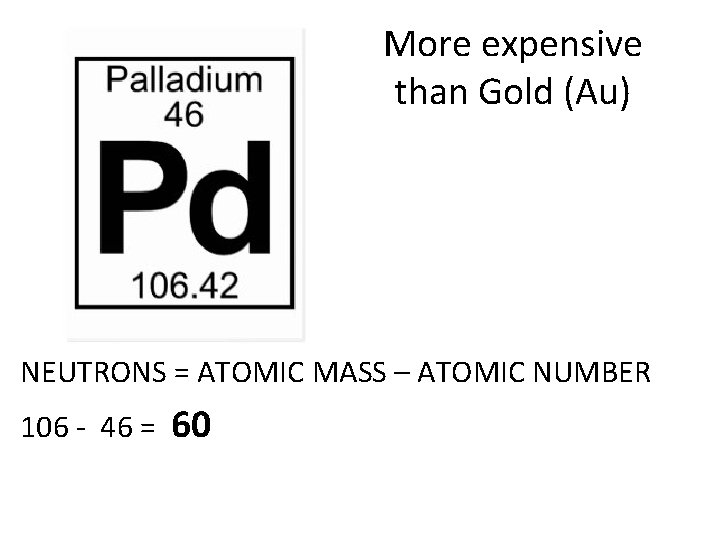
More expensive than Gold (Au) NEUTRONS = ATOMIC MASS – ATOMIC NUMBER 106 - 46 = 60
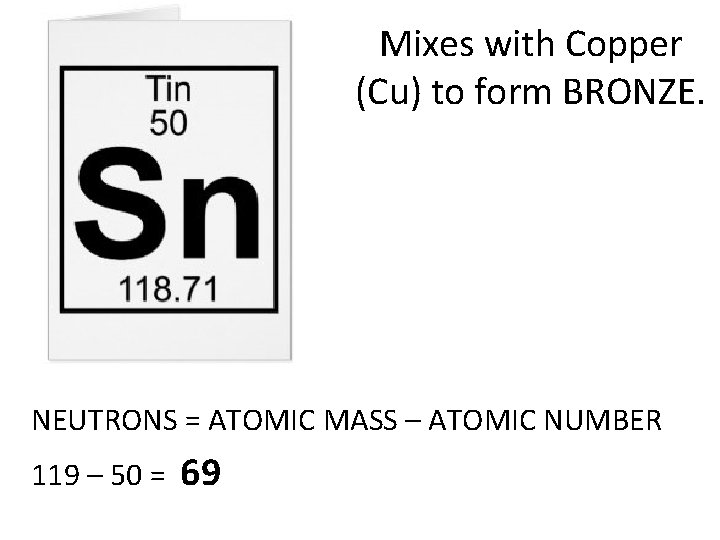
Mixes with Copper (Cu) to form BRONZE. NEUTRONS = ATOMIC MASS – ATOMIC NUMBER 119 – 50 = 69
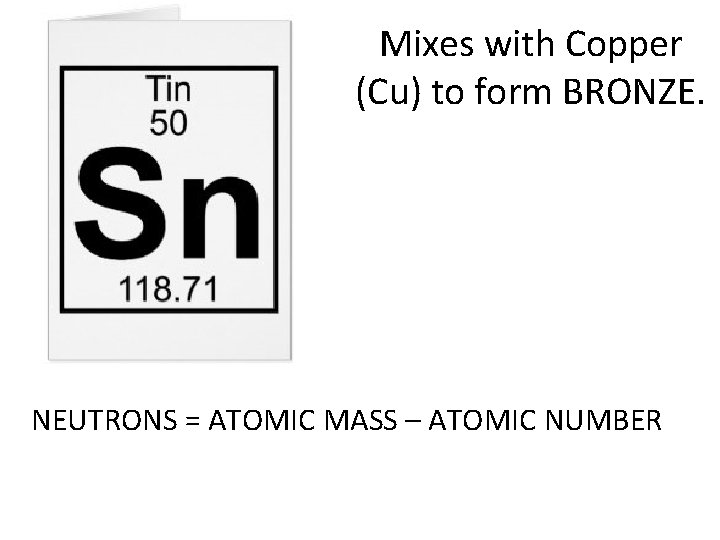
Mixes with Copper (Cu) to form BRONZE. NEUTRONS = ATOMIC MASS – ATOMIC NUMBER
COMPLETE THE STATEMENT…
COMPLETE THE STATEMENT… Why do you think this is?
* WAIT, WE CAN’T FORGET ABOUT ELECTRONS (-)!!!
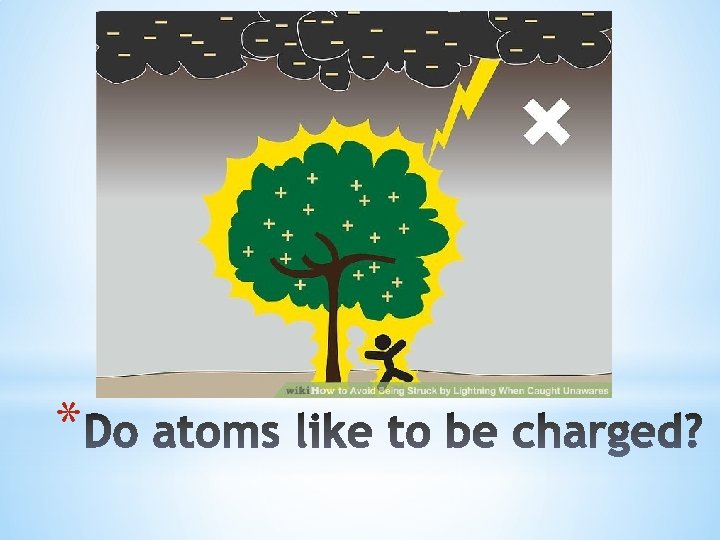
*atomic basics worksheet… *
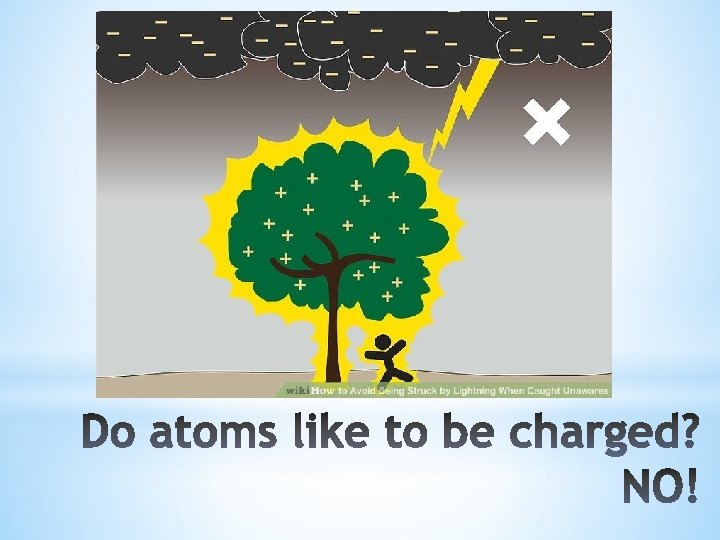
*atomic basics worksheet…
in other words… USUALLY, ELECTRON (-) = PROTONS (+)
*Atomic basics – side 1 for classwork/homework
- Slides: 108