
LIGO Cryogenic Test Masses for LIGO Upgrades Brett
LIGO Cryogenic Test Masses for LIGO Upgrades Brett Shapiro Stanford University G 1300196 -v 1 1/23
LIGO Summary • Cryo test mass problem statement • Thoughts on LIGO III quad pendulum upgrades • Stanford experiments – Preliminary rapid cooling – Preview of upcoming experiments • Rapid cooling thoughts for LIGO III • List of problems to solve G 1300196 -v 1 2/23
Cyro Test Mass Problem Statement * For LIGO III, reduce suspension and coating thermal noise by cooling the lower quad to 120 K (-153. 15 C) – Get to 120 K in a timely manner – Then maintain 120 K • Include a warm-up scheme (don’t forget!) • Do not increase the test mass lossiness – Emissive coatings, heat links, thick sus fibers, etc • Do not compromise passive seismic isolation – Cables, hoses, links, etc • Keep about the same seismic isolation platforms (ISIs, HEPIs) – Limit the amount of extra weight on the ISI – Leave the rest of the BSC warm 3/23
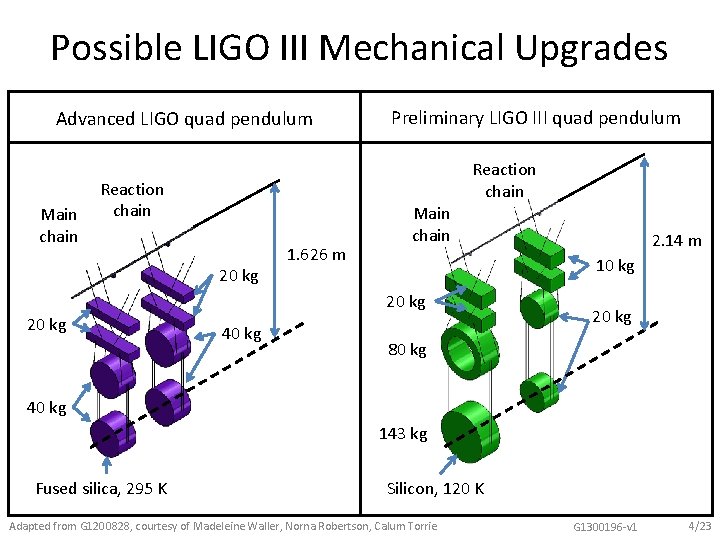
Possible LIGO III Mechanical Upgrades Advanced LIGO quad pendulum Main chain Preliminary LIGO III quad pendulum Reaction chain 20 kg 1. 626 m Main chain 10 kg 20 kg 40 kg 2. 14 m 20 kg 80 kg 40 kg 143 kg Fused silica, 295 K Silicon, 120 K Adapted from G 1200828, courtesy of Madeleine Waller, Norna Robertson, Calum Torrie G 1300196 -v 1 4/23
Why These Test Mass Changes? • Thermal elastic noise and CTE of silicon goes to zero at ≈120 K (and 18 K) • Silicon’s mechanical loss decreases at lower temperatures, silica’s increases • Silicon has high thermal conductivity – decreasing thermal lensing with high laser power • Higher mass reduces radiation pressure sensitivity and helps reduce thermal noise with less surface/volume ratio References: [1] Strawman report – T 1200031 [2] “Test mass materials for a new generation of gravitational wave detectors”; 2003; Rowan, Byer, Fejer, et al. G 1300196 -v 1 5/23
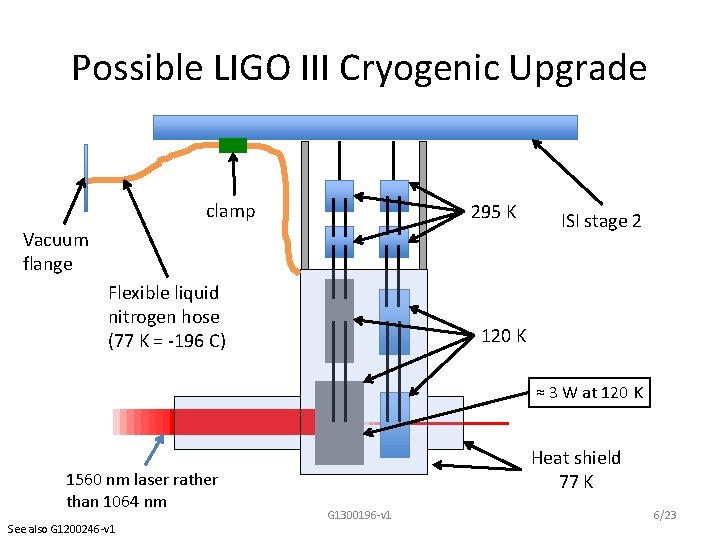
Possible LIGO III Cryogenic Upgrade clamp 295 K Vacuum flange Flexible liquid nitrogen hose (77 K = -196 C) ISI stage 2 120 K ≈ 3 W at 120 K 1560 nm laser rather than 1064 nm See also G 1200246 -v 1 Heat shield 77 K G 1300196 -v 1 6/23
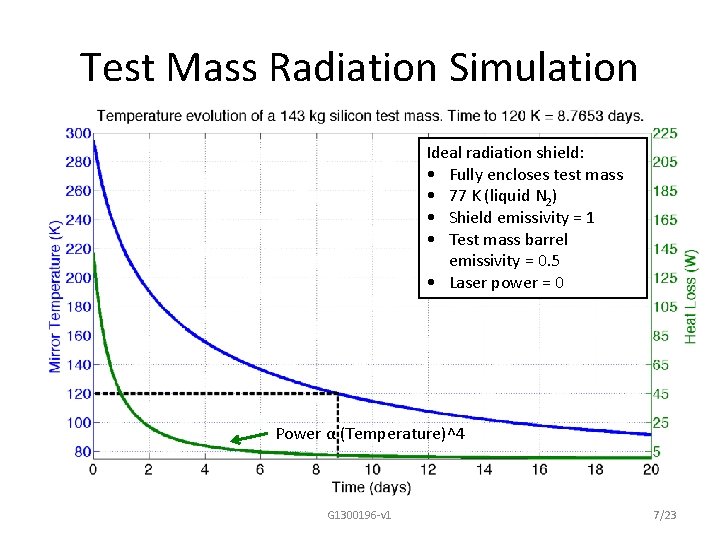
Test Mass Radiation Simulation Ideal radiation shield: • Fully encloses test mass • 77 K (liquid N 2) • Shield emissivity = 1 • Test mass barrel emissivity = 0. 5 • Laser power = 0 Power α (Temperature)^4 G 1300196 -v 1 7/23
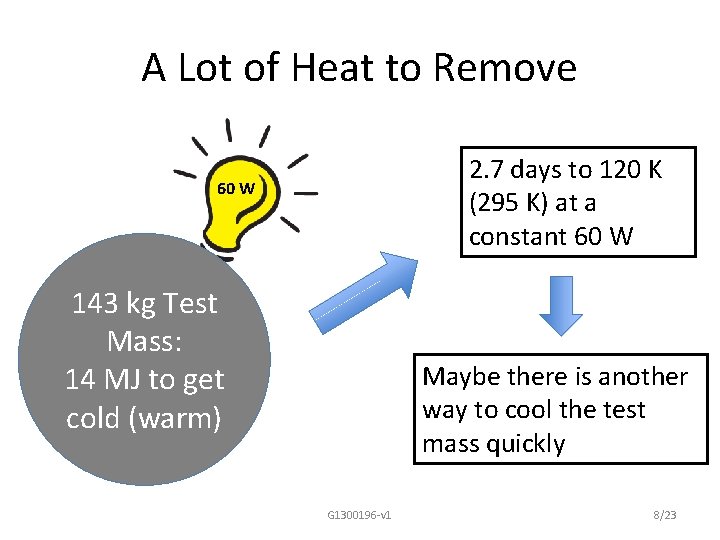
A Lot of Heat to Remove 2. 7 days to 120 K (295 K) at a constant 60 W 143 kg Test Mass: 14 MJ to get cold (warm) Maybe there is another way to cool the test mass quickly G 1300196 -v 1 8/23
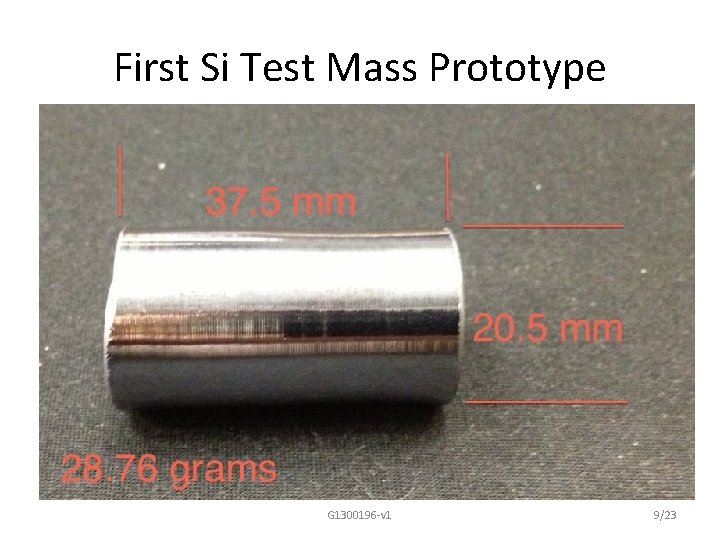
First Si Test Mass Prototype G 1300196 -v 1 9/23
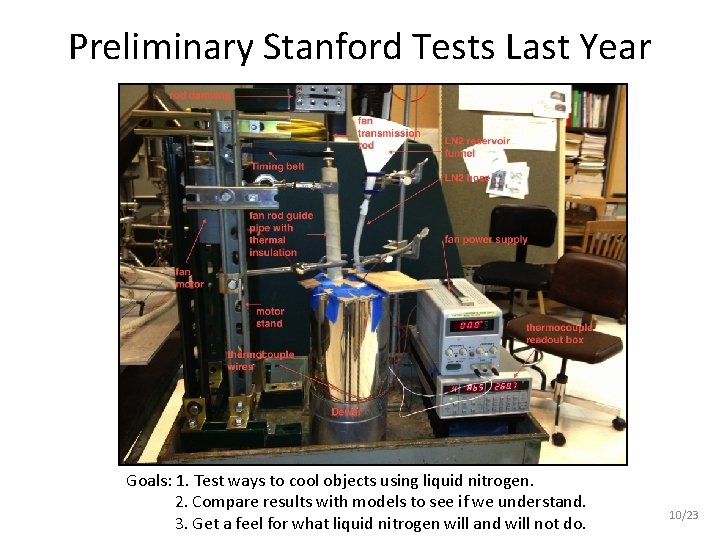
Preliminary Stanford Tests Last Year Goals: 1. Test ways to cool objects using liquid nitrogen. 2. Compare results with models to see if we understand. 3. Get a feel for what liquid nitrogen will and will not do. 10/23
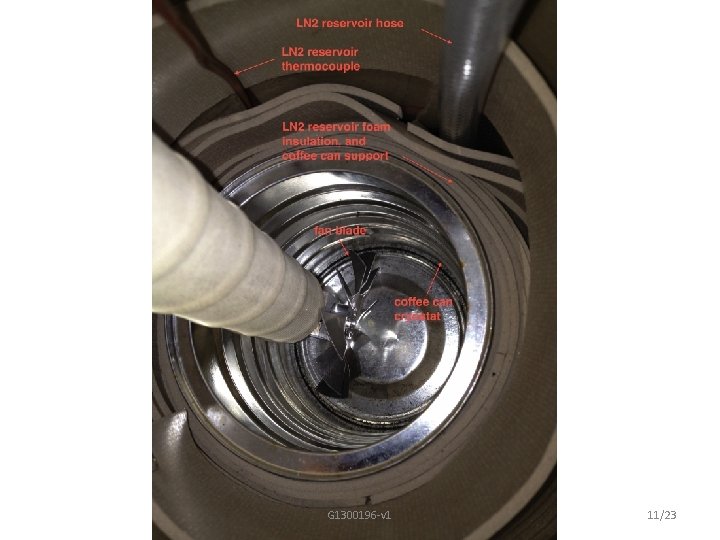
G 1300196 -v 1 11/23
12
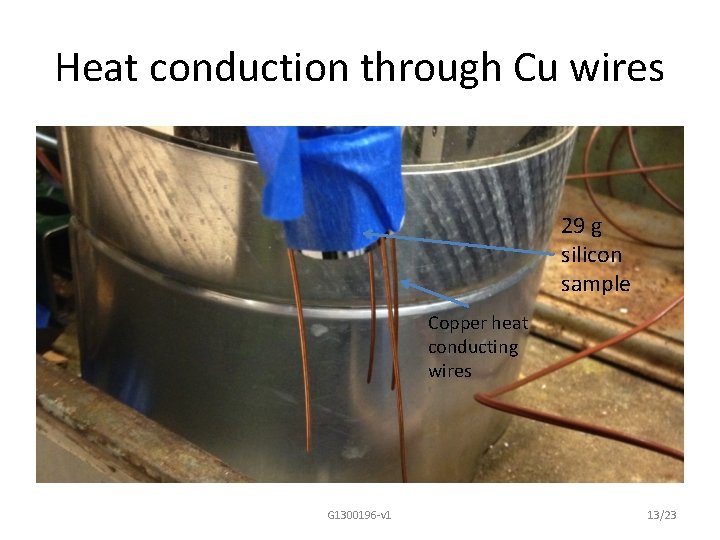
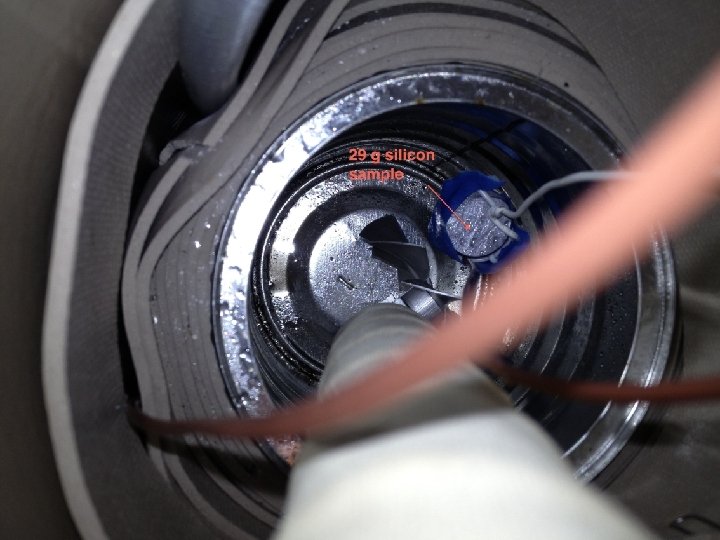
Heat conduction through Cu wires 29 g silicon sample Copper heat conducting wires G 1300196 -v 1 13/23
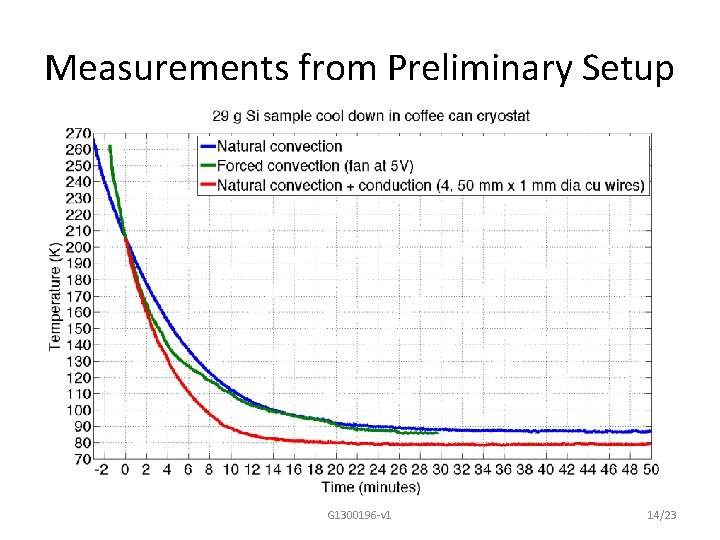
Measurements from Preliminary Setup G 1300196 -v 1 14/23
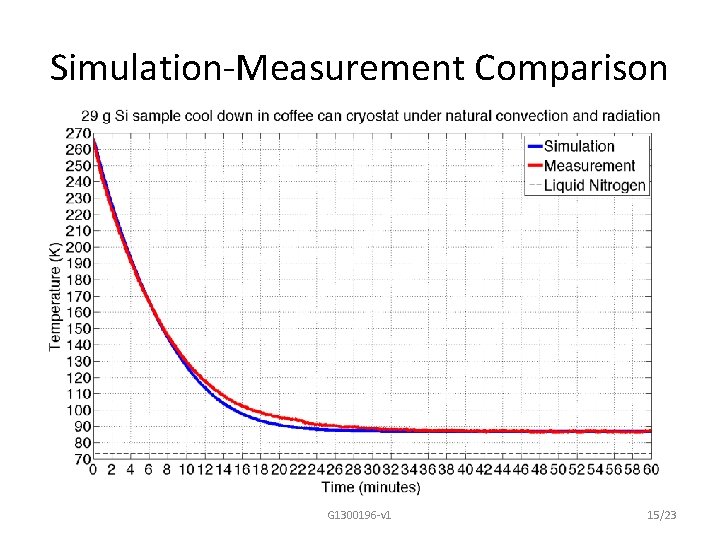
Simulation-Measurement Comparison G 1300196 -v 1 15/23
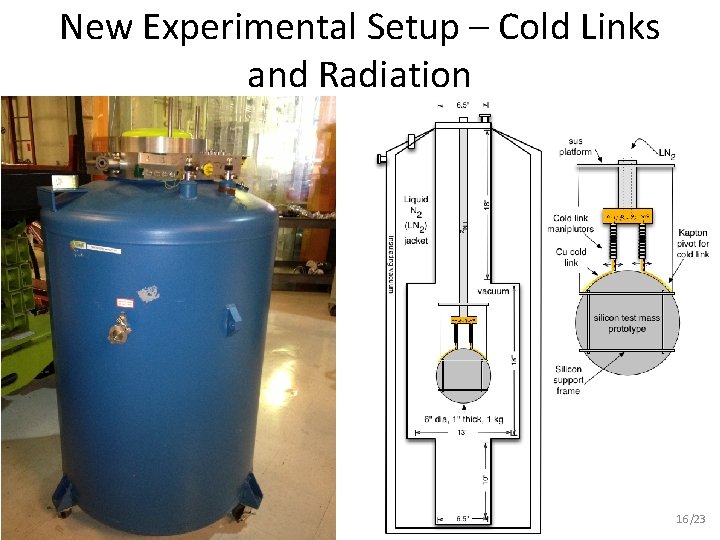
New Experimental Setup – Cold Links and Radiation 16/23
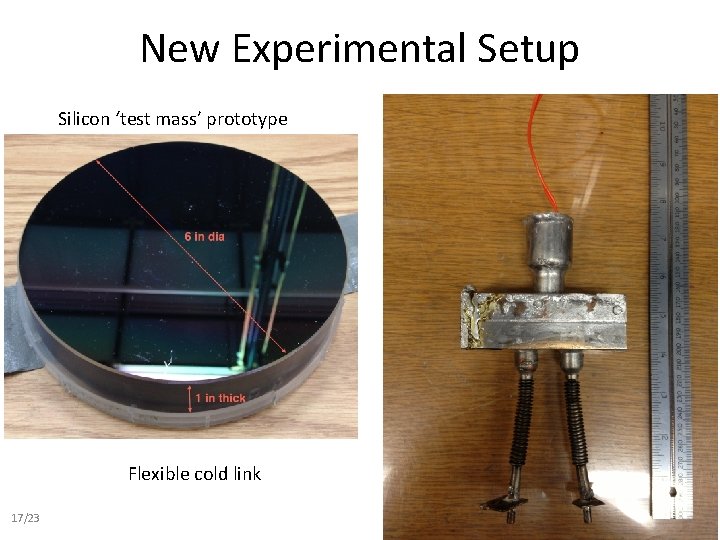
New Experimental Setup Silicon ‘test mass’ prototype Flexible cold link 17/23
List of Upcoming Experiments - 1 st set: • cold link (pincher) test – Comparison with models – Does residual air pressure enhance thermal conductivity? • radiative test – Emissive coatings – Measure of max heat input at 120 K. Experiments - 2 nd set: • suspension spring test to see if we can control the spring temp and Si temp simultaneously • Optical temperature measurement of Si - measure temperature dependent mode frequencies 18/23
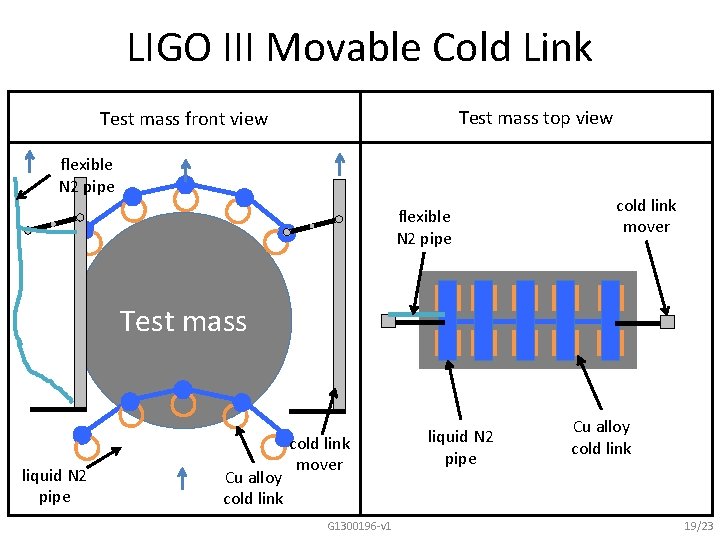
LIGO III Movable Cold Link Test mass top view Test mass front view flexible N 2 pipe cold link mover Test mass liquid N 2 pipe Cu alloy cold link mover G 1300196 -v 1 liquid N 2 pipe Cu alloy cold link 19/23
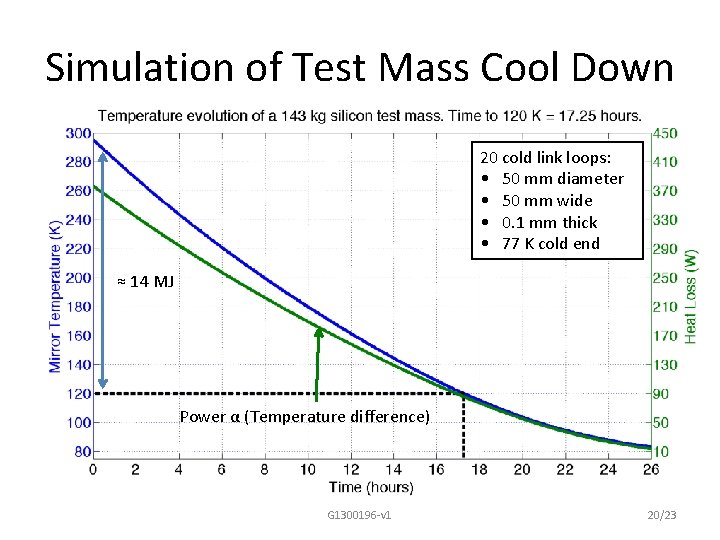
Simulation of Test Mass Cool Down 20 cold link loops: • 50 mm diameter • 50 mm wide • 0. 1 mm thick • 77 K cold end ≈ 14 MJ Power α (Temperature difference) G 1300196 -v 1 20/23
Other Problems To Solve • • Liquid N 2 hoses flexible enough for ISI under vacuum Temperature/height control of blade springs Test mass temperature control How to measure temperature? – Measure acoustic modes – Young’s modulus is temp. dependent – Infrared camera Emissivity of optical coatings Lossiness of emissive coatings Good emissivity estimates/measurements of Si? Power absorption in Si (ppm, W, etc)? How noisy is bubbling nitrogen: seismic, Newtonian? Do boiling chips help? • Optical coating thermal noise at 120 K • • • G 1300196 -v 1 21/23
LIGO Cryo Resources • Strawman website – https: //nodus. ligo. caltech. edu: 30889/wiki/do ku. php? id=strawman • Strawman report - T 1200031 • Google doc https: //docs. google. com/spreadsheet/ccc? key =0 Aq. RDYy. FEj. UXXd. Hp. Yc 3 dy. Tlh 2 TXNDem 5 o. Wk hv. Y 0 Nud. VE#gid=0 G 1200803 22/23
LIGO Conclusions • LIGO folks and larger GW community thinking more seriously about cryo test masses • Experiments underway at Stanford to test cooling technology • Lots of problems to solve! G 1300196 -v 1 23/23
LIGO Backups G 1300196 -v 1 24
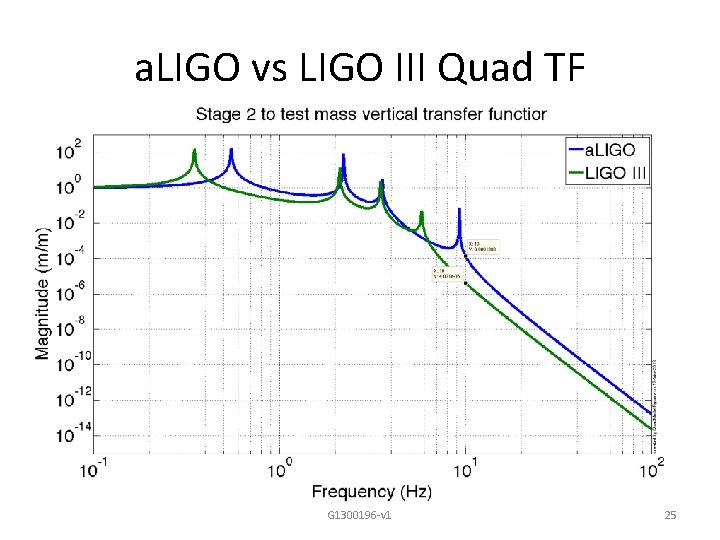
a. LIGO vs LIGO III Quad TF G 1300196 -v 1 25
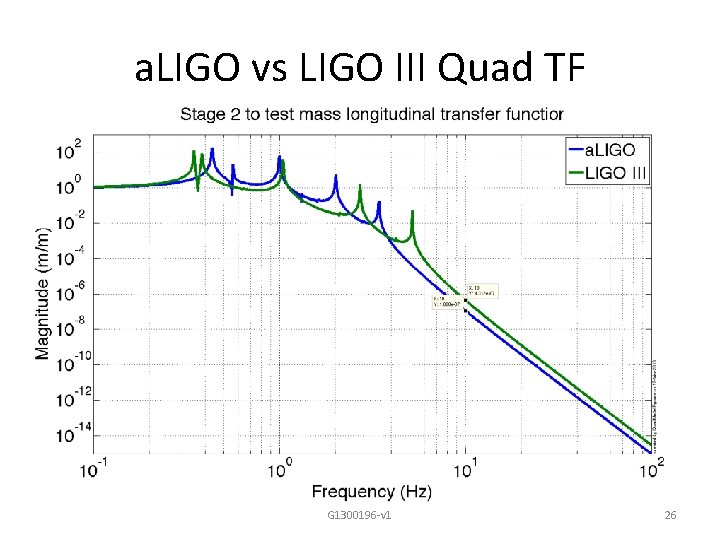
a. LIGO vs LIGO III Quad TF G 1300196 -v 1 26
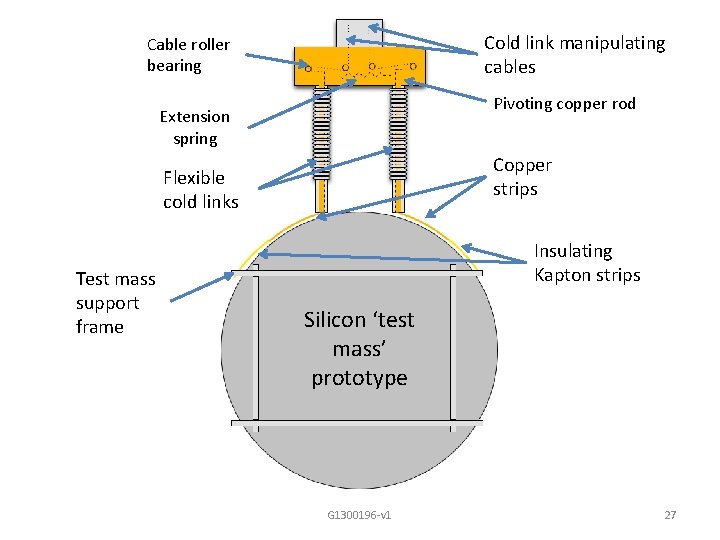
Cold link manipulating cables Cable roller bearing Pivoting copper rod Extension spring Copper strips Flexible cold links Test mass support frame Insulating Kapton strips Silicon ‘test mass’ prototype G 1300196 -v 1 27
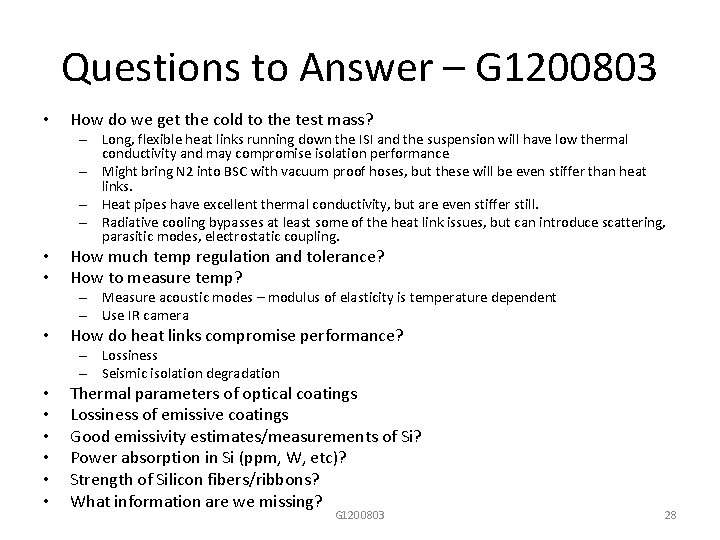
Questions to Answer – G 1200803 • How do we get the cold to the test mass? – Long, flexible heat links running down the ISI and the suspension will have low thermal conductivity and may compromise isolation performance – Might bring N 2 into BSC with vacuum proof hoses, but these will be even stiffer than heat links. – Heat pipes have excellent thermal conductivity, but are even stiffer still. – Radiative cooling bypasses at least some of the heat link issues, but can introduce scattering, parasitic modes, electrostatic coupling. • • How much temp regulation and tolerance? How to measure temp? – Measure acoustic modes – modulus of elasticity is temperature dependent – Use IR camera • How do heat links compromise performance? – Lossiness – Seismic isolation degradation • • • Thermal parameters of optical coatings Lossiness of emissive coatings Good emissivity estimates/measurements of Si? Power absorption in Si (ppm, W, etc)? Strength of Silicon fibers/ribbons? What information are we missing? G 1200803 28
Reasons not to have open LN 2 in BSC 1. The mirror coatings may have a thermal shock issue 1. The nitrogen must be very clean before contacting the test mass. 1. Exposure to vacuum will cause liquid nitrogen to explode. G 1300196 -v 1 29
- Slides: 29