
Lightflow a lightweight distributed workflow system Andreas Moll
Lightflow a lightweight, distributed workflow system Andreas Moll synchrotron. org. au
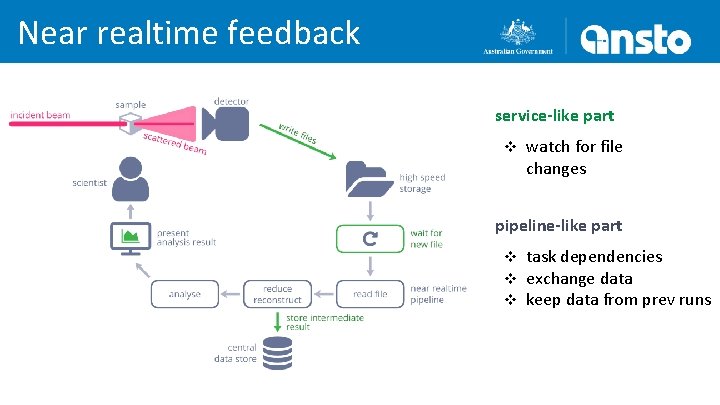
Near realtime feedback service-like part v watch for file changes pipeline-like part v v v synchrotron. org. au task dependencies exchange data keep data from prev runs
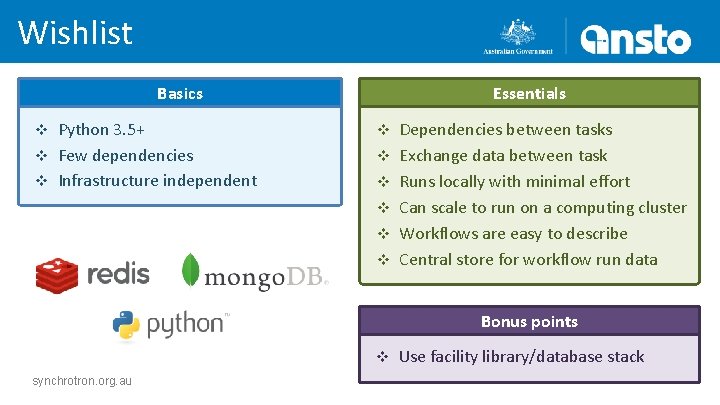
Wishlist Basics Python 3. 5+ v Few dependencies v Infrastructure independent v Essentials v v v Dependencies between tasks Exchange data between task Runs locally with minimal effort Can scale to run on a computing cluster Workflows are easy to describe Central store for workflow run data Bonus points v synchrotron. org. au Use facility library/database stack
So many excellent options There are many excellent workflow systems and tools available Scientific workflow systems Examples: Apache Taverna, Discovery Net, Kepler, EDNA, Workspace, Cylc, … Domain specific systems Examples: Galaxy, Ruffus, Dpdak, UFO, Savu, Fireworks, … ETL (Extract Transform Load) Examples: Airflow, Luigi, Pinball some came really close to be a match one (or more) showstoppers for each of them synchrotron. org. au
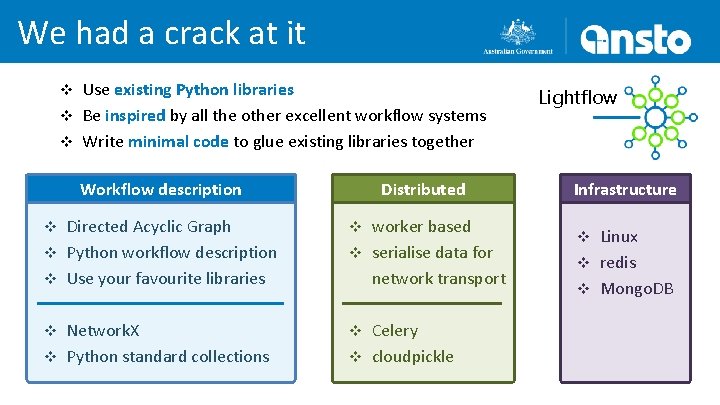
We had a crack at it Use existing Python libraries v Be inspired by all the other excellent workflow systems v Write minimal code to glue existing libraries together v Workflow description Distributed worker based v serialise data for network transport v Directed Acyclic Graph v Python workflow description v Use your favourite libraries v Network. X v Python standard collections v v synchrotron. org. au Celery v cloudpickle Lightflow Infrastructure Linux v redis v Mongo. DB v
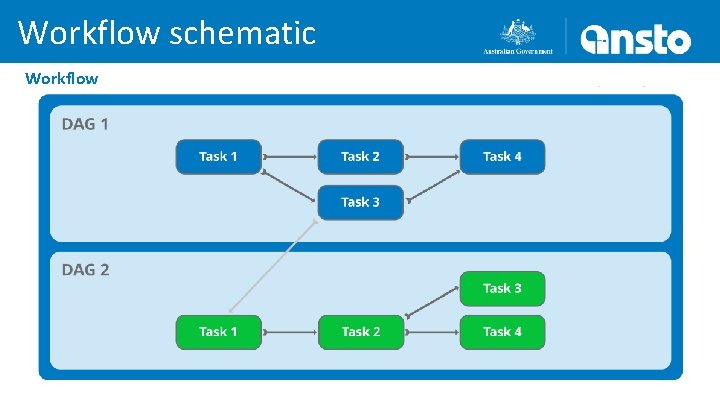
Workflow schematic Workflow synchrotron. org. au
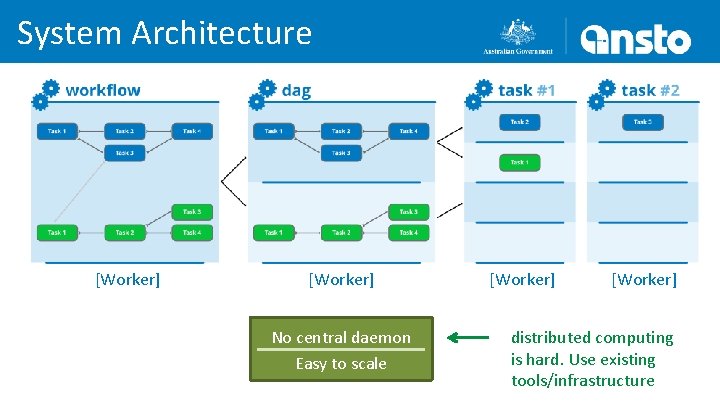
System Architecture [Worker] No central daemon Easy to scale synchrotron. org. au [Worker] distributed computing is hard. Use existing tools/infrastructure
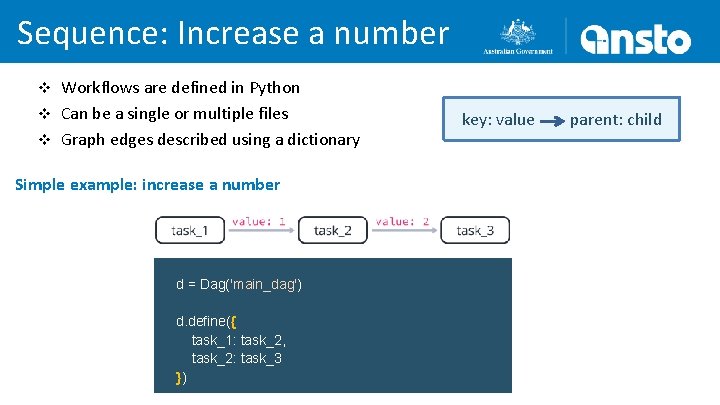
Sequence: Increase a number Workflows are defined in Python v Can be a single or multiple files v Graph edges described using a dictionary v Simple example: increase a number d = Dag('main_dag') synchrotron. org. au d. define({ task_1: task_2, task_2: task_3 }) key: value parent: child
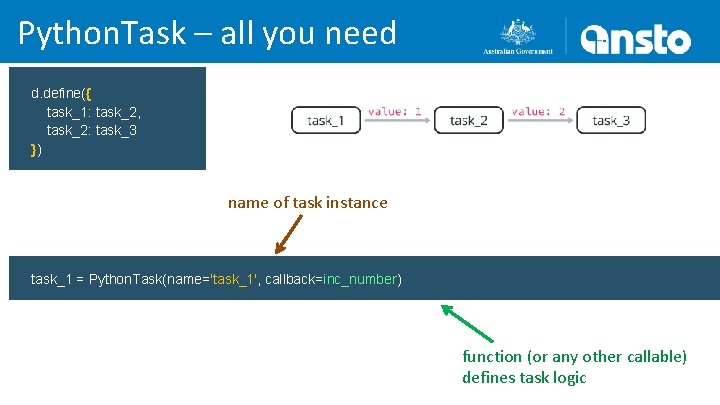
Python. Task – all you need d. define({ task_1: task_2, task_2: task_3 }) name of task instance task_1 = Python. Task(name='task_1', callback=inc_number) synchrotron. org. au function (or any other callable) defines task logic
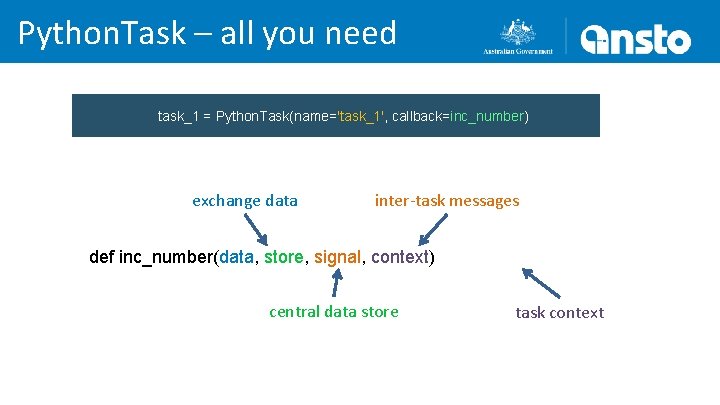
Python. Task – all you need task_1 = Python. Task(name='task_1', callback=inc_number) exchange data inter-task messages def inc_number(data, store, signal, context) central data store synchrotron. org. au task context
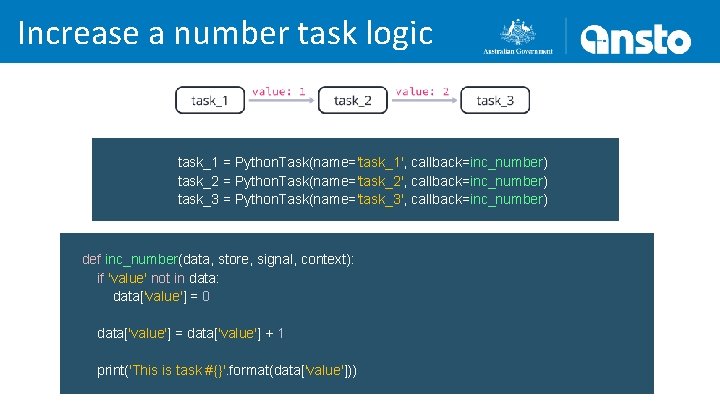
Increase a number task logic task_1 = Python. Task(name='task_1', callback=inc_number) task_2 = Python. Task(name='task_2', callback=inc_number) task_3 = Python. Task(name='task_3', callback=inc_number) def inc_number(data, store, signal, context): if 'value' not in data: data['value'] = 0 data['value'] = data['value'] + 1 print('This is task #{}'. format(data['value'])) synchrotron. org. au
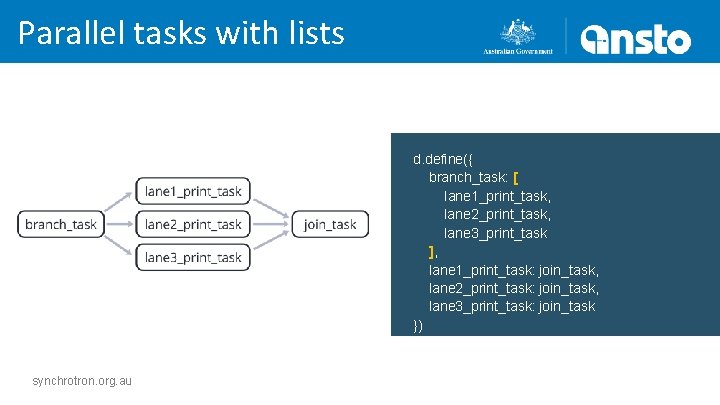
Parallel tasks with lists d. define({ branch_task: [ lane 1_print_task, lane 2_print_task, lane 3_print_task ], lane 1_print_task: join_task, lane 2_print_task: join_task, lane 3_print_task: join_task }) synchrotron. org. au
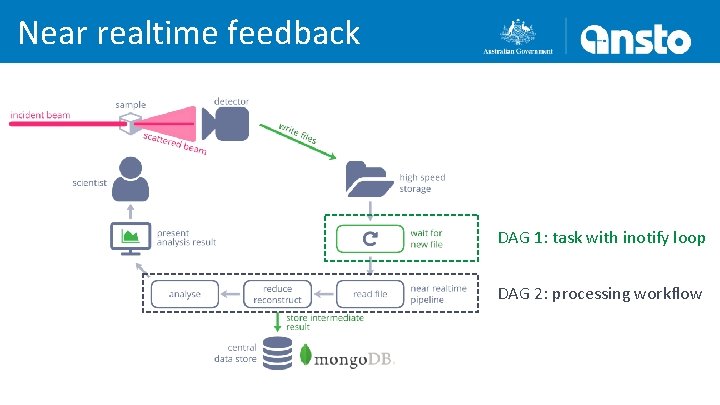
Near realtime feedback DAG 1: task with inotify loop DAG 2: processing workflow synchrotron. org. au
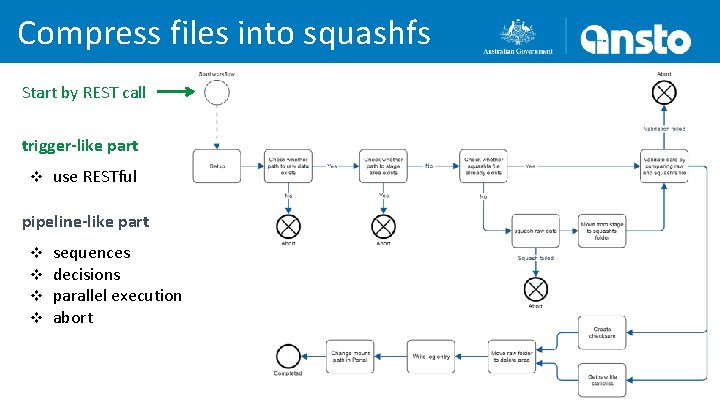
Compress files into squashfs Start by REST call trigger-like part v use RESTful pipeline-like part v v sequences decisions parallel execution abort synchrotron. org. au
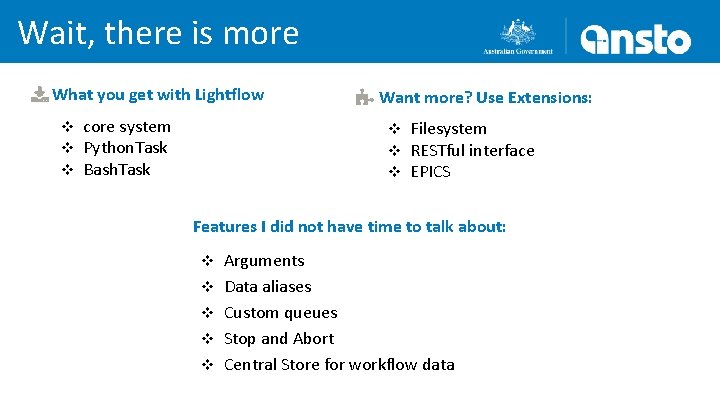
Wait, there is more What you get with Lightflow v v v core system Python. Task Bash. Task Want more? Use Extensions: v v v Filesystem RESTful interface EPICS Features I did not have time to talk about: v v v synchrotron. org. au Arguments Data aliases Custom queues Stop and Abort Central Store for workflow data
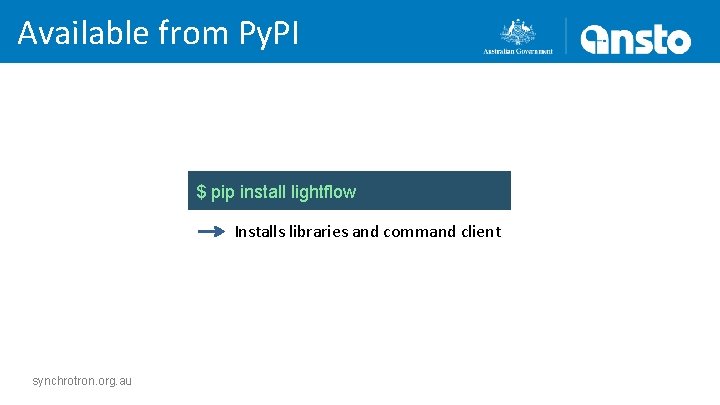
Available from Py. PI $ pip install lightflow Installs libraries and command client synchrotron. org. au
Source Code Lightflow Source Code on Git. Hub (BSD-3) github. com/Australian. Synchrotron/Lightflow australiansynchrotron. github. io/Lightflow/ synchrotron. org. au
- Slides: 17