
Light Years Big Numbers Continued Astronomical Units work
Light Years Big Numbers, Continued
Astronomical Units work great within our own Solar System, but as we move through our galaxy, distances grow ever farther apart.
That's why we created a unit of measurement based on the distance that light travels in a year. We call these units, “light years. ”
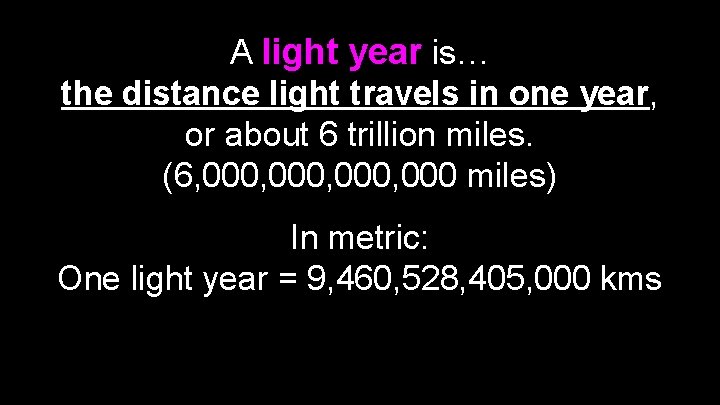
A light year is… the distance light travels in one year, or about 6 trillion miles. (6, 000, 000 miles) In metric: One light year = 9, 460, 528, 405, 000 kms
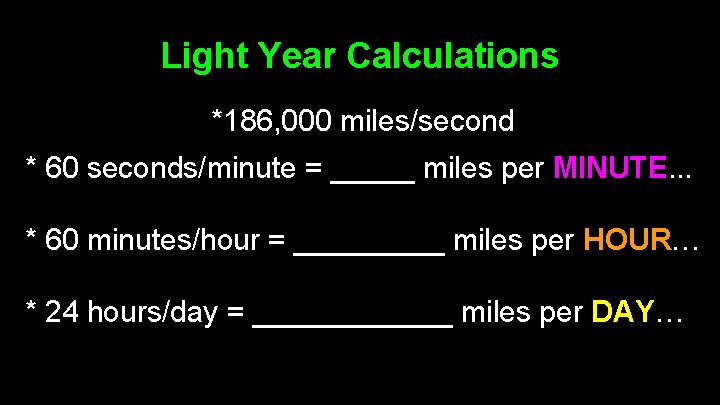
Light Year Calculations *186, 000 miles/second * 60 seconds/minute = _____ miles per MINUTE. . . * 60 minutes/hour = _____ miles per HOUR… * 24 hours/day = ______ miles per DAY…
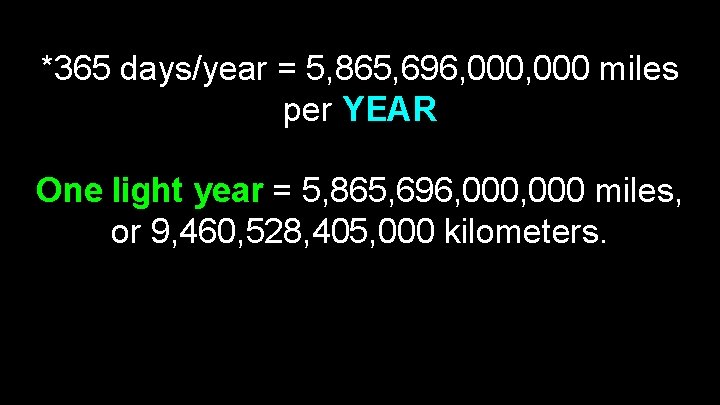
*365 days/year = 5, 865, 696, 000 miles per YEAR One light year = 5, 865, 696, 000 miles, or 9, 460, 528, 405, 000 kilometers.
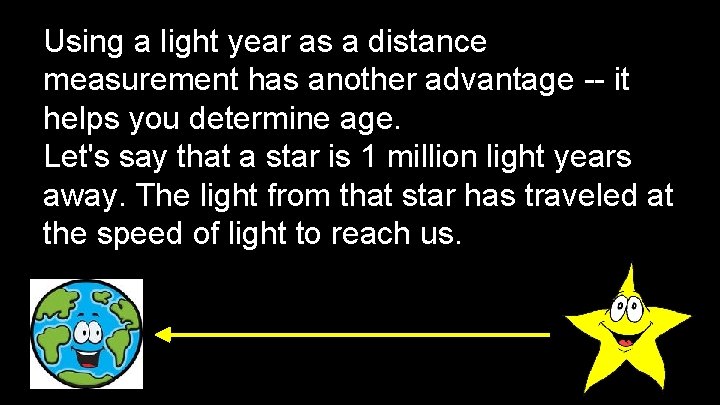
Using a light year as a distance measurement has another advantage -- it helps you determine age. Let's say that a star is 1 million light years away. The light from that star has traveled at the speed of light to reach us.
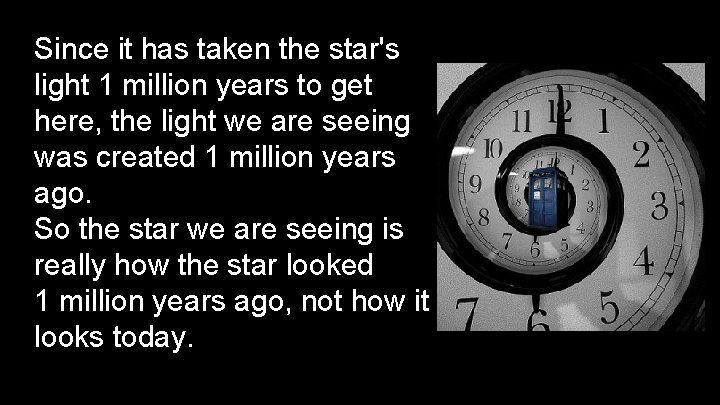
Since it has taken the star's light 1 million years to get here, the light we are seeing was created 1 million years ago. So the star we are seeing is really how the star looked 1 million years ago, not how it looks today.
In the same way, our Sun is about 8 light minutes away. If the Sun were to suddenly explode right now, we wouldn't know about it for eight minutes because that is how long it would take for the light of the explosion to get here.
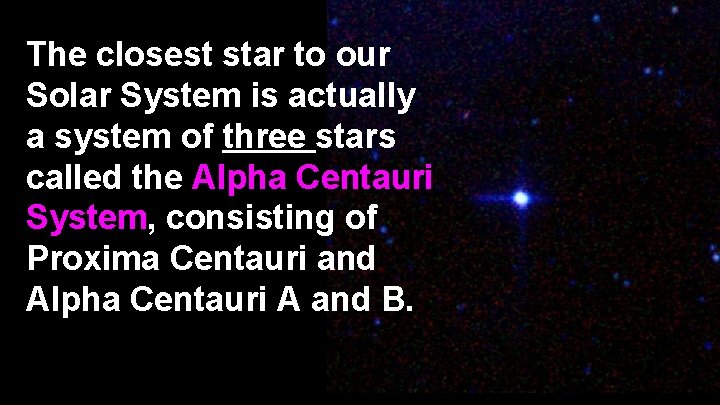
The closest star to our Solar System is actually a system of three stars called the Alpha Centauri System, consisting of Proxima Centauri and Alpha Centauri A and B.
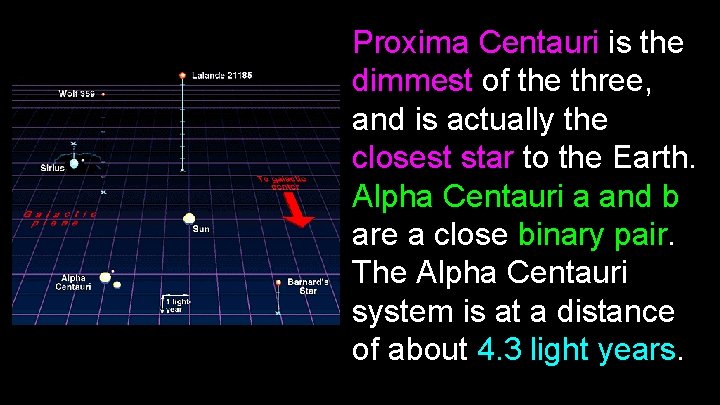
Proxima Centauri is the dimmest of the three, and is actually the closest star to the Earth. Alpha Centauri a and b are a close binary pair. The Alpha Centauri system is at a distance of about 4. 3 light years.
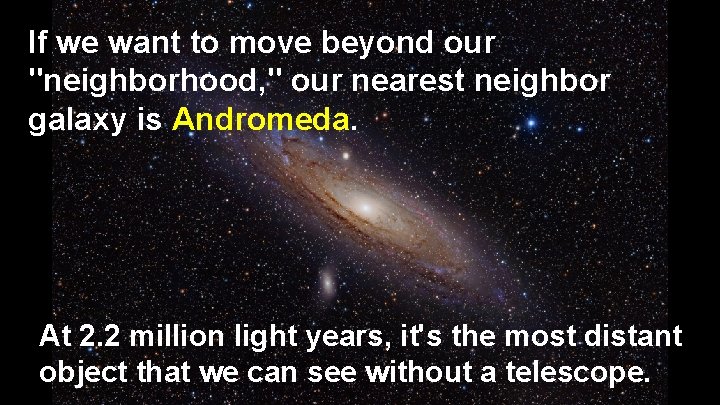
If we want to move beyond our "neighborhood, " our nearest neighbor galaxy is Andromeda. At 2. 2 million light years, it's the most distant object that we can see without a telescope.
- Slides: 12