
Light Waves Light waves transfer energy and can

- Slides: 30
Light Waves Light waves transfer _______ energy and can be manipulated in predictable ways!
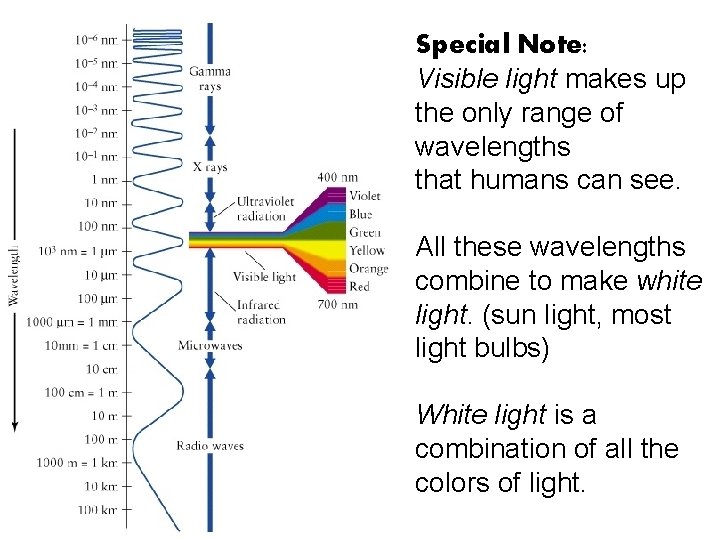
Special Note: Visible light makes up the only range of wavelengths that humans can see. All these wavelengths combine to make white light. (sun light, most light bulbs) White light is a combination of all the colors of light.
There are four types of wave manipulations. The first one is: reflection
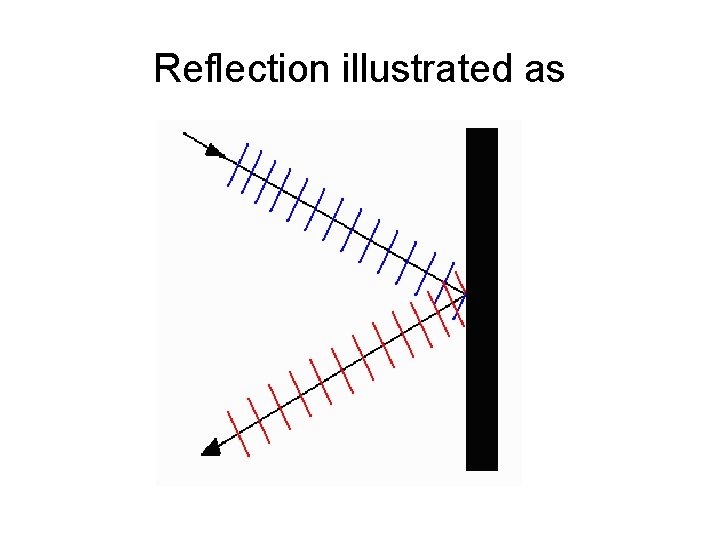
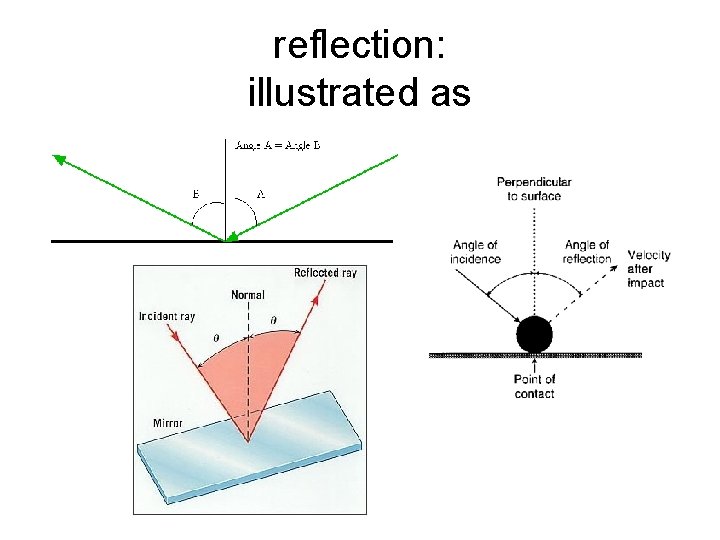
reflection: defined as Waves bounce back when they hit a surface they cannot pass through
Reflection illustrated as
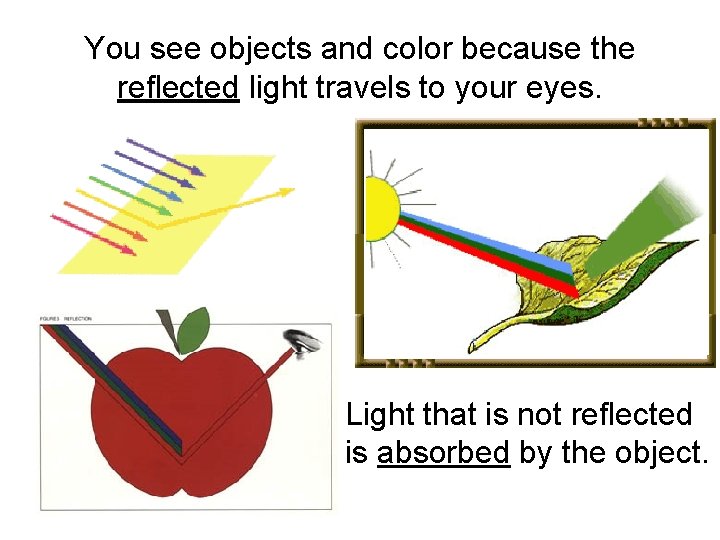
You see objects and color because the reflected light travels to your eyes. Light that is not reflected is absorbed by the object.
A second type of manipulation is absorption
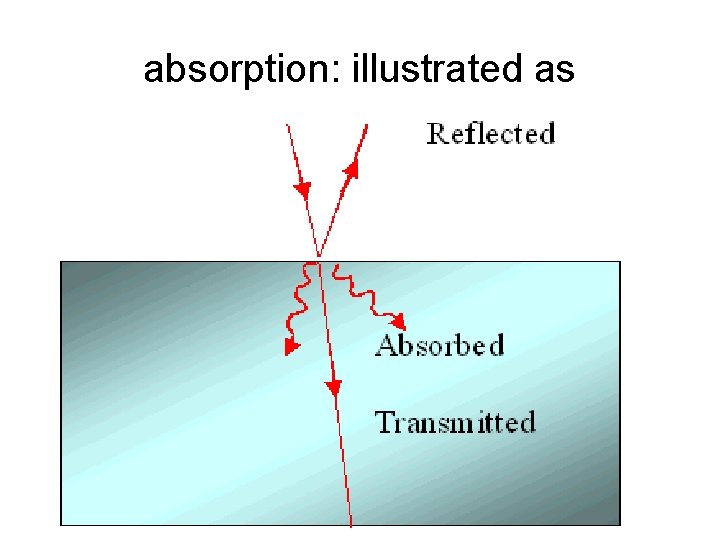
absorption: defined as The transfer of light energy into an object or a particle of matter.
absorption: illustrated as
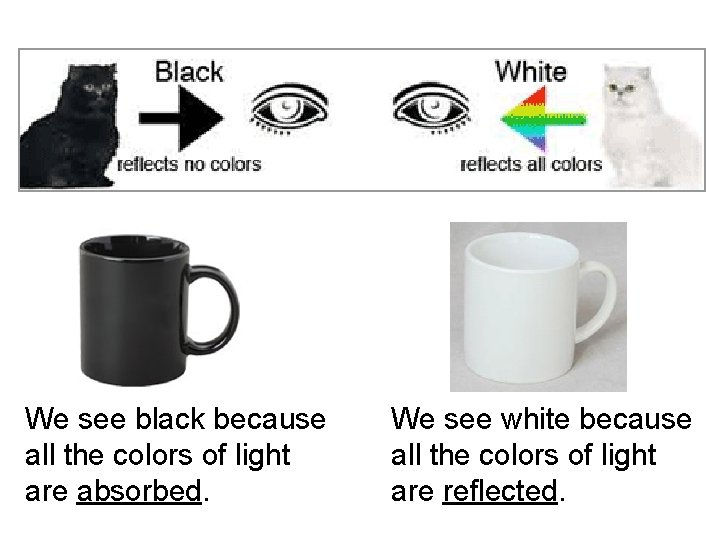
We see black because all the colors of light are absorbed. We see white because all the colors of light are reflected.
A third type of manipulation is refraction
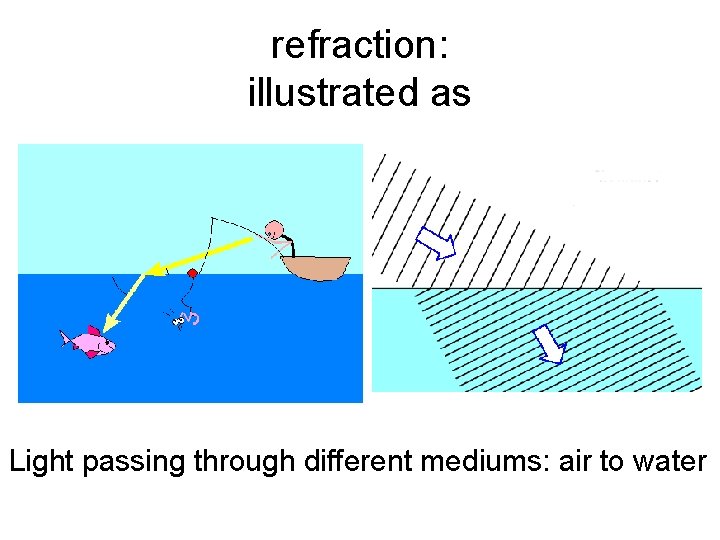
refraction: defined as Waves bend and change directions as they pass at an angle from one type of medium to another.
refraction: illustrated as Light passing through different mediums: air to water
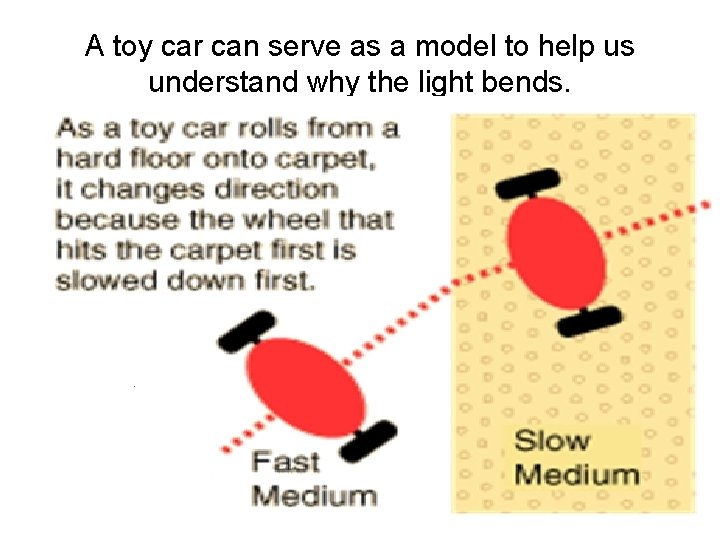
A toy car can serve as a model to help us understand why the light bends.
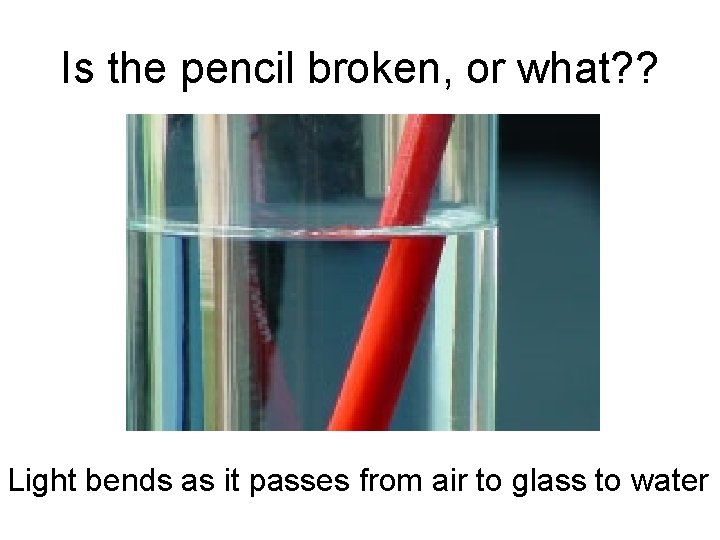
Is the pencil broken, or what? ? Light bends as it passes from air to glass to water
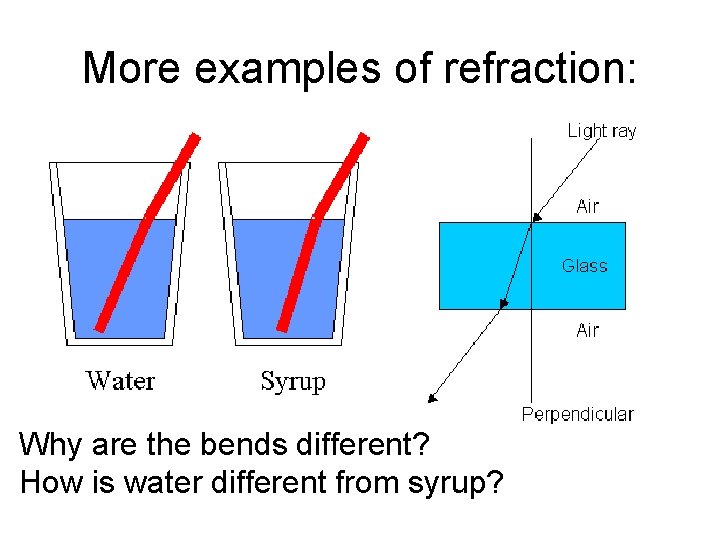
More examples of refraction: Why are the bends different? How is water different from syrup?
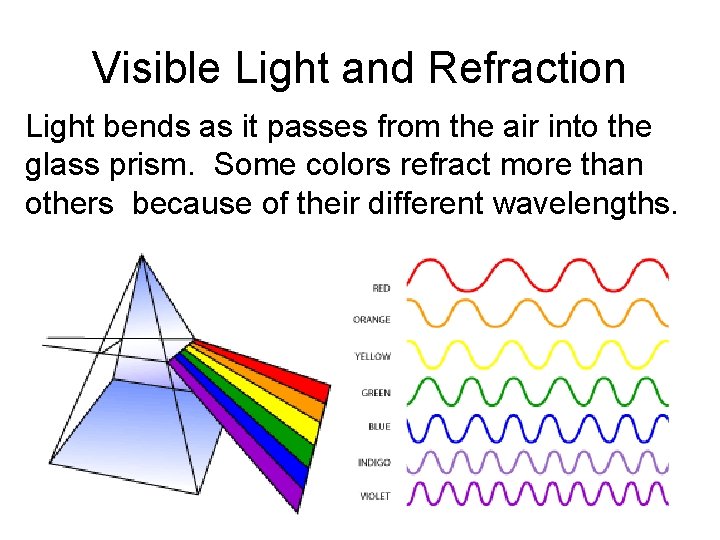
Visible Light and Refraction Light bends as it passes from the air into the glass prism. Some colors refract more than others because of their different wavelengths.
A fourth type of manipulation is diffraction
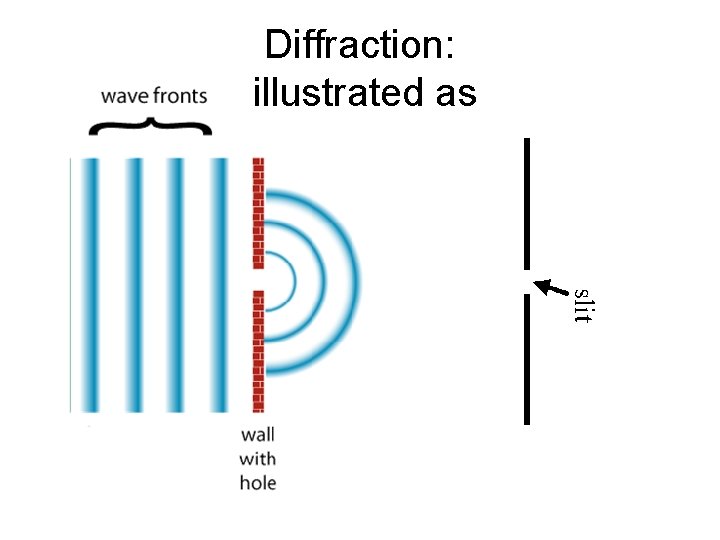
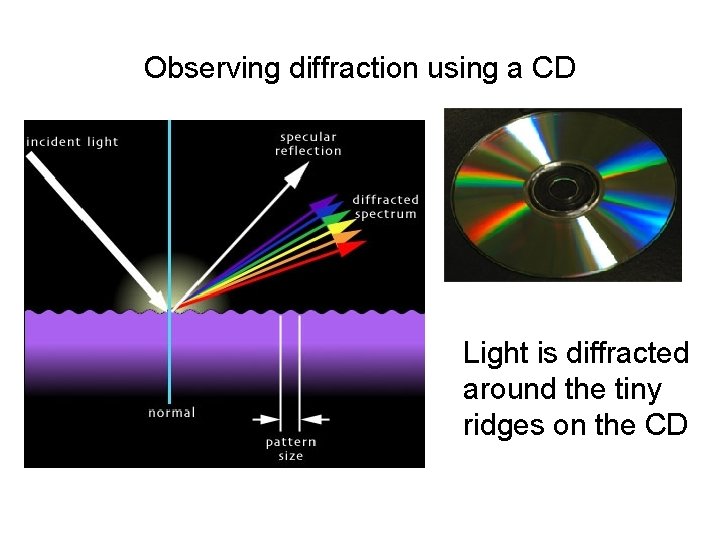
diffraction: defined as The bending of waves around the edge of a small object or through a small opening.
Diffraction: illustrated as
Observing diffraction using a CD Light is diffracted around the tiny ridges on the CD
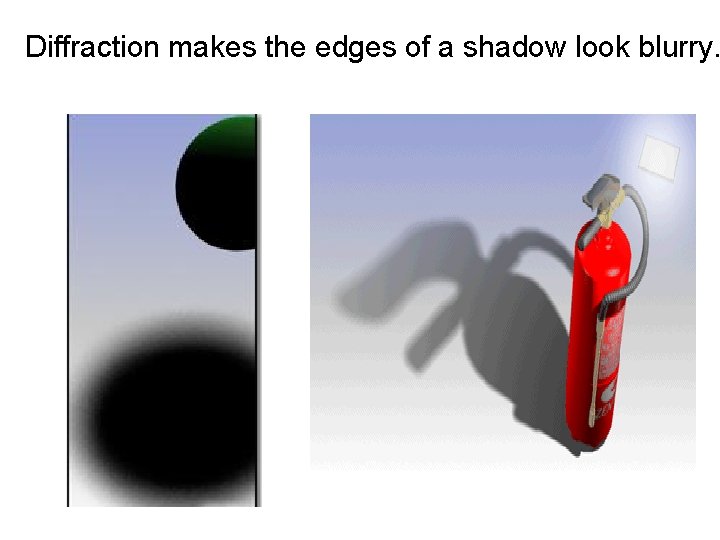
Diffraction makes the edges of a shadow look blurry.
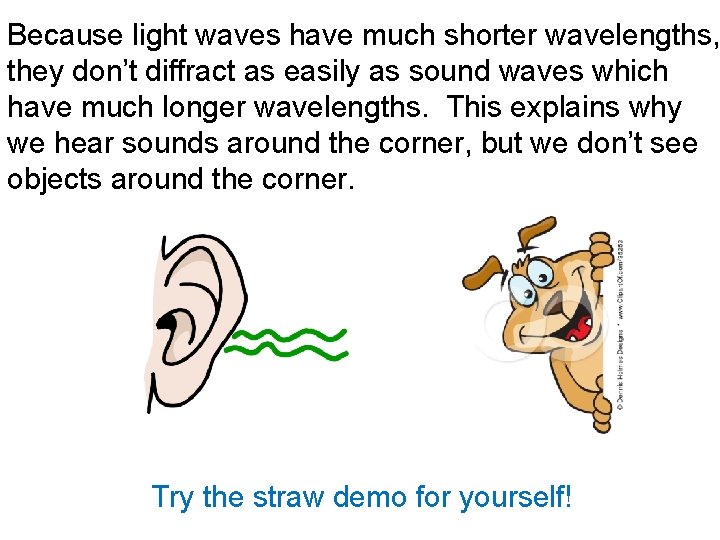
Because light waves have much shorter wavelengths, they don’t diffract as easily as sound waves which have much longer wavelengths. This explains why we hear sounds around the corner, but we don’t see objects around the corner. Try the straw demo for yourself!
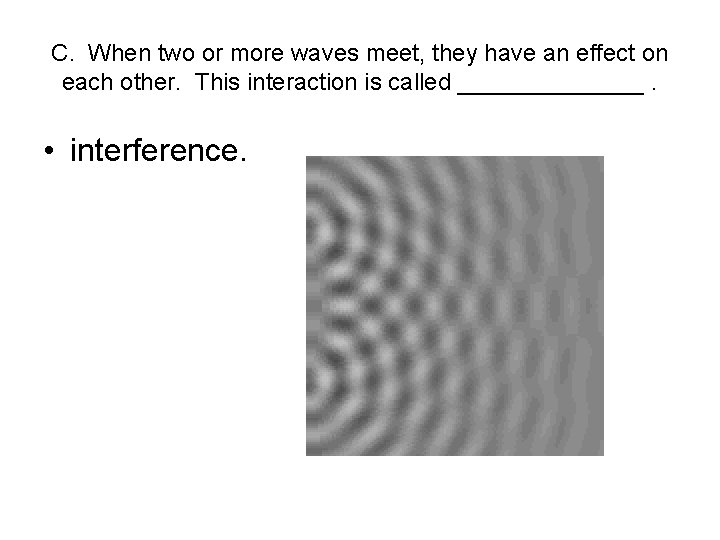
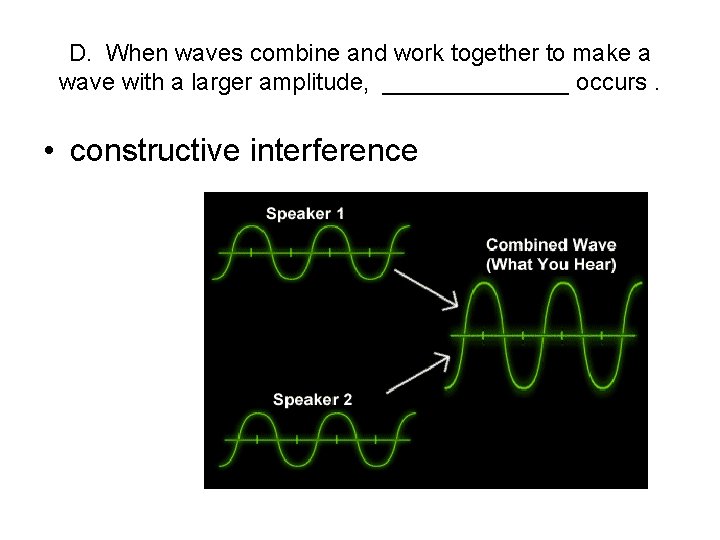
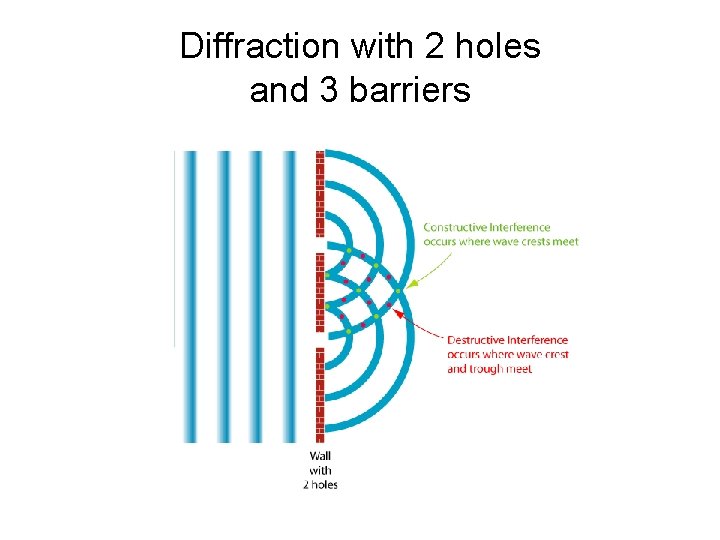
C. When two or more waves meet, they have an effect on each other. This interaction is called _______. • interference.
D. When waves combine and work together to make a wave with a larger amplitude, _______ occurs. • constructive interference
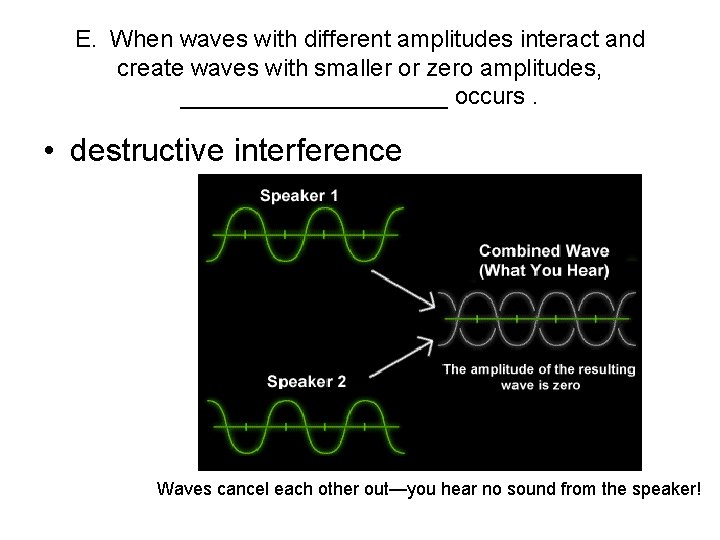
E. When waves with different amplitudes interact and create waves with smaller or zero amplitudes, __________ occurs. • destructive interference Waves cancel each other out—you hear no sound from the speaker!
reflection: illustrated as
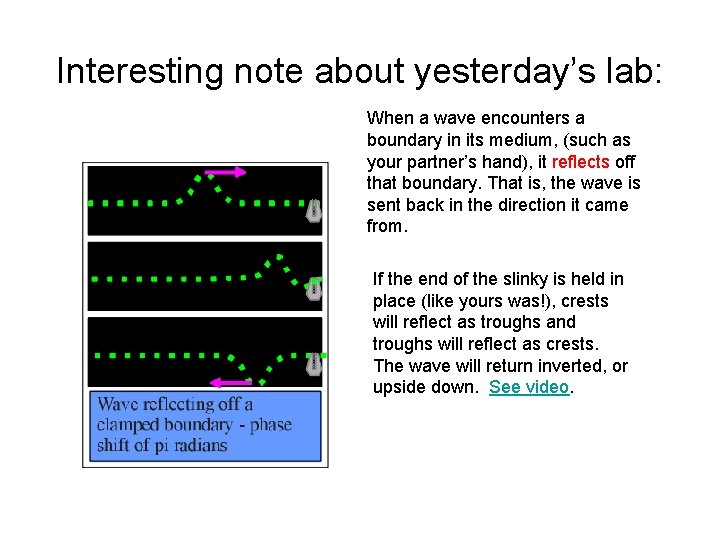
Interesting note about yesterday’s lab: When a wave encounters a boundary in its medium, (such as your partner’s hand), it reflects off that boundary. That is, the wave is sent back in the direction it came from. If the end of the slinky is held in place (like yours was!), crests will reflect as troughs and troughs will reflect as crests. The wave will return inverted, or upside down. See video.
Diffraction with 2 holes and 3 barriers