
Light reception Photoreceptors Structure Function Eye evolution Neural
- Slides: 30
Light reception • Photoreceptors – Structure – Function • Eye evolution • Neural connections • Color perception
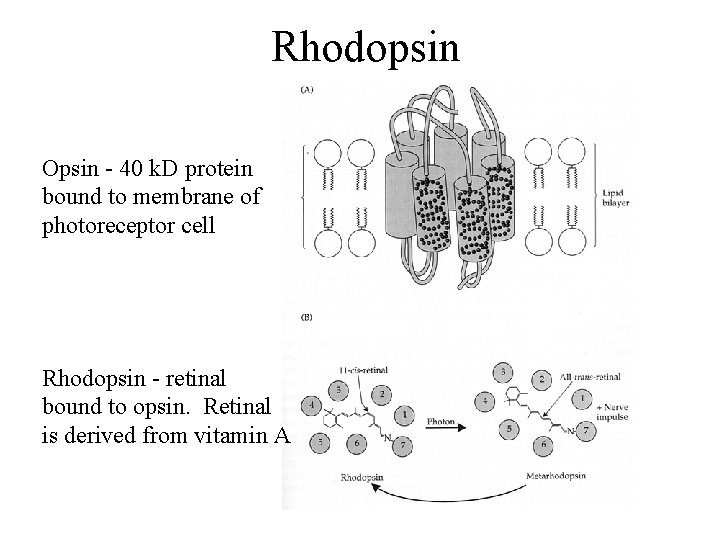
Rhodopsin Opsin - 40 k. D protein bound to membrane of photoreceptor cell Rhodopsin - retinal bound to opsin. Retinal is derived from vitamin A
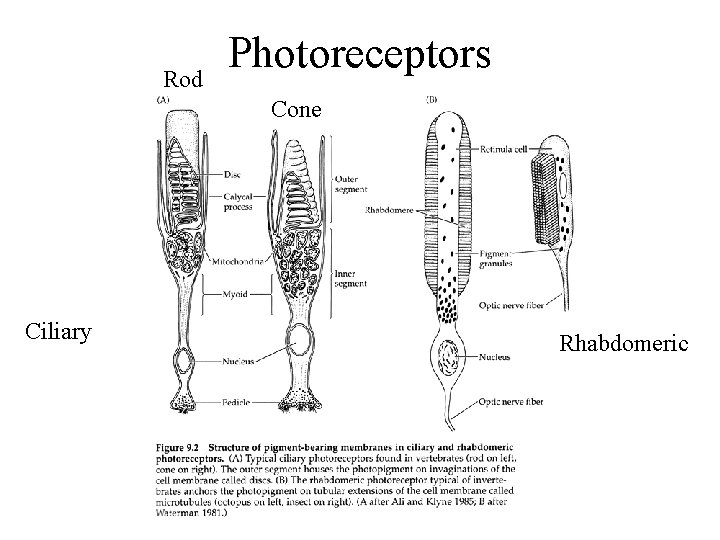
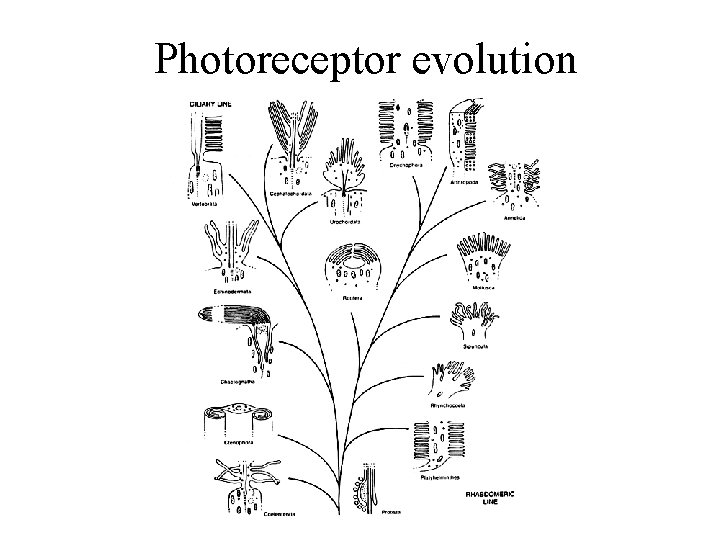
Rod Photoreceptors Cone Ciliary Rhabdomeric
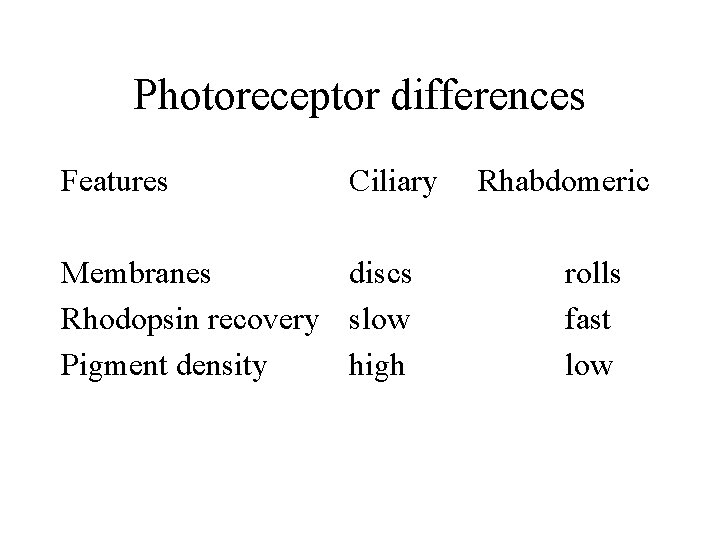
Photoreceptor differences Features Ciliary Membranes discs Rhodopsin recovery slow Pigment density high Rhabdomeric rolls fast low
Photoreceptor evolution
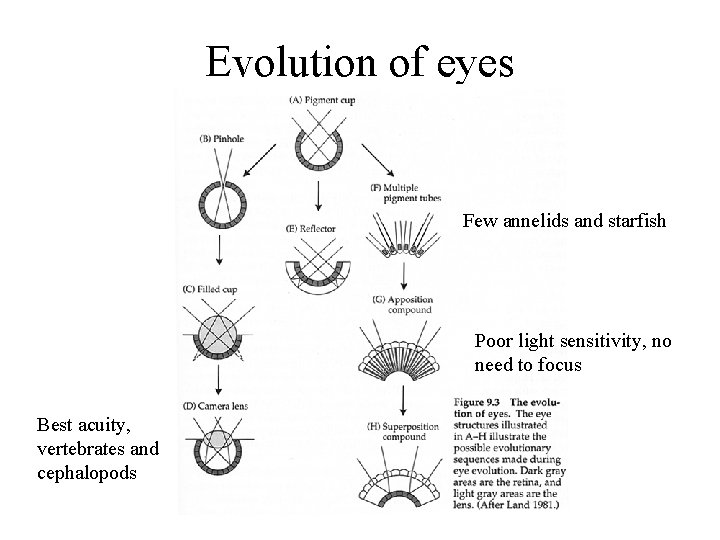
Evolution of eyes Few annelids and starfish Poor light sensitivity, no need to focus Best acuity, vertebrates and cephalopods
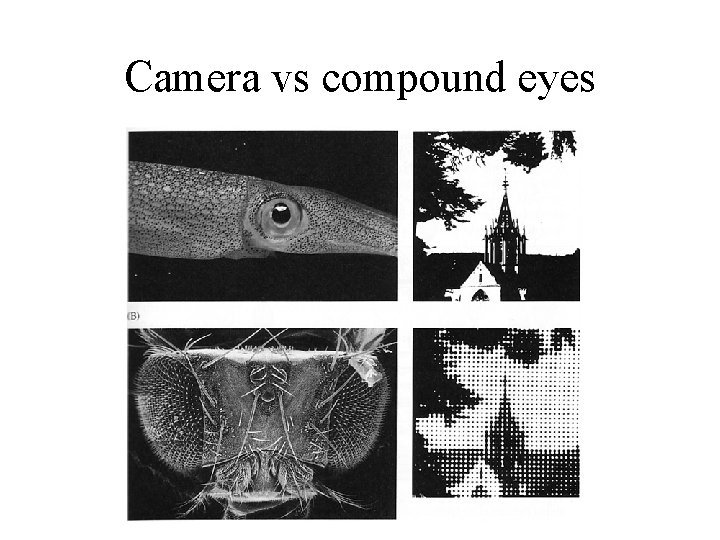
Camera vs compound eyes
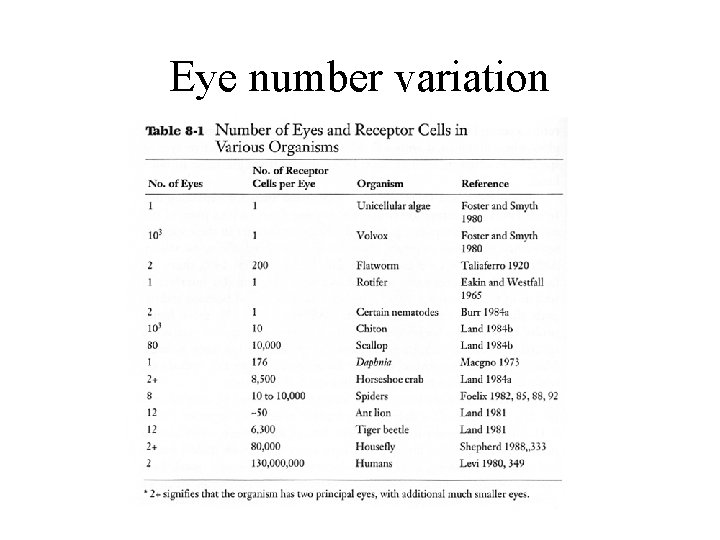
Eye number variation
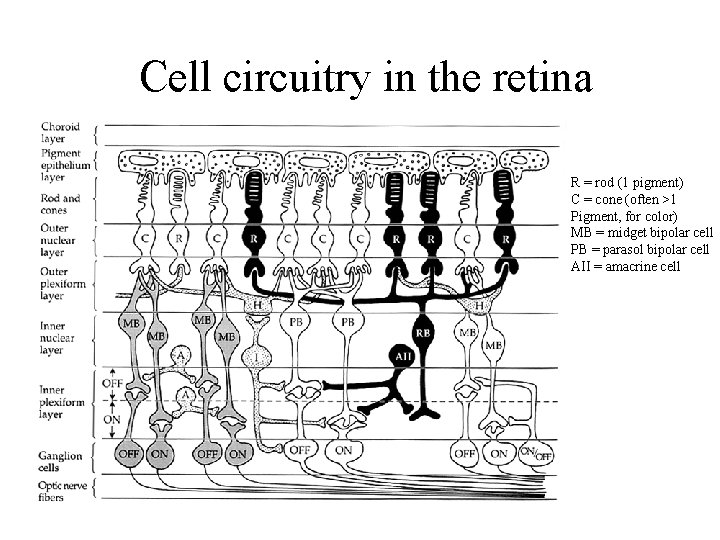
Cell circuitry in the retina R = rod (1 pigment) C = cone (often >1 Pigment, for color) MB = midget bipolar cell PB = parasol bipolar cell AII = amacrine cell
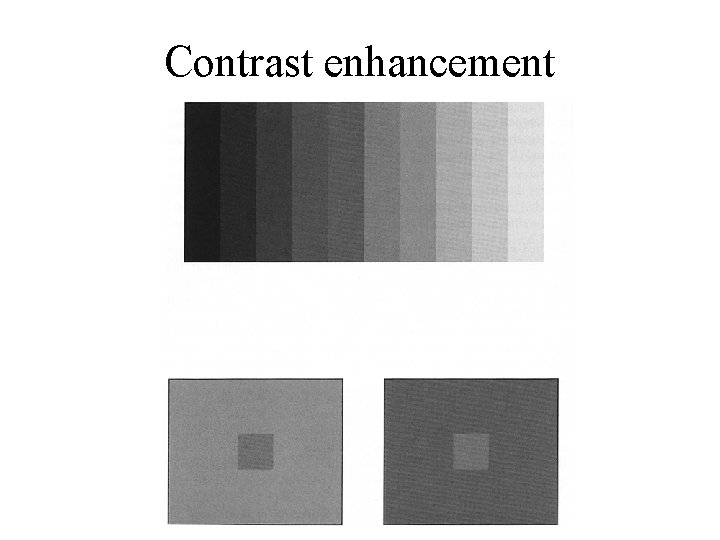
Contrast enhancement
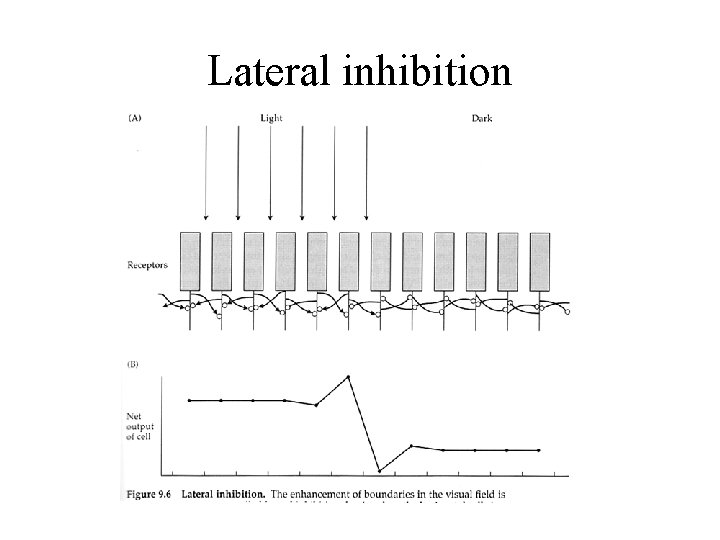
Lateral inhibition
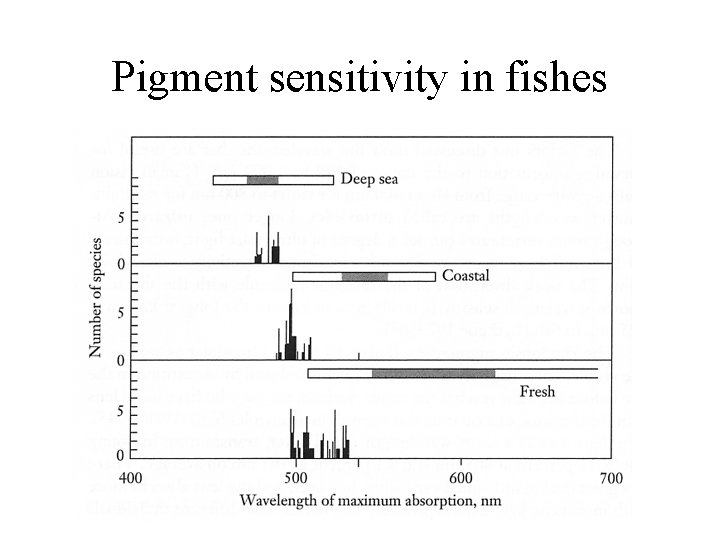
Color detecting photoreceptors • Different variant of retinal – vitamin A 1 = > retinal 1, vitamin A 2 => retinal 2 shifts absorption peak 25 nm – Fish, some amphibians • Change amino acid composition of opsin – changes absorption peak from 350 -620 nm – Widespread, X-linked in primates • Add colored oil droplet to the photoreceptor cell – Birds, amphibians, lizards, snakes, turtles
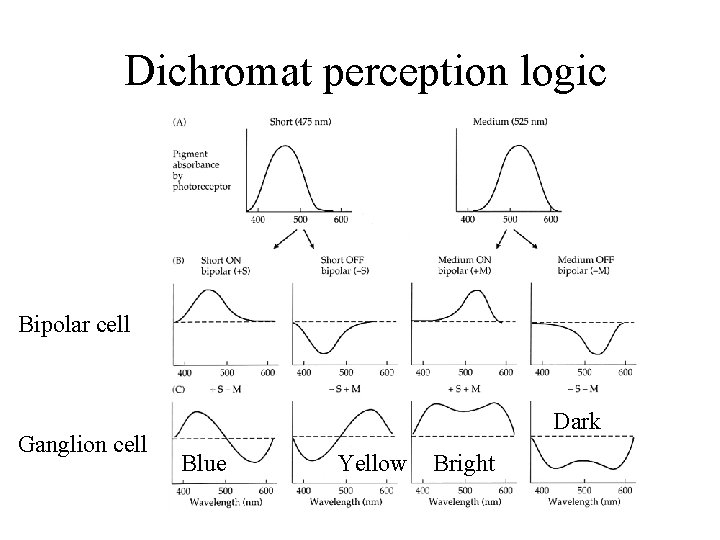
Dichromat perception logic Bipolar cell Ganglion cell Dark Blue Yellow Bright
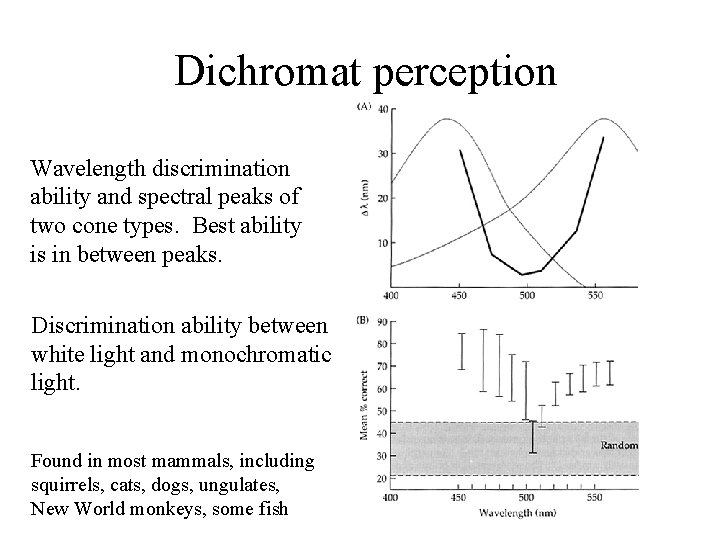
Dichromat perception Wavelength discrimination ability and spectral peaks of two cone types. Best ability is in between peaks. Discrimination ability between white light and monochromatic light. Found in most mammals, including squirrels, cats, dogs, ungulates, New World monkeys, some fish
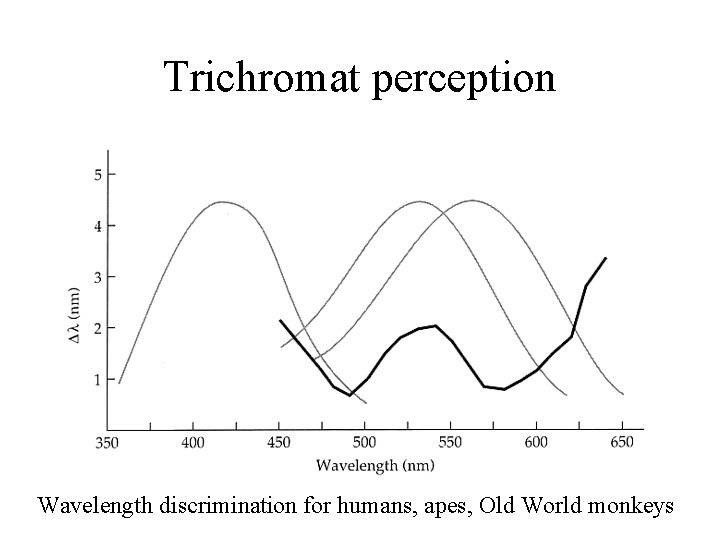
Trichromat perception Wavelength discrimination for humans, apes, Old World monkeys
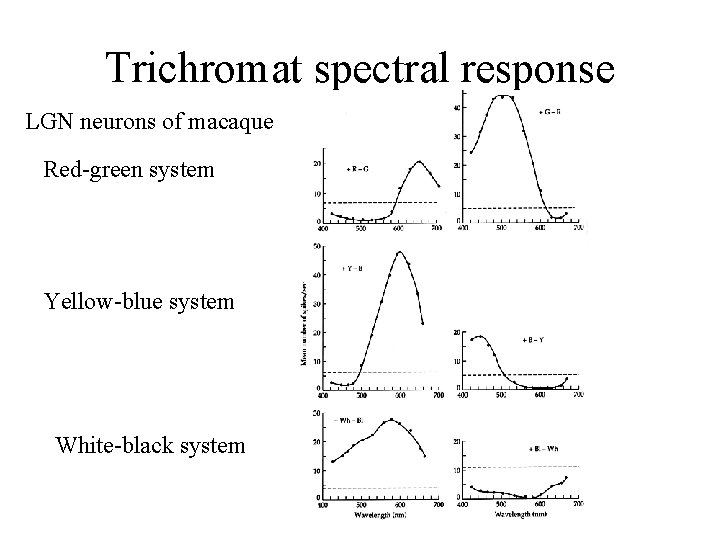
Trichromat spectral response LGN neurons of macaque Red-green system Yellow-blue system White-black system
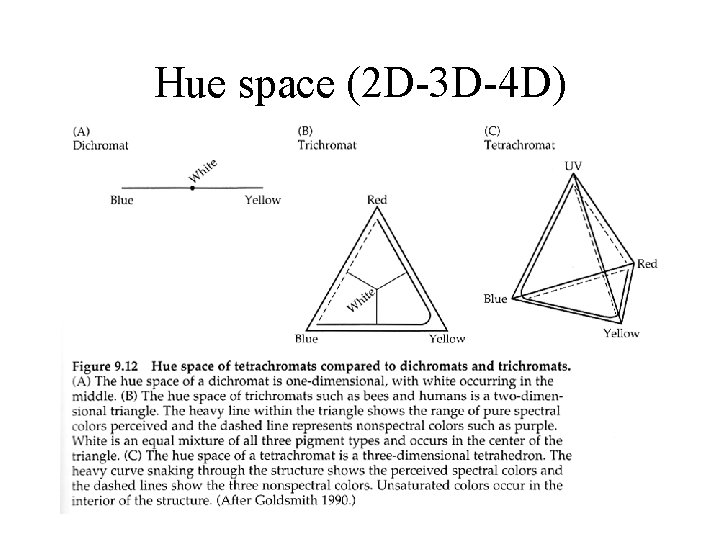
Hue space (2 D-3 D-4 D)
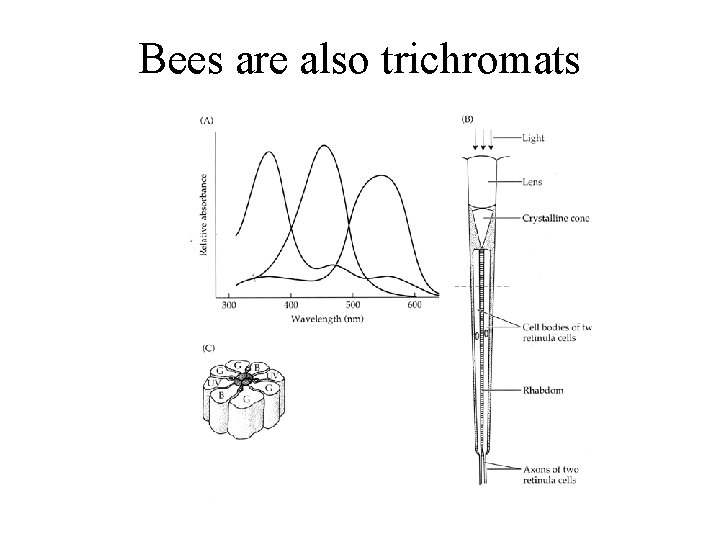
Bees are also trichromats
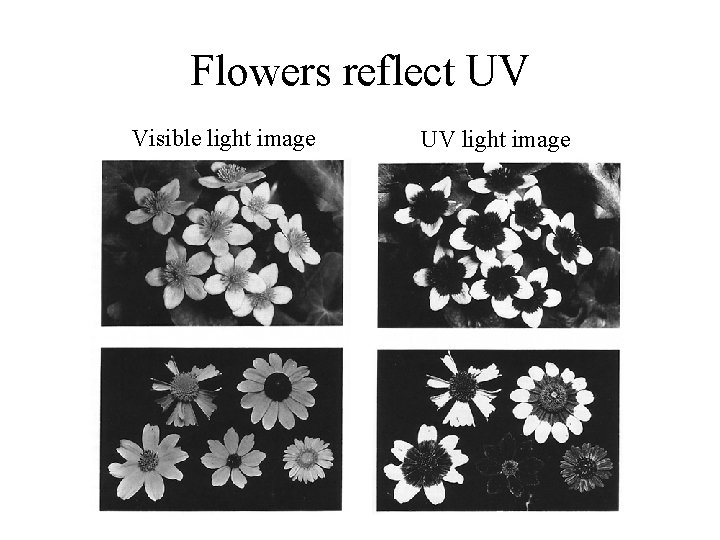
Flowers reflect UV Visible light image UV light image
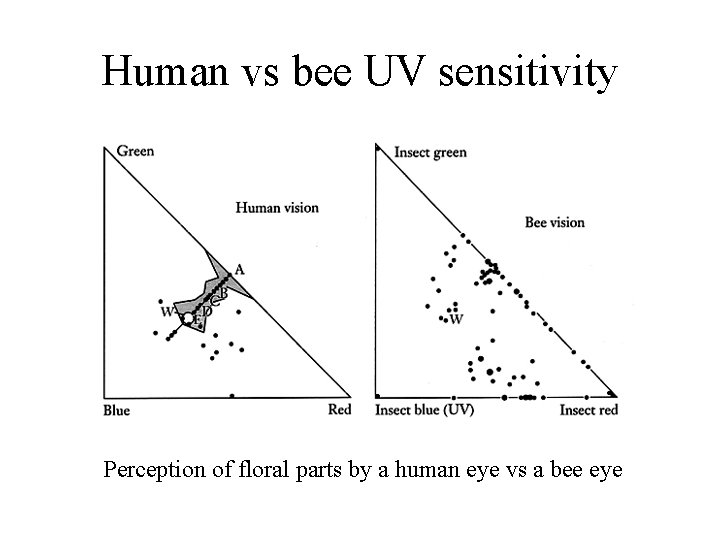
Human vs bee UV sensitivity Perception of floral parts by a human eye vs a bee eye
Pigment sensitivity in fishes
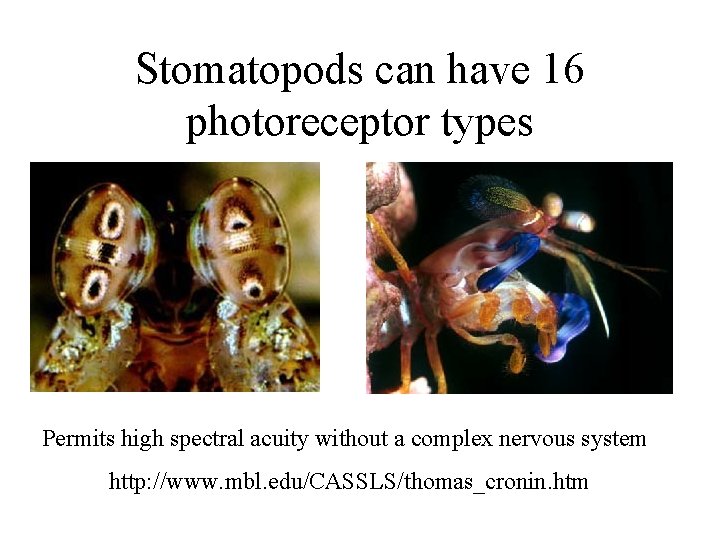
Stomatopods can have 16 photoreceptor types Permits high spectral acuity without a complex nervous system http: //www. mbl. edu/CASSLS/thomas_cronin. htm
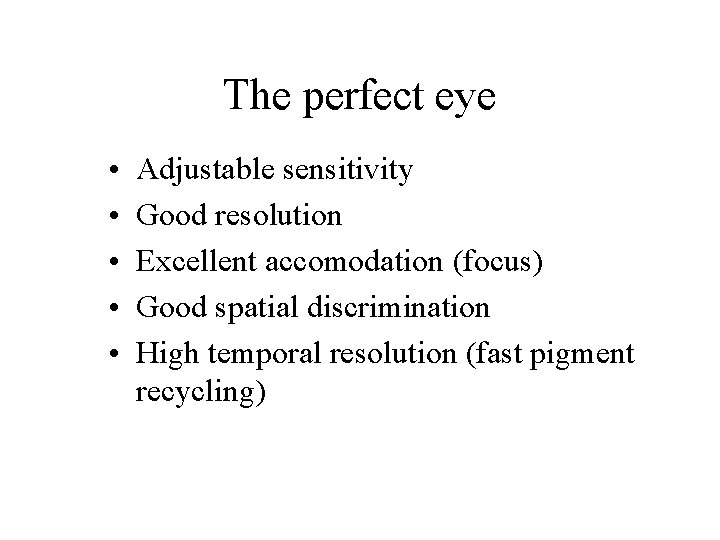
The perfect eye • • • Adjustable sensitivity Good resolution Excellent accomodation (focus) Good spatial discrimination High temporal resolution (fast pigment recycling)
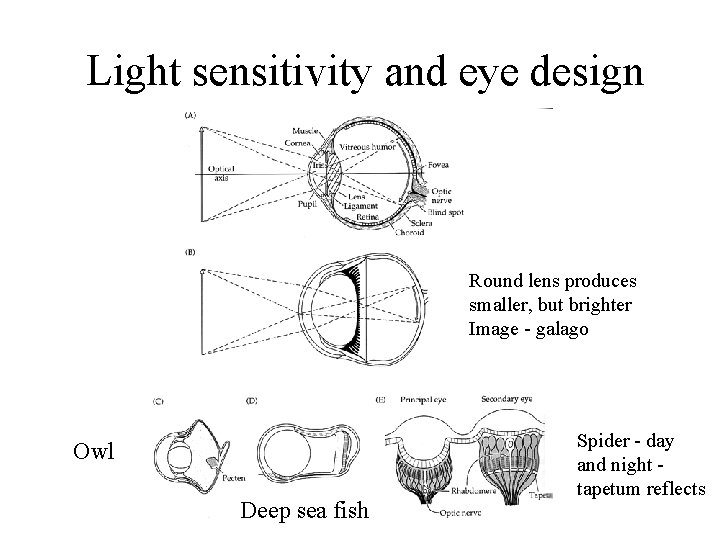
Light sensitivity and eye design Round lens produces smaller, but brighter Image - galago Owl Deep sea fish Spider - day and night tapetum reflects
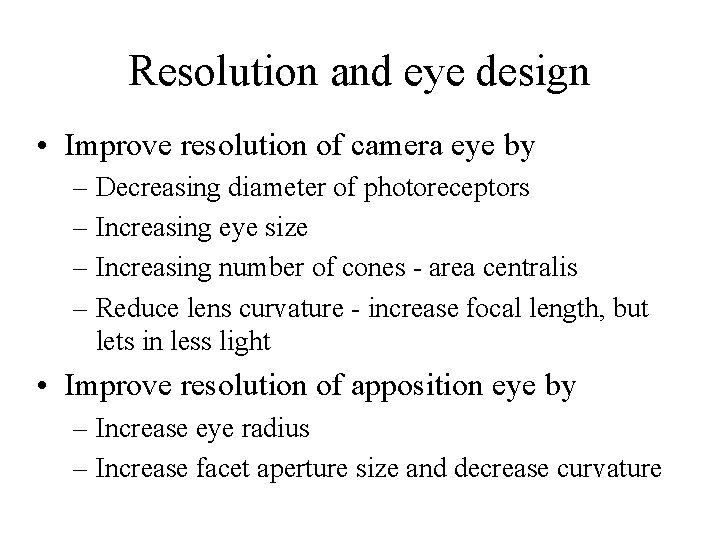
Resolution and eye design • Improve resolution of camera eye by – Decreasing diameter of photoreceptors – Increasing eye size – Increasing number of cones - area centralis – Reduce lens curvature - increase focal length, but lets in less light • Improve resolution of apposition eye by – Increase eye radius – Increase facet aperture size and decrease curvature
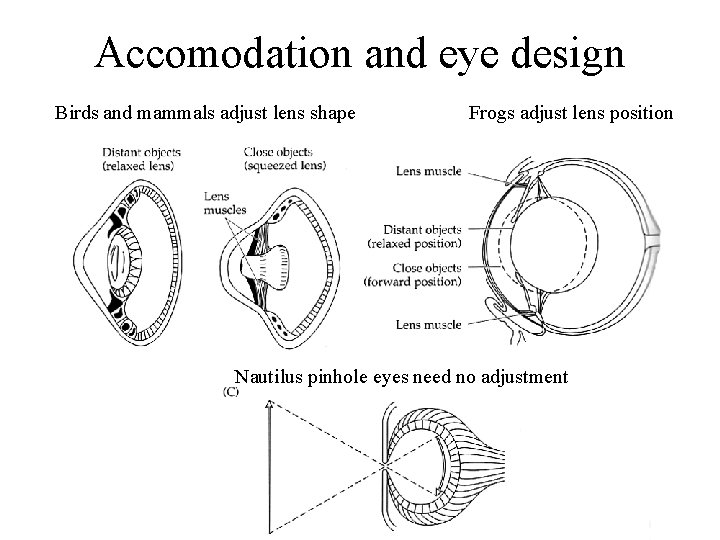
Accomodation and eye design Birds and mammals adjust lens shape Frogs adjust lens position Nautilus pinhole eyes need no adjustment
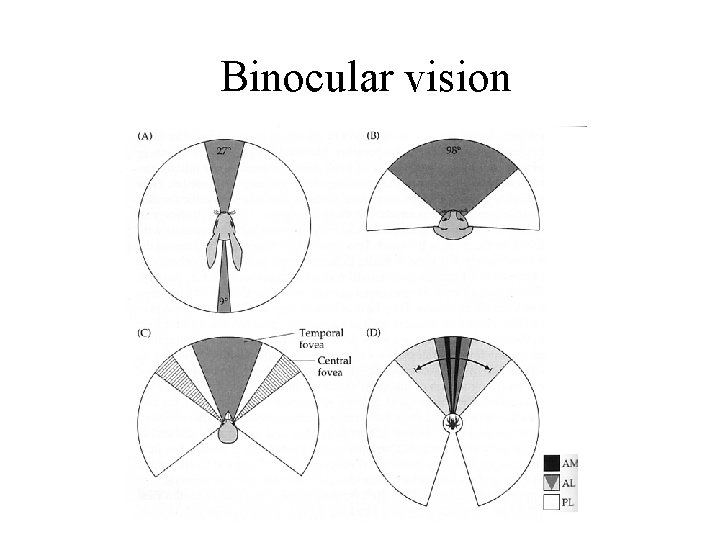
Spatial discrimination • • Learn size of typical object Use arallax by moving head Use accomodation cues Use binocular vision - requires overlapping field of view for two eyes
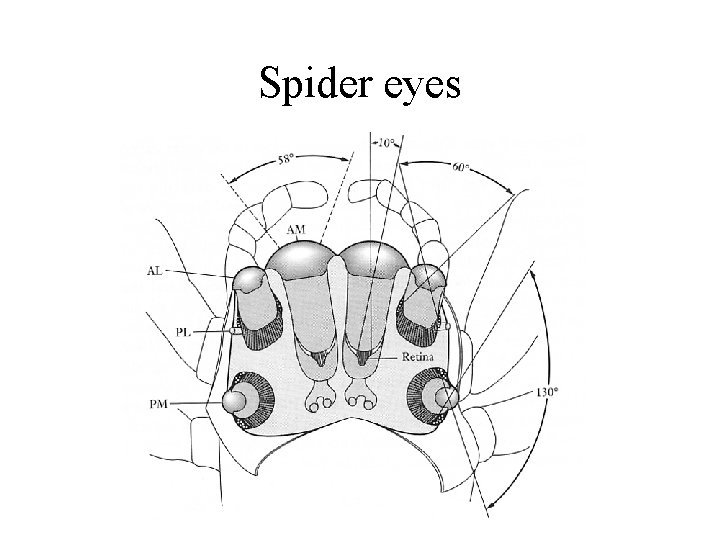
Spider eyes
Binocular vision
Temporal discrimination • Cones have higher flicker fusion rats than rods – Humans = 16/sec – all cone eyes = 100 -150/sex • Rhabdomeres have higher flicker fusion rates than ciliary photoreceptors