
Light Reactions Light Reactions Summary 1 Light energy


- Slides: 38
Light Reactions
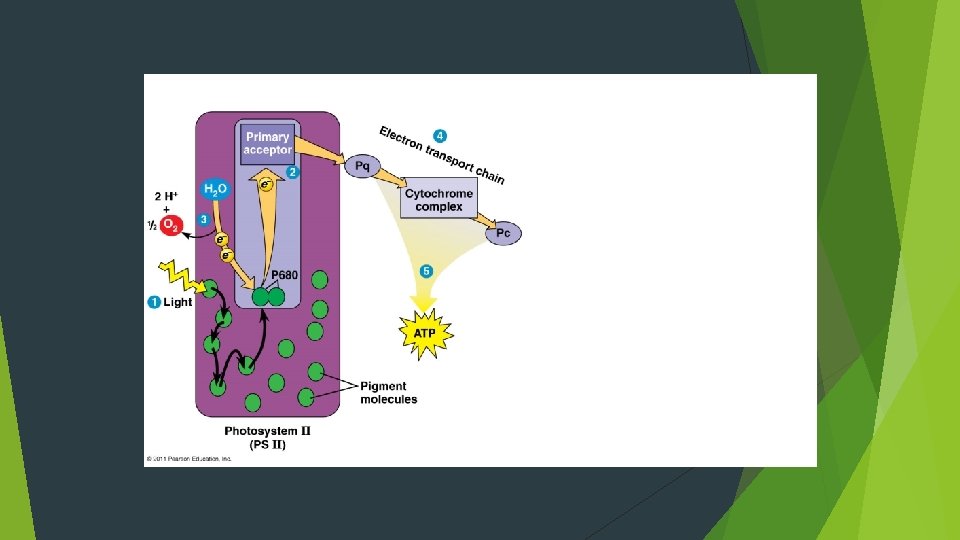
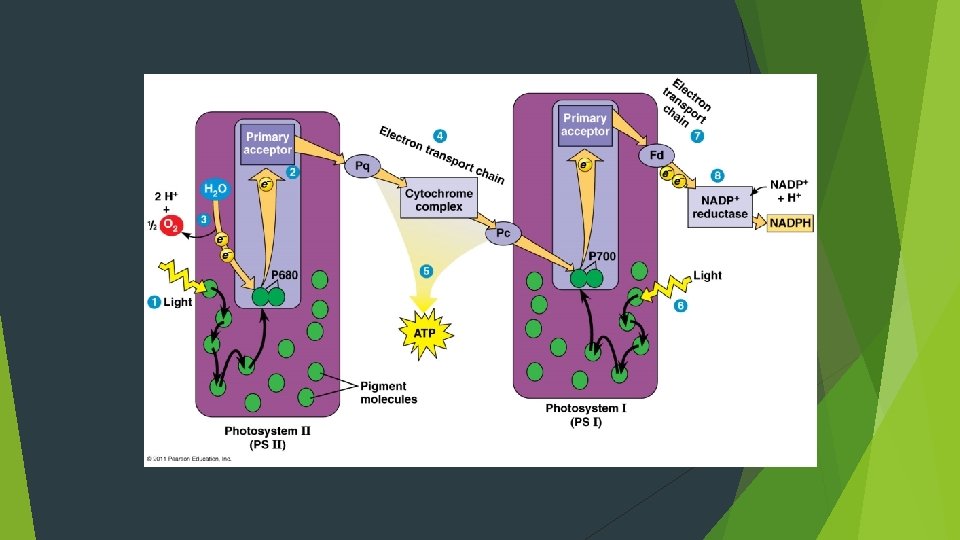
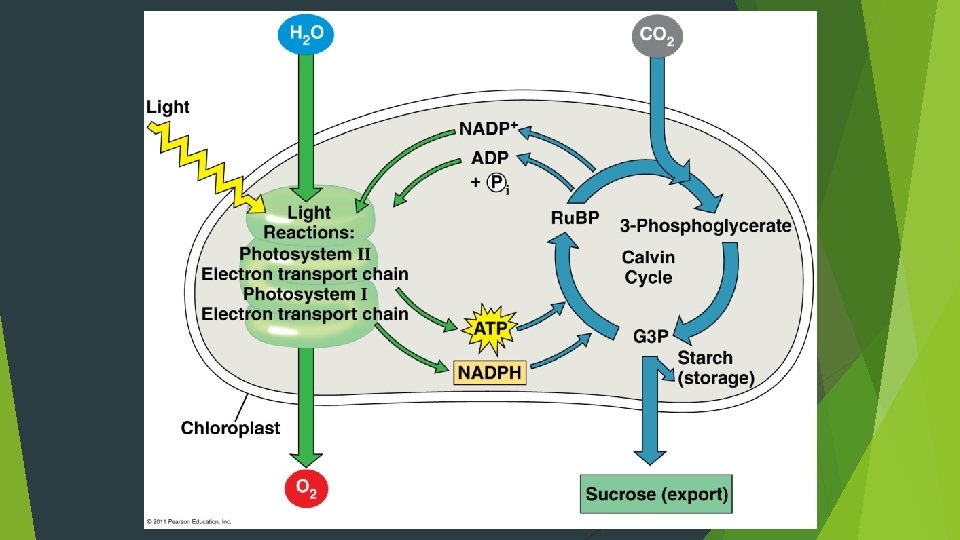
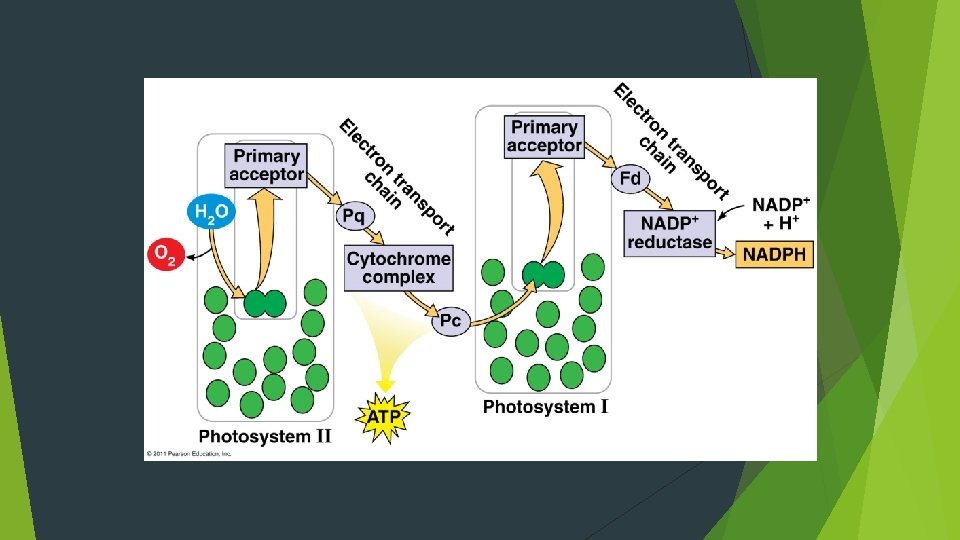
Light Reactions Summary: 1. Light energy splits H 2 O to O 2 releasing high energy electrons (e-) Movement of e- used to generate ATP 3. Electrons end up on NADP+, reducing it to NADPH 2.
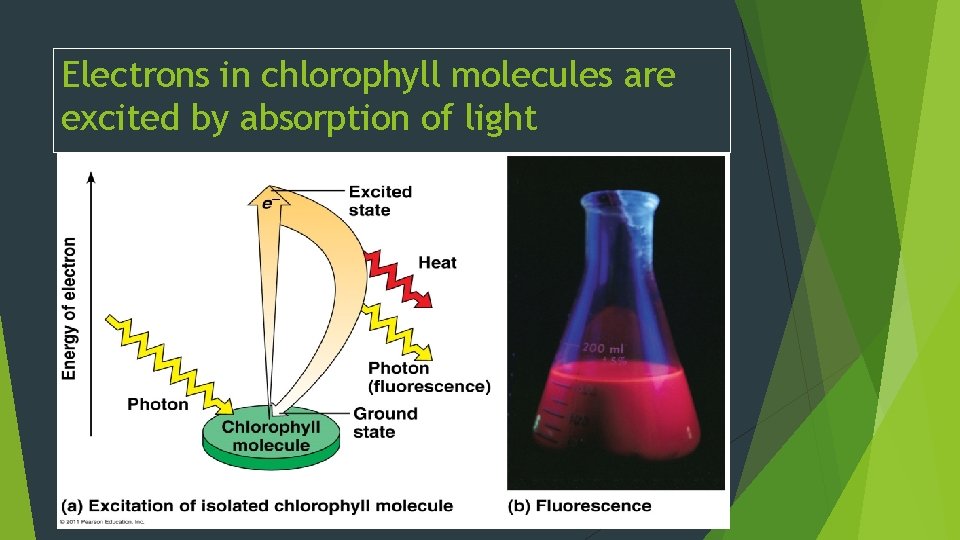
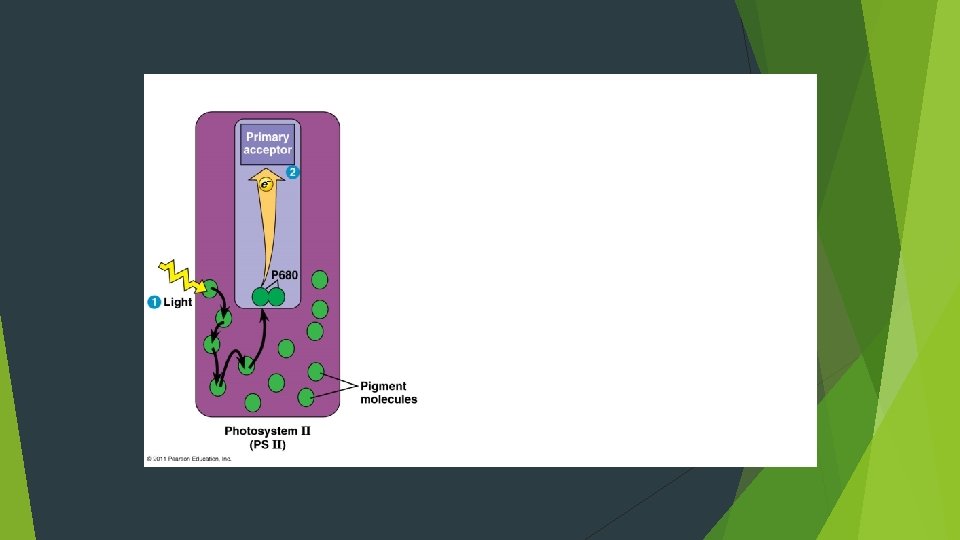
Electrons in chlorophyll molecules are excited by absorption of light
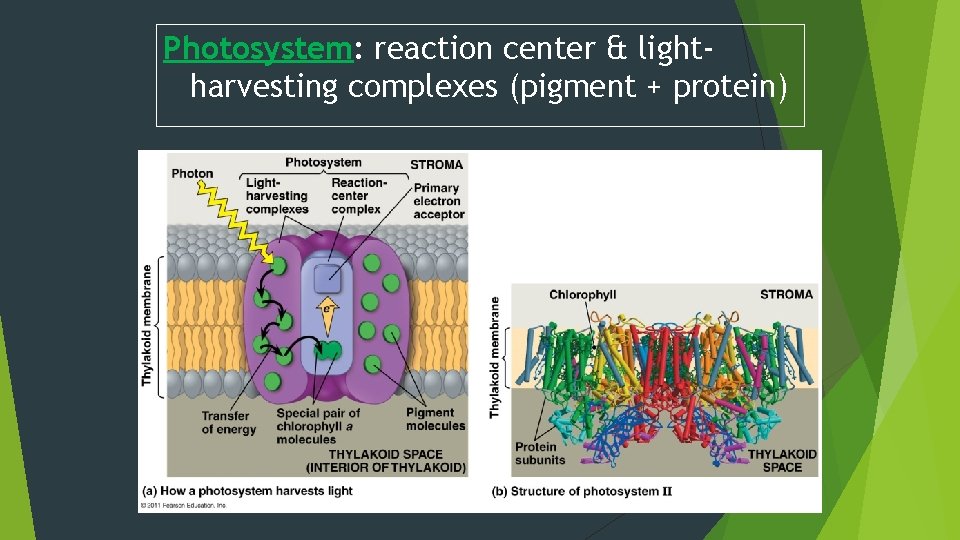
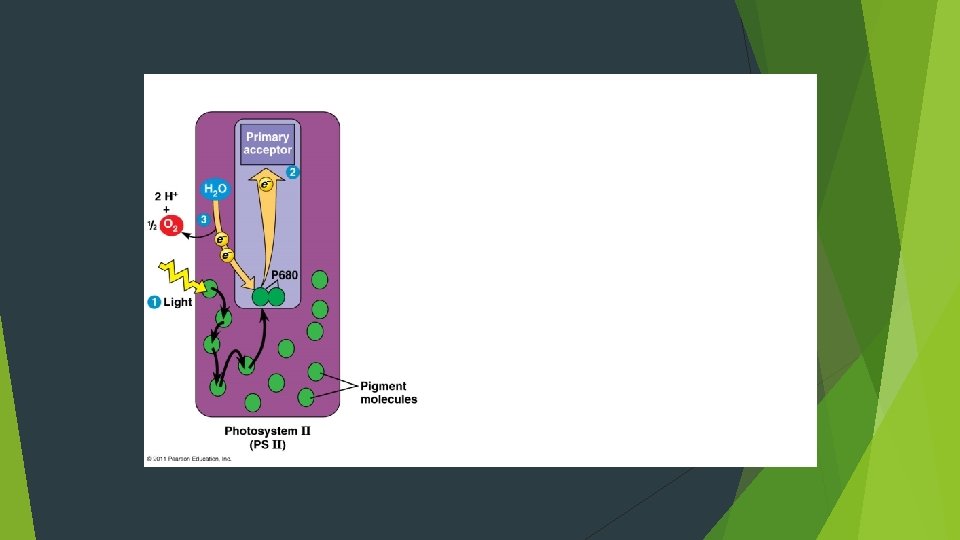
Photosystem: reaction center & lightharvesting complexes (pigment + protein)
Electron Flow Two routes for electron flow: A. Linear (noncyclic) electron flow B. Cyclic electron flow
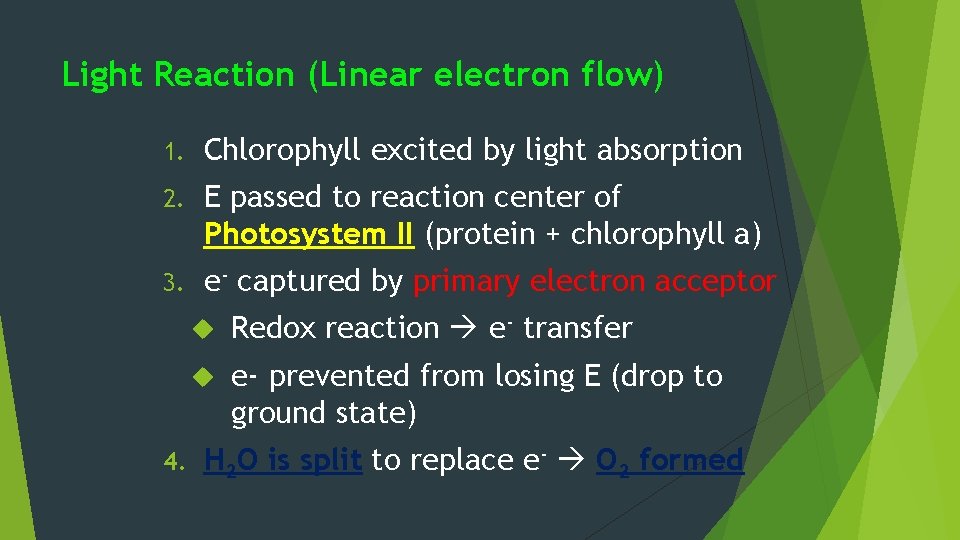
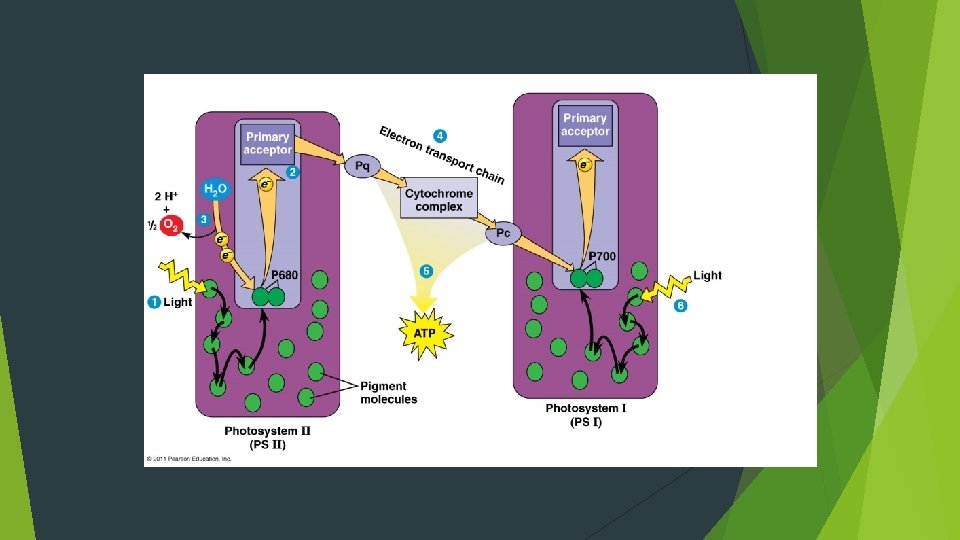
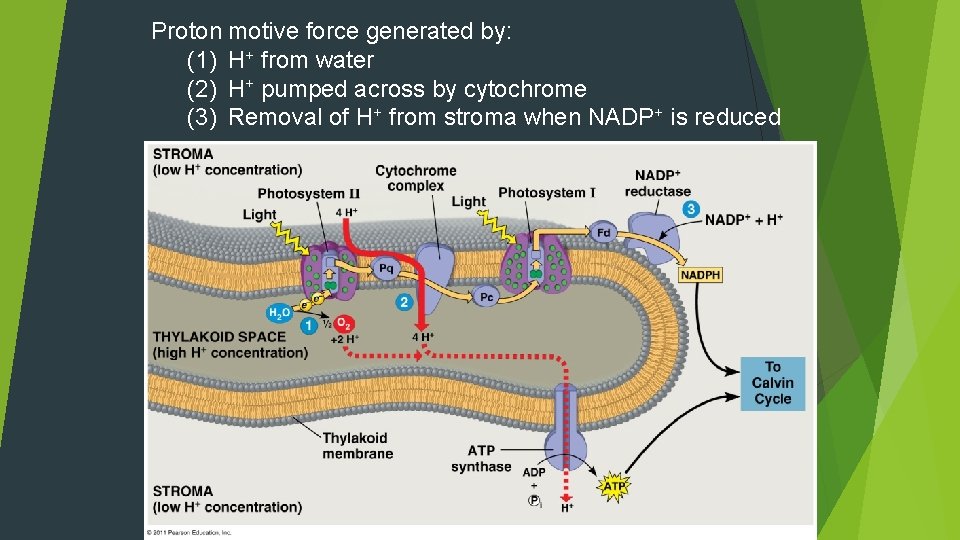
Light Reaction (Linear electron flow) 1. Chlorophyll excited by light absorption 2. E passed to reaction center of Photosystem II (protein + chlorophyll a) 3. e- captured by primary electron acceptor 4. Redox reaction e- transfer e- prevented from losing E (drop to ground state) H 2 O is split to replace e- O 2 formed
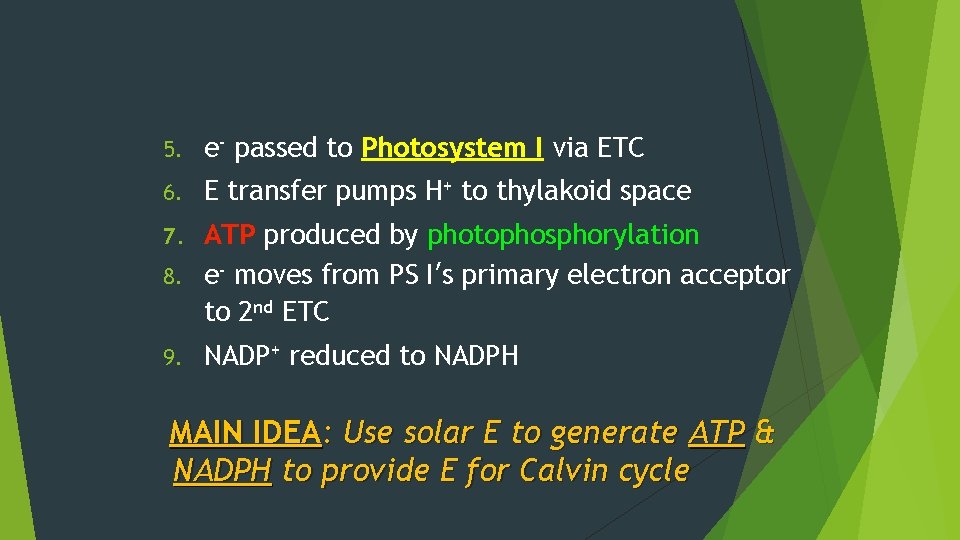
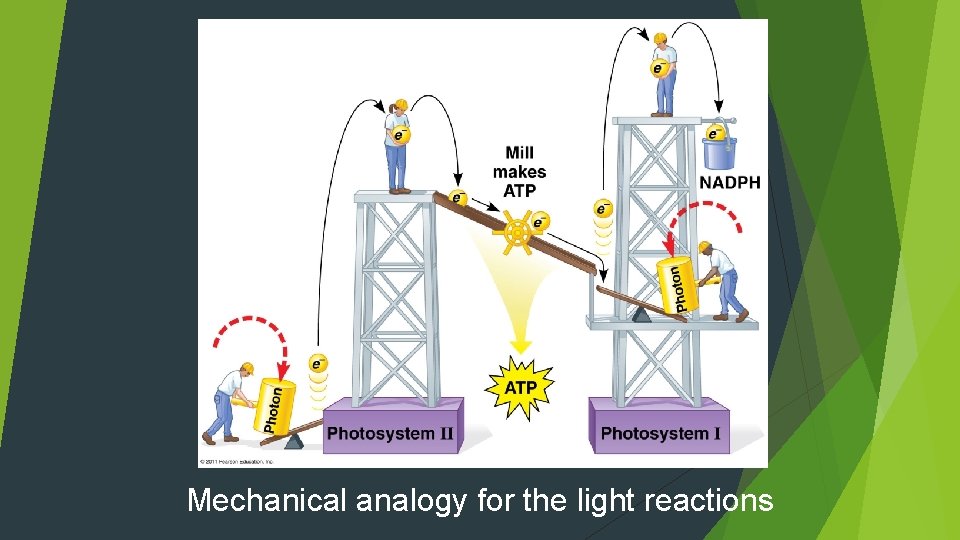
5. e- passed to Photosystem I via ETC 6. E transfer pumps H+ to thylakoid space ATP produced by photophosphorylation 8. e- moves from PS I’s primary electron acceptor to 2 nd ETC 7. 9. NADP+ reduced to NADPH MAIN IDEA: Use solar E to generate ATP & NADPH to provide E for Calvin cycle
Mechanical analogy for the light reactions
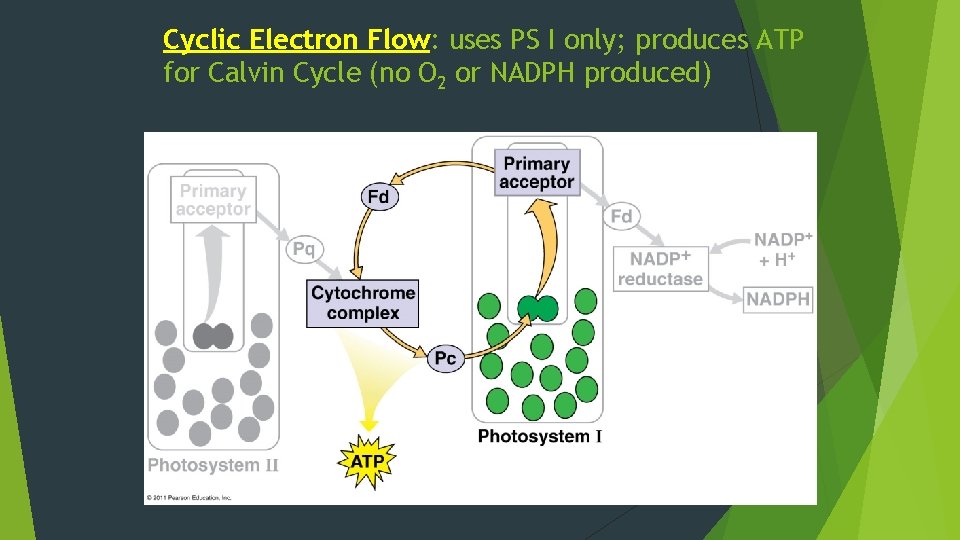
Cyclic Electron Flow: uses PS I only; produces ATP for Calvin Cycle (no O 2 or NADPH produced)
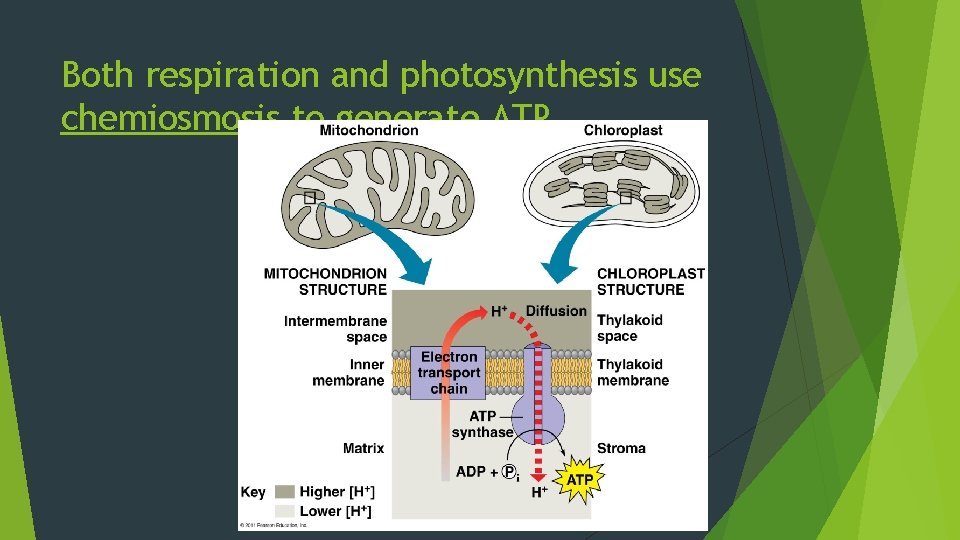
Both respiration and photosynthesis use chemiosmosis to generate ATP
Proton motive force generated by: (1) H+ from water (2) H+ pumped across by cytochrome (3) Removal of H+ from stroma when NADP+ is reduced
Calvin Cycle
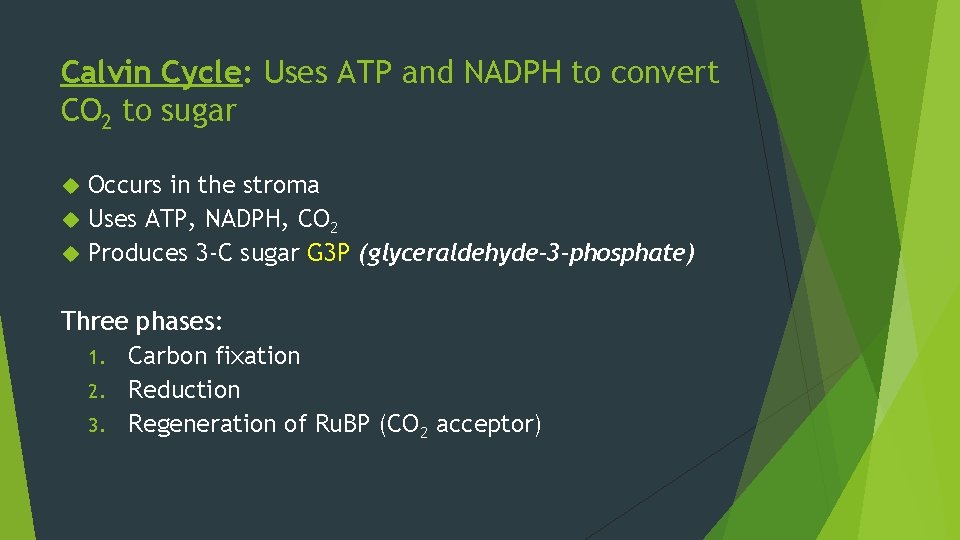
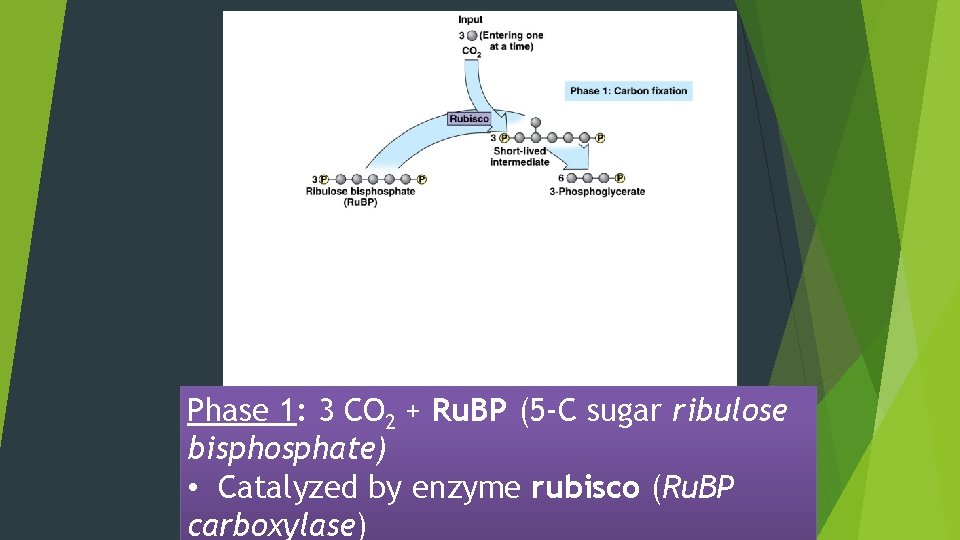
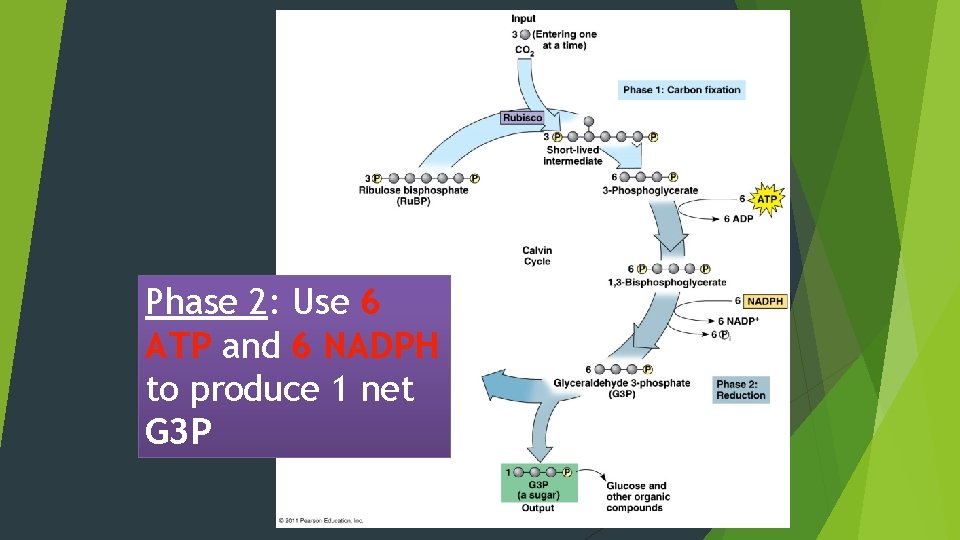
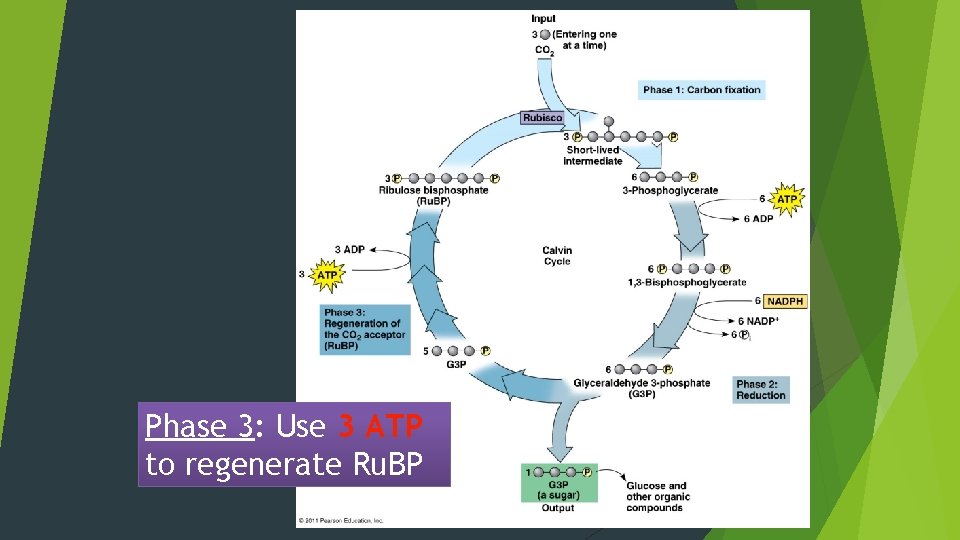
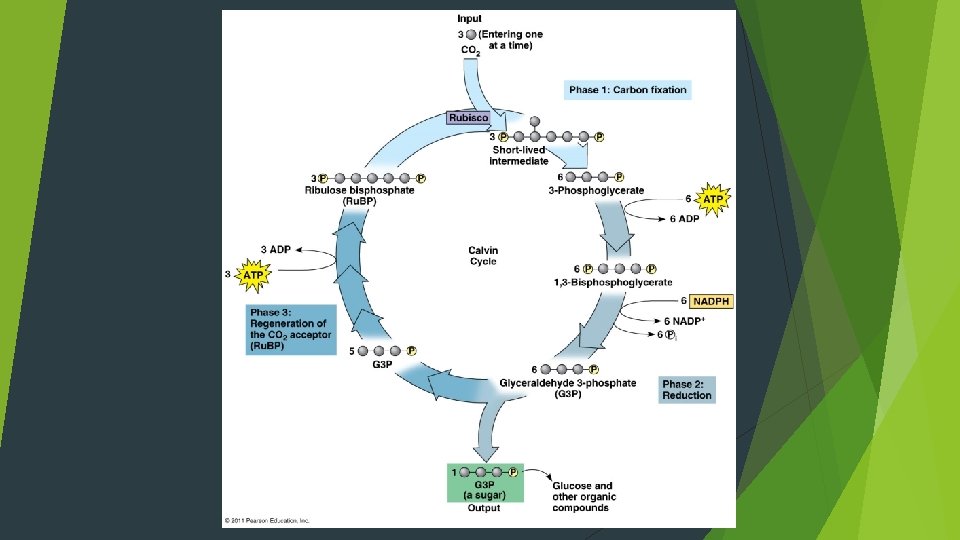
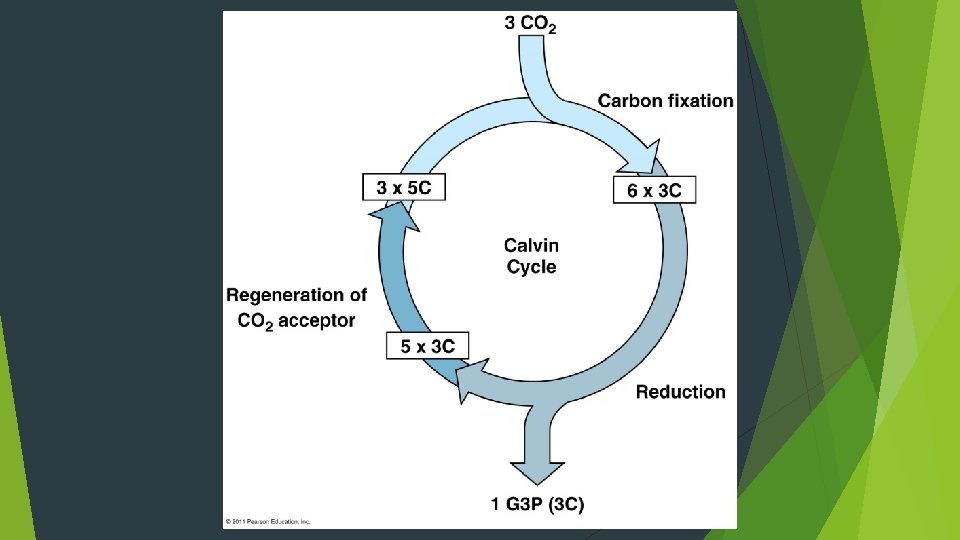
Calvin Cycle: Uses ATP and NADPH to convert CO 2 to sugar Occurs in the stroma Uses ATP, NADPH, CO 2 Produces 3 -C sugar G 3 P (glyceraldehyde-3 -phosphate) Three phases: 1. Carbon fixation 2. Reduction 3. Regeneration of Ru. BP (CO 2 acceptor)
Phase 1: 3 CO 2 + Ru. BP (5 -C sugar ribulose bisphosphate) • Catalyzed by enzyme rubisco (Ru. BP carboxylase)
Phase 2: Use 6 ATP and 6 NADPH to produce 1 net G 3 P
Phase 3: Use 3 ATP to regenerate Ru. BP
Alternative mechanisms of carbon fixation have evolved in hot, arid climates Photorespiration Metabolic pathway which: Uses O 2 & produces CO 2 Uses ATP No sugar production (rubisco binds O 2 breakdown of Ru. BP) Occurs on hot, dry bright days when stomata close (conserve H 2 O) Why? Early atmosphere: low O 2, high CO 2?
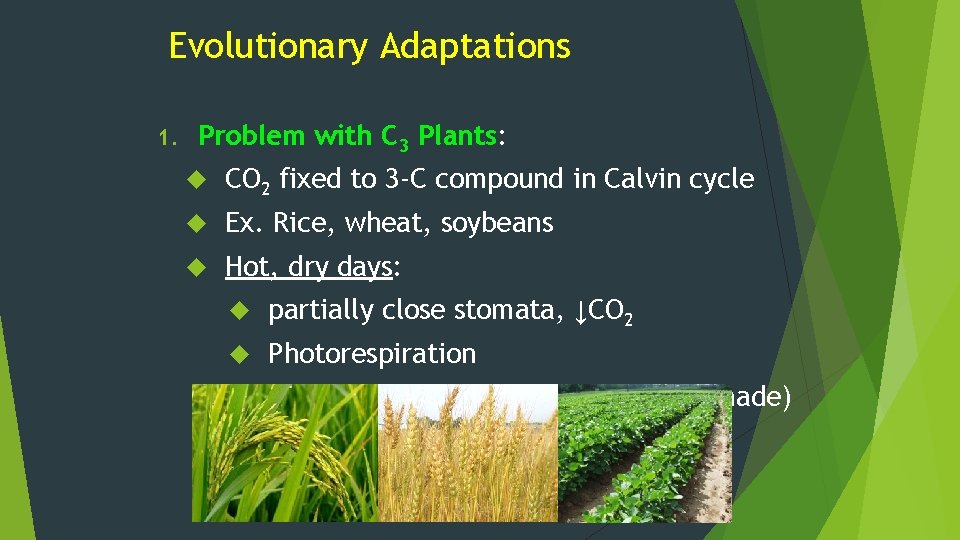
Evolutionary Adaptations 1. Problem with C 3 Plants: CO 2 fixed to 3 -C compound in Calvin cycle Ex. Rice, wheat, soybeans Hot, dry days: partially close stomata, ↓CO 2 Photorespiration ↓ photosynthetic output (no sugars made)
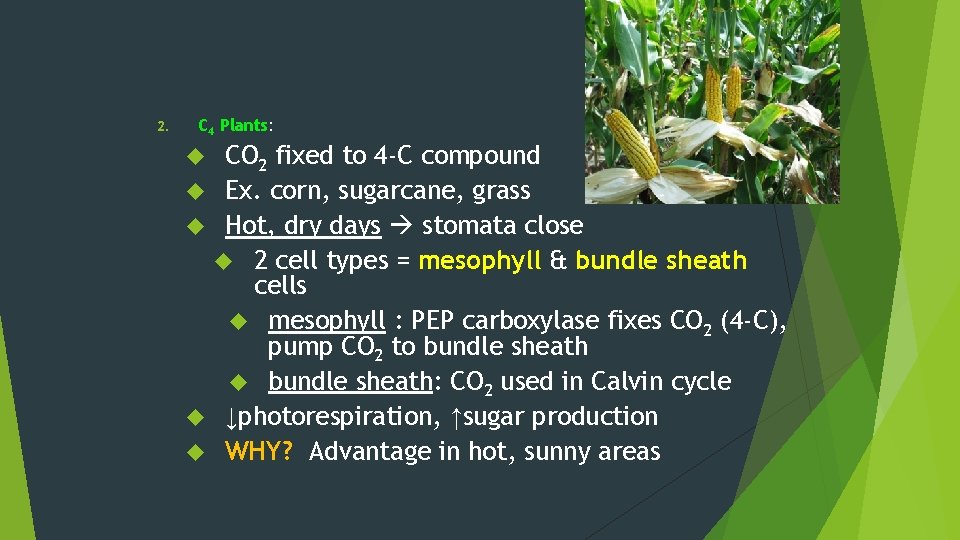
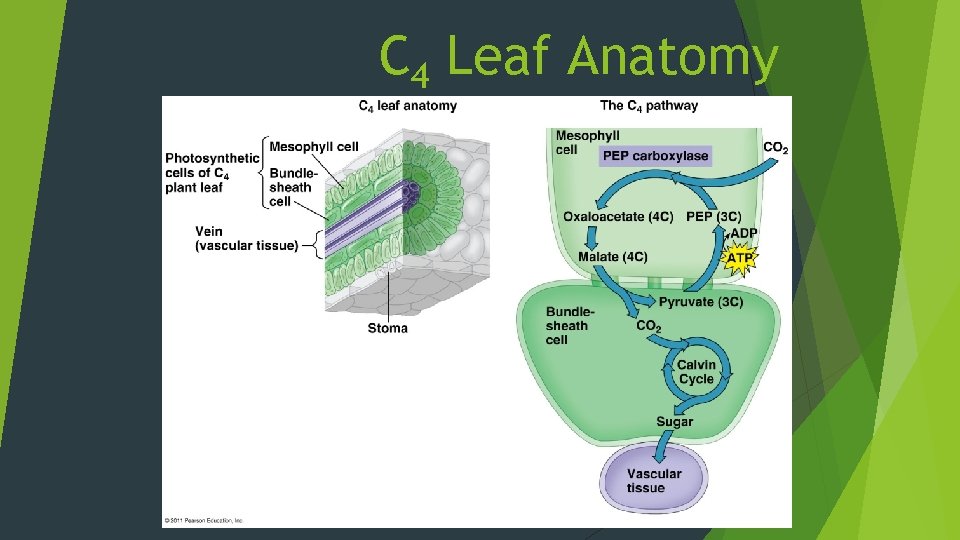
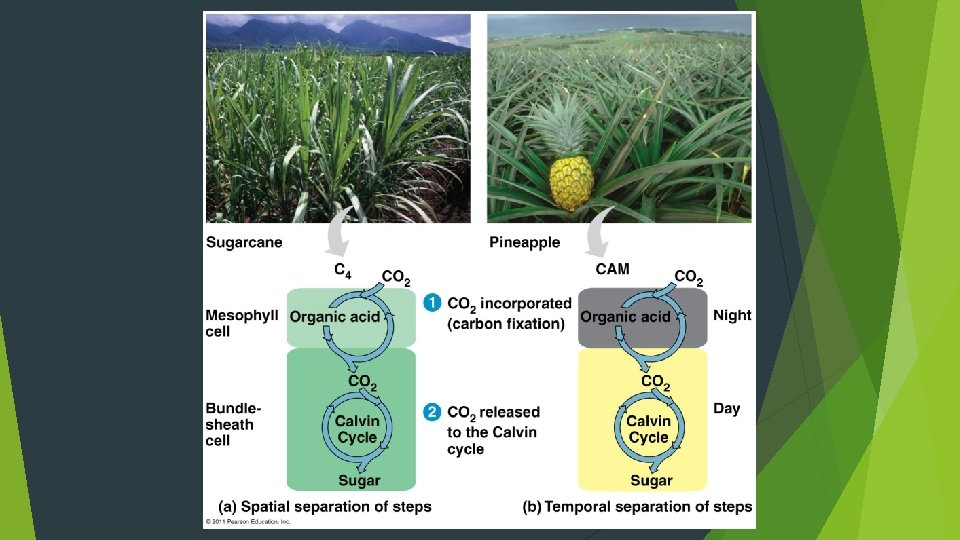
2. C 4 Plants: CO 2 fixed to 4 -C compound Ex. corn, sugarcane, grass Hot, dry days stomata close 2 cell types = mesophyll & bundle sheath cells mesophyll : PEP carboxylase fixes CO 2 (4 -C), pump CO 2 to bundle sheath: CO 2 used in Calvin cycle ↓photorespiration, ↑sugar production WHY? Advantage in hot, sunny areas
C 4 Leaf Anatomy
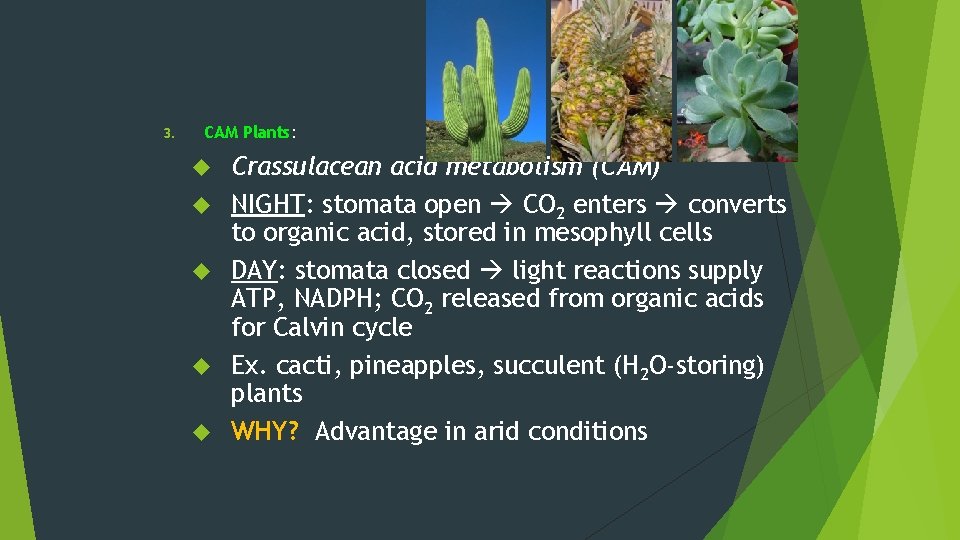
3. CAM Plants: Crassulacean acid metabolism (CAM) NIGHT: stomata open CO 2 enters converts to organic acid, stored in mesophyll cells DAY: stomata closed light reactions supply ATP, NADPH; CO 2 released from organic acids for Calvin cycle Ex. cacti, pineapples, succulent (H 2 O-storing) plants WHY? Advantage in arid conditions
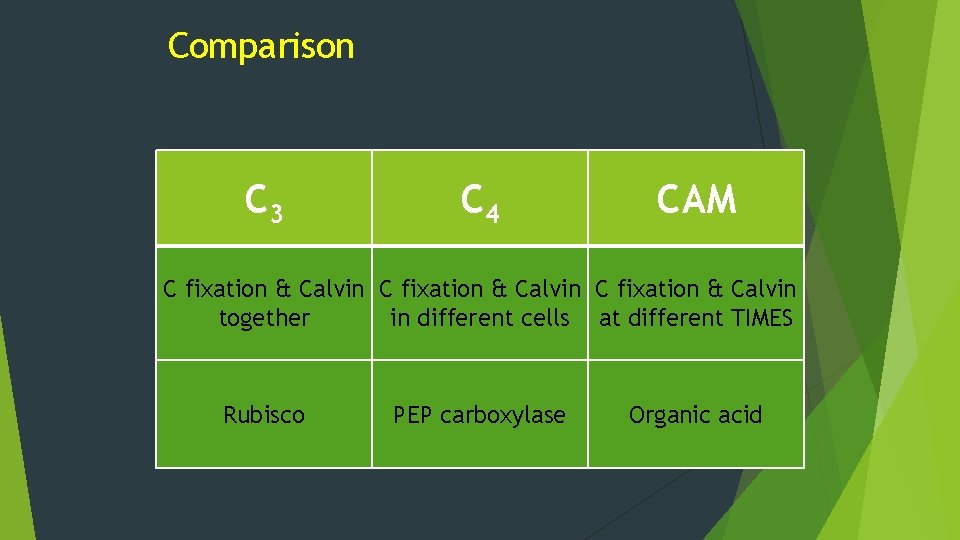
Comparison C 3 C 4 CAM C fixation & Calvin together in different cells at different TIMES Rubisco PEP carboxylase Organic acid
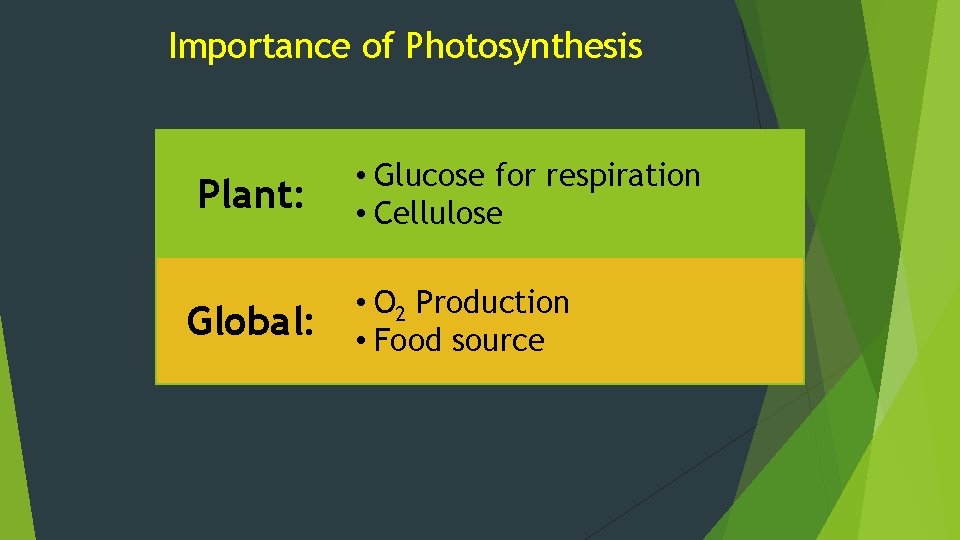
Importance of Photosynthesis Plant: Global: • Glucose for respiration • Cellulose • O 2 Production • Food source
Review of Photosynthesis
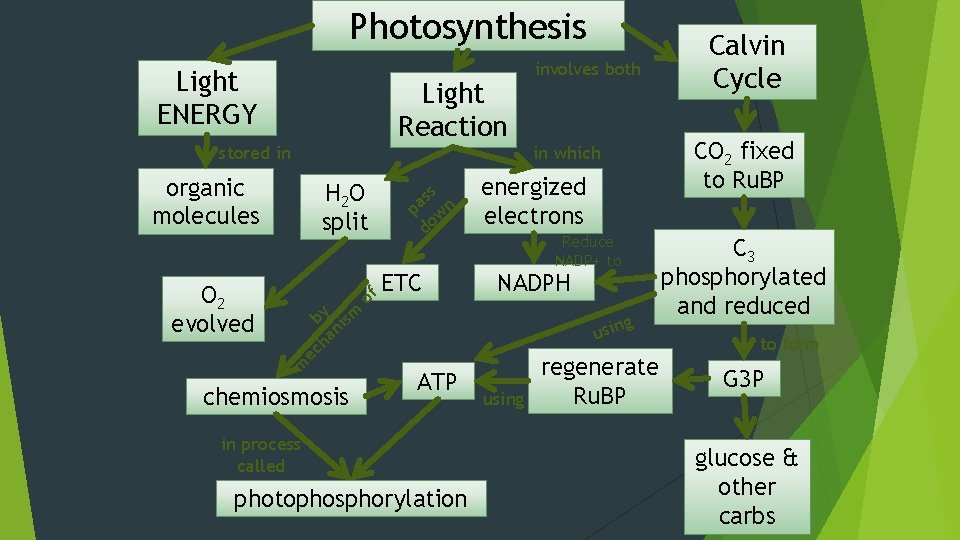
Photosynthesis Light ENERGY Light Reaction stored in organic molecules of ss a p wn do ETC chemiosmosis CO 2 fixed to Ru. BP in which energized electrons Reduce NADP+ to NADPH ha by ni sm m ec O 2 evolved H 2 O split involves both g usin ATP in process called photophosphorylation using Calvin Cycle regenerate Ru. BP C 3 phosphorylated and reduced to form G 3 P glucose & other carbs
LIGHT REACTIONS Calvin cycle
Mitochondria chloroplast
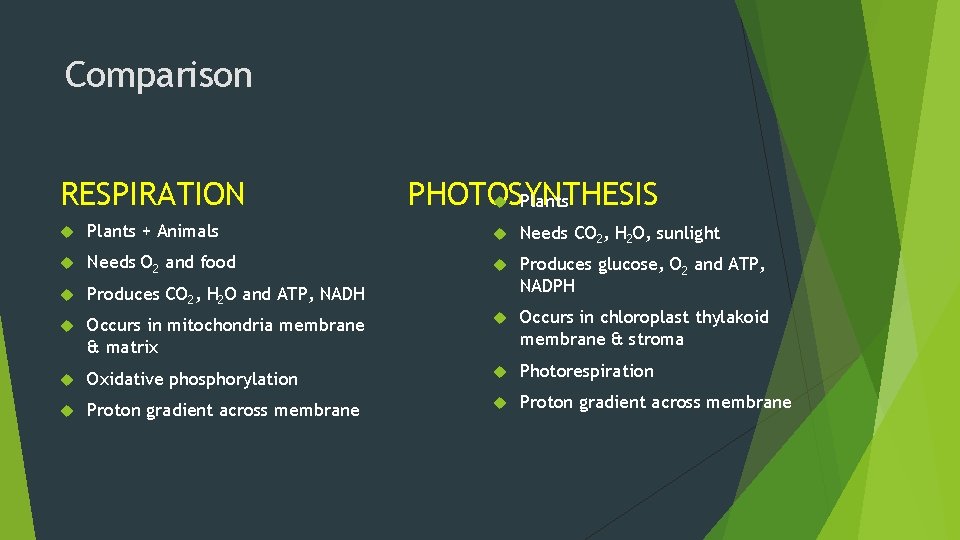
Comparison RESPIRATION PHOTOSYNTHESIS Plants + Animals Needs CO 2, H 2 O, sunlight Needs O 2 and food Produces CO 2, H 2 O and ATP, NADH Produces glucose, O 2 and ATP, NADPH Occurs in mitochondria membrane & matrix Occurs in chloroplast thylakoid membrane & stroma Oxidative phosphorylation Photorespiration Proton gradient across membrane