
Light Mirrors 4 www schoolsobservatory org Learning Objectives

Light & Mirrors 4 www. schoolsobservatory. org
Learning Objectives • To investigate angles of reflection. www. schoolsobservatory. org
A Quick Recap! • A mysterious friend is worried that his rival is spying on his plans. • We’ve discovered how people see objects. • But our friend has walls and fences so we need to work out how his rival is seeing over and around those. • We think mirrors may have been used but need to investigate mirrors further to know exactly how. www. schoolsobservatory. org
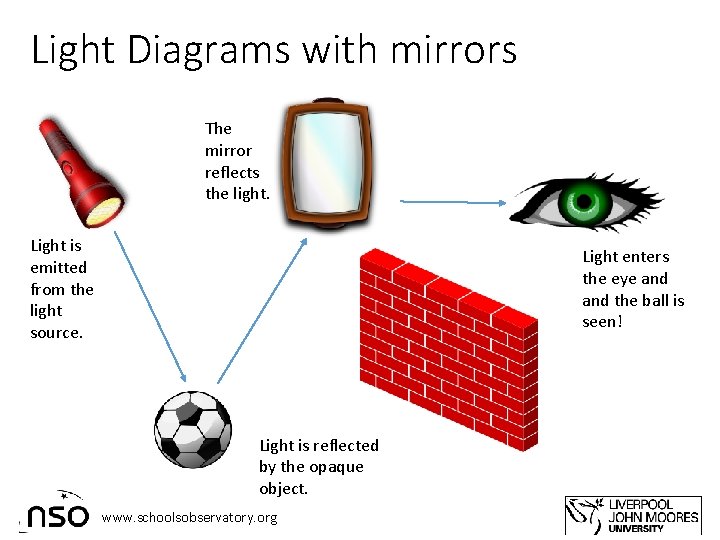
Light Diagrams with mirrors The mirror reflects the light. Light is emitted from the light source. Light enters the eye and the ball is seen! Light is reflected by the opaque object. www. schoolsobservatory. org
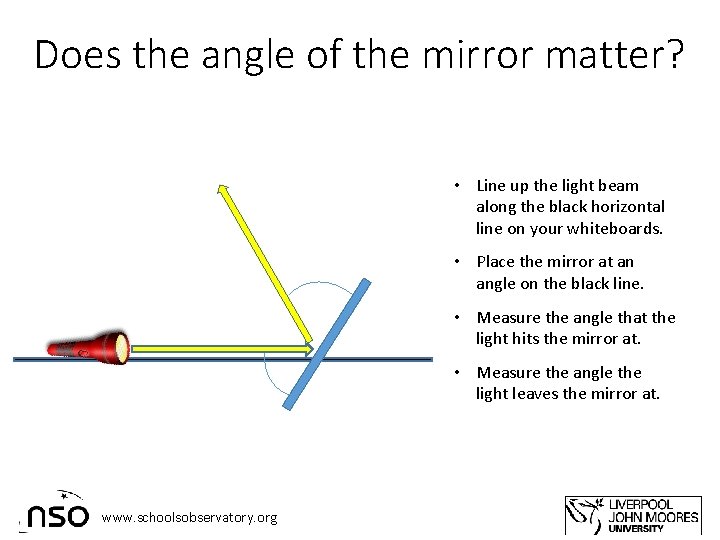
Does the angle of the mirror matter? • Line up the light beam along the black horizontal line on your whiteboards. • Place the mirror at an angle on the black line. • Measure the angle that the light hits the mirror at. • Measure the angle the light leaves the mirror at. www. schoolsobservatory. org
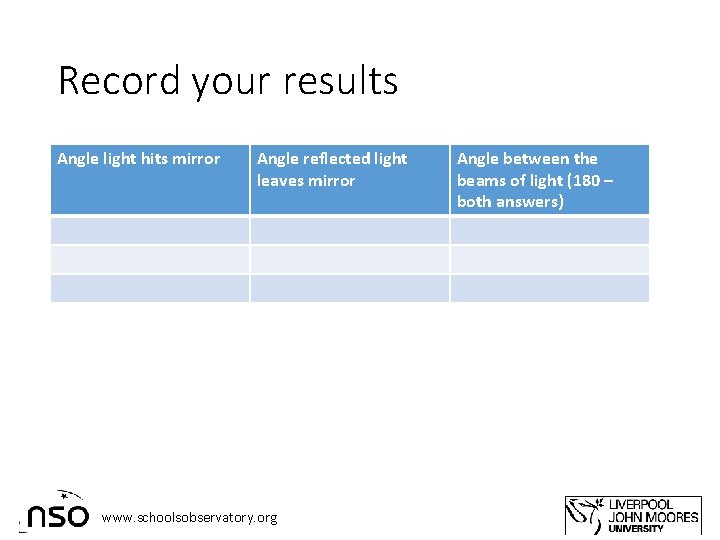
Record your results Angle light hits mirror Angle reflected light leaves mirror www. schoolsobservatory. org Angle between the beams of light (180 – both answers)
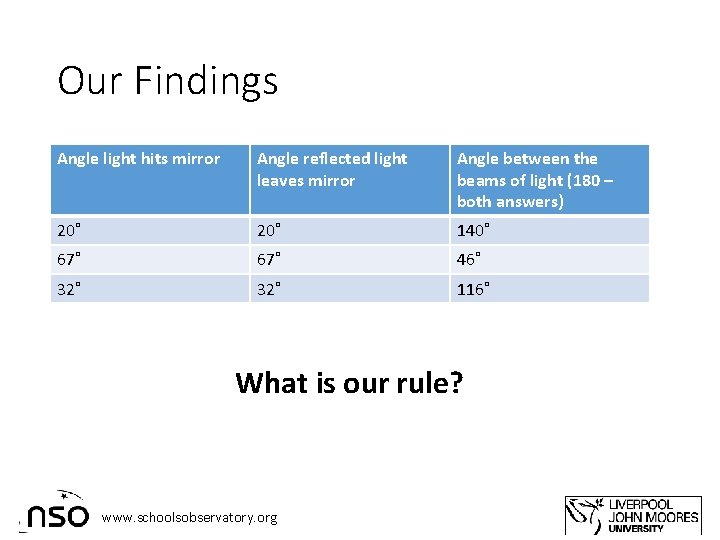
Our Findings Angle light hits mirror Angle reflected light leaves mirror Angle between the beams of light (180 – both answers) 20˚ 140˚ 67˚ 46˚ 32˚ 116˚ What is our rule? www. schoolsobservatory. org
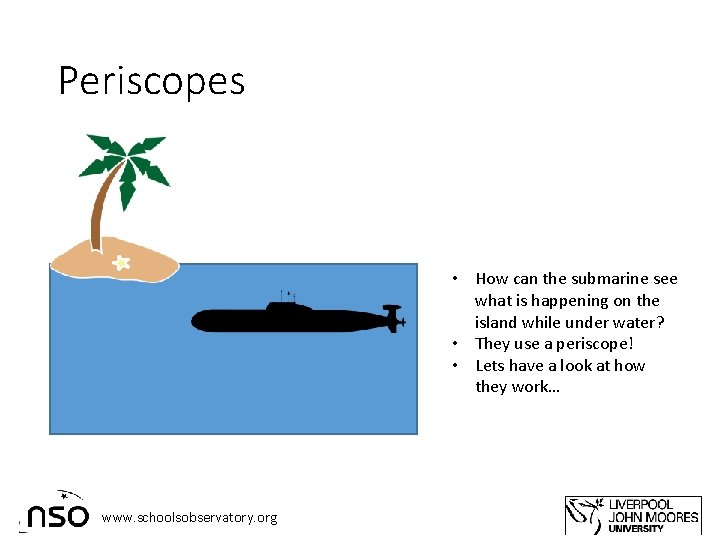
Periscopes • How can the submarine see what is happening on the island while under water? • They use a periscope! • Lets have a look at how they work… www. schoolsobservatory. org

Periscopes • Light is emitted by a light source. • Light is reflected by the objects and into the periscope. • Light hits the first mirror and is reflected at 90˚ down the periscope. www. schoolsobservatory. org • Light hits the second mirror and is reflected at 90˚ and out of the periscope and into the eye.
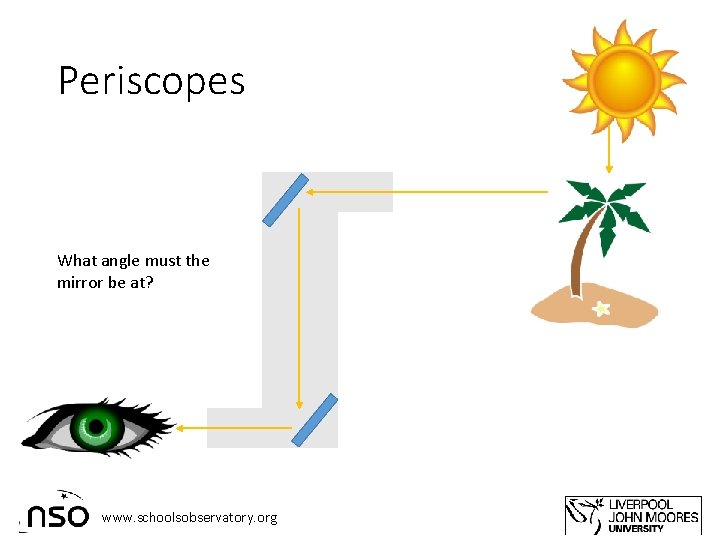
Periscopes What angle must the mirror be at? www. schoolsobservatory. org
What Have We Discovered? • The rival is using a periscope to see over or around the walls and fences. • Periscopes use two mirrors at 45˚ angles. • Light enters the periscope, hits the first mirror, travels down the periscope, hits the second mirror and then leaves the periscope and enters the eye. • Tomorrow we shall let our mysterious friend know and help him win the trophy! www. schoolsobservatory. org
- Slides: 11