
LIGHT MICROSCOPES AND THE HUMAN EYE WHAT IS
- Slides: 20
LIGHT, MICROSCOPES, AND THE HUMAN EYE
WHAT IS LIGHT? �A form of energy that travels in waves � These waves are a form of electromagnetic radiation. Light is not the only form of electromagnetic radiation.
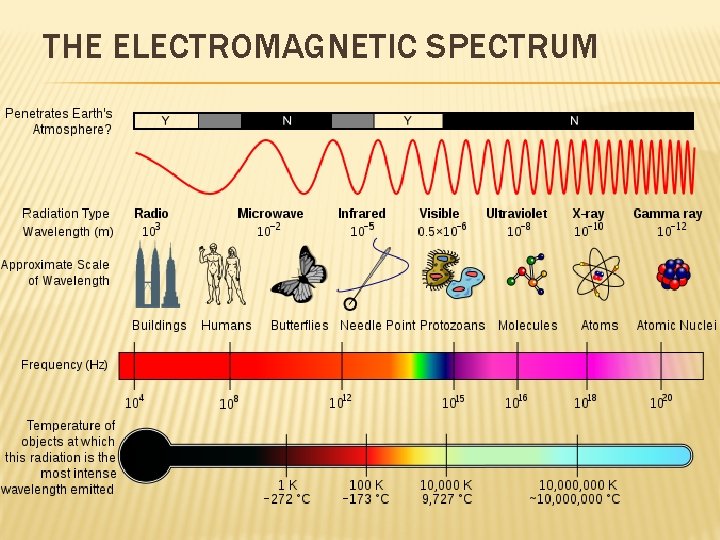
THE ELECTROMAGNETIC SPECTRUM
COLOR � You may have noticed that color takes up a small portion of the electromagnetic spectrum.
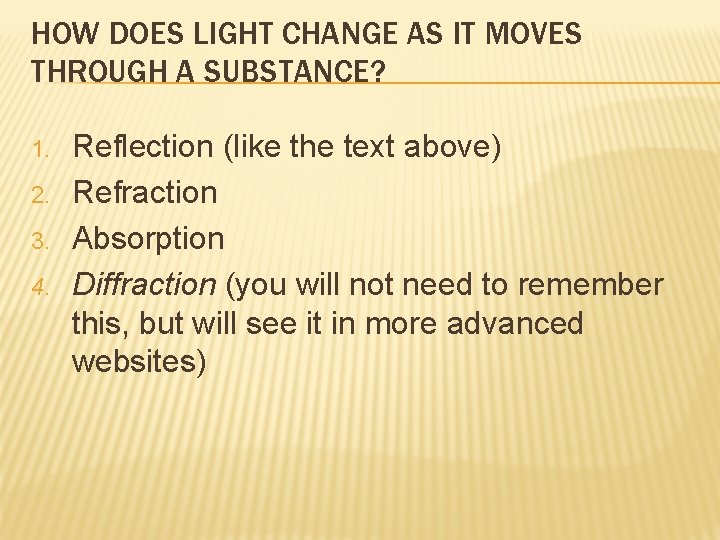
HOW DOES LIGHT CHANGE AS IT MOVES THROUGH A SUBSTANCE? 1. 2. 3. 4. Reflection (like the text above) Refraction Absorption Diffraction (you will not need to remember this, but will see it in more advanced websites)
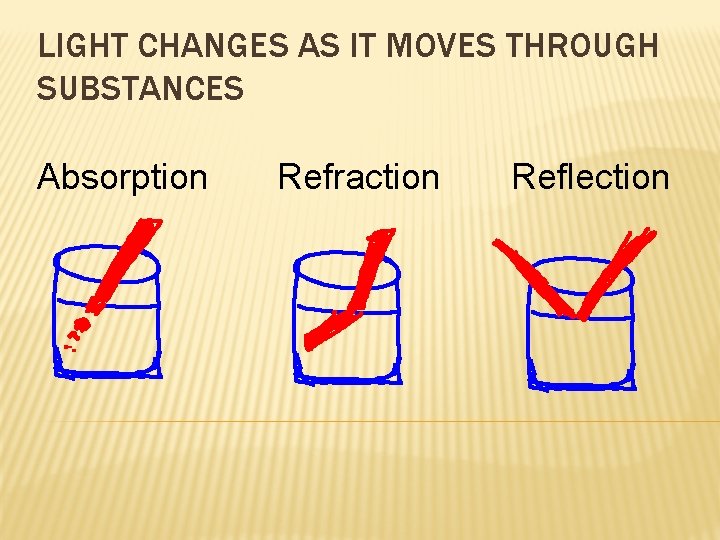
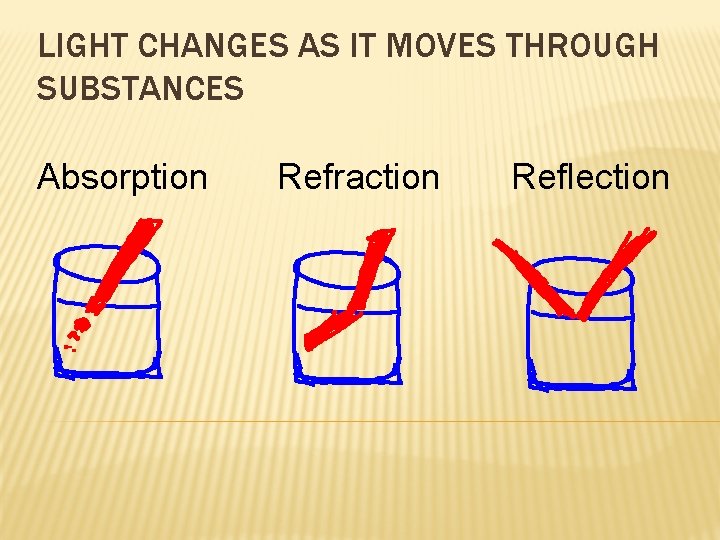
LIGHT CHANGES AS IT MOVES THROUGH SUBSTANCES Absorption Refraction Reflection
LIGHT CHANGES AS IT MOVES THROUGH SUBSTANCES Absorption Refraction Reflection
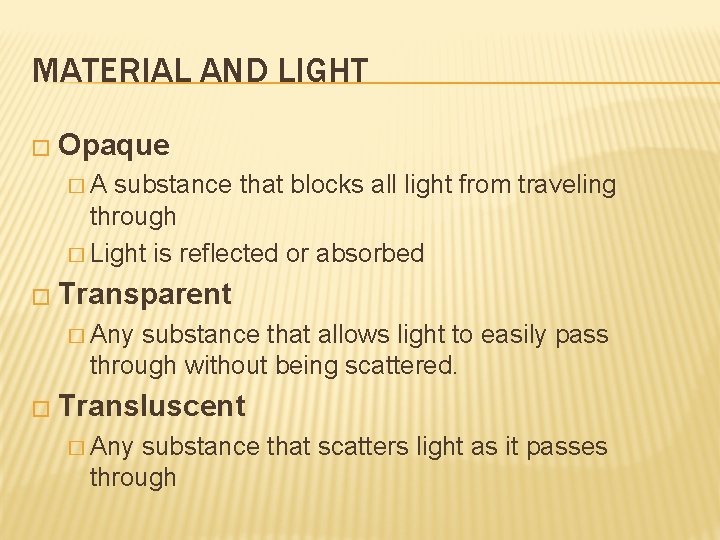
MATERIAL AND LIGHT � Opaque �A substance that blocks all light from traveling through � Light is reflected or absorbed � Transparent � Any substance that allows light to easily pass through without being scattered. � Transluscent � Any substance that scatters light as it passes through
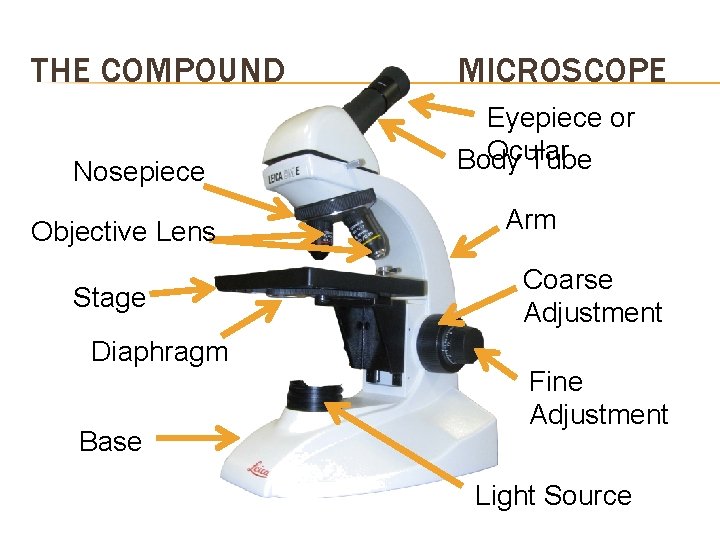
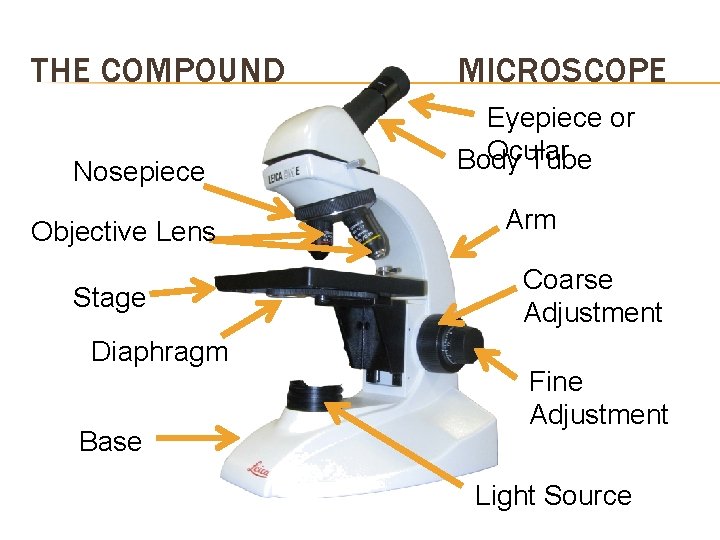
THE COMPOUND Nosepiece Objective Lens Stage Diaphragm Base MICROSCOPE Eyepiece or Ocular Body Tube Arm Coarse Adjustment Fine Adjustment Light Source
THE COMPOUND Nosepiece Objective Lens Stage Diaphragm Base MICROSCOPE Eyepiece or Ocular Body Tube Arm Coarse Adjustment Fine Adjustment Light Source
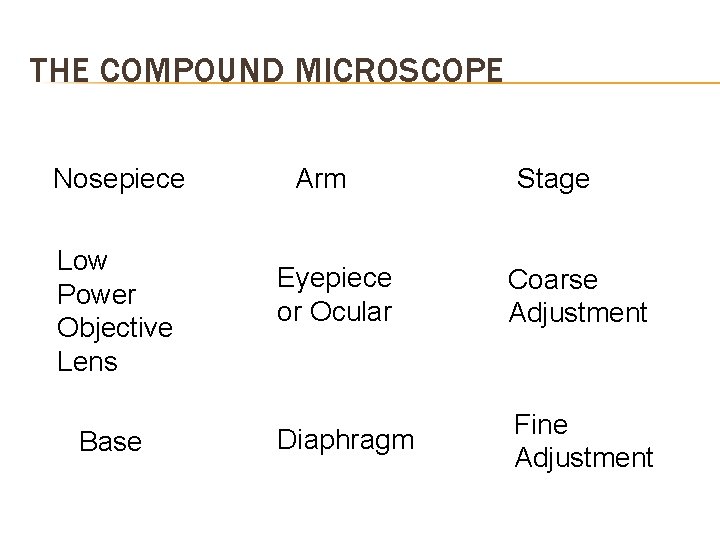
THE COMPOUND MICROSCOPE Nosepiece Low Power Objective Lens Base Arm Stage Eyepiece or Ocular Coarse Adjustment Diaphragm Fine Adjustment
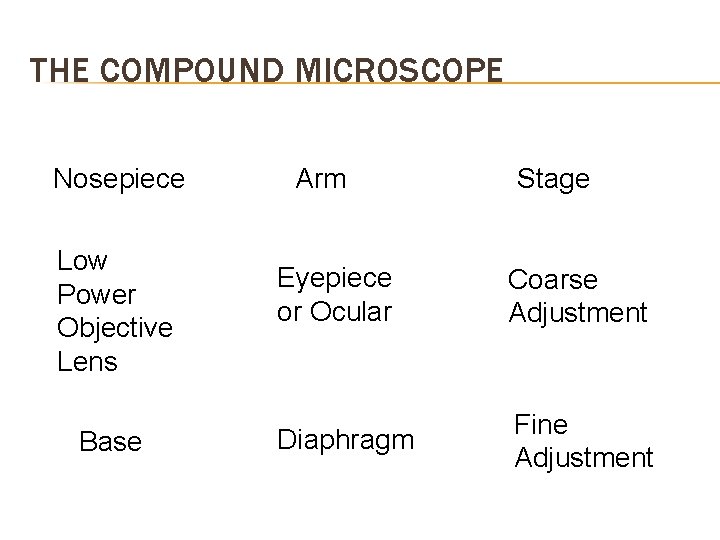
THE COMPOUND MICROSCOPE Nosepiece Low Power Objective Lens Base Arm Stage Eyepiece or Ocular Coarse Adjustment Diaphragm Fine Adjustment
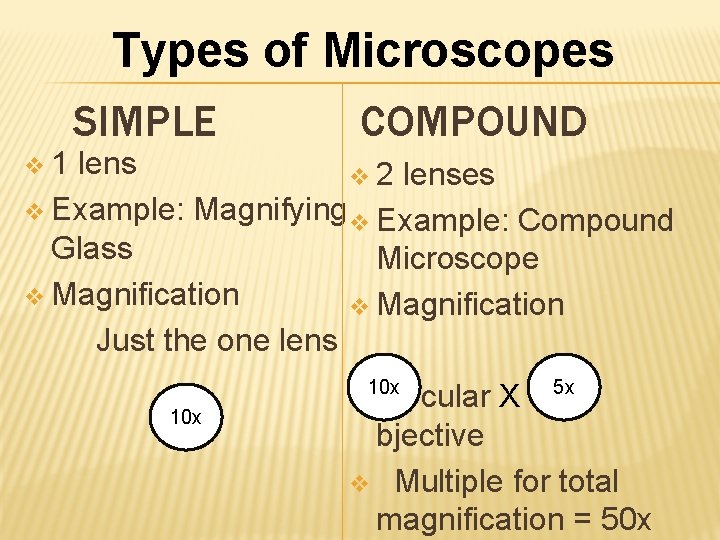
Types of Microscopes v 1 SIMPLE COMPOUND lens v 2 lenses v Example: Magnifying v Example: Compound Glass Microscope v Magnification Just the one lens 10 x cular X 5 x bjective v Multiple for total magnification = 50 x
WHAT YOU SHOULD NEVER DO WITH A MICROSCOPE v v Carry it with one hand. Move the ocular to show someone something. Move the microscope to show someone something Use the coarse adjustment in high power (will crack the slide)
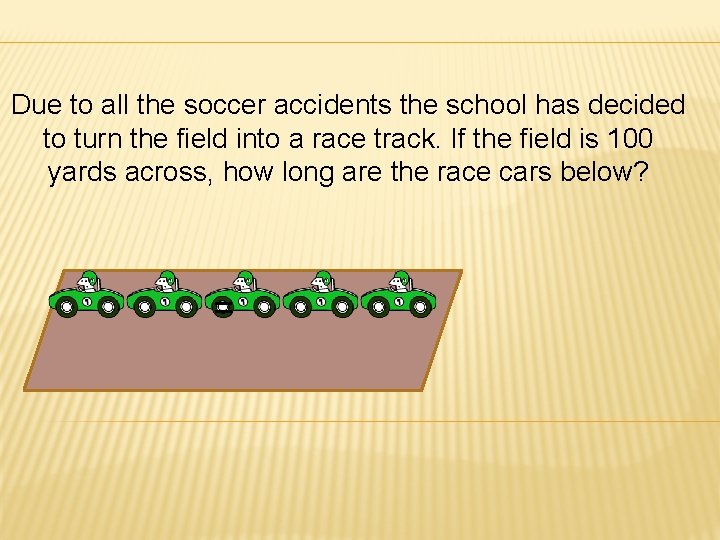
Due to all the soccer accidents the school has decided to turn the field into a race track. If the field is 100 yards across, how long are the race cars below? =
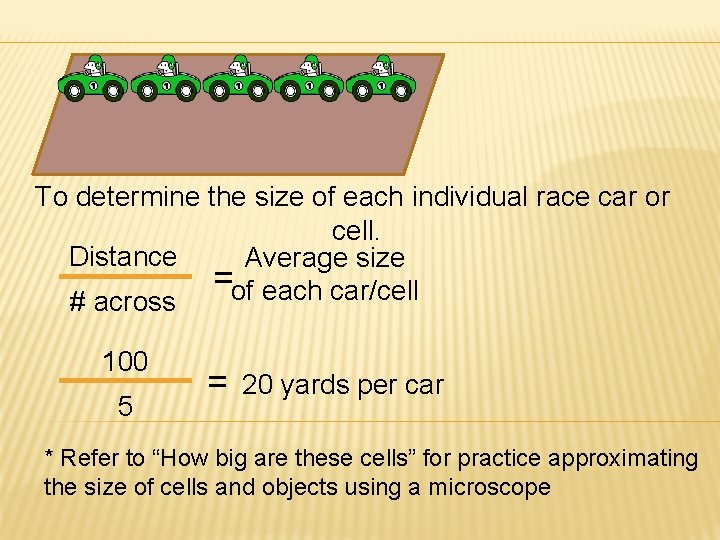
To determine the size of each individual race car or cell. Distance Average size =of each car/cell # across 100 5 = 20 yards per car * Refer to “How big are these cells” for practice approximating the size of cells and objects using a microscope
STEPS TO USING A MICROSCOPE 1. 2. 3. 4. 5. 6. Place the specimen on a slide. Start with the low power objective (red) Place the slide over the hole of the stage (where light comes through), raise the stage as high as it can go using the coarse adjustment (large knob) Look into the ocular lens (eyepiece) as you move the coarse adjustment to focus the specimen. Use the fine adjustment to focus more precisely on the specimen. If using the higher power (yellow), just move the objective lens into place. Your specimen should be in view. Again use the fine adjustment knob to focus.
WET MOUNT v v v Place 1 drop of water on the slide Place your specimen on the drop of water Place another drop of water on top of the specimen Slowly lower the coverslip over the specimen on a 45 degree angle (to prevent air bubbles) Do not bend the cover slip, or push down on it.
STAINING A SLIDE 1. 2. 3. 4. Prepare a wet mount. Rip off a piece of small paper towel with a flat edge (if it doesn’t have a flat edge, fold it over to create one) Place a drop of stain along one edge of the cover slip (lets say the left edge) Place the paper towel along the other edge (the right edge) so that it begins to draw the stain across the slide.
PLEASE NOTE 1. Most of the information was provided with guided notes throughout this unit.