
Light Light is a form of energy Energy
- Slides: 11
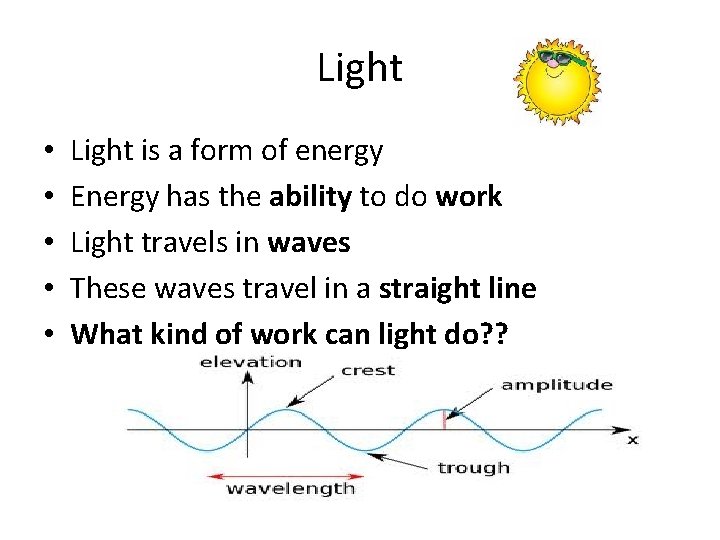
Light • • • Light is a form of energy Energy has the ability to do work Light travels in waves These waves travel in a straight line What kind of work can light do? ?
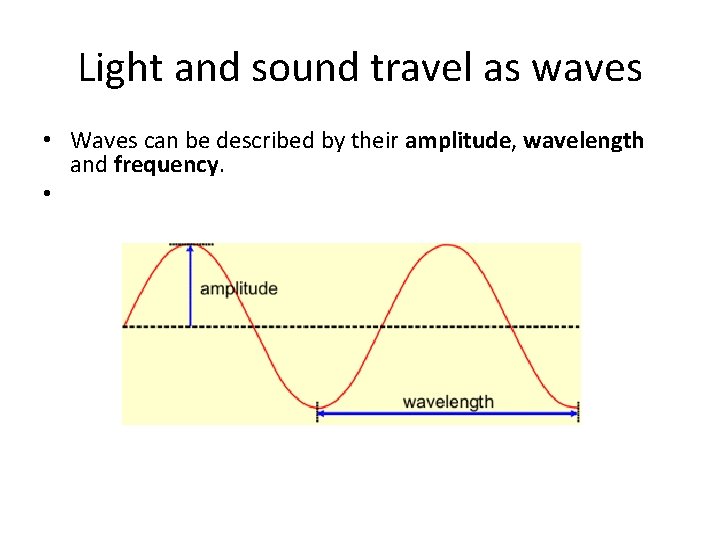
Light and sound travel as waves • Waves can be described by their amplitude, wavelength and frequency. •
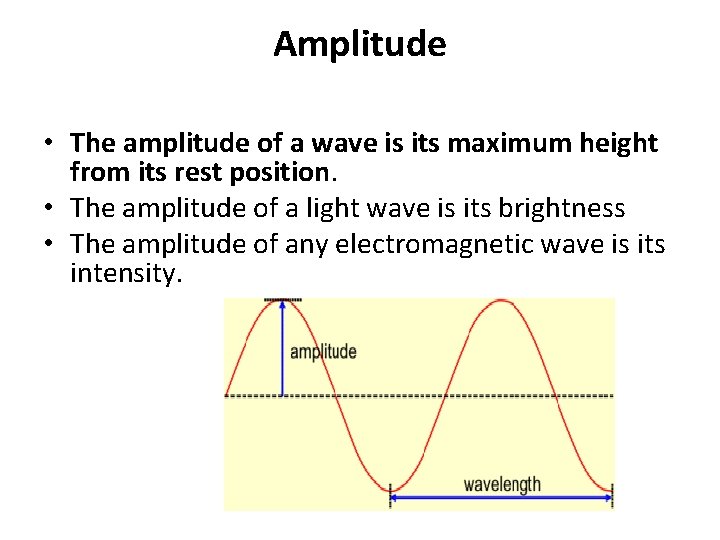
Amplitude • The amplitude of a wave is its maximum height from its rest position. • The amplitude of a light wave is its brightness • The amplitude of any electromagnetic wave is its intensity.
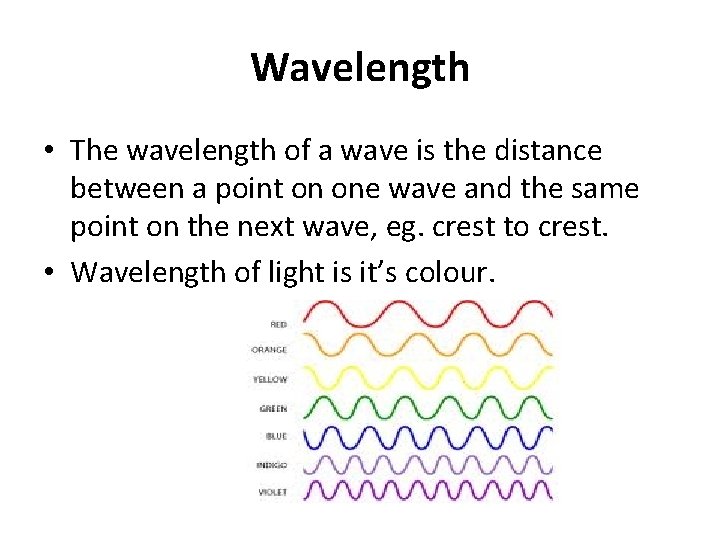
Wavelength • The wavelength of a wave is the distance between a point on one wave and the same point on the next wave, eg. crest to crest. • Wavelength of light is it’s colour.
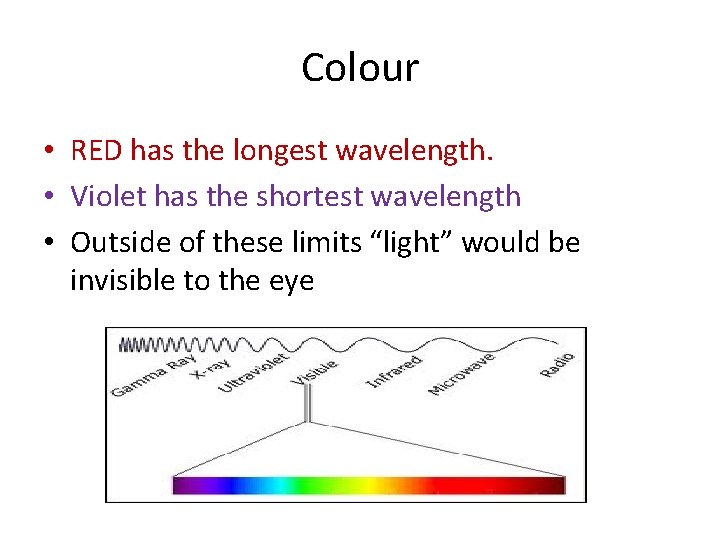
Colour • RED has the longest wavelength. • Violet has the shortest wavelength • Outside of these limits “light” would be invisible to the eye
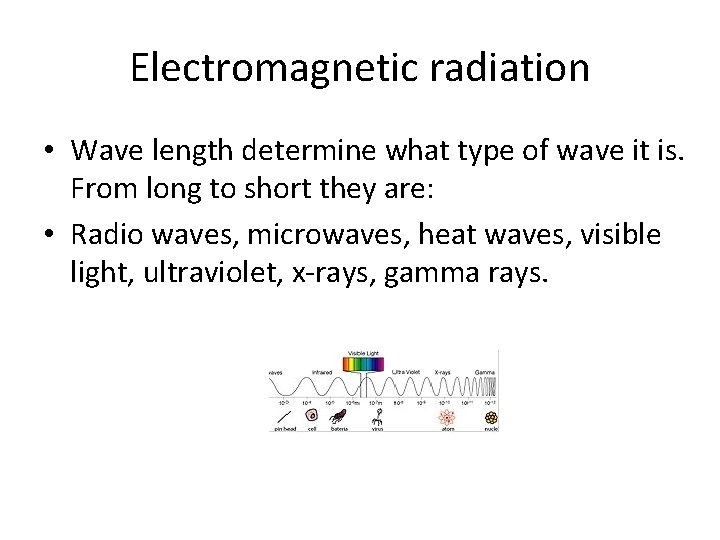
Electromagnetic radiation • Wave length determine what type of wave it is. From long to short they are: • Radio waves, microwaves, heat waves, visible light, ultraviolet, x-rays, gamma rays.
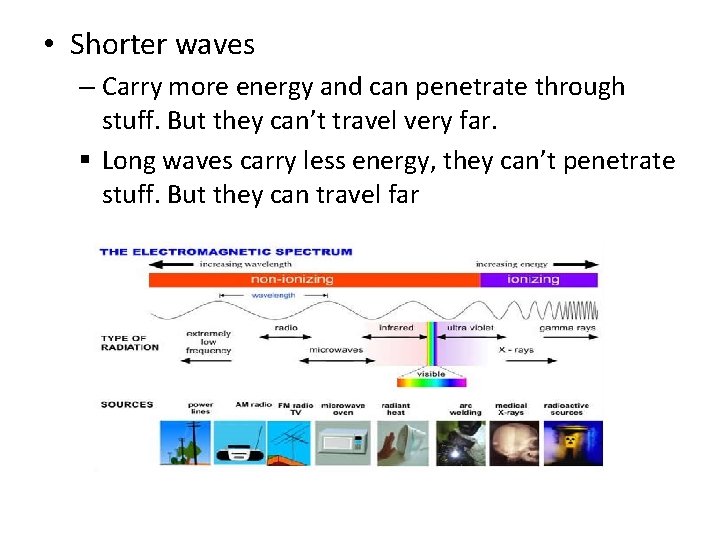
• Shorter waves – Carry more energy and can penetrate through stuff. But they can’t travel very far. § Long waves carry less energy, they can’t penetrate stuff. But they can travel far
Frequency • The frequency of a wave is – The number of waves passing by in one second. – The unit of frequency is the hertz (Hz) • Frequency and wavelength are related. • Shorter wavelength mean higher frequencies. • Longer wavelengths mean lower frequencies
Transverse waves • Light and the electromagnetic spectrum use these wave. • Because they are not made of vibrating particles they can travel through a vacuum. They do not need a medium. So they travel through space. • They are very fast 300 000 m/s in the air
Compression or longitudinal waves • Sound waves are like this. • Compression waves must travel through a substance (solid, liquid, or gas) called a medium. • One molecule hits another molecule, which hits another, passing energy along. • Because sound waves depend on moving objects (molecules) they are not very fast. • Less than 350 m/s in the air
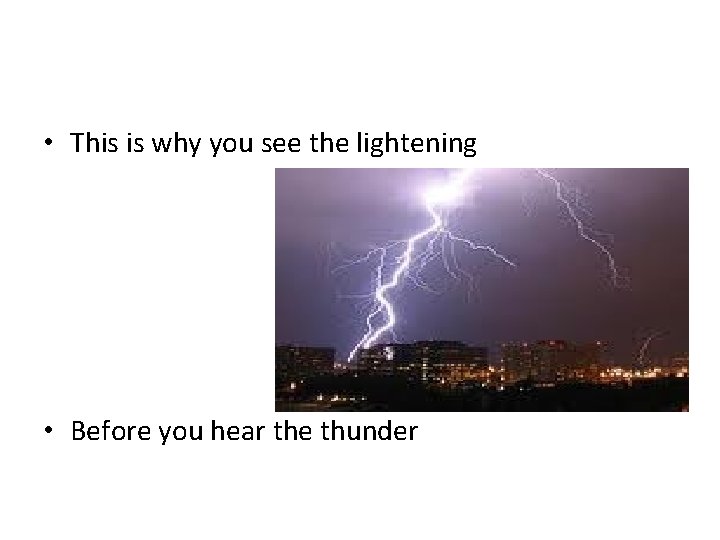
• This is why you see the lightening • Before you hear the thunder