
Light Light is a form of energy Crookes
- Slides: 50
Light
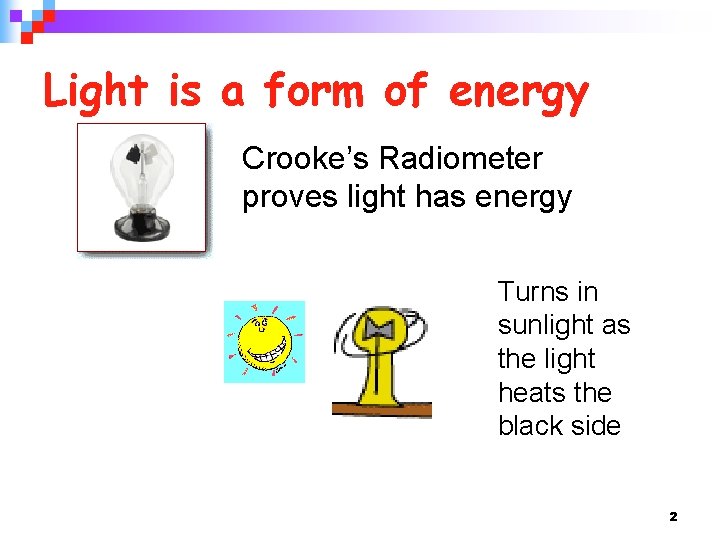
Light is a form of energy Crooke’s Radiometer proves light has energy Turns in sunlight as the light heats the black side 2
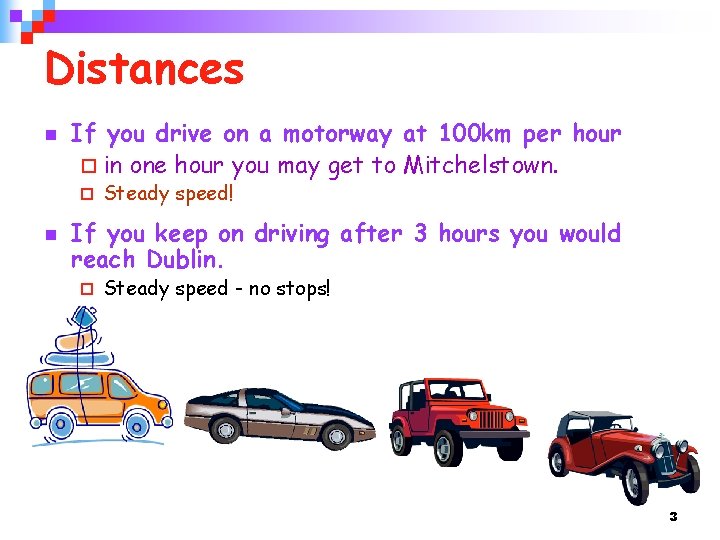
Distances n If you drive on a motorway at 100 km per hour ¨ in one hour you may get to Mitchelstown. ¨ n Steady speed! If you keep on driving after 3 hours you would reach Dublin. ¨ Steady speed - no stops! 3
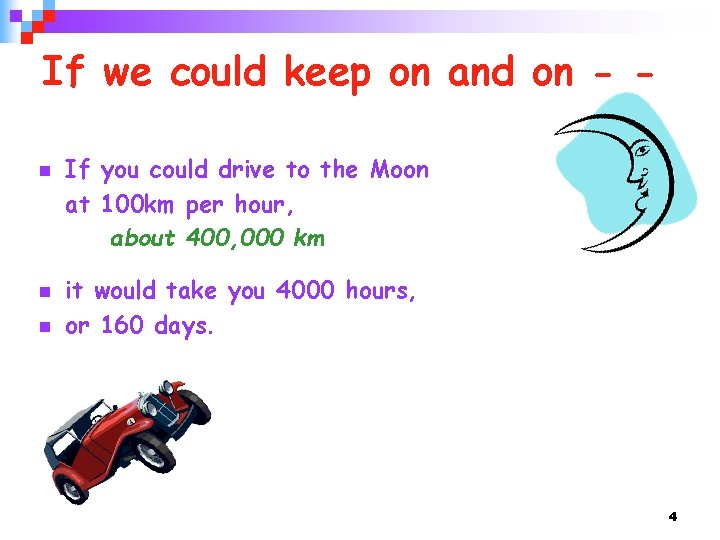
If we could keep on and on - n n n If you could drive to the Moon at 100 km per hour, about 400, 000 km it would take you 4000 hours, or 160 days. 4
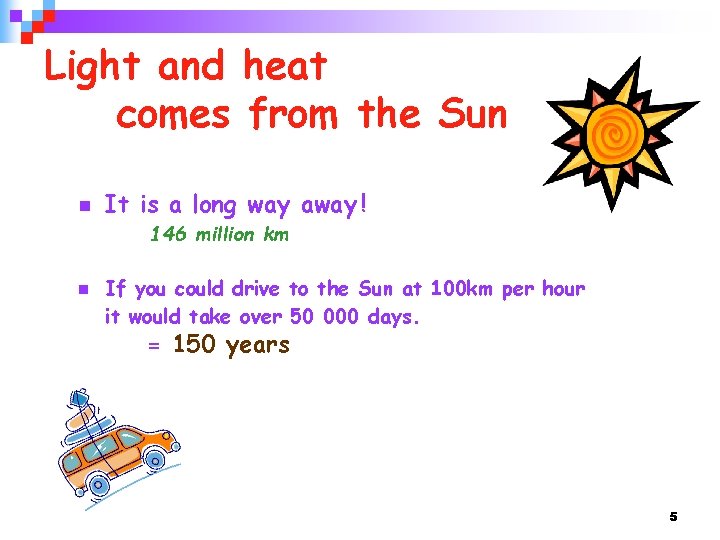
Light and heat comes from the Sun n It is a long way away ! 146 million km n If you could drive to the Sun at 100 km per hour it would take over 50 000 days. = 150 years 5
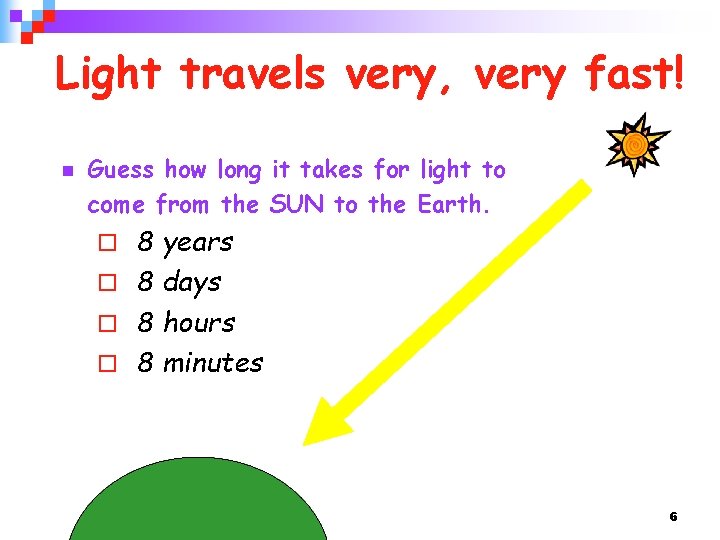
Light travels very, very fast! n Guess how long it takes for light to come from the SUN to the Earth. 8 years ¨ 8 days ¨ 8 hours ¨ 8 minutes ¨ 6
It takes 8 minutes for light to reach us from the Sun! Light travels 300 000 kilometres through space every second! 7
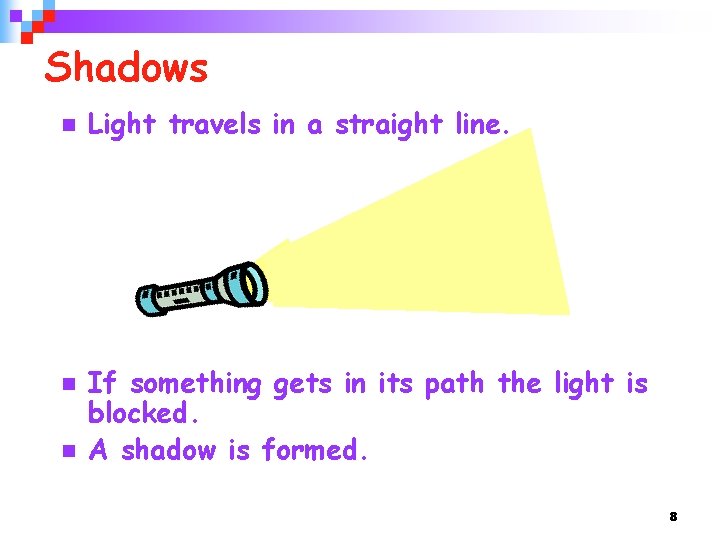
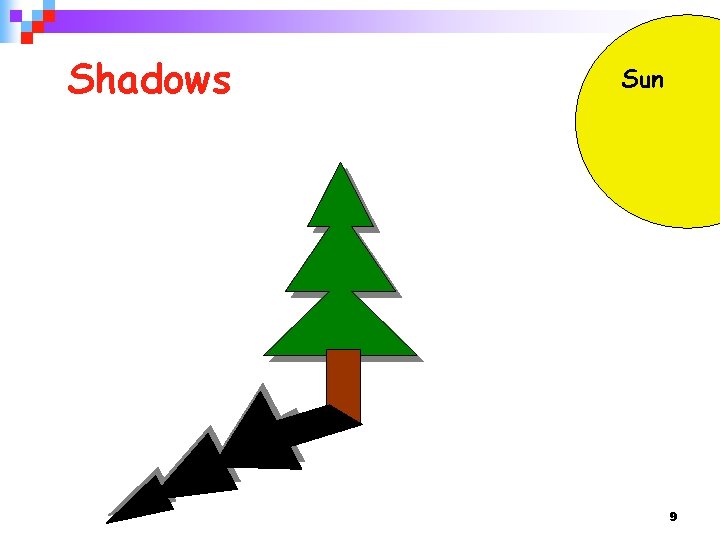
Shadows n n n Light travels in a straight line. If something gets in its path the light is blocked. A shadow is formed. 8
Shadows Sun 9
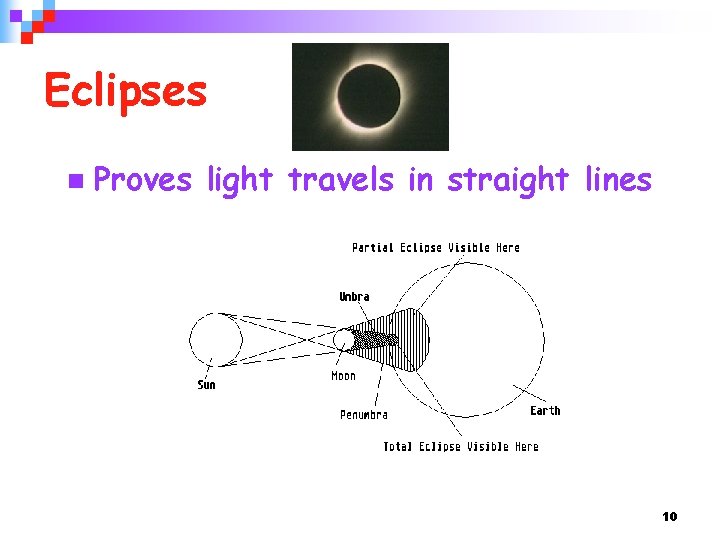
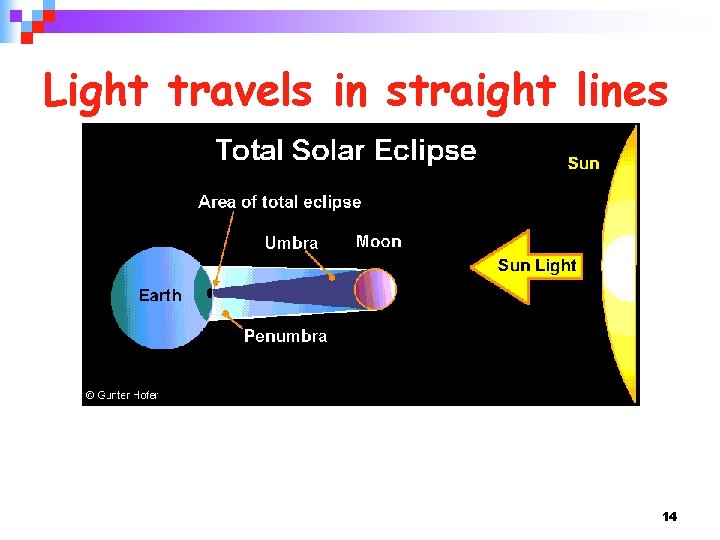
Eclipses n Proves light travels in straight lines 10
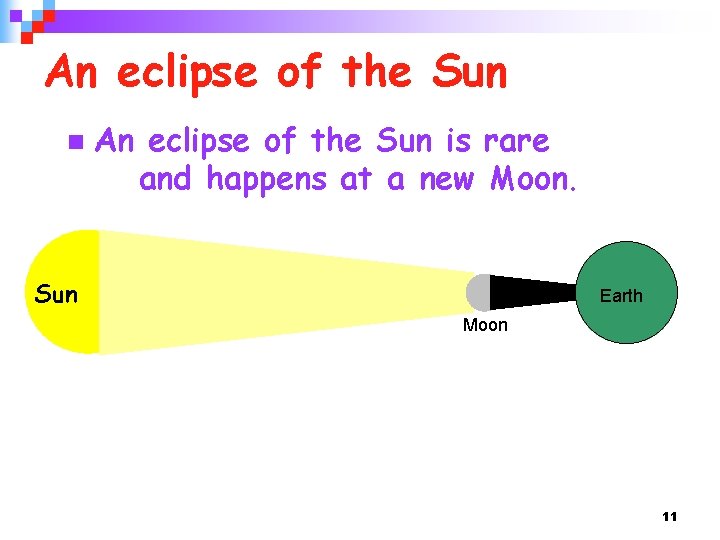
An eclipse of the Sun n Sun An eclipse of the Sun is rare and happens at a new Moon Earth Moon 11
Sun 12
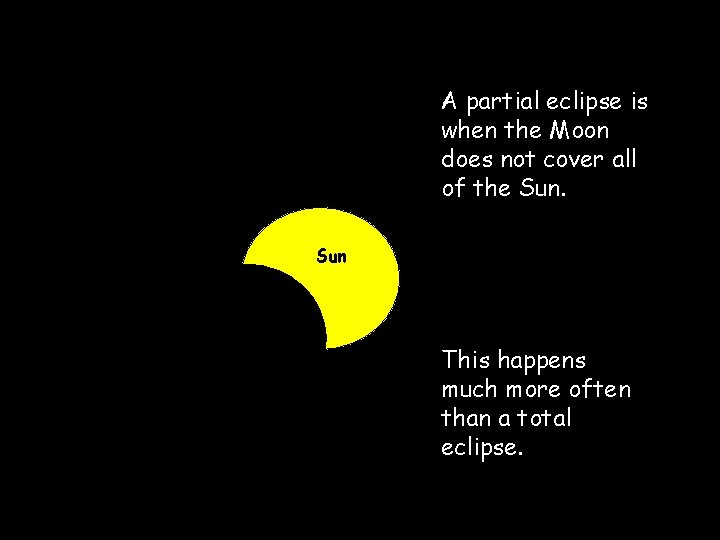
A partial eclipse is when the Moon does not cover all of the Sun This happens much more often than a total eclipse. 13
Light travels in straight lines 14
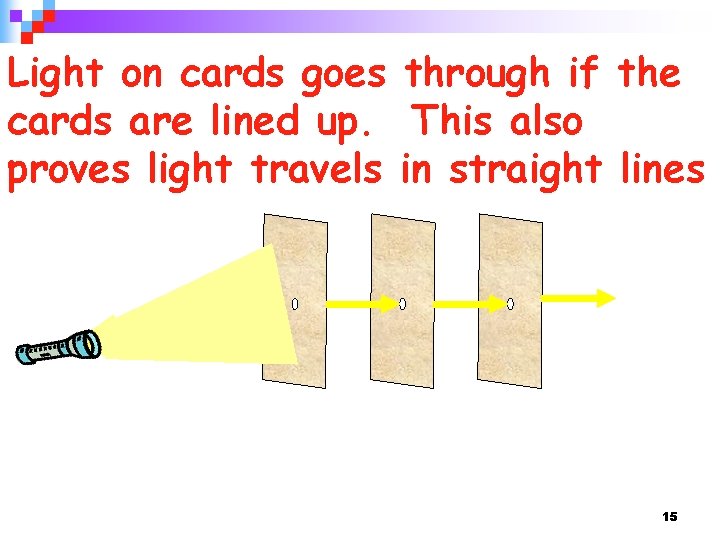
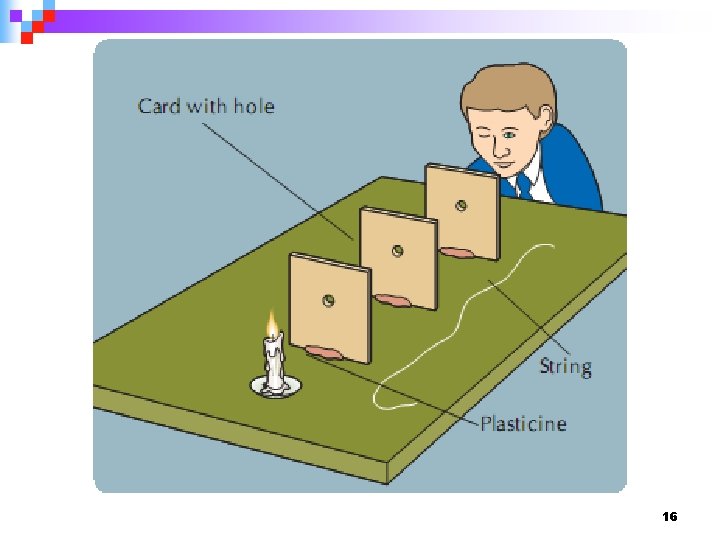
Light on cards goes through if the cards are lined up. This also proves light travels in straight lines 15
16
Day and Night A day + a night = 24 hours 365 of these makes 1 year. The Earth takes 1 year to orbit the Sun. (What does ‘orbit’ mean? ) 17
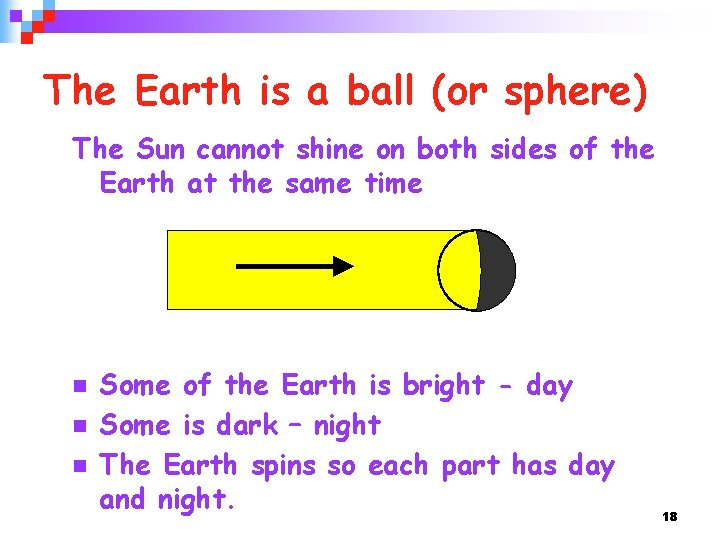
The Earth is a ball (or sphere) The Sun cannot shine on both sides of the Earth at the same time n n n Some of the Earth is bright - day Some is dark – night The Earth spins so each part has day and night. 18
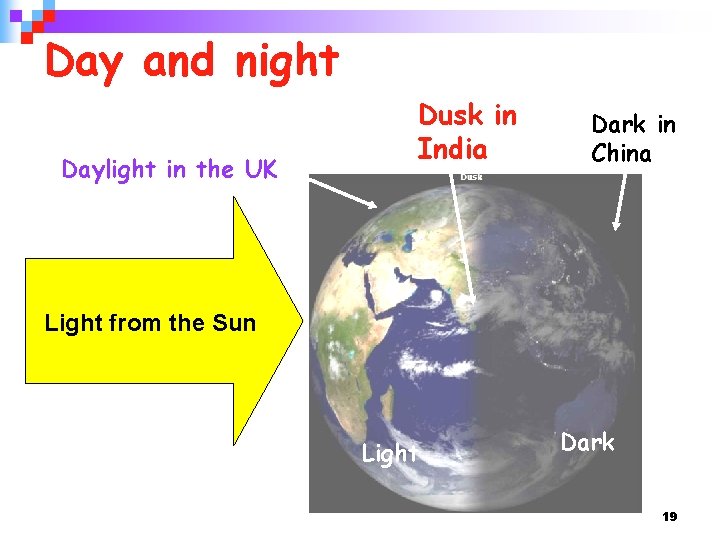
Day and night Daylight in the UK Dusk in India Dark in China Light from the Sun Light Dark 19
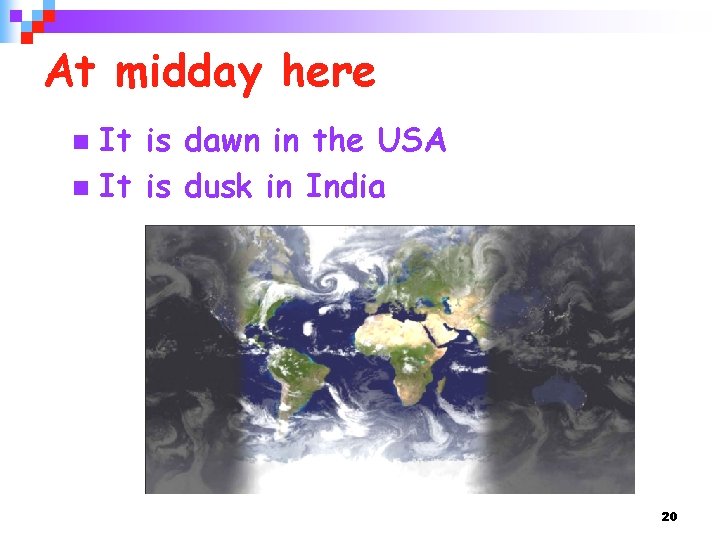
At midday here It is dawn in the USA n It is dusk in India n 20
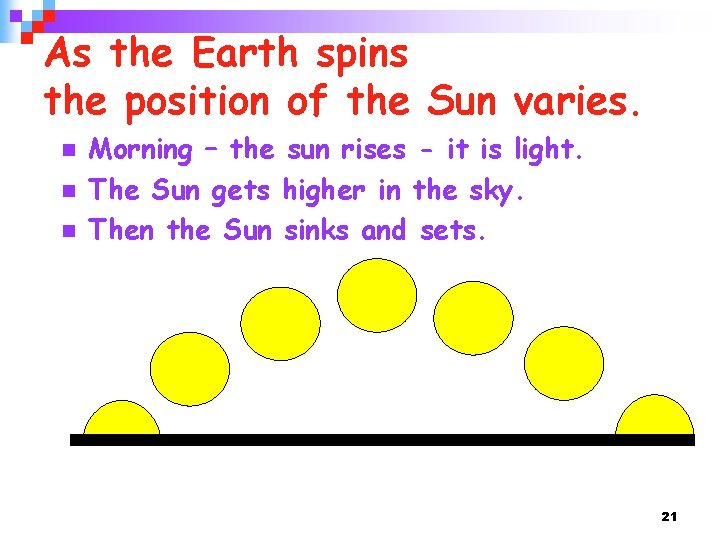
As the Earth spins the position of the Sun varies. n n n Morning – the sun rises - it is light. The Sun gets higher in the sky. Then the Sun sinks and sets. 21
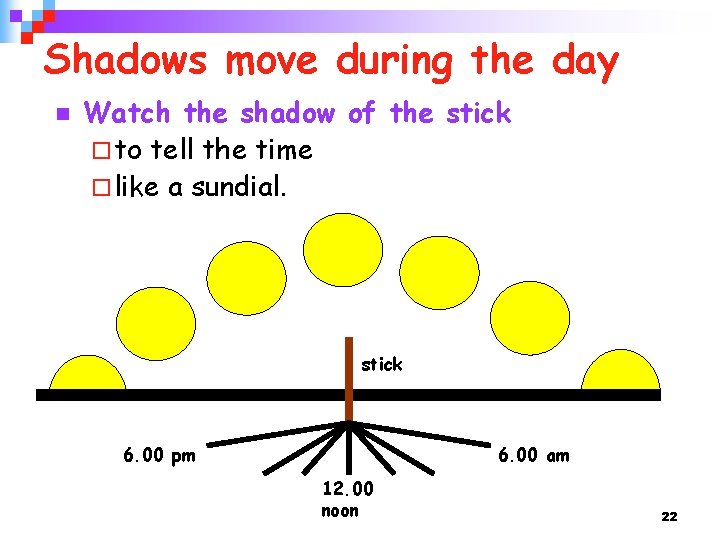
Shadows move during the day n Watch the shadow of the stick ¨ to tell the time ¨ like a sundial. stick 6. 00 pm 6. 00 am 12. 00 noon 22
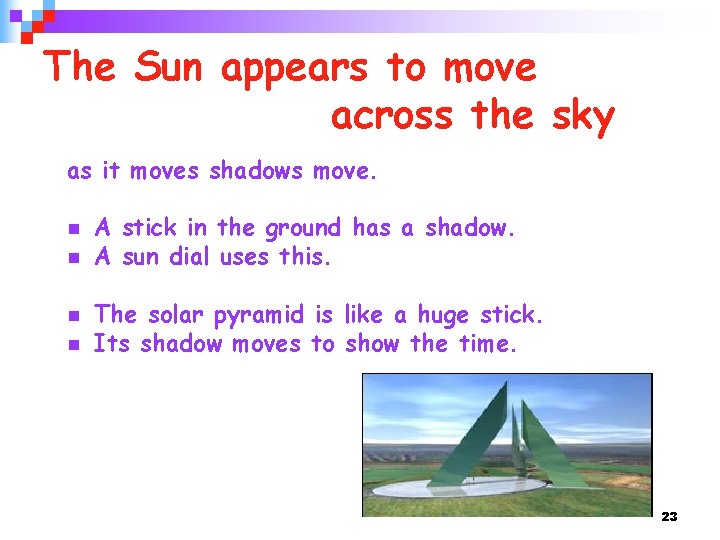
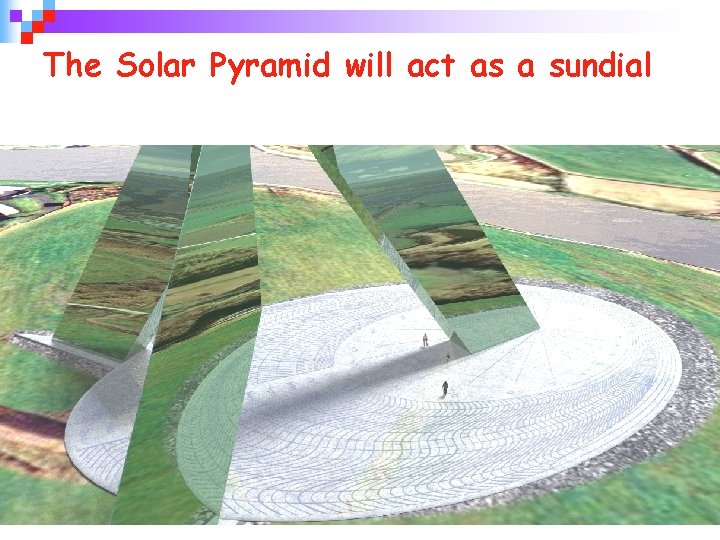
The Sun appears to move across the sky as it moves shadows move. n n A stick in the ground has a shadow. A sun dial uses this. The solar pyramid is like a huge stick. Its shadow moves to show the time. 23
The Solar Pyramid will act as a sundial 24
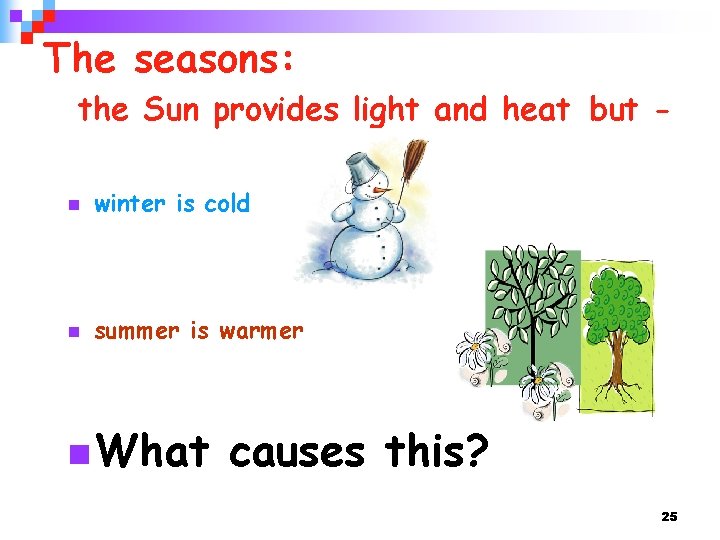
The seasons: the Sun provides light and heat but n winter is cold n summer is warmer n What causes this? 25
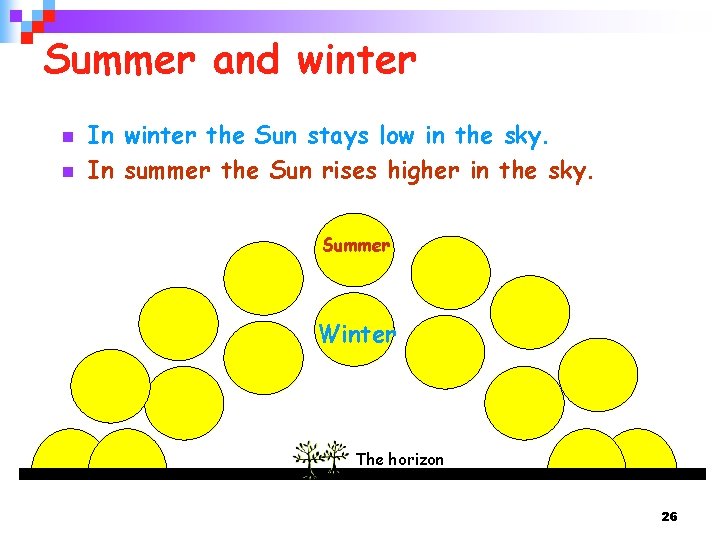
Summer and winter n n In winter the Sun stays low in the sky. In summer the Sun rises higher in the sky. Summer Winter The horizon 26
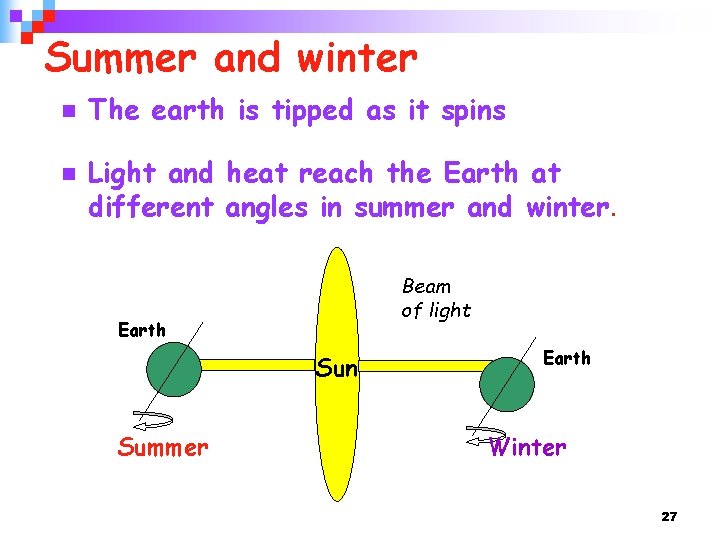
Summer and winter n n The earth is tipped as it spins Light and heat reach the Earth at different angles in summer and winter. Beam of light Earth Sun Summer Earth Winter 27
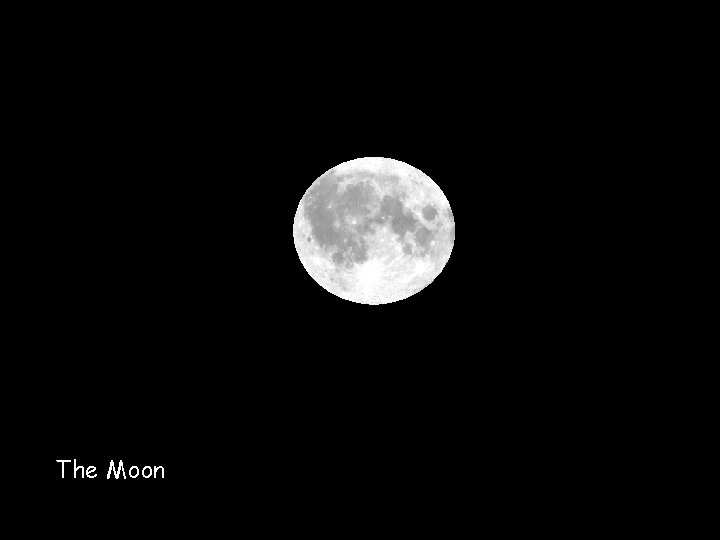
The Moon 28
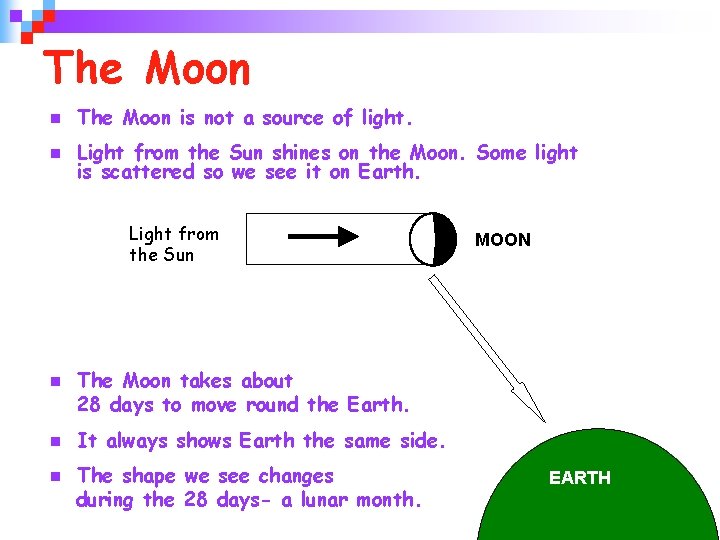
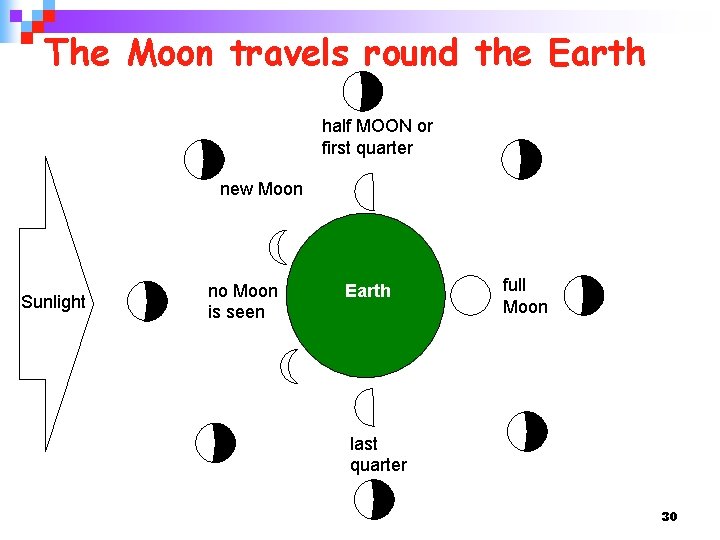
The Moon n The Moon is not a source of light. n Light from the Sun shines on the Moon. Some light is scattered so we see it on Earth. Light from the Sun n MOON The Moon takes about 28 days to move round the Earth. It always shows Earth the same side. The shape we see changes during the 28 days- a lunar month. EARTH 29
The Moon travels round the Earth half MOON or first quarter new Moon Sunlight no Moon is seen Earth full Moon last quarter 30
Bad astronomy in films What is wrong with – n n the Moon looking the same for 3 or 4 nights? lots of stars visible at full Moon? showing lots of stars out of the window of a brightly lit room? the shadow line at Sun-rise looking sharp? 31
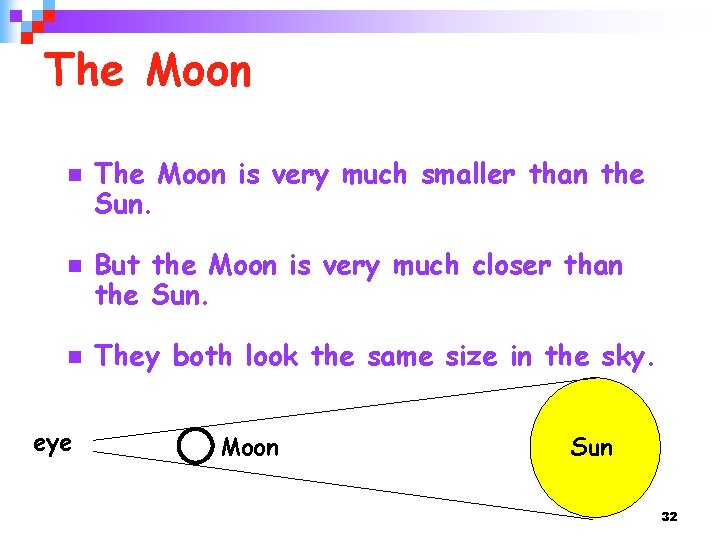
The Moon n eye The Moon is very much smaller than the Sun. But the Moon is very much closer than the Sun. They both look the same size in the sky. Moon Sun 32
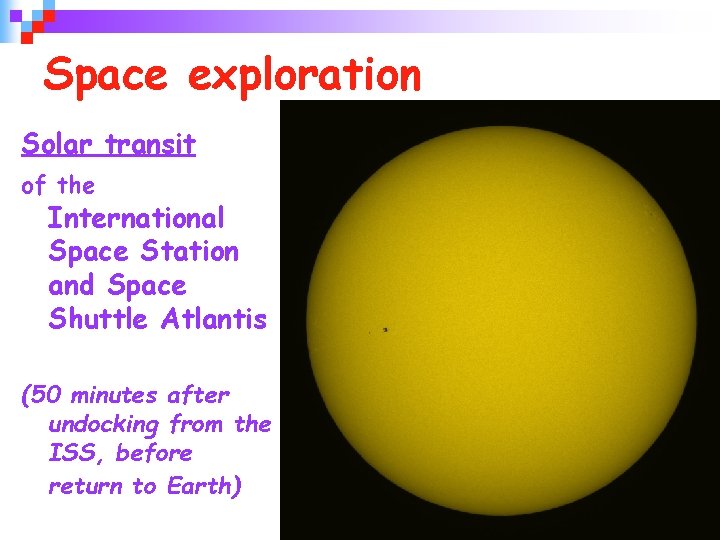
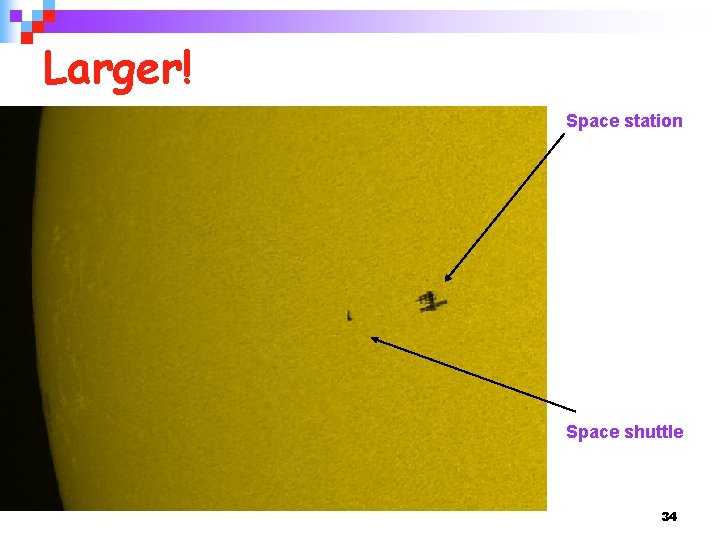
Space exploration Solar transit of the International Space Station and Space Shuttle Atlantis (50 minutes after undocking from the ISS, before return to Earth) 33
Larger! Space station Space shuttle 34
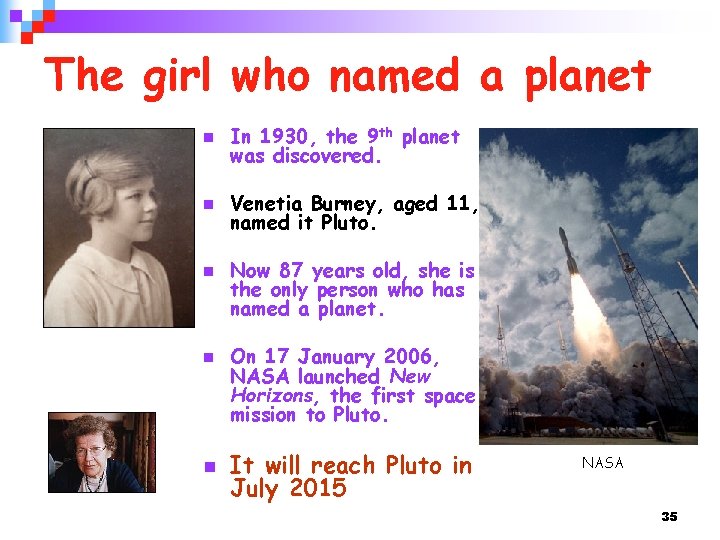
The girl who named a planet n In 1930, the 9 th planet was discovered. n Venetia Burney, aged 11, named it Pluto. n n n Now 87 years old, she is the only person who has named a planet. On 17 January 2006, NASA launched New Horizons, the first space mission to Pluto. It will reach Pluto in July 2015 NASA 35
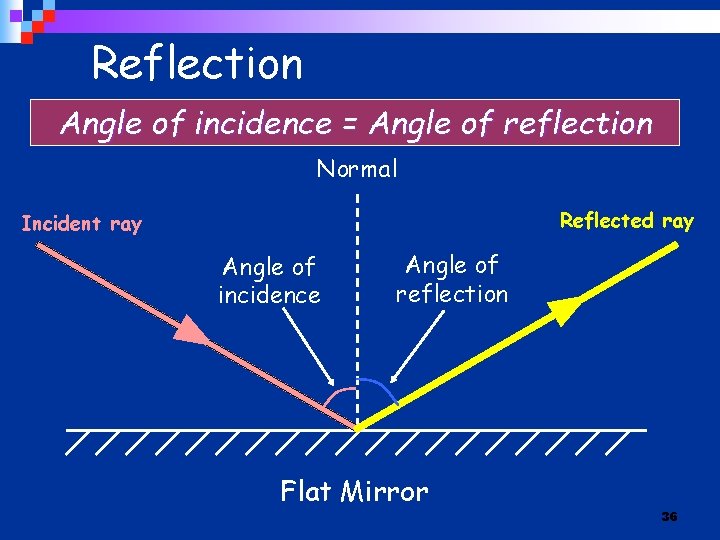
Reflection Angle of incidence = Angle of reflection Normal Reflected ray Incident ray Angle of incidence Angle of reflection Flat Mirror 36
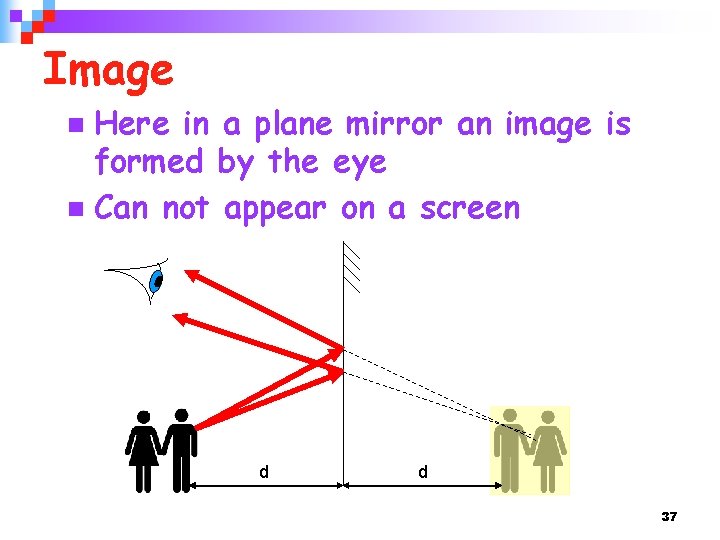
Image Here in a plane mirror an image is formed by the eye n Can not appear on a screen n d d 37
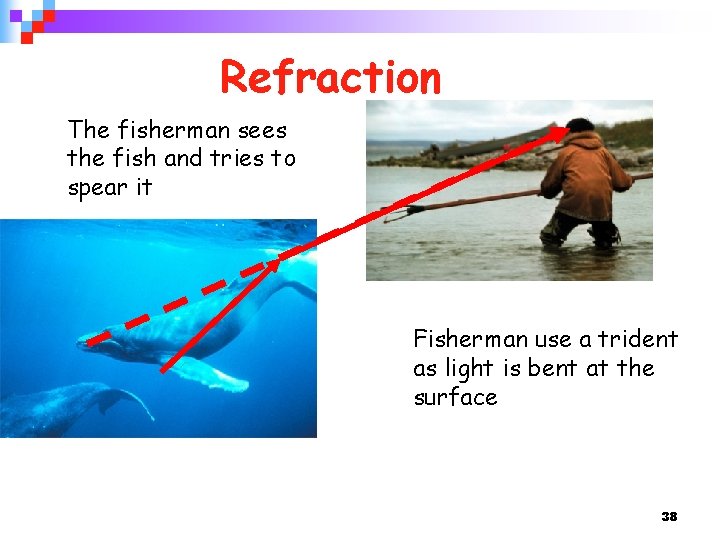
Refraction The fisherman sees the fish and tries to spear it Fisherman use a trident as light is bent at the surface 38
39
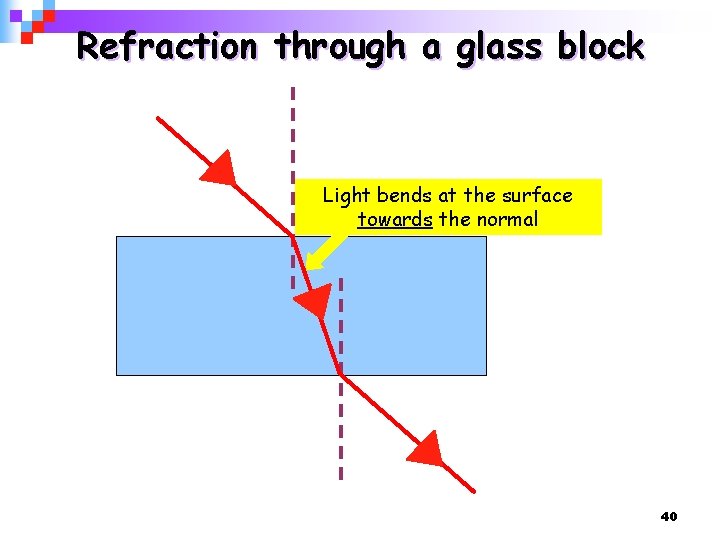
Refraction through a glass block Light bends at the surface towards the normal 40
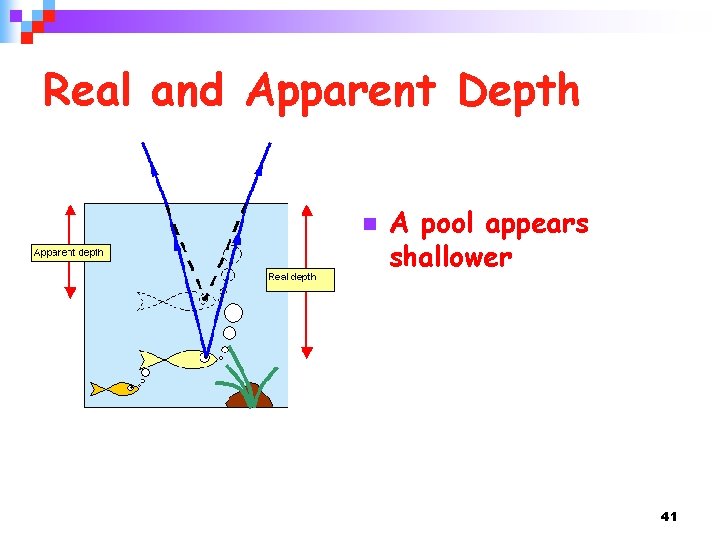
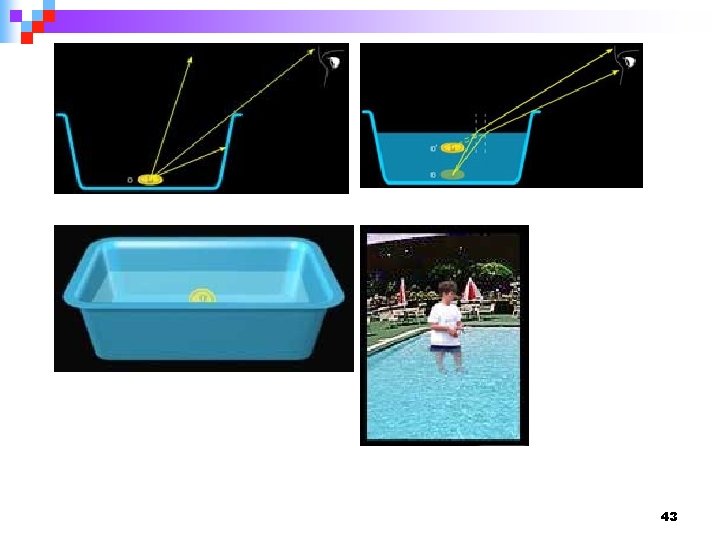
Real and Apparent Depth n A pool appears shallower 41
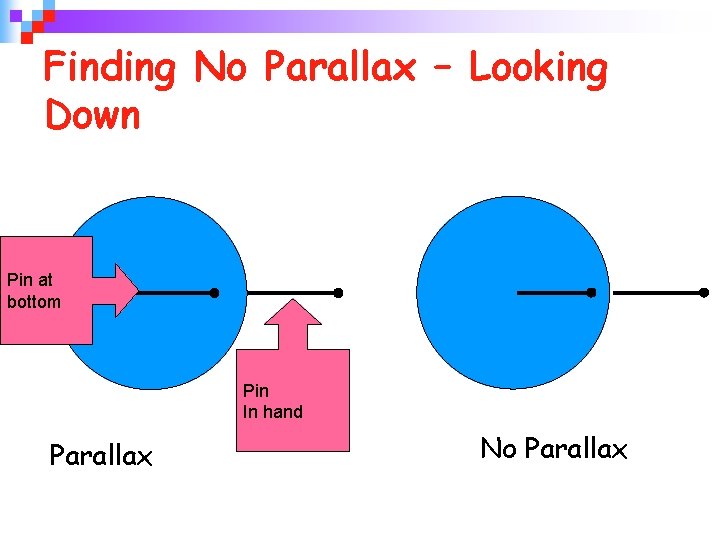
Finding No Parallax – Looking Down Pin at bottom Pin In hand Parallax No Parallax
43
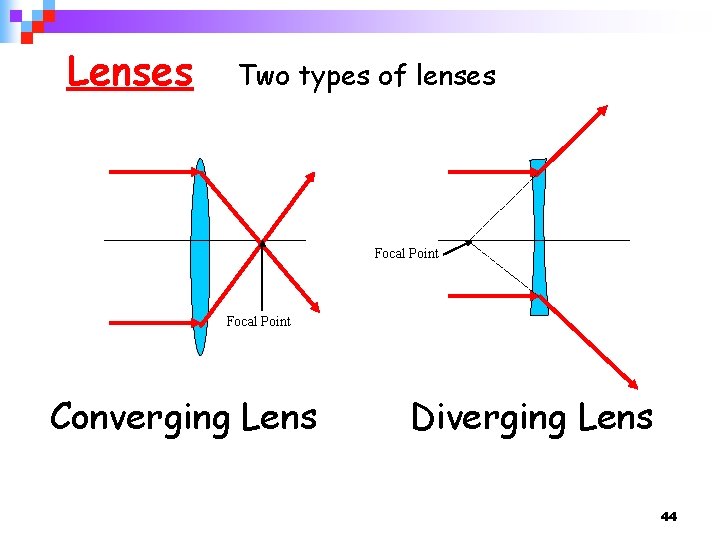
Lenses Two types of lenses Focal Point Converging Lens Diverging Lens 44
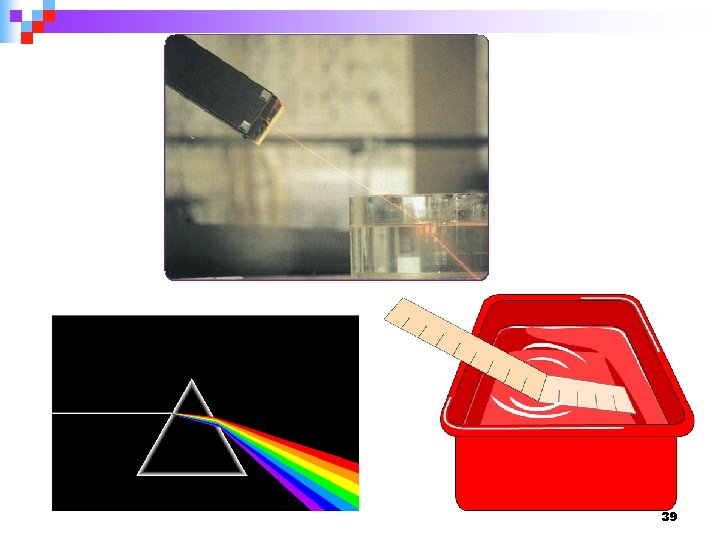
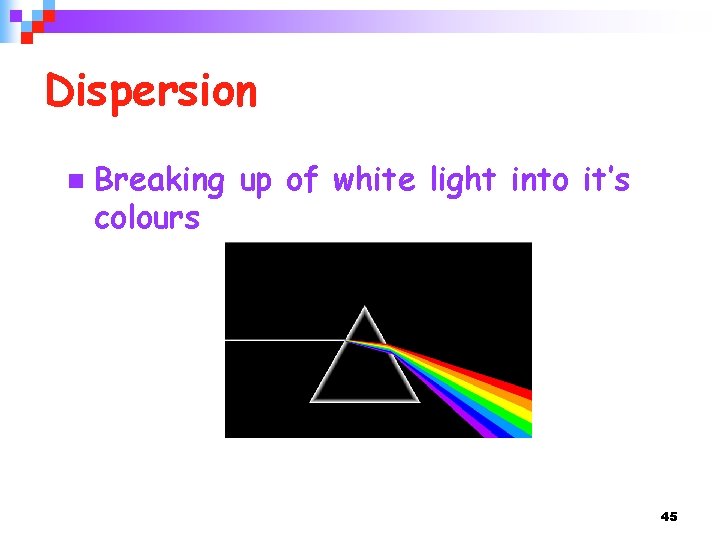
Dispersion n Breaking up of white light into it’s colours 45
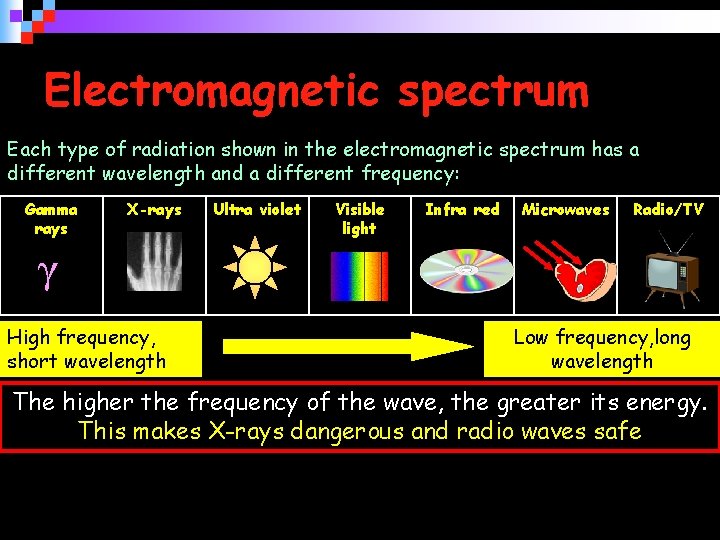
Electromagnetic spectrum Each type of radiation shown in the electromagnetic spectrum has a different wavelength and a different frequency: Gamma rays X-rays Ultra violet Visible light Infra red Microwaves Radio/TV γ High frequency, short wavelength Low frequency, long wavelength The higher the frequency of the wave, the greater its energy. This makes X-rays dangerous and radio waves safe 46
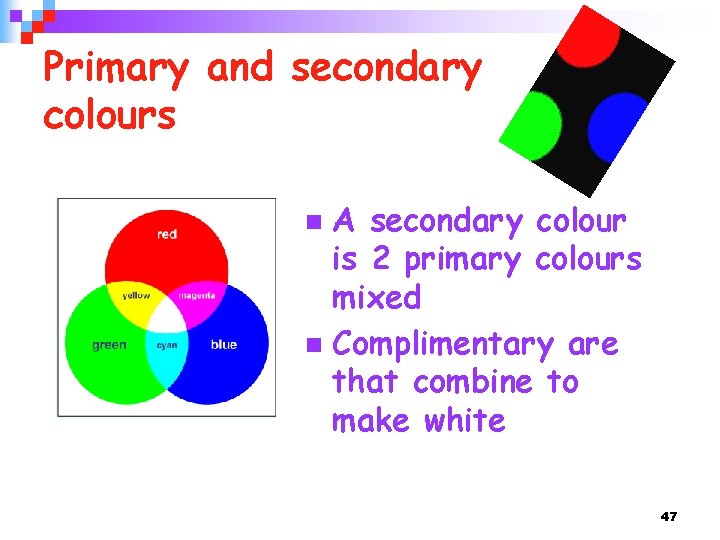
Primary and secondary colours A secondary colour is 2 primary colours mixed n Complimentary are that combine to make white n 47
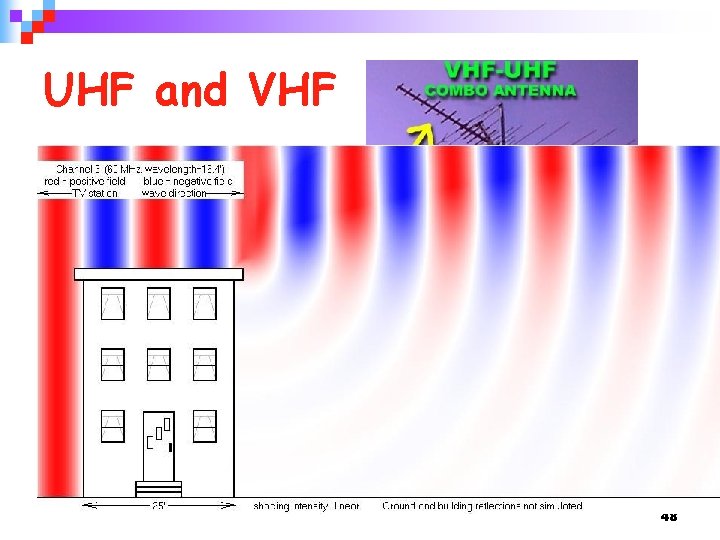
UHF and VHF 48
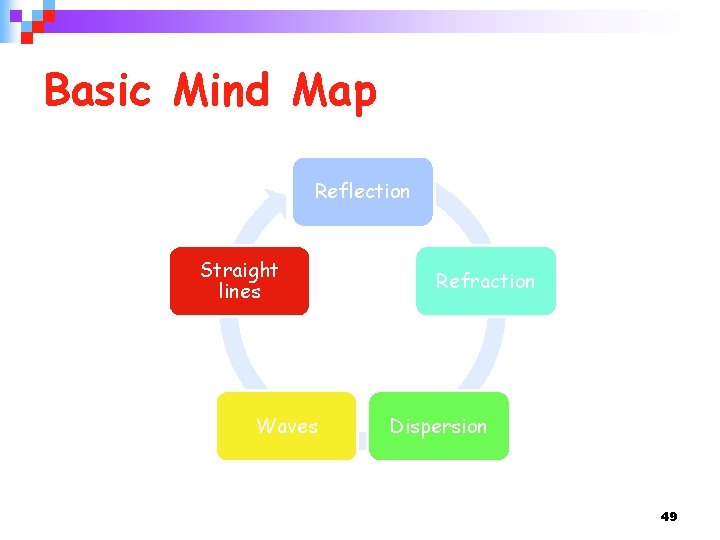
Basic Mind Map Reflection Straight lines Waves Refraction Dispersion 49
H/W P 345 n Q 1 -13 n 50