
Light Light Fundamentals Light is a transverse wave
- Slides: 26
Light
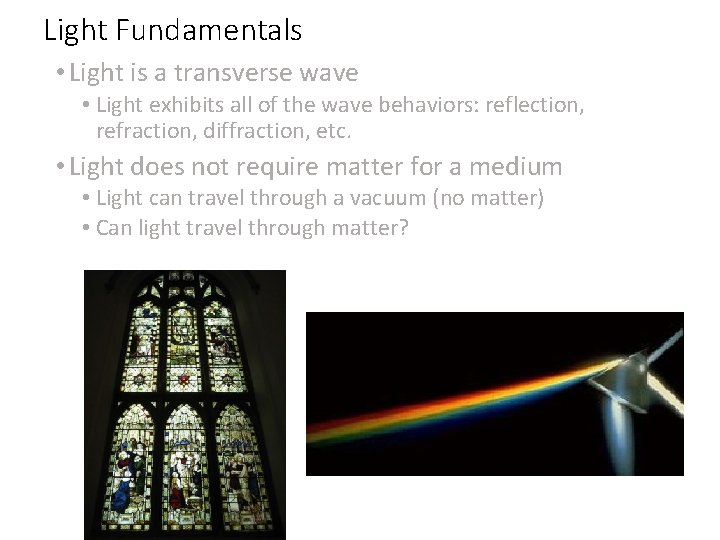
Light Fundamentals • Light is a transverse wave • Light exhibits all of the wave behaviors: reflection, refraction, diffraction, etc. • Light does not require matter for a medium • Light can travel through a vacuum (no matter) • Can light travel through matter?
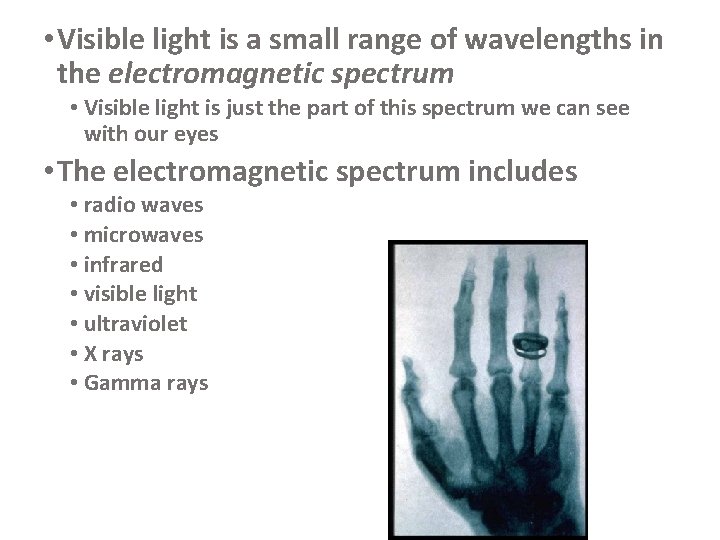
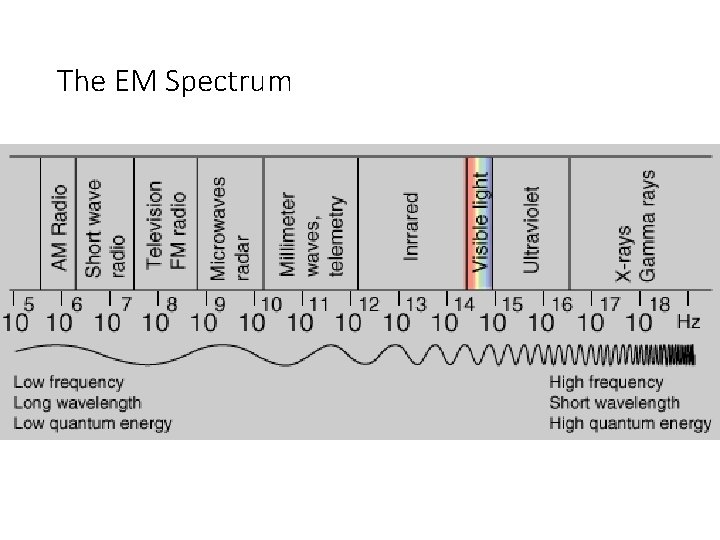
• Visible light is a small range of wavelengths in the electromagnetic spectrum • Visible light is just the part of this spectrum we can see with our eyes • The electromagnetic spectrum includes • radio waves • microwaves • infrared • visible light • ultraviolet • X rays • Gamma rays
• All electromagnetic (EM) waves travel at the same speed in a vacuum • This speed is called the speed of light and is represented by the small letter “c” • c = 3. 00 108 m/s • c = f is the wave equation for all EM waves • Example: What is the frequency of yellow light, = 556 nm? Ans: f = c/ = (3. 00 108 m/s)/(556 10 9 m) = 5. 40 1014 1/s = 5. 40 1014 Hz
The EM Spectrum
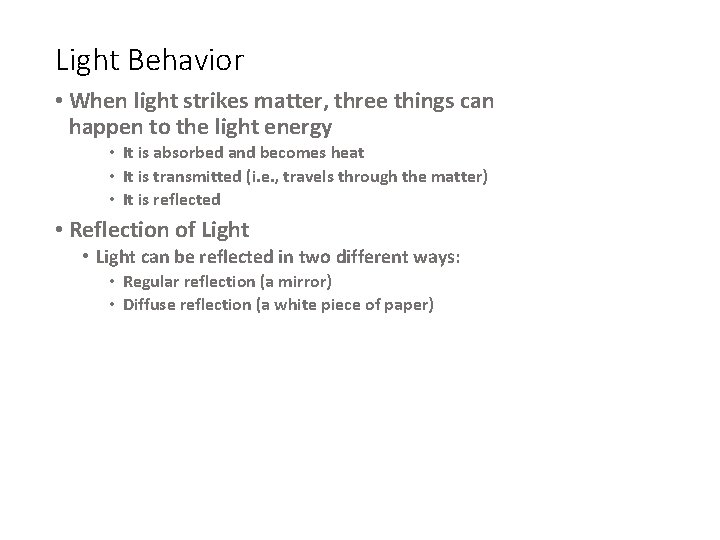
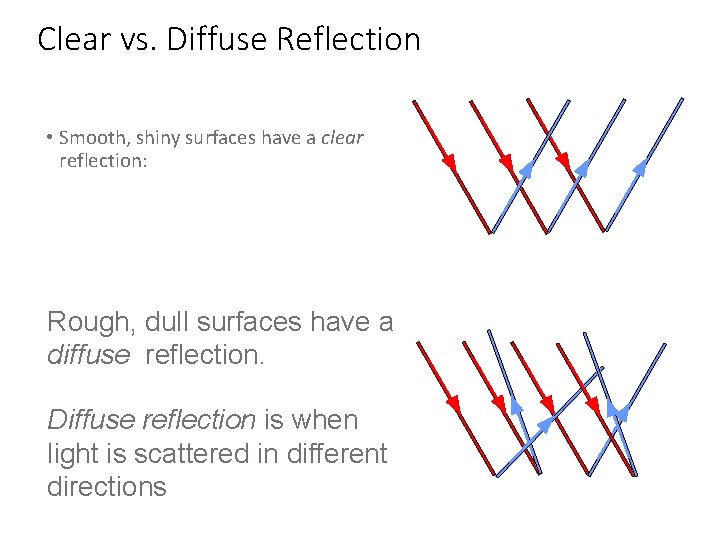
Light Behavior • When light strikes matter, three things can happen to the light energy • It is absorbed and becomes heat • It is transmitted (i. e. , travels through the matter) • It is reflected • Reflection of Light • Light can be reflected in two different ways: • Regular reflection (a mirror) • Diffuse reflection (a white piece of paper)
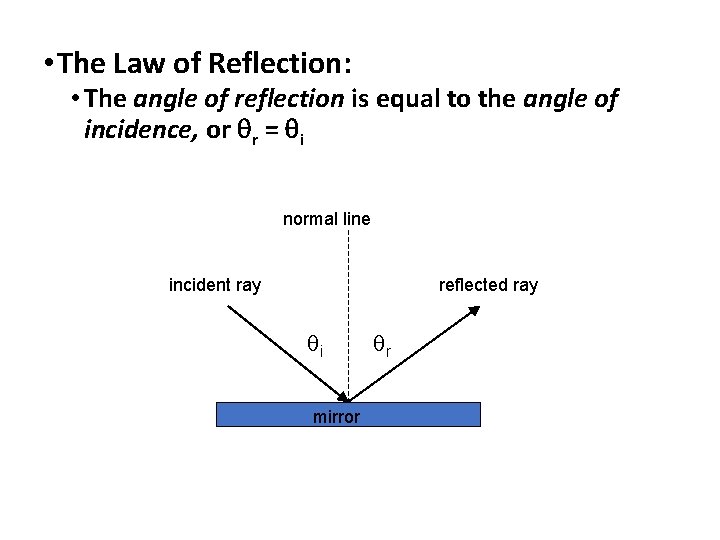
• The Law of Reflection: • The angle of reflection is equal to the angle of incidence, or r = i normal line incident ray reflected ray i mirror r
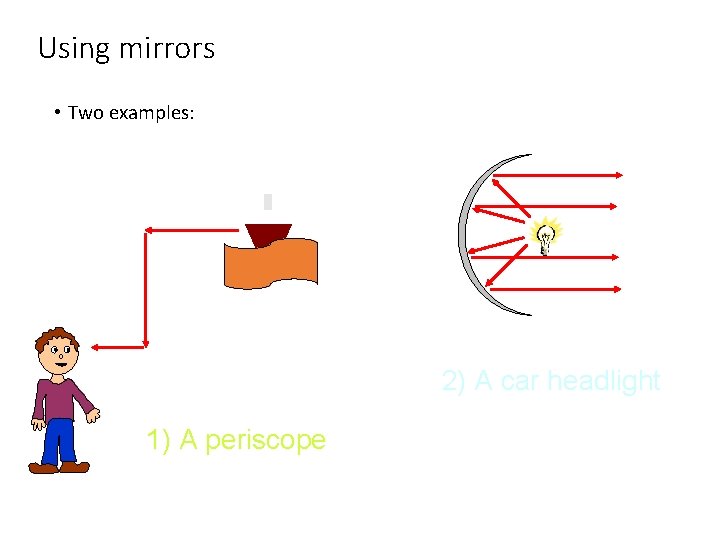
Using mirrors • Two examples: 2) A car headlight 1) A periscope
Color
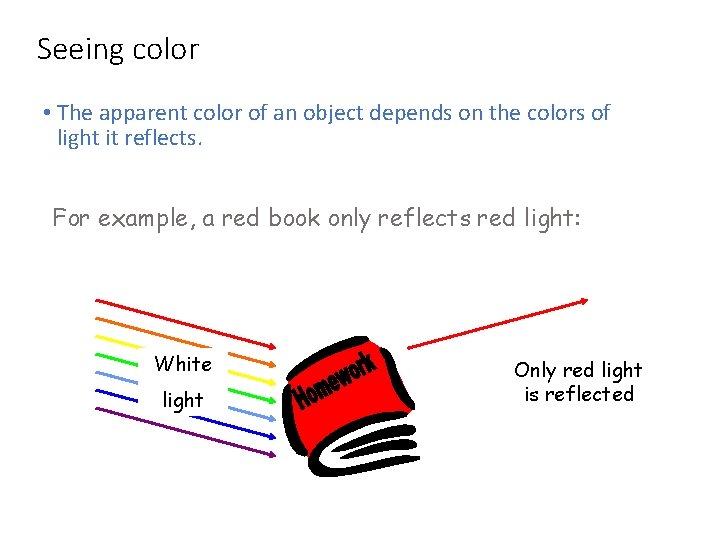
Color • What we see as color are different frequencies of visible light • The spectrum (or rainbow) is all of the colors in order of frequency (ROYGBIV) • Added together, the colors of the spectrum make white light • An object appears green because it reflects green light and absorbs the others
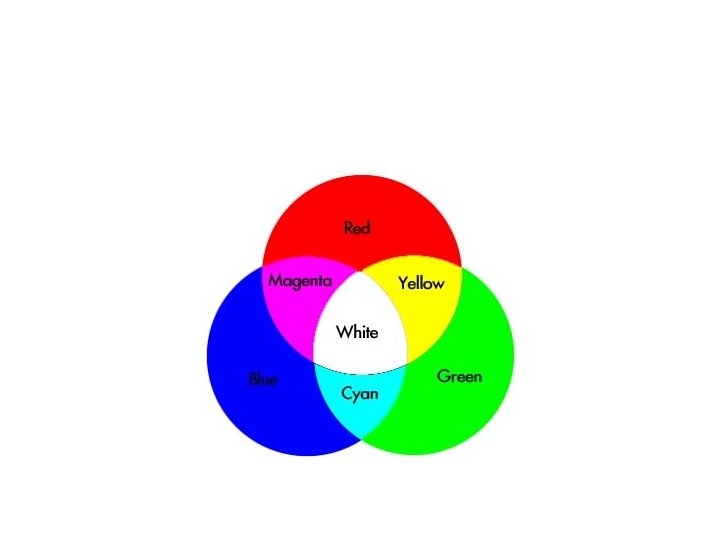
Additive Colors • Our eyes have cone cells that detect three colors: • Red • Green • Blue • These are called the additive primary colors • The additive primary colors can be combined to form the other colors
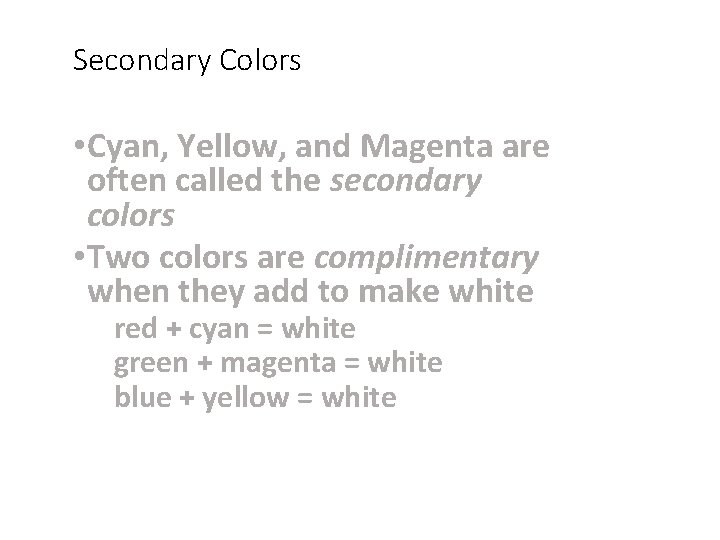
Secondary Colors • Cyan, Yellow, and Magenta are often called the secondary colors • Two colors are complimentary when they add to make white red + cyan = white green + magenta = white blue + yellow = white
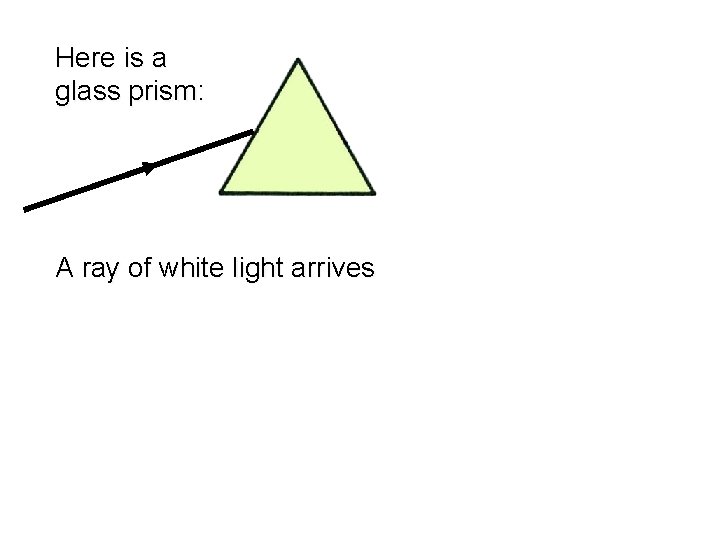
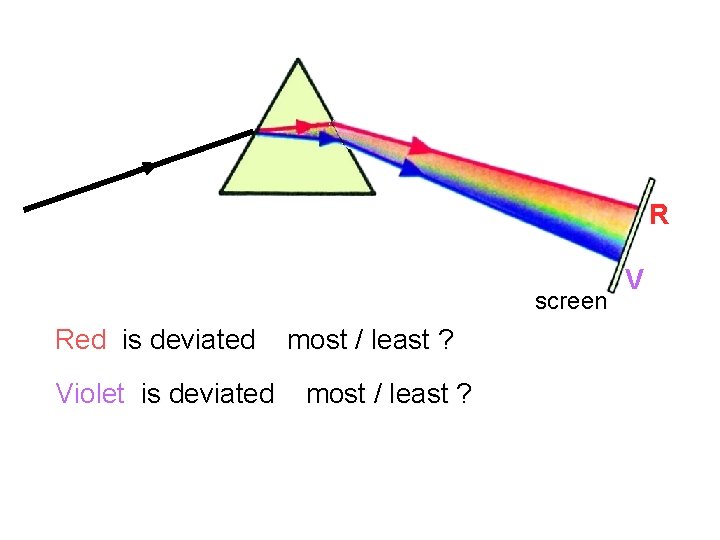
Here is a glass prism: A ray of white light arrives
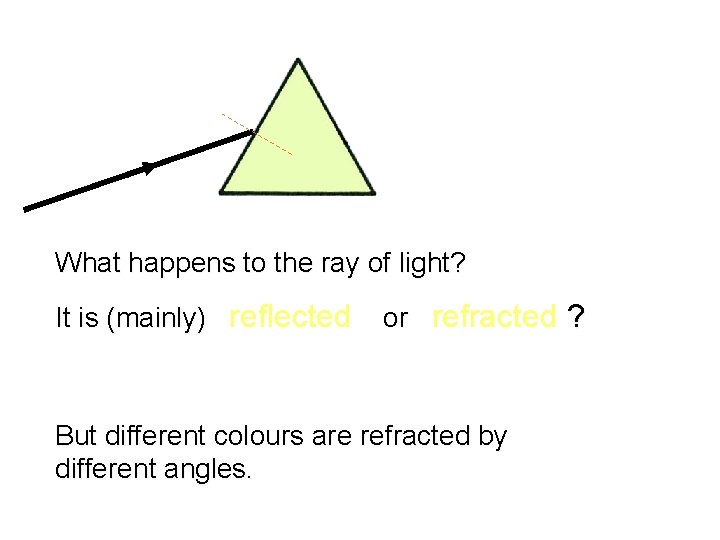
What happens to the ray of light? It is (mainly) reflected or refracted ? But different colours are refracted by different angles.
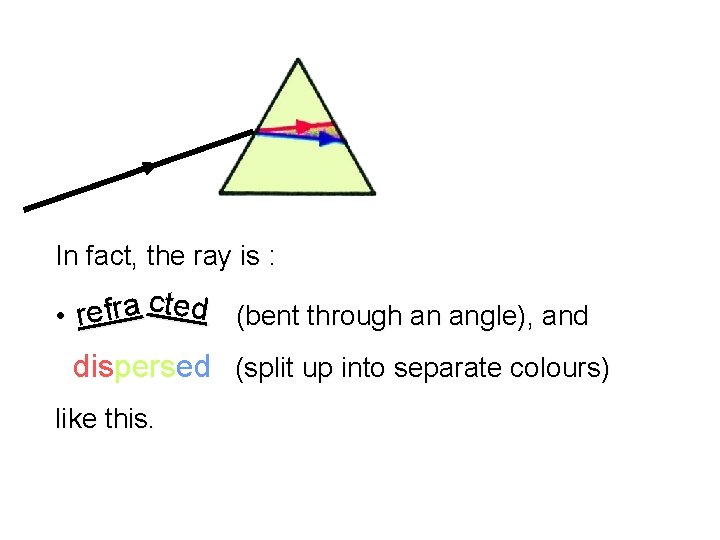
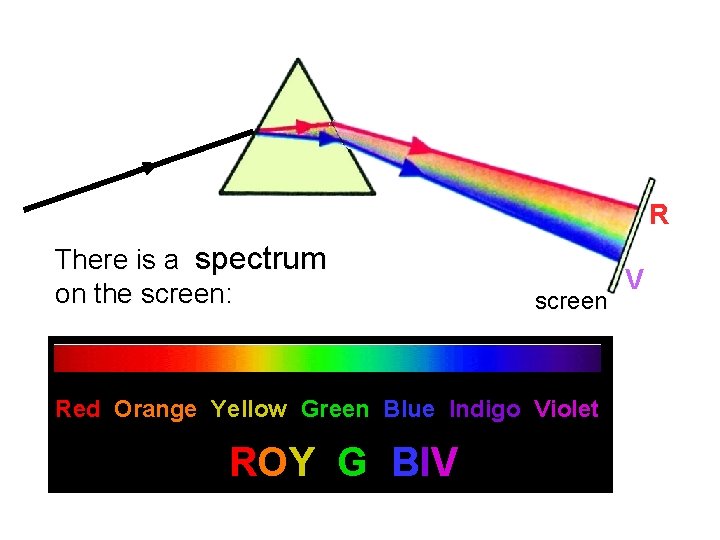
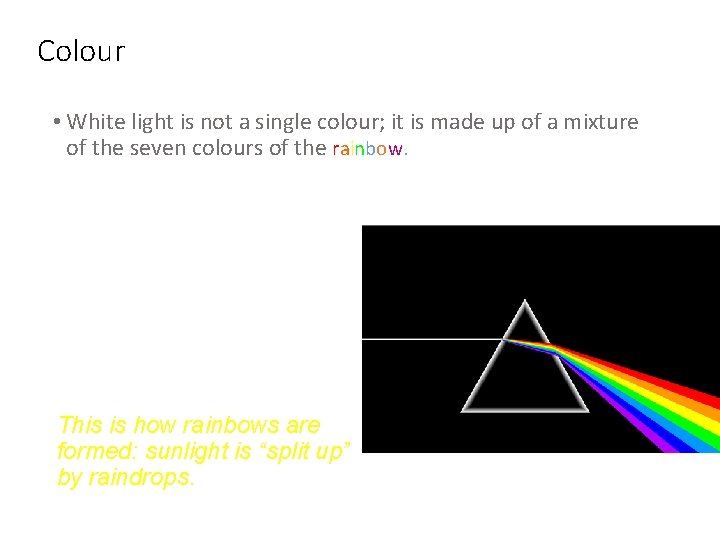
In fact, the ray is : c ted (bent through an angle), and a r f e • r • dispersed (split up into separate colours) like this.
R screen Red is deviated Violet is deviated most / least ? V
R There is a spectrum on the screen: screen Red Orange Yellow Green Blue Indigo Violet ROY G BIV V
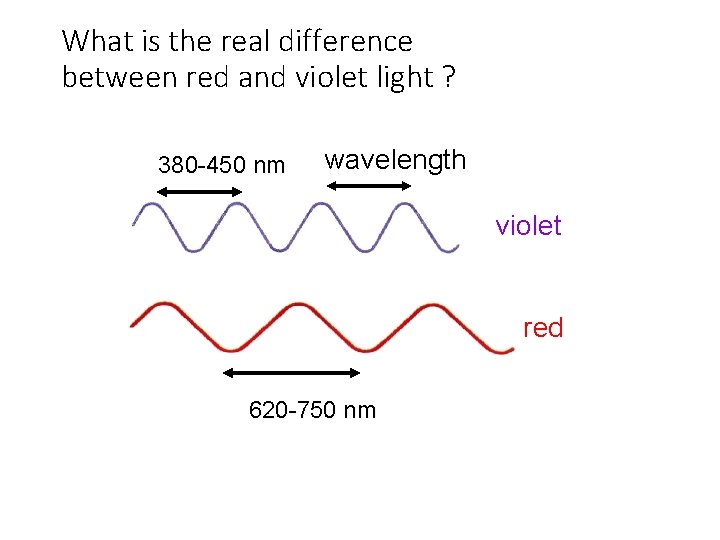
What is the real difference between red and violet light ? 380 -450 nm wavelength violet red 620 -750 nm
Clear vs. Diffuse Reflection • Smooth, shiny surfaces have a clear reflection: Rough, dull surfaces have a diffuse reflection. Diffuse reflection is when light is scattered in different directions
Colour • White light is not a single colour; it is made up of a mixture of the seven colours of the rainbow. We can demonstrate this by splitting white light with a prism: This is how rainbows are formed: sunlight is “split up” by raindrops.
Seeing color • The apparent color of an object depends on the colors of light it reflects. For example, a red book only reflects red light: White light Only red light is reflected
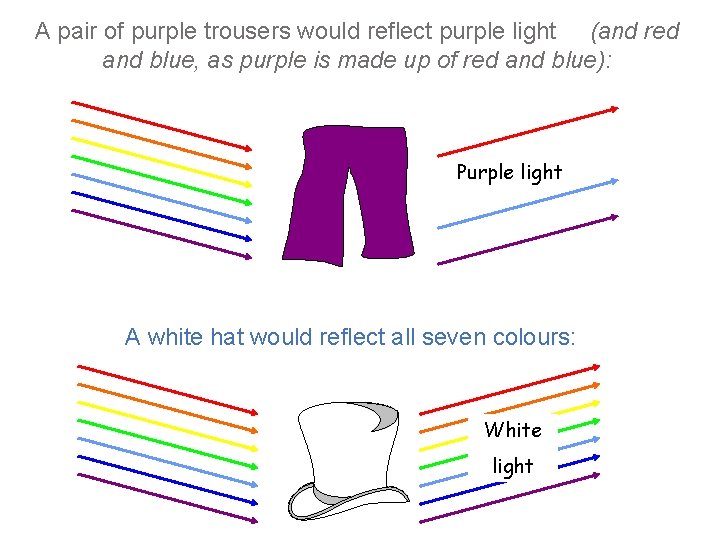
A pair of purple trousers would reflect purple light (and red and blue, as purple is made up of red and blue): Purple light A white hat would reflect all seven colours: White light
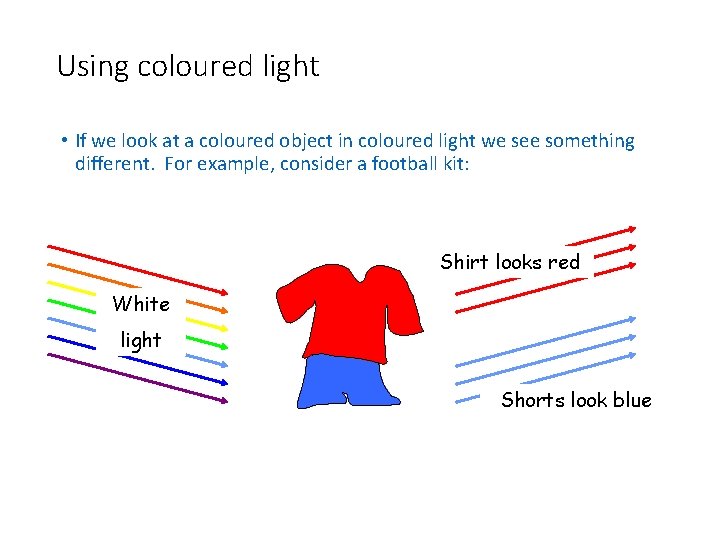
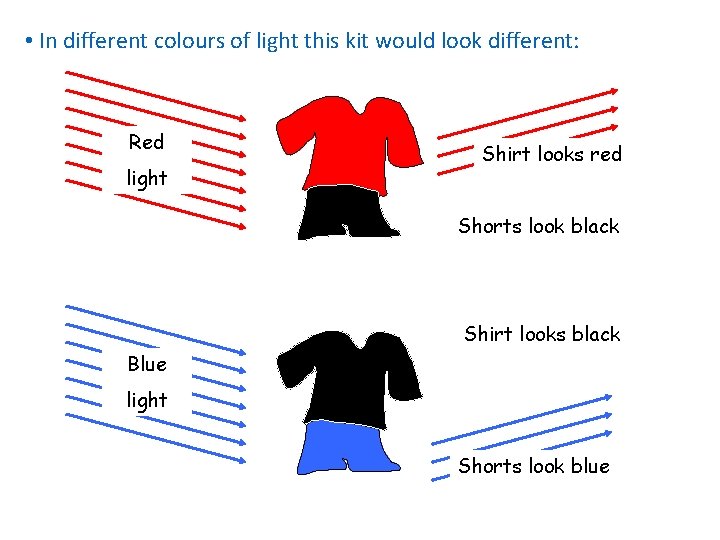
Using coloured light • If we look at a coloured object in coloured light we see something different. For example, consider a football kit: Shirt looks red White light Shorts look blue
• In different colours of light this kit would look different: Red light Shirt looks red Shorts look black Shirt looks black Blue light Shorts look blue
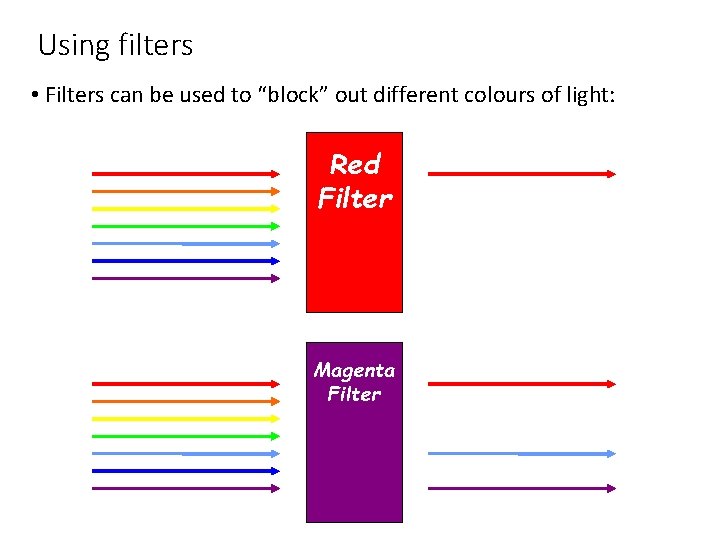
Using filters • Filters can be used to “block” out different colours of light: Red Filter Magenta Filter