
Light is Radiant Energy Radiant Energy is energy
- Slides: 10
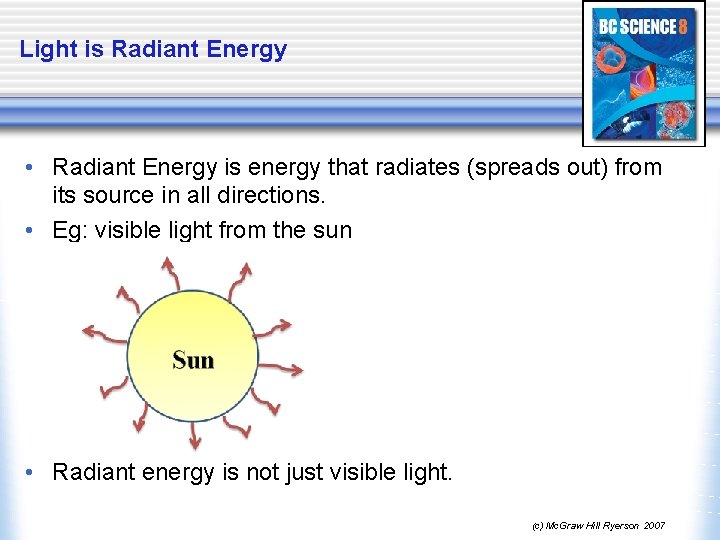
Light is Radiant Energy • Radiant Energy is energy that radiates (spreads out) from its source in all directions. • Eg: visible light from the sun • Radiant energy is not just visible light. (c) Mc. Graw Hill Ryerson 2007
Electromagnetic Radiation • Other sources of energy give off waves of energy you cannot see. • These waves transport energy by the vibration of electrical and magnetic field and are called electromagnetic radiation. (c) Mc. Graw Hill Ryerson 2007
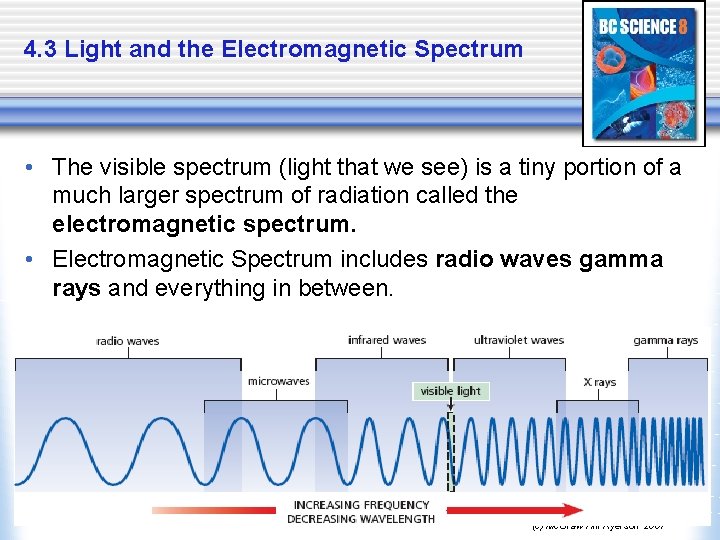
4. 3 Light and the Electromagnetic Spectrum • The visible spectrum (light that we see) is a tiny portion of a much larger spectrum of radiation called the electromagnetic spectrum. • Electromagnetic Spectrum includes radio waves gamma rays and everything in between. See pages 152 - 154 (c) Mc. Graw Hill Ryerson 2007
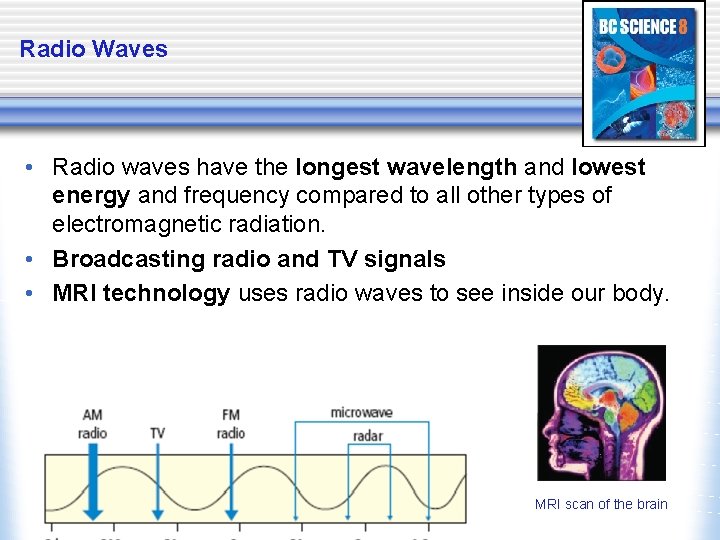
Radio Waves • Radio waves have the longest wavelength and lowest energy and frequency compared to all other types of electromagnetic radiation. • Broadcasting radio and TV signals • MRI technology uses radio waves to see inside our body. MRI scan of the brain
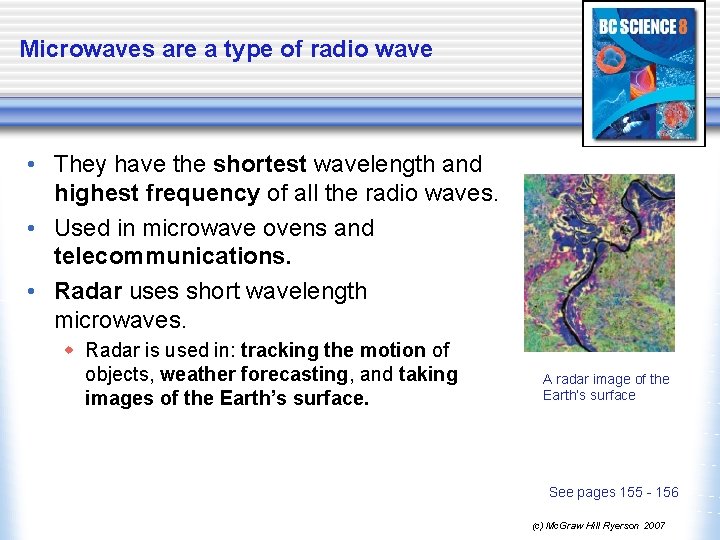
Microwaves are a type of radio wave • They have the shortest wavelength and highest frequency of all the radio waves. • Used in microwave ovens and telecommunications. • Radar uses short wavelength microwaves. w Radar is used in: tracking the motion of objects, weather forecasting, and taking images of the Earth’s surface. A radar image of the Earth’s surface See pages 155 - 156 (c) Mc. Graw Hill Ryerson 2007
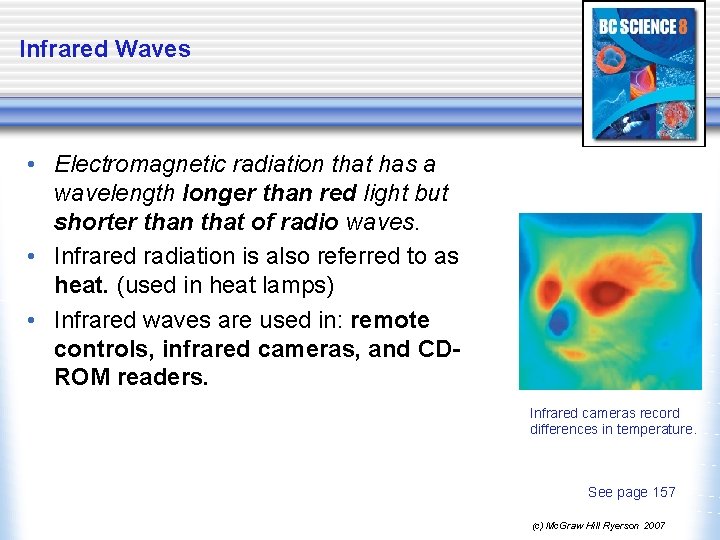
Infrared Waves • Electromagnetic radiation that has a wavelength longer than red light but shorter than that of radio waves. • Infrared radiation is also referred to as heat. (used in heat lamps) • Infrared waves are used in: remote controls, infrared cameras, and CDROM readers. Infrared cameras record differences in temperature. See page 157 (c) Mc. Graw Hill Ryerson 2007
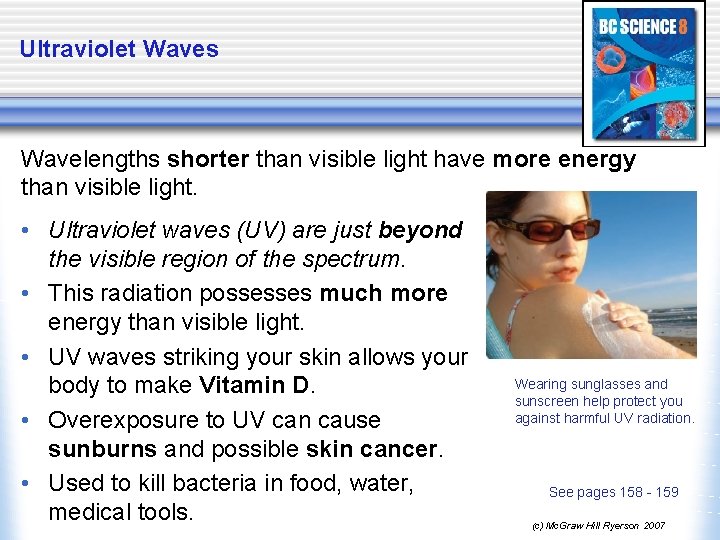
Ultraviolet Waves Wavelengths shorter than visible light have more energy than visible light. • Ultraviolet waves (UV) are just beyond the visible region of the spectrum. • This radiation possesses much more energy than visible light. • UV waves striking your skin allows your body to make Vitamin D. • Overexposure to UV can cause sunburns and possible skin cancer. • Used to kill bacteria in food, water, medical tools. Wearing sunglasses and sunscreen help protect you against harmful UV radiation. See pages 158 - 159 (c) Mc. Graw Hill Ryerson 2007
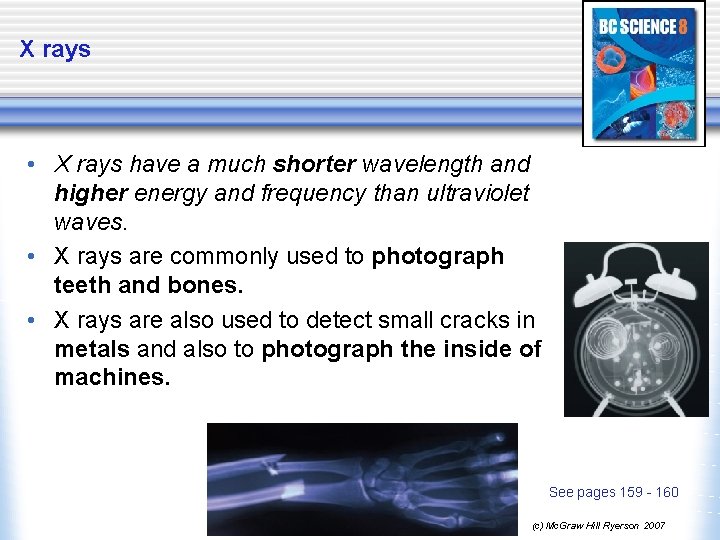
X rays • X rays have a much shorter wavelength and higher energy and frequency than ultraviolet waves. • X rays are commonly used to photograph teeth and bones. • X rays are also used to detect small cracks in metals and also to photograph the inside of machines. See pages 159 - 160 (c) Mc. Graw Hill Ryerson 2007
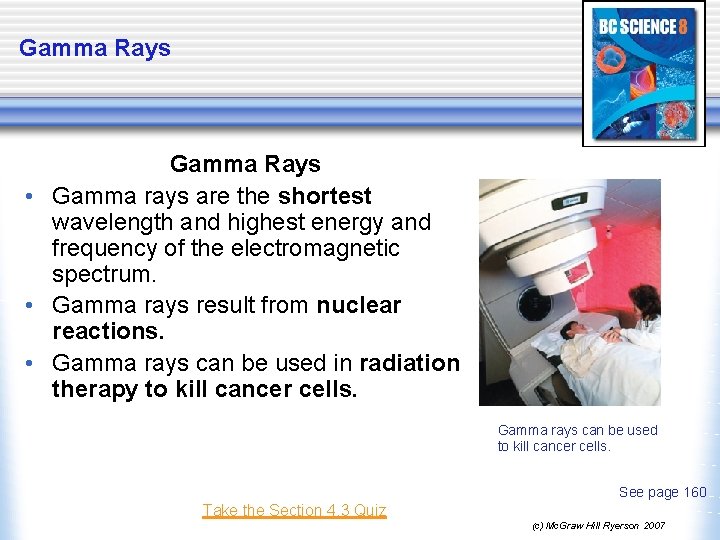
Gamma Rays • Gamma rays are the shortest wavelength and highest energy and frequency of the electromagnetic spectrum. • Gamma rays result from nuclear reactions. • Gamma rays can be used in radiation therapy to kill cancer cells. Gamma rays can be used to kill cancer cells. See page 160 Take the Section 4. 3 Quiz (c) Mc. Graw Hill Ryerson 2007
Check your Understanding 1. Name TWO forms of EMR that have shorter wavelengths than visible light. 2. Name Two forms of EMR that have longer wavelengths than visible light. 3. Which form of EMR has the LONGEST wavelength? 4. Which form of EMR has the highest energy? 5. Which EMR is the most damaging? 6. Other than cooking food, what else are microwaves used for? (c) Mc. Graw Hill Ryerson 2007