
Light Interference the Double Slit Experiment By Zach
Light Interference & the Double Slit Experiment By Zach Schmidt & Neekaan Oshidary
Light: A Particle or Wave n Different tests support different sides of the argument n Today: dual theory n Young Experiment
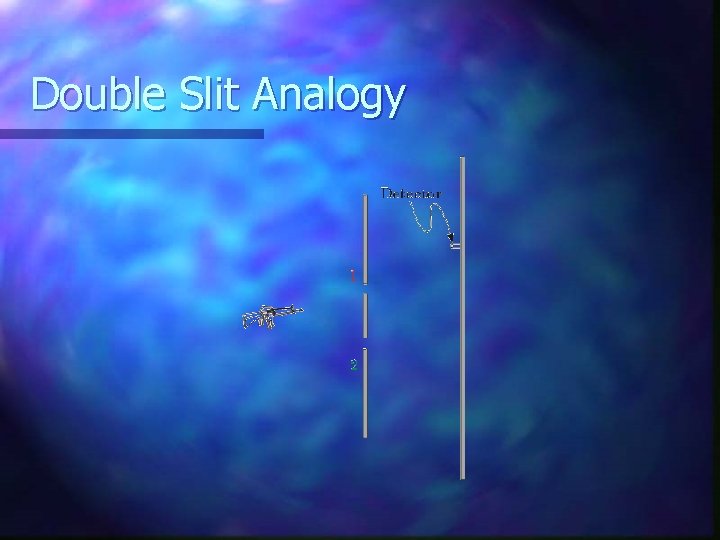
Double Slit Analogy

Particles Through One Slit
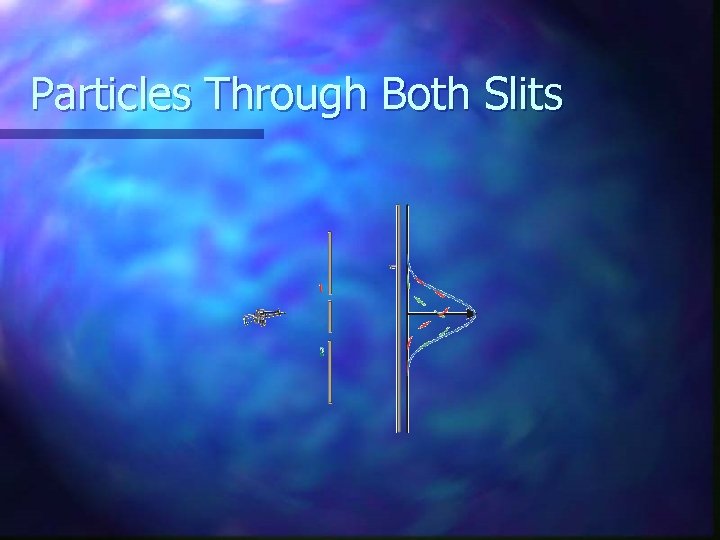
Particles Through Both Slits
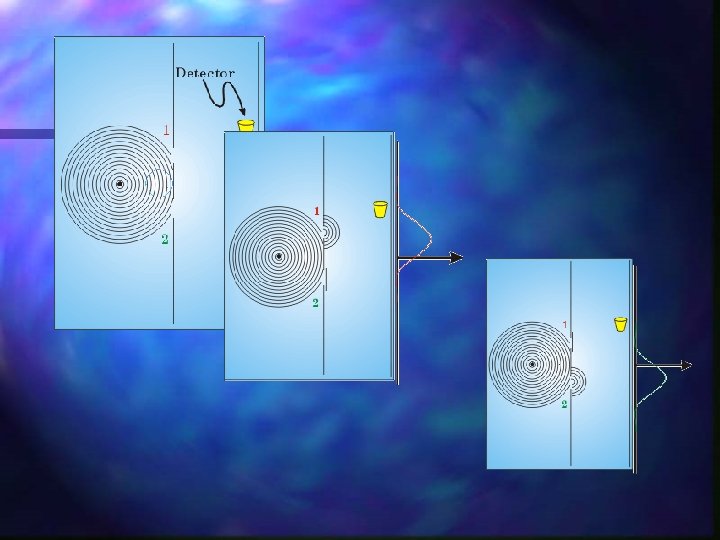
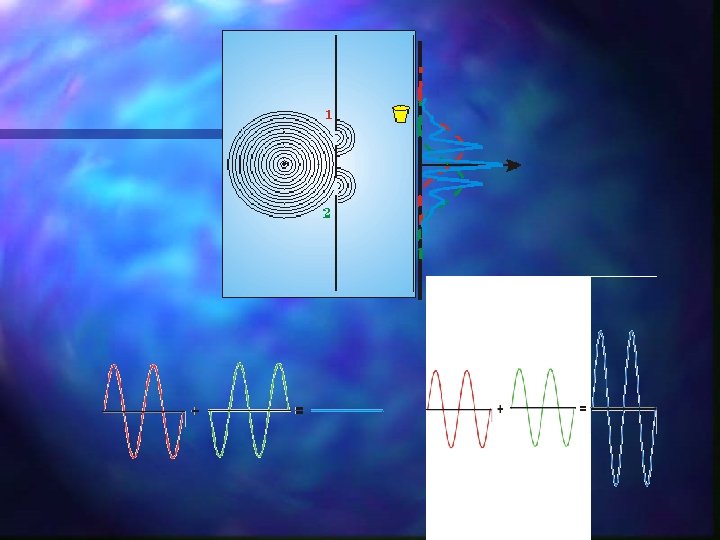
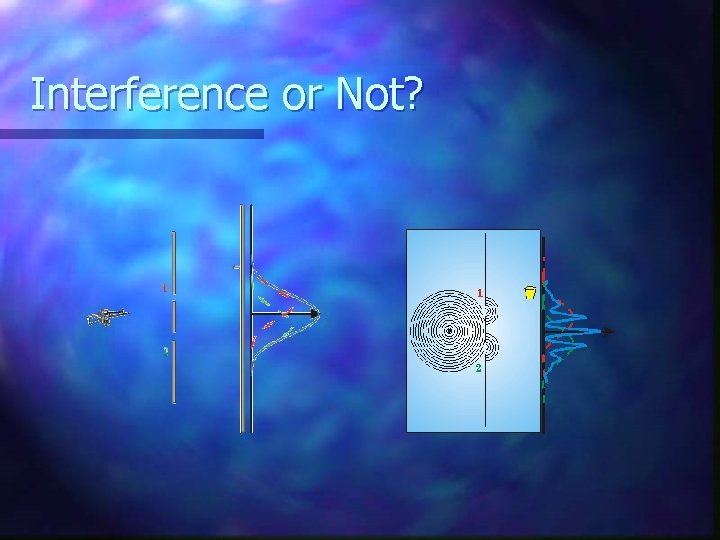
Interference or Not?
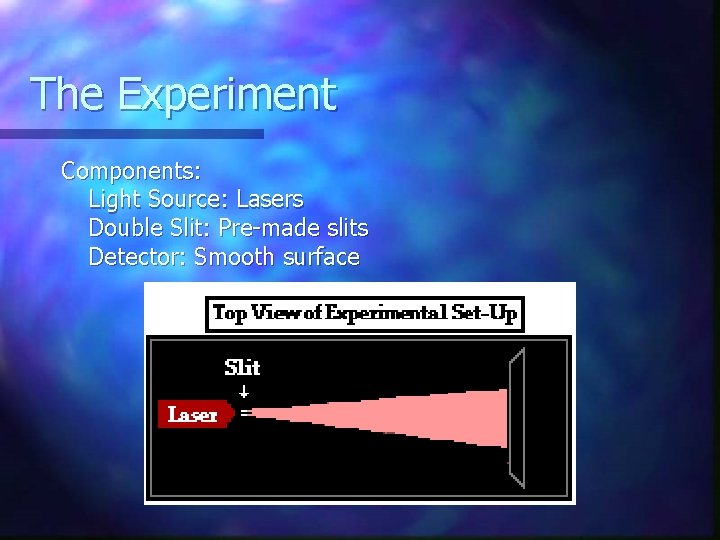
The Experiment Components: Light Source: Lasers Double Slit: Pre-made slits Detector: Smooth surface
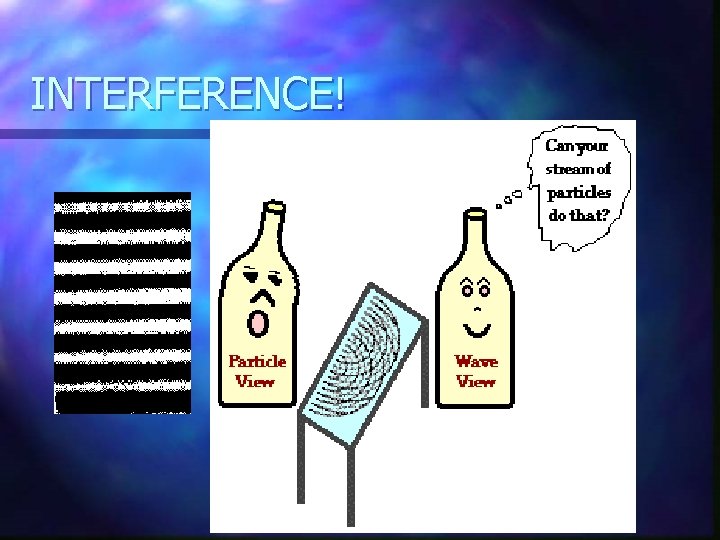
INTERFERENCE!
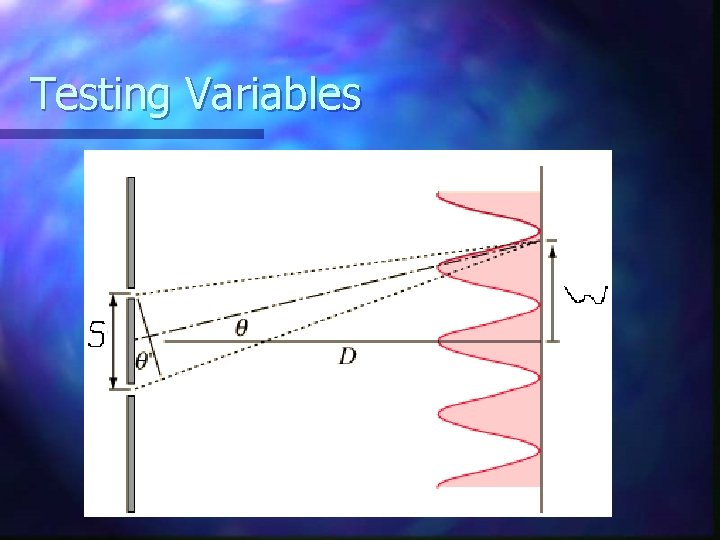
Testing Variables
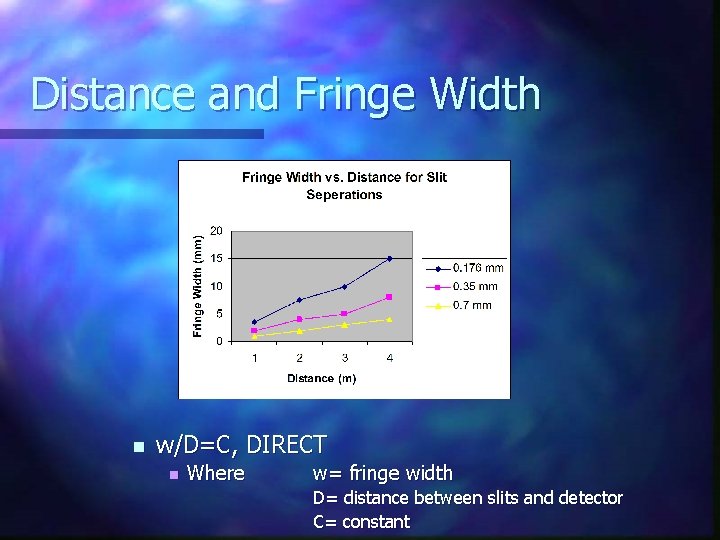
Distance and Fringe Width n w/D=C, DIRECT n Where w= fringe width D= distance between slits and detector C= constant
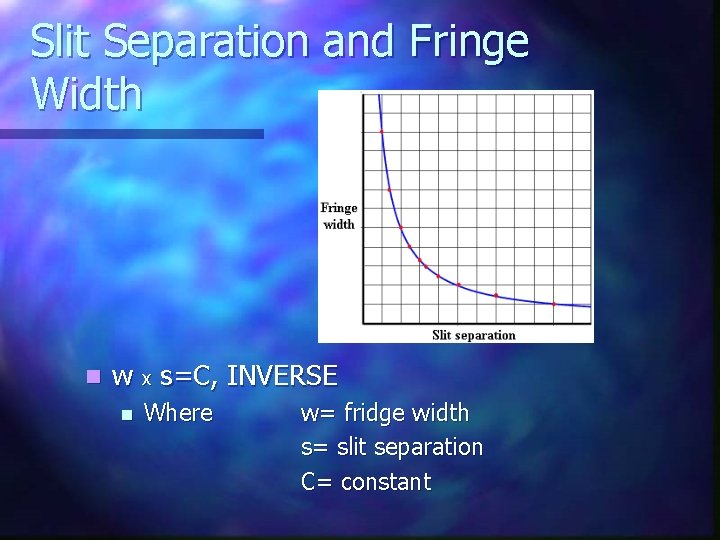
Slit Separation and Fringe Width n w x s=C, INVERSE n Where w= fridge width s= slit separation C= constant
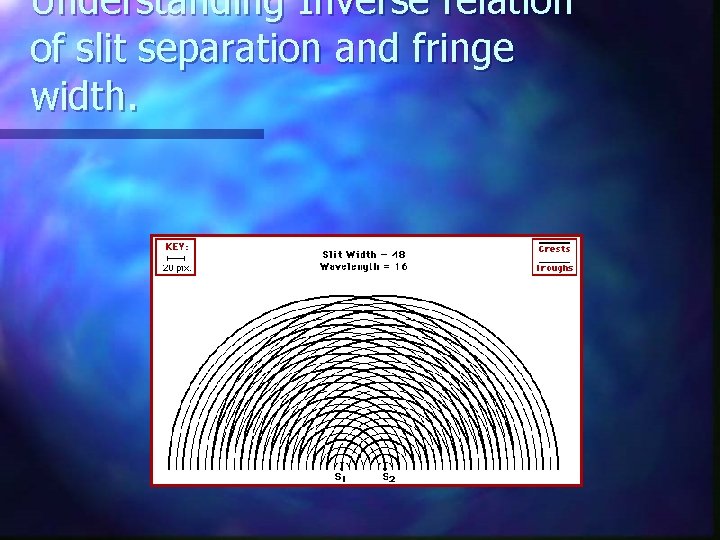
Understanding Inverse relation of slit separation and fringe width.
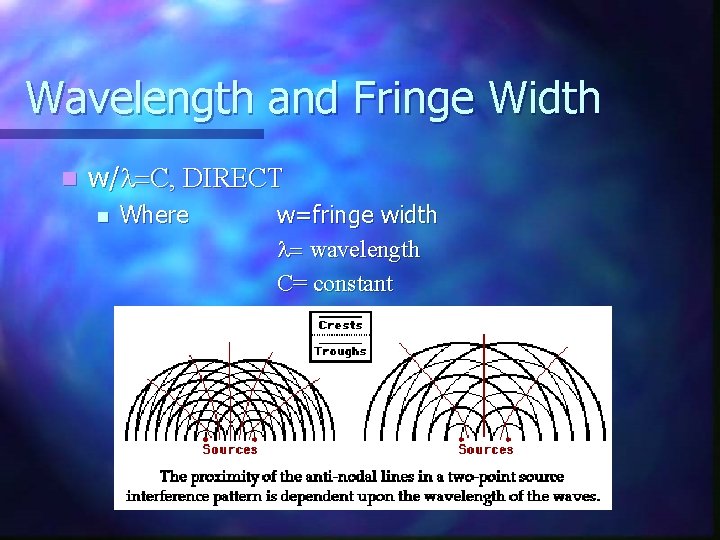
Wavelength and Fringe Width n w/l=C, DIRECT n Where w=fringe width l= wavelength C= constant
Recap of relationships n w/D=C, Distance: direct n w*s=C, Slit separation: inverse n w/l=C, Wavelength: direct n Can we combine these into one larger equation?
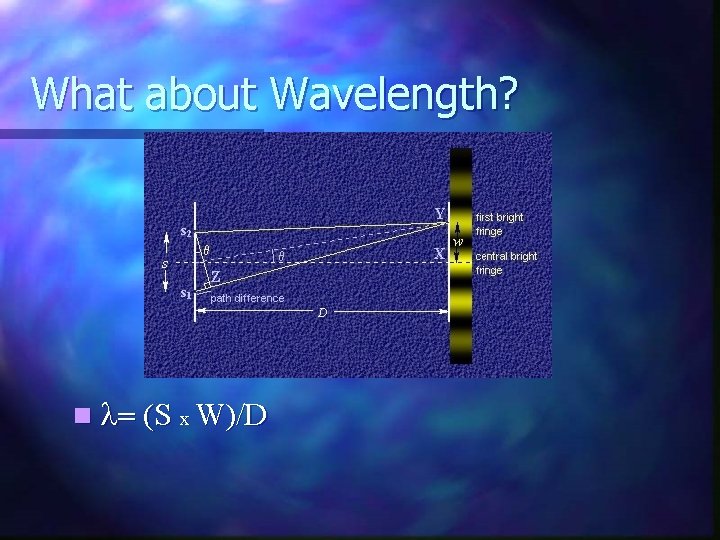
What about Wavelength? n l= (S x W)/D
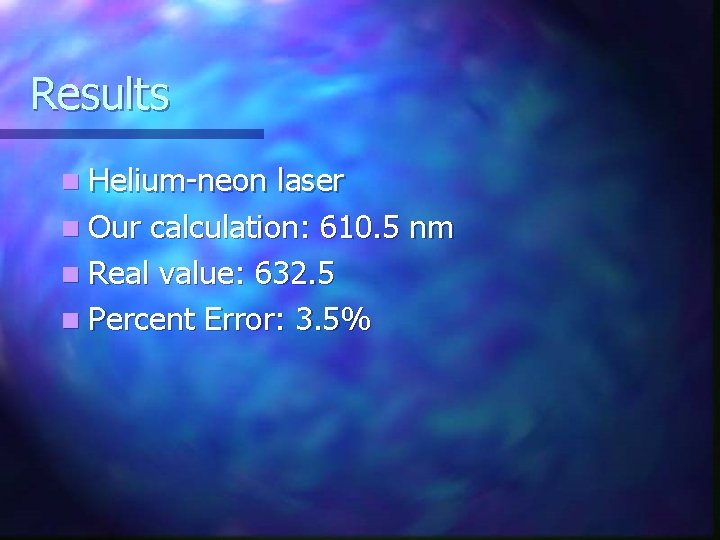
Results n Helium-neon laser n Our calculation: 610. 5 nm n Real value: 632. 5 n Percent Error: 3. 5%
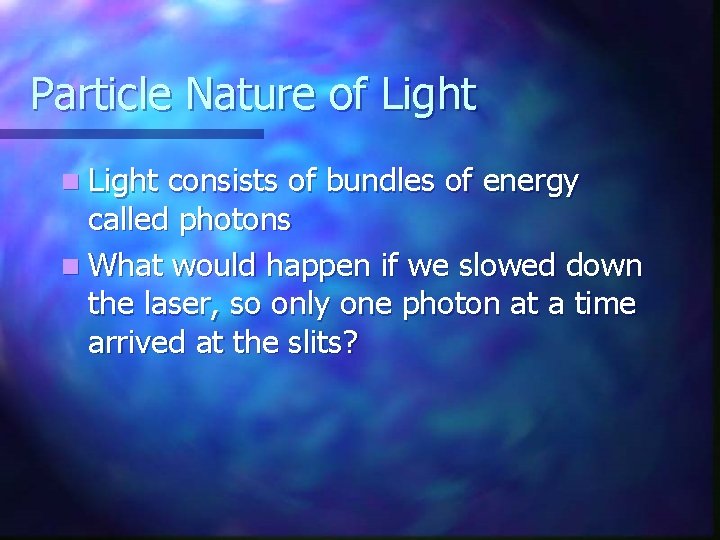
Particle Nature of Light n Light consists of bundles of energy called photons n What would happen if we slowed down the laser, so only one photon at a time arrived at the slits?
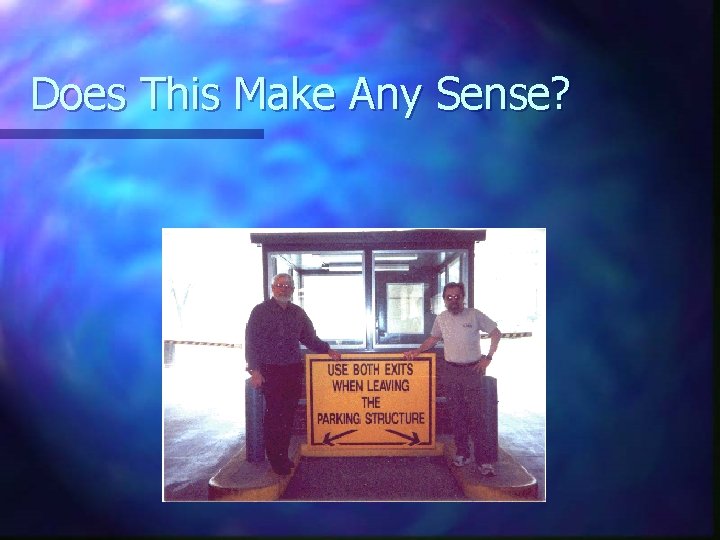
Does This Make Any Sense?
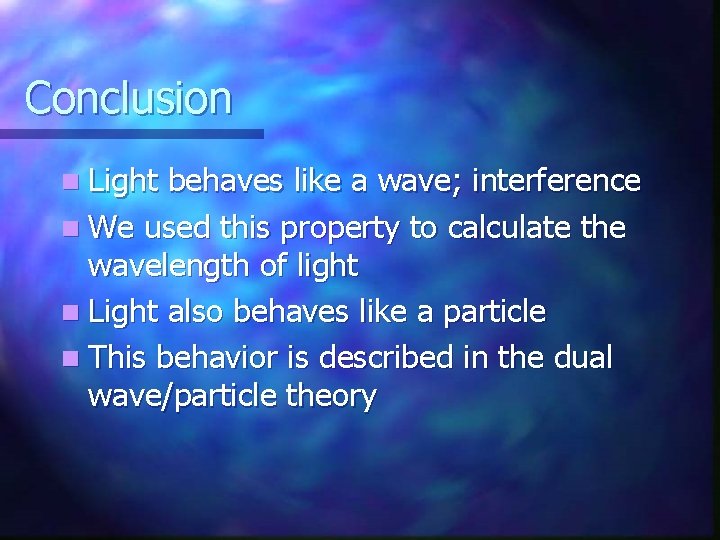
Conclusion n Light behaves like a wave; interference n We used this property to calculate the wavelength of light n Light also behaves like a particle n This behavior is described in the dual wave/particle theory
THE END!
- Slides: 22