
Light How light travels Light travels in waves
- Slides: 4
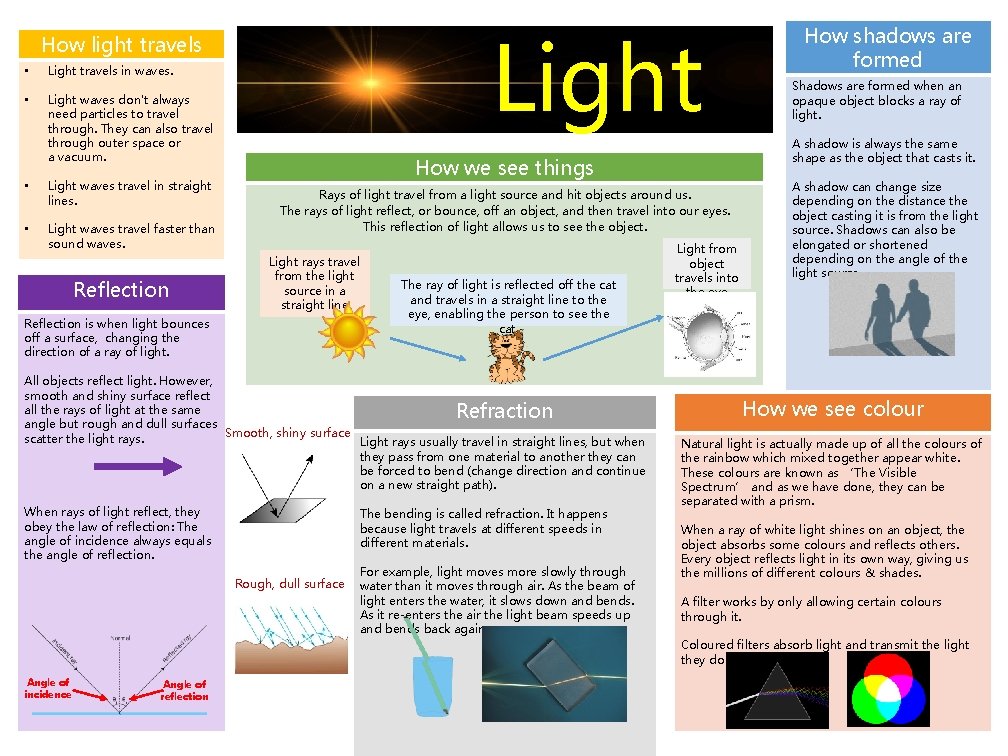
Light How light travels • Light travels in waves. • Light waves don't always need particles to travel through. They can also travel through outer space or a vacuum. • Light waves travel in straight lines. • Light waves travel faster than sound waves. Reflection Rays of light travel from a light source and hit objects around us. The rays of light reflect, or bounce, off an object, and then travel into our eyes. This reflection of light allows us to see the object. Reflection is when light bounces off a surface, changing the direction of a ray of light. The ray of light is reflected off the cat and travels in a straight line to the eye, enabling the person to see the cat. All objects reflect light. However, smooth and shiny surface reflect all the rays of light at the same angle but rough and dull surfaces Smooth, shiny surface scatter the light rays. Light rays usually travel in straight lines, but when they pass from one material to another they can be forced to bend (change direction and continue on a new straight path). Refraction When rays of light reflect, they obey the law of reflection: The angle of incidence always equals the angle of reflection. The bending is called refraction. It happens because light travels at different speeds in different materials. Rough, dull surface For example, light moves more slowly through water than it moves through air. As the beam of light enters the water, it slows down and bends. As it re-enters the air the light beam speeds up and bends back again. Shadows are formed when an opaque object blocks a ray of light. A shadow is always the same shape as the object that casts it. How we see things Light rays travel from the light source in a straight line How shadows are formed Light from object travels into the eye A shadow can change size depending on the distance the object casting it is from the light source. Shadows can also be elongated or shortened depending on the angle of the light source. How we see colour Natural light is actually made up of all the colours of the rainbow which mixed together appear white. These colours are known as ‘The Visible Spectrum’ and as we have done, they can be separated with a prism. When a ray of white light shines on an object, the object absorbs some colours and reflects others. Every object reflects light in its own way, giving us the millions of different colours & shades. A filter works by only allowing certain colours through it. Coloured filters absorb light and transmit the light they don’t absorb. Angle of incidence Angle of reflection
Colour As we now know, white light is actually made up of all the colours of the rainbow and this is called the ‘visible spectrum’. But how do we see the colour of objects? When a ray of white light shines on an object, the object absorbs some colours and reflects others. Every object reflects light in its own way, giving us the millions of different colours & shades.
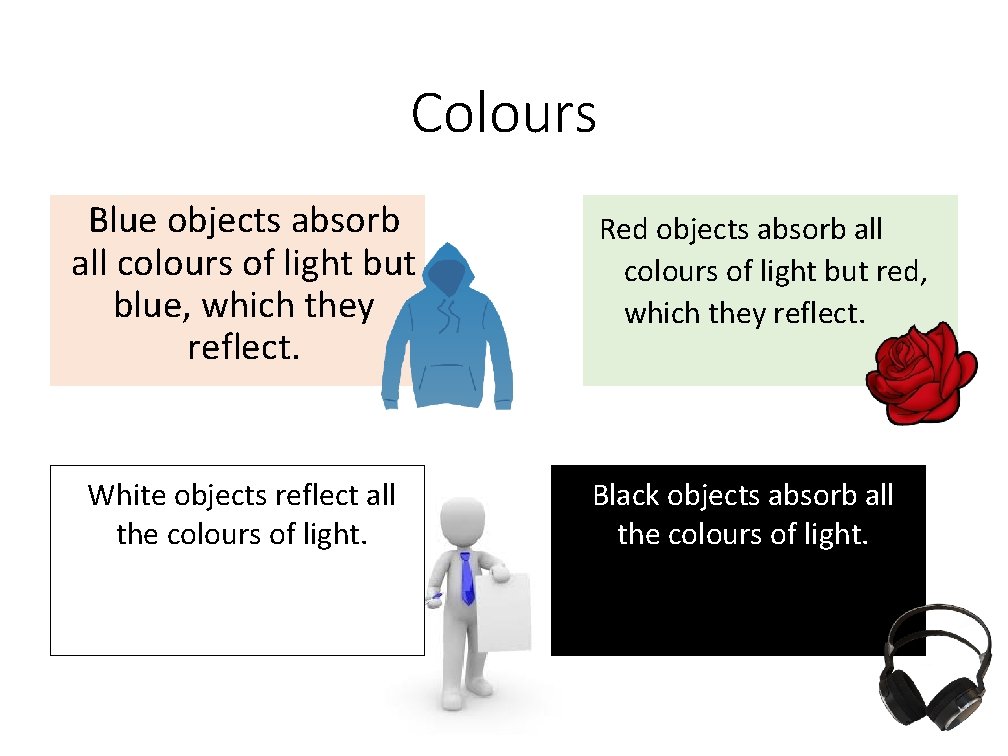
Colours Blue objects absorb all colours of light but blue, which they reflect. White objects reflect all the colours of light. Red objects absorb all colours of light but red, which they reflect. Black objects absorb all the colours of light.
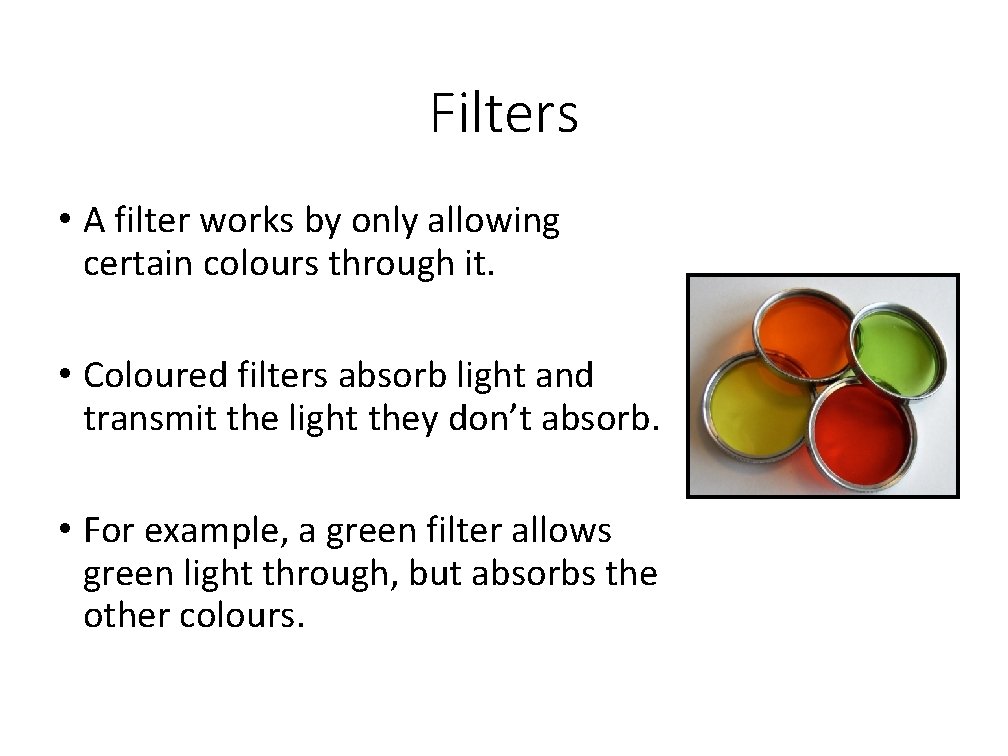
Filters • A filter works by only allowing certain colours through it. • Coloured filters absorb light and transmit the light they don’t absorb. • For example, a green filter allows green light through, but absorbs the other colours.