
Light Fields in Ray and Wave Optics Introduction
- Slides: 5
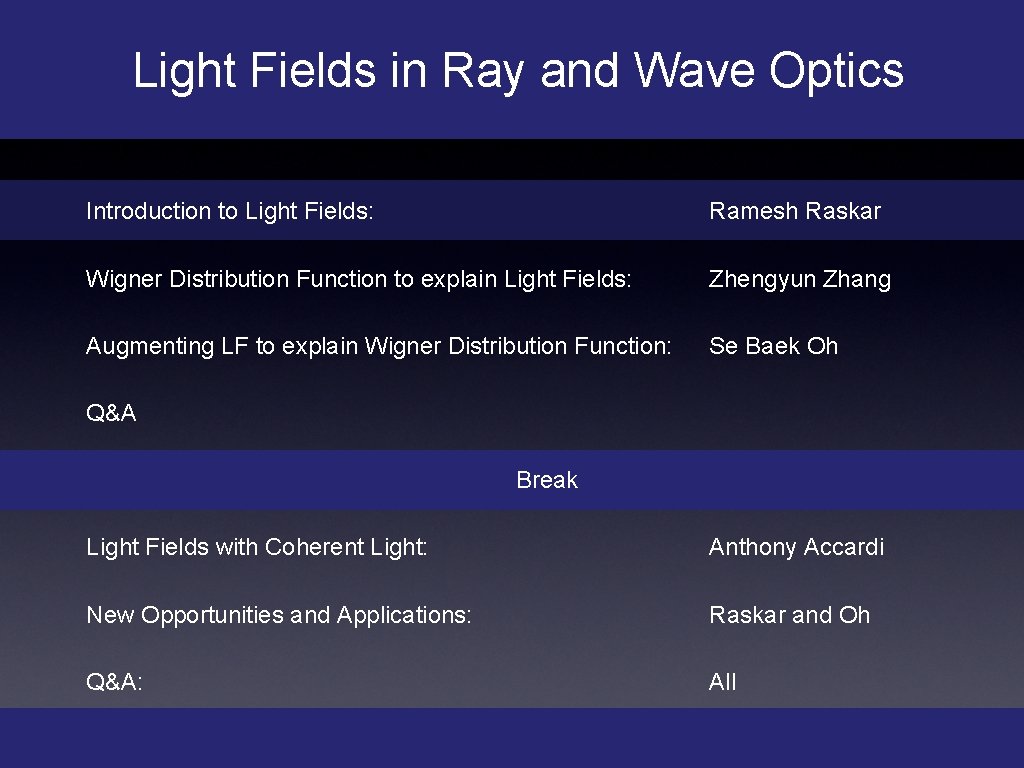
Light Fields in Ray and Wave Optics Introduction to Light Fields: Ramesh Raskar Wigner Distribution Function to explain Light Fields: Zhengyun Zhang Augmenting LF to explain Wigner Distribution Function: Se Baek Oh Q&A Break Light Fields with Coherent Light: Anthony Accardi New Opportunities and Applications: Raskar and Oh Q&A: All
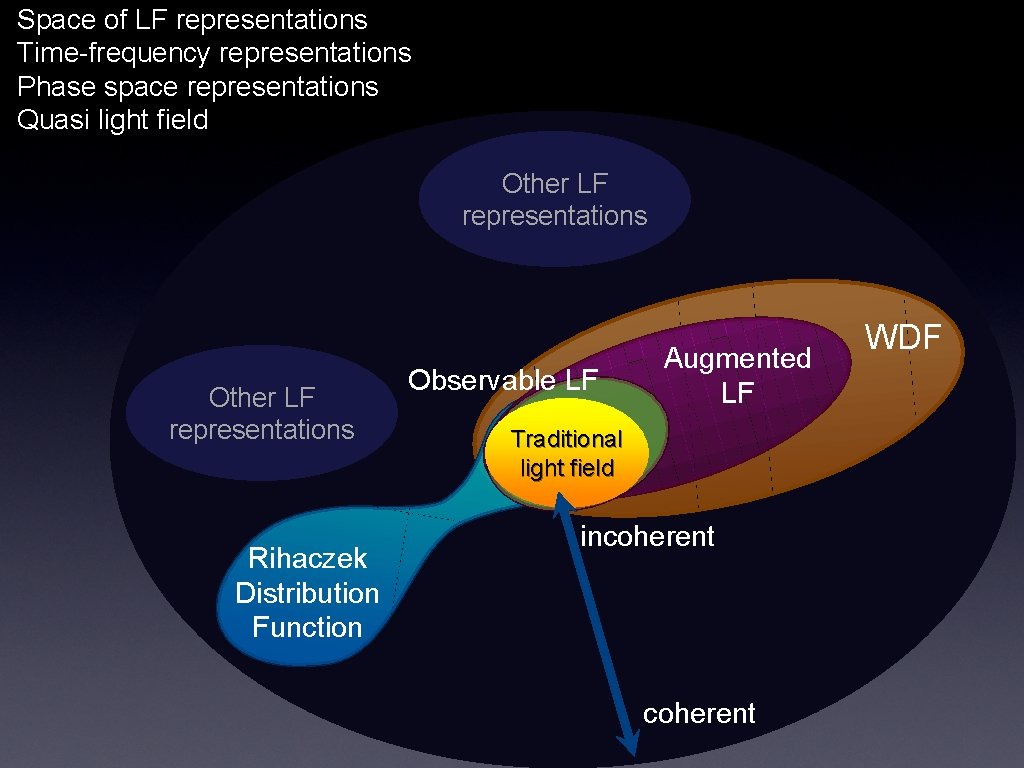
Space of LF representations Time-frequency representations Phase space representations Quasi light field Other LF representations Rihaczek Distribution Function Observable LF Augmented LF Traditional light field incoherent WDF
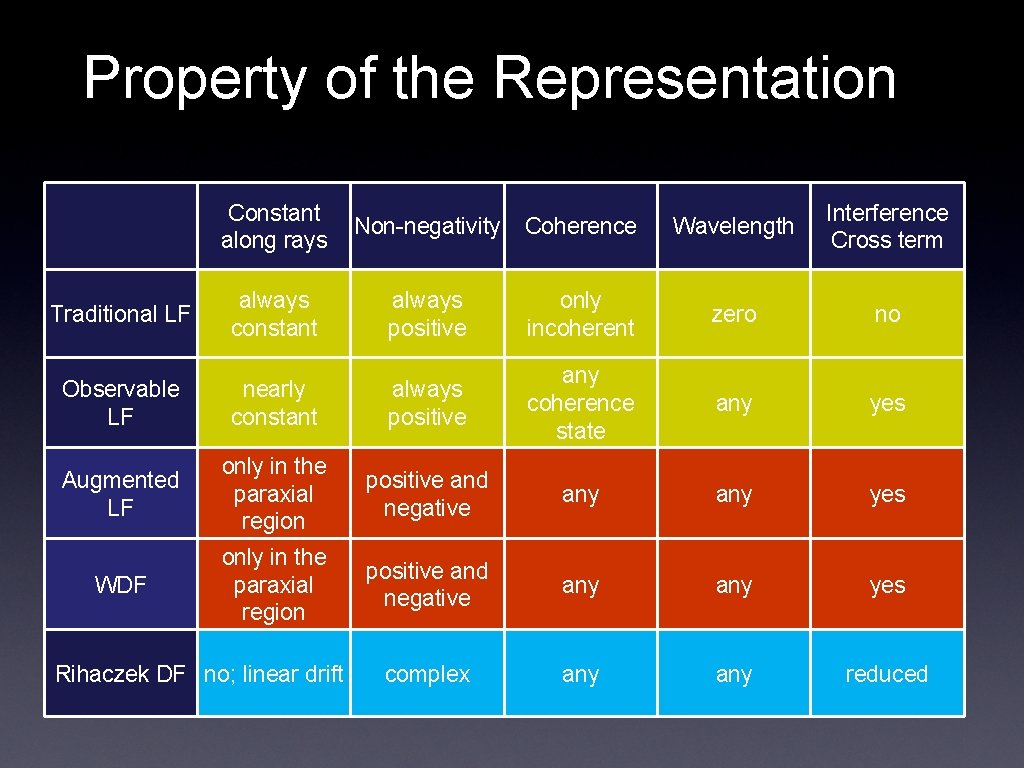
Property of the Representation Traditional LF Constant along rays Non-negativity Coherence Wavelength Interference Cross term always constant always positive only incoherent zero no any yes Observable LF nearly constant always positive any coherence state Augmented LF only in the paraxial region positive and negative any yes WDF only in the paraxial region positive and negative any yes complex any reduced Rihaczek DF no; linear drift
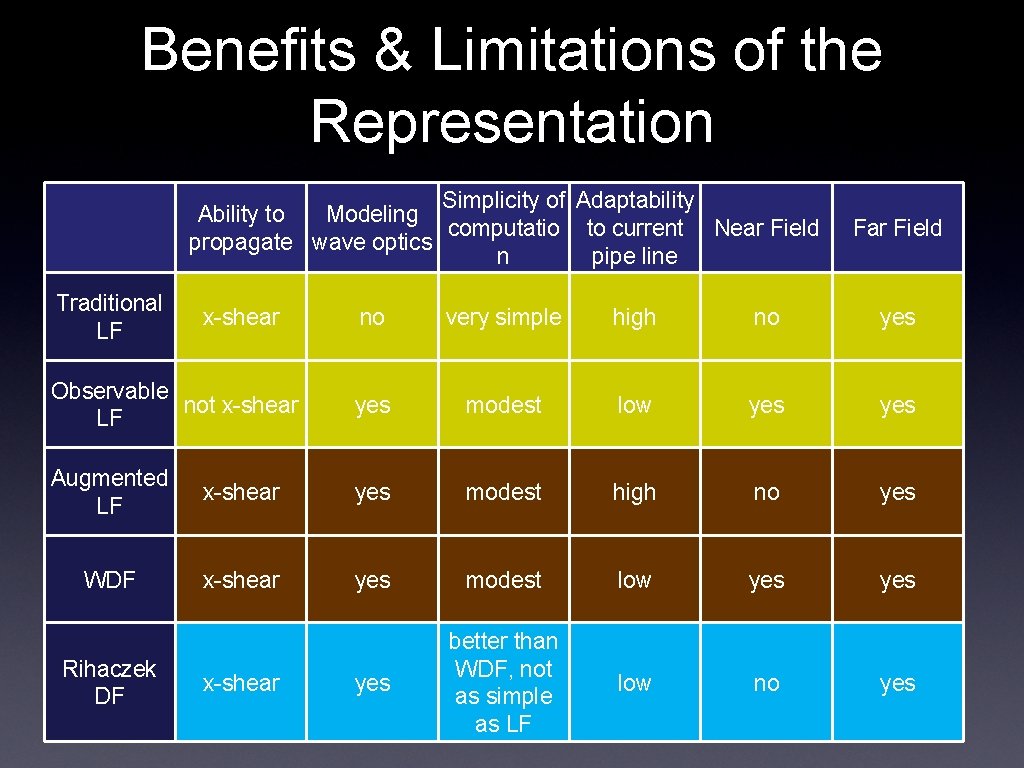
Benefits & Limitations of the Representation Simplicity of Adaptability Ability to Modeling computatio to current Near Field propagate wave optics n pipe line Traditional LF no very simple high no yes Observable not x-shear LF yes modest low yes Augmented LF x-shear yes modest high no yes WDF x-shear yes modest low yes yes better than WDF, not as simple as LF low no yes Rihaczek DF x-shear Field x-shear
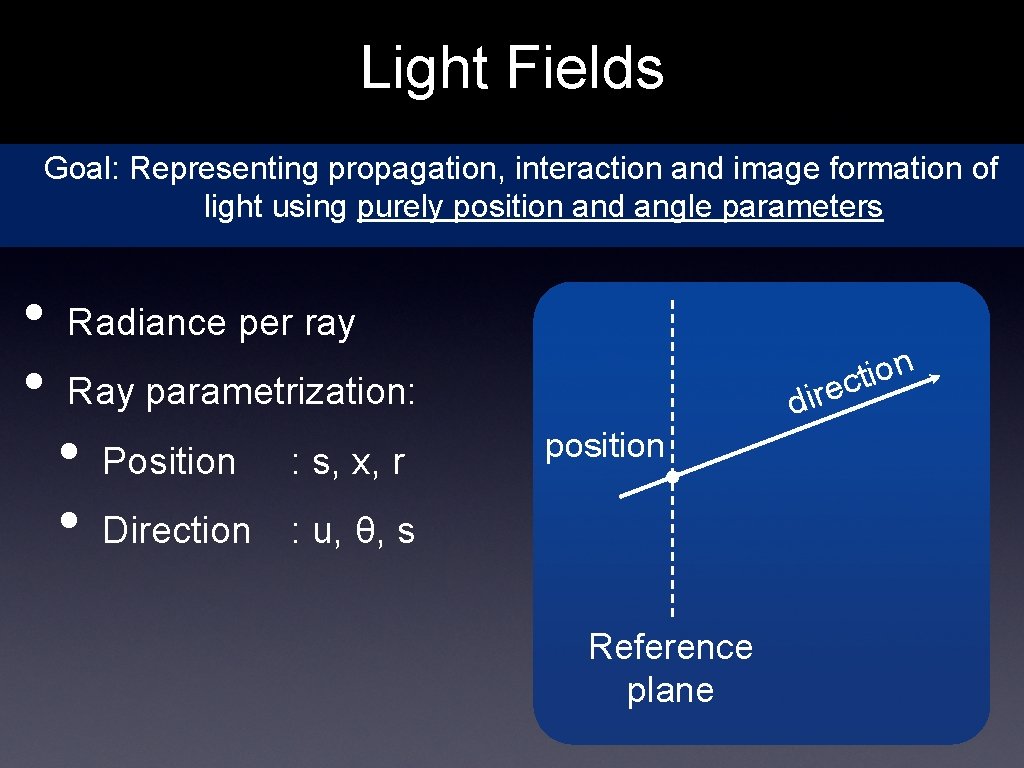
Light Fields Goal: Representing propagation, interaction and image formation of light using purely position and angle parameters • • Radiance per ray n o i ect Ray parametrization: • • Position : s, x, r Direction : u, θ, s dir position Reference plane