
Light Field Structure Analysis With material courtesy of



- Slides: 27
Light Field Structure Analysis With material courtesy of Jaakko Lehtinen
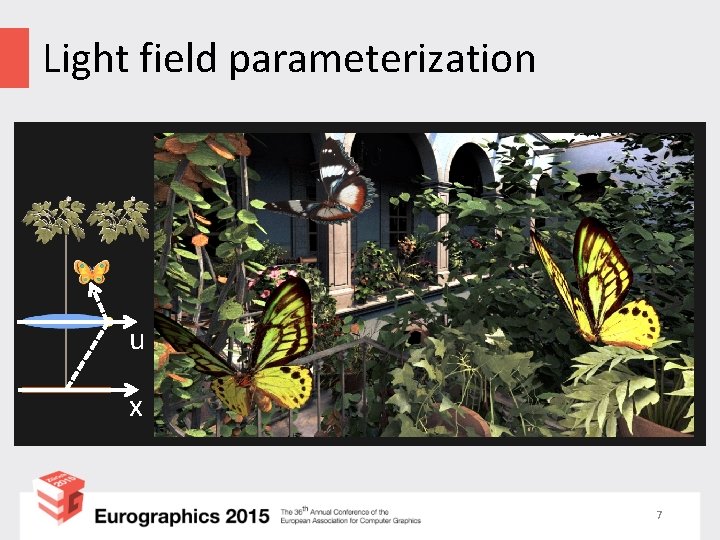
Key observation • Light rays are highly coherent - Rays originating from same surface point vary smoothly over angle • Represent light rays in light field parameterization - Rays correspond to points in a 4 D position-direction space • Exploit coherent, anisotropic structure of light fields 2
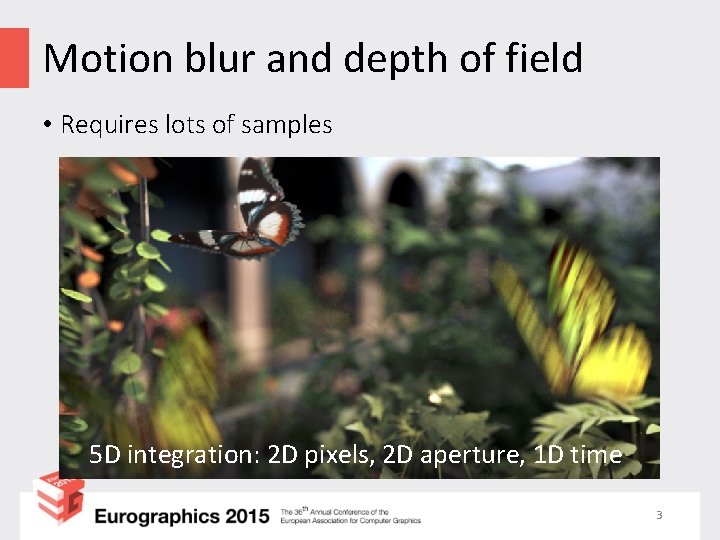
Motion blur and depth of field • Requires lots of samples 5 D integration: 2 D pixels, 2 D aperture, 1 D time 3
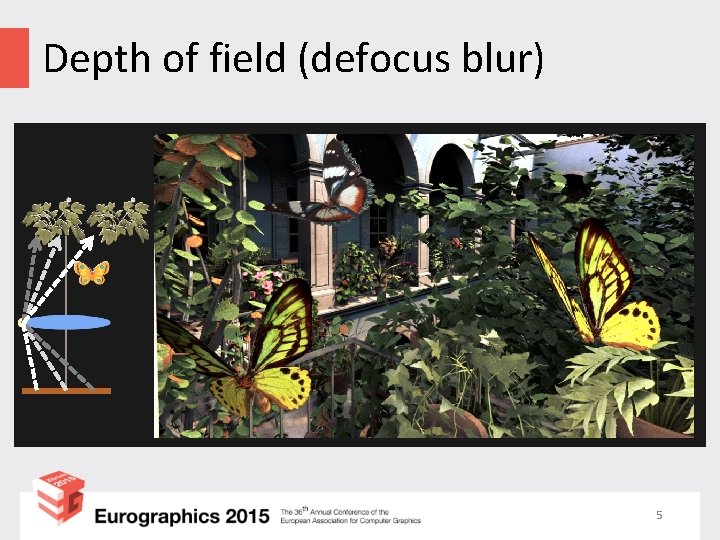
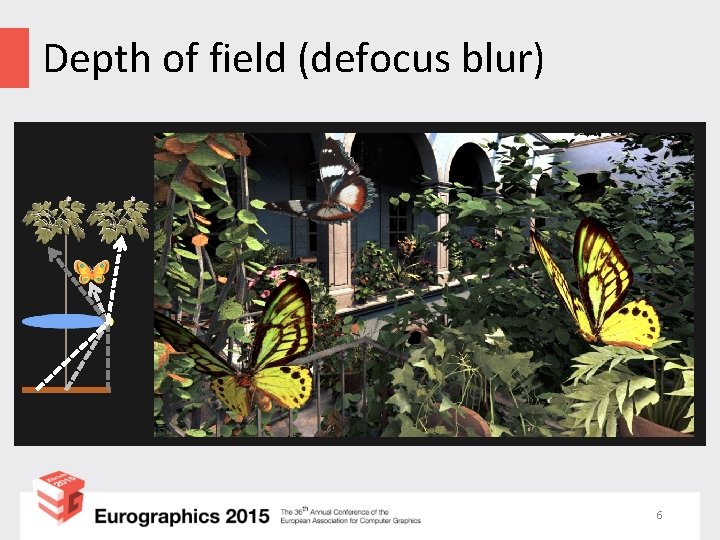
Depth of field (defocus blur) 4
Depth of field (defocus blur) 5
Depth of field (defocus blur) 6
Light field parameterization u x 7
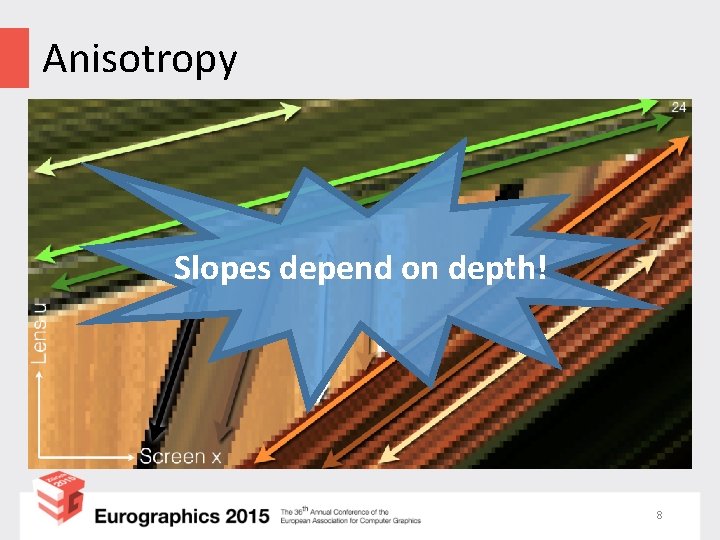
Anisotropy Slopes depend on depth! 8
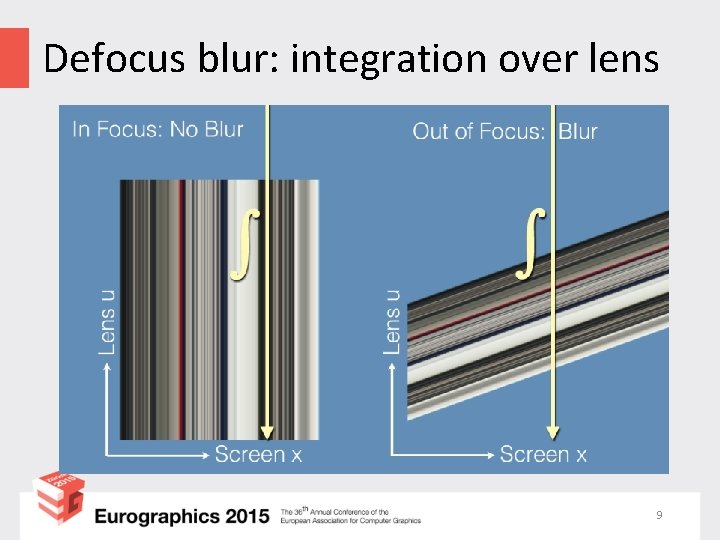
Defocus blur: integration over lens 9
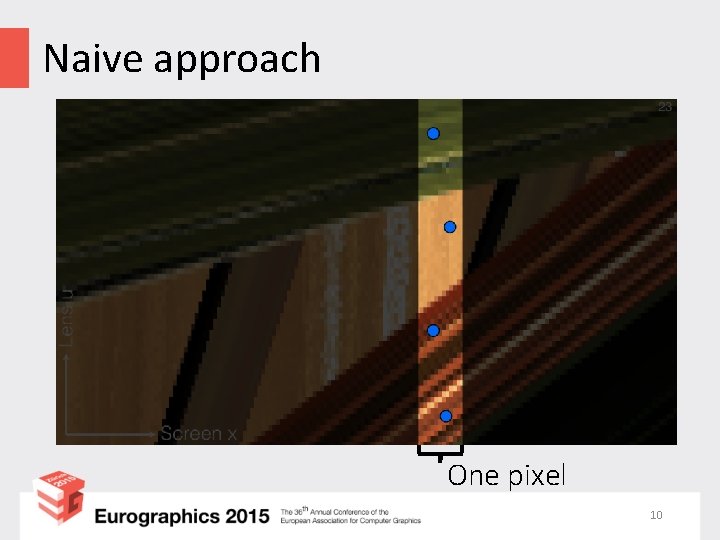
Naive approach One pixel 10
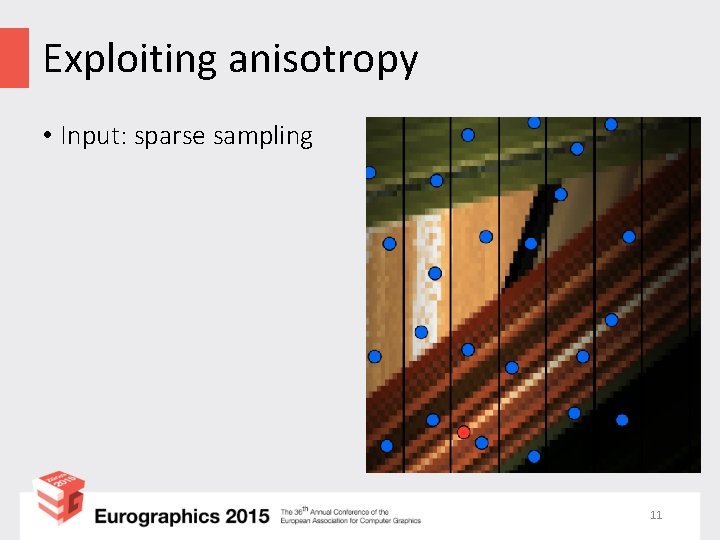
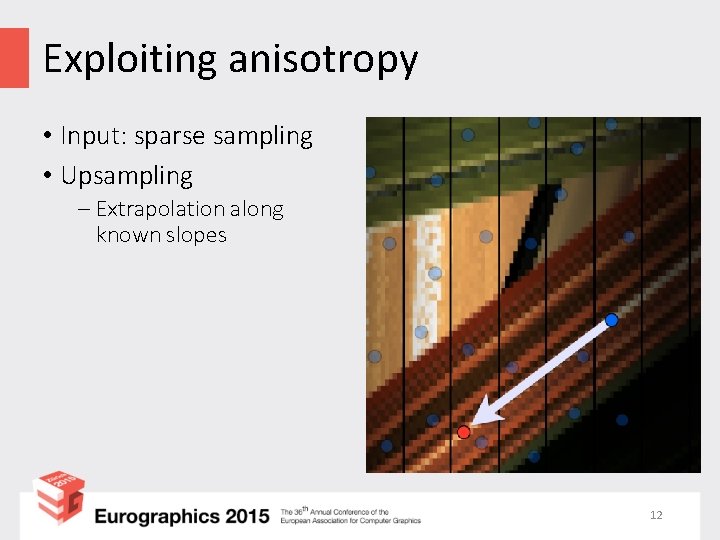
Exploiting anisotropy • Input: sparse sampling 11
Exploiting anisotropy • Input: sparse sampling • Upsampling - Extrapolation along known slopes 12
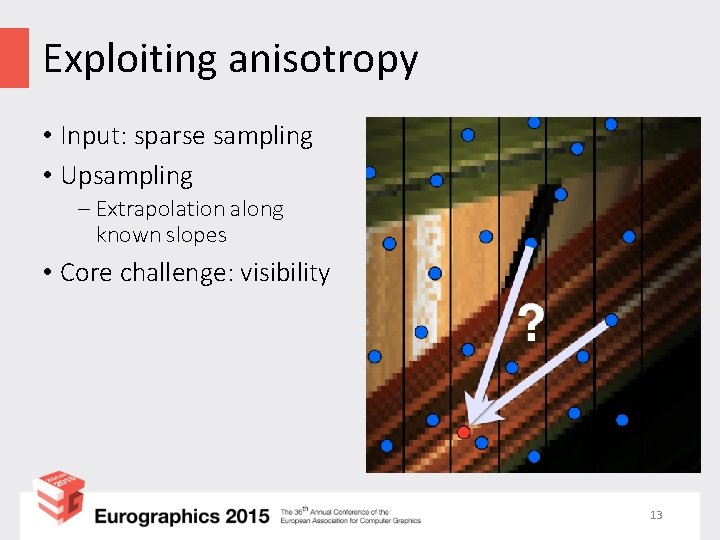
Exploiting anisotropy • Input: sparse sampling • Upsampling - Extrapolation along known slopes • Core challenge: visibility 13
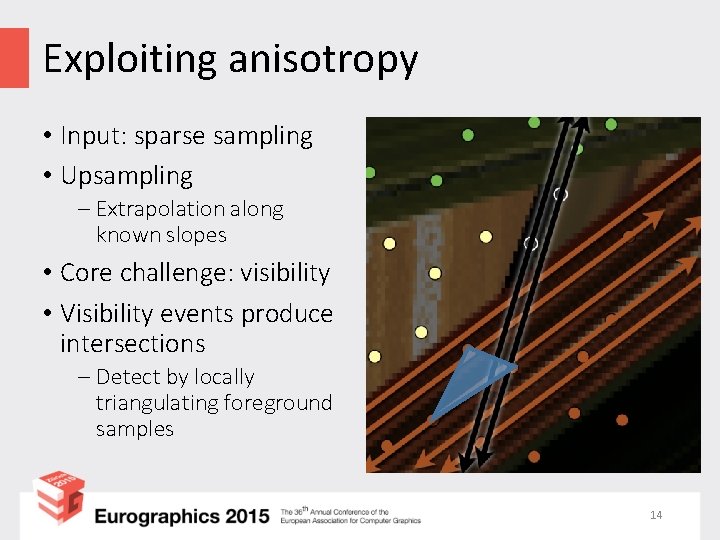
Exploiting anisotropy • Input: sparse sampling • Upsampling - Extrapolation along known slopes • Core challenge: visibility • Visibility events produce intersections - Detect by locally triangulating foreground samples 14
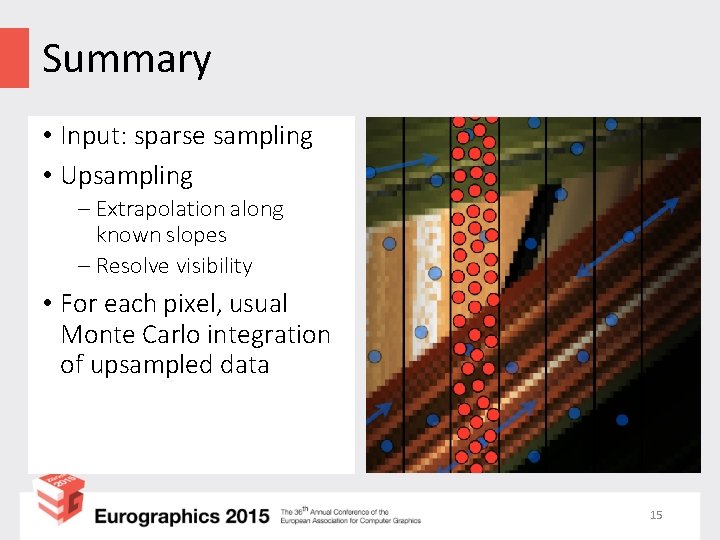
Summary • Input: sparse sampling • Upsampling - Extrapolation along known slopes - Resolve visibility • For each pixel, usual Monte Carlo integration of upsampled data 15
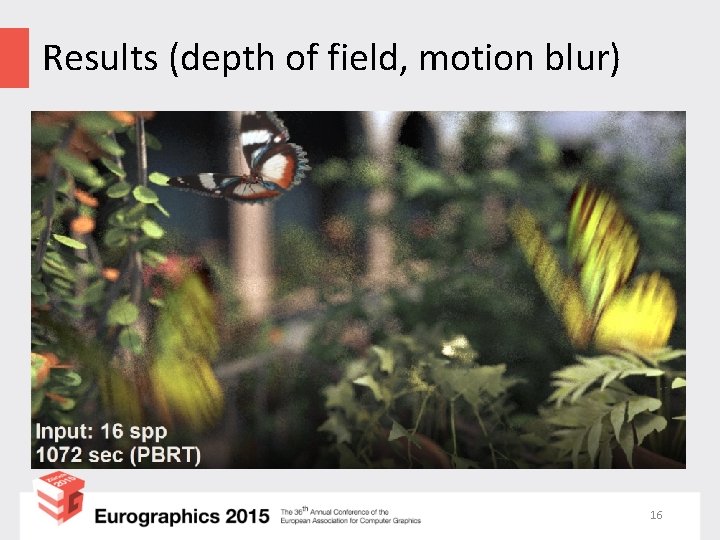
Results (depth of field, motion blur) 16
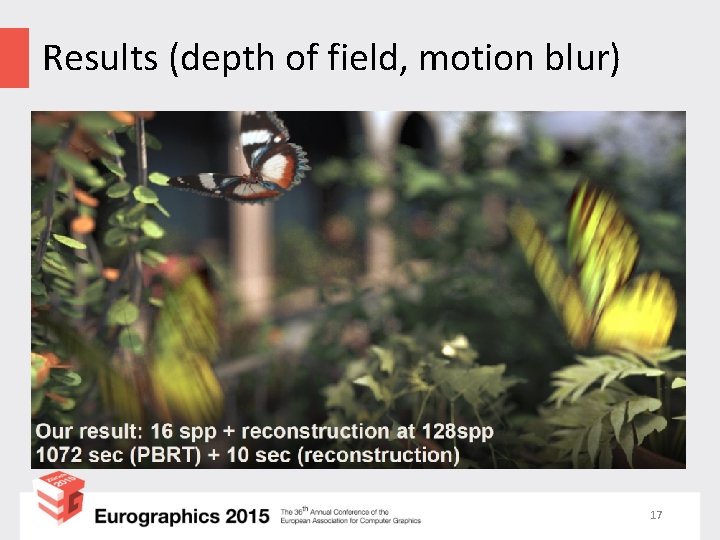
Results (depth of field, motion blur) 17
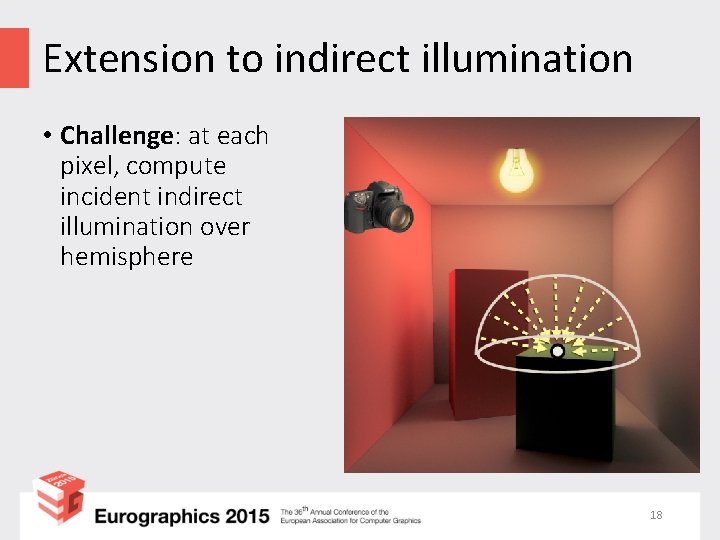
Extension to indirect illumination • Challenge: at each pixel, compute incident indirect illumination over hemisphere 18
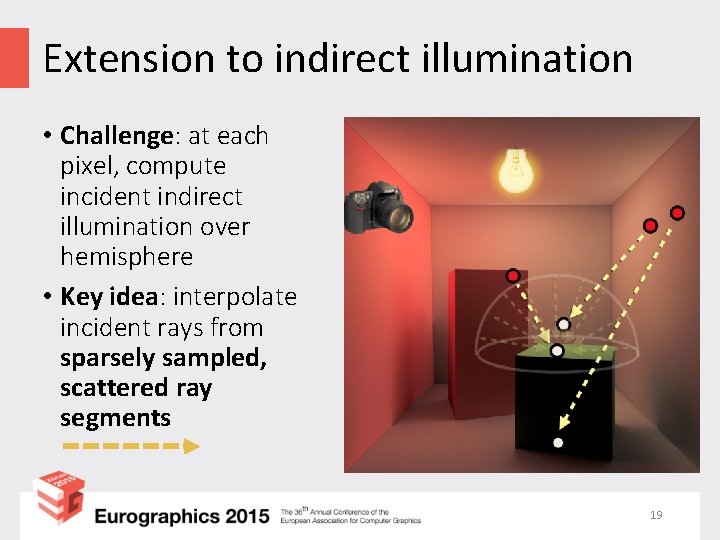
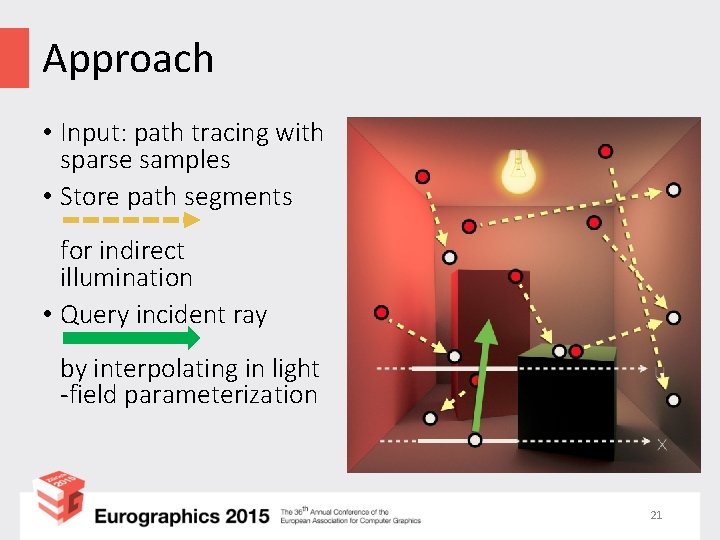
Extension to indirect illumination • Challenge: at each pixel, compute incident indirect illumination over hemisphere • Key idea: interpolate incident rays from sparsely sampled, scattered ray segments 19
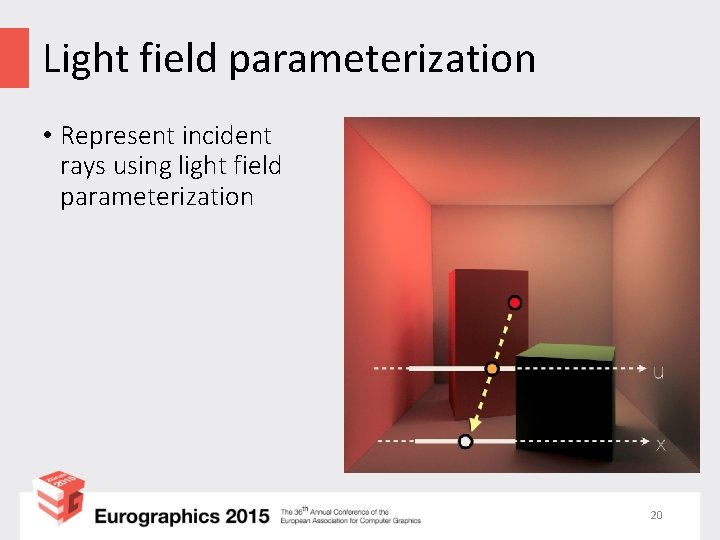
Light field parameterization • Represent incident rays using light field parameterization 20
Approach • Input: path tracing with sparse samples • Store path segments for indirect illumination • Query incident ray by interpolating in light -field parameterization 21
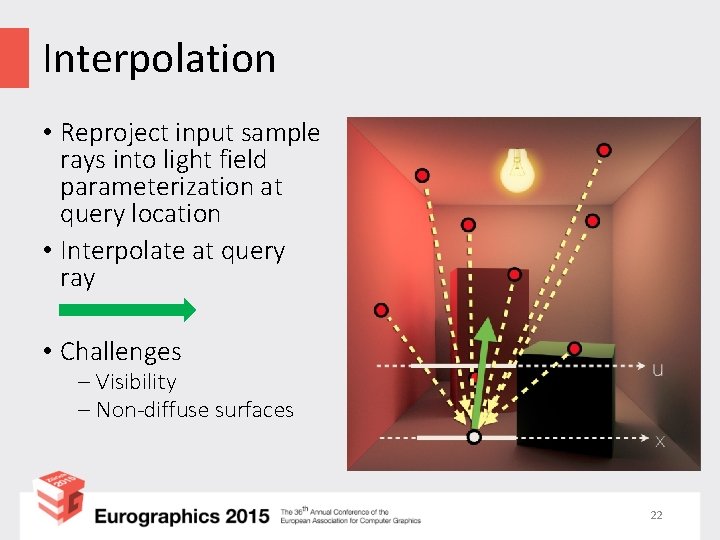
Interpolation • Reproject input sample rays into light field parameterization at query location • Interpolate at query ray • Challenges - Visibility - Non-diffuse surfaces 22
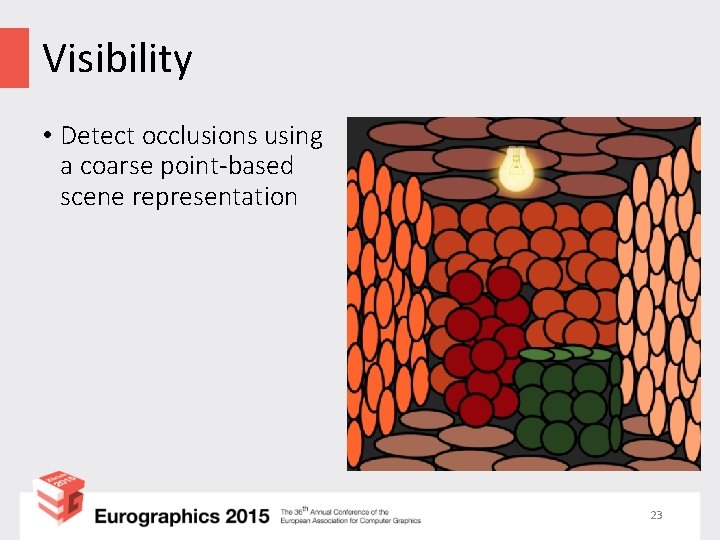
Visibility • Detect occlusions using a coarse point-based scene representation 23
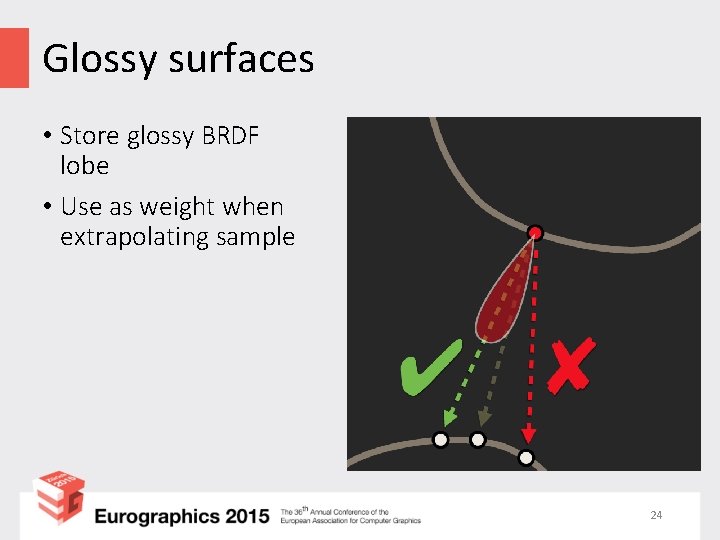
Glossy surfaces • Store glossy BRDF lobe • Use as weight when extrapolating sample 24
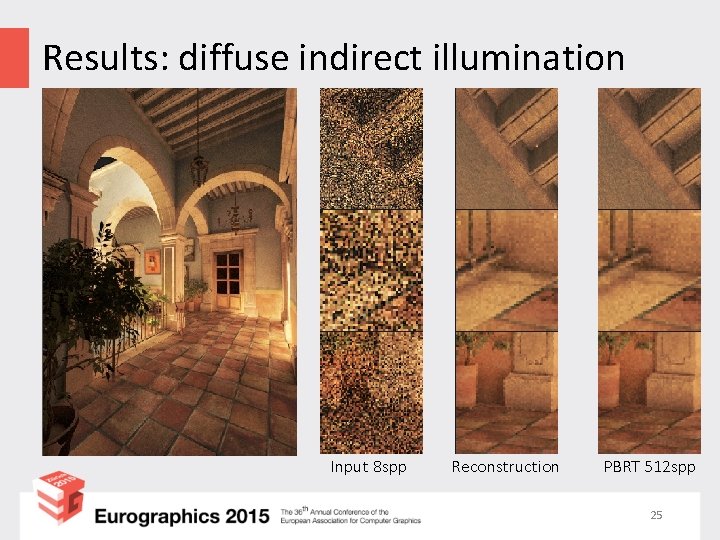
Results: diffuse indirect illumination Input 8 spp Reconstruction PBRT 512 spp 25
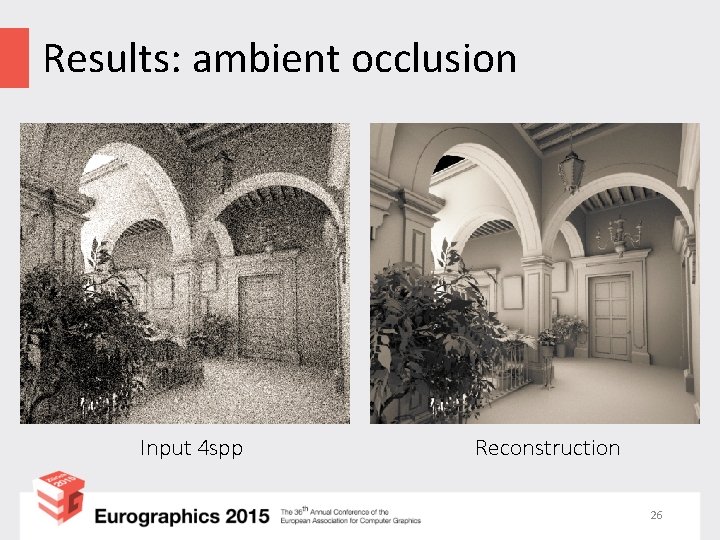
Results: ambient occlusion Input 4 spp Reconstruction 26
Conclusions • Light field parameterization reveals anisotropic structure of incident light • Convenient representation for upsampling and interpolation - Easy to preserve light field structure • Good results from very sparse input • Challenges - Visibility - Glossy surfaces - Memory requirements 27